When Ethan first started eating more high-protein homemade meals, I wanted to be sure he was getting the same balanced nutrition you’d expect from a vet-approved formula. That’s why I compared our kitchen bowl to a trusted dry option like Blue Buffalo Wilderness Salmon. The nutrient profile (animal protein + omega-3s) matched closely, which gave me the confidence to build this simple Salmon & Quinoa Dog Food Recipe you can cook at home.
This recipe focuses on clean protein from salmon, gentle carbs from quinoa, and a few easy veggies for fiber—ideal for active pups or anyone who wants a natural protein boost without complicated steps. Below, I’ll show you the exact ingredients, a step-by-step guide, and a vet-style nutrition snapshot so you can decide if this rotation fits your dog’s routine.
Prefer a ready-made option on busy days? See our updated picks in Best Salmon Dog Food Guide (2025).
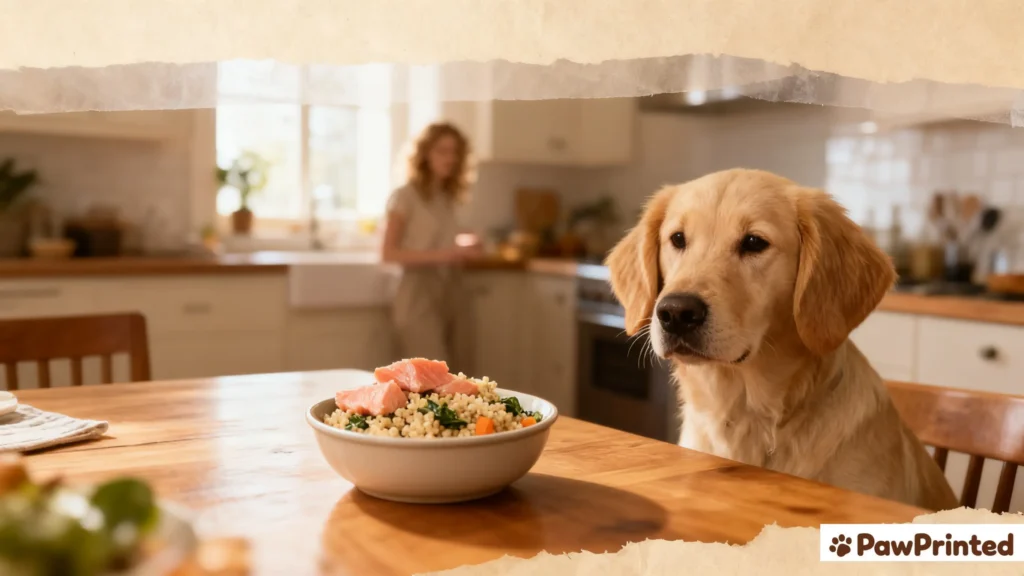
Why Salmon & Quinoa Work So Well Together
Salmon provides premium animal protein and rich omega-3 fatty acids that help build lean muscle, support coat shine, and keep joints comfortable. Quinoa contributes plant-based protein and gentle fiber that improve digestion and steady energy. Together they create a balanced, high-protein bowl — nourishing, low-inflammation, and full of natural flavor dogs love.
Before finalizing this recipe, I tested a few salmon-based kibbles like Taste of the Wild Pacific Stream , and noticed how easily Ethan’s stomach handled them. That inspired me to recreate the same balance at home — using fresher ingredients and fewer additives.
Protein Balance
Salmon: High-quality animal protein for lean muscle.
Quinoa: Gentle plant protein that complements meat sources.
Benefit: Together they deliver complete amino acids for sustained strength and stamina.
Omega-3 Advantage
Salmon: Naturally rich in EPA & DHA for coat health.
Quinoa: Neutral base that aids absorption.
Benefit: Maintains skin hydration and glossy fur while reducing inflammation.
Digestive Support
Salmon: Easy to digest and anti-inflammatory.
Quinoa: Adds soluble fiber for steady gut movement.
Benefit: Keeps stools firm and promotes balanced digestion.
Low Glycemic Impact
Salmon: Low-carb, high-protein foundation.
Quinoa: Slow-release carbohydrate.
Benefit: Supports consistent energy without sugar spikes.
Allergen Friendly
Salmon: Hypoallergenic for most dogs.
Quinoa: Gluten-free and grain-free.
Benefit: Ideal for pups with sensitive skin or stomachs.
Next up: the ingredient list and portion guide. For a balanced commercial alternative that mirrors this homemade blend, check out Hill’s Science Diet (Salmon & Veg) .
Ingredients You’ll Need
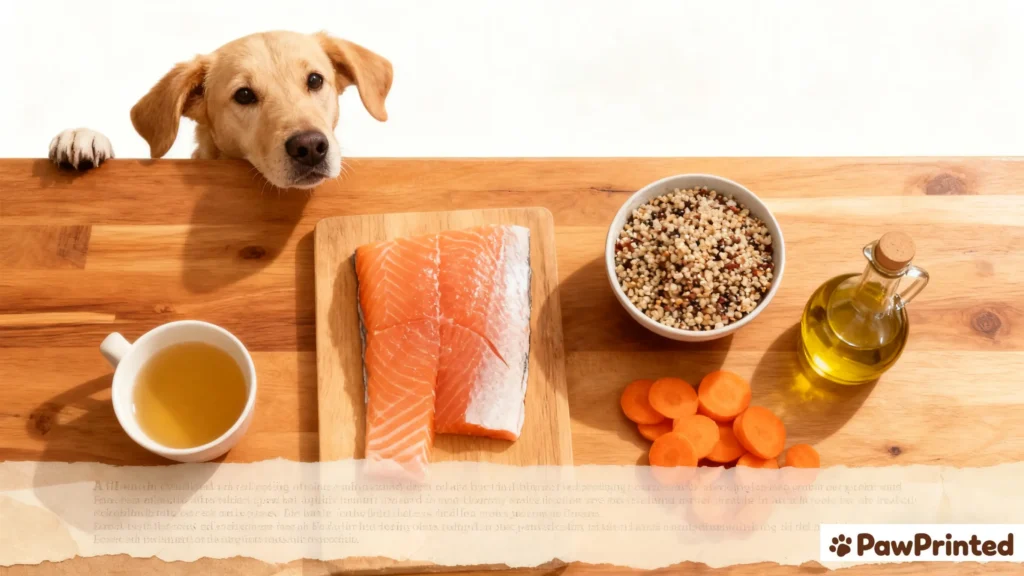
This high-protein homemade meal uses six simple, natural ingredients. Each one plays a clear role — salmon for clean protein, quinoa for fiber balance, and healthy oils for coat care. You can swap or scale based on your dog’s size and activity level.
Fresh Salmon — 1 lb (boneless, skinless)
Clean, high-quality protein that’s naturally rich in omega-3s. Keeps your dog’s coat shiny and digestion smooth. On busy weeks, I rotate Blue Buffalo Wilderness Salmon — a gentle, grain-free option that mirrors the same nutrition profile.
Cooked Quinoa — ½ cup (rinsed & soft)
A gluten-free seed that provides plant-based protein and fiber. Rinse well to remove natural saponins, then cook until fluffy. For a quick commercial backup, Taste of the Wild Pacific Stream includes gentle carbs that serve a similar function.
Carrots or Spinach — ¼–½ cup (lightly steamed)
Adds color, vitamins, and gentle sweetness. Steam and chop finely to improve absorption. If you want a greener boost, see our Salmon & Spinach Recipe — it’s a perfect iron-rich variation.
Olive Oil or Fish Oil — 1 tsp
A drizzle of healthy fats to nourish the skin and joints. When traveling or after exercise, I mix in a spoonful of Orijen Six Fish for an extra omega-rich protein boost.
Unsalted Bone Broth or Water — ¼ cup
Helps bind all ingredients, adds aroma, and provides gentle hydration. Always cool before serving to protect sensitive stomachs.
Optional Treat — mid-meal reward
Ethan’s favorite between-meal crunch: Vital Essentials Salmon Freeze-Dried Treats . You can also pair this recipe with Hill’s Science Diet (Salmon & Veg) for a balanced ready-made rotation.
Step-by-Step Cooking Guide
Gentle cooking preserves protein quality and keeps digestion calm. Follow the six easy steps below — each one simple, clear, and designed to help your dog enjoy every bite. Be sure to cool completely before serving and adjust portions based on your dog’s size and activity level.
1. Rinse & Cook Quinoa
Place quinoa in a fine-mesh sieve and rinse under cold water for 30–60 seconds to remove saponins (bitter compounds). Cook in water or unsalted bone broth until soft and fluffy. Allow it to steam-dry — this keeps the texture light and digestible.
2. Cook the Salmon (No Salt)
Bake or steam boneless, skinless salmon until just cooked through; flake gently with a fork. Avoid adding salt, garlic, onions, or heavy oils, and double-check for any tiny pin bones.
3. Steam the Veggies
Lightly steam carrots or spinach until tender but not mushy. Chop finely for better absorption and an even texture that blends smoothly with quinoa and salmon.
4. Combine & Hydrate
In a large bowl, mix the flaked salmon, quinoa, and veggies. Add a splash of warm water or bone broth to moisten, then drizzle a teaspoon of olive or fish oil for coat and joint support. Gently fold — don’t mash — to keep the texture appealing.
5. Cool, Portion & Store
Let the mixture cool to room temperature before serving. Divide into daily portions using glass containers or silicone molds. Refrigerate for up to 3 days or freeze for 2 weeks, labeling dates for easy rotation.
6. Serve & Rotate
Start with small portions and observe stool consistency as you transition. On busy days, I mix half homemade and half Blue Buffalo Wilderness Salmon for texture variety, or add a spoonful of Taste of the Wild Pacific Stream as a gentle topper. For higher protein weekends, I rotate a scoop of Orijen Six Fish for extra strength and flavor.
Next: the nutrition snapshot and vet insights — see how each portion supports strength, coat health, and daily vitality.
Salmon & Quinoa Dog Food Recipe (Protein Boost)
- Medium pot for quinoa
- Steamer or baking tray for salmon
- – Mixing bowl
- Measuring cups & spoons
- Airtight glass containers for storage
- 1 lb boneless skinless salmon fillet
- ½ cup cooked quinoa rinsed thoroughly before cooking
- ¼ –½ cup carrots or spinach lightly steamed, chopped finely
- 1 tsp olive oil or fish oil
- ¼ cup unsalted bone broth or water
- Optional treat:
- Vital Essentials Salmon Freeze-Dried Treats
- Rinse & Cook Quinoa: Place quinoa in a fine sieve and rinse under cold water for 30–60 seconds to remove bitter saponins. Cook in water or bone broth until soft and fluffy. Set aside to cool.
- Cook the Salmon: Steam or bake salmon until cooked through. Remove any bones or skin, and flake into small, soft pieces suitable for your dog’s size.
- Steam the Veggies: Lightly steam carrots or spinach until tender, then finely chop for easy digestion and nutrient absorption.
- Combine & Mix: In a bowl, gently combine salmon, quinoa, and vegetables. Add bone broth and drizzle olive or fish oil on top. Fold until evenly mixed — avoid mashing.
- Cool & Serve: Let cool completely before serving. Store leftovers in airtight containers (refrigerated up to 3 days or frozen up to 2 weeks).
Rotate occasionally with a gentle dry option like Hill’s Science Diet (Salmon & Veg)
. 🐾 Feeding Guide: Serve about 1 cup per 20 lbs of body weight daily, split into two meals.
Adjust according to your dog’s activity level and size.
For added crunch, mix with Blue Buffalo Wilderness Salmon
. 💡 Storage Tip: Refrigerate up to 3 days or freeze individual portions for up to 2 weeks.
Always thaw in the fridge — not on the counter — to maintain food safety. If you don’t want to cook daily, check our dry food picks — those were Ethan’s daily backups.
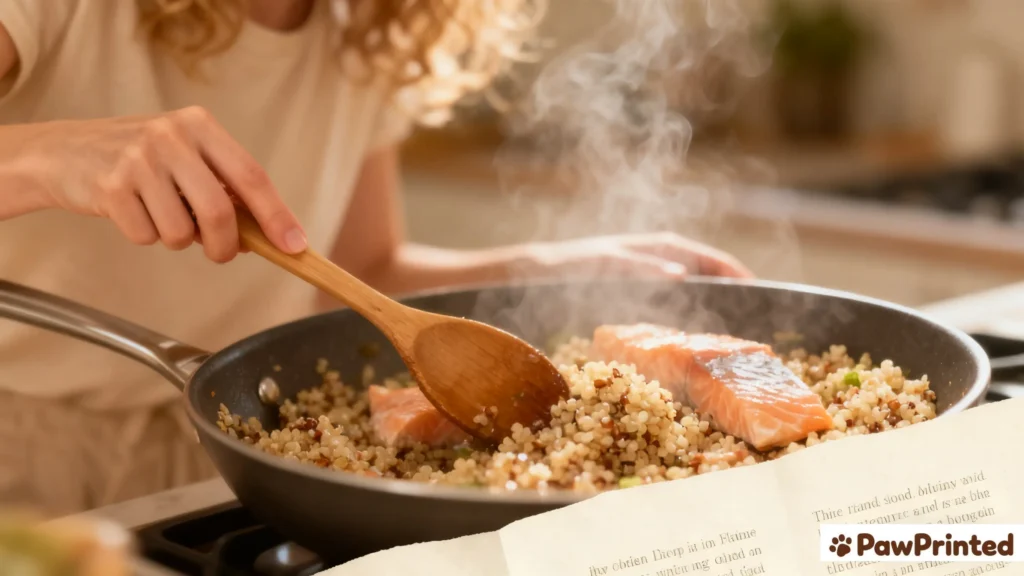
Nutritional Data & Vet Insights
This salmon-and-quinoa blend offers high-quality protein with a balanced nutrient ratio — ideal for active, recovering, or senior dogs who need steady energy without digestive stress. It’s easy to digest, heart-friendly, and closely mirrors many vet-recommended commercial diets.
Essential for lean muscle and tissue repair. The salmon base delivers all key amino acids. Orijen Six Fish provides a similar multi-source protein profile for high-energy pups.
Supports coat shine, hormone function, and nutrient absorption. Natural fish oils provide a rich omega-3 and omega-6 balance. On rotation weeks, Hill’s Science Diet (Salmon & Veg) keeps levels steady without overloading calories.
A balanced fiber range that supports healthy digestion and firm stools. The quinoa’s soluble fiber keeps gut flora stable while remaining gentle.
Moderate calorie density suited for daily feeding. For pups needing extra fuel, a few bites of Taste of the Wild Pacific Stream make an easy topper between meals.
The heart of this recipe. Omega-3s calm inflammation, protect joints, and enhance coat texture. For additional support, Blue Buffalo Wilderness Salmon maintains a similar balance.
Up next — our vet-approved variations and substitution ideas for sensitive stomachs.
Vet Tips & Variations
Every dog’s digestion and energy needs are different — even between pups in the same home. Here’s how I adjust this salmon-and-quinoa base to fit different lifestyles, sensitivities, and ages, all guided by our vet and Ethan’s own taste tests.
For Gentle Digestion
Swap quinoa for soft-cooked oats or steamed pumpkin to make the recipe easier on the stomach while keeping healthy fiber. When Ethan had a mild tummy upset, our Salmon & Pumpkin Dog Food Recipe became his comfort meal. For a quick gentle alternative, Taste of the Wild Pacific Stream (Salmon) mimics that soothing blend.
For Weight Control
Use leaner protein cuts like white fish or turkey and cut back on oil portions to lower calories. Adding a spoonful of warm broth can help your pup feel full. On lighter feeding days, I often switch to Hill’s Science Diet (Salmon & Veg) — its nutrient balance supports steady weight without losing flavor.
For Allergy-Prone Dogs
Stick to single-source proteins and limit additives or fillers. Orijen Six Fish (Grain-Free) offers a clean, hypoallergenic model that you can easily replicate at home using fresh salmon and omega oils.
For Senior Dogs
Older pups benefit from softer textures and gentle omega-rich additions. Add extra broth for hydration and a sprinkle of ground flaxseed or chia for joint and coat support. I occasionally rotate in Wellness CORE High Protein for its steady amino profile and digestibility.
For Active or Working Dogs
Double the salmon portion and add a drizzle of fish oil for recovery after workouts or play sessions. It helps maintain muscle tone and endurance naturally. When Ethan spends extra time at the park, I mix in a few bites of Blue Buffalo Wilderness Salmon for added protein and calories.
Next: serving and storage tips — how to keep your homemade meals fresh, portioned, and easy to manage even on busy weeks.
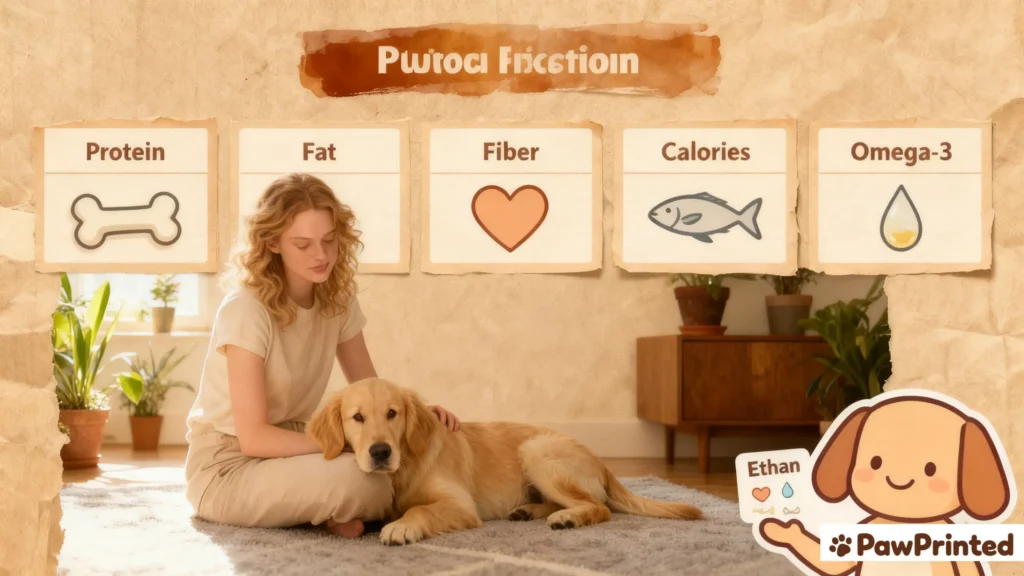
Serving Ideas & Storage
Once your batch is cooked and cooled, smart portioning and gentle storage keep each meal fresh, safe, and nutritionally stable. These are the serving routines we follow at home — simple, vet-approved, and Ethan-approved too.
Portion Guide
Serve about 1 cup per 20 lbs of body weight per day, split into two meals. Adjust portions based on activity level — a bit more for active dogs, slightly less for seniors. Keeping meals consistent helps maintain digestion rhythm and stable weight.
Mix with Dry Food
On busy mornings, I often do a 50/50 bowl — half homemade, half Blue Buffalo Wilderness Salmon . The crunch keeps Ethan engaged, and the combined proteins deliver steady energy through the day.
Storage Tips
Store in airtight containers and refrigerate for up to 3 days, or freeze portions for up to 2 weeks. Always thaw in the fridge — never on the counter — to prevent bacterial growth. For trips, freeze single-serve bags for easy defrosting and portion control.
Refreshing Frozen Meals
To rehydrate frozen portions, add a spoon of warm, unsalted broth or mix in a few bites of Hill’s Science Diet (Salmon & Veg) . It revives aroma and texture, helping picky eaters stay excited for every meal.
Gentle Toppers
Add a spoonful of plain pumpkin purée or top with a bit of Taste of the Wild Pacific Stream for dogs with sensitive digestion. These toppers blend smoothly with the salmon base and enhance flavor naturally.
Rewards & Training Moments
For mid-day training or snack breaks, Ethan’s favorite treat is Vital Essentials Salmon Freeze-Dried Treats . They carry the same flavor as this recipe, making positive reinforcement consistent and rewarding.
Next: Ethan’s real-world favorites — the store-bought picks that best match his homemade bowl in flavor and nutrition.
What Worked for Ethan
Over the past year, I’ve tested dozens of salmon-based meals to see which ones matched the balance and texture of our homemade bowl. Some became Ethan’s travel staples, others inspired new tweaks in our kitchen. These are the brands that truly worked for him — all vet-approved, taste-tested, and rotation-safe.
Blue Buffalo Wilderness Salmon Dry Dog Food
Our weekday essential when mornings get busy. It mirrors the omega-3 balance and clean protein of this recipe while keeping Ethan’s coat glossy. I often blend it 50/50 with homemade batches for extra crunch and convenience.
Taste of the Wild Pacific Stream (Salmon)
Gentle, grain-free, and lightly smoke-scented — Ethan’s “reset bowl” for calmer days. It digests easily and makes a great transition food after busy weekends or long car rides.
Hill’s Science Diet (Salmon & Vegetable Blend)
Our vet’s first pick for a balanced dry formula. It pairs perfectly with homemade salmon meals — small kibble size, lean fats, and easy portion control make it an ideal daily rotation base.
Orijen Six Fish (Grain-Free)
A high-performance blend that fuels Ethan’s active days. Packed with multiple fish proteins and natural omega oils, it’s our “weekend power bowl” when he needs recovery fuel after long hikes.
Vital Essentials Salmon Freeze-Dried Treats
Ethan’s favorite snack — crunchy, pure, and made from single-ingredient salmon. I use them as training treats or crumble a few over meals to keep things exciting without additives.
Next: check out the FAQ section for vet-approved advice and practical feeding guidance — including how often dogs can safely enjoy salmon.
Frequently Asked Questions
Is quinoa good for dogs?
Yes — quinoa is a healthy, gluten-free seed that provides gentle plant-based protein and essential minerals such as magnesium, iron, and manganese. It’s a great alternative to grains like rice, offering more fiber and amino acids. When thoroughly rinsed and fully cooked, quinoa supports digestion, maintains steady energy, and helps keep your dog’s stool firm. Always serve it plain without salt or seasoning, and avoid raw quinoa as it contains bitter saponins that can upset sensitive stomachs.
Can dogs eat quinoa every day?
Dogs can safely eat quinoa several times per week as part of a balanced rotation. It works best when paired with lean proteins such as salmon or turkey and gentle vegetables like carrots or spinach. For daily use, adjust portions and rotate with easy digestible carbs like pumpkin or oats to maintain nutritional balance. When you don’t have time to cook, Hill’s Science Diet (Salmon & Veg) provides a similar nutrient profile and consistent texture for steady feeding.
Is it okay to feed dogs salmon every day?
Yes, as long as the salmon is fully cooked, boneless, and served in proper portions. Salmon is one of the best animal protein sources for dogs — it’s rich in omega-3 fatty acids, supports heart and joint health, and keeps coats glossy. Avoid raw salmon because it may contain parasites. To prevent excess fat intake, alternate with white fish or poultry recipes, or mix in Orijen Six Fish to diversify amino acids while keeping meals balanced and satisfying.
Which is better for dogs — rice or quinoa?
Both have their benefits. White rice is gentle and ideal for temporary stomach upsets, while quinoa offers higher protein and fiber for long-term nutrition. Quinoa also contains trace minerals and antioxidants that support overall wellness. For sensitive dogs, start with rice and gradually mix in quinoa over 3–5 days. If you prefer a balanced commercial option that combines gentle carbs and fish protein, Taste of the Wild Pacific Stream is a reliable choice with a mild, hypoallergenic blend.
How can I make a high-protein dog food at home?
Start with a clean protein base like salmon, turkey, or chicken. Add moderate carbs such as quinoa, pumpkin, or oats, then round out the bowl with dog-safe vegetables and omega-rich oils. The ideal ratio is roughly 50% protein, 25% carbs, and 25% vegetables. Keep seasonings minimal and portions consistent. For tested variations, explore our Vet-Approved Salmon Dog Food Recipes — all designed to maintain balance and digestibility while keeping meals flavorful.
Wrapping It Up
Cooking for Ethan always reminds me that good nutrition doesn’t have to be complicated. Whether you’re simmering quinoa on the stove or scooping a bowl of Blue Buffalo Wilderness Salmon , what matters most is the routine — and the care that goes into it. Dogs thrive on consistency, balance, and the feeling that every meal is made for them.
This Salmon & Quinoa Dog Food Recipe checks all those boxes: easy to digest, rich in clean protein, and filled with omega goodness for coat and joint health. Some weeks we cook together; other times I rely on Hill’s Science Diet (Salmon & Veg) or the always-reliable Taste of the Wild Pacific Stream . The balance stays constant — wholesome, protein-forward, and vet-approved.
If you’re new to homemade feeding, start small and stay flexible. Your pup doesn’t care about perfect plating — only that it’s made with heart. Each bowl, whether cooked or poured, is a quiet “I love you” in every bite.
If you’re stuck, start with gentle wet food, then move toward steady dry picks. For more ideas and related guides, see the Explore More section below.
Explore More
Further Reading (External Sources)
For pet parents who want to learn more about safe homemade feeding and vet-reviewed nutritional guidance, here are trusted sources our team frequently references:
- PetMD — Can Dogs Eat Quinoa? Nutritional Benefits Explained
- American Kennel Club (AKC) — Is Salmon Safe for Dogs to Eat?
- Tufts University Cummings School — Homemade Diets for Dogs: Vet Insights
- U.S. FDA — Tips for Safe Preparation of Homemade Pet Food
These expert-reviewed resources align closely with PawPrinted’s approach — simple, science-backed, and full of heart. Explore more related recipes and vet guides below.