When Ethan was younger, his meals were mostly store-bought kibble — quick, easy, and fine for a while. But after a few months, his coat turned dull, and he started scratching after every meal. That’s when I decided to try something different: a simple homemade mix of salmon, rice, and peas.
The first bowl changed everything. The smell of freshly poached salmon caught his attention before I even placed it down, and by the end of the week, his skin looked calmer and his energy steadier. It wasn’t just food anymore — it was care I could see working. That’s what inspired this recipe: an easy, vet-approved homemade dog food that anyone can make with everyday ingredients.
Whether you’re switching from dry food or just exploring homemade options, this Homemade Salmon Dog Food Guide covers everything I learned — from safe cooking to portion tips — so you can start fresh, confident, and guilt-free.
Why Salmon Is Vet-Approved for Dogs
After Ethan’s switch, our vet smiled and said, “That’s exactly what I’d recommend.” It turns out salmon isn’t just tasty — it’s one of the most balanced proteins for dogs. Packed with omega-3 fatty acids (EPA and DHA), salmon supports glossy coats, healthy joints, and calm digestion. For dogs with sensitive skin or mild food allergies, it’s often gentler than chicken or beef.
Unlike many common meats that trigger inflammation or itching, salmon helps reduce flare-ups from the inside out. Its anti-inflammatory properties can ease dry skin and seasonal shedding, especially when paired with light grains like rice and fiber-rich veggies like peas.
If your pup tends to react to standard kibble, a Grain-Free Salmon Dog Food blend can be a smart reset — simple ingredients, steady nutrition, and far fewer belly surprises.
That’s why most vets (and Ethan’s, too) call salmon the “starter protein” for sensitive pups — wholesome, low in fillers, and rich in real nourishment you can see working with every meal.
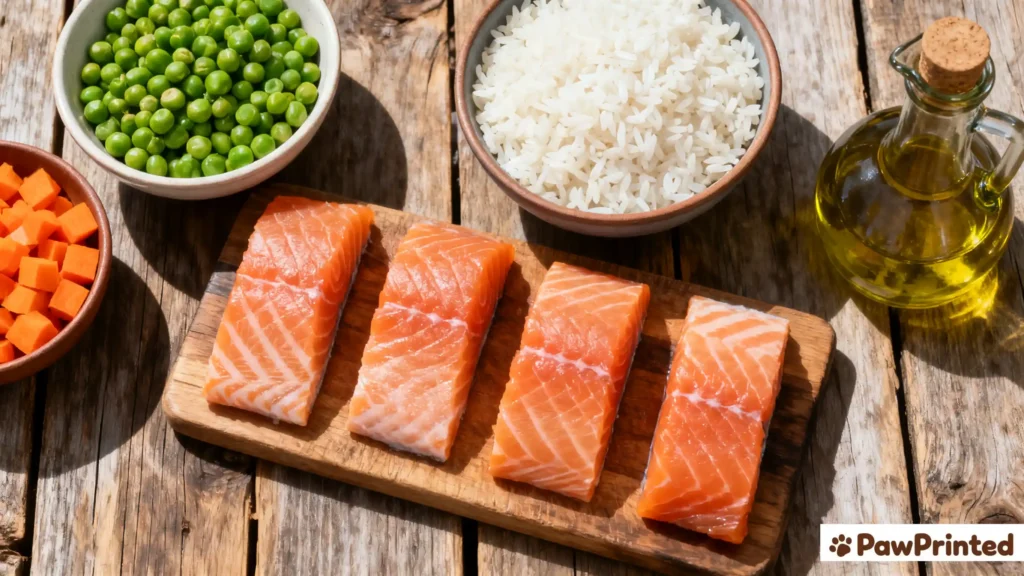
Ingredients You’ll Need (Balanced & Gentle Mix)
This homemade salmon dog food keeps things simple — no fancy prep, no fillers. Every ingredient here was chosen to balance digestion, flavor, and daily nutrition. Think of it as comfort food, but formulated for your pup’s long-term health.
The heart of this recipe — a lean, omega-3-rich protein that nourishes skin and coat while keeping digestion smooth.
Soft and soothing for sensitive tummies. White rice helps recovery days; brown rice adds extra fiber for regular weeks.
Lightly steamed for gentle texture. A mild fiber source that also adds natural sweetness dogs love.
Adds shine to coats and supports joint flexibility. A small drizzle goes a long way in daily meals.
Carrots, pumpkin, or spinach — rotate small portions for added antioxidants and variety.
Each ingredient keeps the focus on gentle nutrition — no seasoning, no extras, no stress. If you’re watching allergens or itching, explore our Limited Ingredient Salmon Dog Food guide for simple, allergy-safe swaps.
Step-by-Step — How I Cooked It for Ethan
This salmon dog food recipe follows the same rhythm I use every Sunday — calm music, cozy light, and Ethan sitting right by my feet, nose in the air, waiting for the first steam of fish to rise.
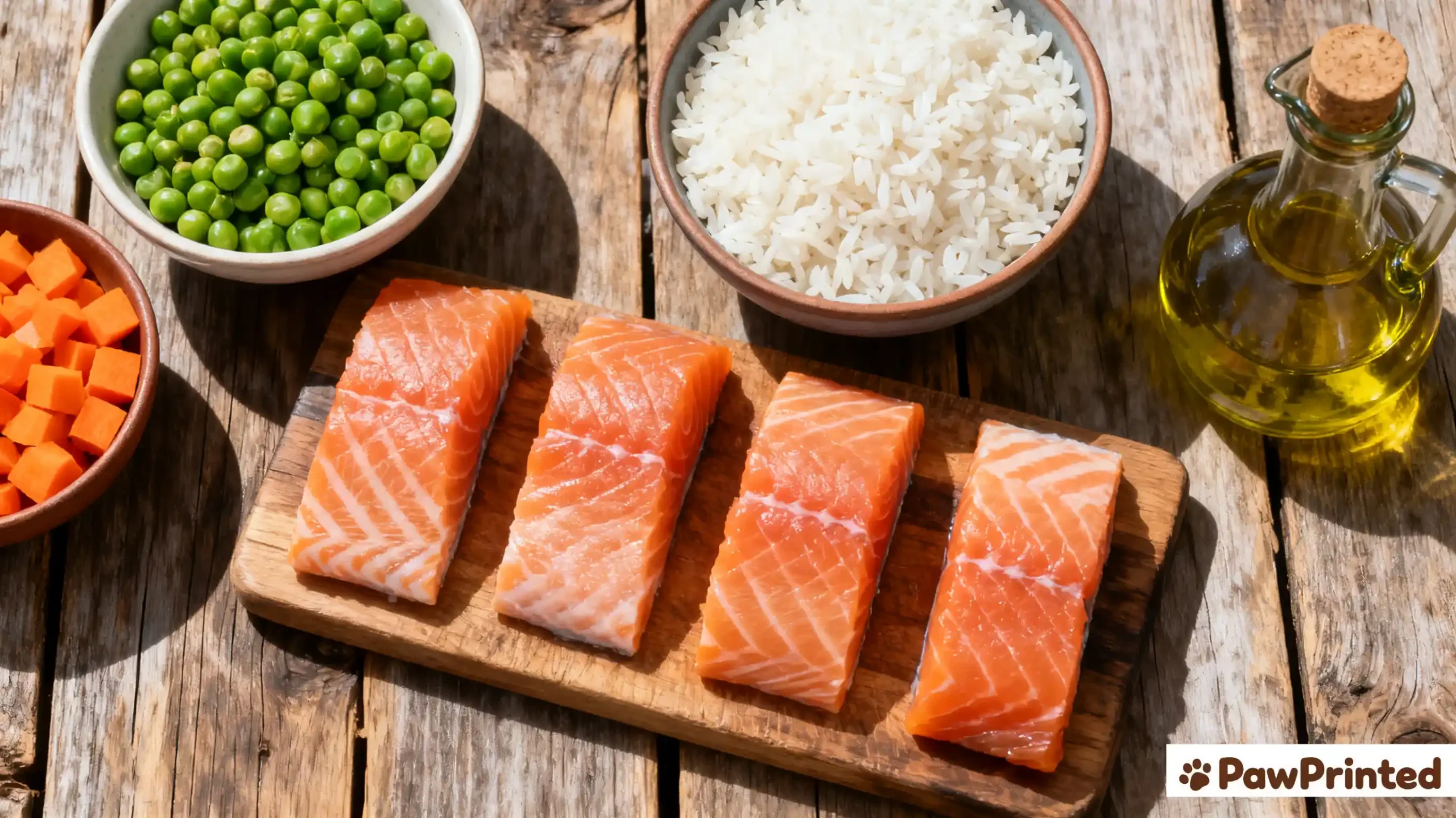
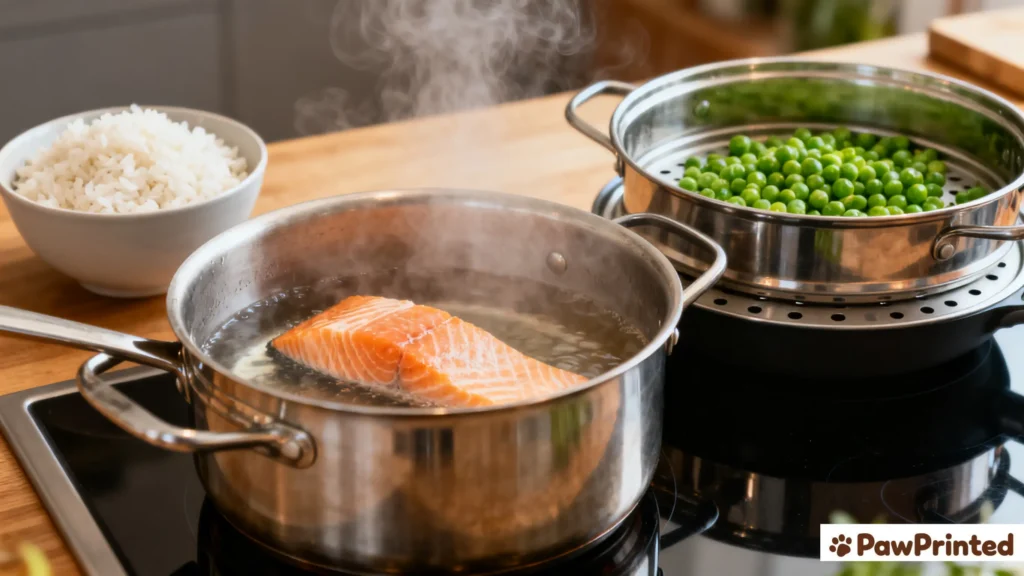
Start with boneless, skinless salmon fillets. Rinse lightly and pat dry. I like to poach them gently in simmering water for 10–12 minutes — just enough to flake with a fork. Avoid seasoning or oil. Once cooked, cool it down and shred into bite-sized pieces so every bite is easy on your pup’s digestion.
Rinse one cup of white rice until the water runs clear. Add twice as much water and cook until soft — not sticky, but tender. The mild starch acts like a natural binder that helps calm sensitive stomachs. I usually prepare a larger batch and refrigerate portions for three days of easy meals.
Use fresh or frozen peas — about half a cup. Steam them for 3–4 minutes until bright green and slightly firm. Overcooked peas lose their gentle crunch and nutrients, so keep it light. Ethan loves the pop of texture when they mix into the warm rice.
In a large bowl, combine the salmon, rice, and peas. Add a teaspoon of olive oil or fish oil — it adds shine to coats and helps joints stay flexible. Mix slowly until even. The moment Ethan hears the spoon clink against the bowl, his tail starts wagging non-stop.
Always let the food cool before serving. Warm to the touch is perfect — not hot. I portion Ethan’s meals into reusable containers, freeze half, and store the rest in the fridge. This keeps his meals fresh, balanced, and ready to serve anytime the sniff test approves.
If you’d like to compare prep styles or see our visual demo, check out our Salmon & Sweet Potato Dog Food Recipe — another vet-approved blend that stores beautifully and pairs well with this one in rotation.
Every Sunday morning, I cook while Ethan sits by the window, watching the light move across the floor. He already knows the smell of salmon means something special — calm, love, and a warm bowl that belongs only to him.
Salmon Dog Food Recipe (Rice & Peas, Vet Approved)
- Pot or steamer
- Rice cooker (optional)
- – Mixing bowl
- Airtight containers or silicone molds
- 12 oz 340 g boneless skinless salmon, cooked
- 2 cups 300 g cooked white rice
- 1 cup 140 g peas, lightly steamed
- 1 tsp 5 ml olive oil or fish oil
- Optional: ½ cup 70 g diced carrots or pumpkin
- Optional calcium: ½–1 tsp eggshell powder or vet-approved calcium supplement
- Poach salmon for 10–12 minutes until flaky; cool and shred.
- Cook rice until soft but not mushy.
- Steam peas for 3–4 minutes, then drain.
- Combine salmon, rice, peas, and oil in a bowl; mix evenly.
- Let the mixture cool completely before serving or storing.
Transition gradually over 5–7 days to avoid stomach upset.
Refrigerate for up to 3 days or freeze for up to 2 months.
For balanced long-term feeding, consult your veterinarian.
When to Choose Store-Bought (Our Tested Picks)
I’ll be honest — I love cooking for Ethan, but not every week runs smoothly. Between vet checkups, travel, and full workdays, I needed backup meals that were healthy, safe, and easy to trust. That’s when we started testing a few vet-approved salmon dog foods that fit his routine without any upset tummy surprises.
The first brand that passed Ethan’s picky taste test was Blue Buffalo Life Protection (Salmon). The kibble stays gentle on digestion but adds a nice crunch — perfect for weekdays when I can’t cook. It also keeps his coat smooth without needing extra oil in his diet.
For grain-free days, I often rotate with Taste of the Wild Pacific Stream. It’s made with smoked salmon and sweet potatoes — Ethan loves the smell so much that he sits by the pantry when I open the bag. This one’s great for pups with mild skin sensitivities or seasonal allergies.
When I asked our vet for a clinic-approved formula, she recommended Hill’s Science Diet (Salmon & Veggie). It’s balanced for everyday feeding, especially when your pup’s digestion needs consistency after a homemade stretch. The mild flavor and stable nutrient ratio make transitions effortless.
For sensitive-stomach days, I trust Natural Balance L.I.D. Salmon & Sweet Potato. It’s a limited-ingredient blend — short, clean, and easy to read — exactly what I look for when Ethan’s skin feels a bit dry or his belly needs a reset.
And on weekends, when I like to spoil him a little, I sprinkle in a few bites of Orijen Six Fish. It’s rich, high in protein, and perfect for that extra coat shine before grooming days. Ethan’s tail-wag meter says it all — complete approval.
Each of these options passed our “real life” test: steady digestion, shiny coat, zero itching, and one very happy dog. They’re the reason I never worry when homemade isn’t an option — just gentle, trustworthy food that keeps Ethan thriving every day.
If you want to compare ingredients or find your dog’s perfect match, check our full guide: Best Salmon Dog Food (Top Rated 2025).
DIY Option — When You Prefer Homemade
There’s something comforting about stirring a warm bowl of homemade food — the smell, the quiet patience, the tail tapping the kitchen floor. If you love that feeling too, making your own salmon mix can be just as easy as opening a bag. It’s the same calm routine that brought Ethan back to his healthiest self.
Homemade meals let you control every ingredient, reduce allergens, and adjust texture for your dog’s preferences. Whether you’re testing gentle proteins or managing mild sensitivities, starting with simple recipes like this one builds confidence fast.
Our vet always says: “Homemade isn’t about perfection — it’s about care.” That’s why we created step-by-step guides to make your kitchen time rewarding, not stressful.
Both guides walk you through small-batch prep, safe cooking temperatures, and portion control — everything you need to make healthy, vet-approved meals at home. Start small, cook slow, and enjoy watching your pup thrive one bowl at a time.
Serving Sizes — How Much to Feed Your Dog
Every dog is different — their ideal portion depends on weight, age, and daily activity. The good news is that homemade salmon dog food follows the same logic as balanced vet diets: start small, observe, and adjust gradually.
½ to 1 cup per meal, twice daily. Great for small breeds or low-activity pups. Adjust slightly if adding treats or snacks.
1 to 1½ cups per meal, twice daily. Works best for healthy adult dogs with moderate exercise routines.
2 to 3 cups per meal, twice daily. For active breeds or dogs on outdoor routines, increase slightly as needed.
Reduce total portion by 20–25%. Salmon provides high-quality protein, so less can still be enough for gentle metabolism.
Always monitor your dog’s weight and adjust serving sizes accordingly. The easiest check? You should feel your pup’s ribs under a light layer of fat — not hidden, not sharp. For more detailed portion planning, see our Homemade Dog Food Portion Guide.
Tip: If you’re mixing homemade food with dry kibble, aim for a 50/50 split by volume at first. Slowly increase the homemade ratio once your dog’s digestion stays steady.
If you don’t want to cook daily, check our dry food picks — those were Ethan’s daily backups. You’ll find them in our Best Salmon Dog Food Guide.

Storage Tips — Keep It Fresh, Safe & Easy
Homemade salmon dog food stays fresh longer than you’d expect — as long as you cool, portion, and store it right. Think of it like prepping healthy meals for family: small batches, clean containers, and smart labeling go a long way.
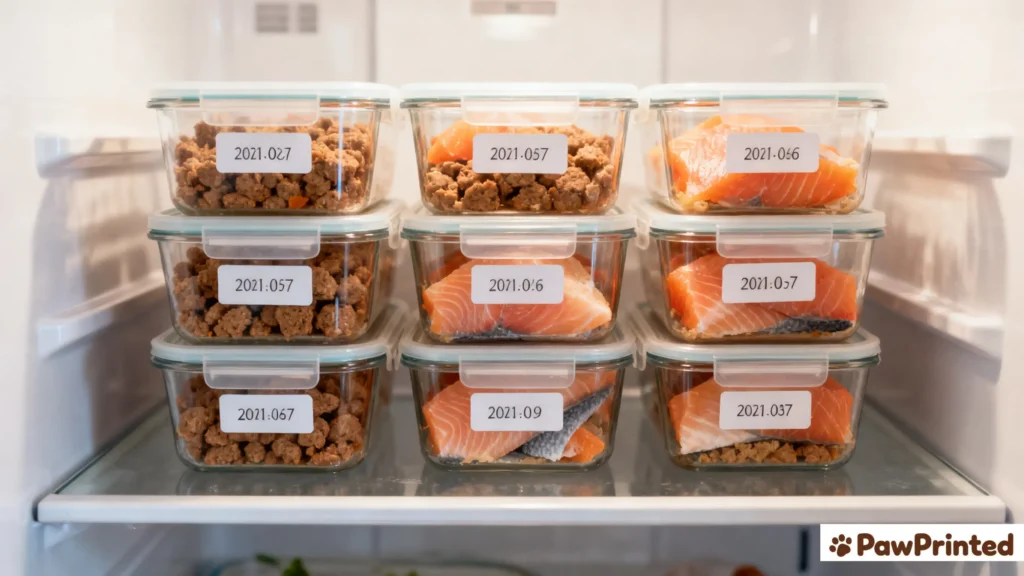
Keep portions in airtight glass or BPA-free containers for up to 3 days. Let the food cool completely before sealing — moisture trapped by steam can shorten freshness.
For longer use, freeze single portions in silicone molds or small jars for up to 2 months. Thaw overnight in the fridge, then warm slightly before serving.
Never microwave directly. Instead, place the portion in a bowl and set it in warm water for 5–10 minutes. Room temperature meals help dogs digest better and preserve nutrients.
Write down prep dates and rotate old batches first (“first in, first out”). This small habit keeps every bowl safe and delicious — Ethan’s tail always knows which one’s fresh.
If you plan to prep weekly, make one big cooking session on Sunday and store half frozen. That way you’ll always have ready-to-serve meals — just like Ethan’s meal plan. For more prep ideas, check our Homemade Dog Food Portion & Storage Guide.
Tip: Always use stainless-steel or ceramic bowls — plastic can absorb oils from salmon and cause odor over time.
My Dog’s Reaction — Ethan’s Honest Review
The first time I served this salmon recipe, Ethan didn’t just eat — he celebrated. His ears perked up the second I lifted the lid, and that tail started thumping like a drum. He took one cautious sniff, then dove in without a pause. By the time I blinked, the bowl was spotless.
What surprised me most wasn’t how fast he finished, but how relaxed he seemed afterward — no itching, no burping, no restless pacing. Just a happy sigh and a quiet nap by the window. For a dog who used to scratch after every meal, that kind of peace felt like a small miracle.
Now, whenever I start poaching salmon, Ethan sits in his usual spot by the counter, watching every move with patient excitement. It’s become our quiet weekend ritual — one part cooking, one part connection, and all love.
If your pup reacts the same way, share your story with us in the comments or tag @PawPrintedPet on Pinterest. We love seeing how these little recipes bring big happiness to furry friends everywhere.
What Vets Usually Say
Every time I bring Ethan in for a checkup, our vet asks the same thing first: “What’s he eating lately?” And when I mention homemade salmon and rice, her answer is always a calm nod — “Good choice.” Most vets agree that cooked salmon is one of the safest and most balanced proteins you can feed, as long as it’s handled correctly.
They emphasize three things: simplicity, consistency, and portion control. In other words — don’t overcomplicate it. Use boneless, unseasoned salmon, balance it with gentle carbs like rice or oats, and keep serving sizes predictable. The goal isn’t variety for excitement; it’s repetition for stability.
Many veterinary nutritionists also highlight the benefits of omega-3 fatty acids from salmon. These help reduce inflammation, support heart and joint health, and improve coat condition over time. When paired with high-fiber ingredients like peas or pumpkin, it becomes a simple, vet-approved foundation for everyday feeding.
Of course, vets still remind us that homemade meals should complement — not replace — balanced commercial diets. For long-term use, they often suggest alternating with vet-approved salmon dog foods that include added vitamins and minerals for full coverage. This rotation helps you keep both freshness and complete nutrition on the menu.
— Dr. L. Bennett, DVM, Canine Nutrition Specialist

Easy Variations — Same Base, New Flavors
Once you’ve made this salmon dog food a few times, you’ll see how easy it is to customize. The base mix of salmon, rice, and peas works beautifully with other gentle proteins and ingredients, giving your dog variety without upsetting digestion.
Switch to boiled chicken breast and soft oats for a lighter, warming meal — perfect for sensitive stomachs or post-vet recovery days.
Try Chicken & Oats RecipeAdd a spoon of pumpkin puree for fiber and a touch of natural sweetness. Great for digestion and shiny coats.
Try Salmon & Pumpkin RecipeOur readers’ favorite — rich in antioxidants and beta-carotene. Perfect for active or allergy-prone pups.
Try Salmon & Sweet Potato RecipeFor extra protein rotation, try lean beef with rice — ideal for large breeds that need more energy.
Try Beef & Rice RecipeAll these versions use the same gentle cooking steps: steam, mix, and cool. Switching proteins every few weeks keeps meals interesting and helps balance your dog’s nutrition naturally.
Tip: When testing a new ingredient, start small — mix a few spoonfuls into your dog’s regular meal for two days to check tolerance before switching completely.
Which Dogs Will Enjoy This Recipe
This salmon, rice, and pea recipe was made for dogs who need a gentle, nourishing reset — or simply love real food. It’s mild, easy to digest, and balanced enough for daily meals or weekly rotations.
Salmon and rice are light on digestion, perfect for pups with bloating, diarrhea, or recurring tummy troubles. The gentle fats and clean carbs soothe the gut naturally.
For dogs reacting to chicken or beef, salmon provides a hypoallergenic alternative. Its omega-3s also help reduce itching, redness, and dry skin patches over time.
Easy to chew, soft-textured, and rich in joint-friendly nutrients. Ideal for older dogs who need gentle meals with steady protein and anti-inflammatory support.
Perfect for pups with higher energy needs. The healthy oils in salmon help maintain stamina, coat gloss, and recovery after exercise.
Dogs who turn away from dry kibble often respond well to fresh salmon meals — the aroma alone wins most battles at the bowl.
In short: this recipe works beautifully for almost any dog, but it shines brightest for those needing balance — inside and out. If your pup has chronic sensitivities or you’re unsure where to start, check our Sensitive Stomach Dog Food Guide for more personalized feeding advice.

Rotation Plan — Balancing Homemade & Store-Bought
Even the best homemade dog food works best when balanced with convenience. That’s why I use a simple rotation plan for Ethan — one that keeps nutrition steady while giving us flexibility through busy weeks and calm weekends.
Our routine looks like this: homemade meals three or four days a week, and a vet-approved dry salmon formula for the rest. The combination keeps Ethan’s digestion stable, maintains his coat glow, and saves me time when life gets hectic.
Freshly cooked salmon, rice, and peas. Great for digestion, hydration, and emotional bonding — it’s our slow weekend ritual.
Gentle, nutrient-complete meals for weekdays. I rotate between Blue Buffalo and Hill’s Science Diet Salmon to keep balance and variety.
Between meals, I give him light salmon or sweet potato treats — just enough to keep training fun without overfeeding.
Rotating like this helps maintain nutrient balance, gives the digestive system time to rest, and reduces the risk of food boredom. It’s also a great way to combine the best of both worlds — the love of homemade food and the reliability of vet-tested formulas.
When in doubt, start small. You can always expand your rotation with allergy-friendly or seasonal recipes from our Homemade Dog Food Guide, or explore the full range of vet-approved options in our Best Salmon Dog Food Guide.
Tip: Always transition slowly — mix a little new food into the old one for 3–5 days. Ethan learned to love his rotation this way — no stress, no upset tummy, just wagging tails and clean bowls.
FAQ — Salmon Dog Food Recipe (Rice & Peas, Vet Approved)
Yes. Salmon is one of the most balanced proteins for dogs — rich in omega-3s, easy to digest, and gentle on sensitive skin. It supports coat shine, joint flexibility, and heart health. When cooked properly (boneless and unseasoned), it’s safe for daily feeding or rotation meals. Many vets recommend salmon-based recipes as a go-to protein for pups with mild allergies or dull coats.
Dogs can eat salmon often, but variety still matters. Feeding salmon 3–4 times a week gives your dog consistent omega-3 benefits without overloading protein or fats. You can rotate it with chicken, turkey, or white fish for balance. Always use cooked salmon — raw salmon can contain parasites harmful to dogs. For daily feeding, alternate homemade with a vet-approved salmon dry food for convenience and complete nutrition.
Mild vegetables like peas, carrots, pumpkin, spinach, and green beans pair beautifully with salmon. They add fiber, vitamins, and texture without irritating digestion. Avoid onions, garlic, and heavily seasoned veggies. If your dog has a sensitive stomach, stick with soft-cooked peas and rice — a classic vet-approved combination that supports calm digestion and balanced energy.
For many dogs, yes — salmon can be gentler than chicken. While chicken is a good protein, it’s also one of the most common allergy triggers. Salmon provides cleaner omega-3 fats and less inflammation risk. Dogs with itchy skin, dull coats, or sensitive stomachs often respond better to salmon-based diets. That’s why many grain-free salmon dog foods are recommended for allergy relief and digestive balance.
Store freshly cooked salmon dog food in the refrigerator for up to 3 days or freeze portions for up to 2 months. Always cool it before sealing in airtight containers to keep moisture balanced. When reheating, bring it to room temperature — not hot — to preserve nutrients and avoid burns. Label batches by date so you can rotate safely and maintain freshness for every meal.
Wrapping It Up
Homemade doesn’t have to be complicated — it just needs care, consistency, and love. Whether it’s a Sunday batch of fresh salmon and rice or a quick store-bought backup, what matters most is that your dog feels nourished and happy with every bite.
If you’ve tried this recipe, share your story in the comments or tag us on Pinterest. We love seeing happy pups enjoying their homemade meals! And if you’re not sure where to start, begin with a gentle wet food — then move toward steady dry picks once your dog’s tummy adjusts.