When cold days stack up, I like a simple chew that feels comforting and purposeful. A warm chicken broth base plus a careful pinch of turmeric gave Ethan a cozy, savory bite we could use for calm indoor training. If you are new to baking for your pup, start with our
Homemade Dog Treats Guide for safe ingredients, portion rules, and storage basics.
Ingredient Spotlight – Why Chicken Broth & Turmeric Work Together
Chicken broth
Gentle protein notes and a savory aroma that encourages picky eaters. Choose low-sodium broth and cool it before mixing so the dough stays easy to handle.
Turmeric
A spice used for its warm flavor and supportive properties when used in tiny amounts. Measure precisely and mix thoroughly so the spice disperses evenly.
Oat flour or similar binder
Creates a workable dough that sets into soft chews at low heat. Add gradually to avoid a dry, crumbly texture.
Egg
Adds structure so small chews release neatly from the mold and keep their shape after cooling.
Omega pairing
For a rounder nutrient profile in winter, a tiny drizzle of
Iceland Pure Unscented Salmon Oil for Dogs can complement your routine.
Ingredients You’ll Need
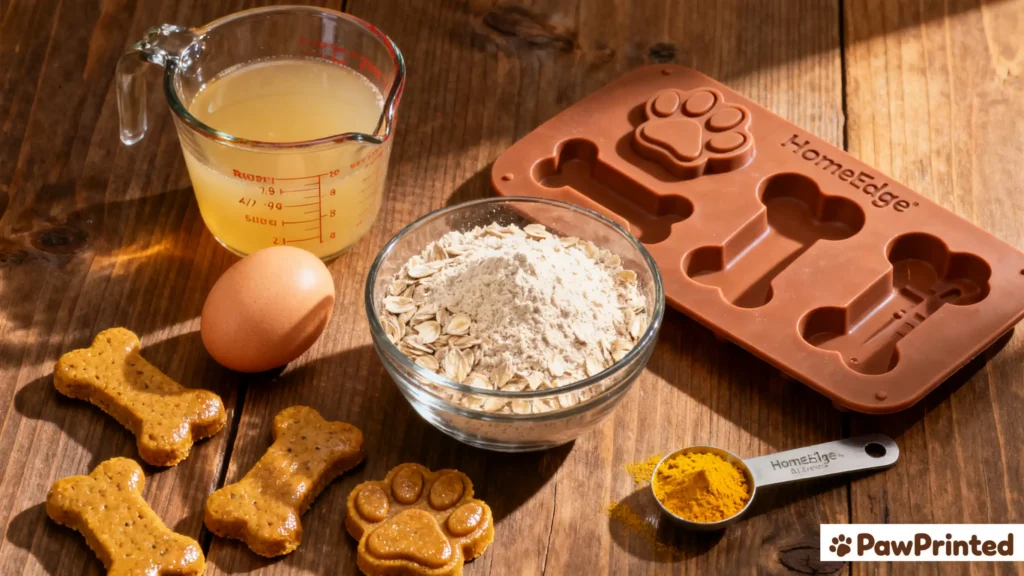
Unsalted chicken broth – 1/2 to 3/4 cup, cooled
Cool fully so the dough mixes evenly without turning sticky.
Oat flour – 1 to 1 1/4 cups
Add gradually until a soft, non-sticky dough forms. Adjust for broth thickness.
Egg – 1
Helps the chews set gently at low temperature.
Turmeric – 1/8 to 1/4 tsp
Use a precise measure; a little goes a long way in small chews.
Shaping tool (optional)
Press dough into the
homEdge Silicone Paw & Bone Dog Treat Mold for tidy, uniform chews.
Accuracy helper (optional)
I weigh spice and flour with a compact scale so batches stay consistent. See our picks in
8 Best Scales & Measuring Tools for Homemade Dog Food.
Step-by-Step Cooking Guide
1) Preheat and line
Preheat to 150–160°C (300–320°F). Line a sheet or use a reliable nonstick pan to prevent sticking. If you need an upgrade, scan
8 Best Nonstick Pans for Cooking Homemade Dog Food.
2) Mix the dry
Whisk oat flour with turmeric to distribute the spice evenly before any liquid hits the bowl.
3) Add wet and form dough
Stir in the egg and cooled chicken broth. Add flour as needed until the dough presses cleanly and lifts from the bowl without clinging.
4) Shape small
Press into a silicone mini mold for consistent sizes. The
paw-and-bone mold keeps edges neat and centers soft.
5) Bake low and slow
Bake 20–30 minutes to a gentle set. Confirm center dryness with a slim probe from
6 Best Kitchen Thermometers for Homemade Dog Food so chews dry evenly without browning.
6) Cool and store
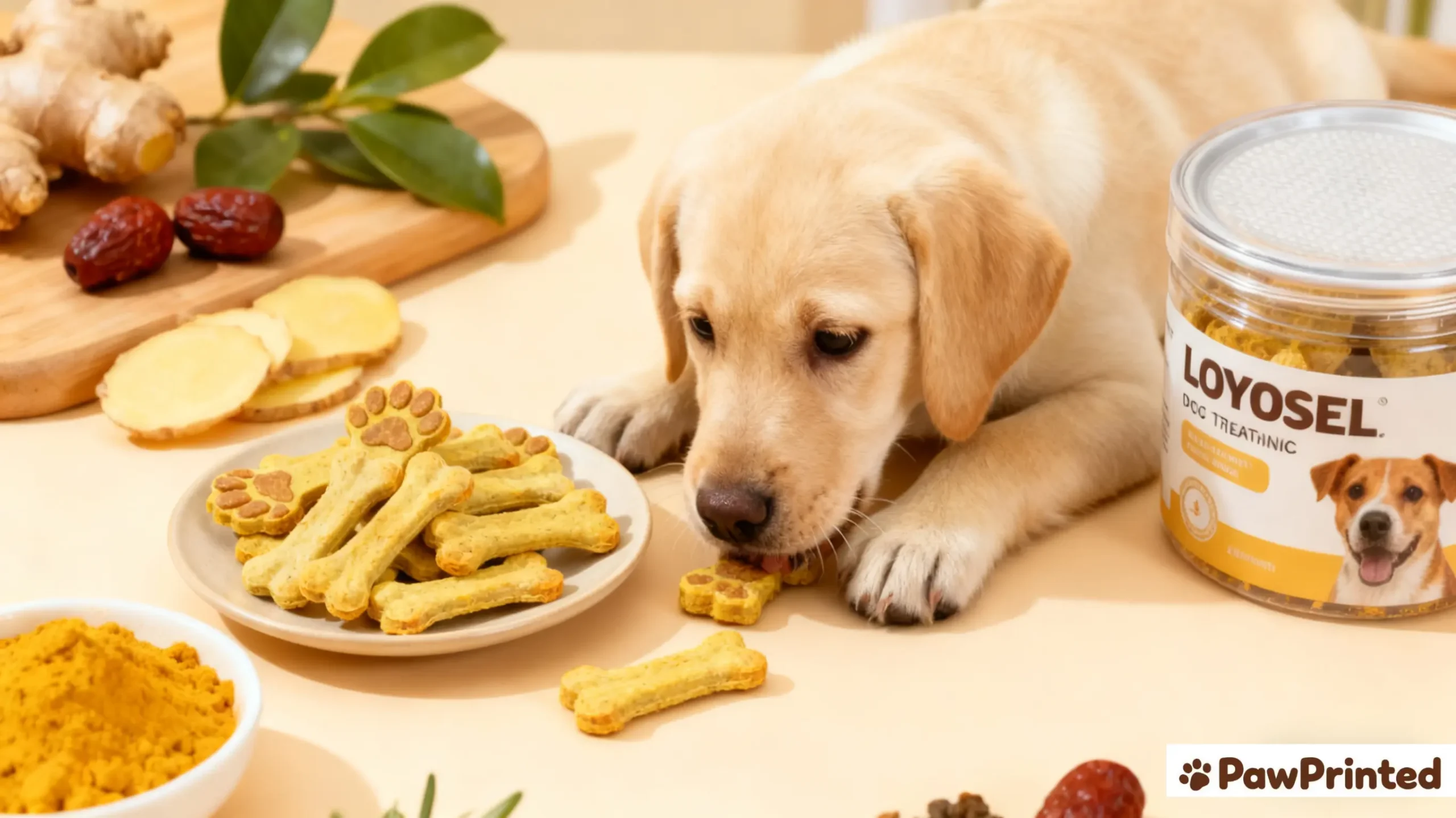
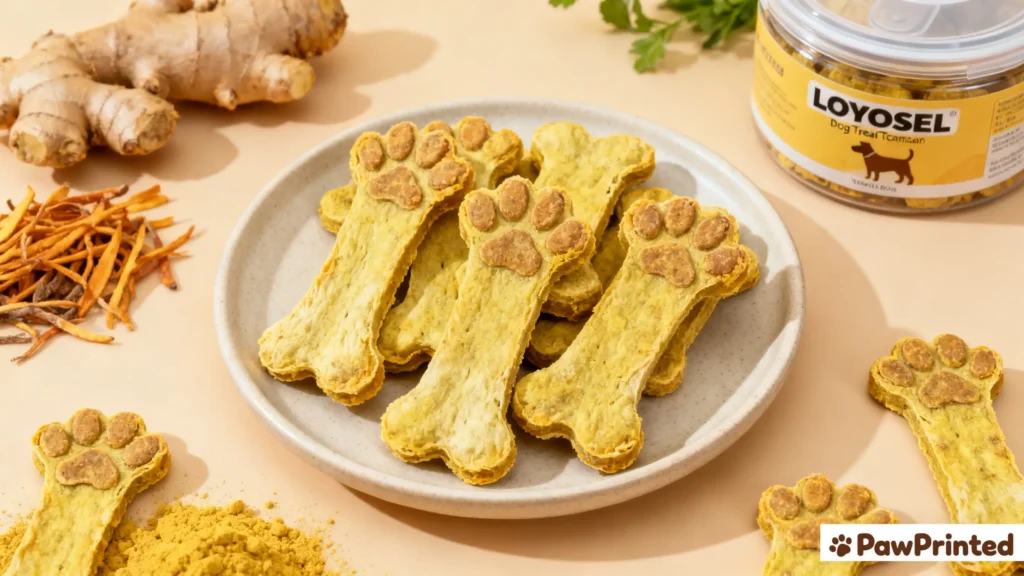
Cool completely on a rack, then seal in an airtight jar such as the
LOYOSEL Dog Treat Container to preserve aroma and texture.
Chicken Broth & Turmeric Dog Treats Recipe (Immune Defense Chews)
- Mixing bowl & spatula
- Measuring scale (8 Best Scales & Measuring Tools for Homemade Dog Food)
- Silicone paw & bone mold
- Nonstick pan or baking sheet
- Kitchen thermometer
- Cooling rack
- LOYOSEL Airtight Dog Treat Container
- ½ cup unsalted chicken broth cooled
- 1 egg
- 1 to 1¼ cups oat flour added gradually
- ⅛ – ¼ tsp turmeric powder measured precisely
- 1 tsp olive oil optional, for texture
- Water as needed for consistency
- Optional Add-Ins
- Tiny drizzle of Iceland Pure Unscented Salmon Oil for Dogs for Omega-3 support
- Sprinkle of parsley for a mild digestive boost
- Preheat oven to 150–160 °C (300–320 °F). Line a baking sheet or use a nonstick pan (Best Nonstick Pans for Cooking Homemade Dog Food).
- Mix dry ingredients – Combine oat flour and turmeric until the spice is evenly distributed.
- Add wet ingredients – Whisk egg and broth, then combine with the dry mix. Adjust flour for a soft, non-sticky dough.
- Shape – Press into the homEdge Silicone Paw & Bone Dog Treat Mold for uniform chews.
- Bake – 20–30 minutes at low heat until edges set. Confirm center dryness with a thermometer (6 Best Kitchen Thermometers for Homemade Dog Food).
- Cool & store – Cool completely and store in an airtight container for freshness and flavor.
• Turmeric caution: Measure with precision; over-spicing can upset digestion.
• Joint bonus: Serve with a PupGrade Joint Support Chew for extra mobility care.
• Storage: Keep sealed in an airtight jar; room temp 7–10 days, fridge 10 days, freeze up to 2 months.
• Comfort scene: While cooling, Ethan snuggles on his heated blanket — the perfect reward after taste-testing.
• Brand note: If you don’t want to cook daily, check our dry food picks – those were Ethan’s daily backups.
Nutritional Data & Vet Insights
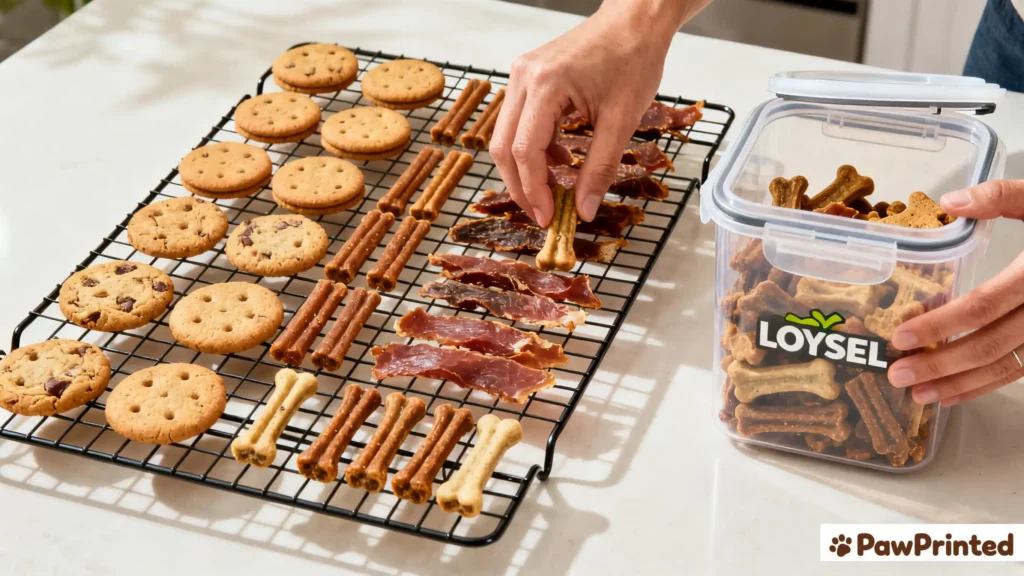
Gentle, savory base
Broth-based chews smell great and encourage relaxed nibbling during quiet training.
Measured spice
Keep turmeric low and evenly mixed. Tiny batches need precise measuring and thorough whisking.
Portion logic
Mini cavities help fit treats under the 10% daily calorie guideline while practicing indoors.
Supportive pairings
For ongoing mobility and winter routines, pair a chew with a daily
PupGrade Joint Support Chew. A tiny drizzle of
salmon oil can complement fatty acids.
Vet Tips & Variations
Sensitive stomach
Start with very small pieces and introduce slowly. If stools soften, pause and retry with a drier bake.
Senior-friendly
Shorten the bake slightly for a softer bite. Use the smallest mold cavities for easy chewing.
Grain-free variant
Swap oat flour for coconut or pea flour; reduce bake time slightly and test a mini batch first.
Weight control
Count chews toward daily calories and keep training sessions short but frequent.
Introduce slowly, measure turmeric precisely, and adjust for your dog’s size, age, and activity. Treats support routines but never replace balanced meals.
Serving Ideas & Storage
Cool fully before sealing to prevent trapped moisture. Room temp up to 7–10 days if baked dry; refrigerate about 10 days; freeze 1–2 months. For tidy pantries, scan
10 Best Dog Food Storage Containers for Freshness & Hygiene for reliable setups.
While trays cool, Ethan curls up on his
FurHaven Thermo Snuggly Heated Dog Blanket — our favorite kind of winter evening.
What Worked for Ethan
Shaping and release
The
paw-and-bone silicone mold keeps each chew even and easy to lift.
Freshness routine
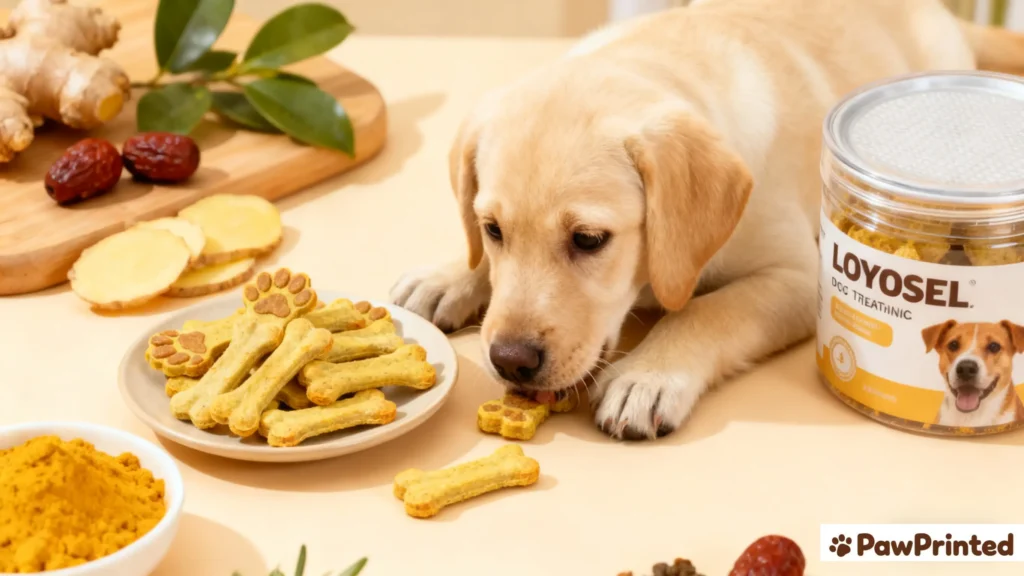
We cool completely, then seal in the
LOYOSEL airtight container to hold the savory aroma for the week.
Immune & joint rhythm
On chilly days he gets a daily
joint chew and sometimes a tiny drizzle of
salmon oil with his chew.
Cozy cooldown
He naps on his
heated blanket while I tidy the kitchen — an easy finish to a warm batch night.
FAQ
Are chicken broth and turmeric safe for dogs in small chews?
For most healthy dogs, small amounts are acceptable when measured precisely and introduced slowly. Keep turmeric low and use unsalted, low-fat broth to avoid unnecessary sodium and excess calories.
Mix the spice into the flour before adding liquids so it disperses evenly, then bake at a low temperature to dry the centers without browning. As with any new recipe, monitor stools, energy, and skin for 48–72 hours, and pause if you notice discomfort.
Tip: if your dog has liver, gallbladder, or bleeding-risk conditions, ask your vet before using turmeric.
How much turmeric should I use in dog treats?
Use very small amounts — typically 1/8 to 1/4 teaspoon per small batch of mini chews, adjusted for size and activity.
Turmeric is potent; too much can upset digestion or overpower flavor. Start at the low end, weigh for consistency, and increase only after you confirm tolerance across several training sessions.
Tip: precise kitchen scales help keep spice levels consistent between batches.
What oven settings help chews dry without getting hard?
Low to moderate heat works best. Aim for 150–160°C (300–320°F) for 20–30 minutes, depending on size and dough moisture.
Pull trays when edges set and centers feel dry but springy. Let chews rest in the switched-off oven with the door slightly ajar for 5–10 minutes to finish drying gently.
Tip: keep all cavities the same thickness for predictable results.
Can I make a grain-free version of these chews?
Yes. Substitute oat flour with coconut or pea flour, then shorten the bake slightly and test a mini batch first.
Grain-free flours absorb liquid differently and can dry faster. Adjust broth amount to keep dough workable and watch tolerance over several days.
Tip: if dough feels crumbly, add a teaspoon of broth at a time until it presses cleanly.
How should I store chicken broth and turmeric chews?
Cool completely, then keep them dry and airtight. At room temperature they last about 7–10 days if baked dry; refrigeration reaches roughly 10 days; freezing extends to 1–2 months.
Discard chews that smell sour, feel tacky, or show discoloration. Label jars or freezer bags with the bake date and rotate weekly to keep quality high.
Tip: small molds reduce moisture and extend shelf life compared with large pieces.
Wrapping It Up
Gentle broth, a careful pinch of spice, and a soft chew you can use all week — that’s our winter rhythm. Tell me how your pup liked the texture and whether the smallest cavities worked best at your house.
Author & Vet Review Notes
Emma – Founder & Dog Mom: Measuring the spice first kept batches consistent. The silicone mold made soft centers easy even at low heat.
Reviewed by Dr. Lydia Harper, DVM: Turmeric can fit into treat routines when used sparingly. Keep batches small, measure precisely, and treat these as rewards rather than diet replacements.
References – Authoritative Sources
- Healthy Homemade Dog Treats (2024) – Hill’s – Baking, storage, and portion basics for safe homemade treats.
- Turmeric in Canine Diets (2023) – Vet Nutrition Notes – Practical guidance on low dosing and monitoring.
- Portion Control & Treat Calories (2024) – Tufts Vet Nutrition – Why the 10% rule helps maintain weight and mobility.
- Kitchen Food Safety for Pets (2024) – PetMD – Hygiene, temp control, and spoilage cues for home bakes.
- Low-Sodium Choices for Dogs (2023) – AKC – Salt awareness and broth considerations in treats.
Explore More
More winter-friendly treats and helpful kitchen picks: