When Ethan first started moving more slowly on chilly mornings, I realized that “joint care” could not just live in a supplement bottle. It had to show up in his bowl too. This collection pulls together ten gentle homemade meals that focus on soft textures, joint-friendly ingredients, and realistic weeknight prep so you can support your dog’s arthritis without turning your kitchen into a science lab.
These recipes are not meant to replace your vet’s treatment plan, but to sit alongside it as a practical, daily way to keep your dog comfortable. Every bowl leans on simple combos like salmon with oats, whitefish with sweet potato, and chicken with turmeric, focusing on moisture, digestibility, and steady energy. If your vet has already walked you through joint care basics or pointed you toward a dog food health guide, this page is the “what do I actually cook” follow up you can come back to whenever your pup needs a softer, more supportive menu.
Seasonal Context – When Arthritis Recipes Help The Most
Arthritis flares rarely follow our schedules. Many dogs feel stiffer during colder months, after long naps, or the day after extra play. That is why this collection is designed as a flexible “comfort menu” you can rotate through during winter, rainy weeks, or any time your dog is having a low-mobility day. The recipes favor warm, slightly soupy textures, gentle carbs, and easy-to-chew proteins so sore joints do not have to work hard just to reach the bowl.
You can pair these meals with your usual base diet or use them as short-term comfort meals during tougher periods, always under your vet’s guidance. If you are still mapping out your dog’s overall feeding plan, it can help to review a broader dog food health guide or ingredient-focused hubs like the homemade dog food by ingredient collection and then plug these arthritis recipes into that bigger picture.
Ingredient Philosophy – How I Chose These Arthritis Relief Combos
Every recipe in this collection starts with one simple question: “Can my dog chew and digest this easily on a stiff day?” From there, I layered in proteins that support lean muscle without adding excess weight, gentle slow carbs that keep energy steady, and add-ons that your vet might already recommend for joint care. You will see repeat patterns like salmon, whitefish, and lean poultry, paired with oats, rice, sweet potato, and pumpkin for softness and fiber.
I also built each bowl to be supplement-friendly. That means textures that accept powders and oils without clumping, and serving sizes you can reliably measure. If your vet likes products such as glucosamine chews or powdered joint boosters, these meals give you a warm, fragrant base to mix them into. Think of this page as your “functional engine” for arthritis relief: you pick the protein, match it with a soft carb, add your vet-approved joint helper on top, and adjust portions to keep your dog at a joint-friendly weight.
Not sure which nutrition path fits your dog’s current problem? Our Dog Food Health Guide by Function walks you through common issues like digestion, allergies, joints, and weight so you can choose the right food strategy.
Recipe Collection – 10 Gentle Arthritis Relief Dog Meals
Below are the ten arthritis relief recipes I use most often with Ethan. In your WordPress editor, each of these will be a separate WPRM block so you can print, pin, and reuse them as needed.
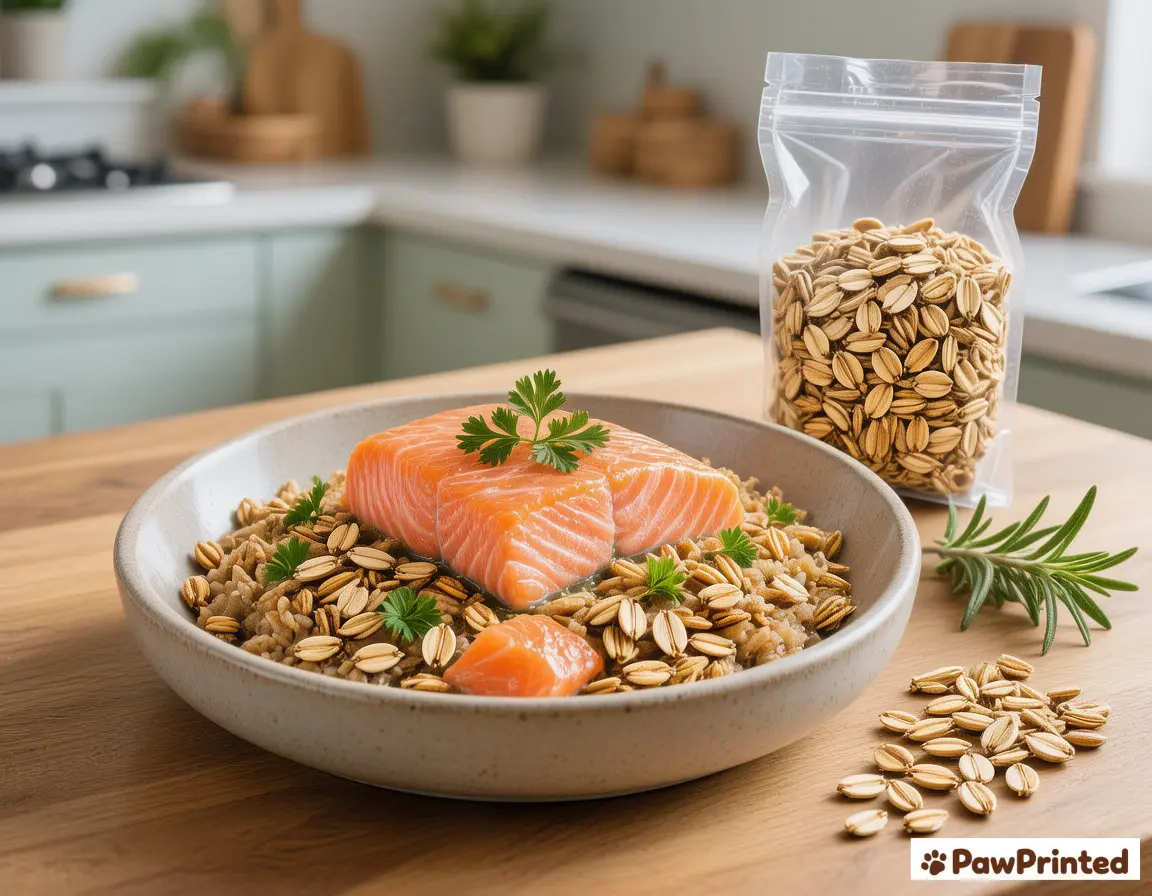
Salmon & Oats Arthritis Relief Dog Meal
- – Small saucepan or stockpot
- Wooden spoon or spatula
- Measuring cups and spoons
- – 200 g boneless salmon fillet skin removed, cut into chunks
- – 1 cup water or low-sodium dog-safe broth
- – 1/2 cup rolled oats
- – 1/4 cup blueberries fresh or frozen
- – 1 tbsp pumpkin puree optional, for extra fiber
- Add the salmon and water or low-sodium broth to a small saucepan. Bring it to a gentle simmer and cook until the salmon turns opaque and flakes easily with a fork.
- Reduce the heat and stir in the rolled oats. Cook on low, stirring often, until the oats become soft and creamy. Add a little extra water if the mixture becomes too thick.
- Gently fold in the blueberries and pumpkin puree, stirring just until everything is evenly combined and warmed through.
- Remove the pan from the heat and allow the mixture to cool to lukewarm. Break the salmon into small, bite-sized pieces if needed.
- Serve a portion that fits your dog’s size and calorie needs. Store any leftovers in the refrigerator for up to 2 days or freeze in small portions.
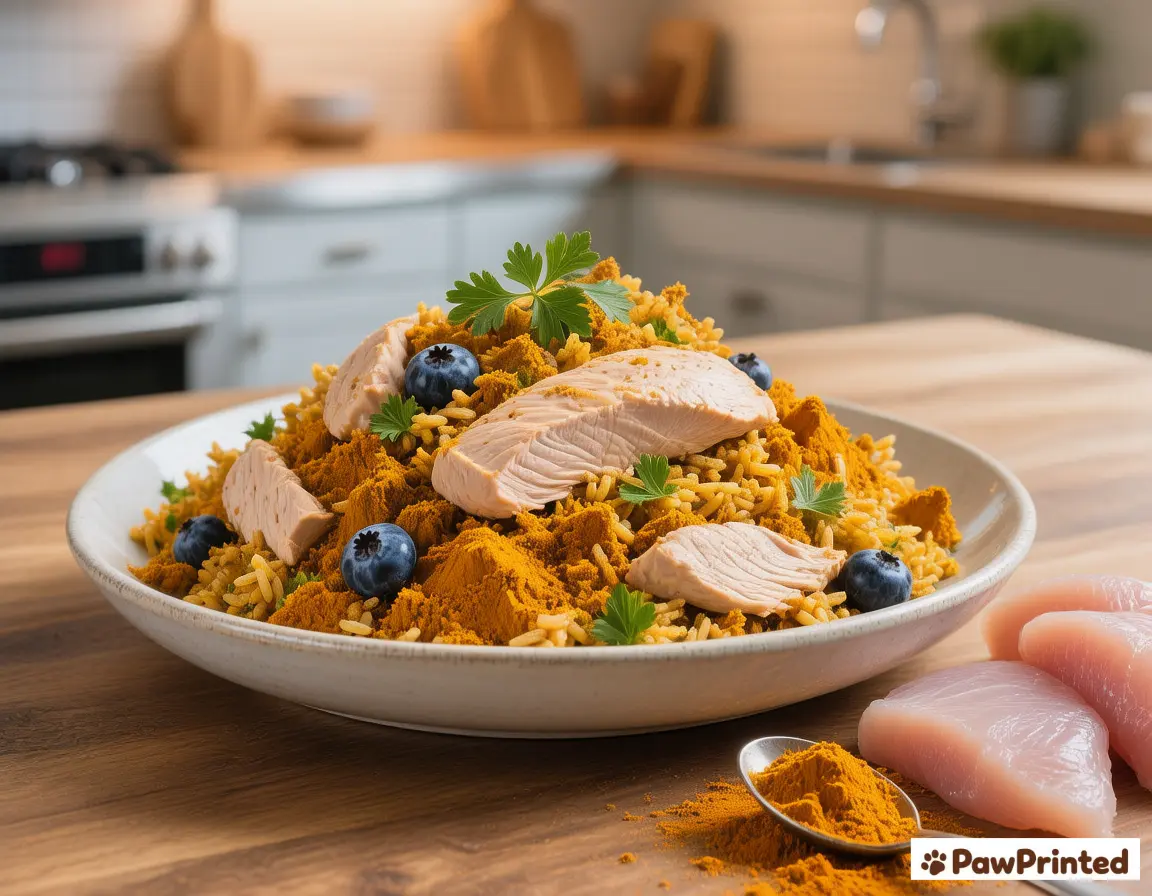
Chicken & Turmeric Anti-Inflammatory Dog Meal
- – Nonstick skillet or saucepan
- Measuring spoons
- Mixing spoon
- – 200 g skinless chicken breast diced
- – 1 cup water or low-sodium broth
- – 1/2 cup cooked sweet potato mashed
- – 1/4 cup cooked white rice
- – 1/4 tsp ground turmeric vet-approved amount
- Add the diced chicken and water or broth to a nonstick pan or small pot. Bring to a gentle simmer and cook until the chicken pieces are fully cooked through and tender.
- Stir in the mashed sweet potato, mixing until the chicken is coated and the texture becomes smooth and slightly thick. Add a splash more liquid if the mixture feels too dry.
- Fold in the cooked white rice, distributing it evenly so there are no large clumps of rice or chicken.
- Sprinkle in the ground turmeric and stir thoroughly to avoid any pockets of spice. Make sure the turmeric is evenly blended throughout the meal.
- Remove from the heat and let the mixture cool down to a safe, lukewarm temperature before serving to your dog.
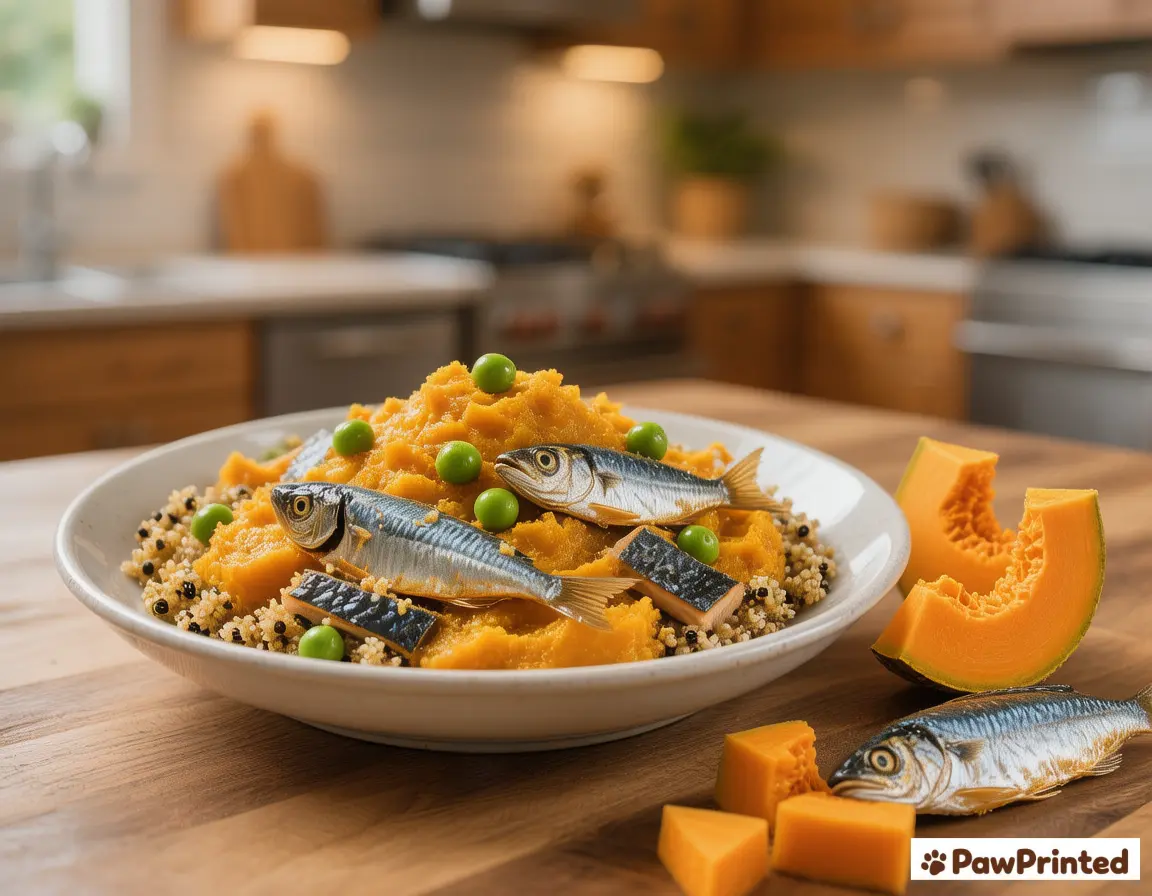
Sardine & Pumpkin Omega Boost Arthritis Relief Meal
- – Mixing bowl
- – Fork
- Measuring cups and spoons
- – 1 can sardines in water drained (about 90–100 g)
- – 1/2 cup pumpkin puree plain, no spices
- – 1/2 cup cooked white rice
- – 1–2 tbsp water or low-sodium broth as needed
- – 1 tsp flaxseed oil or vet-approved oil optional
- Add the drained sardines to a mixing bowl and mash them thoroughly with a fork until there are no large chunks and any soft bones are broken down.
- Stir in the pumpkin puree and mix until you have a smooth, uniform base that coats the sardines evenly.
- Add the cooked white rice and fold gently, making sure the rice is fully mixed into the pumpkin-sardine blend.
- If the mixture looks too thick or dry, add 1–2 tablespoons of water or broth until you reach a soft, spoonable consistency.
- If you are using flaxseed oil or another vet-approved oil, drizzle it in and stir again. Let the meal stand for a few minutes and serve at room temperature.
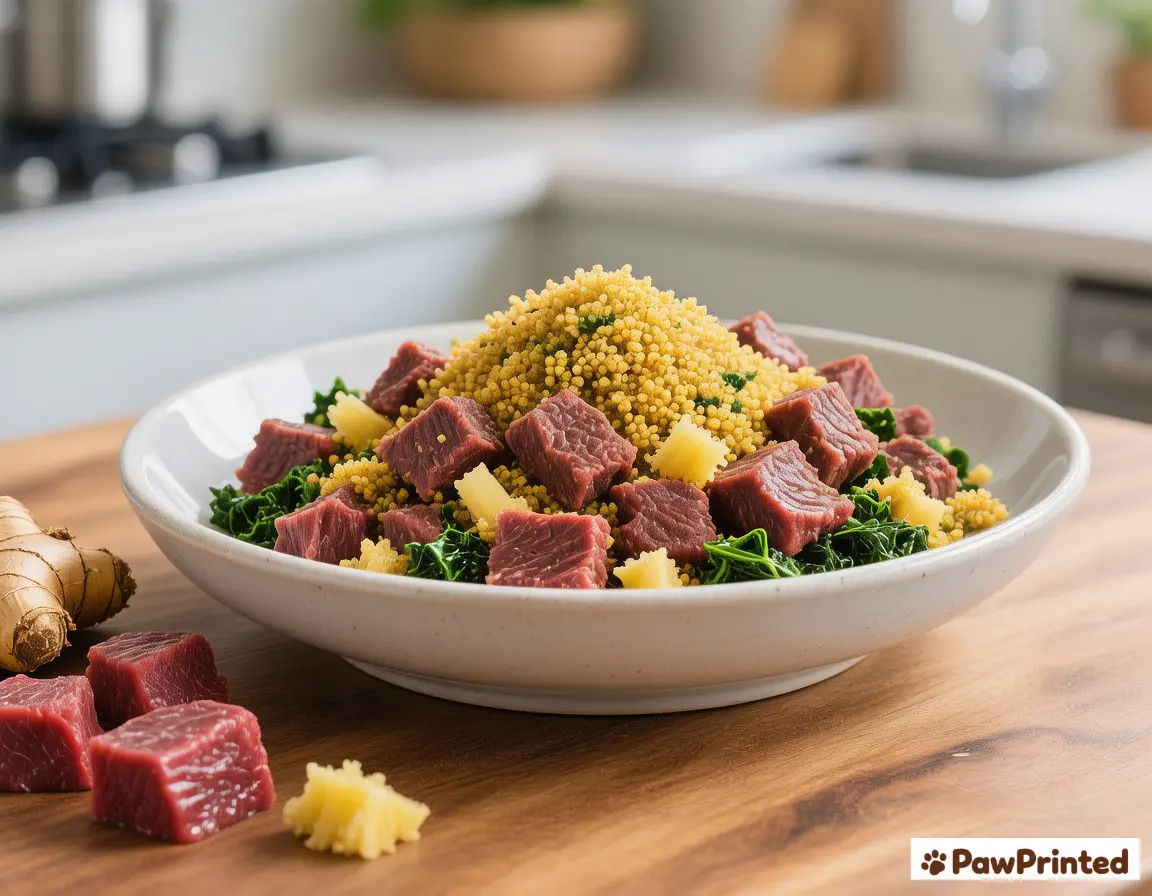
Beef & Ginger Comfort Joint Meal for Dogs
- Nonstick skillet
- Grater
- Wooden spoon
- – 200 g lean ground beef
- – 1 tsp finely grated fresh ginger
- – 1/3 cup finely chopped carrots
- – 1/2 cup cooked white rice
- – 1 cup water or low-sodium broth
- Add the lean ground beef to a nonstick skillet and cook over medium heat, breaking it into small crumbles. Drain off any excess fat if needed to keep the recipe light.
- Stir in the grated ginger and chopped carrots, cooking for a few minutes until fragrant and the carrots start to soften.
- Pour in the water or broth and bring the mixture to a gentle simmer. Continue cooking until the carrots are fully tender.
- Add the cooked white rice and fold gently until everything is evenly combined. Let the mixture thicken into a soft, spoonable texture.
- Remove from the heat and allow it to cool to a safe temperature before serving an appropriate portion to your dog.
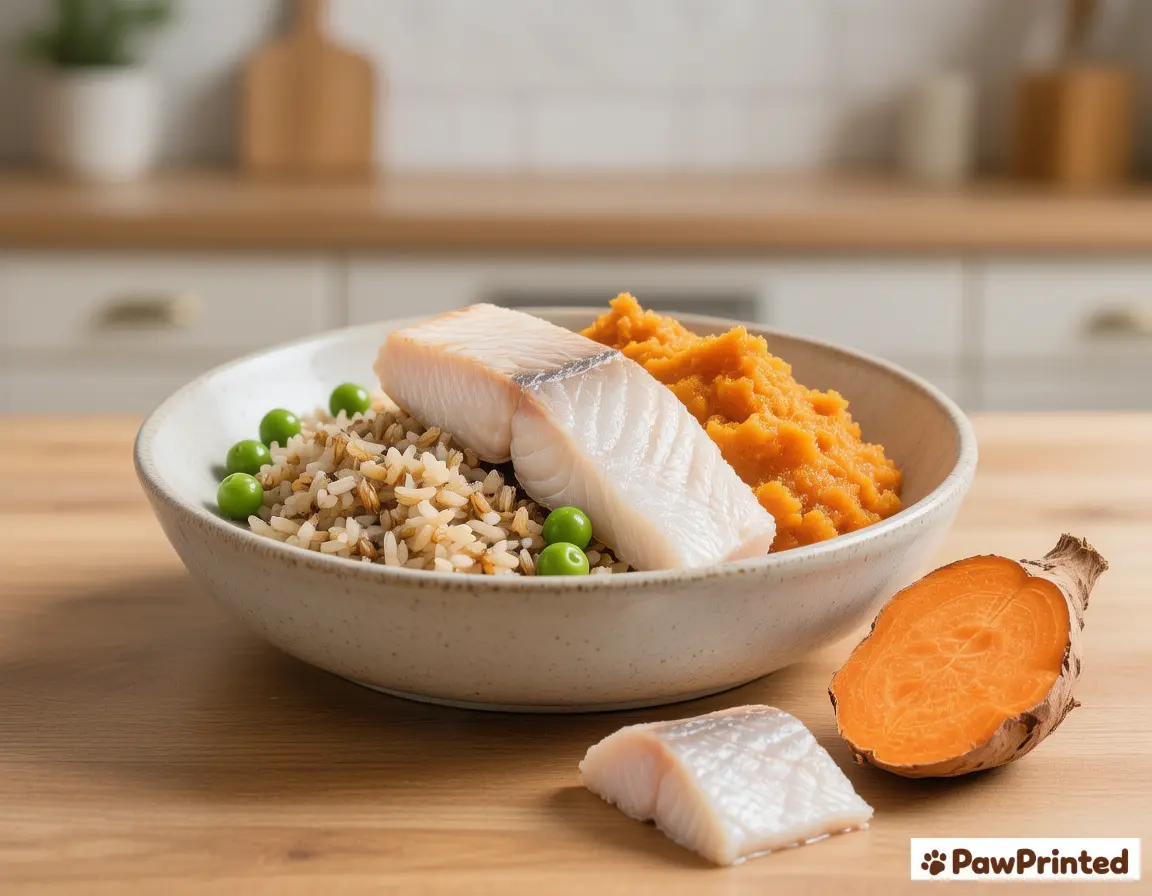
Whitefish & Sweet Potato Gentle Arthritis Relief Meal
- – Saucepan
- – Fork
- Mixing spoon
- – 200 g white fish fillet such as cod, boneless and skinless
- – 1 cup water or low-sodium broth
- – 1/2 cup mashed sweet potato
- – 1/4 cup cooked peas lightly mashed
- – 1/4 cup cooked oats or white rice
- Place the whitefish and water or broth in a small saucepan and bring to a gentle simmer. Cook until the fish is opaque and flakes easily with a fork.
- Remove the fish from the heat, check carefully for any remaining bones, and break it into small pieces.
- Stir in the mashed sweet potato and mashed peas, mixing until the fish and vegetables are evenly combined.
- Add the cooked oats or rice and fold everything together, adjusting with a bit more liquid if needed to reach a soft mash-like consistency.
- Let the mixture cool down to a safe serving temperature before offering it to your dog.

Lamb & Rosemary Herbal Joint Support Meal
- Nonstick skillet
- – Knife and cutting board
- Measuring spoons
- – 200 g lean ground lamb
- – 1/2 tsp finely chopped fresh rosemary or vet-approved dried amount
- – 1/3 cup finely diced carrots
- – 1/2 cup cooked white rice or barley
- – 1 cup water or low-sodium broth
- Add the ground lamb to a nonstick skillet and cook over medium heat, breaking it into small pieces. Drain excess fat if necessary.
- Stir in the chopped rosemary and carrots, cooking until the mixture becomes aromatic and the carrots begin to soften.
- Pour in the water or broth and bring to a gentle simmer. Continue cooking until the carrots are fully tender.
- Fold in the cooked rice or barley and mix thoroughly so the grains are evenly distributed and the mixture thickens slightly.
- Remove from the heat and cool to a safe serving temperature before feeding your dog.
Core Booster Joint Powder,
especially for dogs who dislike pills or chews. For consistent dosing, I always use
Mutclord stainless measuring scoops.
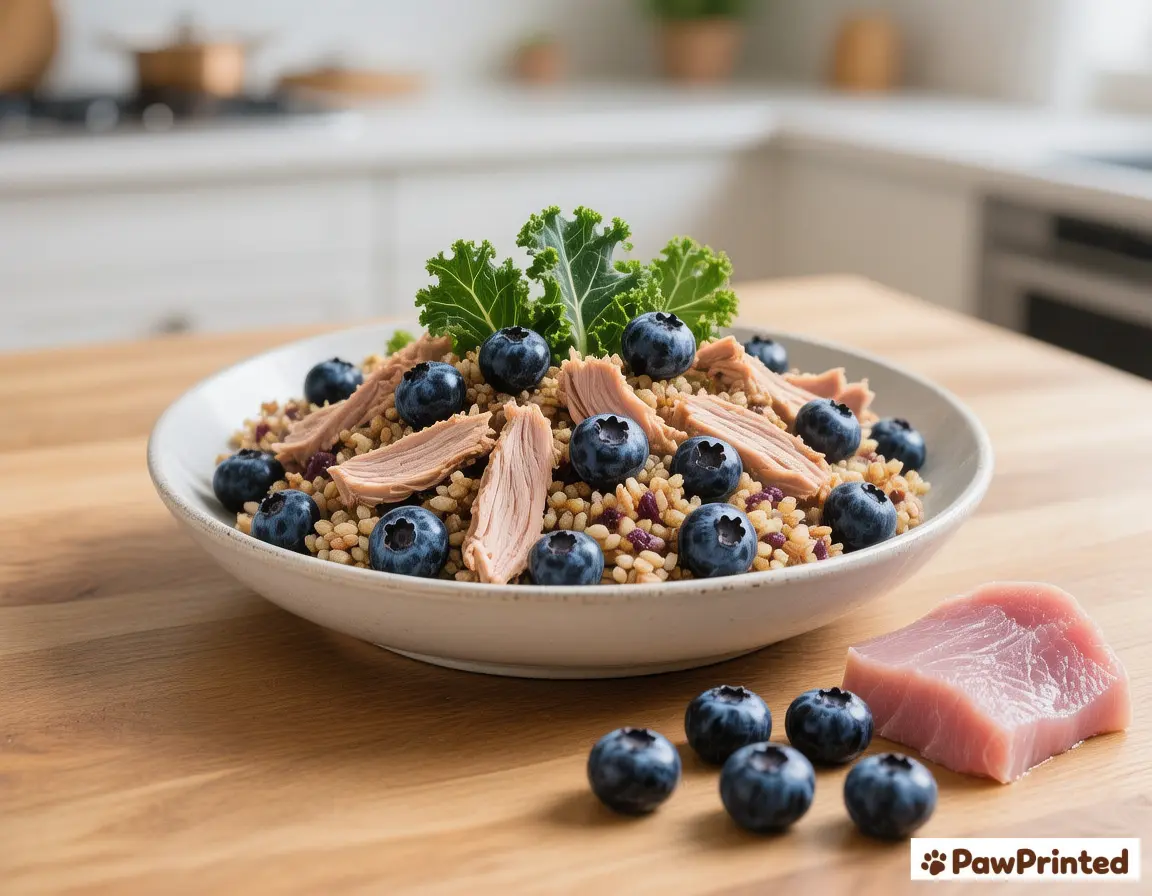
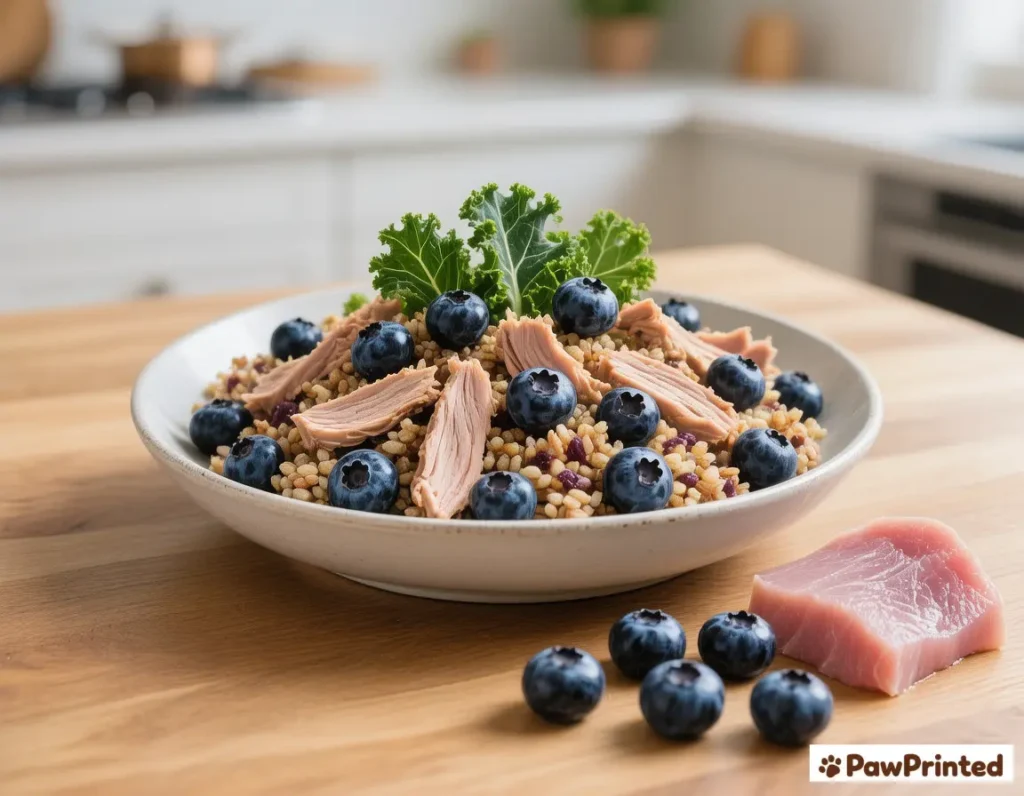
Turkey & Blueberry Antioxidant Joint Support Meal
- – Nonstick skillet or saucepan
- Mixing spoon
- – Measuring cups
- – 200 g lean ground turkey
- – 1/4 cup blueberries lightly mashed
- – 1/2 cup cooked oats
- – 1/4 cup mashed pumpkin or sweet potato
- – 1 cup water or low-sodium broth
- Cook the ground turkey in a nonstick pan over medium heat, breaking it into small crumbles until fully cooked and no pink remains.
- Add the water or broth and bring to a gentle simmer to keep the mixture moist.
- Stir in the cooked oats and mashed pumpkin or sweet potato, mixing until smooth and thick.
- Gently fold in the mashed blueberries, allowing the mixture to warm through without boiling so the berries keep their flavor and color.
- Remove from the heat, cool to lukewarm, and serve a portion appropriate for your dog’s size.
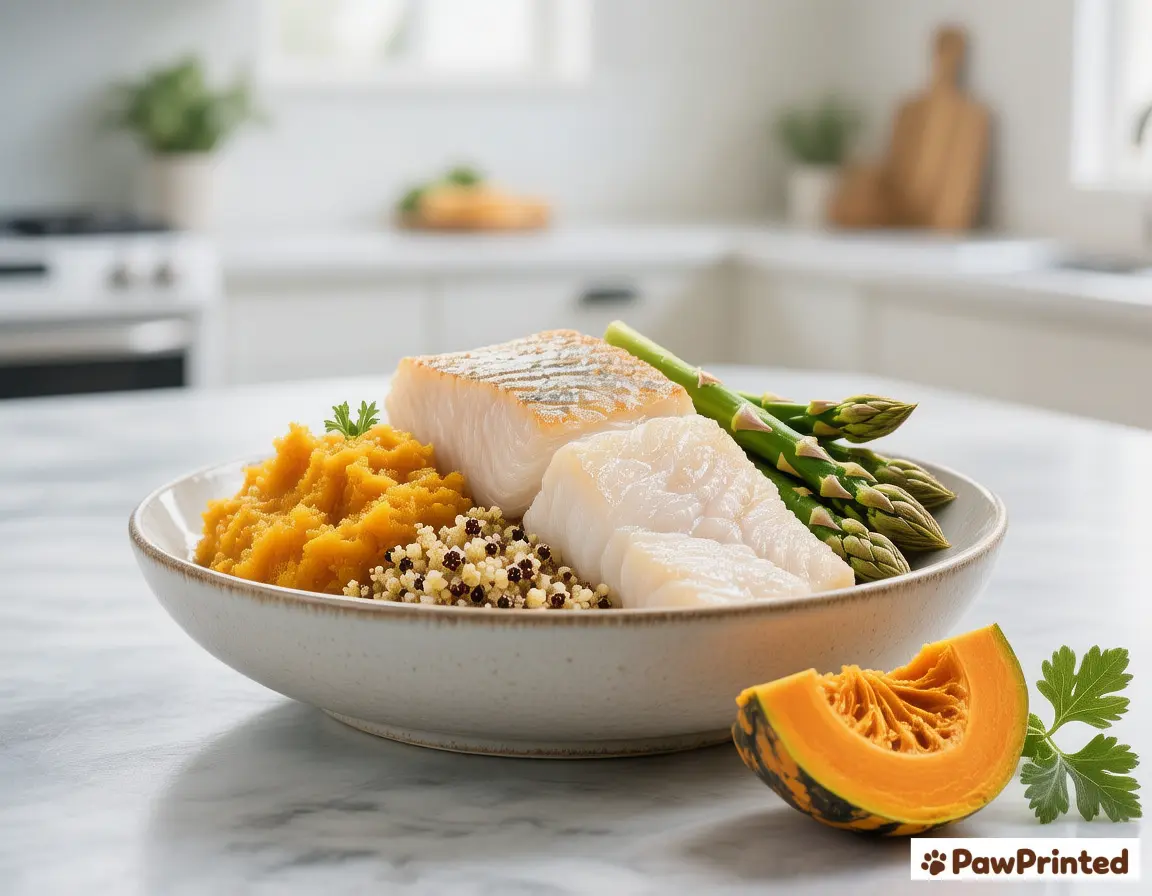
Cod & Pumpkin Low-Fat Arthritis Relief Meal
- – Saucepan
- – Fork
- Mixing spoon
- – 200 g cod fillet boneless and skinless
- – 1 cup water or low-sodium broth
- – 1/2 cup pumpkin puree
- – 1/2 cup cooked white rice
- – 1 tsp flaxseed oil or vet-approved low-fat oil optional
- Place the cod fillet and water or broth in a saucepan and bring to a gentle simmer. Cook until the fish turns opaque and flakes easily with a fork.
- Remove the cod, check carefully for any remaining bones, and shred it into small pieces.
- Stir in the pumpkin puree until the fish and pumpkin form a smooth, creamy mixture.
- Fold in the cooked rice and mix until everything is evenly combined, adding a splash more liquid if needed to keep the texture soft.
- Let the meal cool to a safe temperature before serving to your dog.
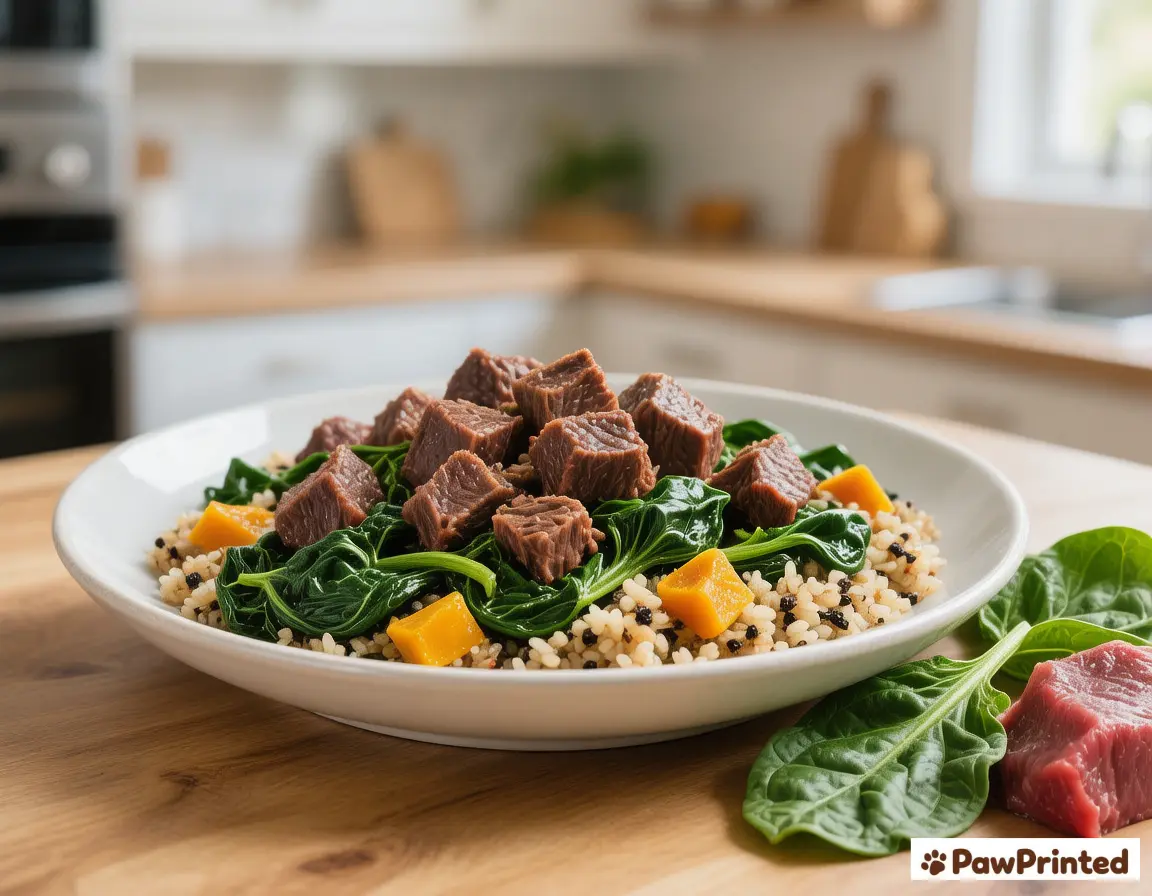
Beef & Spinach Iron-Support Joint Relief Meal
- Nonstick pan
- – Knife and cutting board
- – Measuring cups
- – 200 g lean ground beef
- – 1/2 cup finely chopped spinach
- – 1/2 cup cooked white rice
- – 1/4 cup finely chopped carrots
- – 1 cup water or low-sodium broth
- Add the ground beef to a nonstick pan and cook over medium heat, breaking it up into small pieces. Drain off any excess fat to keep the recipe lighter.
- Add the chopped carrots and water or broth, then simmer until the carrots are soft and tender.
- Stir in the chopped spinach and cook for a few minutes until the leaves wilt and turn bright green.
- Fold in the cooked rice and combine until the mixture becomes soft and cohesive.
- Allow the meal to cool to a safe serving temperature before giving it to your dog.

Chicken & Green Lipped Mussel Premium Joint Support Meal
- – Saucepan
- Mixing spoon
- Measuring spoons
- – 200 g skinless chicken breast diced
- – 1 cup water or low-sodium broth
- – 1/2 cup cooked oats
- – 1/4 cup mashed sweet potato
- – 1/2–1 tsp green lipped mussel powder vet-approved dose
- Add the diced chicken and water or broth to a saucepan and simmer gently until the chicken is fully cooked and tender.
- Stir in the mashed sweet potato and mix until the chicken is coated and the texture is smooth.
- Add the cooked oats and fold gently, creating a soft porridge-like consistency. Add more liquid if needed to keep it easy to lap up.
- Remove the pan from the heat and allow the mixture to cool slightly so it is warm but not hot.
- Stir in the green lipped mussel powder thoroughly after cooking, making sure it is evenly distributed, then cool to lukewarm before serving.
Core Booster Joint Powder
for consistent results. Ethan eats this more comfortably from an
adjustable-height bowl,
which eases strain on his neck and front legs.
For health-focused cooking, you can also explore the Ingredient-Based Dog Food Recipe Hub for easy meals organized by single ingredients.
Vet & Nutrition Insights – How These Meals Support Arthritic Joints
Most vets agree on three pillars for arthritis care: keep inflammation down, keep weight controlled, and keep daily movement gentle but consistent. These recipes lean into all three. Fat is kept moderate or low, especially in the cod-based and whitefish recipes, so you can protect joints from the extra load that comes with creeping weight gain. Proteins like salmon, sardines, and poultry are chosen for digestibility and their suitability in senior dogs who may already have other conditions to juggle.
On the anti-inflammatory side, recipes that use oily fish, turmeric, or green lipped mussel powder are designed to sit alongside, not replace, your vet’s preferred joint supplement. You can still use structured products like glucosamine tablets or joint chews as the “precision tool” while these bowls act as the warm, comforting backdrop. Finally, the soft textures are there for a reason. Dogs with joint pain often struggle with posture while eating, so making meals easy to lap up can reduce how long they have to stand and bend over the bowl at each feed.
Storage & Serving Guide – Keeping Arthritis Meals Safe And Practical
Most of these recipes hold well in the fridge for 2 days and in the freezer for up to a month when stored correctly. For joint-support cooking, I like to batch prep 2–3 recipes on a weekend, freeze them in small portions, and simply thaw a day ahead. Silicone freezer trays such as Souper Cubes 1/2 cup trays make it easy to pop out single servings without having to chip away at a big frozen block.
Once frozen or chilled, you can transfer blocks into a larger sealed bin so your fridge and freezer stay organized. Rolling containers like the IRIS airtight pet food container work well if you also prep low-fat kibble or other bases for mixing. Always reheat or thaw to lukewarm, stir well to avoid hot spots, and check with your vet before changing portion sizes. For arthritis dogs, it is usually kinder to feed two to three smaller meals rather than one large bowl that leaves them very full and heavy afterward.
What Worked For Ethan – Real Life Tweaks From Our Kitchen
With Ethan, the biggest changes came from small, boring habits repeated over time. Measuring portions with a digital scale instead of eyeballing, rotating between two or three favorite recipes, and keeping his treats joint-aware made a bigger difference than any single “miracle” ingredient. On flare-up days, I lean on the softer meals like the salmon and oats or cod and pumpkin recipes, and I make sure his bowl is raised so he does not have to lean as far forward. An adjustable-height feeding bowl helped more than I expected.
I also learned to simplify my own expectations. Some weeks I cook multiple arthritis recipes from this page. Other weeks I rely more on vet-approved joint chews and salmon oil while keeping his base food consistent. When I need a reliable supplement, I often come back to options like Cosequin DS or a gentle chew Ethan actually likes. The key is to align your routine with your dog’s energy level and your own bandwidth, instead of chasing a perfect plan that is impossible to maintain.
Not sure which nutrition path fits your dog’s current problem? Our Dog Food Health Guide by Function walks you through common issues like digestion, allergies, joints, and weight so you can choose the right food strategy.
FAQ – Common Questions About Arthritis Relief Dog Food
Can homemade food really help my dog with arthritis?
Homemade food can support an arthritic dog when it is used as part of a plan your vet has already approved. Soft, moisture-rich meals built around lean protein and gentle carbs can make it easier for your dog to eat, maintain a healthy weight, and tolerate daily supplements. That matters because every extra kilogram your dog carries sits directly on sore joints. At the same time, arthritis is a structural disease, not something diet alone can fix. You still need your vet’s guidance on pain relief, joint supplements, and activity limits. Think of these recipes as a practical way to deliver calories and support ingredients in a form your dog actually enjoys, while your vet remains in charge of the overall treatment strategy.
Which ingredients are most helpful for dogs with arthritis?
Popular choices for arthritis support include oily fish such as salmon or sardines, lean poultry, and low to moderate fat content overall. Those proteins can be paired with soft carbohydrates like oats, rice, and sweet potato to keep meals easy to chew and digest. Many vets also use targeted nutrients such as glucosamine, chondroitin, omega-3 fatty acids, and green lipped mussel, usually delivered through structured supplements. In practice, you might serve a bowl of salmon with oats and pumpkin, then add a measured dose of your vet’s preferred joint product on top. The goal is not to create a “magic” ingredient list, but to build meals where maintainable weight, comfort, and consistent intake of those helpful nutrients are realistic for your dog and your household.
How often can I feed these arthritis relief recipes?
Frequency depends on your dog’s overall diet and your vet’s instructions. For some dogs, one arthritis-friendly meal per day alongside a complete, balanced commercial diet is enough to improve comfort and appetite. Others, especially seniors with multiple issues, may do better rotating between several soft homemade meals over a few weeks. It is important not to guess on long-term nutrition, because an unbalanced diet can create new problems over time. A good starting approach is to introduce one recipe a few times a week, monitor weight, stool quality, and energy, then ask your vet whether you can scale up, adjust ingredients, or keep the recipes as occasional “comfort days” only.
Do I still need joint supplements if I cook these recipes?
In most arthritis cases, supplements remain important even when you are cooking supportive meals. Clinical doses of glucosamine, chondroitin, omega-3s, or green lipped mussel are difficult to reach through food alone without overshooting calories or unbalancing the diet. What homemade recipes can do is provide a soft, tasty base that makes it easier to deliver those supplements consistently. It is usually more realistic to mix a powder or tablet into a warm, fragrant bowl than into dry kibble, especially with picky senior dogs. Work with your vet to decide which supplement is appropriate, then use these recipes as the “delivery vehicle” rather than a replacement for medically guided joint care.
How can I keep my arthritic dog at a healthy weight with homemade food?
Weight control is one of the most powerful tools you have for arthritis management, because every extra unit of body weight increases load on hips, elbows, and the spine. With homemade food, the key is measuring rather than guessing. Use a kitchen scale to weigh cooked portions, track treats, and adjust amounts based on your vet’s target weight and body condition score. Choose recipes from this collection that emphasize lean proteins and low to moderate fat, such as the cod and pumpkin or whitefish and sweet potato bowls. Combine that with gentle daily movement, like two shorter walks rather than one long one, and regular check ins with your vet. Over time, even a small, steady weight loss can translate into noticeably easier movement and better quality of life for your dog.
Wrapping It Up – Turning Arthritis Care Into A Daily Rhythm
Living with an arthritic dog is rarely about one big decision. It is about quietly adjusting bowls, routines, and expectations so your dog can keep doing the things they love with a bit less strain. If you pick just two or three recipes from this collection and rotate them through your week, you are already giving your dog a softer landing than a bowl that never changes. Combine that with honest conversations with your vet, gentle exercise, and a realistic supplement plan, and you have a care routine that can actually last.
If you are feeling overwhelmed, start small. Choose one fish-based recipe, one poultry-based recipe, and one low-fat option, then watch how your dog moves, eats, and rests over a few weeks. Adjust portions with your vet, lean on tools that make prep easier, and remember that a sustainable “good enough” plan will always beat a perfect routine you cannot maintain.
If you don’t want to cook daily, check our dry food picks – those were Ethan’s daily backups.
Author & Vet Review Notes
From Emma, Founder at PawPrinted: “These arthritis recipes came straight out of my own kitchen during the seasons when Ethan struggled the most with morning stiffness. They are not meant to replace your vet’s plan, but to give you something practical to do at the stove when you feel helpless watching your dog slow down.”
Vet review note: “Joint-friendly diets work best when they support weight control, stable energy, and consistent supplement delivery. Soft, highly palatable meals like these can make it easier for owners to keep dogs eating, especially in senior years, but they still need to be tailored to each dog’s diagnosis, medications, and lab work. Always talk to your veterinarian before making large, long-term changes to your dog’s diet, even when the recipes look simple and gentle.”
Whenever you need reliable gear for feeding, grooming, training, or daily walks, browse the Best Dog Products Guide (Updated 2025) for carefully reviewed, dog-tested picks that save you time and guesswork.
References – Authoritative Sources
- Arthritis and Joint Pain in Dogs (2019) – American Kennel Club (AKC). Overview of canine osteoarthritis, common signs, and multimodal management options including weight control, supplements, and exercise modification.
- Home-Prepared Diets for Dogs with Chronic Disease (2020) – Tufts Cummings School of Veterinary Medicine. Practical guidance on when home cooking is appropriate, the risks of unbalanced recipes, and the need for veterinary nutritionist input.
- Use of Nutraceuticals in Canine Osteoarthritis (2018) – Veterinary Clinics of North America. Review of evidence for glucosamine, chondroitin, omega-3 fatty acids, and green lipped mussel in joint care protocols.
- Weight Management and Osteoarthritis in Dogs (2016) – Hill’s Pet Nutrition. Discussion of how calorie control and body condition scoring impact joint load and long-term comfort in arthritic dogs.
- Omega-3 Fatty Acids in Inflammatory Joint Disease (2017) – National Institutes of Health review. Summary of how marine-sourced omega-3s can modulate inflammation pathways relevant to arthritis in both humans and companion animals.
- Guidelines for Safe Use of Supplements in Dogs (2021) – WSAVA Global Nutrition Committee. Practical recommendations on evaluating supplement quality, dosing ranges, and monitoring for side effects when using joint products in dogs.
Explore More – Related Guides & Tools
If you are building a full arthritis-friendly routine for your dog, these related guides and tools can help you connect what happens in the kitchen with what happens on walks, vet visits, and rest days.
Dog Food Health Guide
Understand how different nutrients, body weight, and feeding patterns influence joint load, inflammation, and long-term comfort in dogs of different ages and breeds.
Homemade Dog Food By Ingredient
Browse other ingredient-based recipes so you can rotate arthritis-friendly bowls with options for sensitive stomachs, allergies, or weight control without starting from scratch each time.
Best Dog Food Storage & Prep Tools
See the storage containers, freezer trays, and measuring tools that make batch cooking and portion control easier when you are managing arthritis and weight at the same time.
Affiliate Disclosure
Some links on this page are affiliate links. That means if you choose to make a purchase after clicking them, PawPrinted may earn a small commission at no extra cost to you. I only highlight products that fit the cooking and care routines I genuinely use with Ethan, and your dog’s veterinary team should always have the final say on which foods, treats, and supplements are appropriate for their specific health needs.