The week I started testing these pork recipes, Ethan was in one of those in between phases. His energy was fine, stools were mostly formed, but his appetite felt flat and his interest in yet another chicken bowl was clearly fading. I wanted something that brought back his enthusiasm without tipping him into rich, greasy territory that would upset his stomach.
Lean ground pork was already in our freezer for family meals, and pairing it with softer carbs and gentle fiber felt like an easy way to keep cooking realistic. These eight recipes are the exact combinations I built in our kitchen to keep his digestion steady while giving him a new flavor profile that actually made him trot into the kitchen again.
My goal with this collection is simple: practical pork based bowls that are warm, filling, and predictable enough to use in a real weekly routine. Nothing fancy, nothing that needs a chef, just home cooking that fits around your normal dinner prep.
8 Homemade Pork Dog Food Recipes You Can Actually Cook
These eight pork bowls are the exact versions that worked in our own kitchen – simple, repeatable recipes you can plug into your week without needing chef level skills.
Some links above are affiliate links. They never cost you extra, and they help us keep testing foods, tools, and daily routines with Ethan so these guides stay honest and practical.
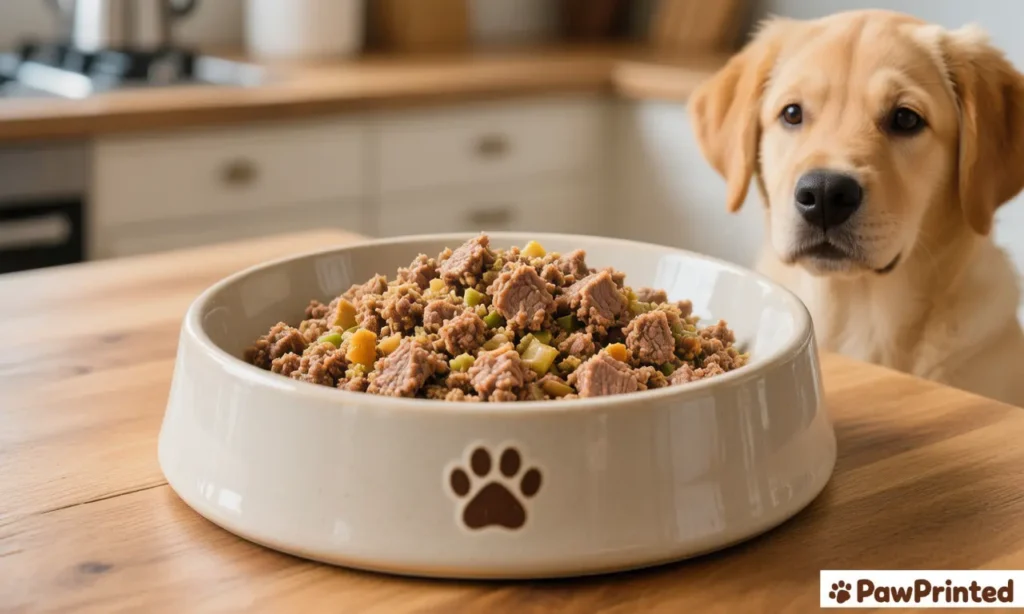
Why I Cooked These Pork Dog Food Recipes For Ethan
The week I started testing these pork recipes, Ethan was in one of those in between phases. His energy was fine, stools were mostly formed, but his appetite felt flat and his interest in yet another chicken bowl was clearly fading. I wanted something that brought back his enthusiasm without tipping him into rich, greasy territory that would upset his stomach.
Lean ground pork was already in our freezer for family meals, and pairing it with softer carbs and gentle fiber felt like an easy way to keep cooking realistic. These eight recipes are the exact combinations I built in our kitchen to keep his digestion steady while giving him a new flavor profile that actually made him trot into the kitchen again.
My goal with this collection is simple: practical pork based bowls that are warm, filling, and predictable enough to use in a real weekly routine. Nothing fancy, nothing that needs a chef, just home cooking that fits around your normal dinner prep.
Ingredient Spotlight – Why These Pork Combinations Work
For this collection I stayed with lean or extra lean ground pork, trimmed of visible fat and cooked in a way that lets excess fat separate rather than cling to the meal. Pork gives Ethan a softer chew than beef, a richer flavor than chicken, and enough protein density to keep his muscles supported without feeling like a heavy, feast style dinner.
Around that pork base, I rotate a small group of predictable ingredients. Rice, oats, barley, and quinoa cover different carb and fiber patterns, while pumpkin, sweet potato, carrot, apple, zucchini, and green beans give moisture, color, and gentle fiber without pushing his gut too hard. None of these ingredients are exotic, but together they let me lean a bowl slightly toward digestion, energy, or weight awareness depending on what that week looks like.
The whole point is that you can look at the ingredient list for each recipe and immediately understand what it is trying to do. If a bowl is meant for softer, calming evenings, you will see pumpkin and slow cooked texture. If it is meant for a higher activity day, you will see quinoa and a little more carb density to carry that energy.
How This 8 Recipe Pork Collection Is Organized
I did not want eight nearly identical bowls that just shuffle vegetables around. Instead, each recipe in this collection leans into a slightly different role: everyday soft meals, gentle recovery bowls, weight conscious options, higher protein training days, and lighter warm weather meals. In our house, I rarely repeat the same pork bowl more than twice in a week, but I move between this small set so Ethan’s stomach knows what to expect.
Think of this page as a menu you can pick from based on what your dog needs right now. Maybe you choose a pumpkin heavy slow cooker bowl after a busy weekend, or a leaner oat based mix if your vet has asked you to watch weight for a while. This is how real home kitchens work when you cook for both humans and dogs: a small rotation of meals that you know well enough to tweak, rather than a new experiment every night.
Nutritional Data And Vet Aligned Insights For Pork Recipes
Protein And Lean Support
Lean ground pork can provide a strong protein base for many adult dogs as long as fat is trimmed and overall calories are kept in check. These recipes keep pork as the anchor while leaning on measured portions and gentle cooking to avoid the feast style meals that often trigger issues. If you want a deeper breakdown of protein, fat, and carbs in homemade meals, the Dog Food Macros Guide walks through how to think in macros instead of guessing from the pan.
Digestive Stability
Each recipe pairs pork with predictable starches and fiber sources to keep stools as steady as possible. Pumpkin, oats, barley, and rice each influence stool shape and timing in slightly different ways, which is why I do not throw all of them into one bowl at once. The goal is to let you notice patterns so you can move between recipes instead of feeling stuck when digestion shifts.
Fiber And Stool Quality
Pork does not bring fiber on its own, so these bowls rely on vegetables and grains to support regularity. Soluble fiber from pumpkin and oats helps hold water in the stool, while structured fibers from green beans or barley can give extra form. If your dog tends to swing between soft and firm, you can favor recipes that use pumpkin and oats more often until things feel stable again.
Calcium And Micronutrients
None of these recipes are meant to be served long term without attention to calcium, trace minerals, and vitamins. Pork, grains, and vegetables bring a lot of helpful nutrients but they do not automatically cover everything your dog needs. To understand how to add calcium and safe supplement layers on top of these bowls, see the Calcium Balance Guide and Dog Food Supplements Guide.
Which Dogs Benefit Most
These recipes are generally built for adult dogs with moderate activity and no history of pancreatitis or strict low fat requirements. Dogs that need very lean diets, prescription fat limits, or therapeutic nutrition plans should only use pork recipes under direct veterinary guidance. If your dog has complex health needs, the broader Dog Health Guide will help you see where home cooking fits and where prescription diets still matter.
When To Adjust Or Pause
Any change in stool quality, appetite, itchiness, or energy that persists for more than a few days is a signal to pause and reassess. Sometimes that means switching to a milder protein for a week, sometimes it means trimming portion sizes or choosing the lower fat recipes more often. Building notes around which bowls your dog tolerates best will make future vet visits and recipe adjustments much easier.
Vet Tips And Recipe Variations For Different Dogs
For sensitive stomach dogs, start with the simplest recipes in this collection, ideally the pumpkin and rice based bowls, and introduce them slowly alongside your current food. Keep the portions small, stay close to the original ingredient list, and do not stack multiple new add ons like extra treats or toppers at the same time.
For weight management, favor the low fat oat based recipes and keep an eye on overall daily calories, not just the main bowl. That might mean shrinking commercial treats, using part of the home cooked portion as rewards, or reserving the richer recipes only for higher activity days. Senior dogs often do best with softer textures, which makes the slow cooked and rice heavy bowls good candidates, especially when chewing or dental work is on your mind.
Serving Ideas, Portion Ranges, And Safe Storage
Portion sizes will always depend on your dog’s weight, age, and activity level, but a sensible starting point is to treat these bowls like any other complete meal and match them to the daily calorie target your vet recommends. Smaller dogs often do better when you divide batches into more frequent, smaller meals, while larger dogs may be comfortable with two well portioned servings per day.
When it comes to storage, cool each batch quickly, pack it into shallow containers, and label dates so you know what should be used first. Refrigerated portions are best used within two to three days, while frozen portions can support a weekly or biweekly prep rhythm. If you like a more structured guide to portions and transitions, the Portion & Serving Size Guide and 7 Day Transition Guide are helpful companions for this collection.
What Worked For Ethan With These Pork Recipes
On Ethan’s side, the biggest wins came from keeping the cooking routine as boring and repeatable as possible. I built one or two pork based batches on Sunday afternoons, portioned them into small containers, and rotated them with his other proteins through the week. That rhythm seemed to keep his stools steady, his interest in dinner high, and my stress low because I was not reinventing the wheel every night.
Tools mattered more than I expected. Shallow freezer trays, a reliable slow cooker, and containers that did not leak when defrosting made it much easier to stick with home cooking on busy days. This is also where I quietly layered in his joint support and probiotic routine alongside the bowls he already loved. In your own kitchen, pick one or two tools that make portioning and thawing simpler, and build your first pork batches around those so the pattern feels sustainable.
Pork Dog Food Recipes FAQ
How often can I feed these pork dog food recipes?
Most healthy adult dogs can eat pork based homemade meals several times per week as part of a balanced rotation, but not every dog should have pork every single day. The right frequency depends on your dog’s weight, activity level, and health history, including any concerns about fat tolerance or pancreatitis. A common pattern is to use pork bowls two to four times per week and rotate with other proteins, which keeps variety in the diet while letting you watch how your dog responds over time.
When you first introduce these recipes, start slowly by replacing only part of your dog’s usual food and keep that pattern for a few days. Track stool quality, appetite, and energy before you increase the proportion of homemade pork meals. If everything stays steady and your vet is comfortable with the plan, you can gradually make pork a regular part of the weekly routine instead of a rare treat.
Dogs with strict low fat requirements or complex medical histories usually need a more customized plan. In those cases, even lean pork recipes should only be used under veterinary guidance, and sometimes only as small toppers rather than full bowls. When in doubt, check with your vet before committing to pork as a frequent base protein.
Can I use regular fatty pork for these recipes if I trim it?
Using standard, fattier pork cuts and trimming them at home can work in some situations, but it does not always bring fat down to the same level as extra lean ground pork. Visible surface fat is only part of the picture, and marbled fat inside the meat still adds richness and calories that can stress digestion in some dogs. If your dog has any history of soft stools or pancreatitis, it is safer to start with clearly labeled lean or extra lean options.
If you do use regular pork, trim as much external fat as you reasonably can and choose cooking methods that let fat separate, such as slow cooking and then chilling the batch so you can skim the cooled fat layer. This is more work than beginning with lean ground pork, but it can help reduce the final fat content if lean meat is difficult to find in your area. Always introduce these meals slowly, especially for smaller dogs that feel the impact of rich meals more quickly.
The most important rule is to listen to what your dog’s stools, energy, and comfort are telling you. If trimming and careful cooking still lead to repeated loose stools or belly discomfort, step back and switch to leaner ingredients or another protein. Pork is an option, not an obligation, and your dog’s gut comfort is more important than using every cut in the freezer.
Do I still need supplements with these pork recipes?
Yes, most dogs still need some form of supplementation when you rely on home cooked recipes, even if the meals look rich and varied. Pork, grains, and vegetables provide a lot of helpful nutrients, but they do not reliably cover calcium, certain vitamins, and some trace minerals that are important for long term health. Without those pieces, a dog can quietly drift into nutritional gaps over months or years even if they look fine in the short term.
The simplest way to fill those gaps is to work with your vet or a veterinary nutritionist to choose a balanced supplement designed for home cooked diets. They can help you match the product and dose to your dog’s weight and to the recipes you use most often, including pork based bowls from this collection. Another option is to use a professionally formulated recipe that already specifies exact supplements, then build your pork batches around those instructions.
What I try to avoid is guessing with a handful of random multivitamins or treating supplements as optional extras. It is much safer to have one clear plan that you follow consistently than to switch products every few weeks. Once you have that plan in place, you can enjoy the creative side of pork recipes knowing the foundation is covered.
Can puppies eat these pork dog food recipes?
Puppies have much stricter and more specific nutrient requirements than adult dogs, so these recipes are not designed to be complete and balanced for growth on their own. While a few small tastes of lean cooked pork from your bowl are usually safe for a healthy puppy, relying on improvised pork and rice style meals can leave gaps in calcium, phosphorus, and other nutrients that matter for bone development. Over time those gaps can affect growth plates, joint health, and overall body structure.
If you want pork to be part of a puppy’s diet, it is safest to use a growth formula or a veterinary designed recipe that clearly states it meets standards for puppies. In that context, pork may appear as one of several carefully balanced ingredients rather than the main feature of a homemade experiment. That kind of structure is hard to recreate at home without professional guidance and lab data.
Until you have a vet approved growth recipe in hand, treat these pork bowls as an idea bank for the adult years instead of a direct template for your puppy. You can still use the cooking rhythm, storage habits, and ingredient familiarity now, then adapt the full recipes later when your dog is grown and has more flexible nutrient needs.
How do I switch between pork recipes and commercial dog food safely?
Switching back and forth between homemade pork recipes and commercial dog food is possible, but it still requires a gradual approach. Sudden swings in texture, moisture, and fat content are a common reason dogs develop soft stools or gassy discomfort, even if both foods are good quality on their own. A slow transition lets your dog’s gut adjust to the different pattern of nutrients and fiber without being pushed too hard.
A simple pattern is to start by replacing 20 to 25 percent of your dog’s bowl with a pork recipe while keeping the rest as their usual commercial food. Hold that ratio for several days, then either increase the homemade portion or settle into a mixed feeding rhythm if that balance suits your schedule. Many families find that keeping some commercial food in the plan actually makes long term homemade cooking more realistic.
If your dog has a very sensitive stomach or a complicated medical history, work with your vet to decide how quickly to move and which recipes are safest to start with. Mixed feeding is not a failure, and in many homes it is exactly what keeps both dogs and humans comfortable. The key is to be deliberate rather than improvising a different mix at every meal.
Wrapping It Up
These eight pork recipes are not meant to be a perfect textbook, they are meant to give you a realistic starting point that fits around a normal family kitchen. Start with the one or two bowls that feel doable this week, pay attention to how your dog looks and feels, and slowly build a rotation that works for both of you.
If you run into questions or want to share what is working in your own kitchen, feel free to leave a comment or pin your favorite bowl to come back to later. I will keep refining this collection as Ethan and I learn more from real life, not just from recipes written on paper.
If you don’t want to cook daily, check our dry food picks – those were Ethan’s daily backups.
Author And Vet Review Notes
From Emma: These pork bowls came out of real weeks when I needed dinners that felt comforting but not heavy, for both Ethan and the humans in the house. If you keep your batches small and your rotation simple, home cooking stops feeling like a project and starts feeling like part of your normal kitchen rhythm.
From the vet side: Pork can be a perfectly reasonable protein choice for many adult dogs when fat is controlled, batches are balanced, and health history is respected. The key is to keep your veterinarian informed, use properly designed supplements where needed, and stay honest about what your schedule can support long term.
References – Authoritative Sources
PetMD Editorial Team (2023), “Homemade Dog Food: Is It Right for Your Dog?”, PetMD. https://www.petmd.com/dog/nutrition/homemade-dog-food Overview of benefits, risks, and balancing needs for home prepared dog diets.
American Kennel Club (2022), “Can Dogs Eat Pork?”, AKC.
Can Dogs Eat Pork?
Discusses safe and unsafe forms of pork for dogs and highlights fat and seasoning concerns.American College of Veterinary Nutrition (ACVN), “Home Prepared Diets for Dogs and Cats”. https://acvn.org Professional guidance on formulating balanced home cooked diets and the need for expert input.
WSAVA Global Nutrition Committee (2021), “Global Nutrition Guidelines”.
Nutrition Guidelines
Core principles for assessing dog foods and working with vets on nutrition plans.Freeman et al. (2013), “Current Knowledge About the Risks and Benefits of Raw Meat Based Diets for Dogs and Cats”, Journal of the American Veterinary Medical Association. https://avmajournals.avma.org Reviews infection and nutrient risks of raw meats, including pork, and food safety considerations.
Explore More Homemade Dog Food Guides
If you are building a full homemade plan around these pork bowls, these guides will help you connect everyday cooking with long term health and realistic routines.
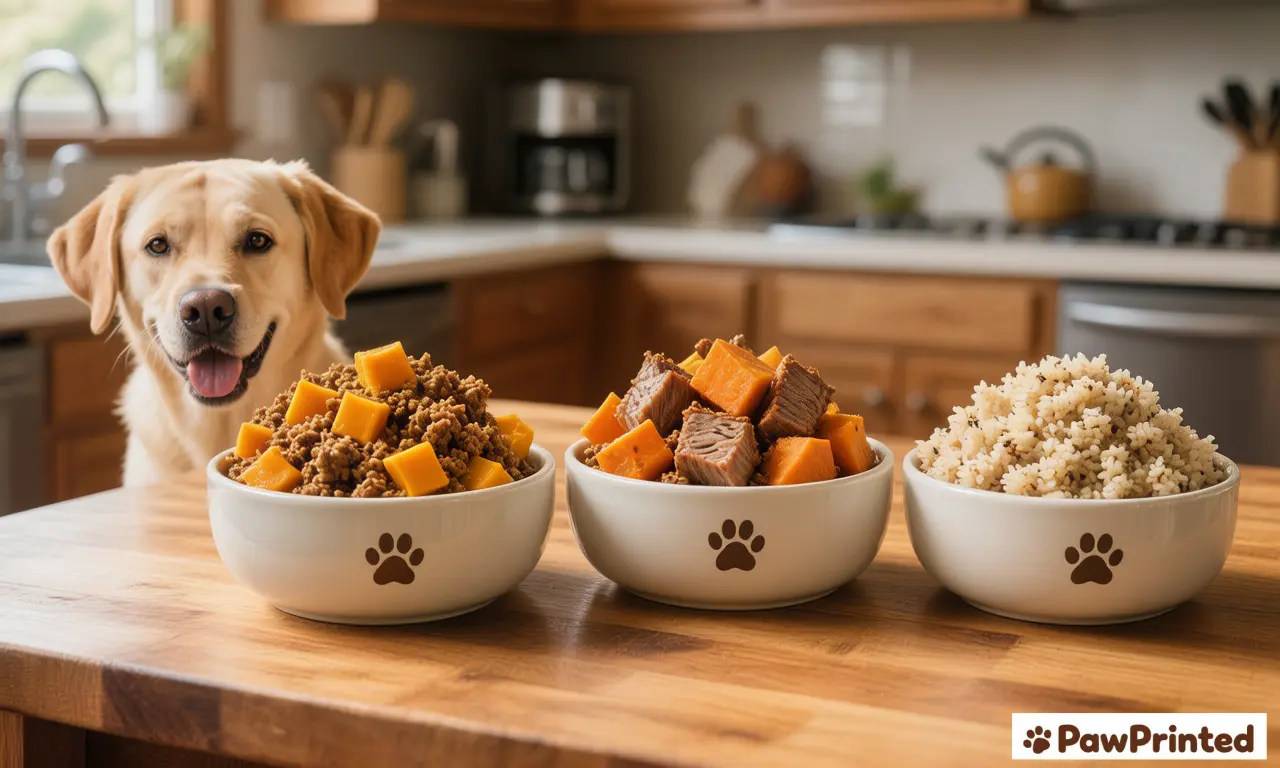
Pork Roast & Sweet Potato Lean Weight Control Bowl
- Baking tray
- – Saucepan
- Steamer basket
- – Mixing bowl
- Fork or meat shredder
- Pork loin roast – 1 cup shredded and trimmed of fat
- Sweet potato – 1 cup boiled and mashed
- Green beans – 1/2 cup steamed and chopped
- Rolled oats – 1/2 cup cooked soft
- Filtered water or light broth – as needed for moisture
- Roast and prepare the pork
- Trim any visible fat from the pork loin before cooking to keep the bowl naturally lean. Roast it in the oven at a moderate temperature until fully cooked and fork tender. Once cooled slightly, shred the meat into small, even strands so your dog can chew comfortably. If the meat feels dry, drizzle in 1–2 tablespoons of warm water to restore moisture.
- Cook the sweet potato and oats
- Boil peeled sweet potato chunks until they mash easily with a fork, creating a smooth base that gives the bowl structure and gentle sweetness. In a separate pot, cook rolled oats with extra water so they finish soft and slightly porridge-like. This texture helps the meal stay moist, reduces digestive effort, and supports steady fullness for weight management.
- Steam the green beans
- Lightly steam chopped green beans until bright and tender. They should keep their shape but break apart easily. Green beans add fiber volume without many calories, helping the bowl feel hearty while remaining appropriate for lean diets. Once cooked, drain well to avoid excess water altering final consistency.
- Combine everything into a balanced bowl
- Add the shredded pork, mashed sweet potato, soft-cooked oats, and steamed green beans into one mixing bowl. Pour in small splashes of filtered water or broth until the texture becomes soft and cohesive, not dry or sticky. Mix thoroughly so each scoop contains balanced protein, fiber, and carbs. Let the meal cool fully before serving or dividing into storage containers.
For extra moisture control, add small splashes of warm water right before serving. Green beans can be replaced with chopped zucchini for dogs needing even lower calorie density. Store cooled portions in shallow containers to chill quickly and maintain ideal texture.