When winter runs shorter and sunlight hides, I like a bright cookie that smells like roasted veggies and feels light in the hand. Beetroot and carrot turned out to be our happiest combo for color and crunch. If this is your first veggie bake, skim our
Homemade Dog Treats Guide for safe ingredients, temps, and storage basics before you start.
Ingredient Spotlight – Why Beetroot & Carrot Work Together
Beetroot
Color-rich veggie with antioxidant compounds that bring gentle vibrance to winter snacks. Use cooked and well mashed for easy mixing and even color.
Carrot
Beta-carotene and friendly fiber support tidy texture. Grate finely or mash soft so mini cookies hold edges without cracking.
Oat Flour
Grain-inclusive binder that dries evenly and keeps shapes consistent for portion control.
Egg
Simple protein binder that helps tiny cavities set cleanly in the mold.
Omega pairing
For joint balance on cold days, I sometimes add a tiny drizzle of
Iceland Pure Unscented Salmon Oil for Dogs right before serving.
Ingredients You’ll Need
Mashed beetroot – 1/2 cup, cooled
Cook until tender, drain thoroughly, and mash very smooth to avoid wet pockets.
Finely grated carrot – 1/2 cup, squeezed dry
Remove excess moisture so cookies dry evenly.
Oat flour – 1 to 1 1/4 cups
Add gradually until a firm, non-sticky dough forms.
Egg – 1
For structure and crisp edges in mini shapes.
Shaping tool (optional)
Press dough into the
homEdge Silicone Paw & Bone Dog Treat Mold for uniform portions and easy release.
Accuracy helper (optional)
Veggies vary in moisture, so weighing keeps ratios consistent. See picks in
8 Best Scales & Measuring Tools for Homemade Dog Food.

Step-by-Step Cooking Guide
1) Preheat and line
Preheat to 150–160°C (300–320°F). Line a sheet or use a reliable pan to prevent sticking. If you are upgrading cookware, scan
8 Best Nonstick Pans for Cooking Homemade Dog Food.
2) Prepare veggies
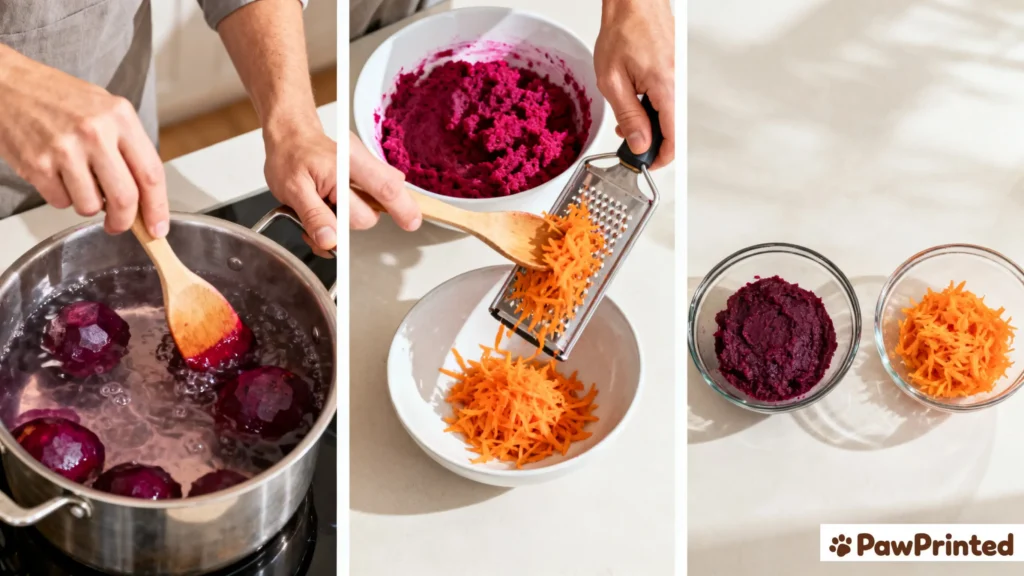
Cook beetroot until tender, drain well, and mash smooth. Grate carrot finely and squeeze out moisture. Cooler, drier veggies make cleaner edges.
3) Mix dry
Whisk oat flour to break clumps. Even flour distribution helps prevent color streaks from beet juice.
4) Form dough
Stir beet, carrot, and egg into flour. Add extra flour as needed until the dough is firm and presses cleanly without sticking to your fingers.
5) Shape small
Press into a silicone mini mold for consistent sizes. The
paw-and-bone mold keeps portions even and clean.
6) Bake and check
Bake 20–30 minutes to a dry, lightly crisp finish. Check centers with a slim thermometer from
6 Best Kitchen Thermometers for Homemade Dog Food to avoid underbaking dense veggie spots.

Beetroot & Carrot Dog Treats Recipe (Antioxidant Boost)
- Mixing bowl & spatula
- Nonstick pan or baking sheet
- Silicone paw-and-bone mold
- Kitchen thermometer
- Measuring scale (8 Best Scales & Measuring Tools for Homemade Dog Food)
- Airtight storage container
- Cooling rack
- ½ cup cooked and mashed beetroot drained well
- ½ cup finely grated carrot squeezed dry
- 1 to 1¼ cups oat flour added gradually
- 1 large egg
- 1 tsp olive oil optional
- Water as needed for dough consistency
- Optional finish
- Tiny drizzle of Iceland Pure Unscented Salmon Oil for Dogs for Omega-3 support
- Preheat oven to 150–160 °C (300–320 °F). Line a sheet or use a nonstick pan (Best Nonstick Pans for Cooking Homemade Dog Food).
- Prepare veggies – Cook beetroot until soft, drain well, and mash smooth. Grate carrot finely and squeeze excess moisture for even texture.
- Mix dry ingredients – Whisk oat flour to aerate, then stir in beet, carrot, and egg. Add extra flour until dough is firm but pliable.
- Shape – Press into the homEdge Silicone Paw & Bone Dog Treat Mold for tidy, uniform cookies.
- Bake – 20–30 minutes until lightly crisp. Check centers with a thermometer (Best Kitchen Thermometers for Homemade Dog Food) to ensure even dryness.
- Cool and store – Let cool completely on a rack, then store in an airtight container to preserve color and crunch.
• Spill warning: Beet juice stains easily — wipe spills immediately with warm water.
• Texture adjustment: For crispier cookies, extend bake by 5 min and let trays rest in the warm oven.
• Joint pairing: Serve alongside a PupGrade Joint Support Chew for extra mobility support.
• Storage: Room temp 7–10 days; fridge 10 days; freeze up to 1–2 months. Store in LOYOSEL Dog Treat Container.
• Comfort routine: While trays cool, Ethan naps on his heated blanket — the coziest way to wait for cookies.
• Brand note: If you don’t want to cook daily, check our dry food picks — those were Ethan’s daily backups.
Nutritional Data & Vet Insights
Antioxidant color
Beetroot and carrot bring color and supportive antioxidants for a lively winter routine.
Portion control
Mini shapes help keep rewards under 10 percent of daily calories while you train indoors.
Fiber balance
Moderate fiber supports stool quality. Introduce slowly and watch GI responses for 48–72 hours.
Joint pairing
For mobility support, pair a cookie with a daily
PupGrade Joint Support Chew. A tiny drizzle of
salmon oil can round out fatty acids.
Vet Tips & Variations
Sensitive stomach
Start with a small batch and very small pieces. Keep the dough dry and bake thoroughly to reduce moisture-related GI surprises.
Senior-friendly
Shorten bake slightly for a softer bite. Tiny molds help with easy chewing and portioning.
Grain work-around
Swap oat flour for coconut or pea flour if grains are an issue. Test a mini batch first to check tolerance.
Weight control
Use the smallest cavities and count treats toward the 10 percent rule. Keep sessions short but frequent.
Introduce slowly, keep pieces small, and adjust for your dog’s size, age, and activity. Treats support routines but never replace balanced meals.
Serving Ideas & Storage
Cool on a rack until fully dry, then seal in an airtight jar such as the
LOYOSEL Dog Treat Container Airtight Storage to protect crunch and color. Room temp: 7–10 days if dry-baked. Refrigerate up to 10 days. Freeze 1–2 months. If you are tidying the pantry, browse
10 Best Dog Food Storage Containers for clean setups.
While trays cool, Ethan curls up on his
FurHaven Thermo Snuggly Heated Dog Blanket in a warm corner. Pink cookies, warmer paws.
What Worked for Ethan
Shaping and release
The
paw-and-bone silicone mold keeps color tidy and portions even.
Freshness routine
We cool completely, then seal in the
LOYOSEL airtight container so the aroma holds all week.
Mobility ritual
On stiffer days he gets a daily
joint chew and sometimes a tiny drizzle of
salmon oil before a cookie.
Cozy cooldown
He naps on his
heated blanket while I tidy up beet stains with warm water and patience.
FAQ
Are beetroot and carrot safe for dogs in cookies?
For most healthy dogs, yes in modest amounts. Both veggies are commonly used in homemade treats and can fit into a balanced reward plan when introduced slowly and baked thoroughly.
Cook beetroot until soft and mash well so it blends evenly without creating wet pockets. Finely grate and squeeze carrot to manage moisture. As with any new ingredient, start small and monitor stools, energy, and skin for 48–72 hours. If your dog has kidney or urinary concerns, ask your vet before adding beetroot.
Tip: tiny cookies help portion control and make tolerance testing easier.
What oven temperature and time work best for veggie cookies?
Low to moderate heat protects color and dries cookies evenly. Aim for 150–160°C (300–320°F) and 20–30 minutes depending on size and moisture.
Smaller cavities finish sooner. If your oven runs hot, reduce by 10°C to prevent over-browning. After baking, leave trays in the switched-off oven for 5–10 minutes with the door slightly ajar to finish drying without scorching.
Tip: keep thickness uniform so every piece bakes predictably.
How should I store beetroot and carrot cookies?
Cool completely and keep them dry and airtight. Moisture trapped in warm cookies shortens shelf life and softens texture.
At room temperature, dry-baked pieces last about 7–10 days. Refrigeration reaches roughly 10 days. Freezing extends to 1–2 months. Discard cookies that smell sour, feel sticky, or show discoloration.
Tip: label jars or freezer bags with the bake date and rotate weekly.
Can I bake a grain-free version?
Yes. Swap oat flour for coconut or pea flour and adjust moisture. Grain-free flours can bake drier, so watch texture and reduce bake time slightly if needed.
Test a mini batch first and introduce the new version slowly. If your dog has a history of strong reactions, check with your vet before changes. Keep pieces very small while testing.
Tip: add a teaspoon of olive oil if dough feels too dry with coconut flour.
How many veggie cookies can my dog have per day?
Treats should stay around 10 percent of daily calories. Mini shapes help you reward often without overfeeding.
For weight control or seniors, choose the smallest cavities and keep sessions short but frequent. If activity drops in winter, reduce the daily treat count and consider leaner main meals.
Tip: log treat counts for a week to find your dog’s ideal range.
Wrapping It Up
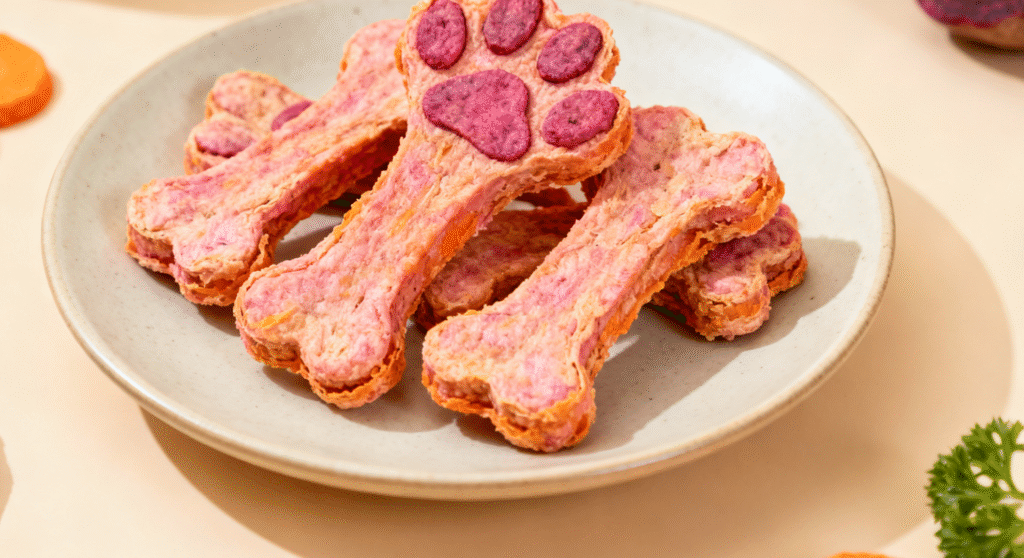
Bright color, clean crunch, and a gentle veggie profile make these an easy winter win. Tell me which mold shape your pup loved most and how the color held after storage.
Author & Vet Review Notes
Emma – Founder & Dog Mom: Squeezing carrot drier before mixing made a big difference. The smallest cavities kept our winter training on track.
Reviewed by Dr. Lydia Harper, DVM: Sensible portions and thorough drying are key. Vegetables are a fine accent in treats but do not replace balanced diets or targeted medical plans.

References – Authoritative Sources
- Vegetable Choices for Dogs (2024) – AKC – Overview of safe vegetables and moderation guidance.
- Portion Control & Weight Management (2024) – Tufts Vet Nutrition – Why treat calories matter for mobility and health.
- Antioxidants in Canine Diets (2023) – Frontiers in Vet Sci – Role of plant antioxidants in overall wellness.
- Homemade Treat Storage Safety (2024) – PetMD – Cooling, drying, and spoilage checkpoints.
- Oven Drying Techniques for Pet Treats (2023) – Vet Nutrition Notes – Low-temperature drying for consistent texture.
Explore More
More winter-friendly bakes and helpful kitchen picks: