The older Ethan gets, the more his joints tell us about the weather. On colder mornings, he sometimes pauses before jumping off the couch or taking those first few steps outside. It is not dramatic, but you can feel the difference.
That is what pushed me to stop thinking in terms of one “perfect recipe” and instead build a small rotation of arthritis relief dog food recipes that actually work in daily life. Some days call for a soft, warming bowl. Other days need something lighter, or something with stronger joint support built in.
This collection brings together 10 practical recipes I use depending on the situation. You will find anti-inflammatory meals, soft food options for senior dogs, and a few stronger “boost-style” recipes when joints need extra support.
None of these are magic fixes, but when used consistently, they become part of a bigger routine that helps your dog stay comfortable, mobile, and more willing to move.
If you want to understand how diet fits into joint care overall, you can also read
Dog Food for Arthritis – Can Diet Really Help?
where I break down what actually matters and what is just marketing noise.
Below, I will walk you through each recipe, why it works, and how to adjust it depending on your dog’s age, size, and daily routine.
10 Arthritis Relief Dog Food Recipes That Actually Fit Real Life
10 Homemade Dog Food Recipes for Joint Support
When your dog starts slowing down, hesitating on stairs, or just not moving like before, food becomes more than just daily fuel. It becomes part of how you support their comfort, mobility, and long-term health.
I put together these 10 joint support recipes based on what actually works in real routines. Some are soft and easy for senior dogs, some focus on anti-inflammatory ingredients, and a few are stronger “boost-style” meals when you want extra support built into the bowl.
You don’t need to cook everything every day. Just pick one that fits your dog right now, keep it simple, and build from there.
🦴 Joint Support Dog Food Collection – 10 Easy Homemade Meals
This collection brings together ten functional homemade dog food recipes designed to support mobility, joint comfort, recovery, and daily strength. Each meal focuses on a specific purpose, including anti-inflammatory support, soft texture for easier chewing, low-allergen protein options, and nutrient combinations that fit real daily feeding routines. Rather than offering random recipes, this printable guide works as a practical joint support system you can return to anytime.
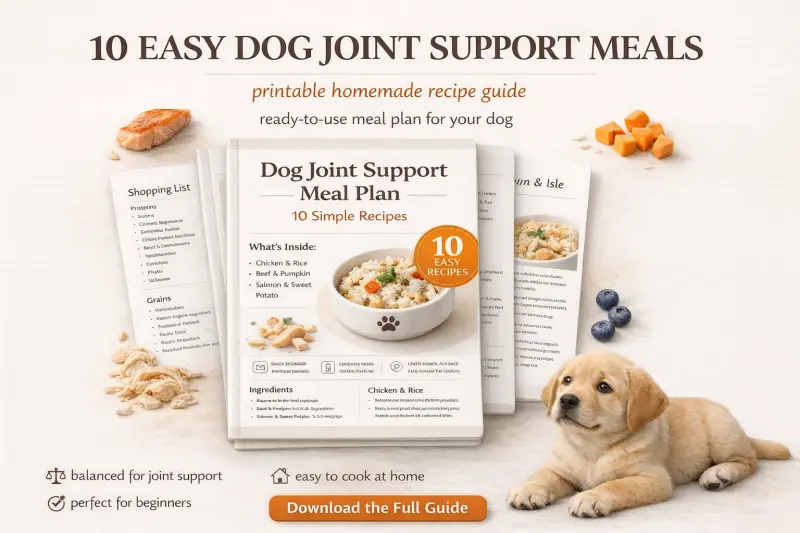
📘 What You’ll Get (10 Recipes):
🥩 Beef & Pumpkin Joint Support Recipe – Anti-inflammatory and easy to digest
🐟 Salmon & Sweet Potato Anti-Inflammatory Recipe – High Omega-3 support
🍗 Chicken & Turmeric Joint Relief Recipe – Gentle daily joint comfort meal
🫐 Turkey & Blueberry Mobility Support Recipe – Antioxidant support for healthy aging
🐑 Lamb & Quinoa Anti-Inflammatory Recipe – Low-allergen joint support meal
🐟 Sardine & Rice Soft Joint Care Recipe – Soft food for senior dogs and recovery days
🦆 Duck & Apple Joint Support Recipe – Alternative low-allergen protein option
🥚 Egg & Spinach Soft Protein Recipe – Easy-to-digest light protein meal
🍲 Bone Broth & Chicken Recovery Recipe – Recovery-focused hydration and comfort support
🦪 Beef & Green Lipped Mussel Joint Boost Recipe – Advanced cartilage and mobility support
🛠️ Each recipe includes a clear purpose, simple structure, and printable guidance for easier everyday use.
🎨 Included in Two PDF Formats:
Color Visual Edition – designed for easy browsing, mobile reading, and quick visual understanding.
Black-and-White Printable Edition – designed for clean printing, kitchen use, and low-ink practical reference.
This gives you one version to view comfortably and another version to actually use while cooking.
Scroll down to explore each recipe individually. You can use one card at a time, save a single favorite, or keep the full collection as a practical mobility support reference for everyday life with your dog.
What You’ll Find in This Collection
Inside this guide, you’ll find ten homemade dog food recipes organized as a functional joint support system. Some meals focus on anti-inflammatory support, while others are designed for soft texture, sensitive digestion, recovery periods, or long-term mobility care for aging dogs.
Each recipe is written in a way that feels realistic and usable, with straightforward ingredients and practical combinations that support daily feeding without adding unnecessary complexity.
Why the Two PDF Versions Are Useful
This collection includes both a color visual version and a black-and-white printable version because they serve different purposes in real daily life. The color edition is easier to browse on your phone or tablet, especially when you want a quick visual reminder of what each meal looks like.
The black-and-white version is more practical when you actually cook. It prints cleanly, uses less ink, and removes visual distractions, which makes it easier to keep beside you in the kitchen while you follow the steps or check proportions.
How to Use the Individual Cards
Each recipe card can be used on its own or combined into a rotating meal routine. Some dog parents use soft meals during recovery or low-appetite days, while others keep low-allergen options ready for sensitive digestion and anti-inflammatory meals for long-term joint care.
The collection is designed to reduce guesswork. Instead of wondering what to cook next, you can choose a recipe based on your dog’s needs, energy level, chewing comfort, and daily condition.
Why This Set Works Together
These recipes were selected to work together as a small, intentional support system rather than as unrelated meals. Across the set, you’ll find a balanced mix of softer textures, anti-inflammatory ingredients, gentle proteins, hydration-friendly meals, and more advanced joint-focused recipes.
This makes the collection more useful over time. You are not just downloading recipes – you are building a flexible feeding library that can support different seasons, life stages, and recovery moments.
Emma’s Notes
What helped me most was not finding one perfect recipe. It was having a small set of meals I could rotate depending on how Ethan was doing.
Some days called for something softer. Some days I wanted more anti-inflammatory support. Some days I needed a gentler protein that felt easier on digestion. Having both a visual version and a printable version also made a real difference for me. One is easier to browse, and the other is easier to actually cook from. This guide reflects that real-life rhythm and gives you something practical to come back to instead of starting from scratch every time.
Joint Support Recipe – Beef & Pumpkin for Easy Daily Relief
This is a soft homemade dog food recipe built around beef, pumpkin, and gentle joint-support ingredients. It works well for dogs who need a warmer, easier-to-eat meal that does not feel too heavy. I like this one as a steady starting recipe for older dogs, large breeds, or pups who seem stiff after rest.

Download Complete Joint Support Dog Food PDF Guide
📘 What You’ll Get:
• Clean, printable layout with no clutter
• Exact ratios or texture guidance
• Step flow based on vet-informed prep habits
• Helps avoid common mistakes (sticky / uneven / inconsistent)
• Two versions: full-color and black-and-white print
• No ads, no pop-ups – just a simple working version
Quick Overview
- Time: 20-25 minutes
- Difficulty: Easy
- Best For: Senior dogs, large breeds, and dogs needing a softer joint-friendly meal
- Focus: Soft texture, anti-inflammatory support, and simple batch prep
Step-by-Step Instructions
- Cook the beef Gently cook lean ground beef in a pan until fully done, then drain excess fat so the final mix stays easier on the stomach.
- Soften the pumpkin base Warm plain pumpkin puree until smooth and easy to stir, then set it aside so it blends evenly without clumping.
- Mix the core ingredients Combine the cooked beef with pumpkin and your chosen joint-support add-ins. This is usually where I rely on a fixed ratio so I do not adjust midway.
- Check texture before serving Stir until the mixture looks moist, soft, and easy to scoop. Add a small splash of warm water or broth if it feels too dense.
- Cool and portion Let the food cool fully, then divide it into consistent servings so daily feeding feels easier and more repeatable.
Why This Helps
This recipe works because it keeps the texture soft and the ingredient list practical. Beef gives the meal substance, pumpkin helps keep the bowl gentle and easy to mix, and the overall consistency is simple to repeat when you want a steady routine. It is especially helpful for dogs who do better with warm, moist meals instead of dry or crumbly textures.
Emma’s Notes
This is one of the easiest joint-support meals for me to keep in rotation because it feels filling without turning greasy or heavy. When Ethan seems a little stiff, I usually start with this style of bowl before trying anything more layered.
I usually use a green lipped mussel powder because it makes this part easier without changing the texture too much.
I keep a consistent version nearby so I do not adjust texture or ratios mid-way.
Things to Watch
- Use plain pumpkin puree only, not pie filling with sugar or spices.
- Keep added oils and powders light at first if your dog is new to rich supplements.
- Store leftovers in sealed portions and use within a safe fridge window, or freeze for easier batch prep.

Quilted Dog Car Seat Cover with Hammock Style
I like using a back seat cover like this anytime Ethan is riding with me, especially on muddy walks, vet runs, or longer drives where I know the back seat is going to take the hit. It gives him one clear space to settle while keeping hair, dirt, and damp paws off the seats.
What I find most useful is the hammock-style setup. It helps close the gap behind the front seats, adds a little more boundary during the ride, and makes cleanup much easier afterward. I still keep a towel nearby for especially wet days, but this is the layer that saves my car from becoming part of the adventure.
- Best for: Daily drives, muddy paws, vet trips, and weekend outings
- Why it helps: Protects the back seat while giving dogs a more defined riding space
- How I use it: Keep it installed for everyday use and shake it out after messy trips
- Good to know: Check strap fit, seat anchors, and door coverage for your car size
Anti-Inflammatory Recipe – Salmon & Sweet Potato for Smoother Joint Support
This is a homemade anti-inflammatory dog food recipe built around salmon, sweet potato, and naturally supportive fats. It works especially well for dogs who need a softer meal with more Omega-3 support in their daily routine. I like this one when I want a bowl that feels nourishing, joint-friendly, and easy to rotate into a weekly plan.

📘 What You’ll Get:
• Clean, printable layout with no clutter
• Exact ratios or texture guidance
• Step flow based on vet-informed prep habits
• Helps avoid common mistakes (sticky / uneven / inconsistent)
• Two versions: full-color and black-and-white print
• No ads, no pop-ups – just a simple working version
Quick Overview
- Time: 20-25 minutes
- Difficulty: Easy
- Best For: Senior dogs, large breeds, and dogs needing more anti-inflammatory meal support
- Focus: Omega-rich texture, soft consistency, and easy weekly rotation
Step-by-Step Instructions
- Cook the salmon gently Bake, steam, or poach the salmon until fully cooked and easy to flake, then remove any bones and break it into small soft pieces.
- Prepare the sweet potato base Cook the sweet potato until very soft, then mash it until smooth so it blends evenly with the salmon.
- Mix in the core support ingredients Combine the salmon, mashed sweet potato, and flaxseed, then stir until the texture looks moist and uniform. This is usually where I rely on a fixed ratio so I do not adjust midway.
- Add the extras carefully Fold in a small amount of chia seeds and finely chopped or softened broccoli so the bowl stays balanced without becoming too chunky.
- Cool and portion Let everything cool fully before serving, then divide into steady portions for the fridge or freezer so repeat feeding feels simple.
Why This Helps
This recipe is naturally suited to anti-inflammatory feeding because the base already leans into softer texture and better fat quality. Salmon brings a strong Omega-3 profile, sweet potato helps hold the mix together without making it dry, and the added seeds make the bowl feel more complete without turning it into a complicated prep project. It is one of the easiest ways to build a joint-support meal that still feels practical on busy weeks.
Emma’s Notes
This is one of the bowls I reach for when I want something a little more supportive than a basic protein-and-veg mix. It feels softer, smoother, and easier to keep consistent, especially when I am batch prepping a few days at once.
I usually add a little pet omega-3 fish oil when I want to reinforce the anti-inflammatory side without changing the recipe structure.
For dogs that already seem stiffer than usual, this is also the kind of meal I pair with a more structured joint routine instead of trying to fix everything through the bowl alone.
Things to Watch
- Always check salmon carefully for bones before mixing it into the final bowl.
- Start with small amounts of added oil or seeds if your dog is not used to richer meals.
- Keep portions moist but not oily, and store extras in sealed containers for easier repeat feeding.
Joint Relief Recipe – Chicken & Turmeric for Easy Daily Anti-Inflammatory Support
This is a lighter homemade dog food recipe built around chicken, turmeric, and soft vegetables for everyday joint support. It works well when you want a simple bowl that feels gentle, practical, and easy to keep in rotation. I like this one for regular meal prep because it is easy to mix, easy to portion, and easy to pair with supportive powders or oils.

Download Complete Joint Support Dog Food PDF Guide
📘 What You’ll Get:
• Clean, printable layout with no clutter
• Exact ratios or texture guidance
• Step flow based on vet-informed prep habits
• Helps avoid common mistakes (sticky / uneven / inconsistent)
• Two versions: full-color and black-and-white print
• No ads, no pop-ups – just a simple working version
Quick Overview
- Time: 20 minutes
- Difficulty: Easy
- Best For: Dogs needing a lighter daily joint-support meal with simple anti-inflammatory ingredients
- Focus: Soft texture, easy rotation, and practical everyday prep
Step-by-Step Instructions
- Cook the chicken until tender Gently cook boneless chicken breast until fully done, then shred or chop it into small soft pieces that mix easily into the bowl.
- Soften the carrot base Steam or boil the carrots until they are very soft, then mash or finely chop them so the final texture stays easy to eat.
- Blend in the turmeric carefully Mix the chicken and carrots with turmeric, then add a very small amount of black pepper and olive oil so the bowl stays balanced without tasting overly rich.
- Adjust the consistency Stir until the mixture looks soft and evenly coated. This is usually where I rely on a fixed ratio so I do not adjust midway.
- Cool and portion for repeat use Let the mixture cool fully, then divide it into even servings so daily feeding feels simpler and more consistent through the week.
Why This Helps
This recipe works well because it keeps everything simple. Chicken gives you a lean, familiar base, carrots help soften the texture, and turmeric adds a practical anti-inflammatory angle without making the meal feel heavy. It is especially useful when you want a bowl that can handle regular rotation and still leave room for added support like joint powders, fish oil, or digestive help.
Emma’s Notes
This is one of the easiest bowls for me to keep on repeat because nothing about it feels fussy. When I want a lighter joint-support meal that still feels useful, this is usually where I start.
I usually mix in a little joint care powder because it blends in smoothly and does not force me to change the texture of the bowl.
On weeks when I am rotating richer meals too, I like having a consistent version nearby so I do not keep adjusting the balance from one batch to the next.
Things to Watch
- Use turmeric lightly at first, especially if your dog is not used to spice-adjacent ingredients.
- Do not overdo the black pepper or oil, because too much can make the bowl harder on sensitive stomachs.
- Store extra portions in sealed containers and recheck texture after chilling, since chicken mixes can firm up in the fridge.

Bousnic Remote Dog Training Collar
I only look at a remote collar like this as a more advanced tool, not a shortcut and definitely not the first thing I reach for with a young dog. For me, the real priority is always clear cues, steady repetition, and building calm habits first.
If someone is considering one, I think it only makes sense when they already have a thoughtful training plan and understand exactly why they’re using it. I would never treat something like this as everyday puppy gear, and I’d be extra careful about fit, timing, and whether a gentler option could solve the same issue.
- Best for: More advanced training setups where a clear plan is already in place
- Why it matters: This is a specialized tool, not a default starting point
- How I think about it: Training basics, consistency, and lower-pressure methods come first
- Good to know: Fit, timing, and responsible use matter more than the device itself
Mobility Support Recipe – Turkey & Blueberry for Everyday Senior Dog Support
This is a homemade dog food recipe built around turkey, blueberries, and gentle everyday support ingredients for older dogs. It works especially well when you want a bowl that feels light, steady, and easy to keep in regular rotation. I like this one for senior-dog meal planning because it gives you a practical mix of protein, antioxidants, and soft texture without turning prep into a whole production.

Download Complete Joint Support Dog Food PDF Guide
📘 What You’ll Get:
• Clean, printable layout with no clutter
• Exact ratios or texture guidance
• Step flow based on vet-informed prep habits
• Helps avoid common mistakes (sticky / uneven / inconsistent)
• Two versions: full-color and black-and-white print
• No ads, no pop-ups – just a simple working version
Quick Overview
- Time: 20-25 minutes
- Difficulty: Easy
- Best For: Senior dogs and dogs needing a lighter daily bowl with antioxidant support
- Focus: Soft texture, daily maintenance, and practical senior-dog rotation
Step-by-Step Instructions
- Cook the turkey until soft Gently cook lean turkey until fully done, then break it into small, soft pieces so it mixes evenly and stays easy to chew.
- Prepare the oat base Cook the oats until very soft and slightly thick, giving the bowl a smoother texture that helps hold the ingredients together.
- Add the antioxidant ingredients Stir in the blueberries and finely chopped or softened spinach so the mix stays balanced without becoming too coarse.
- Finish with the supportive fats Add a small amount of flaxseed oil and mix until the bowl looks evenly coated. This is usually where I rely on a fixed ratio so I do not adjust midway.
- Cool and portion for routine use Let the mixture cool fully, then divide it into even servings so daily feeding stays simple and repeatable through the week.
Why This Helps
This recipe is useful because it leans into a softer, lighter structure that still feels supportive for older dogs. Turkey keeps the bowl practical and familiar, oats help the texture stay gentle, and blueberries bring an easy antioxidant angle without making the prep complicated. It is the kind of meal that works well as part of a steady maintenance routine instead of a one-off fix.
Emma’s Notes
This is one of the bowls I like when I want something that feels calm and easy to keep on repeat. It does not feel too rich, but it still gives me enough room to build a more supportive routine around it.
I usually add a little joint superfood powder because it fits this kind of daily maintenance bowl without making the texture awkward.
For older dogs, I care more about keeping the routine consistent than making every bowl feel “extra,” so this is the kind of recipe I come back to when I want something steady.
Things to Watch
- Keep blueberries in a moderate amount so the bowl stays balanced and not overly sweet.
- Use spinach lightly and chop it well so the final texture stays easy for older dogs to manage.
- Store portions in sealed containers and stir before serving if the oat base thickens too much after chilling.
Anti-Inflammatory Recipe – Lamb & Quinoa for Sensitive Dogs with Joint Needs
This is a gentle homemade dog food recipe built around lamb, quinoa, and simple anti-inflammatory ingredients. It works especially well for dogs with sensitive stomachs or food intolerances who still need steady joint support. I like this one when I want a clean, low-trigger bowl that feels balanced and easy to repeat without causing flare-ups.

Download Complete Joint Support Dog Food PDF Guide
📘 What You’ll Get:
• Clean, printable layout with no clutter
• Exact ratios or texture guidance
• Step flow based on vet-informed prep habits
• Helps avoid common mistakes (sticky / uneven / inconsistent)
• Two versions: full-color and black-and-white print
• No ads, no pop-ups – just a simple working version
Quick Overview
- Time: 25 minutes
- Difficulty: Easy
- Best For: Sensitive dogs, food intolerance cases, and dogs needing low-trigger joint support
- Focus: Gentle digestion, anti-inflammatory balance, and clean ingredient rotation
Step-by-Step Instructions
- Cook the lamb gently Cook lean lamb until fully done, then drain excess fat so the final bowl stays easier on sensitive stomachs.
- Prepare the quinoa base Rinse quinoa thoroughly, then cook until soft and fluffy so it blends smoothly into the mix.
- Add the greens and anti-inflammatory elements Stir in finely chopped or softened spinach along with a small amount of ginger for a light anti-inflammatory boost.
- Mix in the supportive seeds Add ground pumpkin seeds and combine everything until the texture looks even and easy to scoop. This is usually where I rely on a fixed ratio so I do not adjust midway.
- Cool and portion carefully Let the mixture cool fully, then divide into consistent portions so you can maintain a steady feeding routine without constant adjustments.
Why This Helps
This recipe works well because it keeps things simple and low-trigger while still supporting joint health. Lamb offers an alternative protein that many sensitive dogs tolerate better, quinoa provides a lighter grain base, and the added ingredients help support inflammation without making the bowl overly complex. It is especially useful when you need a dependable recipe that will not disrupt digestion.
Emma’s Notes
This is the kind of bowl I use when I want to play it safe but still feel like I am supporting joint health. It feels clean, predictable, and easy to keep consistent without second-guessing every ingredient.
I usually mix in a small amount of green lipped mussel powder because it adds joint support without making the recipe feel heavier or harder to digest.
When dealing with sensitive dogs, I focus more on consistency than complexity, so this is one of the recipes I keep coming back to.
Things to Watch
- Introduce lamb gradually if your dog has not had it before, even though it is often considered a low-sensitivity protein.
- Use ginger in very small amounts to avoid upsetting sensitive stomachs.
- Monitor stool consistency when adding seeds or supplements and adjust slowly if needed.

Bedsure Calming Dog Bed
I like having a bed like this in the spots where Ethan naturally settles on his own, especially during the first weeks when I want rest to feel easy and predictable. The round shape gives him a soft place to curl up without making the whole room feel crowded.
What I pay attention to most is whether a bed actually gets used, not just whether it looks cozy. A plush option like this can work well for dogs who like to nest, lean into the edges, or circle a few times before sleeping. I usually place it in a quiet corner first, then let the routine make the bed feel familiar.
- Best for: Puppies and dogs who like soft, curled-up rest spots
- Why it helps: Creates a defined resting place that feels warm and contained
- How I use it: Set it in a calm corner and let it become part of the daily rest routine
- Good to know: Choose the size based on your dog’s sleeping style, not just weight
Soft Joint Care Recipe – Sardine & Rice for Gentle Senior-Friendly Support
This is a soft homemade dog food recipe built around sardines, rice, and gentle joint-support ingredients. It works especially well for older dogs, picky eaters, or dogs with weaker teeth who need an easier texture. I like this one when I want a simple, moist bowl that supports joints while staying easy on digestion.

Download Complete Joint Support Dog Food PDF Guide
📘 What You’ll Get:
• Clean, printable layout with no clutter
• Exact ratios or texture guidance
• Step flow based on vet-informed prep habits
• Helps avoid common mistakes (sticky / uneven / inconsistent)
• Two versions: full-color and black-and-white print
• No ads, no pop-ups – just a simple working version
Quick Overview
- Time: 15-20 minutes
- Difficulty: Easy
- Best For: Senior dogs, dogs with dental issues, or dogs needing soft and easy-to-digest meals
- Focus: Soft texture, high moisture, and gentle joint support
Step-by-Step Instructions
- Cook the rice until very soft Prepare white rice with extra water so it becomes slightly soft and moist, making the final bowl easier to eat.
- Prepare the sardines Use cooked or canned sardines in water, mash them thoroughly, and check carefully for any bones before mixing.
- Blend in the pumpkin base Add plain pumpkin puree and mix until the texture becomes smooth and easy to scoop. This is usually where I rely on a fixed ratio so I do not adjust midway.
- Add supportive ingredients Stir in a small amount of chopped parsley and optional fish oil to enhance the fatty acid profile without making the bowl too oily.
- Cool and portion Let the mixture cool fully, then portion into soft servings that are easy to scoop, store, and reheat if needed.
Why This Helps
This recipe is especially useful because it focuses on texture first. Sardines naturally provide Omega-3 fatty acids for joint support, while rice and pumpkin create a soft, cohesive base that is easy to digest and gentle on the stomach. It is ideal for dogs who need both joint care and a meal that does not require much chewing effort.
Emma’s Notes
This is one of the easiest meals to use when a dog seems less interested in harder food or needs something softer after a long day. It feels simple but still does the job.
I usually pair this with joint support chews because it is easier to separate the meal texture from the joint supplement routine.
When meals are already soft like this, I focus more on keeping things consistent rather than adding too many extras at once.
Things to Watch
- Always double-check sardines for bones, especially if using canned versions.
- Keep fish oil additions light to avoid making the meal too rich for sensitive stomachs.
- Store in airtight containers and stir before serving if the mixture thickens after refrigeration.
Joint Support Recipe – Duck & Apple for Sensitive Skin and Joint Balance
This is a homemade dog food recipe built around duck, apple, and gentle ingredients for dogs with sensitivities. It works especially well for dogs who need a lower-allergen protein while still supporting joints and coat health. I like this one when I want a balanced bowl that supports mobility, digestion, and skin comfort at the same time.

Download Complete Joint Support Dog Food PDF Guide
📘 What You’ll Get:
• Clean, printable layout with no clutter
• Exact ratios or texture guidance
• Step flow based on vet-informed prep habits
• Helps avoid common mistakes (sticky / uneven / inconsistent)
• Two versions: full-color and black-and-white print
• No ads, no pop-ups – just a simple working version
Quick Overview
- Time: 25 minutes
- Difficulty: Easy
- Best For: Dogs with food sensitivities, skin issues, or needing joint + coat support
- Focus: Low-allergen protein, balanced nutrition, and soft, easy-to-mix texture
Step-by-Step Instructions
- Cook the duck thoroughly Gently cook lean duck meat until fully done, then chop or shred into small pieces to keep the texture easy to mix.
- Prepare the sweet potato base Cook sweet potato until very soft, then mash it into a smooth base that helps bind the ingredients together.
- Add apple and carrot Finely chop or lightly cook apple and carrot, then mix them in to add gentle fiber and natural sweetness.
- Blend in supportive fats Add a small amount of coconut oil and mix until evenly coated. This is usually where I rely on a fixed ratio so I do not adjust midway.
- Cool and portion Let the mixture cool fully, then divide into consistent portions for easier feeding and storage.
Why This Helps
This recipe works well because it combines a less common protein with gentle supporting ingredients. Duck is often better tolerated by dogs with sensitivities, while apple and sweet potato help maintain digestive balance. The addition of healthy fats supports both joint lubrication and coat condition, making this a useful dual-purpose meal.
Emma’s Notes
This is one of the recipes I use when I want to support both joints and skin at the same time without overcomplicating things. It feels like a clean reset meal for dogs that react to heavier foods.
I usually pair this with joint care soft chews because they are easier to give to picky dogs compared to tablets or powders.
When I am focusing on coat health too, adding a bit of fish oil alongside this meal makes a noticeable difference over time.
Things to Watch
- Remove apple seeds and core before using, as they are not safe for dogs.
- Use coconut oil in moderation to avoid making the meal too rich.
- Monitor your dog’s response when introducing duck if it is a new protein.

Ergonomic Retractable Dog Leash
I think of a leash like this as a situational tool, not my default for every walk. For quiet open spaces or short potty trips where I want a little more range, it can be useful, especially when I’m still figuring out what pace feels manageable for Ethan.
What matters most to me is control and consistency, so I’m careful about where I use it. In busier areas, I still prefer a standard leash, but for calmer moments this kind of handle can feel easier on the hand and simpler to manage when you want quick adjustments.
- Best for: Quiet walks, short potty breaks, and open low-traffic spaces
- Why it helps: Gives a little extra range while keeping one-handed control simple
- How I use it: Only in places where visibility, distance, and pace are easy to manage
- Good to know: I’d still choose a standard leash first for busy streets or training-heavy walks
Soft Protein Recipe – Egg & Spinach for Gentle Recovery and Daily Balance
This is a light homemade dog food recipe built around eggs, spinach, and easy-to-digest ingredients. It works well for recovery periods, low appetite days, or when you want a softer, simpler meal. I like this one when I need something gentle that still supports overall nutrition without putting pressure on digestion.

Download Complete Joint Support Dog Food PDF Guide
📘 What You’ll Get:
• Clean, printable layout with no clutter
• Exact ratios or texture guidance
• Step flow based on vet-informed prep habits
• Helps avoid common mistakes (sticky / uneven / inconsistent)
• Two versions: full-color and black-and-white print
• No ads, no pop-ups – just a simple working version
Quick Overview
- Time: 15 minutes
- Difficulty: Easy
- Best For: Recovery periods, low appetite dogs, or dogs needing a gentle, easy-to-digest meal
- Focus: Soft texture, light protein, and easy digestion
Step-by-Step Instructions
- Cook the oats until soft Prepare oats with extra water so they become smooth and slightly creamy, creating a gentle base for the meal.
- Prepare the eggs Lightly scramble or boil the eggs, then chop them into small pieces so they mix evenly into the bowl.
- Add spinach and soften Steam or finely chop spinach, then mix it in while keeping the texture soft and easy to chew.
- Blend in light fats and calcium Add a small amount of olive oil and optional cheese, mixing until everything looks evenly combined. This is usually where I rely on a fixed ratio so I do not adjust midway.
- Cool and portion Let the mixture cool completely, then portion into small servings that are easy to store and reheat if needed.
Why This Helps
This recipe works because it reduces load on digestion while still delivering usable nutrition. Eggs provide a highly digestible protein source, oats help maintain a soft, cohesive texture, and spinach adds light micronutrient support. It is not designed as a heavy joint formula, but it pairs well with gentle supplements to support overall balance during lighter feeding phases.
Emma’s Notes
This is one of the meals I rely on when I want to keep things simple and predictable. It feels easy to prepare and does not overwhelm dogs that are already a bit off their usual routine.
I usually pair this with gentle joint chews instead of trying to turn the bowl itself into something too complex.
For recovery periods, I care more about consistency and comfort than adding too many extras, so this kind of recipe stays in my regular rotation.
Things to Watch
- Use cheese in small amounts only, especially for dogs sensitive to dairy.
- Keep the texture soft and moist to avoid making the meal harder to eat.
- Store portions properly and stir before serving if the mixture thickens after refrigeration.
Recovery Recipe – Bone Broth & Chicken for Gentle Joint Comfort and Easy Eating
This is a soft homemade dog food recipe built around bone broth, chicken, and simple recovery-friendly ingredients. It works especially well for senior dogs, low appetite days, or dogs who need a warm, easy-to-finish meal. I like this one when I want something soothing, practical, and easy to pair with supportive powders or oils without changing the structure of the bowl.

Download Complete Joint Support Dog Food PDF Guide
📘 What You’ll Get:
• Clean, printable layout with no clutter
• Exact ratios or texture guidance
• Step flow based on vet-informed prep habits
• Helps avoid common mistakes (sticky / uneven / inconsistent)
• Two versions: full-color and black-and-white print
• No ads, no pop-ups – just a simple working version
Quick Overview
- Time: 20-25 minutes
- Difficulty: Easy
- Best For: Senior dogs, recovery periods, and dogs with lower appetite or softer texture needs
- Focus: Warm moisture, gentle texture, and practical recovery support
Step-by-Step Instructions
- Cook the chicken until tender Gently cook boneless chicken until fully done, then shred it into small soft pieces so it blends easily into the broth-based bowl.
- Prepare the carrot base Steam or boil the carrots until very soft, then mash or finely chop them so they do not interrupt the texture.
- Warm the broth and combine Heat plain bone broth gently, then stir in the shredded chicken and carrots until everything looks evenly coated and moist.
- Add the supportive extras carefully Mix in a small amount of turmeric and a light splash of apple cider vinegar so the bowl stays practical without becoming too sharp. This is usually where I rely on a fixed ratio so I do not adjust midway.
- Cool and portion for repeat feeding Let the mixture cool fully, then portion into small servings that are easy to refrigerate, warm slightly, and serve again later.
Why This Helps
This recipe works well because it prioritizes softness, moisture, and ease. Bone broth helps create a warm, easy-to-finish bowl, chicken keeps the protein familiar and gentle, and the overall texture is usually more inviting for dogs that are not excited about firmer meals. It is a practical option when you want a recovery-friendly bowl that also leaves room for joint powders, fish oil, or digestive support.
Emma’s Notes
This is one of the bowls I come back to when I want food to feel easier, not heavier. It is especially useful on days when a dog seems less interested in eating but still does better with something warm and soft.
I usually stir in a little joint care powder because it blends in easily and does not force me to change the texture or rebuild the recipe.
When recovery or appetite feels like the bigger issue, I focus on getting the bowl consistent first, then layering in support instead of trying to do everything at once.
Things to Watch
- Use plain bone broth only, without onion, garlic, or heavy added salt.
- Keep apple cider vinegar very light so the bowl stays gentle and easy to finish.
- Store portions in sealed containers and recheck texture before serving, since chilled broth mixtures can thicken.
Joint Boost Recipe – Beef & Green Lipped Mussel for Stronger Daily Mobility Support
This is a richer homemade dog food recipe built around beef, green lipped mussel support, and practical ingredients for stronger joint care. It works especially well for dogs who need more than a basic maintenance bowl and benefit from a more focused mobility routine. I like this one as a flagship recipe when I want the meal itself to feel substantial while still leaving room for higher-level joint support.

Download Complete Joint Support Dog Food PDF Guide
📘 What You’ll Get:
• Clean, printable layout with no clutter
• Exact ratios or texture guidance
• Step flow based on vet-informed prep habits
• Helps avoid common mistakes (sticky / uneven / inconsistent)
• Two versions: full-color and black-and-white print
• No ads, no pop-ups – just a simple working version
Quick Overview
- Time: 20-25 minutes
- Difficulty: Easy
- Best For: Senior dogs, large breeds, and dogs needing a more advanced joint-support routine
- Focus: Stronger mobility support, soft texture, and practical daily reinforcement
Step-by-Step Instructions
- Cook the beef until fully done Gently cook lean beef until fully cooked, then drain excess fat so the final bowl feels supportive without becoming too heavy.
- Prepare the pumpkin base Warm plain pumpkin puree until smooth and easy to stir, creating a soft base that helps hold the recipe together.
- Mix in the main support ingredients Combine the cooked beef with pumpkin, then stir until the texture looks even, moist, and easy to scoop.
- Add the advanced joint-support extras Fold in green lipped mussel support, a small amount of glucosamine powder, and fish oil. This is usually where I rely on a fixed ratio so I do not adjust midway.
- Cool and portion for routine use Let the mixture cool fully, then portion into steady servings so the routine stays easy to repeat without guesswork.
Why This Helps
This recipe works well as an advanced option because it combines a filling, familiar protein with stronger joint-support ingredients that are easy to layer into a soft bowl. Beef gives the meal substance, pumpkin keeps the texture manageable, and the added support ingredients help turn the recipe into something more focused than a basic maintenance meal. It is a practical fit for dogs who need more than light, casual support.
Emma’s Notes
This is the bowl I think of when I want the recipe to do more of the heavy lifting. It still feels simple to make, but it gives me a stronger structure to work from when a dog clearly needs more support than a gentle everyday meal.
I usually use a green lipped mussel powder because it is one of the easiest ways to build stronger joint support into the bowl without making the prep complicated.
When I use this recipe, I treat it more like a steady support routine than a one-off meal, because consistency matters more than making one bowl feel extra powerful.
Things to Watch
- Start added powders and oils slowly if your dog is new to stronger joint-support ingredients.
- Keep the bowl moist but not greasy, especially if your dog has a sensitive stomach.
- Store portions in sealed containers and mix well before serving if the support ingredients settle after chilling.
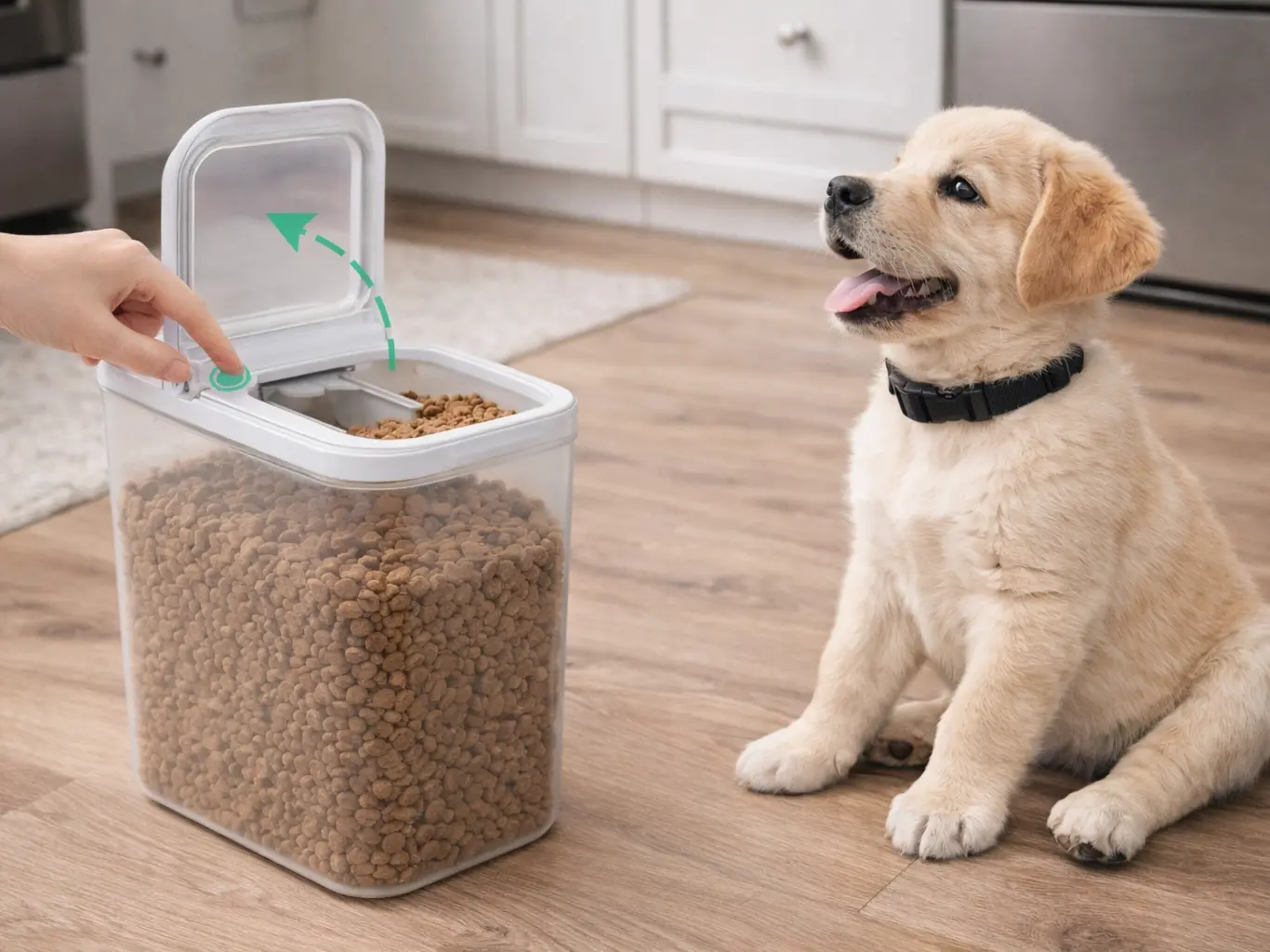
TBMax Airtight Dog Food Container
I like having a container like this once feeding starts to feel repetitive in a good way. It keeps kibble in one clean spot, makes scooping faster, and helps the kitchen feel less like an open bag situation all week long.
What I pay attention to most is whether the lid is easy to open with one hand and easy to close fully. If I’m measuring food every day, I want the routine to stay simple. A container like this works best when it’s actually convenient enough that I’ll use it every single time.
- Best for: Daily kibble storage and cleaner feeding routines
- Why it helps: Keeps food contained, easier to scoop, and less messy than open bags
- How I use it: Store the current bag in one dedicated feeding zone and refill as needed
- Good to know: Check capacity against your usual bag size before choosing one
Ingredient Spotlight – Why Beef & Pumpkin Work For Joint Health
Lean Ground Beef – Strength Without Extra Inflammation
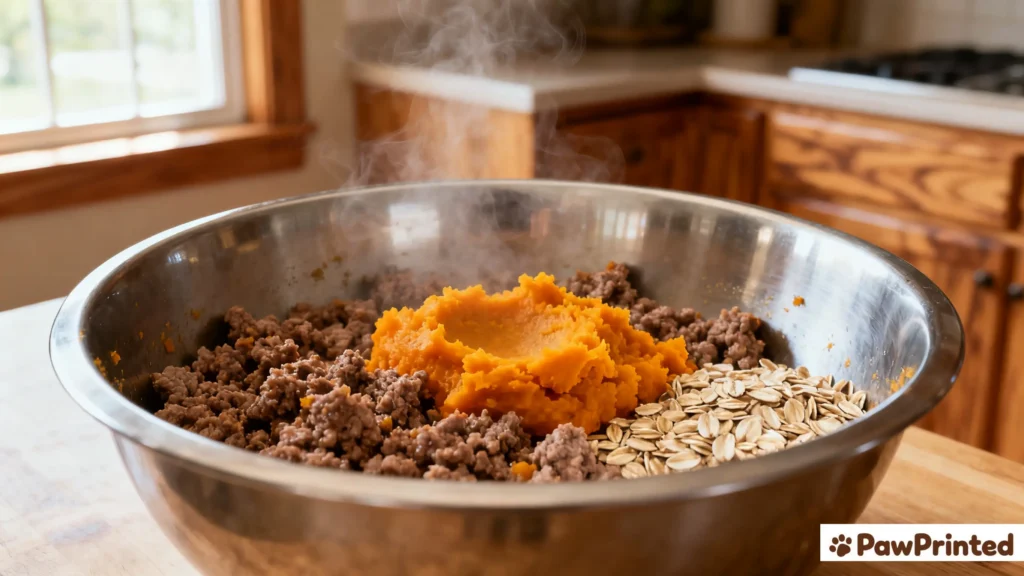
I use 90 percent lean ground beef so Ethan still gets enough high quality protein to maintain muscle mass without loading his bowl with excess saturated fat. Strong muscles support arthritic joints and keep daily movement safer. Trimming the fat also reduces inflammatory load, which is important when you are trying to keep flare ups quiet.
Pumpkin – Gentle Fiber And Antioxidant Carotenoids
Pumpkin brings soft, soluble fiber that is kind to sensitive senior stomachs and helps keep stools comfortable when mobility is already a struggle. Its orange carotenoids act as antioxidants, which support the same long term anti inflammatory goals we have for Ethan. A pumpkin rich base also keeps the food moist and easy to chew.
Oats – Soft Energy For Senior Digestion
Rolled oats give slow burning carbohydrates in a form that is easy to soften and easy to digest. When cooked until creamy, they remove chewing stress and give older dogs a steady energy curve instead of a big spike and crash. That stability helps dogs with arthritis move more comfortably through the day.
Turmeric – Natural Anti Inflammatory Support
Turmeric is included for its well known anti inflammatory properties. It does not replace medication, but many vets are comfortable with it as part of a joint support plan when used in measured amounts. It works best when combined with fat, so pairing it with beef and oil makes nutritional sense. Always speak with your vet before adding new supplements if your dog is already medicated.
Omega Rich Fish Oil – Everyday Mobility Helper
A good omega oil blend helps manage inflammation around the joints and can make stiff dogs more willing to get up and move. I like using a high quality salmon and pollock oil, such as
this joint friendly fish oil,
because it is concentrated and easy to mix in after cooking so the delicate fats are not damaged by heat.
If you want a wider overview of how nutrients like omega 3s, controlled fat, and gentle fibers fit into the bigger joint care picture,
Dog Food for Joint Health – Can Diet Really Help Your Pup?
is a good place to start.
Ingredients You Will Need
Main Base
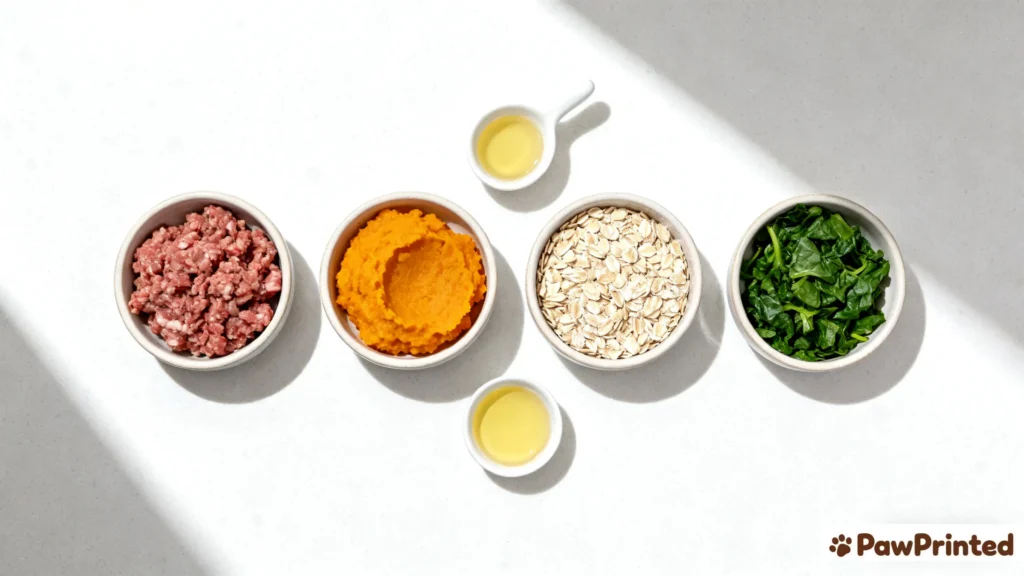
- 1 lb lean ground beef (around 90 percent lean)
- 1 cup pumpkin puree (plain, no sugar or spices)
- 1/2 cup rolled oats, cooked until very soft
Joint Support Add Ons
- 1 teaspoon turmeric powder
- 1 tablespoon omega rich fish oil, added after cooking
- 1 vet approved canine joint supplement, as directed by your vet (optional but helpful)
Liquid & Texture Adjustments
- 1 to 1 1/2 cups water or low sodium dog safe broth
- Extra pumpkin or oats to thicken if needed
- Small splash of water when reheating to keep portions moist
Tools I Actually Use
- A ceramic nonstick pan such as
this GreenLife frying pan
for browning beef with very little added fat. - A sturdy mixing bowl and silicone spatula.
- Silicone freezer molds like
these dog food freezer trays
for easy portioning and reheating.
Whenever you need reliable gear for feeding, grooming, training, or daily walks, browse the
Best Dog Products Guide (Updated 2025)
for carefully reviewed, dog-tested picks that save you time and guesswork.
Step by Step Cooking Guide
Step 1 – Brown The Beef Gently
Start by heating a medium nonstick pan over medium heat. I like using a ceramic option such as
this GreenLife pan
so the beef browns evenly without sticking and without needing extra oil. Add the lean ground beef and break it up into small crumbles with a spatula. Cook until it is just no longer pink, stirring regularly so no pieces burn. Over browning creates compounds that are not ideal for dogs with chronic inflammation, so aim for gentle cooking rather than a deep sear. Once cooked, drain off any visible fat and set the pan aside to cool slightly while you prepare the oats.
Step 2 – Cook The Oats Until Soft
In a small saucepan, combine the rolled oats with enough water to fully cover them, usually about one cup. Bring the mixture to a gentle simmer, then lower the heat and cook for 8 to 10 minutes, stirring occasionally, until the oats are very soft and creamy. For dogs with arthritis, especially seniors, I always aim for a porridge texture that is easy to lap up and swallow without extra chewing effort. If the oats thicken too much, add a splash of water to keep them smooth. Take the pan off the heat and let the oats cool slightly before mixing them into the rest of the recipe.
Step 3 – Combine Beef, Pumpkin, And Oats
Add the cooked beef, cooked oats, and pumpkin puree into a large mixing bowl. Use a sturdy spoon or silicone spatula to fold everything together until the mixture looks uniform. You want each bite to include some beef, some oats, and some pumpkin so there are no surprises for sensitive stomachs. The final texture should be soft, moist, and scoopable rather than dry or crumbly. If the mixture feels too thick for a dog who struggles with chewing, loosen it with a small amount of warm water or dog safe broth. Keep the mixture warm but not hot before you add the turmeric and oil in the next step.
Step 4 – Stir In Turmeric And Omega Oil
Once the mixture has cooled to a comfortable warm temperature, sprinkle the turmeric evenly over the top. Drizzle in your omega rich fish oil, such as the joint focused blend you can find through
this Grizzly salmon and pollock oil link.
Stir slowly but thoroughly so every spoonful carries a little of the anti inflammatory support. Adding the oil at this stage protects the delicate omega fats from high heat and helps bind the turmeric to the food. If your vet has recommended a specific joint supplement powder, you can fold that in here as well, following their dosage guidance closely.
Step 5 – Cool Completely And Portion Safely
Let the finished mixture sit until it reaches room temperature. This cooling time gives the oats a chance to finish absorbing moisture and makes the texture more stable for portioning. I usually scoop the food into silicone molds like
these freezer trays designed for homemade dog food,
pressing each portion down lightly so there are no air pockets. Flat, uniform portions are easier to thaw and reheat evenly, which matters when you are trying to keep a routine for a dog with arthritis.
Step 6 – Serve Warm And Adjust For Your Dog
When you are ready to serve, pop out a portion and warm it just until it is slightly above room temperature. A gentle warmth makes the aroma stronger, which encourages older dogs with low appetite to eat more steadily. If your dog is overweight or on a strict calorie plan, feed smaller portions of this recipe as a topper over their regular joint friendly kibble, not as the entire meal. For lean but stiff dogs, you may be able to use it as a full meal after checking calories with your vet. Always introduce new foods gradually over several days so your dog has time to adjust.
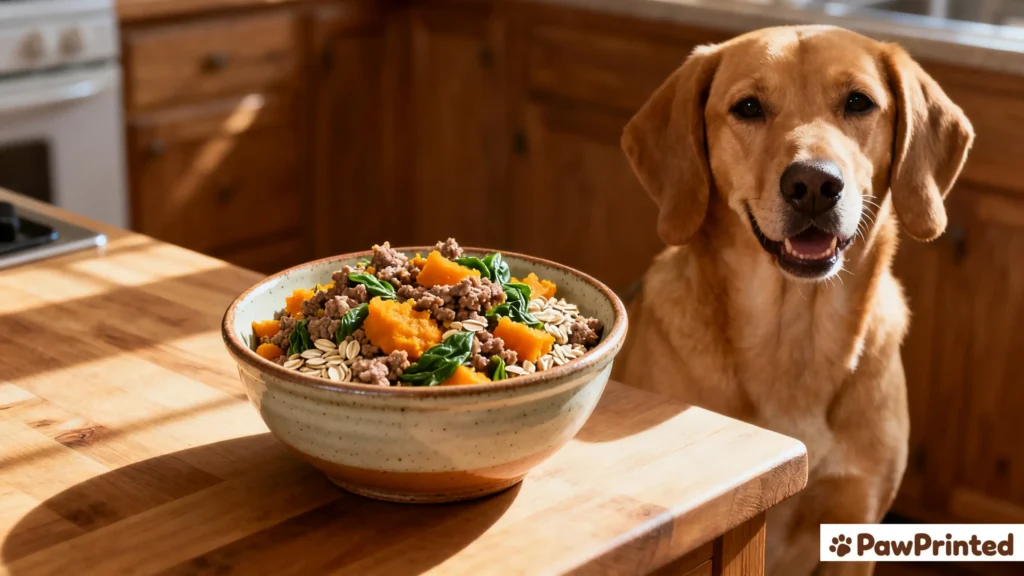
Nutritional Data And Vet Insights
Protein For Muscle Support
Lean ground beef offers complete amino acids that help maintain the muscles supporting arthritic joints. Strong muscles act like shock absorbers, reducing the pounding on damaged cartilage. The key is keeping beef lean so you get protein without excess fat, which can worsen inflammation and weight gain.
Controlled Fat And Omega Balance
Instead of relying on naturally high beef fat, this recipe keeps total fat moderate and adds targeted omega rich oil. That lets you influence the balance toward anti inflammatory omega 3s rather than pro inflammatory omega 6 heavy fats. It is a small adjustment, but over months it can support better mobility.
Gentle Fiber For Sensitive Stomachs
Pumpkin and oats bring a mix of soluble and soft fibers that support stool quality without creating bulky, hard to pass waste. Dogs with arthritis often dislike straining on walks, so anything that keeps potty time smoother will indirectly protect their joints and comfort.
Anti Inflammatory Spice Layer
Turmeric is not a magic bullet, but it adds a gentle anti inflammatory layer that fits nicely with vet recommended plans for arthritis. Combined with omega 3s, weight control, and appropriate medication, it can be one more small nudge in the right direction rather than the only tool you rely on.
Senior Friendly Texture
The final texture is soft, slightly moist, and easy to break apart. That matters for dogs who have sore joints in their jaw or neck and may be reluctant to chew hard kibble. Soft food is not automatically better for all dogs, but for many arthritic seniors it makes the eating experience far less stressful.
Weight And Portion Awareness
Excess weight is one of the biggest factors that worsens arthritis. This recipe is designed to be nutrient dense without being a calorie bomb, but you still need to work with your vet to decide whether it should be a topper, a partial replacement, or a full meal. The same bowl size will not fit every dog.
Vet Tips And Simple Variations
For Dogs Already On Arthritis Medication
If your dog is on NSAIDs or other arthritis medications, always check with your vet before adding turmeric or new supplements. Some dogs with sensitive stomachs need smaller starting amounts or slower transitions. In most cases, this recipe works best as a gentle support on top of a stable medication plan rather than a replacement.
For Overweight Arthritic Dogs
For dogs who need to lose weight, use this recipe as a measured topper over a calorie controlled joint support kibble instead of a full bowl. Focus on smaller portions that still give the anti inflammatory and fiber benefits without adding too many calories. Your vet can help you calculate daily totals.
For Sensitive Stomach Dogs
If your dog has a history of digestive upsets, introduce this arthritis relief dog food slowly over 5 to 7 days. Start with a spoonful mixed into their regular food and watch for loose stools or gas. Pumpkin and oats are usually well tolerated, but every dog has a different threshold.
When Beef Is Not An Option
If beef has not worked well for your dog, you can adapt the same structure with a leaner or alternative protein such as turkey or lamb, as long as your vet agrees. The important pieces are the lean protein, the gentle fiber base, and the anti inflammatory oil and spice layer.
Learning The Bigger Joint Support Picture
Diet is only one part of a good joint care plan. If you want a clearer overview of how daily meals fit alongside exercise and supplements,
Hip & Joint Support Dog Food – What Every Owner Should Know
and
Senior Joint Care Dog Food – How to Support Aging Dogs
lay out what usually helps most dogs over the long term.
Always treat recipes like this as one tool in a larger plan. Your vet knows your dog’s medical history and can help you decide how often to serve this bowl and how to pair it with medication, supplements, and movement.
Serving Ideas And Storage Tips
How Often To Serve
Many families use this arthritis relief dog food once a day as the main meal or as a generous topper over joint friendly kibble. Others use it several times a week for extra comfort on long walk days. The right schedule depends on your dog’s body condition, current food, and medication plan, so ask your vet to help you decide.
Portioning For Your Dog
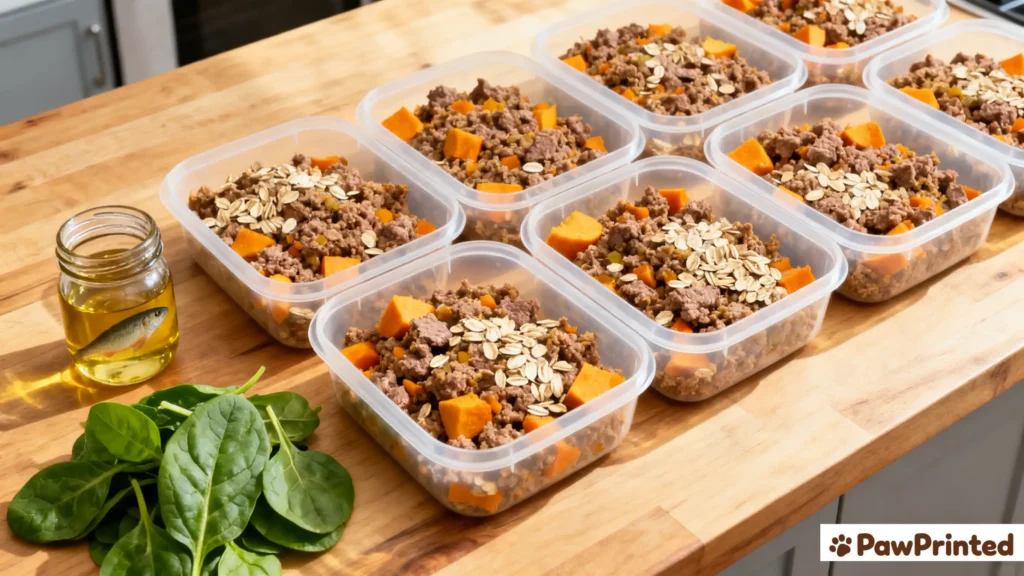
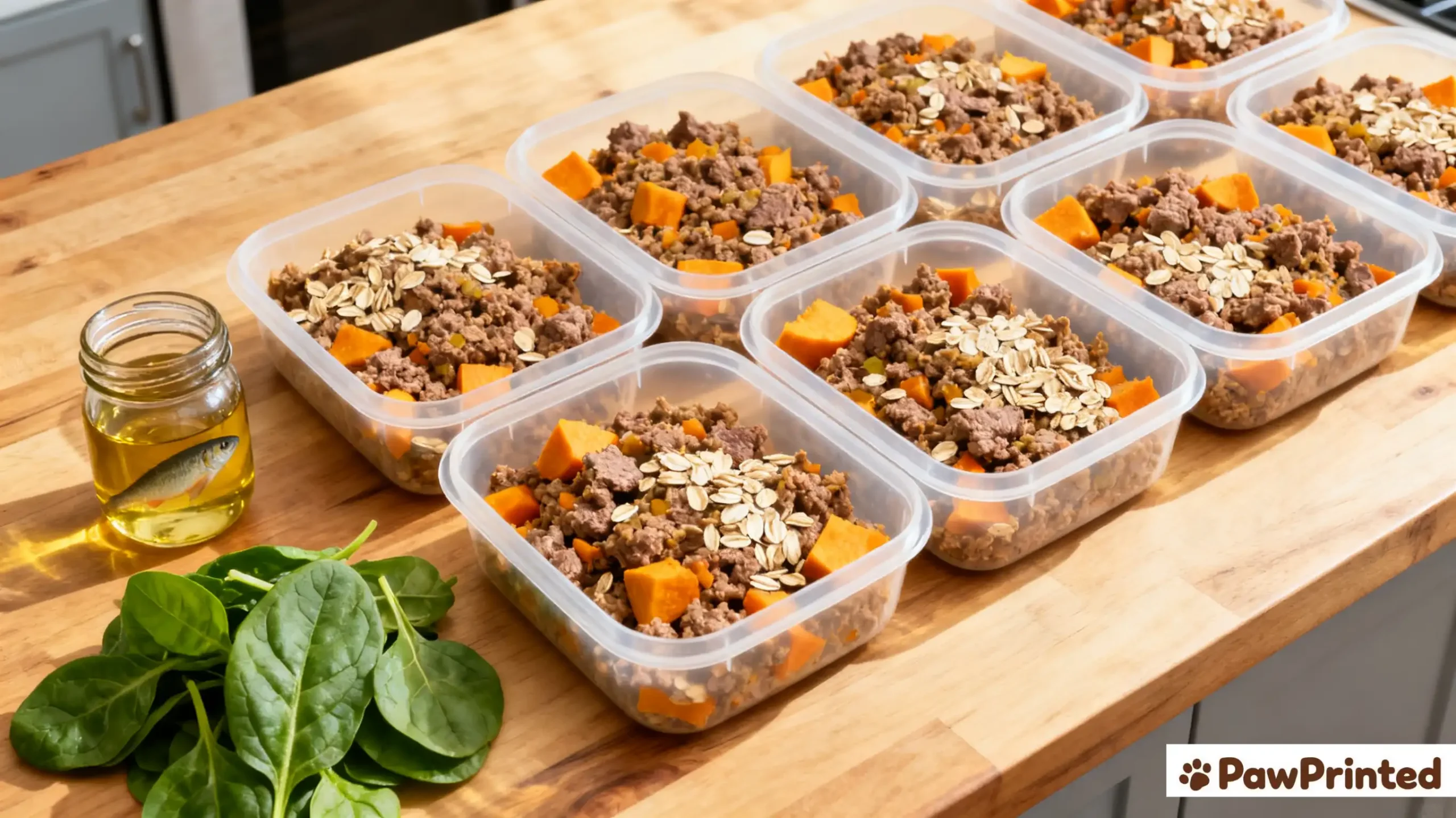
As a rough starting point, one batch will usually make 4 to 6 portions for a medium dog. I like to freeze individual pucks using
these silicone freezer molds
so I can thaw exactly what Ethan needs per meal. Over time you can adjust the portion size up or down based on your vet’s feedback and how your dog maintains weight.
Fridge And Freezer Storage
Fresh portions keep well in the fridge for up to 2 or 3 days when stored in an airtight container. I rotate small batches in a compact jar such as the one you might use for treats, for example something similar to
this LOYOSEL airtight treat container.
For longer storage, keep the rest frozen and only move what you need into the fridge each day.
Storing Kibble And Homemade Together
If you still feed a joint support kibble alongside this recipe, it helps to keep both foods organized. A larger airtight bin like
this IRIS pet food container
works well for dry food, while your cooked portions stay in smaller glass containers or freezer molds. That way you can consistently mix and match without guessing what is left.
If you want more ideas for pans, trays, and storage containers that make homemade joint friendly meals easier to manage, you can always browse
Best Dog Food Making Tools (Vet Approved 2025)
for a full toolkit rundown.
Not sure which nutrition path fits your dog’s current problem? Our
Dog Food Health Guide by Function
walks you through common issues like digestion, allergies, joints, and weight so you can choose the right food strategy.
What Worked For Ethan – Our Real Life Routine
Daily Omega Support
Ethan does best when his omega intake stays consistent. Alongside this beef and pumpkin base, I add a measured pump of a high quality fish oil such as the one available through
our joint focused oil pick.
I mix it in after cooking so the oil stays as fresh and effective as possible.
Joint Chews He Actually Enjoys
On top of food changes, Ethan gets a daily joint chew. He responds well to soft chews like
these PupGrade joint support chews,
which combine glucosamine, chondroitin, and MSM in a texture he can manage even on stiff days. We treat them as a structured part of his routine, not as random snacks.
Prep Once, Serve Calmly All Week
Batch cooking has been a huge relief. I use
the silicone freezer molds
mentioned above so I can prep a full pan on Sunday and simply pop out portions for the next few days. It keeps our mornings calmer, which is good for both Ethan’s stress and mine.
Keeping The Feeding Station Organized
A tidy feeding station makes it easier to stick with a joint care routine. We keep kibble in an airtight bin similar to
this IRIS storage container,
while treats live in something like
this LOYOSEL treat jar.
That separation reminds me which items are part of his arthritis plan and which are just for fun.
When your pup has a specific health need, like a sensitive stomach or joint stiffness, explore the
Functional Homemade Dog Food Recipes – Vet-Guided Cooking Hub
to find gentle, purpose-driven meals that match those issues.
FAQ – Common Questions About This Arthritis Relief Recipe
Can this arthritis relief dog food replace my dog’s regular diet?
In many cases this recipe is best used as a topper or partial replacement rather than a complete diet on its own. It brings helpful elements like lean protein, gentle fiber, and anti inflammatory support, but it may not cover every vitamin and mineral need for every dog. Your dog’s age, size, activity level, and medical history all affect whether a homemade recipe can be fed as a full time diet.
The safest approach is to start by feeding this bowl alongside a complete and balanced joint support kibble or vet recommended diet. Over time, your vet can help you review your dog’s weight, energy, and bloodwork to decide how much of the daily intake can reasonably come from homemade meals. Some owners end up using recipes like this a few times per week, while others build a more comprehensive homemade plan under veterinary guidance.
Think of this recipe as a supportive tool rather than a magic replacement. When you pair it with professional advice, you can find a level that adds comfort without accidentally creating nutrient gaps.
How often can I feed this arthritis relief dog food to my dog?
Most healthy adult dogs with arthritis can safely enjoy this recipe several times per week, and some may be able to eat it daily in controlled portions. The exact frequency depends on your dog’s calorie needs, current food, body condition, and any other medical conditions. Dogs that gain weight easily may need smaller, less frequent servings than lean, active dogs.
A practical starting point is to use this meal once a day as a topper over your dog’s regular arthritis friendly food for one or two weeks. Watch how they respond in terms of stool quality, energy, and weight. If everything looks stable, your vet may approve increasing the number of days or portion size. If your dog is on a strict therapeutic diet for another issue, such as kidney or liver disease, your vet may suggest a more limited schedule.
Always increase homemade meals gradually and recheck with your vet during annual or semi annual visits so their advice can keep pace with your dog’s changing needs.
Is turmeric safe for dogs with arthritis?
Turmeric is generally considered safe for many dogs when used in moderate amounts, especially as part of an arthritis support plan. It has mild anti inflammatory properties and can gently complement the effects of omega 3s, weight control, and appropriate medication. However, not every dog should receive turmeric, and it should never be added in large, unmeasured doses.
Dogs with sensitive stomachs, gallbladder disease, or bleeding disorders may need to avoid turmeric or use very cautious amounts. Turmeric can also interact with certain medications, including blood thinners and some pain relievers. That is why it is important to mention any new supplement or recipe change to your vet, particularly if your dog already takes daily arthritis medication or other long term drugs.
When in doubt, start with the lowest amount suggested in the recipe and watch for changes in stool, appetite, or comfort. If you see anything worrying, stop and speak with your vet before trying again.
Can I use canned pumpkin instead of fresh in this recipe?
Yes, plain canned pumpkin is usually a very good choice for this recipe and often more convenient than fresh pumpkin. What matters most is that the ingredient list contains only pumpkin without added sugar, spices, or pie filling extras. This keeps the fiber and antioxidant benefits without introducing things that could upset your dog’s stomach or add unnecessary calories.
Canned pumpkin is also more consistent from batch to batch, which helps dogs with arthritis who benefit from a predictable routine. Fresh pumpkin can work as well if you roast and puree it until smooth, but you will need to pay extra attention to texture and moisture levels. Some fresh batches can turn out stringier or drier, which may not be as easy for senior dogs to manage.
If you switch between fresh and canned pumpkin, watch your dog’s stool and comfort for a few days to make sure the change in texture does not create any digestive surprises.
What if my dog is overweight and has arthritis, how should I adjust portions?
For dogs who are both overweight and arthritic, portion control is one of the most powerful tools you have. Extra pounds put significant stress on already painful joints, so the goal is to use recipes like this for comfort and anti inflammatory support without increasing total calories. That usually means smaller servings and using the food as a topper instead of a full bowl.
Work with your vet to calculate a target daily calorie range for your dog based on their ideal weight, not their current weight. Then decide how much of that daily total can come from this recipe. In many cases, mixing a small scoop of this arthritis friendly food into a measured amount of light or joint support kibble gives the best of both worlds: portion control plus comfort.
Recheck your dog’s weight every few weeks and adjust serving sizes accordingly. If the scale is not moving in the right direction, ask your vet whether you should reduce the homemade portion size or frequency while keeping the joint support supplements in place.
Wrapping It Up
Living with a dog who has arthritis means paying attention to dozens of small details instead of chasing one big fix. This beef and pumpkin based arthritis relief dog food recipe is one of those small details that can quietly support everything else you and your vet are already doing. It will not erase joint damage, but it can make daily movement, digestion, and mealtime more comfortable.
If you do not want to cook daily, check our dry food picks – those were Ethan’s daily backups.
If you try this recipe, adjust it slowly, watch your dog’s weight and comfort, and keep notes you can share at your next vet visit. Every arthritis plan is a long game, and homemade meals work best when they fit into that wider plan instead of sitting off to the side as a separate experiment.
Author & Vet Review Notes
“From a practical standpoint, I wanted a recipe I could cook on a weeknight without five specialty ingredients. From a vet standpoint, we focused on lean protein, controlled fat, and steady omega 3 support. If you keep portions reasonable and check in with your vet regularly, recipes like this can be a comforting part of a long term arthritis care plan.”
– Emma, Founder at PawPrinted, with review input from our consulting veterinarian
References – Authoritative Sources
The following sources were used to shape the general joint health and nutrition principles behind this recipe. They are included to help you and your vet review the science together.
- Arthritis in Dogs: Diagnosis and Treatment (PetMD, 2022) – Overview of canine arthritis signs, treatment options, and the role of weight management and joint friendly diets.
- Canine Osteoarthritis: Nutritional Management (American Kennel Club, 2021) – Discusses how omega 3s, controlled calories, and appropriate supplements support joint health.
- Omega 3 Fatty Acids in Dog Nutrition (Tufts Veterinary Nutrition, 2020) – Explains how EPA and DHA contribute to inflammation control in arthritic dogs.
- Weight Management and Mobility in Senior Dogs (Hill’s Pet Nutrition, 2020) – Highlights the strong link between body condition and arthritis comfort.
- Dietary Supplements in Osteoarthritis (Frontiers in Veterinary Science, 2018) – Reviews evidence for ingredients such as turmeric, glucosamine, and chondroitin.
Explore More Joint Friendly Guides
If you want to keep building a gentle, long term joint care plan for your dog, these guides are a good next step.
Arthritis Relief Dog Food Recipe (Beef & Pumpkin, Vet Approved)
- Large nonstick skillet
- Silicone spatula
- Airtight dog food containers
- Silicone freezer trays
- Measuring spoons
- Mixing spoon
- Beef Base
- 1 lb lean ground beef
- 1 cup fresh pumpkin purée no sugar, no spices
- 1/2 cup carrots finely chopped
- 1/2 cup green peas
- 1 tbsp olive oil healthy fats for mobility
- Joint Support Add-Ons
- 1 tsp turmeric powder
- 1/4 tsp black pepper bioavailability for turmeric
- 1 tsp crushed eggshell powder or canine calcium supplement
- 1 vet-approved multivitamin
- Optional Tools
- Large nonstick pan
- Silicone spatula
- Airtight dog food storage containers
- Silicone freezer trays for portioning
- Step 1 – Prepare the Base Ingredients
- Start by placing a large nonstick pan over medium heat. Add the lean ground beef and break it apart using a silicone spatula, letting it cook slowly so the fat renders gently without burning. Once the meat begins to turn brown, drain excess fat if needed. Stir in the olive oil, allowing it to coat the beef evenly, which adds valuable omega-rich support for joint mobility. Keeping the heat moderate helps retain moisture, ensuring a softer texture that is easier for stiff or senior dogs to chew.
- Step 2 – Add Pumpkin and Carrots for Fiber Support
- Once the beef is fully browned, fold in the pumpkin purée and carrots. Pumpkin provides gentle fiber that supports digestion while offering anti-inflammatory properties. Carrots add vitamins A and K while maintaining a naturally sweet flavor most dogs enjoy. Stir slowly to blend the mixture evenly, letting the colors combine into a warm, orange-toned base. Allow the mixture to simmer for a few minutes—this softens the carrots, making them easier for dogs with dental discomfort or decreased chewing ability.
- Step 3 – Mix in Peas and Reduce Heat
- Next, pour in the green peas and reduce the heat to low. This prevents overcooking, which can make peas mushy and decrease their nutritional value. Mix gently as the peas warm through, contributing plant-based proteins, vitamins, and steady energy for dogs with joint stiffness. At this stage, check texture to ensure everything remains soft but not overly watery. The base should be hearty, slightly thick, and scoopable.
- Step 4 – Add Turmeric and Black Pepper for Joint Support
- Once the vegetables are softened, sprinkle in the turmeric powder and the tiny pinch of black pepper. Turmeric is widely recognized for its natural anti-inflammatory benefits, especially for dogs with arthritis or early mobility decline. The black pepper enhances absorption, but only in very small amounts. Stir thoroughly to ensure even distribution. Let the mixture cook for 2–3 minutes so the spices bloom without burning.
- Step 5 – Fold in Calcium and Multivitamin Supplement
- Turn off the heat before adding any supplements. Mix in the crushed eggshell powder or a vet-approved calcium source, along with your canine multivitamin. Adding these after cooking ensures nutrients are not lost to heat. Stir carefully to achieve a consistent texture. Supplements help complete the nutrient profile of the recipe, especially for dogs with chronic inflammation or age-related degeneration.
- Step 6 – Cool, Portion, and Serve Safely
- Allow the recipe to cool fully before preparing servings. The texture should be soft, moist, and scoopable—easy for older or stiff dogs to eat without strain. Portion the food into silicone freezer trays for easier daily feeding and long-term storage. Refrigerate up to 3 days or freeze for up to 2 months. Always serve at room temperature or gently warmed, avoiding hot food that can upset sensitive stomachs.