Vet-informed, gentle, and repeatable—this homemade chicken & pumpkin bowl keeps sensitive tummies calm and energy steady.
I’m Emma. Cooking for my pup makes me feel connected to his health. This homemade chicken & pumpkin recipe is simple, budget-friendly, and easy to batch on Sundays. It pairs a lean protein with soft carbs and soluble fiber—great for dogs that do better on predictable, limited-ingredient meals. If you’re switching from kibble or another recipe, follow the Dog Food Transition Guide and keep variables steady for 7–10 days.

⚠️ Red flags—see your vet: repeated vomiting, watery/bloody stool, black/tarry stool, refusal to eat >24h, sudden weight loss, or lethargy. Food helps maintenance—not emergencies.
Why This Recipe Works
- Lean, digestible protein: chicken breast supports muscle without excess fat.
- Soft, steady carbs: rice gives predictable energy and a gentle texture.
- Soluble fiber: pumpkin helps normalize stool during transitions.
- Simple & repeatable: fewer ingredients = fewer variables to upset sensitive guts.
Printable Recipe Card
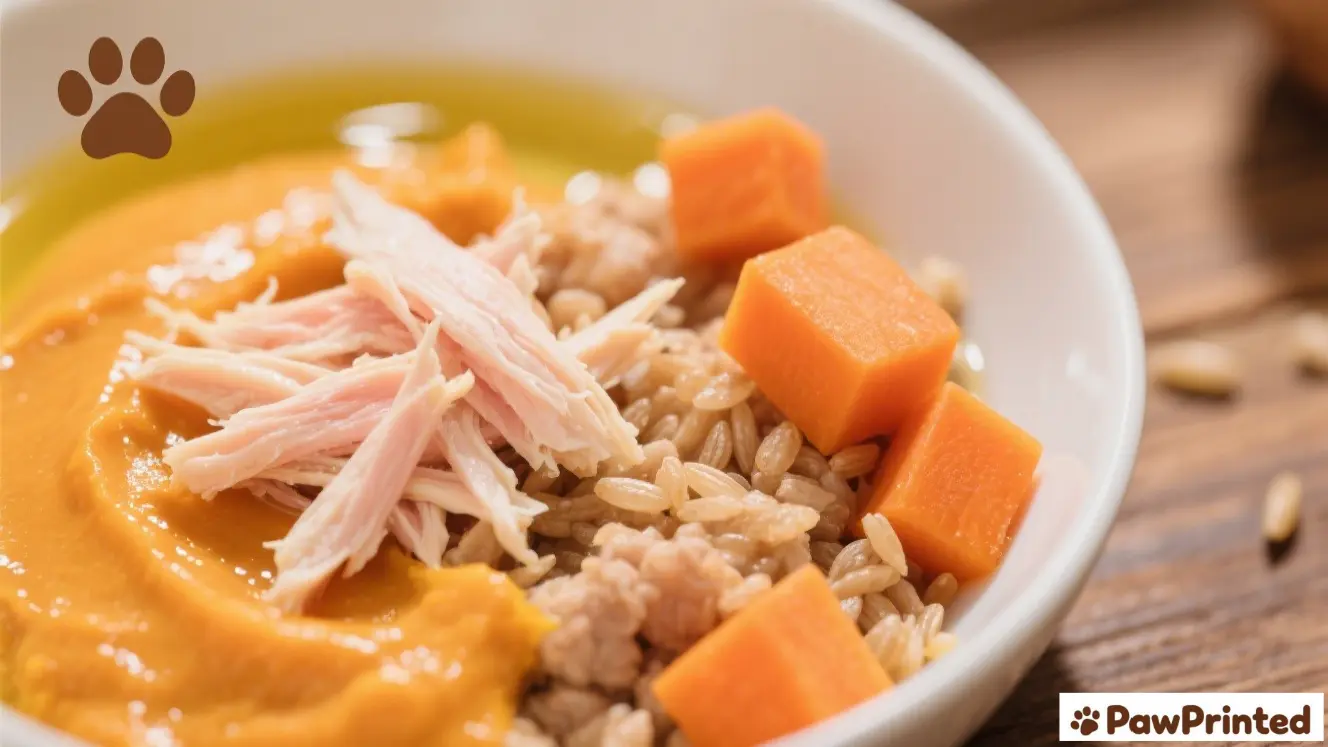
Chicken & Pumpkin Homemade Dog Food (Vet Approved)
- – Medium pot
- Steamer basket
- – Mixing bowl
- Kitchen scale & measuring cups
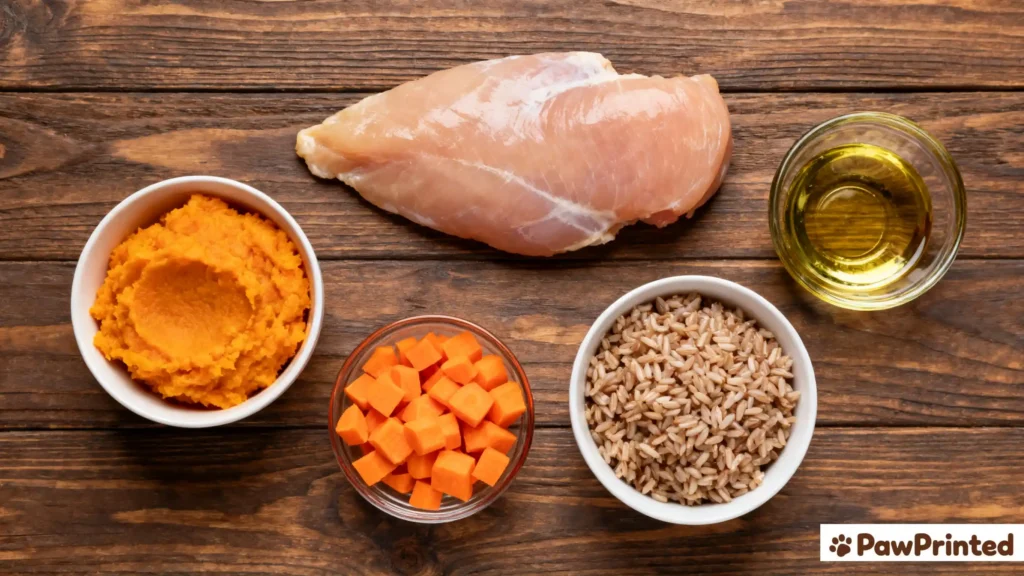
- 2 cups chicken breast boiled, shredded
- 1.5 cups brown rice soft cooked — sub with white rice for very sensitive stomachs
- 1 cup carrots steamed, diced
- 0.5 cup pumpkin puree
- 1 tsp olive oil
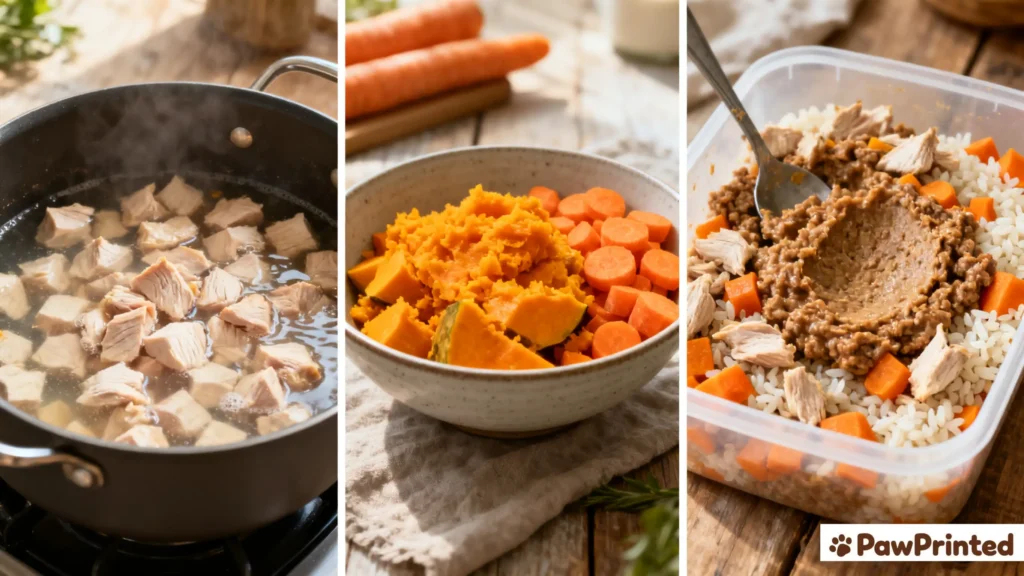
- Wash, trim, and dice chicken and carrots evenly; prepare pumpkin puree.
- Boil chicken 15–20 mins until fully cooked; cook rice until soft; steam carrots until tender.
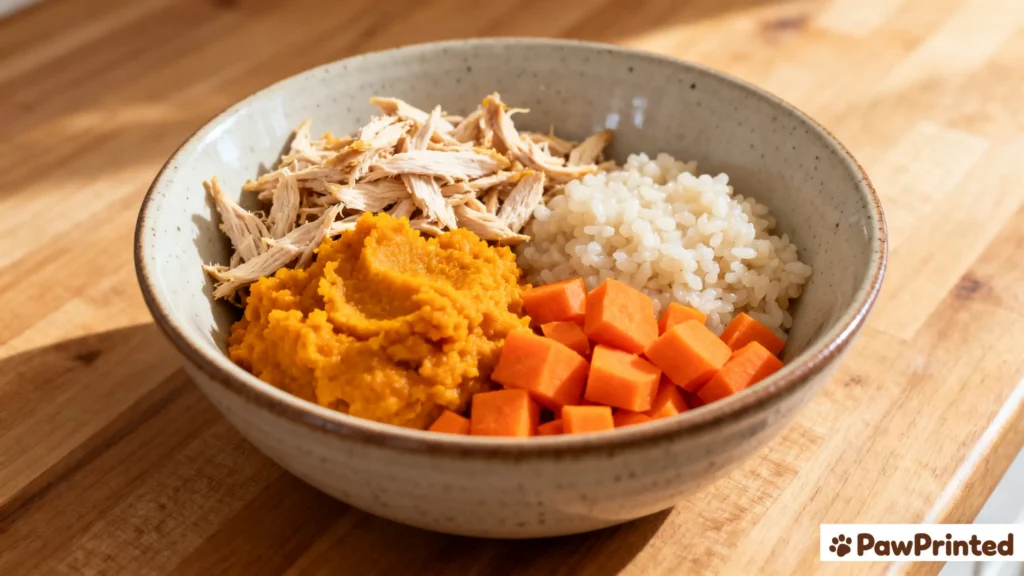
- Shred chicken, combine with rice, carrots, and pumpkin; mix thoroughly.
- Cool to room temperature, portion with kitchen scale, and store in containers.
• Storage: Refrigerate portions for up to 3 days or freeze up to 3 weeks. Thaw overnight in fridge and serve at room temperature.
• Suitable for: Most adult dogs, especially with sensitive stomachs.
• Not suitable for: Dogs with pancreatitis or fat-sensitive conditions (omit olive oil).
Ingredients (Quick Reference)
| Ingredient | Amount | Why It Helps |
|---|---|---|
| Chicken breast (boiled, shredded) | 2 cups | Lean protein; highly digestible |
| Brown rice (soft-cooked) | 1.5 cups | Gentle carbs; steady energy |
| Carrots (steamed, diced) | 1 cup | Beta-carotene; light fiber |
| Pumpkin purée (plain) | 0.5 cup | Soluble fiber; stool consistency |
| Olive oil | 1 tsp | Skin/coat support (omit for fat-sensitive dogs) |
How to Make It (Step-by-Step)
- Prep & weigh: trim visible chicken fat; weigh ingredients for consistency. Set out clean tools and containers.
- Cook separately: boil chicken until fully cooked; cook rice until very soft; steam carrots until fork-tender.
- Combine warm: shred chicken; fold with warm rice, carrots, and pumpkin until evenly coated. Adjust with a splash of warm water if needed.
- Cool & finish: let the mix cool to room temperature; stir in oil (optional). Serve slightly warm, never hot.
- Portion smart: refrigerate up to 3 days; freeze portions 2–3 weeks. Thaw in the fridge; warm gently before serving.
Serving & Storage
- How much: start around 2–3% of body weight/day split into 2 meals; adjust by energy, stool, and body condition.
- Transition: 7–10 days (25% → 50% → 75% → 100%). Follow the Transition Guide.
- Storage: fridge ≤ 3 days; freezer 2–3 weeks in dated, single-serve containers.
Easy Variations
- Protein: chicken ↔ turkey (lean) ↔ (vet-guided) extra-lean beef.
- Carbs: brown rice ↔ white rice (extra gentle) ↔ oats (test tolerance).
- Fiber swap: pumpkin ↔ a little sweet potato purée (go slow).
- Make it hands-off: try our Instant Pot Chicken & Turkey or Crockpot Dog Food.
Helpful backups: If cooking daily isn’t your plan, keep gentle store options on hand—see Best Wet Food for Sensitive Stomach and Best Dry Food for Sensitive Stomach. For age-specific tweaks: Puppy Hub · Senior Hub.
FAQ
Short-term use is fine without extras. For long-term daily feeding, ask your vet about a canine vitamin/mineral supplement and omega-3s. Recheck weight and body condition regularly.
Yes. White rice is often gentler during tummy resets, while brown rice offers more fiber and nutrients. Choose based on your dog’s tolerance and your vet’s advice.
Slow the transition, serve slightly warm, and try a teaspoon of broth for aroma. Persistent refusal or behavior change warrants a call to your vet to rule out medical causes.
Keep variables minimal and follow a 7–10 day blend. Use our Sensitive Stomach & Diarrhea Hub and Transition Guide for pacing and troubleshooting.
Follow PawPrinted On Pinterest
Want more vet-informed homemade recipes and calm-tummy routines? Follow us on Pinterest and save your favorites—we share fresh inspo every week.