When Ethan learned his first reliable “stay,” these tiny cheese & chicken bites were our secret weapon. They’re soft, high-value, and quick to make with real ingredients you already have. In 20–25 minutes you’ll have a jar of training treats that keep your pup motivated without loading on extra calories.
Why Homemade Training Treats Work Better
Positive reinforcement works best when the reward is frequent, tiny, and irresistible. Store-bought options can be salty, fatty, or full of fillers. Homemade lets you control size, texture, and ingredients so you can reward often without overdoing calories. For a simple overview of treat styles, see our homemade dog treats guide.
Ingredients (3–4 Real Foods)
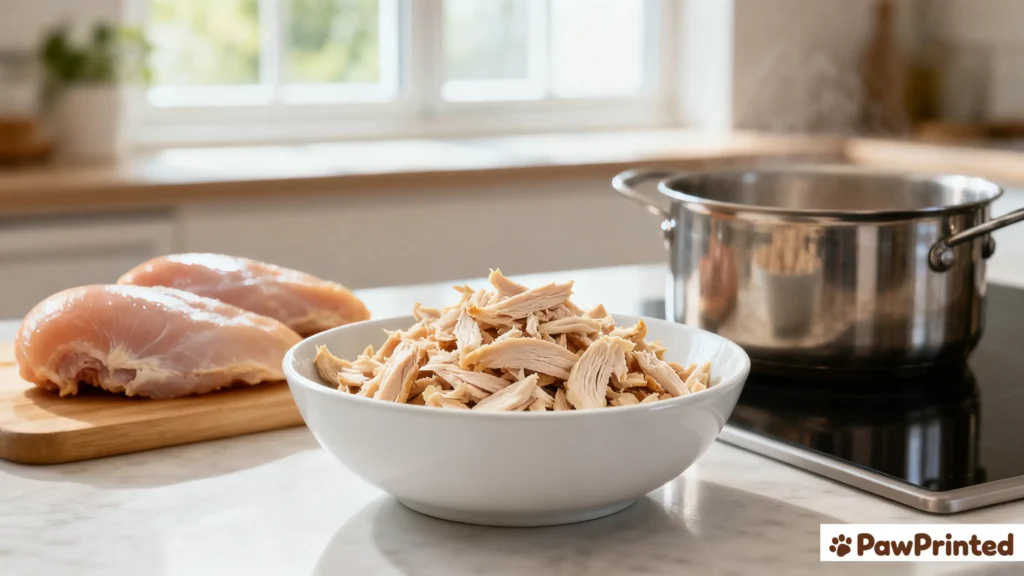
- 1 cup cooked chicken breast, very finely chopped
- 1/2 cup low-fat cheese, shredded
- 1/2 cup oat flour (or pulse rolled oats to a fine meal)
- 1 egg (binder)
- Optional: 1 tsp finely chopped parsley for fresh scent & color
Why this combo: chicken brings lean protein, low-fat cheese adds “wow” aroma for training, and oat flour keeps the mix gentle on most tummies. For calorie-conscious days, alternate with our lighter, wheat-free option like the hypoallergenic duck & rice treats.
Step by Step: How I Cooked It
1) Prep the chicken (no oil, no salt)
Poach or steam chicken breast until fully cooked and tender. Let it cool, then mince very finely so each bite is uniform. The smaller the pieces, the better the mix binds and the softer the final texture. Keep the prep plain — no onions, garlic, or seasoning — so these treats stay training-friendly and tummy-kind.
2) Mix in cheese and oat flour
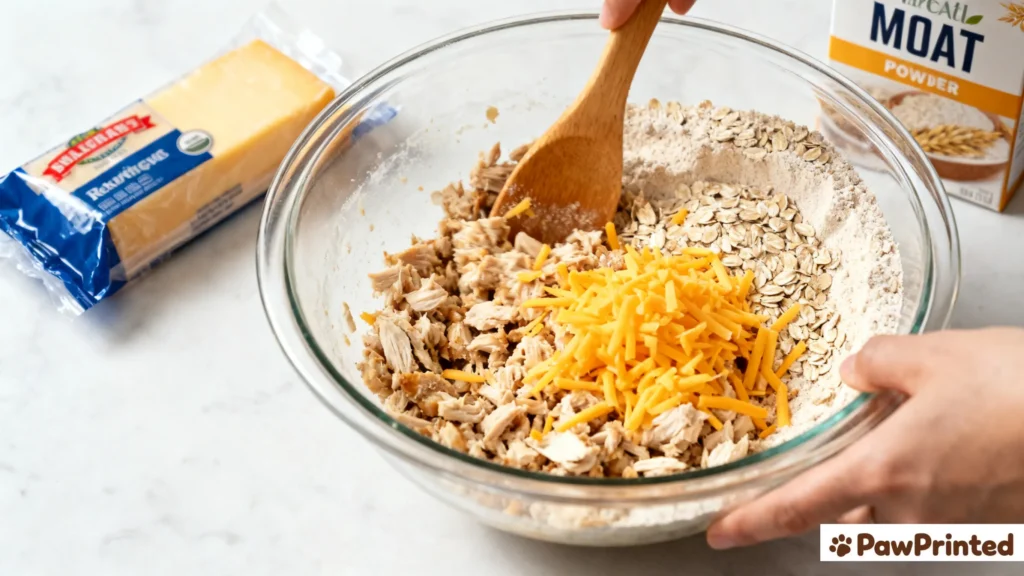
In a bowl, combine the shredded low-fat cheese with oat flour. Toss in the minced chicken and fold to distribute evenly. You want a mixture that’s slightly tacky but not wet. The cheese will melt in the oven, “gluing” flavor into each bite so your dog stays laser-focused during drills.
3) Add egg and shape mini bites
Crack in one egg and mix until the dough holds together. Pinch off pea-sized pieces (or use a 1/2-teaspoon scoop). Smaller is better for rapid rewards — think one bite per success. If the dough sticks, lightly dampen your fingers or dust with a touch more oat flour.
4) Bake or air-fry until set
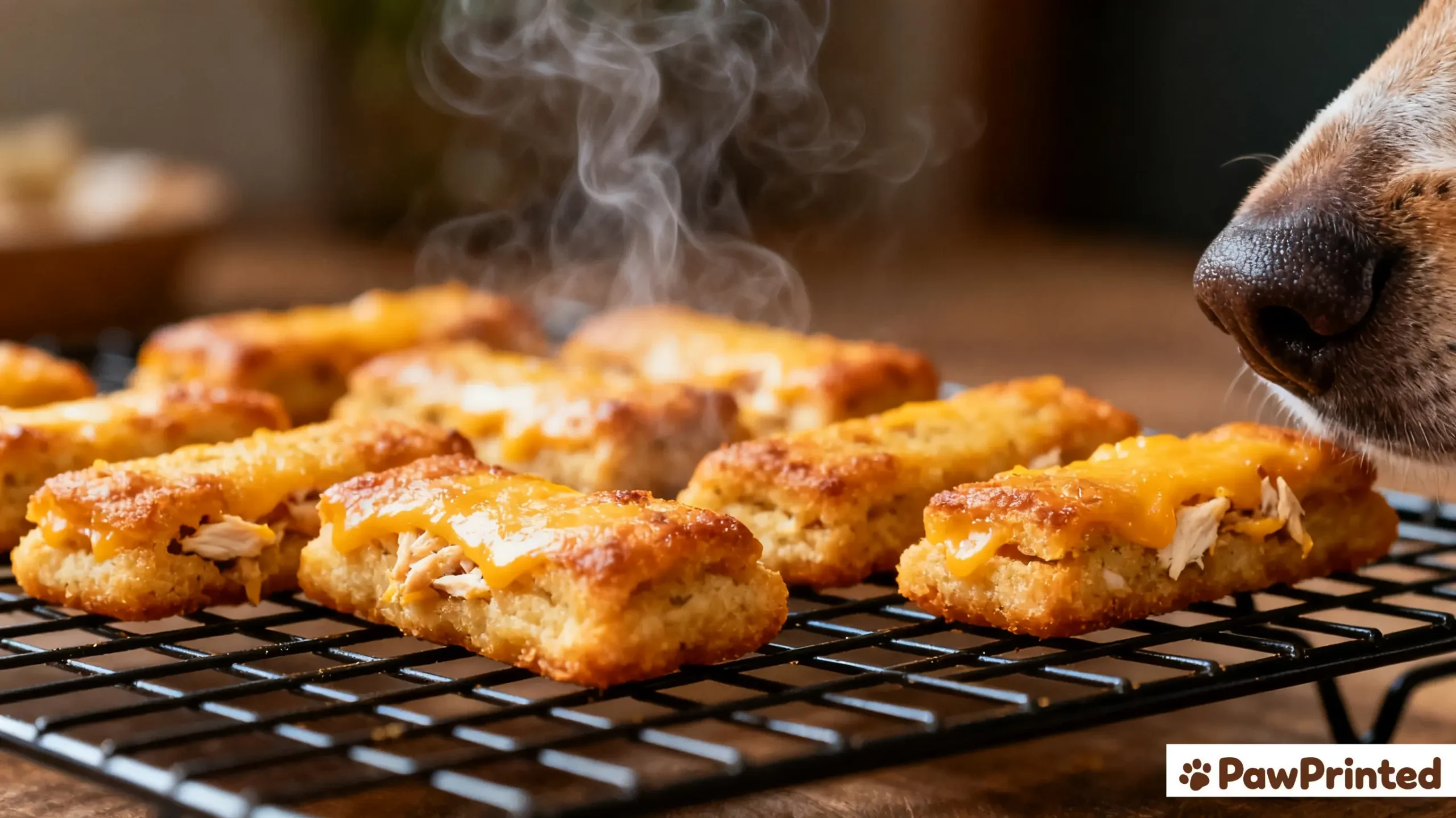
Arrange on a parchment-lined tray. Bake at 350°F (175°C) for about 18–22 minutes, or air-fry at 320°F (160°C) for 8–10 minutes, until firm to the touch but not rock-hard. Softer textures are ideal for fast chewing between cues; if you’re shaping longer sessions, rotate a few pieces from your pouch and keep your plan aligned with our puppy training schedule.
5) Cool, portion, and store
Cool completely so the centers finish setting. Store in an airtight jar in the fridge for up to 5 days. For longer stints, freeze flat in a zip bag and thaw a handful at a time. During long sessions, rotate a few frozen pieces into your treat pouch to keep everything fresh.
Tools We Used (Optional, Makes It Faster)
Hand-rolled bites work perfectly. If you want quicker shaping, these bone-mold treat makers keep sizes consistent for training.
Training Dog Treats Recipe (Cheese & Chicken Bites)
- Baking tray + parchment paper
- Mixing bowl & spoon
- Measuring cup
- Optional: bone-shaped silicone mold or treat maker
- 1 cup cooked chicken breast very finely chopped
- 1/2 cup low-fat cheese shredded
- 1/2 cup oat flour or finely blended oats
- 1 egg binder
- Optional: 1 tsp finely chopped parsley for fresh scent & color
- Cook the chicken:
- Poach or steam chicken breast until fully cooked and tender. Let cool, then mince very finely for even mixing.
- Mix the base:
- Combine shredded cheese and oat flour in a bowl. Fold in chopped chicken until the texture becomes slightly sticky.
- Add egg and shape:
- Crack in one egg and mix well until the dough binds together. Pinch off pea-sized pieces or use a small scoop.
- Bake or air-fry:
- Arrange bites on parchment paper. Bake at 350°F (175°C) for 18–22 minutes, or air-fry at 320°F (160°C) for 8–10 minutes until firm but soft inside.
- Cool & store:
- Let cool fully. Store in an airtight container in the fridge for up to 5 days, or freeze for longer.
• If crumbly, add a teaspoon of egg white; if too wet, dust with oat flour.
• Store up to 5 days refrigerated or 2 months frozen.
• Rotate with hypoallergenic duck & rice treats for variety.
• Follow the 90/10 rule: treats ≤10% of daily calories. ⸻ 🐾 Author & Source Emma — Founder & Dog Mom, PawPrinted
URL: https://pawprintedpet.com/training-dog-treats-recipe/
How We Use These in Training
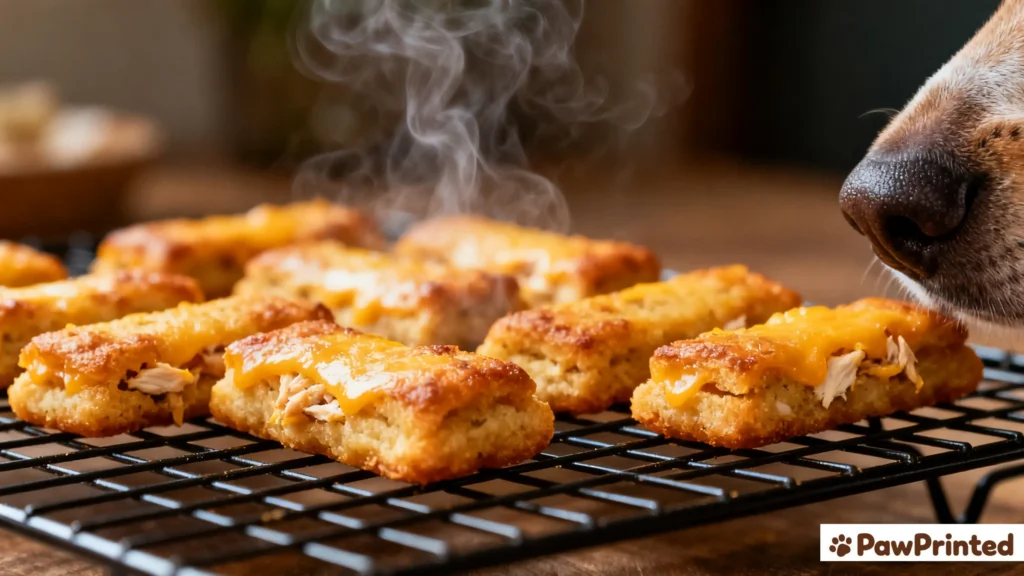
Keep bites tiny and frequent — one success, one nibble. For a new behavior like “down,” we mark the moment (click or “yes!”) and deliver one small treat so Ethan resets quickly for the next rep. If your dog loses interest mid-session, switch to a few warm pieces; the cheesy aroma usually brings focus right back. For variety across the week, try chicken & broccoli sticks or banana-based treats.
Storage & Serving Tips
- Follow the 90/10 rule: treats ≤10% of daily calories.
- For small pups, crumble each piece in half — same flavor, less total calories.
- Rotate flavors through the week for sustained motivation.
FAQ
What do professional dog trainers use for treats?
Trainers choose tiny, soft, high-value treats that a dog can swallow quickly so the next rep starts fast. That’s why these cheese & chicken bites work — they’re small, fragrant, and easy to chew. Keep pieces pea-sized, mark each success, and rotate flavors (see banana treats) when interest dips.
What is the healthiest training treat?
The “healthiest” training treat is one that’s small, balanced, and portion-controlled. Lean proteins (like chicken) with gentle carbs (like oats) keep calories modest while delivering great flavor. Follow the 90/10 rule so treats stay ≤10% of daily calories, and choose very soft textures for fast chewing. Sensitive day? Try our hypoallergenic duck & rice treats.
How many treats per day can I use for training?
As a general guide, keep treats at or under 10% of daily calories. For high-frequency training, simply shrink each bite so your dog earns many rewards without a calorie spike. You can also reserve part of the day’s food ration and use it as practice rewards, then weave in a few high-value bites when you need extra focus. See our puppy training schedule for pacing and rest tips.
Are cheese and chicken safe for dogs?
In small amounts, lean chicken and low-fat cheese are widely tolerated by healthy adult dogs. Introduce gradually, avoid added salt or seasonings, and adjust for sensitivities. For alternatives, browse ideas in our homemade dog treats hub.
What is the 90/10 rule for treats?
The 90/10 rule means 90% nutrition from balanced meals, 10% (or less) from treats. Use pea-sized bites, count approximate pieces per session, and balance heavier training days with lower-calorie options. Keep your main feeding plan anchored in our dog food hub.
Wrapping It Up
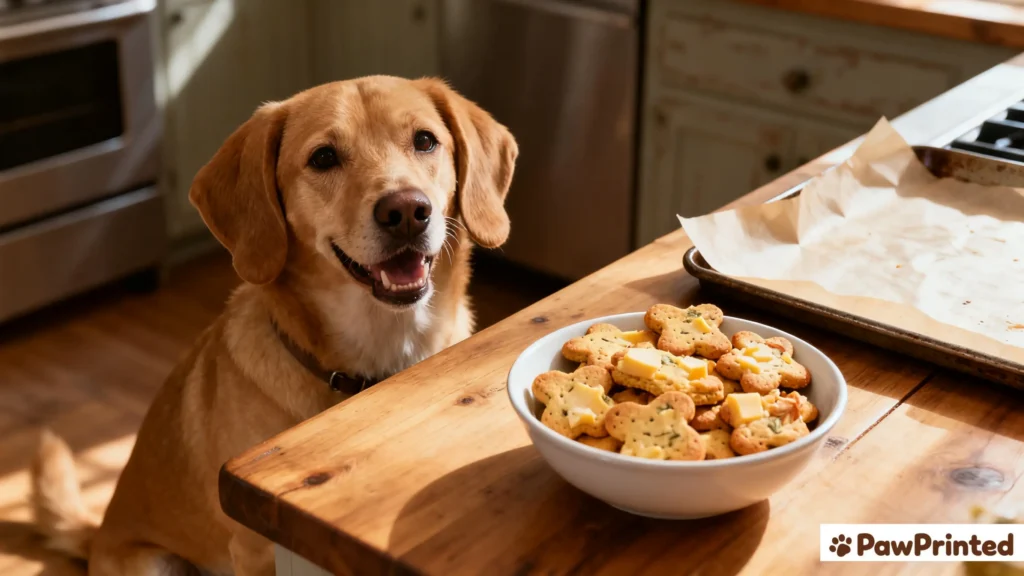
Keep rewards tiny, timing crisp, and sessions short. These cheese & chicken bites have powered so many “aha!” moments in our kitchen — we can’t wait to hear about yours. If you’re stuck, start with gentle wet food, then move to steady dry picks. Share your wins in the comments and don’t forget to save this recipe for later.
Further Reading (External Sources)
Explore More Dog Treat Recipes
- Homemade Dog Treats Recipe (Peanut Butter & Oats, Vet Approved)
- Healthy Dog Treats Recipe (Pumpkin & Coconut)
- Low Calorie Dog Treats Recipe (Apple & Carrots)
- Hypoallergenic Dog Treats Recipe (Duck & Rice, Vet Approved)
- Grain Free Dog Treats Recipe (Salmon & Sweet Potato)
- Training Dog Treats Recipe (Cheese & Chicken Bites)
- Frozen Dog Treats Recipe (Yogurt & Blueberries)
- Dental Dog Treats Recipe (Parsley & Mint)