When you are teaching your dog new skills, not every snack in the pantry will work as a training reward. Training sessions move quickly, your dog needs to stay focused, and you do not want to overload them with calories just to get a good “sit” or “come.” That is why this training treat recipes collection focuses on small, high-reward bites that are designed for repetition.
Instead of guessing in front of the treat shelf, you can work from a clear set of homemade recipes that are softer, more aromatic and easier to portion. Each recipe in this collection was built around quick rewards, gentle ingredients and realistic kitchen prep so you can spend more time training and less time worrying about what is in the treat bag.
Think of this guide as your shortcut: six training-friendly treats you can rotate through the week, matched to real-life scenarios like recall, leash manners and practicing calm around distractions.
Six High-Reward Mini Treat Recipes
These six mini training treats are designed for fast-paced sessions, quick chewing and high aroma value — perfect for recall games, loose-leash walking practice and teaching new cues. Each recipe uses simple, dog-safe ingredients while keeping portion sizes small so you can reward frequently without adding excess calories.
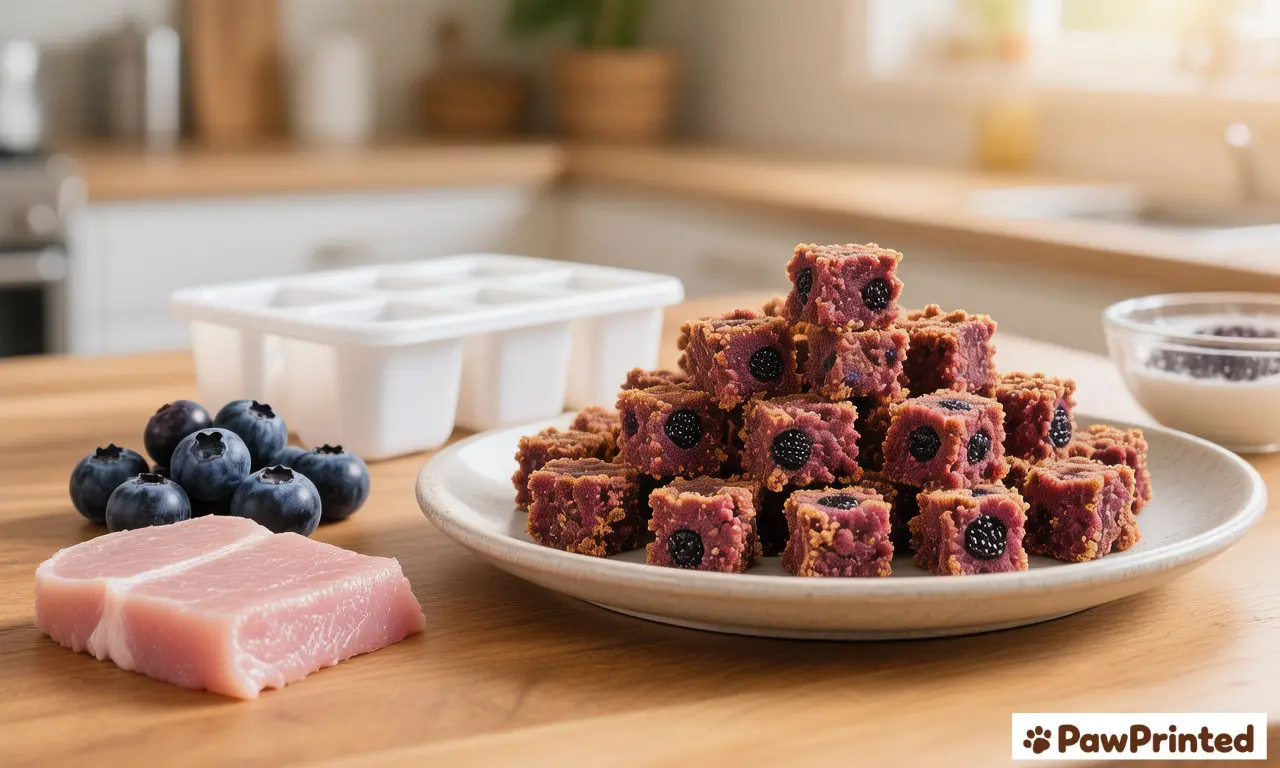
Small, soft turkey and blueberry bites designed for rapid-fire training. Easy to chew, mildly fruity in aroma and simple to break into tiny pieces for frequent rewards.
Quick Overview
- Protein: Lean ground turkey.
- Add-in: Fresh or frozen blueberries for extra aroma.
- Texture: Soft minis that are easy to bite and swallow.
- Best for: Recall games, leash training and shaping new cues.
Why It Works
- Turkey offers a lean, high-value protein many dogs love.
- Blueberries add natural sweetness and a training-friendly scent.
- Mini size helps you deliver lots of repetitions without overfeeding.
Things To Watch
- Use unsweetened blueberries only, no syrup or added sugar.
- Keep treats very small for toy breeds or puppies.
- Include in your dog’s daily calorie total if you train often.
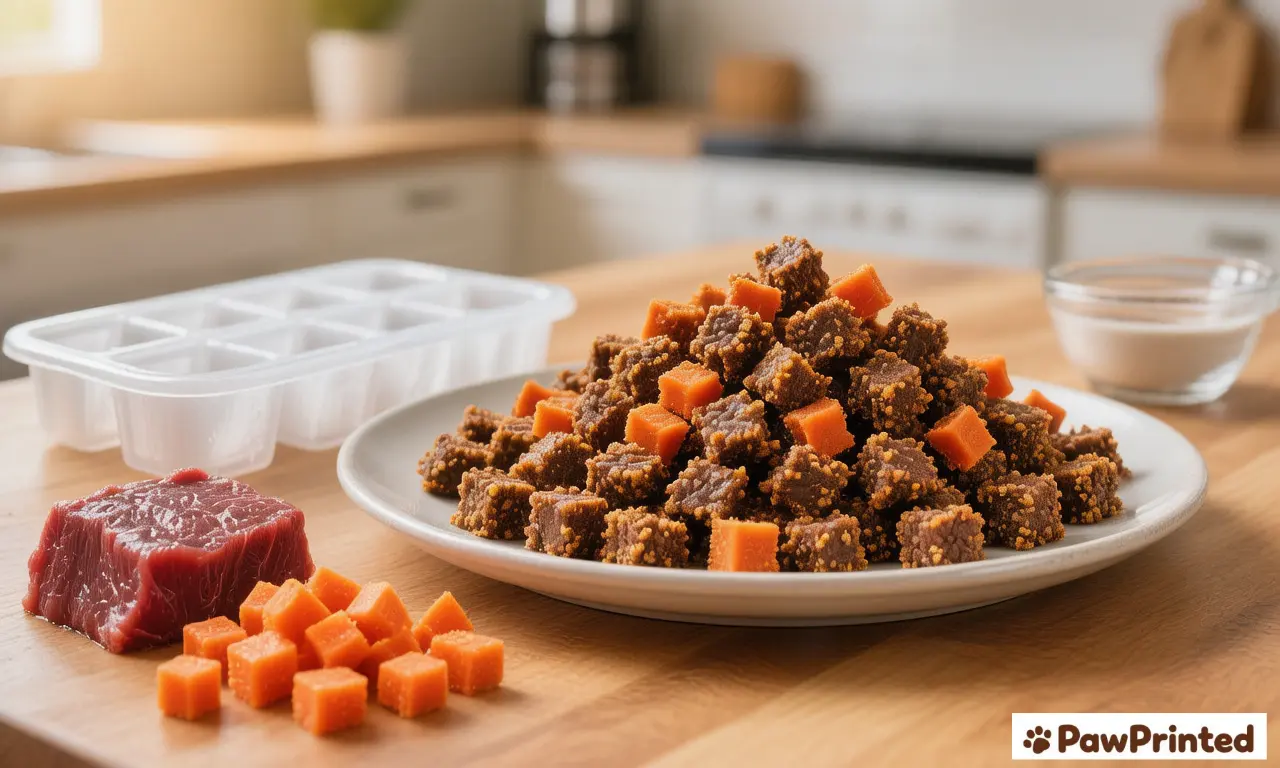
High-value beef jerky style pieces with fine carrot bits for crunch. Great when you need your dog’s full attention during tougher training sessions or outdoor distractions.
Quick Overview
- Protein: Lean beef strips or mince.
- Add-in: Finely chopped carrot for texture.
- Texture: Chewy, meaty bites that feel like a real reward.
- Best for: Recall work, heel training and tough distractions.
Why It Works
- Strong beef aroma cuts through busy, noisy environments.
- Carrot helps add bulk without relying on grain-heavy fillers.
- Easy to snip into tiny squares so each piece stays low in calories.
Things To Watch
- Choose lean cuts and blot excess fat after cooking.
- Not ideal for dogs on strict low-fat or beef-free diets.
- Always supervise chewing to avoid gulping larger pieces.
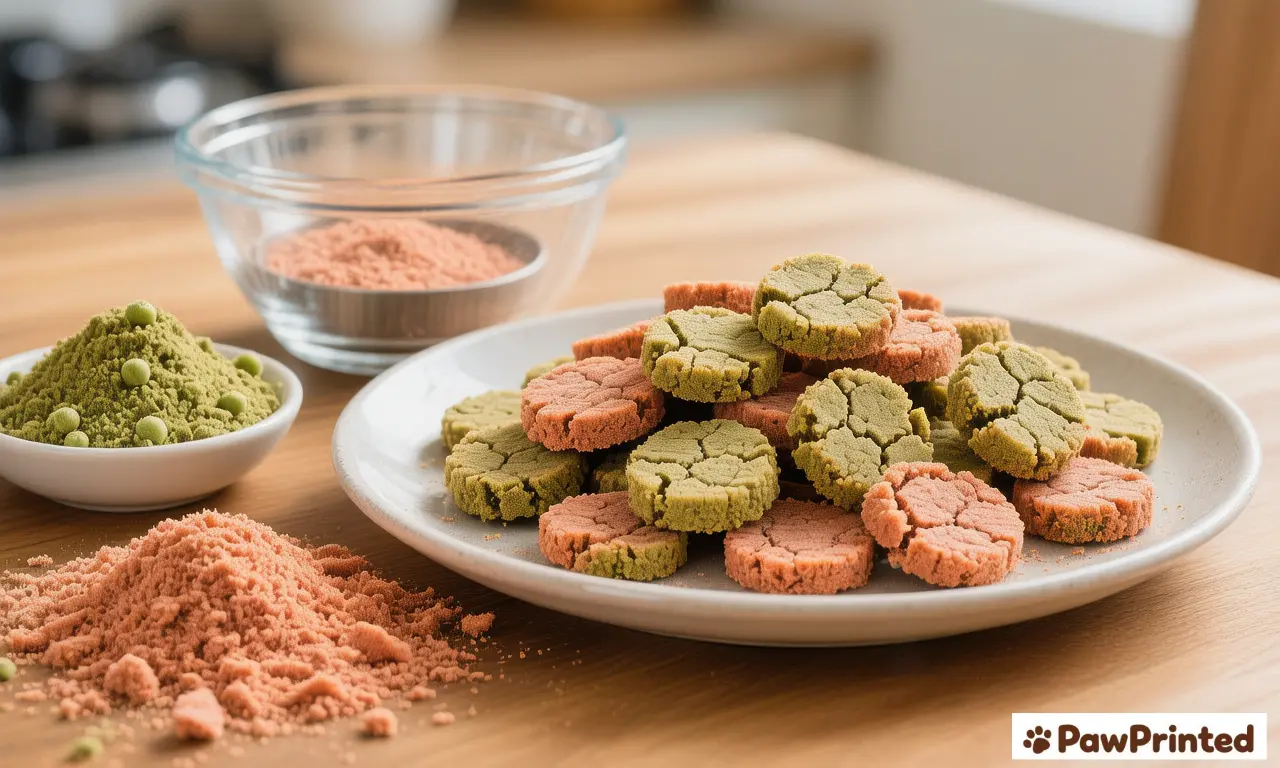
Omega-rich salmon combined with pea flour for small, grain-free training bites. Perfect for dogs that do well on fish-based diets and need a stronger-smelling reward.
Quick Overview
- Protein: Salmon or salmon flour.
- Base: Pea flour instead of wheat or corn.
- Texture: Small baked minis with a tender crumb.
- Best for: Grain-free homes and fish-loving pups.
Why It Works
- Salmon offers omega-3 fatty acids that support skin and coat.
- Pea flour helps create structure without traditional grains.
- Smell-forward treats can hold a dog’s focus in busy environments.
Things To Watch
- Check with your vet if your dog is on a cardiac-sensitive diet plan.
- Use fully cooked salmon and avoid added salt or seasoning.
- Store in the fridge and use within a few days for best aroma.
Light chicken and pumpkin training bites that stay soft and easy to swallow. Great for puppies, small dogs and quick marker training where you deliver lots of treats.
Quick Overview
- Protein: Finely minced chicken.
- Base: Pumpkin puree with light binders.
- Texture: Tiny, soft cubes that do not crumble easily.
- Best for: Puppies, toy breeds and rapid-fire training.
Why It Works
- Chicken is familiar and enticing for most dogs.
- Pumpkin supports digestion while adding mild sweetness.
- Very small pieces keep each reward low in calories but high in value.
Things To Watch
- Not suitable for dogs with confirmed chicken allergies.
- Use plain pumpkin, not pie filling or seasoned mixes.
- Refrigerate leftovers and discard if texture changes or smells sour.
Novel-protein duck paired with finely chopped apple for mildly sweet, fragrant cubes. A good option for dogs who cannot use chicken-based treats but still need strong training motivation.
Quick Overview
- Protein: Duck, finely minced.
- Add-in: Apple pieces (no cores or seeds).
- Texture: Soft mini cubes, easy to break apart.
- Best for: Dogs needing poultry-free training options.
Why It Works
- Duck can help dogs who react to chicken or beef.
- Apple adds light crunch and natural sweetness without heavy calories.
- Small cubes let you reward frequently during longer sessions.
Things To Watch
- Always remove apple cores and seeds completely.
- Check with your vet if your dog is on a strict allergy or elimination diet.
- Monitor stool quality when introducing both duck and apple together.
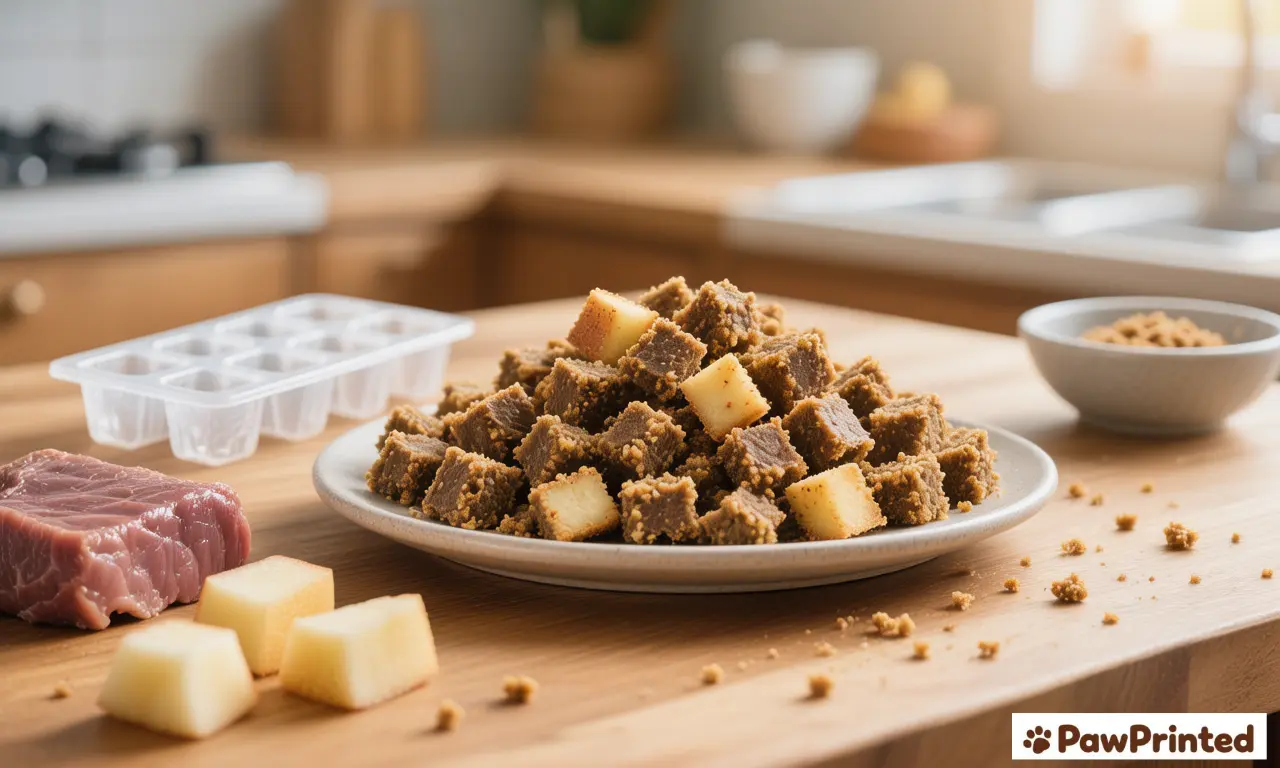
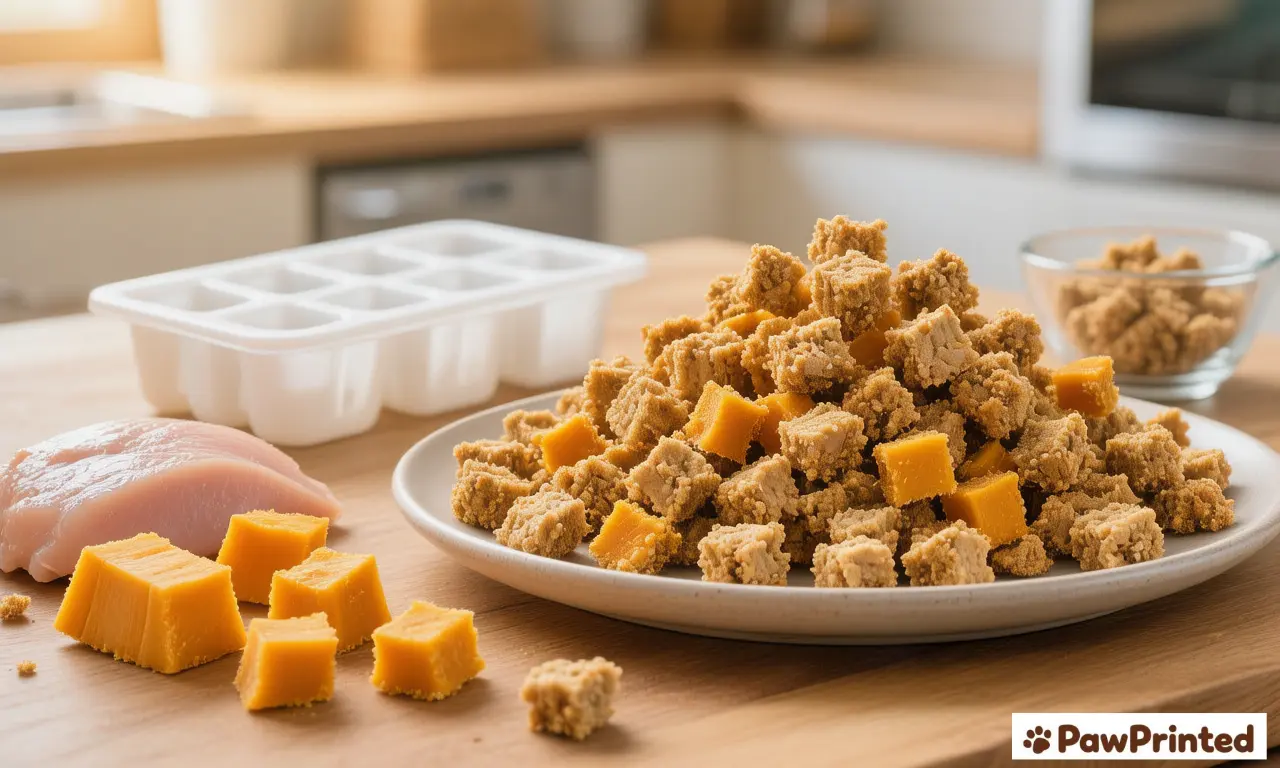
Classic cheese and chicken training bites that most dogs go crazy for. Designed to be cut into very tiny pieces so you can keep sessions long while calories stay under control.
Quick Overview
- Protein: Chicken breast or mince.
- Add-in: Small amount of low-sodium cheese.
- Texture: Soft, slightly chewy training squares.
- Best for: High-value rewards and tricky behaviors.
Why It Works
- Cheese boosts aroma and value for difficult training moments.
- Chicken keeps the treat protein-focused and familiar.
- Works well as a “jackpot” reward when your dog nails a hard cue.
Things To Watch
- Not ideal for dogs needing strict low-fat or dairy-free diets.
- Keep each piece tiny to avoid overfeeding during long sessions.
- Track overall daily calories if you use cheese often in training.
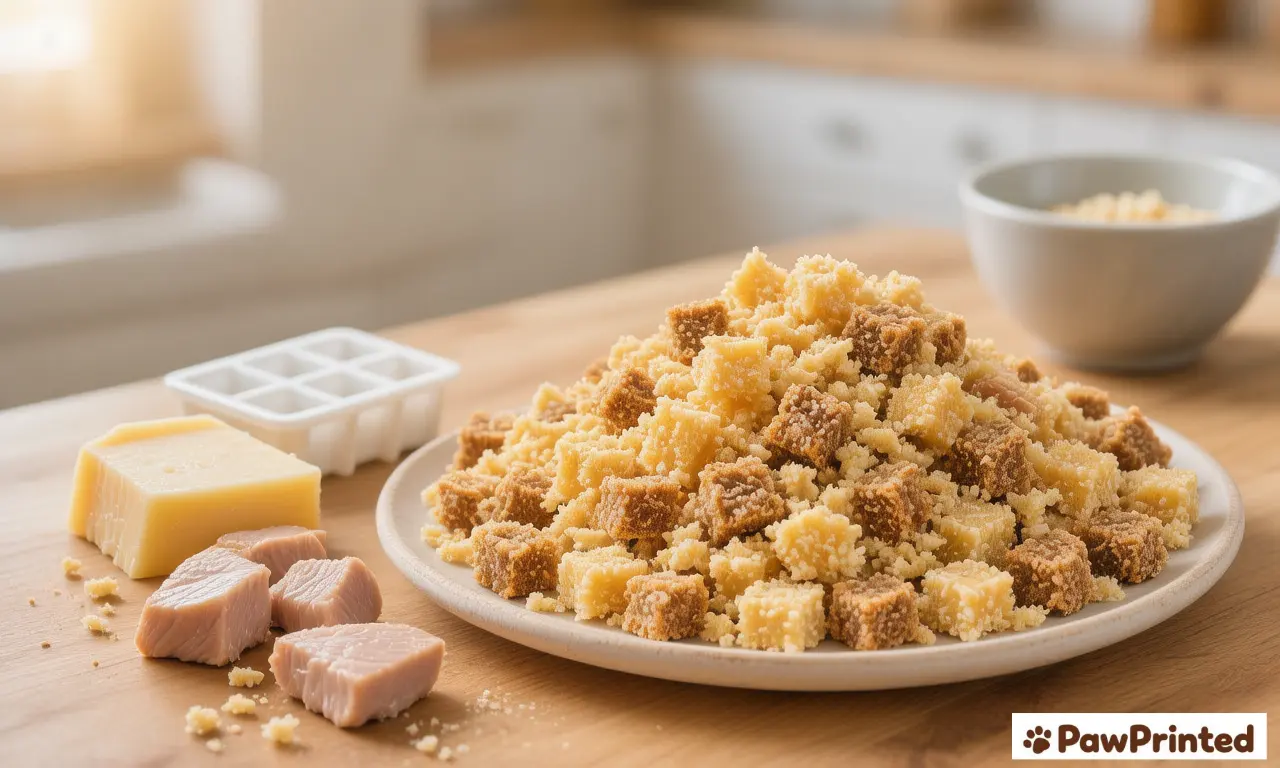
What Makes a Training Treat Effective?
A good training treat is not just “anything your dog will eat.” For most dogs, the best training rewards are small, soft and smelly enough to cut through distractions. You want something that your dog can chew and swallow quickly so you can keep the training rhythm going without long pauses or messy crumbs on the floor.
Texture and flavor matter just as much as ingredients. Soft bites work better than hard biscuits for rapid-fire rewards. Strong but dog-safe aromas make it easier for food-motivated pups to focus on you instead of the environment. At the same time, the ingredient list should stay simple enough that you can spot any reactions if your dog has a sensitive stomach or food allergies.
Finally, a truly effective training treat respects your dog’s overall diet. That means lighter recipes that use lean proteins, fruits, vegetables and controlled starches, so you can reward often without quietly adding a full extra meal by the end of the day.
Treat Sizes, Portions & Calories for Training
Even the best homemade training treat can cause weight gain if the portions are too generous. Most dogs do not need full cookie-sized pieces during training. Instead, aim for tiny bites: something roughly the size of a fingernail for small dogs and a bean-sized piece for medium and large dogs. The goal is “taste and move on,” not “stop and chew for twenty seconds.”
A practical approach is to decide on a daily treat allowance based on your dog’s weight and activity level, then subtract those calories from their regular meals. During more intense training phases, you may feed part of their daily food ration as rewards and use higher-value treats only when you are asking for something difficult or working around big distractions.
Puppies, seniors and dogs on weight management plans need extra monitoring. For them, prioritise lower-calorie recipes, break pieces even smaller and keep an eye on body condition over several weeks rather than just a single training day. If the collar feels tighter, it is time to shrink the treats or adjust the main meals.
When To Use High-Reward Training Treats
High-reward treats are your “special currency” in dog training. They are most useful when you teach a brand-new behavior, ask for focus in a difficult environment or need your dog to choose you over something very exciting, like another dog or a squirrel. In those moments, dry kibble usually is not enough motivation, but a tiny, delicious training bite can tip the decision in your favor.
Use your highest-value treats for recall practice, loose-leash walking, calm behavior around visitors and any training that happens in busy places such as parks, vet waiting rooms or pet stores. For easy, well-established cues at home, you can switch to lower-value rewards or even part of your dog’s regular food.
Over time, you can phase out constant food rewards and mix in praise, play or life rewards such as going outside. The recipes in this collection are there to help you through the “learning and proofing” stages, when clear, consistent reinforcement makes the difference between a cue your dog knows sometimes and a cue they respond to every time.
Vet Tips & Training Variations
Training treats are most effective when they are soft, small and easy to swallow. Vets usually recommend using high-reward minis for challenging behaviors, and rotating two or three flavors to prevent boredom. For dogs with food sensitivities, single-protein treats like turkey, salmon or duck are often easier on the stomach.
If your dog is new to training, start with pea-sized pieces and gradually reduce treat size as skills improve. Puppies, senior dogs and toy breeds may need even smaller pieces to avoid choking hazards. Keep an eye on total calories—frequent training sessions can add up quickly if each treat is too large.
You can also swap ingredients based on dietary needs—for example, replace chicken with turkey for poultry-sensitive dogs, or use salmon for pups needing extra omega-3 support. Always introduce new ingredients slowly and observe stool quality, itchiness or changes in appetite.
FAQ
How many training treats can dogs have per day?
Most dogs can safely consume training treats totaling about 5–10 percent of their daily calories. Small, soft treats work best because you can deliver many repetitions without overfeeding. Monitor weight weekly if you train often.
What makes a treat “high-reward” for training?
High-reward treats are soft, aromatic and extremely tasty, making them ideal for reinforcing new behaviors. Proteins like chicken, salmon, turkey or beef tend to work best. Freeze-dried or grain-free options are also popular for food-sensitive dogs.
Are homemade training treats better than store-bought?
Homemade training treats let you control ingredients, texture and calories. They are great for dogs with allergies or those needing simple whole-food snacks. Store-bought high-value training treats are convenient but may include fillers or extra sodium, depending on brand.
Can puppies eat training treats?
Yes—puppies benefit greatly from soft, tiny training treats during socialization and early obedience work. Choose gentle proteins, avoid added salt or sugar, and keep treat size extremely small to prevent choking.
How should I store homemade training treats?
Most soft training treats keep for 3–5 days in the refrigerator. Freeze extras in small batches to maintain freshness and aroma. Always discard treats that smell off or change texture.
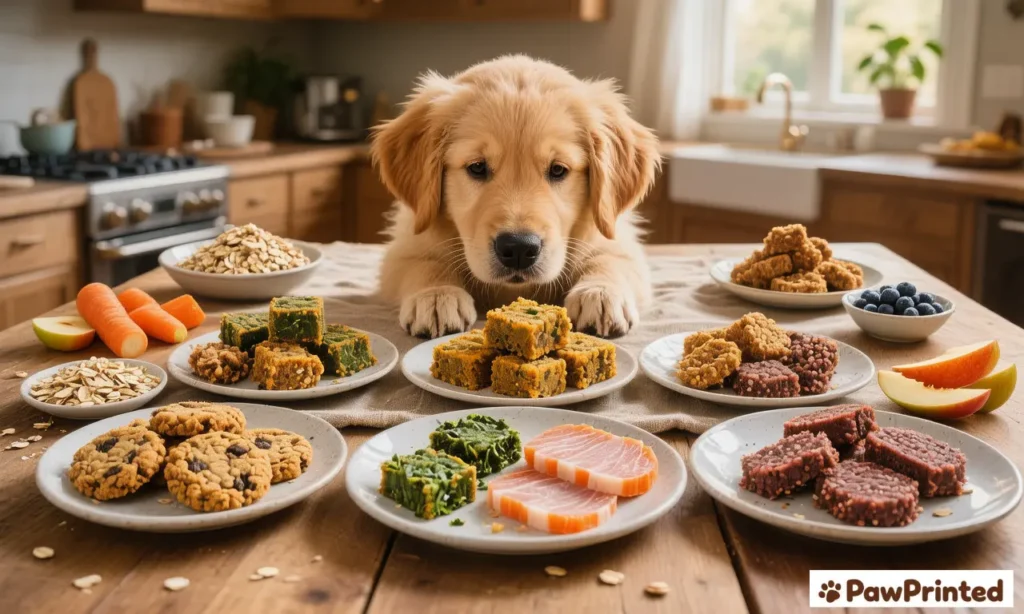
Explore More
More Training Treat Recipes & Helpful Guides
Browse more vet-approved recipes and training-friendly snack ideas.
Author & Vet Review Notes
Emma’s Notes: Training treats are one of my favorite tools because they build confidence and make learning fun. Ethan responds best to soft minis he can swallow quickly— it keeps the flow of the session smooth and upbeat.
Vet Reviewer – Dr. Lydia Harper: For training, choose treats that are soft, aromatic and easy to portion. Keep each piece tiny and track calories if you practice several times per day. Dogs with allergies may benefit from single-protein treats such as salmon or duck.
References — Authoritative Sources
- PetMD (2024): Dog Treat Safety & Portion Control Visit Source
- AKC (2024): Training Treat Selection & Puppy Reward Tips Visit Source
- Tufts Veterinary Nutrition (2023): High-Value Rewards & Obedience Feeding Visit Source
- NIH Nutrition Data (2024): Ingredient Digestibility & Protein Responses Visit Source
- AVMA (2024): Treat Safety, Obesity Risk & Training Guidelines Visit Source