When the weather turns chilly, Ethan’s first few steps after a nap look a bit stiff. I don’t want heavy rewards, so I bake light, cozy bites that still support joints. Sweet potato brings beta-carotene and gentle fiber, while flaxseed adds plant-based Omega-3 (ALA). If you’re new to homemade snacks, skim our
Homemade Dog Treats Guide for safe temps, storage, and portions.
Ingredient Spotlight – Why Sweet Potato & Flaxseed Work Together
Sweet Potato
Rich in beta-carotene and antioxidants. The soft texture keeps training bites friendly on colder days and helps with weight control when walks are shorter.
Flaxseed
Source of ALA Omega-3 that helps overall joint comfort and skin health. For balance, I sometimes finish a serving with a tiny drizzle of
Iceland Pure Unscented Salmon Oil for Dogs so Ethan gets both plant and marine Omega-3s.
Oat Flour
Gentle, grain-inclusive binder with soluble fiber. Pulse rolled oats fine for even baking if you don’t have premade flour.
Egg
Protein binder that helps the dough set into clean, consistent shapes for portion control.
Olive Oil
A teaspoon improves texture and mouthfeel without making treats heavy.
Ingredients You’ll Need
Mashed sweet potato – 1 cup, cooled
Steam or boil until tender, then mash smooth.
Oat flour – 1 to 1 1/4 cups
Add gradually for a firm, non-sticky dough.
Freshly ground flaxseed – 1–2 tbsp
Grind right before using so fats stay fresh.
Egg – 1
For binding and extra protein.
Olive oil – 1 tsp
Optional, improves texture and color.
Shaping tool (optional)
For neat portioning, press dough into the
homEdge Silicone Paw & Bone Dog Treat Mold.
Step-by-Step Cooking Guide
1) Prep the sweet potato
Peel, cube, and steam or boil until fork-tender. Drain well and mash smooth. Let it cool to room temperature so the egg won’t curdle and the dough doesn’t turn sticky.
2) Grind flaxseed fresh
Pulse whole flaxseed just before mixing. Freshly ground seed releases aroma and blends evenly, while limiting oxidation of fats.
3) Mix the dry base
Whisk oat flour with ground flaxseed in a bowl. This distributes fiber so the dough hydrates evenly and keeps shapes tidy after baking.
4) Combine and form dough
Stir in mashed sweet potato, egg, and olive oil. Add extra oat flour as needed until the dough is firm, not tacky, and holds edges when pressed.
5) Shape cleanly
Press dough into a silicone mold for consistent mini bites. I use the
homEdge paw-and-bone mold to keep portions even for joint-care routines. A nonstick pan also helps with release – see
Best Nonstick Pans for Cooking Homemade Dog Food.
6) Bake low and cool dry
Bake at 150–160°C (300–320°F) for 20–30 minutes until set. Smaller shapes finish earlier. Cool fully on a rack, then move to an airtight jar like the
LOYOSEL Dog Treat Container Airtight Storage.
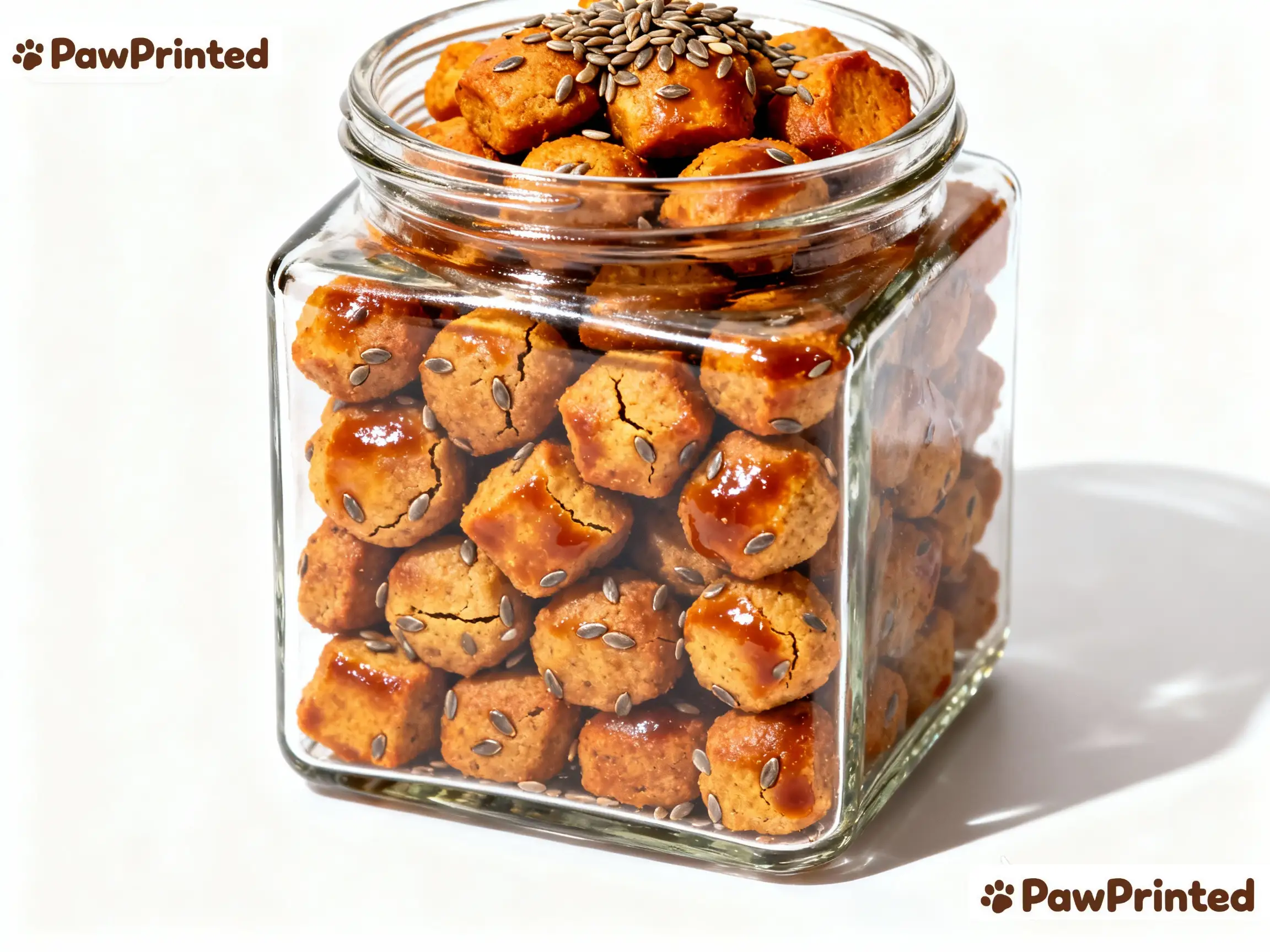
Sweet Potato & Flaxseed Dog Treats Recipe (Joint Care Snack)
- Mixing bowl and spatula
- Mini silicone treat mold (e.g., homEdge Silicone Paw & Bone Dog Treat Mold)
- Baking sheet or nonstick pan
- Cooling rack
- Airtight storage jar (e.g., LOYOSEL Dog Treat Container)
- 1 cup mashed sweet potato about 250 g, cooled
- 1 to 1 1/4 cups oat flour 120–150 g, added gradually
- 1 –2 tbsp freshly ground flaxseed 8–16 g
- 1 large egg
- 1 tsp olive oil optional
- Optional finish after baking, not in dough: a tiny drizzle of salmon oil per serving.
- Cook & mash – Peel and cube sweet potato. Steam or boil until fork-tender, drain well, and mash smooth. Let it cool to room temperature.
- Grind flaxseed – Pulse whole flaxseed just before using so fats stay fresh and blend evenly.
- Mix dry – In a bowl, whisk oat flour with ground flaxseed to distribute fiber for even hydration.
- Form dough – Stir in mashed sweet potato, egg, and olive oil. Add more oat flour until the dough is firm, non-sticky, and holds edges when pressed.
- Shape – Press dough into a silicone mini-treat mold or roll and cut small coins. Keep pieces uniform for consistent baking.
- Bake & cool – Bake at 150–160°C (300–320°F) for 20–30 minutes until set and lightly dry. Smaller pieces finish sooner. Cool fully on a rack before storing.
• Storage: Room temp (dry-baked) 7–10 days in an airtight jar; refrigerate up to 10 days; freeze up to 1 month. Cool completely before sealing to avoid condensation.
• Joint routine: You can pair a mini cookie with a daily joint chew (e.g., PupGrade Joint Support Chews) and occasionally finish a serving with a tiny drizzle of salmon oil.
• Calories & tolerance: Keep treats near 10% of daily calories. Introduce new ingredients gradually and monitor stools, skin, and energy over 48–72 hours.
• Comfort ritual: While trays cool, Ethan curls up on his heated dog blanket – our cozy winter habit.
• Brand note: If you don’t want to cook daily, check our dry food picks — those were Ethan’s daily backups.
Nutritional Data & Vet Insights
Beta-carotene support
Sweet potato supplies carotenoids that support soft tissues and immune health while keeping calories reasonable.
ALA Omega-3
Flaxseed brings ALA, a plant Omega-3 that complements marine sources. Pairing the treat with a tiny drizzle of
salmon oil can round out fatty acids.
Fiber for digestion
Moderate fiber helps stool quality and satiety, useful when winter walks run shorter.
Weight-smart profile
Mini shapes and modest fat keep rewards light so you can train without overfeeding.
Joint routine pairing
For mild stiffness, I pair a cookie with a daily
PupGrade Joint Support Chew to keep the habit simple and consistent.
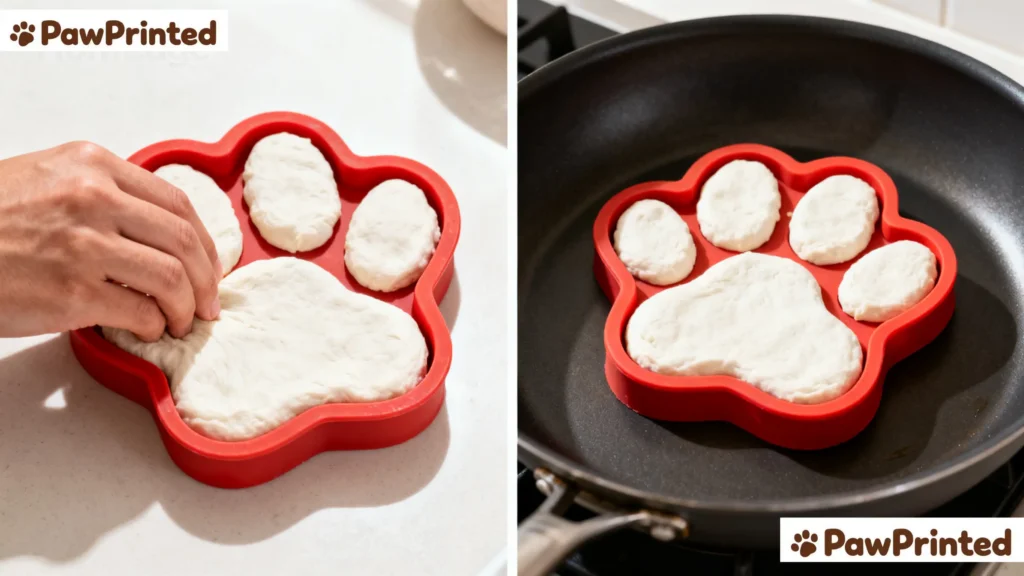
Vet Tips & Variations
Sensitive stomach
Keep the first batch basic: sweet potato, oat flour, egg. Skip oil and limit flax to 1 tsp. Observe 48–72 hours.
Senior dogs
Bake a little shorter for a softer texture that’s easier on older teeth.
Active dogs
Use mini molds for frequent training rewards without adding too many calories at once.
Allergy work-around
Swap oat flour for coconut or pea flour if grains are an issue. Test slowly in tiny portions.
Introduce new ingredients gradually, keep treats under 10% of daily calories, and check with your vet for long-term joint management.
Serving Ideas & Storage
I use these as warm-vibe training bites or post-walk snacks. After cooling, store in an airtight jar like the
LOYOSEL container to protect crunch. Dry-baked pieces keep about 7–10 days at room temp, up to a month frozen. For more storage picks, see
10 Best Dog Food Storage Containers. Ethan usually naps on his
FurHaven Thermo Snuggly Heated Dog Blanket while trays cool – our tiny winter ritual.
What Worked for Ethan
Shaping & consistency
Pressing dough into the
homEdge paw-and-bone silicone mold keeps sizes uniform for joint-care portions.
Freshness that lasts
Cooling fully, then sealing in the
LOYOSEL airtight container keeps aroma bright and texture crisp.
Omega finish
A tiny drizzle of
salmon oil right before serving lifts flavor without changing the bake.
Joint routine
We hand a cookie after his
PupGrade joint chew, so supplements feel like part of the reward.
Warm cool-down
Ethan chills on the
FurHaven heated blanket while the kitchen smells like sweet pie.

FAQ
Do sweet potato and flaxseed actually help joints?
They can support overall comfort as part of a balanced plan. Sweet potato offers antioxidants and helps with weight control, while flaxseed brings ALA Omega-3.
Keeping weight in check reduces joint load. Grind flaxseed fresh to improve availability and limit oxidation. Treats are supportive, not a replacement for vet care or complete diets. If your dog has arthritis or is on medication, talk to your vet first.
Tip: start with tiny portions for 2–3 days and watch mobility, stools, and skin for changes.
What oven temperature and time work best?
Low to moderate heat dries treats evenly without scorching sensitive fats.
For these, 150–160°C (300–320°F) for 20–30 minutes fits most mini molds. Smaller pieces finish sooner. You can switch the oven off and let trays sit 10–15 minutes with the door slightly ajar for extra crispness.
Tip: uniform thickness matters most. Keep pieces the same size for predictable results.
Can I freeze these treats?
Yes. Freezing preserves texture and flavor for weeks.
Cool fully, pre-freeze on a tray, then pack into small bags. Thaw a day’s worth in a sealed bag at room temp to avoid surface moisture. Discard any pieces that smell off or look discolored.
Tip: label bags with the bake date and rotate stock every week.
Are these suitable for grain-sensitive dogs?
They can be adapted. Swap oat flour for coconut or pea flour if grains are an issue.
Introduce the new version slowly and monitor for GI or skin changes over 48–72 hours. If your dog has a history of strong reactions, consult your vet before changes.
Tip: bake a mini test batch first to gauge tolerance.
How many treats should I give per day?
Keep treats around 10% of daily calories and adjust for size, age, and activity.
Mini pieces make training easier without overfeeding. If weight control is a priority, choose the smallest mold cavities and bake slightly longer for a lighter, crisp bite.
Tip: log treat counts for a week to find your dog’s ideal range.
Wrapping It Up
Cozy, bright, and joint-friendly – these little cookies keep Ethan motivated without weighing him down. Share how your first batch went and which mold shape your pup loves most.
Author & Vet Review Notes
Emma – Founder & Dog Mom: Grinding flax right before mixing made the aroma pop. Mini bone shapes help me stay consistent with portions.
Reviewed by Dr. Lydia Harper, DVM: Sensible ingredients and mini portions work well for many dogs. Keep overall calories in check and discuss long-term joint plans with your vet.
References — Authoritative Sources
- Omega-3 in Canine Diets (2023) – NIH – Overview of fatty acid roles for skin and general health.
- Joint Health & Weight Management (2024) – Tufts Vet Nutrition – Why portion control matters for mobility.
- Grains and Dogs (2023) – AKC – Context for using oat flour sensibly.
- Antioxidants in Canine Nutrition (2024) – Frontiers in Vet Sci – How carotenoids support tissues and recovery.
- Homemade Treat Safety (2024) – PetMD – General best practices for baking and storage.

Explore More
More cozy, winter-friendly bakes and organizing tips: