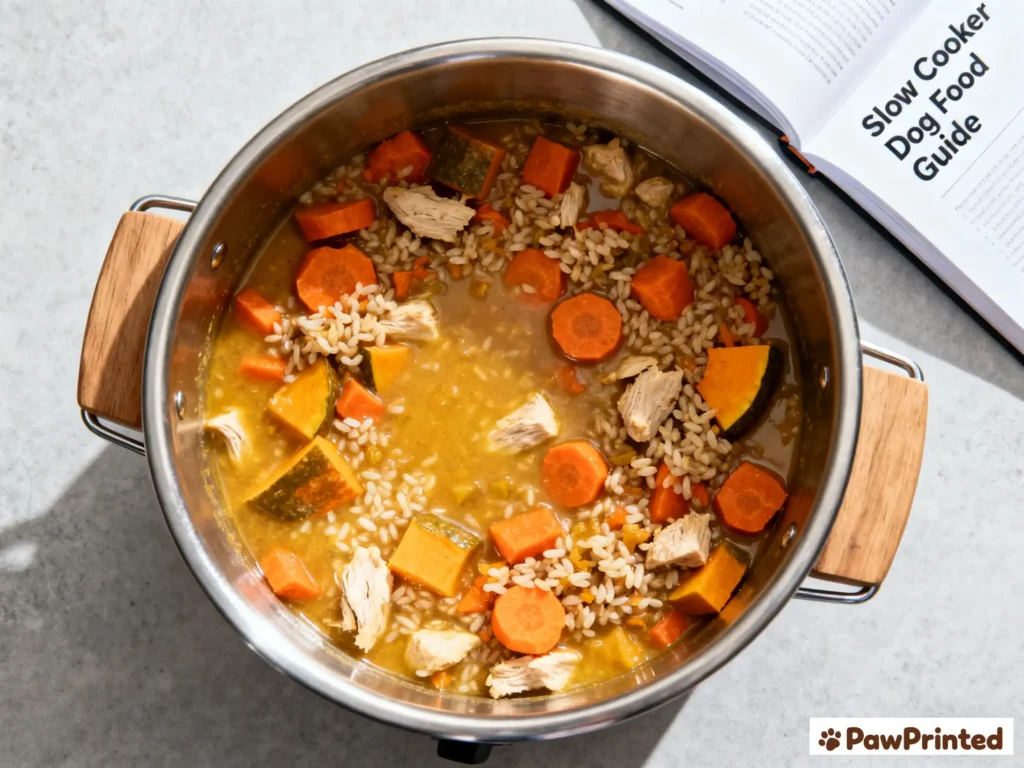
For many busy owners, the slow cooker feels like a secret weapon. You add ingredients in the morning, press a button, and come back to a pot of tender, fragrant food that your dog actually wants to eat. Compared with standing over a stove or juggling multiple pans, it looks like the easiest possible way to make homemade dog food.
The truth is more nuanced. Slow cooker dog food can be a safe, balanced and very realistic way to feed your dog, but only if you understand how long, moist heat changes nutrients, how to manage fat and starch, and how to build a complete recipe instead of just a stew of leftovers. This guide walks through what slow cooker dog food really is, where it shines, and where it can quietly go wrong.
If you are still deciding whether homemade food itself makes sense for your family, it can help to start with the broader Homemade Dog Food Guide – What Owners Should Know First and then come back here to see how slow cooking fits into that bigger picture.
What Slow Cooker Dog Food Actually Is
A slow cooker uses gentle, steady heat over several hours to cook food in a closed pot. Instead of high flames or rapid boiling, the temperature stays relatively low while moisture and heat circulate. For dog food, that usually means lean meat, starches and vegetables simmering together until they are very tender.
Compared with stove top cooking, the slow cooker is forgiving. Ingredients have time to soften, flavors blend, and there is less risk of burning the bottom of the pot. Compared with pressure cooking, the temperatures are lower and the process is simpler, but cooking times are much longer. All of that affects how nutrients are preserved or lost.
How Slow Cooking Heats Food
Slow cookers heat from the sides and bottom, with liquid carrying heat through the pot. Food rarely reaches a rolling boil, but it does stay at a safe cooking temperature for hours. This is kind to tougher cuts of meat but can be hard on some heat sensitive vitamins.
Texture Dogs Usually Enjoy
Long, moist cooking turns lean meat, grains and vegetables into a soft, stew like texture. That can be ideal for picky eaters, senior dogs with dental issues, or dogs that prefer softer food over crunchy kibble.
Convenience For Owners
Once ingredients are prepped and loaded, there is very little hands on work. You do not have to stir constantly or watch the heat, which makes slow cooker dog food attractive for people who work outside the home or juggle busy schedules.
Where Beginners Slip Up
Common mistakes include using very fatty meat and not skimming fat, overdoing starchy ingredients, forgetting supplements, or assuming that a tasty stew is automatically nutritionally complete. The method is easy, but the nutrition planning still matters.
If you are looking for tools that make feeding easier, browse our Best Dog Products Guide for curated bowls, storage, prep tools, and grooming picks that work well with homemade food.
Key Benefits Of Slow Cooker Dog Food
When slow cooker dog food is well planned, it can hit a rare sweet spot: realistic for busy humans, gentle on many dog stomachs, and flexible enough to adapt ingredients week to week. That is why so many owners quietly stick with slow cooked meals long after the first experiment.
The main advantages relate to logistics and texture rather than any magical property of the appliance. The slow cooker buys you time and consistency so that you have more bandwidth left to think about ingredients and balance.
Hands Off Cooking
You can assemble a batch before work, set the slow cooker to low, and come home to finished food. This reduces daily friction and makes it more likely that you will keep homemade feeding going week after week.
Batch Cooking And Meal Prep
Slow cookers are perfect for larger batches that can be portioned, cooled and frozen. This pairs well with a weekly or biweekly meal prep routine so you are not cooking from scratch every night.
Gentle On Sensitive Stomachs
Soft, evenly cooked food is often easier to digest than quickly seared or heavily fried meals. For many sensitive stomach dogs, the combination of lean meat, well cooked starch and vegetables can feel very comfortable.
Flexible Ingredient Choices
You can rotate proteins, swap grains or adjust vegetables without changing your entire method. The appliance does the heavy lifting, so you can focus on picking the right ingredients for your dog.
Risks And Misconceptions About Slow Cooker Dog Food
There is a reason slow cooker dog food feels almost too good to be true. It is easy to assume that if the pot is full of meat and vegetables, the meal is automatically complete and healthy. The reality is that slow cooking can quietly reduce some nutrients and concentrate others if you do not plan around the method.
Water soluble vitamins, like many B vitamins, are sensitive to long heat exposure. Some will end up in the cooking liquid, which you can preserve by serving the broth, but others may degrade over time. Very fatty cuts of meat can render a thick layer of fat on top of the stew, which can be too rich for some dogs if you do not skim it away.
It is also easy to lean heavily on cheap carbohydrates in the slow cooker. Large amounts of rice, pasta or potatoes make the pot look full but can push calories higher than you realise and dilute protein if you do not keep the ratios in check. Without added supplements, even the best looking slow cooker recipe is unlikely to meet long term micronutrient needs on its own.
If you are concerned about homemade safety in general, it can help to step back and read the broader Is Homemade Dog Food Safe? Guide and then walk through the Homemade Dog Food Safety Framework as a checklist. Slow cooker meals can fit into that framework, but they do not get a free pass just because they are easy.
Safety First Before You Switch Your Dog To Slow Cooker Meals
Slow cooker dog food can be a smart upgrade, but only if you have safety, balance and realistic routines in place. Use these guides to double check your plan before you change your dog’s bowl.
What Veterinarians Usually Say About Slow Cooker Dog Food
Many veterinarians are more comfortable with slow cooker dog food than with raw meat diets, because the food is cooked and the bacterial risks are lower. At the same time, they often see the same pattern of problems that show up with any homemade diet – recipes that look wholesome but are incomplete, high fat stews that trigger pancreatitis, or chronic low level deficiencies that only appear on bloodwork.
Vets tend to like slow cooker meals best for dogs that need softer, easy to chew food, have sensitive stomachs, or benefit from stable, predictable recipes. They are more cautious in dogs with kidney, liver or pancreatic disease, where mineral and fat levels must be tightly controlled. In those cases, a vet formulated recipe or a therapeutic commercial diet is usually safer.
Where Vets See Advantages
Cooking lowers bacterial risk and produces soft, consistent textures that are gentle on many stomachs and mouths. Slow cooking also makes it easier to repeat the same recipe, which helps with monitoring.
Where Vets See Problems
Poorly designed recipes, high fat broths, and missing supplements can undo the benefits of home cooking. Some dogs end up overweight or deficient even though the food looks healthy in the bowl.
When To Ask For Help
If your dog has any medical diagnosis or you plan to rely on slow cooker meals long term, it is worth asking your vet about recipe formulation, lab monitoring and when to adjust ingredients or supplements.
How To Learn The Nutrition Basics
For a deeper foundation, you can use the Dog Food Macros Guide to understand protein, fat and carbs, and the Dog Food Supplements Guide to see which add ons make homemade diets safer.
Safe Cooking Rules For Slow Cooker Dog Food
The slow cooker takes care of time and temperature, but you are still in charge of every ingredient that goes into the pot. A few simple rules can make the difference between a stable everyday food and a rich stew that upsets your dog’s stomach.
Choose lean cuts of meat and trim obvious fat where you can. If a layer of fat rises to the top during cooking, let the pot cool slightly and skim most of it away before portioning. Keep ingredients chopped into similar sized pieces so they cook evenly, and avoid large bones or hard chunks that might not soften enough.
Make sure there is enough liquid to keep the food from drying out or forming hot spots, but not so much that you end up with thin soup instead of a meal. Stirring once or twice during cooking, if safe for your schedule, helps distribute heat and ingredients. When the batch is done, cool it quickly in shallow containers before refrigerating or freezing, and label portions clearly so you rotate them properly.
A Balanced Slow Cooker Meal Framework For Dogs
Think of your slow cooker as a tool, not a recipe. The same framework that makes a cooked homemade diet balanced also applies here: enough high quality protein, controlled fat, appropriate carbohydrates and vegetables, and the right supplements for long term health. The exact percentages will vary by dog, but the building blocks stay consistent.
Lean Protein Base
For many adult dogs, 50 to 70 percent of the batch by weight comes from lean meat such as chicken breast, turkey, beef round or similar cuts. This is where most of the protein and a large share of the calories should come from.
Smart Carbohydrate Choices
Ingredients like white rice, brown rice, oats or barley can support digestion and energy when used in moderation. In many recipes, 10 to 25 percent of the batch may be well cooked carbs, adjusted for your dog’s weight and activity.
Vegetables For Fiber And Micronutrients
Dog friendly vegetables such as carrots, pumpkin, green beans or leafy greens can make up around 10 to 20 percent of the recipe. They provide fiber, plant compounds and additional texture when finely chopped or pureed.
Fats And Oils Under Control
A measured amount of healthy fat, such as fish oil or a small amount of added oil, can support skin and coat without overloading the meal. Most dogs do better with a known, modest amount of added fat instead of relying on random rendered fat from the pot.
Minerals And Calcium Balance
Homemade slow cooker diets rarely meet mineral needs without help. Calcium in particular must be balanced with phosphorus over time. For more detail on getting this right, see the Calcium And Bone Balance In Homemade Dog Food Guide .
Essential Supplements
Many well designed recipes still require a vet approved supplement blend or specific additions like vitamin D, vitamin E, iodine and omega 3 fatty acids. This is where a homemade friendly supplement plan can turn a good slow cooker recipe into a complete daily diet.
When Slow Cooker Dog Food May Not Be The Best Choice
Even a great tool is not right for every situation. Slow cooker dog food is not automatically the best option for dogs with advanced kidney or liver disease, a history of pancreatitis, or very specific medical diets that depend on tightly controlled mineral or fat levels. In those cases, every gram of protein, phosphorus and fat matters, and it is harder to control fine details in a big mixed pot.
Highly athletic or working dogs may also need higher protein density and different carbohydrate patterns than many slow cooker recipes naturally deliver. It is possible to design sport friendly slow cooker meals, but they require deliberate formulation, not simply adding more meat to the pot.
Some dogs simply do not enjoy very warm food, or prefer more texture than long slow cooking produces. That is a valid signal too. The goal is not to force every dog into one method, but to match the method to the dog’s medical needs, preferences and your lifestyle.
If you realise that full slow cooker feeding is not ideal, you still have options. You might combine smaller homemade batches with Best Freeze-Dried Dog Food for busy weeks, explore Best Fresh Delivery Dog Food for gently cooked, ready portioned meals, or keep a plan from Best Backup Food For Homemade Diets so you never have to choose between all or nothing.
Final Thoughts – Is Slow Cooker Dog Food Really The Easiest Method?
Slow cooker dog food is one of the easiest methods to live with day to day, especially if you are new to homemade feeding. It lowers the chance of burning food, lets you batch cook on your schedule, and produces textures that many dogs truly enjoy. Those are real advantages, and they matter in real kitchens where energy and time are limited.
At the same time, the slow cooker does not automatically make a recipe balanced, safe or appropriate for every dog. Ingredients, ratios, supplements and your dog’s specific health history still matter more than the appliance you use. The best method is the one you can keep doing consistently while your dog maintains a healthy weight, stable digestion and good lab work.
If you are stuck, start with gentle wet food, then move to steady dry picks that fit your dog’s needs and your real life. You can add slow cooker batches as a flexible tool in your toolkit instead of treating them as the only way to be a good dog owner.
Explore More Realistic Ways To Upgrade Your Dog’s Food
Whether you lean into slow cooker meals, keep things simple with wet and dry food, or mix homemade with commercial options, you have choices. These guides can help you plan your next step with less guesswork.
Frequently Asked Questions About Slow Cooker Dog Food
Is slow cooker dog food healthy?
Slow cooker dog food can be healthy when it is based on a balanced recipe and paired with the right supplements, but the appliance itself does not guarantee good nutrition. The healthfulness of any homemade diet depends on the quality and ratio of ingredients, as well as whether long term vitamin and mineral needs are met. Slow cooking can help by making lean meats, carbohydrates and vegetables palatable and easy to digest, especially for older or sensitive dogs. However, without proper planning, it is just as easy to create a high fat, low protein or nutrient deficient stew that looks comforting but does not support your dog’s body over time. Working from a vet aligned framework and monitoring your dog’s weight, energy and lab work are key steps to keeping slow cooker meals truly healthy.
Does slow cooking reduce nutrients for dogs?
Slow cooking does reduce some nutrients, especially certain B vitamins and other heat sensitive compounds, but this does not automatically make slow cooker meals a poor choice. Many of the losses can be managed by using the cooking liquid in the final meal, which retains dissolved nutrients, and by selecting a well designed supplement plan to replace vitamins that are consistently degraded by heat. Protein quality is generally preserved if you avoid extreme overcooking, and carbohydrates and vegetables often become easier for dogs to digest when they are thoroughly cooked. The key is to recognise that nutrient changes happen with any cooking method and to design your recipe and supplementation strategy around that reality instead of assuming that whole ingredients alone will cover every need.
How long should dog food cook in a slow cooker?
For most lean meat and mixed ingredient dog food recipes, cooking on low for 6 to 8 hours or on high for 3 to 4 hours is a common range, but the exact time depends on your appliance, batch size and ingredient combination. The goal is to reach a safe internal temperature for meat and to ensure that starches and vegetables are fully tender without turning everything into an indistinguishable paste. Larger chunks of meat or dense grains may need the longer end of the range, while finely chopped ingredients soften more quickly. Once you have run a recipe a few times, you will learn how your slow cooker behaves and can standardise a cooking window that consistently produces tender, fully cooked food without excessive breakdown.
Is slow cooker dog food good for sensitive stomach dogs?
Slow cooker dog food can be a very good fit for many sensitive stomach dogs because it produces soft, evenly cooked meals with simple ingredient lists. Gentle textures and thoroughly cooked starches are often easier for compromised digestion to handle than heavily processed kibble or rich table scraps. However, sensitive dogs also need carefully chosen proteins, controlled fat levels and attention to fiber type, so a random stew of leftovers is unlikely to work well. A well structured slow cooker recipe that uses a known compatible protein, modest fat, limited but appropriate carbohydrates and the right supplements can offer both comfort and stability. As always, introduce changes gradually, monitor stool quality and talk with your vet if your dog has a diagnosed digestive condition.
Can you freeze slow cooker dog food?
Yes, most slow cooker dog food can be safely frozen and is often designed with batch cooking and freezing in mind. After cooking, allow the food to cool in shallow containers, then portion it into freezer safe tubs or bags, label with the recipe and date, and freeze promptly. Many owners aim to use frozen portions within 4 to 6 weeks to maintain quality, although the exact time frame can vary by recipe and freezer performance. When you are ready to serve, thaw portions in the refrigerator rather than on the counter, and stir before feeding to redistribute any separated fat or liquid. Freezing does not fix an unbalanced recipe, but it is a powerful tool for making a well designed slow cooker dog food plan realistic to maintain.
References – Authoritative Sources
Home-Prepared Diets for Dogs and Cats – Risks and Benefits (2013, Veterinary Clinics of North America). Review of homemade cooked diets, including slow cooked meals, with discussion of common nutrient gaps and how to correct them. View summary
WSAVA Global Nutrition Committee – Recommendations on Feeding Home-Prepared Diets (World Small Animal Veterinary Association). Practical guidance on when home cooking is appropriate and how to work with professionals to design balanced recipes. View guidelines
AAHA Nutritional Assessment Guidelines for Dogs and Cats (American Animal Hospital Association). Framework for evaluating whether any diet, including slow cooked homemade food, meets a pet’s ongoing nutritional needs. View document
FDA Center for Veterinary Medicine – Get the Facts About Pet Food Safety (U.S. Food and Drug Administration). Consumer guidance on safe handling, storage and preparation of pet food, relevant to homemade cooked diets. View article
PetMD – Homemade Dog Food: Tips for Cooking Your Own Dog Food (PetMD). Overview of benefits and concerns for home cooked dog food, with emphasis on recipe balance and veterinary guidance. View resource
Tufts Cummings School – Homemade Diets for Dogs and Cats (Tufts University). Educational article explaining why most homemade recipes are unbalanced without expert formulation and how to improve safety. View article
If you want one place to explore everything about homemade dog food, start with The Complete Homemade Dog Food Knowledge Hub for a structured overview of guides, recipes, and health topics.