When Ethan started turning away from his bowl, I knew we needed something gentler than his usual kibble. Our vet smiled and suggested a simple pairing: salmon + sweet potato. That was the start of our calm, cozy kitchen ritual—steam rising, tail wagging, and a clean bowl every time.
Why Salmon & Sweet Potato Work So Well
There’s a reason so many vet-approved dog food recipes start with salmon and sweet potato — they balance flavor, digestibility, and skin support in one simple bowl. Salmon is a clean, high-quality protein packed with omega-3 fatty acids that calm inflammation and help maintain shiny coats and supple joints. Sweet potatoes, on the other hand, bring natural fiber and beta-carotene, feeding good gut bacteria while keeping digestion steady.
For dogs with sensitive stomachs, itchy skin, or mild allergies, this pairing creates a soothing base that supports long-term wellness. It’s gentle enough for daily feeding, yet nutrient-dense enough to rival any commercial formula. Ethan’s vet once called it “a perfect everyday meal for picky eaters and post-upset recoveries” — and after watching him lick the bowl clean, I couldn’t agree more.
If you’re comparing store options that use this same science-backed combo, check our Salmon Dog Food Benefits Guide and Sensitive Stomach Salmon Guide — both explain how this pairing fits into balanced rotation feeding plans.
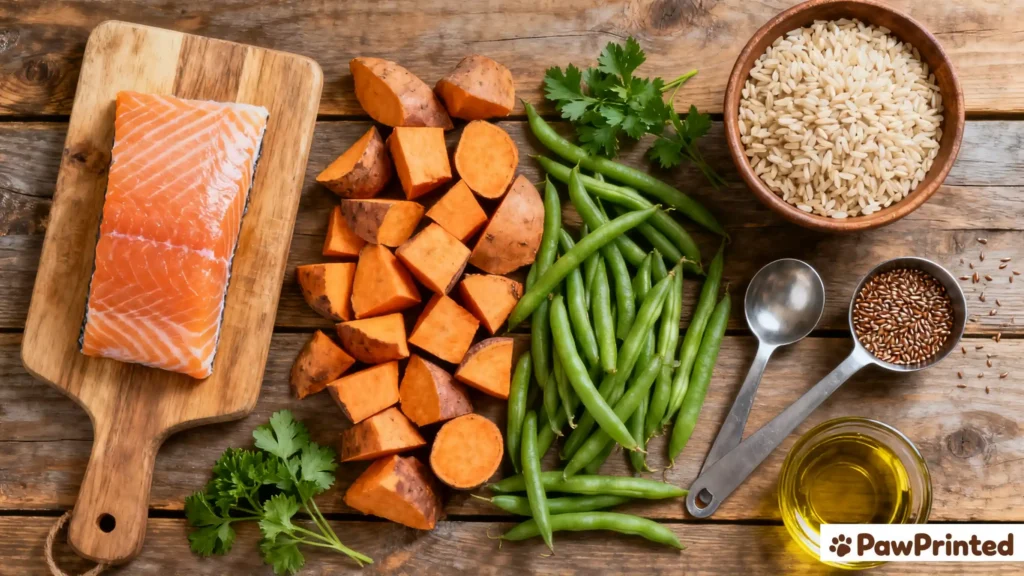
Ingredients You’ll Need (Simple & Fresh)
Whenever I make this recipe, I always picture Ethan waiting by the counter — that quiet tail thump as he recognizes the smell of salmon. It’s one of those meals that feel both special and practical: gentle on the stomach, shiny for the coat, and balanced enough to serve all week.
Clean protein with omega-3s for a healthy coat and joints.
Try Nature’s Recipe Salmon & Pumpkin for busy days when fresh cooking isn’t an option.
Soft fiber that supports digestion and provides gentle carbs.
When short on time, Wild Harvest Salmon & Sweet Potato offers a similar balanced texture Ethan actually enjoys.
Light protein with natural antioxidants for gut balance.
Perfect complement to Canidae Pure Salmon Formula, a vet-trusted option for sensitive tummies.
1 tsp olive or fish oil — keeps skin smooth and joints mobile.
On rest days, we alternate with Evolve Salmon & Potato, which already includes omega-rich fats in perfect ratio.
Pumpkin, carrot, parsley — for extra color and nutrients.
Canidae Salmon Oat Biscuits make great crunchy toppers or travel treats.
When life gets busy and the kitchen stays quiet, I still try to keep the same spirit alive — fresh, mindful feeding that feels like home. On workdays, I’ll mix a half portion of homemade food with Nature’s Recipe Salmon & Pumpkin for consistency. It keeps Ethan’s routine calm, his coat glossy, and his digestion happy — even when my own meals are rushed.
Step-by-Step: How I Cooked It for Ethan
I start with a fillet of boneless, skinless salmon — fresh or frozen both work. Steam or poach it gently for 10–12 minutes until it flakes apart. The key is low heat: it keeps the oils intact and prevents dryness. After cooling, I shred it finely to remove any tiny bones. The kitchen smells incredible, and Ethan always sits quietly nearby, tail swaying. This step alone gives the meal its rich, natural aroma and healthy omega-3 boost.
I peel and cube the sweet potatoes, then steam them until they’re soft enough to mash with a fork. Baking also works if you prefer a deeper flavor. Their natural sweetness balances the salmon’s savory side and adds gentle fiber for digestion. I mash them smooth — no salt, no oil. This step gives the recipe its beautiful orange color and comforting smell, perfect for sensitive stomach dogs.
Next come the peas — I steam them lightly for 3–4 minutes, just until tender. If I have leftover brown rice or oatmeal, I add a spoonful to make the meal more filling on active days. The goal is a soft, balanced texture that blends protein and carbs without heaviness. For older dogs or those watching weight, you can skip the base and keep it leaner. The colors — green, orange, pink — always look like a small celebration in Ethan’s bowl.
Once everything cools, I combine salmon, mashed sweet potato, and peas in a large bowl. A drizzle of fish oil or olive oil adds extra shine and supports joint health. I stir until the mix looks smooth but still a bit chunky — dogs love that texture. Before serving, I let it rest for five minutes so the flavors blend. Ethan starts wagging faster the moment I reach for his bowl. That’s the signal that dinner’s officially approved.
I scoop portions into small glass containers — one for today, a few for the fridge, and the rest for the freezer. Each serving reheats gently to room temperature within minutes. It’s simple, balanced, and always satisfying. Some days, I top it with a crumble of Canidae Salmon & Oat Biscuits for crunch — Ethan’s favorite twist. By the end, his bowl is spotless, and I’m reminded that homemade really is worth it.
Weekly Rotation Snapshot
Homemade Salmon & Sweet Potato
Nature’s Recipe Salmon & Pumpkin
Canidae Pure Salmon Grain-Free
Rest + Light Treats
Balanced, flexible, and easy to maintain — Ethan’s happy all week.
Serving Guide at a Glance
½–1 cup per meal
1–1½ cups per meal
2 cups per meal
*Adjust portions based on activity, age, and energy levels.
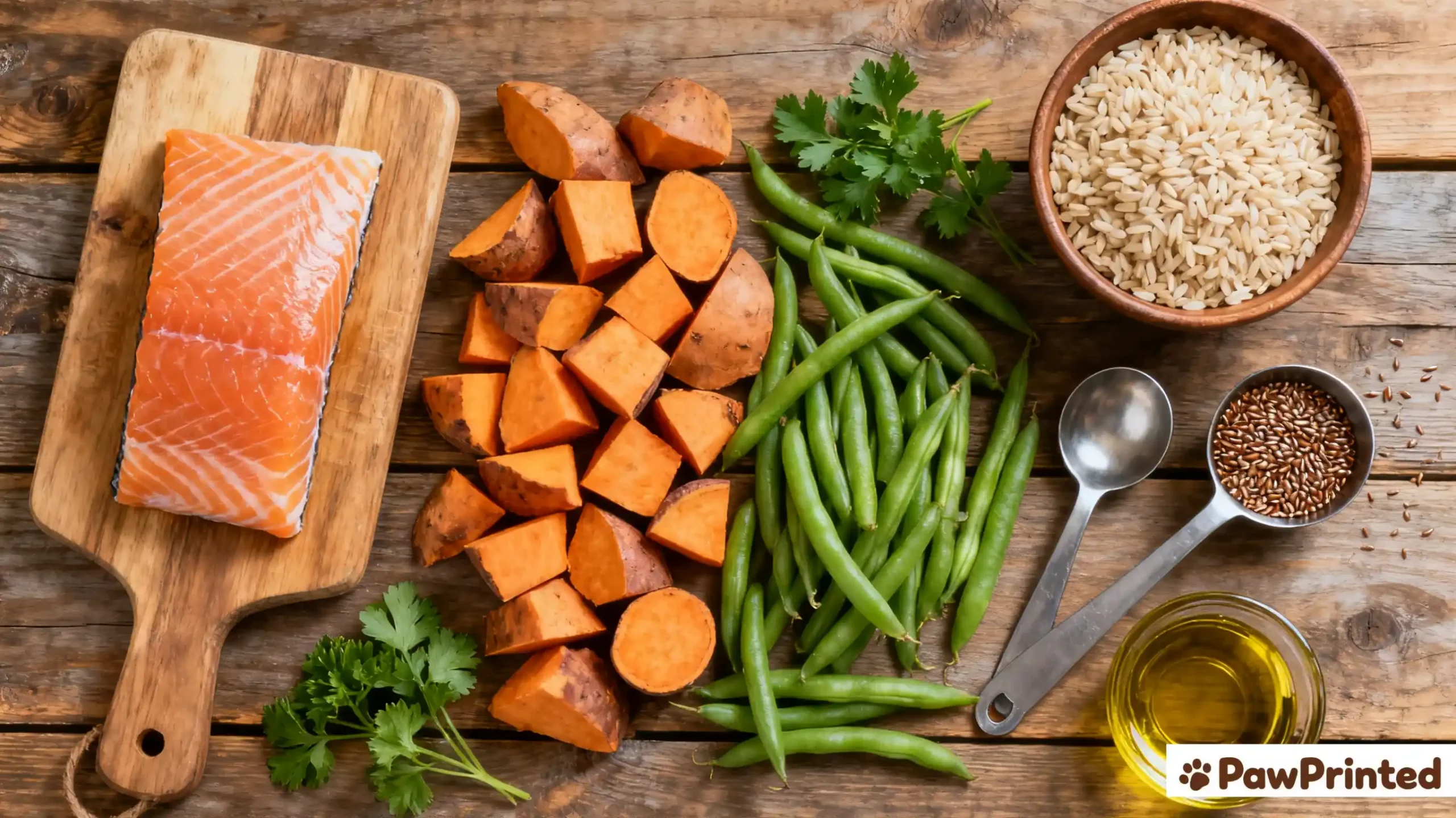
Salmon & Sweet Potato Dog Food Recipe (Easy & Nutritious)
- Steaming pot or saucepan
- – Mixing bowl
- Potato masher or fork
- Measuring cup and spoons
- Airtight storage containers
- 1 lb fresh salmon fillet boneless, skinless
- 1 large sweet potato peeled and cubed
- ½ cup cooked brown rice
- ¼ cup green peas steamed or frozen
- 1 tbsp flaxseed oil or fish oil
- Optional: 1 tsp finely chopped parsley
- Steam or poach the salmon — Cook the salmon fillet gently for about 10–12 minutes until it flakes easily. Avoid frying to preserve the healthy oils.
- Prepare the sweet potatoes — Steam or bake until soft, then mash until smooth. The texture should be creamy and easy to mix.
- Cook the rice — Use plain brown rice, cooked slightly softer than usual to aid digestion.
- Combine all ingredients — In a large bowl, mix salmon, mashed sweet potatoes, rice, and peas. Add the oil and parsley, stirring gently until evenly distributed.
- Cool before serving — Allow the food to reach room temperature before serving to your dog.
- Store leftovers — Keep portions in airtight containers in the fridge for up to 3 days or freeze for up to 2 weeks.
• For a softer texture, add a few tablespoons of low-sodium chicken broth.
• Always let the food cool completely before serving.
• If you don’t want to cook every week, try alternating with gentle store-bought meals like Nature’s Recipe Salmon & Pumpkin or Canidae Pure Salmon Formula — both match this recipe’s nutrient profile.
• Consult your vet before introducing any new homemade meal to ensure it fits your dog’s specific dietary needs.
Serving Sizes & Feeding Guide
One thing I quickly learned while making homemade dog food is that serving size isn’t just about weight — it’s about energy, age, and activity. Ethan, being a medium-sized dog who walks twice a day, thrives on about 1 cup per meal, twice daily. Smaller breeds can start with ½ cup, while larger ones may need up to 2 cups per serving. The rule of thumb: your pup should finish the meal happily but not rush to lick the bowl dry every time.
If you’re feeding this salmon & sweet potato recipe as a full meal, you can skip added kibble. But if you’re transitioning from commercial food, start with a 50/50 mix — half homemade, half their usual dry food. It helps the stomach adapt gently and reduces any chance of loose stool. I usually blend a portion of Nature’s Recipe Salmon & Pumpkin during the first week. It keeps the balance right and ensures Ethan’s system adjusts smoothly.
For puppies and seniors, portion control is key. Puppies burn through calories fast — add a small midday snack or a spoonful of rice for extra energy. Senior dogs, however, benefit from smaller, lighter meals spaced throughout the day. You can even freeze pre-measured portions to keep everything simple and consistent.
Your dog’s body language will tell you a lot — soft eyes, relaxed posture, steady energy. That’s when you know the portion’s just right. If you’re unsure, check our Homemade Dog Food Feeding Guide for quick vet-backed charts and daily ratio tips.

Storage Tips
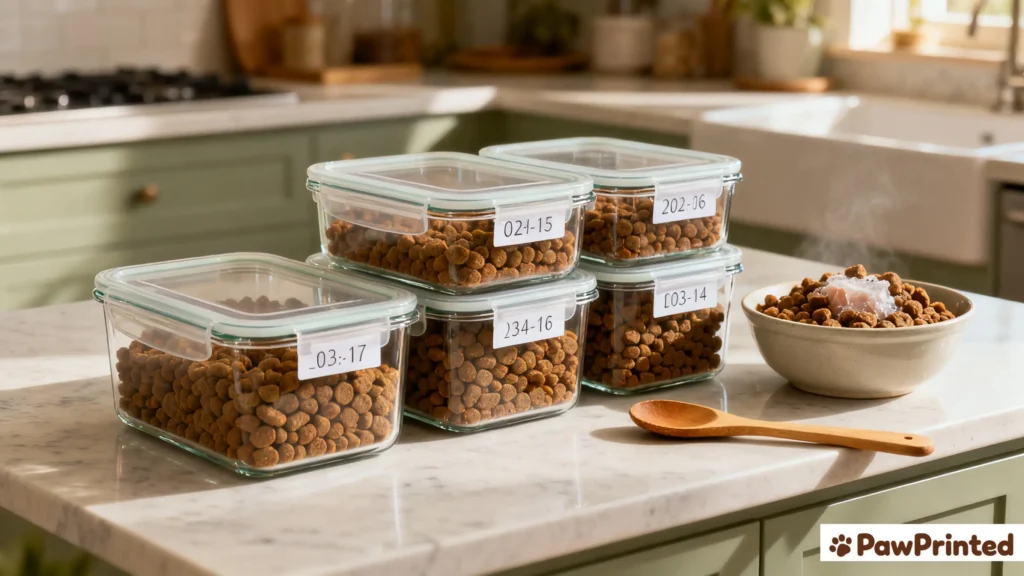
Once the kitchen quiets down and the food has cooled, I portion everything into small, airtight containers. For Ethan’s meals, I label each one with the date and a small paw mark — a habit that saves guesswork later. It might sound simple, but how you store your homemade dog food makes all the difference in freshness and safety.
- Refrigerate for up to 3 days: Store sealed containers in the middle rack, not the door, to maintain steady temperature. Let each portion cool to room temp before sealing — it keeps condensation from creating moisture pockets.
- Freeze for up to 2 weeks: Use small freezer-safe bags or silicone molds for portioning. I usually thaw overnight in the fridge — slow thawing keeps texture and nutrients intact.
- Never reheat directly from frozen: Always bring to room temperature first, then gently warm with warm water or a microwave at low setting for 20–30 seconds.
I’ve tested a few combinations to see what holds up best, and the Evolve Salmon & Potato blend stays remarkably consistent after freezing — it’s a good benchmark for homemade meals too. If the food ever smells “off” or loses its color, it’s best to discard and start fresh.
Most importantly, never refreeze thawed food. Think of it like cooking for family — your dog’s bowl deserves the same care and rhythm. I prep Ethan’s meals every Sunday; it’s a small ritual that keeps both of us on track, one labeled jar at a time.

My Dog’s Reaction & Vet Notes
The first time I served this salmon & sweet potato dog food, Ethan’s nose twitched before the bowl even touched the floor. He gave it one curious sniff, then started eating slowly — the kind of careful, satisfied bites that tell you it’s just right. By the third day, his appetite was steady, his coat felt silkier, and that faint dryness around his ears had started to fade. It wasn’t an overnight change, but a quiet, steady one that showed from the inside out.
During his next check-up, our vet smiled after looking over his skin and energy levels. “Whatever you’re doing,” she said, “keep it up. The omega-3s from salmon and the steady carbs from sweet potato are exactly what his system needs.” That’s when I realized this wasn’t just a recipe — it was a rhythm. It gave Ethan stability, shine, and the kind of calm energy that lasts all day.
For balance, we still rotate in trusted commercial options a few times a week — usually Canidae Pure Salmon Grain-Free on travel days, or Nature’s Recipe Salmon & Pumpkin when I’m low on prep time. They keep his digestion consistent and make the transition between homemade and store-bought seamless. Ethan doesn’t notice the difference — only that dinner always tastes like care.
Easy Variations (Make It Fun & Flexible)
Once you’ve mastered the basic salmon & sweet potato dog food recipe, the fun part begins — experimenting with small tweaks to keep things exciting. Dogs love routine, but their nutrition thrives on gentle rotation. I try to change one ingredient every week or two, keeping Ethan’s meals fresh while supporting different parts of his health.
Add a few spoonfuls of pure pumpkin purée for fiber and vitamin A. It helps regulate digestion and adds a creamy texture Ethan adores. See full recipe: Salmon & Pumpkin Dog Food Recipe.
Swap rice for cooked quinoa to raise protein and minerals while keeping it light. This mix is ideal for active or athletic dogs. Learn how to prep it right in our Salmon & Quinoa Dog Food Recipe.
For older pups, blend the mixture longer and skip dense grains. A drizzle of warm water or bone broth makes it easy to chew and soothing for the joints. More ideas: Senior Dog Food Guide.
These little adjustments make home cooking feel creative instead of repetitive. The best part? You’ll start to recognize your dog’s preferences — Ethan, for example, wags faster when he smells the pumpkin version. It’s our small kitchen ritual: same bowl, new joy.
Rotation Plan — Balancing Homemade & Store-Bought
Even the most dedicated dog parents need a rhythm that fits real life. For me, balance isn’t about perfection — it’s about keeping nutrition steady while keeping life manageable. Some weeks I cook every few days; others, I lean more on store-bought meals that match our homemade recipes. This steady rotation keeps Ethan’s digestion calm and his routine consistent.
Our vet once explained it simply: “Think of rotation feeding like cross-training for the gut.” By alternating homemade salmon meals with high-quality dry or wet food, you strengthen your dog’s digestive system while preventing nutrient boredom. Just make sure both sides of the rotation share similar proteins and fiber levels — consistency is what helps their body adapt smoothly.
Fresh-cooked meals like Salmon & Sweet Potato or Salmon & Pumpkin deliver moisture, real texture, and anti-inflammatory benefits. They reset digestion and hydrate from within.
For travel or busy days, I rely on Nature’s Recipe Salmon & Pumpkin and Canidae Pure Salmon Grain-Free. Both share the same gentle base, so Ethan’s system never feels the switch.
Between meals, I rotate vet-approved rewards like Canidae Salmon Oat Biscuits or Evolve Salmon & Potato. They keep training fun and consistent with his main diet.
Rotating food isn’t just convenient — it builds microbiome resilience, prevents picky eating, and keeps me from burning out in the kitchen. Whether it’s a full homemade week or a mix-and-match routine, the goal stays the same: to feed with love, without pressure. That’s the kind of balance both dogs and humans can live by.
Which Dogs Will Benefit Most
This salmon & sweet potato dog food recipe was first designed for Ethan’s mild allergies and sensitive digestion — but over time, we found it works beautifully for many pups. The clean protein and gentle carbs make it one of the most adaptable meals we’ve tried. If your dog fits any of these groups, this recipe will likely become a regular favorite.
The mild fibers in sweet potato soothe digestion and reduce upset stomachs. Learn more in our Sensitive Stomach Dog Food Guide.
Salmon offers a clean, single-source protein that supports skin recovery and reduces itching. See our Dog Food for Allergies collection.
Balanced protein and slow carbs give lasting energy without heaviness — ideal for daily walks or agility play. Try our High Protein Dog Food Guide.
The soft texture is easy on teeth, while the omega-3s help joint comfort and mobility. Explore the Senior Dog Food Guide.
It’s a flexible base — simple enough for everyday feeding, yet nourishing enough for recovery or rotation days. If you’re unsure which version to start with, check our Best Salmon Dog Food Guide for tested, vet-approved options to pair with your homemade meals.
FAQs — Salmon & Sweet Potato Dog Food
Yes — this pairing is one of the gentlest and most nourishing combinations for dogs. Salmon provides omega-3 fatty acids that support skin, joints, and immunity, while sweet potatoes supply fiber for steady digestion and natural energy. It’s especially beneficial for dogs with sensitive stomachs or allergies. Many vets call it a “balanced comfort meal” because it hydrates, soothes, and strengthens the body without heaviness. Just make sure the salmon is fully cooked and unseasoned before serving.
Dogs can enjoy salmon regularly, but it’s best to rotate it with other lean proteins for variety. Feeding it daily for weeks isn’t harmful if portions are moderate and the source is clean. The key is balance — the natural oils in salmon are fantastic for the coat, yet too much fat may upset digestion. I usually serve this recipe 3–4 times a week and rotate with Canidae Pure Salmon Grain-Free or Evolve Salmon & Potato on busier days. That mix keeps Ethan’s meals consistent but never repetitive.
The healthiest methods are steaming, baking, or poaching — they preserve omega oils and prevent burning. Avoid seasoning, oil, and butter; dogs don’t need extra salt or fat. I typically steam boneless salmon for 10–12 minutes, then flake it gently to check for bones. Mixing it with soft sweet potatoes and peas creates a naturally moist texture that’s easy to digest. This gentle approach is why most vet-approved homemade dog food recipes start with low-temperature cooking.
Technically yes, but it’s safer to peel them first. Sweet potato skin can hold dirt and fiber that’s too tough for sensitive tummies. When peeled and steamed, the inner flesh provides soluble fiber that helps regulate digestion. If your dog’s stomach is strong, you can keep a small amount of skin for texture — just wash thoroughly and cook until soft. For a completely smooth recipe, skip the skin and blend the mixture like we do in the Salmon & Pumpkin Recipe.
In the refrigerator, this recipe stays fresh for about 3 days if sealed tightly. For longer storage, freeze in single portions for up to two weeks. Thaw overnight in the fridge and serve at room temperature — never refreeze thawed food. I like to alternate between frozen homemade meals and Nature’s Recipe Salmon & Pumpkin on days I don’t cook. Both keep Ethan’s routine balanced while saving prep time. The rule is simple: fresh smell, steady color, happy wag — that’s when it’s just right.

Wrapping It Up
Cooking for your dog doesn’t have to be complicated — it’s really about slowing down for a few minutes and enjoying the rhythm of care. This salmon & sweet potato recipe became a Sunday tradition in our kitchen: simple, calming, and full of real goodness. Ethan still waits by the counter every time he hears the pot lid click, tail ready, eyes soft.
If you’re just starting out, try making a small batch this week. Watch how your pup responds — the sparkle in their eyes will tell you everything. And if you’re stuck, start with gentle wet food, then move to steady dry picks. Homemade or not, what matters most is feeding with love and a bit of patience.
💬 Have you tried your own version of this recipe? We’d love to hear what your dog thought! Share it with us or tag @PawPrintedPet — Ethan might even feature your pup’s favorite mix in our next guide.
Every recipe I make for Ethan starts with the same thought — love in small, daily moments. This one became our favorite because it fits easily into real life. Whether you cook it every week or just once a month, the warmth it brings will stay far longer than the meal itself.
Feed with love, cook with care — every bowl tells a story.