Homemade Salmon & Lentils Dog Food – Why We Love This Combo
When Ethan’s digestion felt off during the season change, I looked for a recipe that could balance protein and gentle fiber — something hearty but easy on the stomach. This Salmon & Lentils Dog Food Recipe quickly became our weekday staple: rich in omega-3, high in plant fiber, and naturally satisfying without heaviness.
I still remember the first test batch — Ethan hovered by the stove, tail wagging at every sound of the pot. For days when I can’t cook from scratch, I lean on WAG Salmon Dog Food, which mirrors the same nutrient balance and keeps his coat just as glossy. It’s the kind of reliable backup every dog parent needs when the schedule gets messy.
If you’re new to homemade meals, start with this easy balance of fish protein and fiber. It’s a vet-approved formula that supports smooth digestion and stable energy. For a full guide to salmon-based recipes, see our Vet-Approved Salmon Dog Food Recipes and learn what makes salmon so good for dogs.
Why Salmon and Lentils Work So Well Together
Salmon and lentils may sound simple, but together they form one of the most balanced homemade dog food combinations. Salmon delivers omega-3 fatty acids that nourish the skin, coat, and joints, while lentils supply gentle plant fiber and steady energy that keep digestion calm and stool consistent. It’s a naturally synergistic mix — protein for strength, fiber for gut health.
Our vet once described this blend as a “two-engine formula”: one supports muscle recovery, the other regulates metabolism. Lentils also help control appetite, making it perfect for dogs that gain weight easily. Compared to grain-heavy meals, this combo stays lighter and more nutrient-dense, especially when cooked with low oil and fresh broth.
For dogs with sensitivities, lentils can replace rice without losing nutritional balance. You can explore more limited-ingredient versions in our Limited Ingredient Salmon Dog Food Guide, or see how salmon compares nutritionally with poultry in Salmon vs Chicken Dog Food. When Ethan’s energy dips after long walks, I sometimes mix a few bites of Orijen Six Fish into his bowl for an extra protein boost.
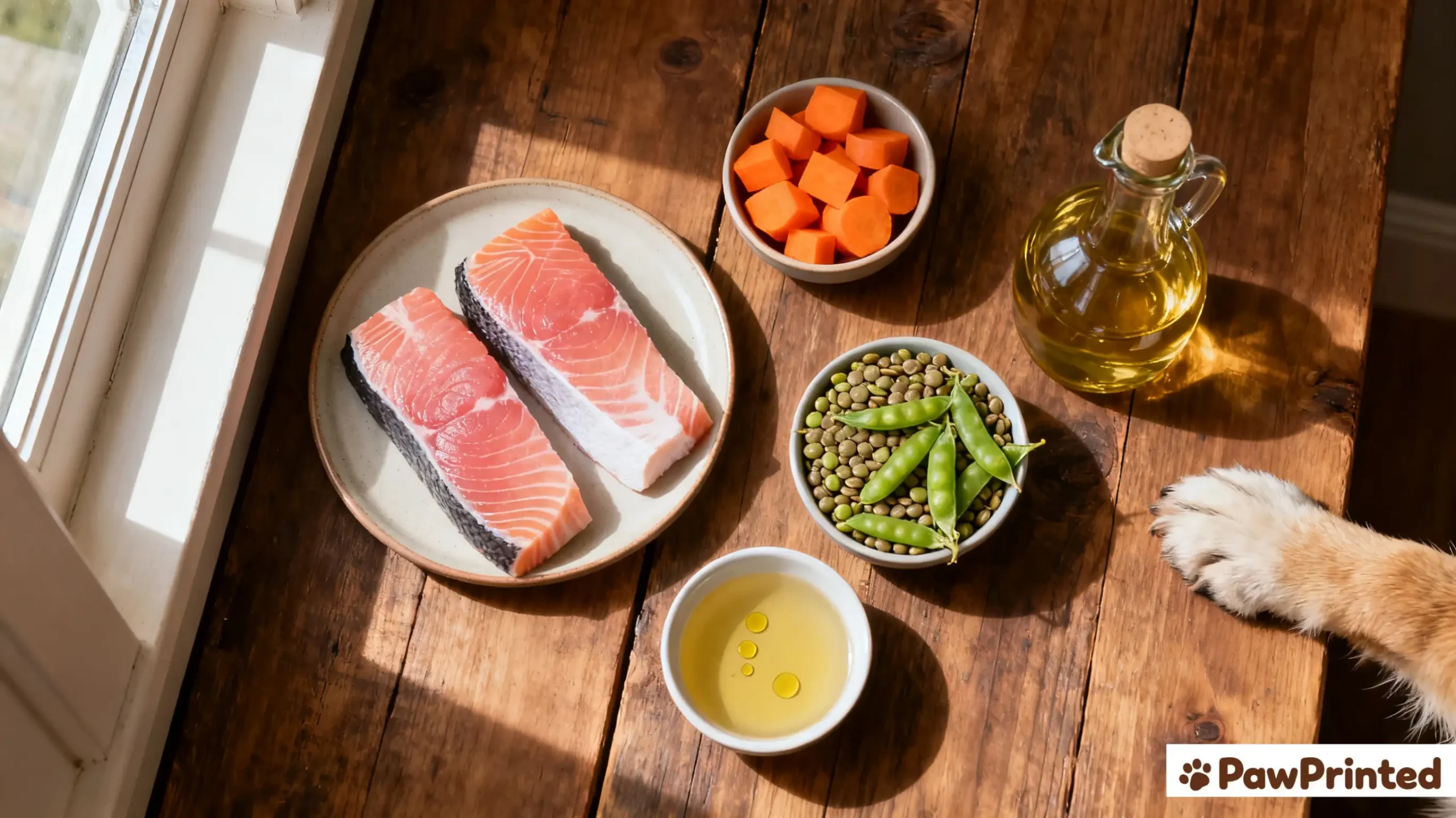
Ingredients You’ll Need
A simple, high-fiber + high-protein base that’s gentle on digestion. Rinse lentils well and cook until tender; keep seasonings minimal (no salt, garlic, or onion). If your pup has a sensitive tummy, see our Sensitive Stomach Guide, and learn why salmon supports skin, coat, and joints in Salmon Benefits for Dogs.
Clean animal protein rich in omega-3s for coat shine and joint comfort. Steam or bake, then flake and remove any pin bones.
Gentle plant fiber + steady carbs for gut balance. Rinse thoroughly and cook until soft (no crunch) to aid digestion.
Adds vitamins, color, and mild sweetness. Steam to soften fibers and improve absorption.
Finishes the bowl with skin-friendly fats. Add after cooling to preserve delicate omegas.
Binds ingredients, boosts aroma, and supports hydration. Cool before mixing.
During prep, Ethan waits patiently for a tiny reward: Natural Balance Salmon Treats. For a post-mix crunch, crumble a strip of Polkadog Salmon Skins.
Step-by-Step Cooking Guide
The key to this Salmon and Lentils Dog Food Recipe is gentle cooking — enough heat to make the protein safe, but never so much that nutrients break down. Each step below keeps texture, aroma, and digestibility in balance. Follow carefully, then cool fully before serving to your pup.
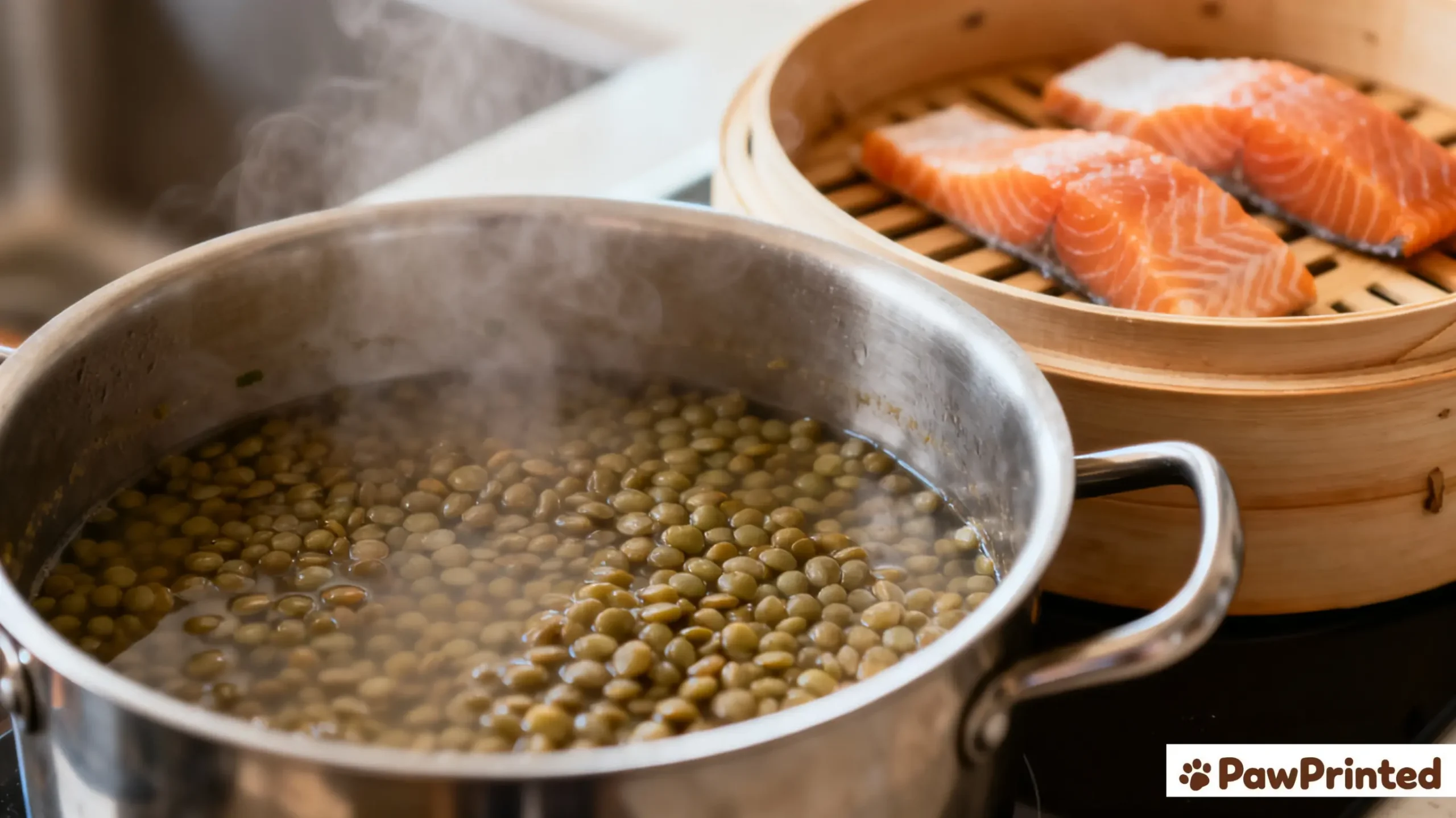
Measure 1 cup of lentils and rinse under cold water for at least 30 seconds to remove natural residues that can cause gas. Simmer in water or unsalted bone broth for 20–25 minutes until tender. Lentils should be soft enough to mash slightly but still hold shape. Drain excess liquid and let them cool completely. For pups with sensitive digestion, you can find fiber-friendly variations in our Low Fat Dog Food Recipe.
Place boneless, skinless salmon fillets on a lined baking tray or steamer. Cook until fully opaque and flake easily with a fork. Avoid salt, garlic, or onion. Once cooked, remove pin bones and cool. When short on time, I use WAG Salmon Dog Food as a ready-made protein backup that mimics the same omega-rich benefits.
Steam ¼ to ½ cup of chopped carrots or spinach for 3–5 minutes until tender. Finely chop for even distribution and better nutrient absorption. Ethan always perks up when he hears the steamer hiss — it’s his sign dinner’s coming! Spinach adds iron and antioxidants that help maintain healthy red blood cells.
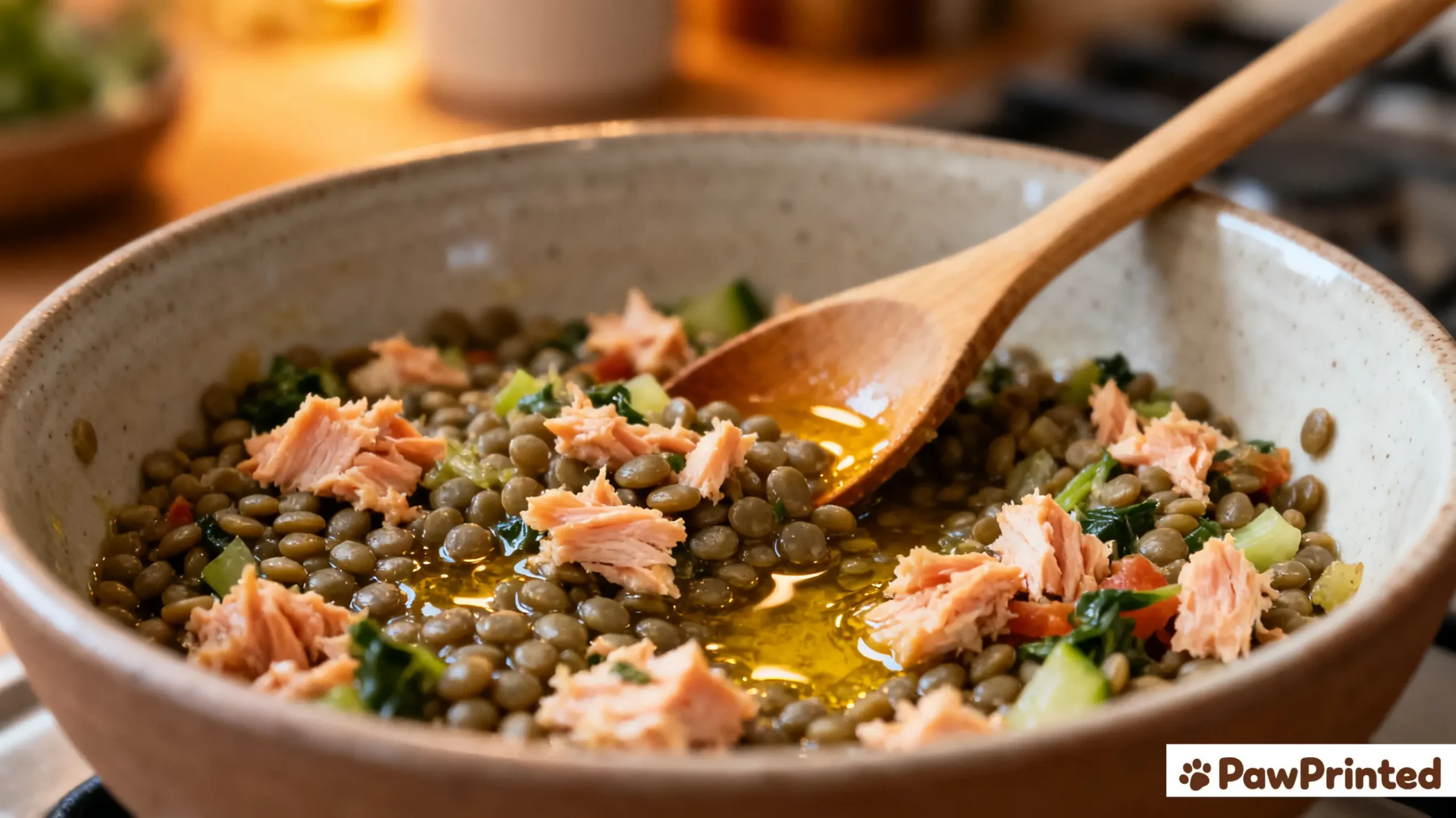
In a large bowl, combine cooked salmon, lentils, and vegetables. Add ¼ cup of cooled broth or water to moisten the mix. Drizzle with 1 teaspoon of olive or fish oil to boost skin and joint support. Fold gently with a spoon — avoid mashing, which can make the meal dense and gummy.
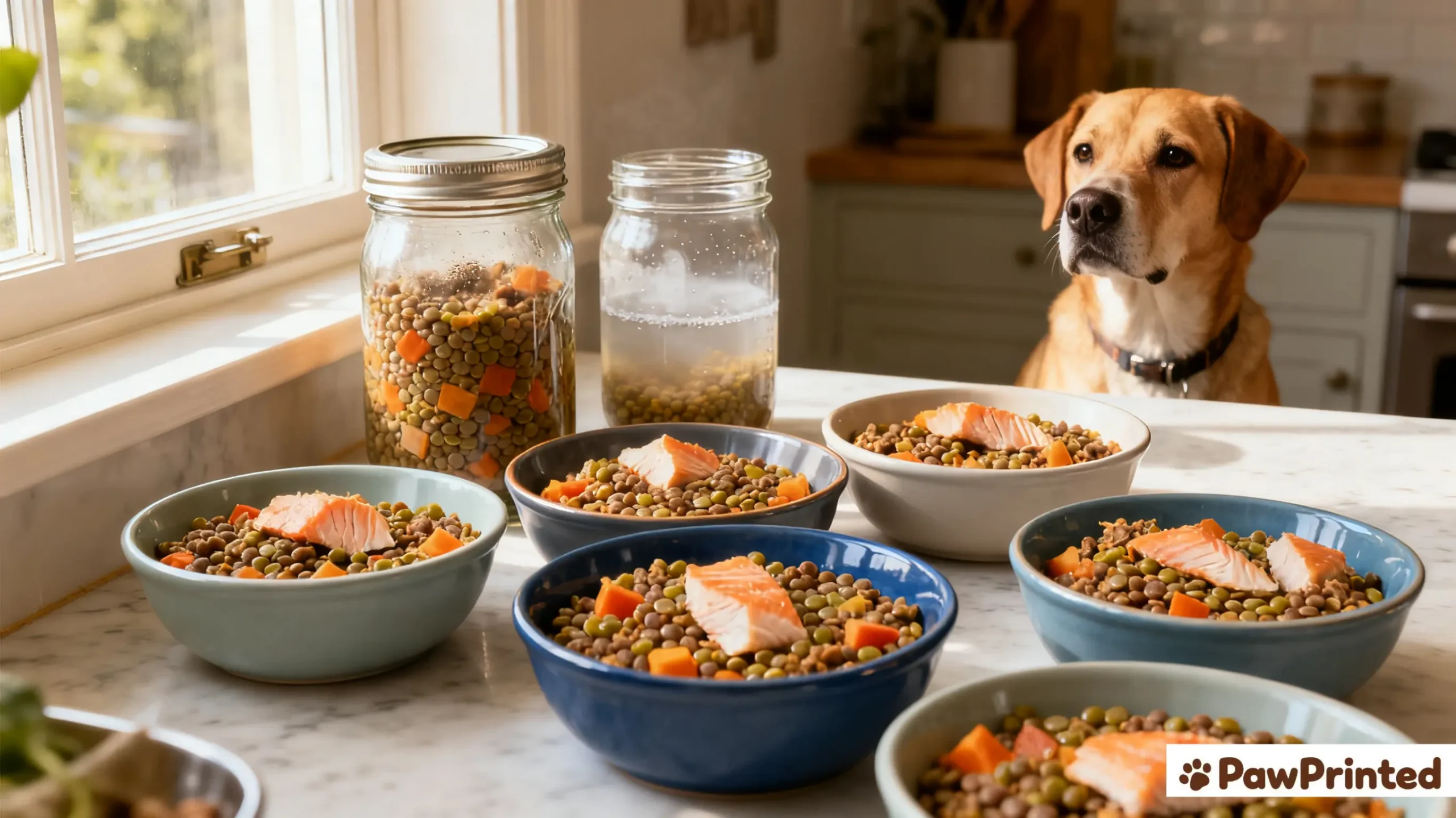
Let the mixture rest until room temperature before portioning. Divide into daily servings based on weight (about 1 cup per 20 lbs). Store in airtight glass containers — refrigerate for 3 days or freeze for 2 weeks. Label containers with dates to keep rotation fresh and easy.
Serve slightly warm or room temperature. For a crunchy topper, crumble a piece of Vital Essentials Salmon Treat on top — Ethan’s favorite way to finish dinner. You can also mix in a few bites of Orijen Six Fish kibble for extra omega-rich texture.

Salmon and Lentils Dog Food Recipe (Fiber and Protein Blend)
- Saucepan or pot for lentils
- Steamer or baking tray for salmon
- Cutting board & knife
- Mixing bowl and spoon
- Airtight containers for storage
- 1 lb boneless skinless salmon fillet cooked and flaked
- ½ cup cooked lentils well-rinsed and soft
- ¼ cup finely chopped carrots or green beans lightly steamed
- 1 tsp olive oil or fish oil
- ¼ cup unsalted bone broth or water
- Optional: a few salmon freeze-dried treats as topping
- Cook the Lentils:
- Rinse lentils thoroughly, then simmer in water or unsalted broth until tender. Drain excess liquid and let them cool slightly.
- Prepare the Salmon:
- Steam or bake the salmon fillet until cooked through. Remove any skin and bones, then flake into bite-sized pieces.
- Add the Vegetables:
- Steam carrots or green beans until soft, then finely chop. They add vitamins and texture while staying easy on digestion.
- Combine Ingredients:
- In a large bowl, mix salmon, lentils, and vegetables. Add bone broth and drizzle olive or fish oil for shine and joint support. Fold gently to keep texture.
- Cool and Serve:
- Allow the meal to cool completely before serving. Refrigerate leftovers for up to 3 days or freeze portions for up to 2 weeks.
• Rotate this recipe with commercial salmon-based dry foods like
Wag Salmon Dog Food or
Orijen Six Fish for complete nutrition.
• Always cool meals before serving and adjust portions by your dog’s weight and activity level.
• If you don’t want to cook daily, check our dry food picks — those were Ethan’s daily backups.
Nutritional Data & Vet Insights
This Salmon and Lentils Dog Food Recipe delivers the perfect balance between lean animal protein and high-quality plant fiber — great for digestion, muscle maintenance, and coat health. Lentils contribute slow-release carbs for steady energy, while salmon ensures an omega-3 boost that supports heart and joint health.
High-quality animal protein from salmon supports lean muscle growth and tissue repair. For busy weekdays when you can’t cook, WAG Salmon Dog Food provides a reliable omega-rich balance similar to this homemade recipe.
Lentils are rich in soluble and insoluble fiber that helps maintain steady bowel movements and nourishes beneficial gut bacteria. Perfect for dogs prone to bloating or irregular digestion. For additional fiber variations, see our Sensitive Stomach Recipes.
Moderate fat from salmon and fish oil fuels your dog’s coat shine and joint lubrication. If your pup needs extra omega-3 support, mix in a few pieces of Orijen Six Fish kibble for added balance.
Designed for daily feeding — dense enough to energize active dogs, yet light for weight maintenance. On rest days, reduce portions slightly or alternate with a lighter mix like Salmon & Pumpkin Dog Food Recipe.
Spinach and salmon together deliver a gentle iron boost and omega-3 synergy — perfect for skin, coat, and circulation. For extra texture and minerals, sprinkle Polkadog Salmon Skins as a topper once or twice a week.
Next: vet-approved variations and serving ideas to adapt this recipe to every pup’s lifestyle.
Vet Tips & Variations
Every dog’s body processes fiber and protein differently — even within the same household. These small adjustments help you personalize this Salmon and Lentils Dog Food Recipe for your pup’s age, energy level, and digestion pattern, all guided by vet-approved principles.
For Gentle Digestion
Swap half the lentils for steamed pumpkin or oats to lower fiber density. This keeps stools firm while calming the gut. When Ethan had a mild stomach upset, I followed this tweak and it worked beautifully. For a store-bought equivalent, WAG Salmon Dog Food offers the same soft texture and mild flavor.
For Weight Control
Reduce oil to half a teaspoon and replace a small portion of salmon with white fish or turkey. Add extra steamed spinach for volume without extra calories. If your dog tends to gain weight easily, alternate with our Low Fat Dog Food Recipe to maintain steady body condition.
For Allergy-Prone Dogs
If your pup reacts to grains or legumes, skip lentils entirely and use sweet potato or pumpkin purée. Pair with limited-ingredient treats like Natural Balance Salmon Treats for safe snacking without fillers.
For Senior Dogs
Older dogs benefit from softer meals and joint support. Add extra broth for hydration and a sprinkle of ground flaxseed for omega-3s. I sometimes mix in a few bites of Orijen Six Fish kibble for additional protein rotation that keeps energy levels up.
For Active or Working Dogs
Double the salmon portion and add a teaspoon of olive oil to support recovery. The lentils’ complex carbs help sustain endurance while salmon’s omega-3s aid muscle repair. For quick post-activity snacks, Ethan loves Polkadog Salmon Skins — crisp, single-ingredient fuel between meals.
Next: serving and storage ideas — how to prep ahead and keep meals safe, even on your busiest weeks.
Serving Ideas & Storage
Once your batch is cooked and cooled, portioning and rotation keep meals consistent and safe. Use the ideas below to match your dog’s size, schedule, and activity level.
Start with ~1 cup per 20 lbs of body weight per day, split into two meals. Adjust +/− 10–20% based on stool quality, appetite, and activity. Keep water available and avoid sudden jumps in serving size.
On busy mornings, I do a 50/50 bowl — half homemade, half WAG Salmon Dog Food. It keeps omega levels steady and adds a crunchy texture Ethan loves, while the lentils provide gentle fiber.
Refrigerate in airtight glass containers up to 3 days. Freeze flat in labeled bags or single-serve cups up to 2 weeks. Thaw overnight in the fridge; never thaw on the counter. Stir before serving.
After thawing, revive aroma with a splash of warm unsalted broth. For excitement and extra omegas, crumble Polkadog Salmon Skins or add a few bites of Orijen Six Fish.
For sensitive tummies, keep toppers simple: a spoon of pumpkin purée or a few Natural Balance Salmon Treats broken over the bowl. On training days, Ethan earns Vital Essentials Salmon Treats as a crunchy finish.
Rotate recipes every 2–3 weeks to broaden nutrient variety (e.g., pumpkin or oats versions). Keep a simple log of portions, stools, and energy so adjustments are data-driven, not guesswork.
Next: What Worked for Ethan — real-world notes on the brands we rotate with this homemade blend.
What Worked for Ethan
Over the past few months, I’ve tested different salmon-based dog foods to see which ones matched the flavor and balance of our Salmon & Lentils Recipe. Some became Ethan’s weekday staples, while others served as quick travel backups when homemade meals weren’t an option. Here are the five that made it into our long-term rotation — each one tested, tasted, and tail-wag approved.
Our weekday go-to when mornings get hectic. WAG’s formula blends wild-caught salmon with sweet potato and peas, keeping omega levels high and stools consistent. It’s light, digestible, and doesn’t interfere with our homemade rotation.
These crunchy bites are Ethan’s mid-day motivation. They echo the same salmon flavor in our recipe, making them perfect for training or gentle snack breaks. I also crumble a few over his dinner bowl when we’re short on time.
My favorite guilt-free topper — single-ingredient salmon skins with natural crunch. They add extra texture, a little sparkle to his coat, and that satisfying “crack” sound he loves. Great for joint support and post-walk rewards.
Our freezer staple. These are 100% pure salmon, freeze-dried to lock in nutrients. Perfect for travel, training, or lazy Sundays when I skip the oven. Ethan’s tail starts wagging the second he hears the bag crinkle.
The high-protein powerhouse we use on active days. Packed with multiple fish sources, it helps recovery and maintains lean muscle. It’s also the only kibble Ethan happily eats plain — no toppings required.
Next: check the FAQ section below for quick answers — including how often to serve lentils, how to balance protein ratios, and safe storage for home-cooked meals.
Frequently Asked Questions
Are lentils safe for dogs?
Yes—when thoroughly cooked and served in moderate portions. Soft, well-cooked lentils provide gentle fiber and plant protein that support steady digestion. Always introduce gradually and monitor stool quality.
How often can I feed salmon and lentils?
Several times per week as part of a rotation is suitable for most dogs. Keep portions consistent for 3–5 days before adjusting, and rotate with other proteins to maintain nutrient diversity.
Do lentils cause gas or bloating?
They can if undercooked or added too quickly. Rinse well, cook until tender, cool fully, and start with small amounts. If stools soften, pause increases and add fiber slowly.
Is salmon okay for daily feeding?
Cooked, boneless salmon is generally fine when portions are balanced. Its omega-3s support skin, coat, and joint health. Avoid raw salmon and remove all pin bones before serving.
What’s the basic portion guide?
A practical starting point is about 1 cup per 20 lbs (9 kg) body weight per day, split into two meals. Adjust by 10–20% based on activity, body condition, and stool quality.
Wrapping It Up
Cooking for Ethan has taught me that nutrition doesn’t need to be complicated — just thoughtful. A simple blend like salmon and lentils covers everything: clean protein, natural fiber, and heart-healthy omegas. It’s real food, made with care, and it shows in his bright eyes and steady energy.
When I can’t cook, I rotate with a few trusted standbys like WAG Salmon Dog Food or Orijen Six Fish . The goal is balance — keeping his diet consistent, nourishing, and enjoyable.
If you’re trying homemade meals for the first time, start small and don’t stress perfection. What matters most is feeding with love and intention. Each bowl is a quiet way of saying: you deserve the best.
If you’re stuck, start with gentle wet food, then move to steady dry picks. For more options, see the Explore More section below.
Homemade Salmon Dog Food Recipes (Vet Approved Series)
Explore our complete collection of vet-approved salmon dog food recipes — each designed for a different need: from gentle digestion to high-protein recovery. These meals are wholesome, easy to prepare, and Ethan-tested for flavor and health.
- 🐟 Salmon Dog Food Recipe (Rice & Peas, Vet Approved) — A classic gentle bowl for sensitive stomachs.
- 🥔 Salmon & Sweet Potato Dog Food Recipe (Easy & Nutritious) — Rich in vitamins and natural fiber.
- 🎃 Salmon & Pumpkin Dog Food Recipe (Gentle Digestion) — The go-to recipe for calm digestion and hydration.
- 🌾 Salmon & Oats Dog Food Recipe (Healthy & Filling) — A cozy, fiber-rich mix for steady energy.
- 🍚 Salmon & Quinoa Dog Food Recipe (Protein Boost) — High-protein and balanced with omega support.
- 🌿 Salmon & Spinach Dog Food Recipe (Omega-3 & Iron Boost) — For glossy coats and strong muscles.
- 🥣 Salmon & Lentils Dog Food Recipe (Fiber & Protein Blend) — Gentle on digestion, rich in texture.
- 🫐 Salmon & Blueberries Dog Food Recipe (Antioxidant Rich) — Boosts immunity with antioxidant power.