Why Salmon Deserves a Spot in Your Dog’s Bowl
When I first introduced salmon dog food into Ethan’s meals, the change was almost immediate—his coat grew shinier, his energy more balanced, and even his appetite improved. As a pet parent who always looks for gentle, nutrient-rich proteins, I quickly understood why so many vets recommend salmon as a healthy choice for dogs.
Salmon has become one of the most trusted ingredients in modern dog nutrition. It’s a clean, digestible source of protein packed with omega-3 fatty acids, antioxidants, and natural vitamins that help dogs thrive from the inside out. For a deeper look at how veterinarians view salmon-based diets, read what vets usually say about salmon dog food.
In this guide, we’ll explore the real science behind salmon dog food—why it’s a healthy protein choice, how it benefits your dog’s coat, digestion, and heart, and what to watch out for when selecting a formula. Whether you’re new to salmon recipes or comparing it with chicken or lamb, this article will help you make an informed, vet-backed decision for your pup.
Nutritional Powerhouse — What Makes Salmon So Beneficial
High-Quality Protein & Amino Acids
Salmon delivers complete, highly digestible protein that helps build lean muscle and steady energy — without the heaviness many dogs experience with red meats. If you’re comparing everyday proteins, our guide on salmon vs chicken dog food breaks down the amino acid balance and digestibility differences.
- Complete amino acid profile for growth and recovery
- Lower in saturated fat than most red meats
Omega-3s (EPA & DHA) Your Dog Can Actually Use
EPA and DHA from salmon calm inflammation, helping with itchy skin, shiny coats, joint comfort, and heart rhythm. Consistent intake is key — smaller daily servings typically outperform large, irregular doses.
Vet Tip: Let your dog’s base diet provide omega-3s naturally from salmon before adding extra fish oil. Always confirm supplement dosage with your vet.
Micronutrients & Antioxidant Partners
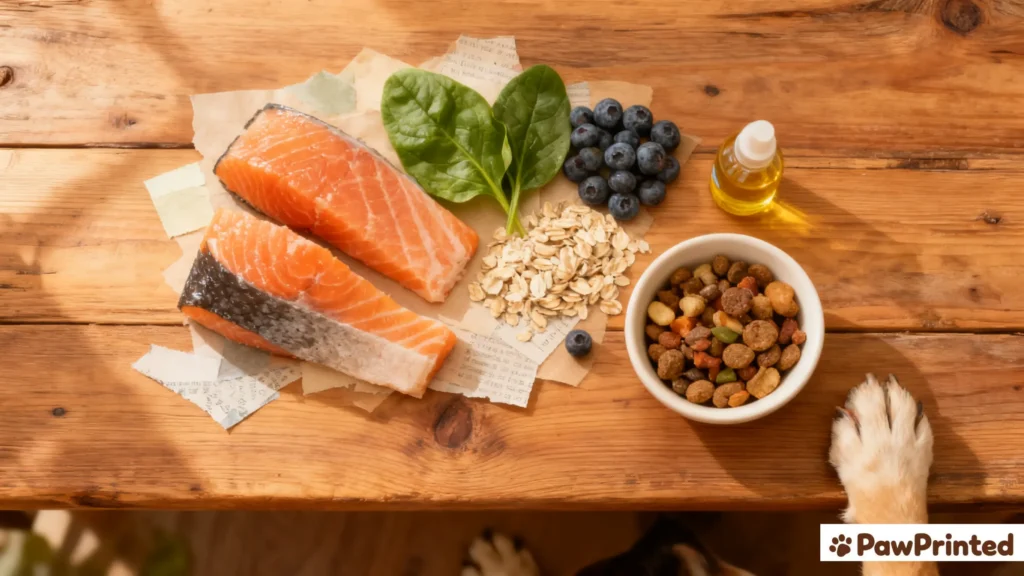
Beyond protein and fats, salmon supplies essential B vitamins, selenium, and potassium. Pairing it with antioxidant-rich produce — like blueberries and leafy greens — supports immune balance and post-activity recovery.
For an easy antioxidant boost, try our salmon & blueberries dog food recipe that’s gentle on digestion and full of natural flavor.
Natural Digestive Balance
Salmon’s natural oils coat the intestinal lining, aiding smooth digestion and consistent stool texture. Combined with prebiotic fiber from grains or vegetables, it supports a balanced gut microbiome and steady appetite — ideal for sensitive eaters.
Bottom line: Salmon offers a rare trio — complete protein, anti-inflammatory omega-3s, and antioxidant nutrients — backed by veterinary nutrition research for all-around health and longevity.
Health Benefits — What Salmon Dog Food Does for Your Pup
Skin & Coat Support
Omega-3s in salmon nourish the skin’s lipid barrier, easing dryness and itch while restoring natural shine. Many owners see results within weeks — less scratching and a glossier coat. Biotin and vitamin B12 also support healthy skin cell turnover.
Gentle on Sensitive Stomachs
Salmon is lighter and easier to digest than many red meats. Its amino acids and gentle oils support a balanced gut microbiome and steady stool quality. If your pup has sensitivities, see our guide to salmon dog food for sensitive stomachs .
Allergy-Friendly Options
When dogs develop intolerances to chicken or beef, salmon is a useful alternative. Paired with grain-free bases, it may help reduce inflammation and keep digestion smooth. Learn more about grain-free salmon dog food for allergy-prone pups.
Joint, Heart & Cognitive Health
EPA and DHA help keep joints supple by moderating inflammatory pathways, while also supporting cardiac rhythm and cognition — ideal for seniors and active pups alike. Consistent omega-3 intake is linked with improved mobility and overall vitality.
Vet Insight: Salmon-based routines often improve both skin comfort and joint ease within one diet — few proteins support multiple systems this naturally.
Choosing the Right Salmon Dog Food — What to Look For
Look for Named Salmon as the First Ingredient
The best salmon dog foods list “salmon” or “wild-caught salmon” as the first ingredient. Avoid vague terms like “fish meal” or “ocean blend.” Named, traceable sources provide better protein quality and digestibility for everyday feeding.
Tip: A label that starts with real salmon indicates the formula is built on genuine protein — not filler or byproduct.
Check for Limited Ingredients
Dogs with sensitivities thrive on limited-ingredient diets. These recipes focus on clean proteins and simple carbohydrates. For our team-tested options, see limited ingredient salmon dog food reviewed by PawPrinted.
- 10 ingredients or fewer for easier digestion
- Free from soy, corn, and artificial dyes
Avoid Fillers and Excess Oils
Lower-quality formulas often rely on plant oils to inflate fat content. Instead, look for natural fats from salmon and flaxseed to balance omega-3 and omega-6 ratios. Steer clear of corn gluten, BHA, or unspecified “fish oil blends.”
Vet Reminder: Too much fat can upset digestion or add unnecessary calories. Natural omega sources from salmon or chia are sufficient for most dogs.
Understand Label Transparency
Trustworthy brands clearly identify sourcing, such as “Alaskan wild-caught salmon.” Transparency signals ethical production and nutritional control. Always verify the guaranteed analysis for balanced protein, fat, and moisture ratios.
Expert Insight: Match the salmon formula to your dog’s needs — leaner for low-activity dogs, richer for active breeds. Source transparency and ingredient balance often matter as much as the fish itself.
Homemade or Commercial? — Balancing Fresh & Convenience
Homemade Salmon Dog Food (Control & Freshness)
Preparing salmon dog food at home lets you control every ingredient in your pup’s bowl. You can fine-tune the protein, fiber, and fat balance while avoiding artificial preservatives or fillers. Homemade meals also retain more nutrients when cooked gently and served fresh.
To start, try our salmon & sweet potato dog food recipe — an easy, vet-approved meal that’s rich in antioxidants and gentle on digestion.
Note: Always confirm portion sizes and calcium supplementation with your veterinarian to maintain complete nutrition.
Commercial Salmon Formulas (Convenience & Consistency)
High-quality commercial salmon dog foods save time without sacrificing nutrition. Look for brands using real salmon as the first ingredient and balanced vitamins and minerals that meet AAFCO standards. Reputable options undergo quality and safety testing.
See our Best Salmon Dog Food Guide (2025) for vet-reviewed dry and wet food selections tested by our team.
Tip: If your dog enjoys variety, alternate between homemade and commercial meals for balanced nutrition and convenience.
Balanced Nutrition for Every Lifestyle
Homemade recipes allow flexible portioning for different activity levels, while commercial foods provide predictable calorie control. Mixing both approaches can offer optimal consistency and palatability. Adjust ratios gradually to avoid digestive upset.
Storage & Preparation Tips
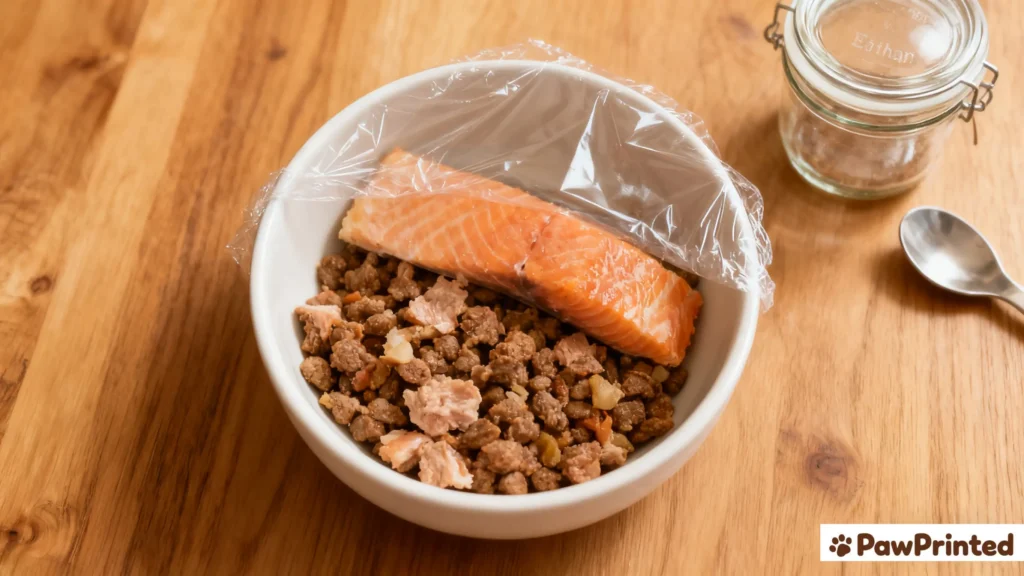
Cooked salmon dog food can be refrigerated for up to three days or frozen in portions for up to a month. Thaw overnight in the refrigerator and serve slightly warm to preserve flavor and texture. Avoid microwaving directly from frozen.
Vet Reminder: Whether homemade or store-bought, the key is balance and consistency. Always introduce new foods slowly, monitor digestion, and keep your veterinarian involved in diet adjustments.

Potential Drawbacks — When to Be Cautious
Allergic Reactions or Protein Sensitivity
Though uncommon, some dogs can develop sensitivities to salmon after long-term feeding. Symptoms like itching, ear inflammation, or paw licking may indicate intolerance. If this occurs, rotate to another protein source like lamb or duck and consult your vet for allergy testing.
Mercury and Source Quality Concerns
Salmon can contain trace levels of heavy metals depending on its origin. Wild-caught Alaskan salmon tends to have lower mercury content than farmed fish. Always buy from brands that test for contaminants and clearly list sourcing details.
Tip: Avoid raw or undercooked salmon from unknown waters, as it may carry parasites like Neorickettsia helminthoeca.
Overfeeding and Fat Imbalance
Salmon is high in healthy fats, but excessive portions can lead to weight gain or soft stools. Use measured servings and pair with lean vegetables or fiber-rich ingredients to maintain calorie balance and digestive stability.
- Weigh portions — avoid free-feeding
- Rotate salmon with lean meats for balanced fat levels
Incomplete Homemade Recipes
Home-prepared salmon diets can lack essential micronutrients such as calcium, zinc, or vitamin D. Over time, these gaps may affect bone strength or metabolism. Always follow vet-approved recipes and use canine multivitamins if advised.
Vet Reminder: Salmon is safe and beneficial for most dogs, but balance and sourcing matter. Choose trusted suppliers, cook thoroughly, and involve your vet whenever adjusting long-term diets.
Serving Ideas & Storage — Keeping It Fresh and Safe
Portion Control by Weight
Feed approximately 2–3% of your dog’s body weight daily, dividing it into two meals. Adjust based on activity level, age, and metabolism. Start small, observe stool consistency, and tweak gradually for an ideal energy balance.
Tip: Use a kitchen scale for precise portions—eyeballing can easily overfeed by 20% or more.
Mix with Dry Food for Texture
Blend a few tablespoons of salmon dog food with dry kibble to boost aroma and encourage picky eaters. The added moisture also aids hydration, especially for dogs that don’t drink enough water during the day.
Bonus: For digestive support, mix with plain pumpkin or a spoon of probiotics.
Storage Tips
Refrigerate cooked salmon dog food in airtight glass containers for up to three days. For longer storage, portion into freezer-safe bags and label with the date. Thaw overnight in the refrigerator for the best texture and flavor retention.
- Refrigerated: up to 3 days
- Frozen: up to 1 month
Refreshing Frozen Meals
Warm thawed meals slightly in a water bath before serving—never microwave directly, as it can create hot spots and damage omega-3s. A gentle warm-up restores aroma and keeps fats stable.
Note: Always check temperature before serving; it should be comfortably warm, not hot.
Transition Reminder: When introducing salmon meals, start with 25% new food and increase gradually over a week. Sudden changes may cause minor digestive upsets even in healthy dogs.

FAQ — Common Questions About Salmon Dog Food
Can dogs eat salmon every day?
Yes, most dogs can safely eat salmon daily as part of a balanced diet, provided it’s cooked thoroughly and properly portioned. Salmon is rich in omega-3 fatty acids and lean protein that support joint health and coat shine. For small breeds or those prone to weight gain, feed moderate portions and rotate with lean proteins like turkey or chicken to maintain variety.
Is salmon good for dogs with sensitive stomachs?
Absolutely. Salmon’s amino acid profile and natural oils make it gentle on the digestive system. It helps maintain normal stool consistency and reduces bloating or discomfort. Dogs with recurrent tummy issues often benefit from switching to a salmon dog food for sensitive stomachs that includes easily digestible ingredients like rice or sweet potato.
Can dogs be allergic to salmon?
Although uncommon, some dogs may develop an allergy to salmon, especially after long-term feeding. Symptoms include itching, ear redness, or excessive paw licking. If this occurs, stop feeding salmon and switch to a different protein such as lamb or duck while consulting your vet for allergy testing and management.
What’s the difference between salmon and chicken dog food?
Salmon dog food is richer in omega-3s and tends to be easier on the stomach, while chicken-based foods often have higher protein density. Salmon is ideal for dogs needing anti-inflammatory benefits, shiny coats, or joint support. For detailed comparisons, see our salmon vs chicken dog food guide .
Is canned salmon safe for dogs?
Yes, as long as it’s packed in water (not oil or brine) and free of added salt or seasoning. Canned salmon is a convenient protein source and retains most of its omega-3 content. Always check the label to ensure there are no bones, and introduce it gradually to avoid digestive upset.
Wrapping It Up — Final Thoughts
Salmon dog food brings together what every pup deserves — a meal that’s nutritious, flavorful, and kind to the stomach. It’s one of the few proteins that support skin, joints, and heart health all at once. Whether you choose homemade or commercial, the key is balance, clean ingredients, and gentle transitions.
In Ethan’s case, salmon quickly became a steady part of his weekly meals. His coat grew shinier, and his energy felt more even throughout the day. With a little observation and patience, you’ll see how small nutritional changes can make a big difference for your dog too.
If you don’t want to cook daily, check our dry food picks — those were Ethan’s daily backups.
Looking for more salmon-friendly meal ideas or vet-approved recipes? Explore our latest guides below.
Explore More — Keep Learning & Cooking with Love
Further Reading (External Sources)
- AKC — Can Dogs Eat Salmon?
- PetMD — Is Salmon Good for Dogs?
- Tufts Vet Nutrition — Safe Fish Options for Dogs
- FDA — Pet Food Safety: Fish and Seafood
Note: All external links above lead to authoritative veterinary or scientific sources to help you verify the nutritional value and safety of salmon for dogs.
Homemade Salmon Dog Food Recipes (Vet Approved Series)
Explore our complete collection of vet-approved salmon dog food recipes — each designed for a different need: from gentle digestion to high-protein recovery. These meals are wholesome, easy to prepare, and Ethan-tested for flavor and health.
- 🐟 Salmon Dog Food Recipe (Rice & Peas, Vet Approved) — A classic gentle bowl for sensitive stomachs.
- 🥔 Salmon & Sweet Potato Dog Food Recipe (Easy & Nutritious) — Rich in vitamins and natural fiber.
- 🎃 Salmon & Pumpkin Dog Food Recipe (Gentle Digestion) — The go-to recipe for calm digestion and hydration.
- 🌾 Salmon & Oats Dog Food Recipe (Healthy & Filling) — A cozy, fiber-rich mix for steady energy.
- 🍚 Salmon & Quinoa Dog Food Recipe (Protein Boost) — High-protein and balanced with omega support.
- 🌿 Salmon & Spinach Dog Food Recipe (Omega-3 & Iron Boost) — For glossy coats and strong muscles.
- 🥣 Salmon & Lentils Dog Food Recipe (Fiber & Protein Blend) — Gentle on digestion, rich in texture.
- 🫐 Salmon & Blueberries Dog Food Recipe (Antioxidant Rich) — Boosts immunity with antioxidant power.