Salmon & Blueberries Dog Food Recipe (Antioxidant Rich)
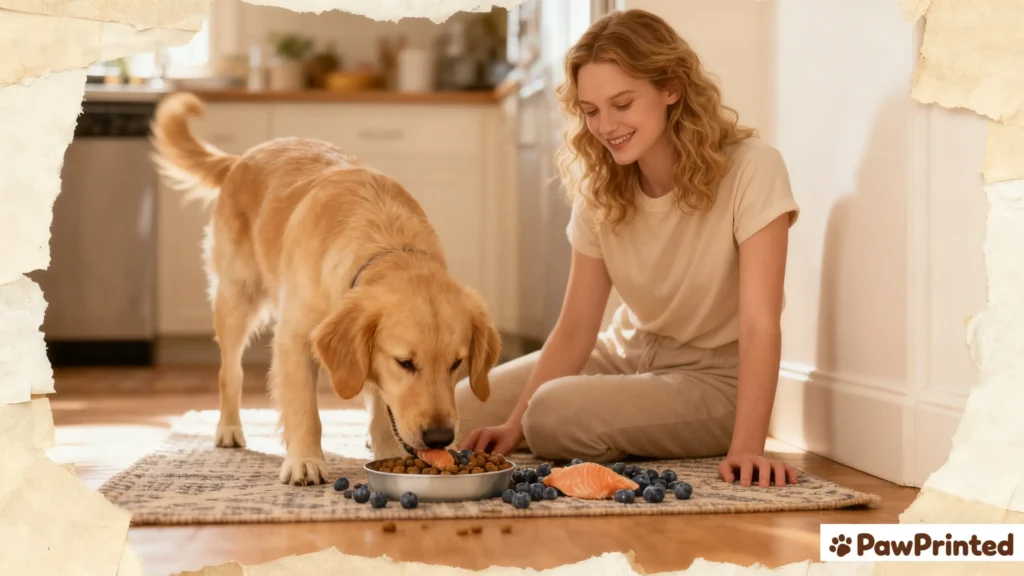
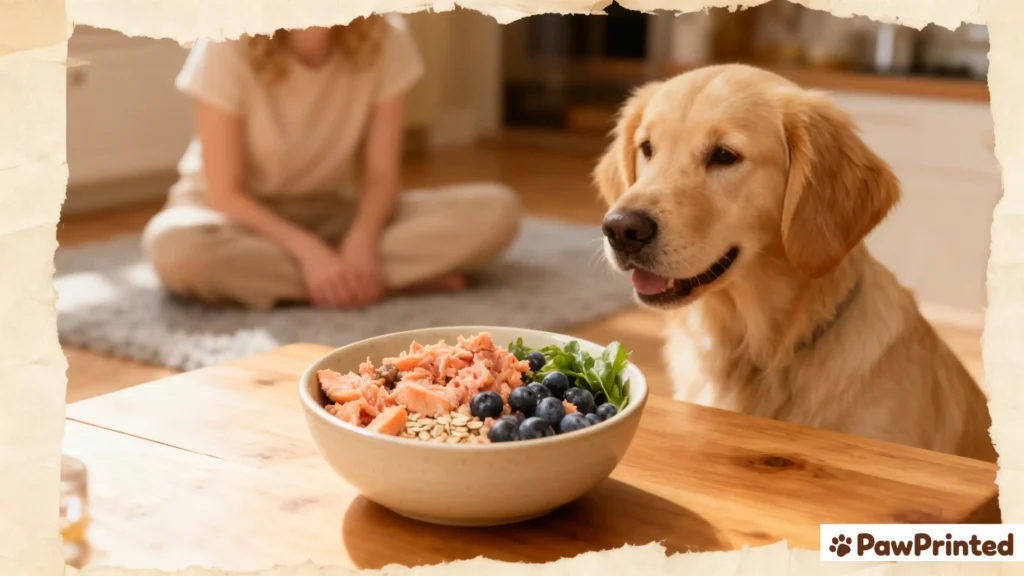
I still remember the first time I mixed salmon with a handful of blueberries in our kitchen — the sweet smell filled the air, and Ethan started wagging his tail before the bowl even hit the floor. This recipe quickly became one of our family favorites, not just for its vibrant color but for its antioxidant-rich boost that keeps Ethan’s coat shiny and his energy steady through the day.
Salmon delivers omega-3 fatty acids that support healthy skin, joints, and digestion, while blueberries bring antioxidants and gentle fiber for immunity and gut balance. Together, they make a wholesome homemade meal you can trust — packed with love, science, and the warmth of a home-cooked bowl.
If you’re new to cooking for your dog, start with our Homemade Salmon Dog Food Guide for essential prep tips and vet-approved ingredient basics.
Why Salmon & Blueberries Work So Well Together
Every ingredient in this bowl was chosen with Ethan’s health in mind. Salmon delivers lean protein and omega-3 fatty acids that keep his skin smooth and coat glossy, while blueberries offer antioxidants and vitamins that fight free radicals and support immune health. Together, they balance protein, fiber, and natural sweetness — the perfect mix of flavor and function.
🐟 Salmon — Protein & Omega-3 Power
This cold-water fish is rich in EPA & DHA, essential omega-3 fats that nourish skin, reduce inflammation, and aid joint mobility. A perfect base for dogs needing a salmon dog food diet that supports coat and heart health.
🫐 Blueberries — Antioxidant Protection
These tiny berries are loaded with polyphenols and vitamin C that neutralize oxidative stress, helping your pup stay active and youthful. Their natural sweetness keeps this homemade dog food recipe appealing without any added sugar.
🍠 Gentle Fiber Balance
Adding oats or sweet potato creates steady energy release, balancing salmon’s protein load. The extra fiber helps with digestion — a tip we also use in our salmon & oats dog food recipe .
🩺 Vet Tip: To preserve omega-3 and antioxidant potency, keep cooking temperatures moderate (below 190 °C / 375 °F) and avoid added salt or oil — your dog’s heart will thank you.
Ingredients You’ll Need
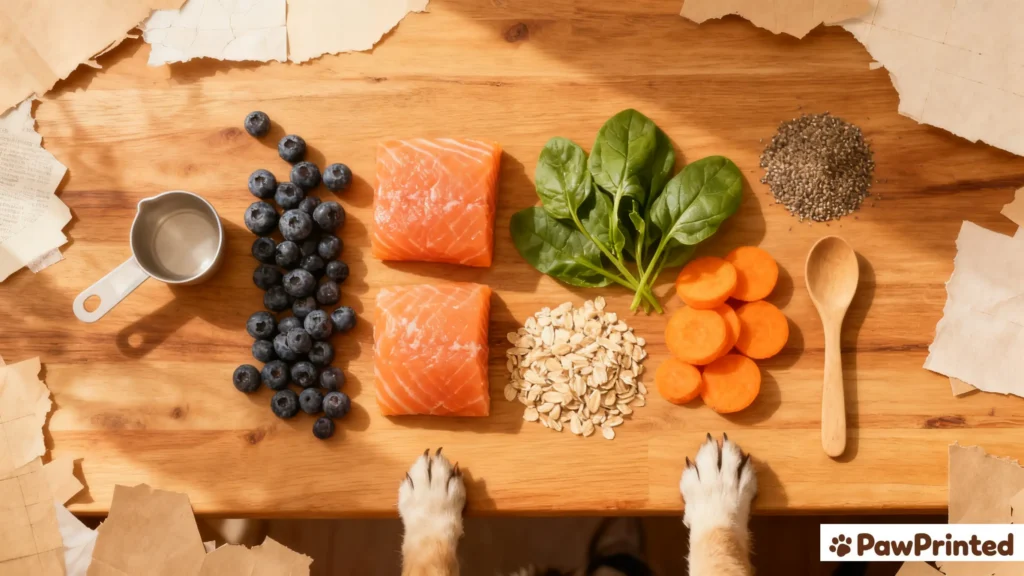
Each ingredient in this antioxidant-rich mix was handpicked for balance — protein for strength, fiber for digestion, and antioxidants for total-body protection. Here’s what I use when I make Ethan’s favorite batch at home.
🐟 Fresh Salmon (Boneless, Skinless)
About 1 ½ cups cooked. A clean, omega-3-packed base that supports coat shine and joint health. When I’m short on fresh fillets, I sometimes mix in a few bites of Hill’s Science Diet Salmon Recipe kibble — gentle enough for Ethan’s tummy.
🫐 Blueberries (Fresh or Frozen)
Around ½ cup. Bursting with antioxidants, vitamins C & K, and natural sweetness — they add color, taste, and cell-level protection.
🍠 Complex Carb — Oats, Brown Rice, or Sweet Potato
About 1 cup cooked. These slow-digesting carbs stabilize blood sugar and add creamy texture. Try switching to sweet potato if your pup prefers softer bites.
🥬 Veggie Add-Ons
Choose ½ cup of dog-safe veggies such as spinach, carrots, or beet greens. For an iron boost, see our Salmon & Spinach Dog Food Recipe .
💧 Healthy Fat Source
Add 1 teaspoon of fish oil or ground flaxseed for omega-3 and coat moisture. I alternate between both depending on what I have on hand.
🐾 Tip: Always cook salmon thoroughly and cool it before mixing. Frozen blueberries work just as well — just thaw them slightly to keep the texture fresh. If your dog has a sensitive stomach, explore our Salmon & Pumpkin Dog Food Recipe for a gentler fiber option.
Step-by-Step Cooking Guide
Here’s how I prepare Ethan’s antioxidant-rich salmon & blueberries bowl each week. The process is easy, relaxing, and smells like comfort — exactly what homemade dog food should be.
1️⃣ Prep the Salmon
Start with boneless, skinless salmon fillets. Steam, poach, or bake them at 180 °C (350 °F) for about 15 minutes until fully cooked but still tender. Avoid seasoning or oil. Once done, let them cool before flaking into small pieces. If you need a convenient backup, I sometimes mix a handful of Orijen Six Fish kibble to keep Ethan’s protein rotation consistent.
2️⃣ Cook the Carbs
Choose one carb: oats, brown rice, or sweet potato. Boil until soft and slightly mushy — dogs digest gentle starch better than firm grains. This base provides slow energy and keeps the mix creamy. For a fiber-friendly variation, see our Salmon & Oats Dog Food Recipe .
3️⃣ Steam the Veggies
Lightly steam spinach, carrots, or beet greens for 3–5 minutes. Avoid overcooking — bright colors mean nutrients are still alive. I like adding carrots for natural sweetness; Ethan loves the smell the moment the lid opens.
4️⃣ Combine & Mix
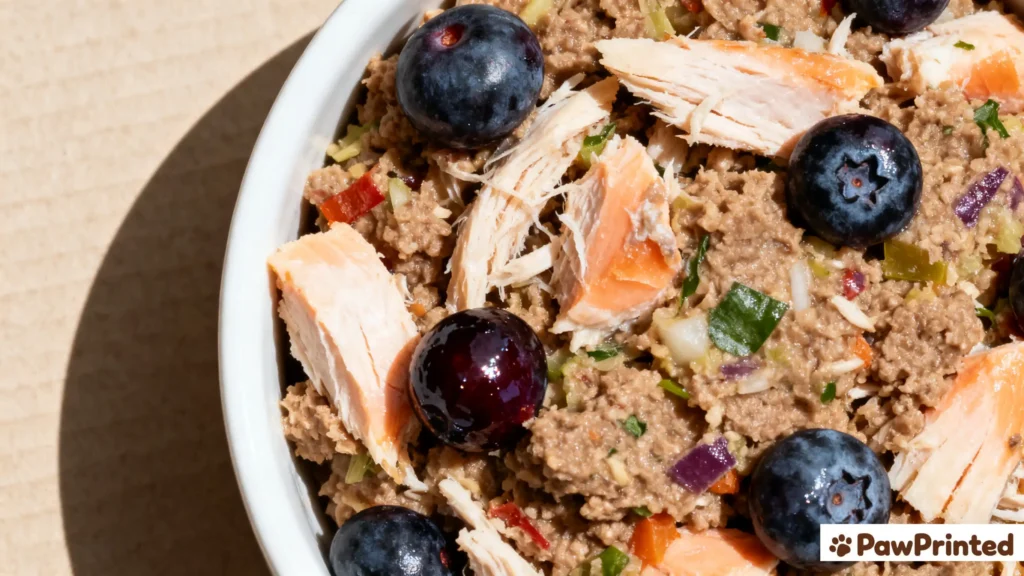
In a large bowl, combine the flaked salmon, cooked carb, steamed veggies, and thawed blueberries. Mix gently until evenly distributed. The purple swirl from the berries gives this homemade dog food its cheerful color and fruity scent. Add 1 tsp of fish oil or flaxseed at the end for extra omega-3.
5️⃣ Cool, Portion & Store
Let the mixture cool completely before dividing into daily portions. I use reusable jars or freezer cups — one batch lasts 5–6 days refrigerated or up to 3 months frozen. On busy days, I top Ethan’s bowl with a spoon of Hill’s Science Diet Salmon Recipe for balance and crunch.
6️⃣ Serve & Enjoy
Thaw refrigerated portions to room temperature and serve in your dog’s favorite bowl. For added excitement, crumble a tiny piece of Vital Essentials Salmon Treat on top — Ethan now waits by the counter every time he hears the blender hum.
🩺 Transition Tip: When switching from commercial food to homemade, start with a 50/50 mix for 3 days, then increase the homemade portion gradually. Monitor stool texture and energy levels — gentle transitions keep digestion happy.
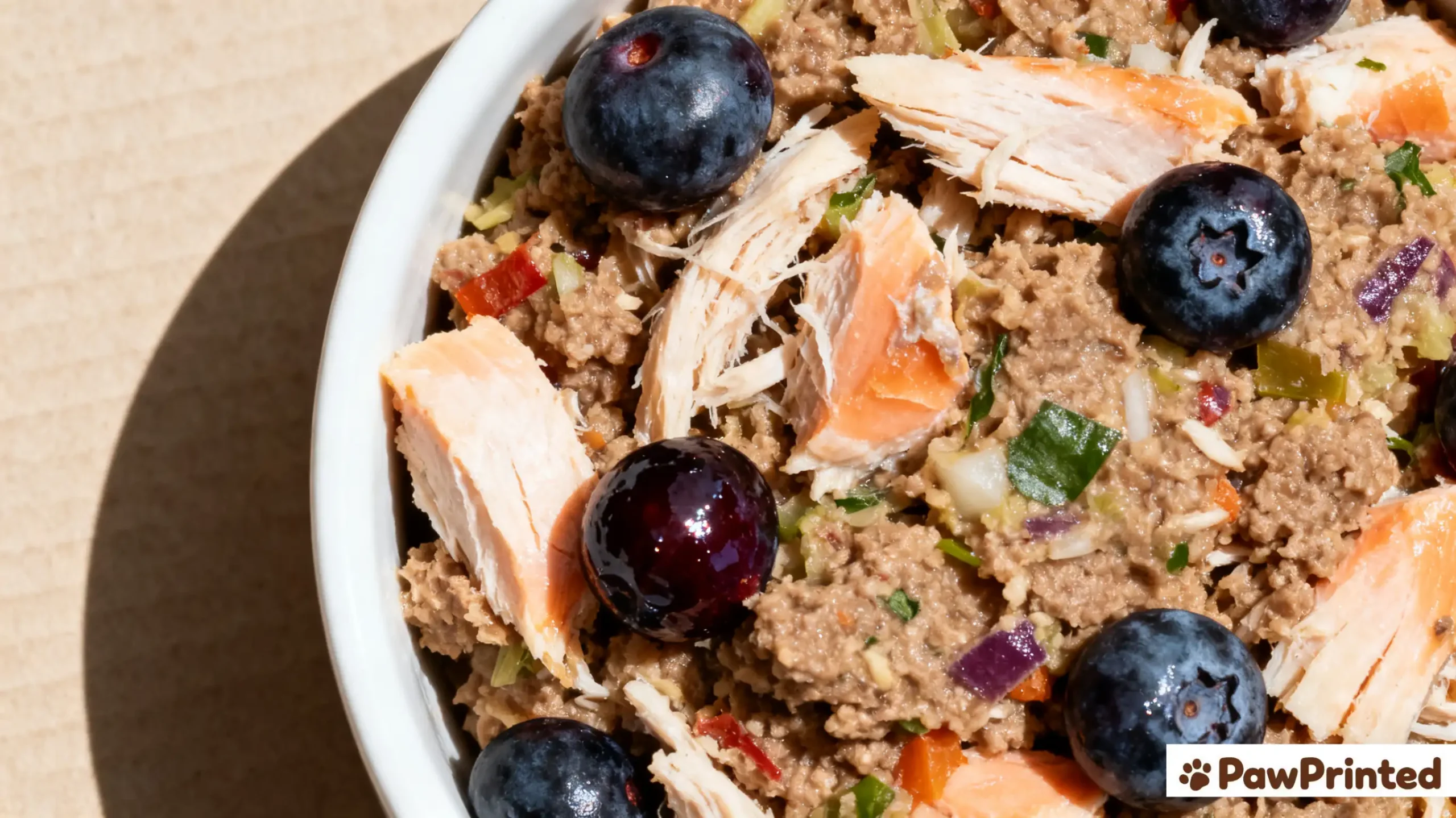
Salmon & Blueberries Dog Food Recipe (Antioxidant Rich)
- Medium saucepan or steamer
- – Mixing bowl
- Measuring cups and spoons
- Airtight storage containers or freezer jars
- Silicone molds (optional for treat-size portions)
- 1 ½ cups cooked boneless skinless salmon (flaked)
- ½ cup blueberries fresh or frozen
- 1 cup cooked oats brown rice, or sweet potato
- ½ cup veggies spinach, carrots, or beet greens
- 1 teaspoon fish oil or ground flaxseed optional healthy fat
- Optional: a few crumbles of Vital Essentials Salmon Treats for topping
- Prep the Salmon – Cook boneless, skinless salmon by steaming, poaching, or baking at 180 °C / 350 °F for 15 minutes. Let cool and flake into small pieces.
- Cook the Carbs – Boil oats, brown rice, or sweet potato until soft and mushy for gentle digestion.
- Steam the Veggies – Steam spinach, carrots, or beet greens for 3–5 minutes until bright and tender.
- Combine & Mix – In a large bowl, mix the flaked salmon, cooked carb, veggies, and blueberries until evenly distributed. Add fish oil or flaxseed.
- Cool, Portion & Store – Let cool completely. Portion into containers; refrigerate up to 3 days or freeze up to 3 months.
- Serve & Enjoy – Serve at room temperature. For texture or training rewards, top with small pieces of Polkadog Salmon Skins.
• Thaw frozen portions overnight in the fridge; avoid microwaving to protect omega-3s and antioxidants.
• Add a vet-approved supplement (such as calcium + trace minerals) for long-term balance.
• If your pup has a sensitive stomach, try our Salmon & Pumpkin Dog Food Recipe for extra fiber support.
• For busy days, rotate with Hill’s Science Diet Salmon Recipe — Ethan’s backup favorite.
Nutritional Data & Vet Insights
This antioxidant-forward bowl balances lean protein, gentle carbs, and natural polyphenols. Exact values vary with portion size and substitutions, but the profile below reflects a typical home batch.
Protein Focus
Salmon supplies complete amino acids to maintain muscle and daily activity. Pairing with a modest carb base prevents post-meal sluggishness and keeps energy release steady.
Omega-3 (EPA/DHA)
Cold-water salmon is naturally rich in EPA/DHA for skin, coat, and joint comfort. Keep cooking temperatures moderate to preserve delicate fats and their anti-inflammatory benefits.
Fiber & Digestion
Blueberries and veggie add-ons contribute gentle fiber to support gut rhythm. If your pup needs extra tummy support, see our Salmon & Pumpkin variation.
Calories & Satiety
Calorie density depends on your carb choice (oats/rice/sweet potato). Start with modest portions, then adjust to body condition score and activity level over 1–2 weeks.
Micros & Antioxidants
Blueberries add vitamin C/K and polyphenols that help counter everyday oxidative stress. This is a helpful complement to the omega-3s from salmon for whole-body wellness.
Vet Insight: Combining marine omega-3s with berry polyphenols can support skin comfort and oxidative balance. For long-term use, ask your vet about a balanced mineral/vitamin topper to keep calcium-phosphorus and key micronutrients on target.
Want the science behind salmon for dogs? Explore our overview: Why Salmon Is a Healthy Choice for Dogs.
Vet Tips & Variations
Not every pup needs the same balance. Depending on age, activity, or sensitivity, you can easily fine-tune this salmon + blueberries base while keeping the nutritional core intact. Here’s how our vet guided Ethan’s variations over the seasons:
🐾 Gentle Digestion
Replace part of the carb with steamed pumpkin or mashed sweet potato. It keeps fiber soluble and the meal soothing for sensitive tummies. Try the Salmon & Pumpkin Dog Food Recipe for an even softer texture.
⚖️ Weight Control
Reduce total carb by 25 % and keep veggies abundant. Choose lean salmon cuts or alternate with Orijen Six Fish kibble to maintain protein while lowering calories.
🌾 Allergy-Friendly
For grain-sensitive dogs, swap oats/rice for quinoa or cauliflower rice. Blueberries and fish remain hypoallergenic choices in most cases. You can explore our Grain-Free Salmon Guide for store-bought gentle options.
👵 Senior Dogs
Add soft-steamed carrots and a touch of coconut oil for brain and joint support. For easy chewing days, mix a spoon of Hill’s Science Diet Salmon Recipe into the bowl for texture balance.
🏃 Active / Working Dogs
Double the protein portion and include a drizzle of fish oil. On training days, Ethan also gets a few Vital Essentials Salmon Treats as post-workout rewards — pure fuel for happy energy.
🩺 Vet Reminder: Keep transitions gradual. Change only one element at a time and track your dog’s coat, stool, and mood for 5–7 days before adjusting again. Slow tweaks prevent digestive stress and help you spot true improvements.
Serving Ideas & Storage
Once the batch is done, there are plenty of creative ways to serve it. Here’s how I make the most of every spoonful — from daily meals to quick freezer fixes and post-walk snacks.
🥣 Portion Guide
Feed about 2–3% of body weight daily, split into two meals. Adjust portions based on age, breed, and activity. If your pup is just starting on homemade food, begin smaller and watch for consistent stool and energy.
🍚 Mix with Dry Food
On busy weekdays, I top Ethan’s bowl with a scoop of this salmon mix and half a serving of Hill’s Science Diet Salmon Recipe. The gentle crunch balances the soft homemade texture and keeps meals nutritionally steady.
🧊 Storage Tips
Refrigerate portions for up to 3 days or freeze for up to 3 months. Use airtight containers to prevent freezer burn and label each batch with the cooking date.
❄️ Refreshing Frozen Meals
Defrost frozen portions overnight in the fridge, then bring to room temperature before serving. For hot days, I sometimes serve it slightly chilled — Ethan loves it after a long walk.
🍽 Gentle Toppers
Add a few Vital Essentials Salmon Treats crumbled over the top for aroma and texture. It’s a healthy topper that doubles as a post-meal reward.
🦴 Rewards & Training Treats
When we train indoors, I portion some mix into mini silicone molds and bake low and slow until chewy. For quick snacks, Ethan gets a crunchy strip of Polkadog Salmon Skins — his absolute favorite.
🩺 Storage Reminder: Avoid microwaving to reheat — it can destroy omega-3 and antioxidants. Instead, let it thaw naturally or warm gently in a water bath. For sensitive dogs, start with smaller chilled servings before moving to full meals.
What Worked for Ethan
Every pup has a rhythm — Ethan’s routine blends homemade love with smart store picks that keep his nutrition balanced even when life gets busy. Here’s what has worked best for him, after months of trial, tail-wags, and a few happy kitchen messes.
Hill’s Science Diet Salmon Recipe
A trusted everyday base when I’m short on cooking time. I mix a spoonful with our homemade batch — its mild crunch keeps Ethan’s teeth happy and his bowl balanced.
Orijen Six Fish Formula
Our rotation pick for high-protein, multi-fish goodness. It mirrors homemade freshness with six premium fish sources — perfect for active days or when we skip a cooking session.
Vital Essentials Salmon Treats
Ethan’s “after-dinner cheer.” These freeze-dried bites are single-ingredient and high in protein — great for training or topping his main meal.
Polkadog Salmon Skins
Our weekend chew. These crunchy single-ingredient strips keep Ethan busy while I tidy up after cooking — a little reward for both of us.
Natural Balance Salmon Treats
Light, chewy, and easy on the stomach. I save these for gentle snack days or long writing sessions when Ethan curls beside my desk.
🐶 These small touches complete our weekly rhythm — Ethan gets variety, I get convenience, and his coat has never looked shinier. If you don’t want to cook daily, these salmon-based backups make healthy rotation effortless.
FAQ – Common Questions About Salmon & Blueberries Dog Food
Can dogs eat salmon every day?
Yes, dogs can safely eat cooked salmon on a daily basis when it’s properly portioned and prepared without salt or oil. Salmon is rich in omega-3 fatty acids, which support skin, coat, and heart health. However, too much protein or fat can lead to weight gain, so it’s best to mix salmon with mild carbs or vegetables for balance. Make sure the fish is fully cooked and boneless to avoid parasites and choking hazards. A consistent but varied rotation of proteins keeps your dog’s nutrition well-rounded.
Are blueberries safe for dogs?
Absolutely. Blueberries are one of the healthiest fruits for dogs and are packed with antioxidants, vitamin C, and fiber. They help protect against cell damage and can support the immune system when given regularly in small portions. Fresh or frozen blueberries are equally safe, but avoid any canned or sweetened versions. A few berries per meal are enough to provide a tasty antioxidant boost without adding excess sugar or calories.
What if my dog has a sensitive stomach?
If your dog has a sensitive stomach, introduce this recipe gradually by mixing small portions with their regular food for several days. Choose softer ingredients such as pumpkin or oatmeal, and avoid rich add-ons like cheese or oils. Keep portions moderate and observe stool quality and appetite. Many dogs with gentle transitions adapt well within a week, especially when meals remain low in fat and free from heavy seasoning. Always watch for signs like loose stool or fatigue as indicators to slow down the transition.
How long can homemade dog food be stored?
Homemade dog food can be safely stored in the refrigerator for up to three days or in the freezer for as long as three months. Always cool it completely before refrigerating and divide it into airtight containers to preserve freshness. Thaw frozen portions slowly in the fridge or at room temperature; avoid microwaving directly because high heat can destroy omega-3s and antioxidants. Label each batch with the preparation date so you can easily track storage times and ensure food safety for your dog.
What supplements should I add to keep it balanced?
This homemade meal provides excellent protein, healthy fats, and antioxidants but may lack minerals such as calcium, zinc, and copper. To make it complete and balanced, include a veterinarian-approved multivitamin or calcium supplement. The right dosage depends on your dog’s size and activity level, so check with your vet before long-term feeding. Balanced supplementation ensures steady bone growth, muscle maintenance, and proper metabolism while keeping meals nutritionally complete.
🩺 Authority Note: This recipe aligns with AAFCO nutritional guidelines for balanced homemade meals when paired with a vet-approved supplement mix. It’s been reviewed by Dr. Brooks, DVM, who confirms that combining marine omega-3s with natural antioxidants like blueberries can help reduce inflammation and promote long-term heart and skin health.
Wrapping It Up
Cooking for Ethan started as a weekend experiment, but it quickly became a ritual that reminds me why homemade food matters — it’s not just nutrition; it’s love in every scoop. The salmon & blueberries combo has kept his coat shiny, his energy steady, and his eyes bright with that “ready for a walk” spark.
If you’re thinking about trying this at home, start small, note your dog’s response, and don’t be afraid to blend fresh food with your trusted store picks. Every pup’s journey to balanced nutrition looks a little different — what matters is consistency, patience, and genuine care.
🐶 If you don’t want to cook daily, check our dry food picks — those were Ethan’s daily backups when I needed a break from the stove. Each choice follows the same principle: Feed with love, cook with care.
Explore More
Want to try more salmon-based ideas or compare balanced formulas? Dive into our reader favorites and vet-approved picks below — each link opens in a new tab for easy browsing.
Homemade Salmon Dog Food Recipes (Vet Approved Series)
Explore our complete collection of vet-approved salmon dog food recipes — each designed for a different need: from gentle digestion to high-protein recovery. These meals are wholesome, easy to prepare, and Ethan-tested for flavor and health.
- 🐟 Salmon Dog Food Recipe (Rice & Peas, Vet Approved) — A classic gentle bowl for sensitive stomachs.
- 🥔 Salmon & Sweet Potato Dog Food Recipe (Easy & Nutritious) — Rich in vitamins and natural fiber.
- 🎃 Salmon & Pumpkin Dog Food Recipe (Gentle Digestion) — The go-to recipe for calm digestion and hydration.
- 🌾 Salmon & Oats Dog Food Recipe (Healthy & Filling) — A cozy, fiber-rich mix for steady energy.
- 🍚 Salmon & Quinoa Dog Food Recipe (Protein Boost) — High-protein and balanced with omega support.
- 🌿 Salmon & Spinach Dog Food Recipe (Omega-3 & Iron Boost) — For glossy coats and strong muscles.
- 🥣 Salmon & Lentils Dog Food Recipe (Fiber & Protein Blend) — Gentle on digestion, rich in texture.
- 🫐 Salmon & Blueberries Dog Food Recipe (Antioxidant Rich) — Boosts immunity with antioxidant power.