Ethan’s first week on raw wasn’t dramatic—it was deliberate. We eased in, watched his stool, and only changed one thing at a time. If you’re nervous about soft stools or “detox,” this step-by-step plan keeps things calm and trackable. For pups with delicate tummies, you can also skim our primer on Sensitive Stomach Dog Food before you start.
Why Transition Matters
Sudden diet swaps can disrupt the gut microbiome and trigger loose stools. A controlled transition allows microbes, enzymes, and motility to adapt gradually. Expect minor stool variation during the first few days—that’s common. Watch for red-flag signs (persistent diarrhea, repeated vomiting, lethargy, weight loss) and slow down or check in with your vet. If you want general switching mechanics, our Dog Food Transition Guide covers timings and portion math across different diet types.

Note: Busy week? Consider balanced commercial options as backups—see our best raw dog food picks. Ethan relied on these on hectic days.
What to Expect When Switching to Raw
- Positive shifts: firmer stools after stabilization, improved appetite, shinier coat, and fresher breath for many dogs.
- Short-term changes: softer stools or slightly different stool smell/volume in the first 3–7 days.
- Red flags: ongoing watery diarrhea (>48–72h), repeated vomiting, clear discomfort, or weight loss—pause, step back a phase, and consult your vet.
Switch Safely in 5 Steps
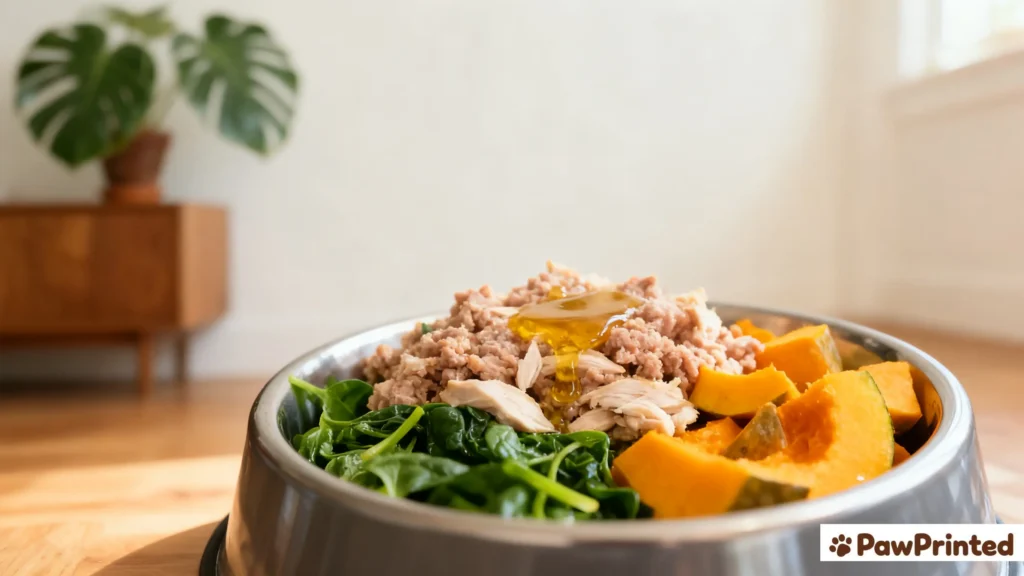
- Days 1–3: 25% raw + 75% current food. Keep the raw simple (one protein, minimal extras). Split across two meals.
- Days 4–6: 50% raw + 50% current food. Assess stool once daily. If soft, hold this phase 1–2 extra days.
- Days 7–9: 75% raw + 25% current food. Maintain the same protein; do not add organs/bones yet.
- Day 10+: 100% raw. Keep formula consistent for another 3–5 days before any add-ons.
- Stabilize & Fine-tune: introduce new elements one at a time (organs, raw meaty bones, veggies) with 3–4 day spacing.
pp-tip: Sensitive stomachs may need a 2–3 week ramp. Change only one variable at a time and keep a stool/appetite log. If your dog has food sensitivities, cross-reference our Limited Ingredient Dog Food hub for elimination basics.
Common Mistakes to Avoid
- Going too fast: jumping from 0→100% raw invites diarrhea.
- Too many proteins at once: makes reactions hard to trace.
- Adding bones too early: increase risk of GI upset or choking—wait until stools are stable and use appropriate sizes.
- Using seasoned or non-food-safe meats: stick to raw-intended, quality-controlled sources.
What Vets & Nutritionists Say
Minor stool variation during a switch is common; persistent symptoms aren’t. Balance matters: mind calcium:phosphorus, essential fatty acids, and micronutrients. If your dog has chronic disease, immune concerns, or is on medication, collaborate with your vet before switching. Prefer starting with a lean, single-protein base. If all-raw is not practical every day, pair a balanced commercial option (see Note below) with your raw meals. To understand where raw sits among less-processed options, skim our Natural Dog Food overview.

Practical Takeaways (Checklist)
- Start with one protein (chicken/turkey) and keep it plain.
- Log stool, appetite, weight daily during weeks 1–2.
- Advance only when stools are formed & easy to pass.
- Introduce new elements every 3–4 days, one at a time.
- Check with your vet for pups, seniors, or dogs with conditions.
FAQ
How long does a raw transition take?
Most healthy adult dogs switch comfortably in about 10 days using a 25%→50%→75%→100% progression. Sensitive stomachs or dogs with a history of loose stools often do better across 2–3 weeks, holding each phase until stools are formed and your dog’s appetite is steady. Puppies and seniors can follow the same framework but benefit from closer monitoring and smaller, more frequent meals. If you hit persistent diarrhea (>48–72 hours), repeated vomiting, or clear lethargy, step back one phase, re-hydrate with small frequent meals, and call your vet. The goal is not speed but stability—advance only when the previous phase looks and feels normal for your dog.
Do dogs “detox” when switching to raw?
Many pet parents describe temporary stool or breath changes as “detox,” but what you’re seeing is usually a short adaptation of enzymes, microbes, and motility to a higher-moisture, higher-protein diet. Mild variation (slightly softer stool, different stool volume or odor) can be normal in the first days. True red flags—watery stool, repeated vomiting, refusal to eat, lethargy—are not “detox” and need action: slow the transition or consult your vet. Keep the recipe simple, change one variable at a time, and track stool daily. Most dogs settle once a consistent single-protein base is established.
Can I switch straight from kibble to raw?
You can, but it’s rarely the most comfortable route. A same-day swap increases the chance of diarrhea because the gut and microbiome haven’t adapted to the moisture, fat, and protein profile of raw. A phased switch gives you control: if stools soften, you simply hold the current ratio longer. For resilient dogs with cast-iron stomachs, a faster 3–5 day switch can work, but have a backup plan and watch hydration closely. When in doubt, use the 10-day schedule—your dog won’t miss out, and you’ll avoid unnecessary bumps while learning how your individual dog responds.
How do I introduce raw safely?
Safety starts with sourcing and pacing. Choose raw-intended meats from reputable suppliers, keep handling hygienic, and begin with a single lean protein. Use the 25%→50%→75% phases, feed measured portions, and log stool/appetite. Do not add raw bones or multiple new proteins until stools are stable for several days. For households with children or immune-compromised people, designate prep tools and surfaces, and wash hands thoroughly. If you’re unsure about balancing nutrients long-term, pair your raw meals with a complete commercial option on busy days, or consult a vet nutritionist for a tailored plan.
Is raw feeding suitable for all breeds and ages?
Most healthy adult dogs can do well on raw when it’s introduced gradually and balanced over time. Puppies and seniors can also succeed but need tighter portion control, careful calcium:phosphorus balance, and more frequent check-ins on weight and stool. Dogs with specific medical needs—renal disease, immunosuppression, or a history of pancreatitis—require veterinary guidance, and some may be better served by cooked or specialized diets. If you’re uncertain, start with a simple single-protein base and advance slowly, or choose a balanced commercial option while you evaluate your dog’s response.

Explore More
If this guide helped you, save it on Pinterest and share your transition notes—your experience helps other dog parents, too. 🐾