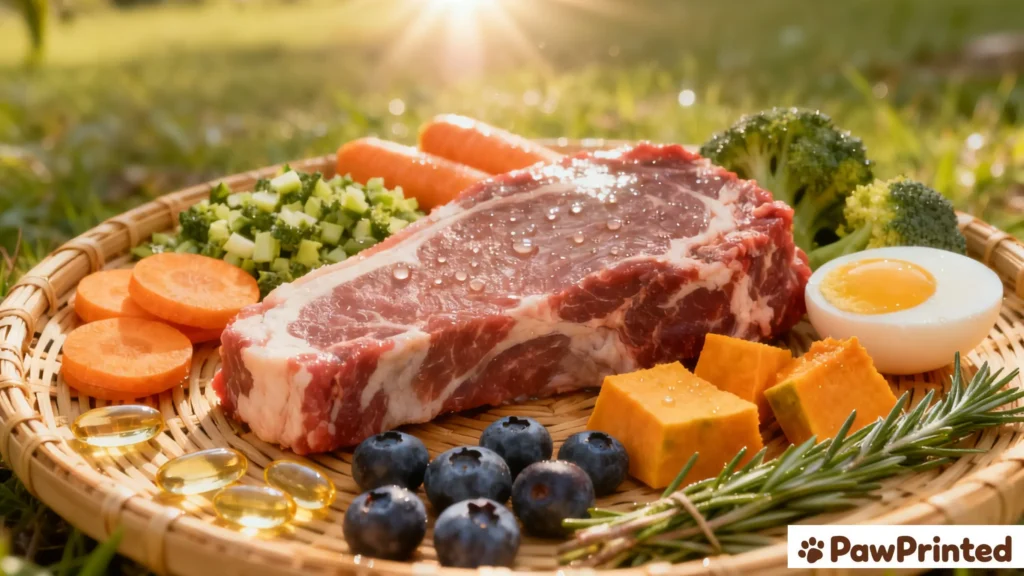
Raw feeding and BARF diets sound very simple on social media: fresher food, shinier coats, smaller poops, and a more “natural” way to feed your dog. In real kitchens, it is a lot more complicated. You are suddenly responsible for bacteria control, bone safety, and long term nutrition balance, not just the next Instagram photo.
This guide walks you through what raw and BARF actually mean, the realistic benefits and risks, what veterinarians usually say about it, and the basic safety and nutrition rules you need before you even defrost the first batch. If you are still deciding between homemade cooked food and raw, or wondering whether your home is ready for raw feeding, you are in the right place.
If you are currently just exploring homemade feeding in general, you may also want to read the Homemade Dog Food Guide – What Owners Should Know First so you can see where raw feeding fits inside the bigger homemade picture.
What Is Raw Feeding and the BARF Diet For Dogs
“Raw feeding” is a broad term for diets that are built primarily from uncooked animal ingredients. In practice, most raw diets for dogs use a mix of raw muscle meat, raw meaty bones, organs, and sometimes small amounts of vegetables, fruit, and supplements. BARF is one popular model and usually stands for “Bones and Raw Food” or “Biologically Appropriate Raw Food”, depending on who you ask.
Under the BARF style, the bowl is built around raw meaty bones plus muscle meat, with organs, blended vegetables, and added oils or supplements layered in. A different style called “prey model raw” aims to mimic a whole prey animal with fewer plant ingredients and more emphasis on whole carcass proportions. Both styles are still “raw”, but the details of the bowl and the nutrient balance can look very different.
If you are not sure whether you should focus on raw or cooked homemade food, it can help to read an expert comparison such as Raw vs Cooked Dog Food – What Experts Actually Think first. This puts raw feeding in context with slow cooked, gently cooked, and commercial diets instead of treating it as an isolated trend.
Raw Diet Basics
A raw diet for dogs usually includes uncooked muscle meat, raw meaty bones, organs like liver and kidney, and sometimes small amounts of blended vegetables or fruit. The goal is to provide a minimally processed, animal based diet with high protein and moderate fat.
What BARF Adds
BARF style feeding builds on raw meaty bones and adds more deliberate plant ingredients and supplements. You often see pureed vegetables, seeds, oils, and vitamin or mineral blends added to support fiber, antioxidants, and micronutrient balance.
Prey Model vs BARF
Prey model raw tries to follow the proportions of a whole prey animal with fewer plant foods, while BARF is more open to mixing in vegetables and extra supplements. Neither model is automatically balanced or safe without careful planning.
Not Just “Any Raw Meat”
Throwing random raw scraps into the bowl is not a BARF diet. True raw feeding requires attention to bone content, organ proportions, micronutrients, and hygiene rules that are stricter than everyday home cooking.
Why Owners Choose Raw Diets For Dogs
Most owners do not start raw feeding because they love handling raw meat. They start because they want better stool quality, less smell, shinier coats, fewer flare ups of itching, or more control over ingredients compared to anonymous kibble. Many also like the idea of feeding something that feels closer to what dogs “would eat in nature”.
When raw diets are well planned and handled safely, some dogs do show improvements in stool quality, appetite, coat condition, and body composition. Those improvements are usually driven by higher protein, fewer fillers, and closer monitoring from the owner, not by the magic of raw meat alone.
Digestive Comfort
Owners often report smaller, firmer stools and less gas on well balanced raw diets. This is likely due to higher animal protein and fewer fermentable fillers, not just the fact that the food is uncooked.
Skin and Coat Changes
A higher intake of animal fat and omega rich ingredients can support a softer, shinier coat and calmer skin. This can also be achieved with carefully formulated cooked or commercial diets if the overall nutrition is comparable.
Ingredient Control
Raw feeding puts the owner in charge of every ingredient. That is empowering, but it also means you are responsible for the nutrition math, safe sourcing, and daily hygiene for the entire diet.
Feeding Experience
Some owners simply enjoy the ritual of preparing raw meals and watching their dogs eat with enthusiasm. The emotional satisfaction can be real, but should never outweigh safety and long term health.
If you are looking for tools that make feeding easier, browse our Best Dog Products Guide for curated bowls, storage, prep tools, and grooming picks that work well with homemade food.
Risks and Misconceptions Around Raw Dog Food
For every success story you see about raw feeding, there are quieter stories about diarrhea, fractured teeth, bacterial infections, or subtle nutrition gaps that only show up on bloodwork. Raw diets compress a lot of responsibility into your kitchen, and the risks are very real if planning or hygiene are weak.
Bacteria like Salmonella and E. coli can be present in raw meat. Many healthy dogs can tolerate low levels, but the risk is still there for the dog and for humans in the household, especially children, elderly people, and anyone with a weakened immune system. Raw meaty bones can also cause cracked teeth, choking, or blockages if size and texture are not properly managed.
Nutrition is another risk. It is easy to overdo bone, forget key organs, misjudge fat levels, or skip micronutrients altogether. Over time, this can mean too little calcium, too much phosphorus, or missing vitamins that do not cause obvious symptoms until a problem is advanced.
If your main concern is whether homemade food in general is safe, it can help to step back and read the broader Is Homemade Dog Food Safe Guide first. From there, you can use the Homemade Dog Food Safety Framework as a vet aligned checklist, then decide whether raw belongs in that framework for your home.
Safety First Before You Switch To Raw
Not every kitchen or dog is ready for a full raw diet. Use these resources to check safety, compare feeding options, and plan your next step with confidence instead of pressure.
What Veterinarians Usually Say About Raw Diets
Most veterinarians are not against owners caring deeply about food. They are cautious about raw diets because they see both the benefits and the complications in real patients. Their concerns often fall into three buckets: infectious disease risk, nutrition completeness, and whether a family can maintain strict hygiene long term.
Many general practice vets prefer cooked or commercial diets that meet established standards, especially for puppies, senior dogs, and dogs with medical conditions. Some integrative or nutrition focused vets will support raw feeding, but usually under a structured plan, with specific recipes, supplements, and follow up lab work.
What most vets do agree on is that a dog needs a balanced diet that fits its age, medical history, and lifestyle, whether it is raw, home cooked, or commercial. No feeding method should be treated as a belief system that replaces bloodwork, physical exams, or common sense.
Where Vets Are Cautious
Vets worry about foodborne illness, fractured teeth from hard bones, and nutrition gaps that are easy to create in DIY raw diets. These are not theoretical risks, they show up as real cases in clinics.
When Vets May Support Raw
Some vets are open to raw feeding for healthy adult dogs when owners are highly motivated, willing to follow a structured plan, and ready to commit to extra hygiene and monitoring.
Shared Ground
Regardless of diet type, most vets want owners to lean on evidence, not trends, to keep dogs at a healthy weight with stable digestion, normal lab work, and consistent energy.
Where To Go Deeper
For a broader view beyond raw, you can explore what research actually says in the Science Behind Homemade Dog Food and how vets frame homemade feeding in What Veterinarians Agree On About Homemade Dog Food .
If you want one place to explore everything about homemade dog food, start with The Complete Homemade Dog Food Knowledge Hub for a structured overview of guides, recipes, and health topics.
Safe Handling and Hygiene Rules For Raw Dog Food
If you decide to try raw feeding, the first skill to master is not recipe design, it is hygiene. Think of your kitchen as handling a constant stream of raw chicken for a high risk family. That is the level of care you need every day, not just on a good week.
Raw meat should be kept frozen until you are ready to defrost it in the fridge, not on the counter. Cutting boards and knives used for raw dog food should not be shared with ready to eat human food. Bowls and storage containers need thorough washing after each meal, and hands need washing after handling raw food or dog bowls.
Bones deserve special care. Weight bearing bones from large animals can be rock hard and more likely to crack teeth, while small, brittle bones may splinter. Many owners choose softer raw meaty bones or ground bone from trusted sources to reduce the risk. If you see your dog gulping large pieces, choking, or struggling to chew, that particular bone is not safe for them.
On the nutrition side, it helps to understand how protein, fat, and carbohydrates work together in a dog bowl. The Dog Food Macros Guide breaks down the role of each macro, while the Dog Food Supplements Guide explains what you may need to add to support a raw or homemade diet safely.
A Balanced Raw Meal Framework You Can Build On
Exact ratios vary between raw feeding philosophies, but most balanced raw diets share a few patterns: enough animal protein to maintain lean muscle, controlled fat, an appropriate amount of bone, specific organs in defined amounts, and targeted supplements to fill micronutrient gaps. Think of this as a framework, not a one size fits all recipe.
Muscle Meat Foundation
For many dogs, 60 to 75 percent of the bowl by weight comes from raw muscle meat like beef, turkey, or lamb. This is the main source of protein and a large portion of the calories, and it needs to be trimmed enough to avoid excessive fat.
Raw Meaty Bones
Raw meaty bones can contribute roughly 10 percent of the diet for many frameworks, but the exact amount depends on bone density and your dog. Too little and calcium may be low, too much and stools can become dry and chalky. This is where a vet or nutritionist can be especially helpful.
Organs As Nutrient Powerhouses
Organs like liver, kidney, and spleen may only make up around 10 percent of the bowl, but they are dense sources of vitamins and minerals. Overfeeding liver in particular can create imbalances, so portion control matters.
Plant Matter and Fiber
Blended vegetables, low sugar fruit, and small amounts of seeds can support fiber, antioxidants, and gut health. They are usually a smaller part of the bowl, but they help many dogs maintain comfortable digestion on raw diets.
Calcium and Bone Balance
Whether you feed bones, ground bone, or a calcium supplement, the calcium to phosphorus balance matters. Over time, getting this wrong can affect bone density and organ health. For a deeper dive, see the Calcium and Bone Balance in Homemade Dog Food Guide .
Targeted Supplements
Many raw diets still need vitamin D, vitamin E, iodine, and essential fatty acids supplemented. The goal is not to replace food, but to make sure the whole diet meets what your individual dog needs over months and years, not just days.
When Raw Diets Are Usually Not Recommended
Raw feeding is not automatically wrong, but it is also not automatically suitable for every dog or every household. There are situations where most vets will recommend cooked or commercial diets instead, or at least ask you to pause raw plans.
Puppies, especially large breed puppies, are still building bone and joint structure. An unbalanced raw diet with the wrong calcium and phosphorus ratio can quietly create long term problems. Senior dogs, dogs with kidney, liver, or pancreatic disease, and dogs on immune suppressing medications may not tolerate raw meat safely.
The people in your home matter too. If there are young children, immunocompromised adults, or anyone who cannot reliably follow raw meat hygiene rules, the human health risk may outweigh any potential benefit for the dog.
The good news is that “not ready for raw” does not mean you have to stay with the exact same kibble forever. Many families choose freeze dried raw style diets, fresh cooked delivery plans, or a carefully selected backup food that supports homemade feeding without turning every week into a project.
For example, you can explore Best Freeze-Dried Dog Food for easier raw style options, look at Best Fresh Delivery Dog Food for gently cooked meals delivered to your door, or keep a plan from Best Backup Food for Homemade Diets so you have a realistic safety net on busy or stressful days.
Final Thoughts – Finding The Right Level Of Raw For Your Life
Raw and BARF diets are not shortcuts, they are high involvement ways of feeding a dog. Some families truly enjoy the extra work and structure, and their dogs do very well on carefully planned raw diets under vet guidance. Others discover that the daily logistics, hygiene, and nutrition math are too heavy, even though their hearts were in the right place.
It is completely valid to decide that a mixed approach works better for you: some homemade cooking, some freeze dried, some high quality commercial food, and occasional raw elements that fit into a safer framework. What matters most is that your dog maintains a healthy weight, stable digestion, good energy, clean lab work, and a life that feels calm and enjoyable for both of you.
If you are stuck, start with gentle wet food, then move to steady dry picks that fit your dog’s health and your real schedule. Raw feeding can stay on the table as an option, but it does not have to be the only path that counts as “good enough” care.
Explore More Realistic Feeding Paths
If full raw feels like too much right now, you can still upgrade your dog’s bowl in ways that fit your time, budget, and comfort level. These guides are a good next step if you want better food without all-or-nothing pressure.
Frequently Asked Questions About Raw Dog Food
Is raw dog food actually good for dogs?
Raw dog food can be helpful for some healthy adult dogs when it is properly balanced and handled with strict hygiene, but it is not automatically better than cooked or commercial diets. Many of the benefits owners notice, such as improved stool quality, better coat condition, and more stable energy, are driven by higher protein, fewer fillers, and closer attention to overall nutrition rather than the raw state alone. At the same time, raw feeding carries real risks, including bacterial contamination, bone related injuries, and long term nutrition gaps if the diet is not carefully designed. The question is not whether raw is good in theory, but whether a specific raw plan is safe, balanced, and realistic for your dog and your household.
Is it safe to feed dogs raw meat?
Feeding dogs raw meat is never zero risk, even if many dogs tolerate occasional exposure to bacteria. Raw meat can carry pathogens like Salmonella, Listeria, and E. coli, which may cause illness in dogs or people who handle the food, bowls, or contaminated surfaces. Safety depends on sourcing, freezing, storage, hygiene, and the health status of both the dog and the humans in the home. Immunocompromised dogs, puppies, senior dogs, and households with young children or vulnerable adults are generally not ideal candidates for raw meat handling. If you decide to feed raw, it is essential to treat your kitchen like you are preparing high risk human food every day and to work with your vet to monitor your dog over time.
What is the BARF diet for dogs?
The BARF diet for dogs is a type of raw feeding that revolves around Bones and Raw Food or Biologically Appropriate Raw Food, depending on the definition you follow. In practice, it usually combines raw meaty bones, raw muscle meat, organ meats, and small portions of pureed vegetables, fruit, and supplements. The idea is to mimic a more natural prey based diet while adding plant ingredients and specific nutrients for balance. However, BARF is not a single standard recipe. Owners still have to decide which meats and bones to use, how much organ to include, and what kind of supplements to add. Without a clear formula and professional guidance, a BARF style diet can end up unbalanced or unsafe, even if the overall concept sounds biologically appropriate.
What are the risks of raw dog food?
The main risks of raw dog food include bacterial contamination, bone injuries, and nutrition imbalances that build up over time. Pathogens in raw meat can cause vomiting, diarrhea, or systemic infection in dogs and may also put people in the household at risk if hygiene is not excellent. Hard or inappropriate bones can crack teeth, cause choking, or lead to obstructions that require emergency surgery. On the nutrition side, it is easy to feed too much or too little bone, underdose essential organs, or forget micronutrients like iodine, vitamin D, and vitamin E. These gaps do not always show up immediately, which is why regular vet checkups and lab work are so important for dogs on raw diets.
Can puppies eat raw dog food?
Puppies have very specific nutrition requirements for growth, and unbalanced raw diets can cause serious long term problems for their bones and joints. While some breeders and experienced owners do raise puppies on carefully designed raw plans, most veterinarians recommend sticking to verified complete and balanced diets, either commercial or professionally formulated homemade, during the growth phase. Puppies are also more vulnerable to infections, and they may not handle bacterial loads as well as healthy adults. If you are strongly considering raw for a puppy, it is essential to work directly with a veterinary nutritionist and your primary vet, rather than trying to adapt adult raw recipes or internet charts to a growing dog.
References – Authoritative Sources
Raw Meat Based Diets for Dogs – Health Risks and Benefits (2018, World Small Animal Veterinary Association). Overview of potential advantages, infectious disease risks, and nutrition concerns associated with raw meat diets in dogs.
AVMA Policy on Raw or Undercooked Animal-Source Protein in Cat and Dog Diets (American Veterinary Medical Association). Position statement outlining public health and animal health risks of raw animal protein diets.
Evaluation of Raw Meat Diets for Dogs (2011, Journal of the American Veterinary Medical Association). Study assessing microbial contamination and nutrient content of commercially available raw diets.
FDA Center for Veterinary Medicine – Get the Facts About Raw Pet Food Diets (U.S. Food and Drug Administration). Consumer guidance on safety concerns and handling recommendations for raw pet foods.
Home-Prepared Diets for Dogs and Cats – Risks and Benefits (Veterinary Clinics of North America). Review article discussing homemade cooked and raw diets, including common imbalances and how to correct them.
AAHA Nutritional Assessment Guidelines for Dogs and Cats (American Animal Hospital Association). Framework for evaluating whether any diet, including raw or homemade, is meeting a pet’s nutritional needs over time.
If you want one place to explore everything about homemade dog food, start with The Complete Homemade Dog Food Knowledge Hub for a structured overview of guides, recipes, and health topics.