Why the First Week Feels So Hard
The first week with a new dog is rarely smooth, even when you are doing everything “right.” Your dog is adjusting to a new space, new sounds, new routines, and new people. Most new dog parents run into the same problem: trying to do too much, too soon. This guide is designed to help you slow down, focus on what matters, and feel confident that you did enough today.
This printable card guide breaks the first week into simple, low-pressure checks you can follow day by day or moment by moment. No perfection required.
New Dog First Week Checklist
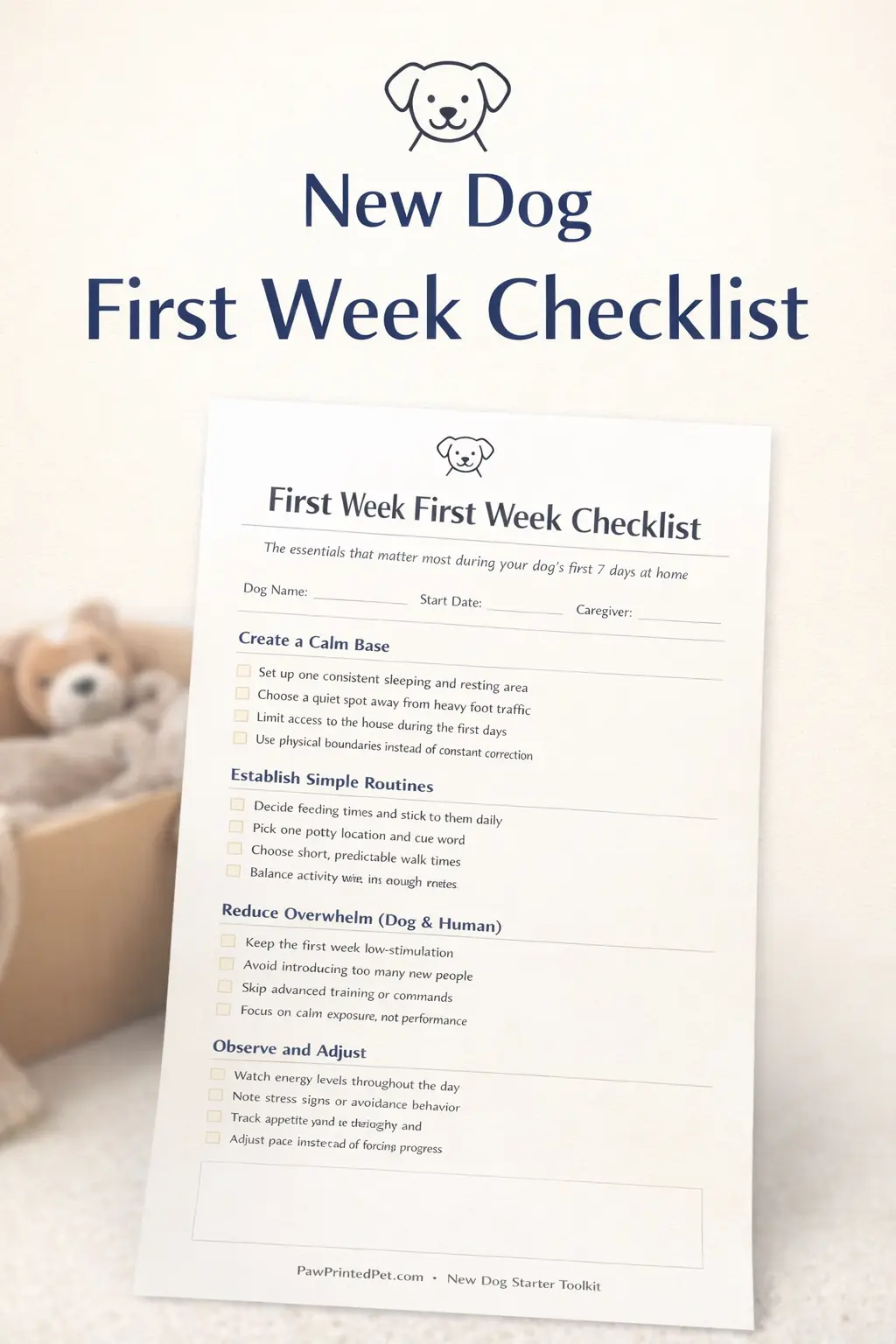
Want a calm, printable guide you can rely on during your dog’s first week at home?
A calmer first week, without overthinking.
The first week with a new dog can feel confusing and overwhelming. This printable toolkit helps you slow down, focus on what truly matters, and let go of unnecessary pressure.
Instead of telling you to do everything at once, it helps you decide what to prioritize, what can wait, and how to build calm routines step by step.
What’s included in the download:
- Calm Start Plan – safety, rest, and gentle routines
- Your Dog’s First 7 Days – pacing expectations across the week
- New Dog Setup Checklist – preparing your home and basics
- What Matters This Week – reducing overwhelm and pressure
- First Week Focus Card – a simple daily anchor
- One-page and printable
- Fillable (name, date, notes)
- Easy to use, no clutter
- No ads or promotions
Free to download, optional support.
This toolkit is 100% free to download. If you’d like to support PawPrinted, you can choose to pay any amount you wish. Your download stays exactly the same.
No ads. No affiliate links. Just a calm, practical resource for new dog parents.
Looking for everything you need to support your dog’s first days at home, without information overload?
The New Dog Starter Toolkit brings together printable checklists and planners designed to help new dog parents stay calm, organized, and confident during the first weeks.
How to Use the Printable Card Guide
Think of each card as one clear decision point. You do not need to complete every card in a single day. Use the cards that match your dog’s current stage, then pause. The goal is stability, not speed.
Use it in real life
Print it and keep it on the fridge, or save it on your phone for quick check-ins.
Check, then stop
Once the essentials are covered, step back and let your dog rest.
Skip cards when needed
If your dog is overwhelmed, the best move may be doing less, not more.
Repeat what works
Consistency builds trust. Simple routines beat complicated plans.
Tip: If you are unsure, choose the calmest option. In the first week, calm usually wins.
Why This Checklist Works for New Dog Parents
A first-week checklist should reduce pressure, not add pressure. The card format keeps your focus narrow and realistic. Instead of chasing a long to-do list, you move through small, clear priorities: safety, basic needs, rest, and gentle connection. That structure helps you avoid the most common first-week trap – doing so much that your dog cannot settle.
It prevents overload
You focus on one essential at a time, which helps both you and your dog stay regulated.
It sets healthy expectations
You will see common adjustment behaviors as normal, not as immediate problems to “fix.”
It builds consistency
Simple repeated routines create predictability, and predictability builds trust.
It gives you a daily win
When the essentials are done, you can stop and feel good about the day.
How This Fits Into a New Dog Starter Toolkit
This printable card guide covers the first-week essentials. After the first week, most new dog parents benefit from a few simple add-ons: a basic routine planner, a gentle observation tracker, and a clear “what’s normal” reference for the adjustment period. The goal stays the same – less guesswork, more calm.
Wrapping It Up
The first week is about adjustment, not performance. If your dog feels safe, and you feel calmer, the first week is already a success. Keep things simple, repeat what works, and give both of you room to settle in.
FAQ
Is this checklist only for puppies, or can I use it for adult dogs too?
You can use this checklist for both puppies and adult dogs who are new to your home. Most first-week problems are not age-specific – they are adjustment-specific. New sounds, new people, new floors, new rules, and new routines can make any dog cautious, clingy, quiet, or unsettled. This guide focuses on safety, decompression, simple rhythm, and low-pressure bonding, which are relevant no matter your dog’s age. The only difference is pacing: adult dogs may have stronger habits and may need more time to trust, while puppies may have shorter attention spans and more frequent potty needs. Either way, the checklist is built to reduce overwhelm and help you cover essentials without pushing your dog too fast.
Do I need to complete every item on the checklist each day?
No. This is not a daily “to-do list,” and it is not meant to be completed all at once. Think of it as a set of calm decision points that help you choose the right level of activity for the day. Some days you may only confirm the basics: your dog is safe, has access to water, has food offered, and has enough rest without pressure. That counts. The checklist is designed to give you a stopping point so you do not spiral into doing more and more. If your dog seems tired, overwhelmed, or withdrawn, doing less is often the best choice. The goal is stability and comfort in week one, not perfection.
What if my dog doesn’t eat much during the first few days?
A reduced appetite is common in the first few days, especially when the environment and routine change suddenly. Stress, unfamiliar smells, and uncertainty can all affect eating. The checklist encourages you to keep things simple: offer familiar food, keep mealtimes calm, and avoid rapid food switching that can create digestive issues. Focus on patterns rather than one meal. If your dog is drinking and otherwise stable, small or skipped meals can be part of adjustment. If your dog refuses all food for more than 48 hours, or you notice repeated vomiting, ongoing diarrhea, or signs of dehydration, that is when you should contact a veterinarian for guidance.
Is this a training checklist?
No. This guide is intentionally not a training plan. The first week is primarily about decompression and predictability, not performance. Many behavior issues in week one come from overstimulation: too many new experiences, too much handling, or too much pressure to “bond” quickly. Training can be valuable later, but it works best after your dog feels safe and can relax in your home. This checklist focuses on safety boundaries, rest, simple rhythm, observation without judgment, and low-pressure bonding. Those are the foundations that make future training easier. If you do only one thing in week one, let your dog settle first.
How is this different from a regular new dog checklist online?
Many online checklists push you to do more – buy everything, socialize immediately, start training right away, and fill every day with tasks. That approach can overwhelm new dog parents and overstimulate a dog who is still trying to understand where they are. This checklist is built to do the opposite: it helps you reduce pressure. It organizes the first week around essentials and clear “stop points,” so you know when you have done enough for the day. It also includes guidance on what not to do in the first 24 hours and encourages observation without rushing to label behavior as a problem. The goal is calm adjustment, not a perfect first week.
Can I use this checklist for a shelter or rescue dog?
Yes, and it is often especially useful for shelter and rescue dogs. Many rescue dogs need decompression time before they can show their true personality. In the first week, you may see shutdown behavior, hiding, low appetite, or heightened vigilance. This guide supports a slower pace: fewer new exposures, more rest, more predictable routine, and low-pressure bonding. It also helps you set physical boundaries early so your dog is not overwhelmed by too much space too soon. If your dog has a known history of fear or anxiety, the checklist can still help – just keep the expectations gentle and prioritize calm. Stability first, confidence later.
What format is the printable checklist?
The printable version is provided as a PDF designed for quick reference. You can print it and keep it visible in your home, or save it on your phone so you can check it during busy moments. The content is structured to be easy to scan, with practical focus areas like safety, what not to do in the first 24 hours, eating and drinking checks, simple rhythm, low-pressure bonding, a daily “enough” check, and guidance on when to watch closely or seek help. If you prefer not to write anything down, you can still use it as a visual checklist to reduce second-guessing. The format is meant to support real life, not create extra work.
What if I already feel behind during the first week?
You are not behind. Week one is not a race, and there is no perfect schedule to catch up to. In most cases, the safest and kindest approach is to slow down, not speed up. If your dog is safe, has access to water, is offered food, and can rest without being pushed, you are meeting the real goal of the first week. Bonding and training are not achievements you unlock in seven days. They are outcomes of consistency over time. Use the checklist to narrow your focus and reduce pressure: cover basics, keep the environment calm, and repeat what works. Feeling calmer is progress, even if nothing looks “Instagram perfect.”
Does this checklist replace veterinary advice?
No. This checklist is a practical home guide and cannot replace professional medical or behavioral advice. What it can do is help you observe patterns, reduce unnecessary stress, and recognize when something needs attention. If your dog shows persistent vomiting, ongoing diarrhea, refusal to eat beyond 48 hours, signs of dehydration, severe lethargy, or sudden behavior changes that worry you, contacting a veterinarian is the correct next step. The same is true for intense fear, repeated snapping, or unsafe behavior that you do not feel equipped to manage. The checklist is designed to support good decisions, including the decision to get help when it is appropriate.
Can I use this checklist as part of a larger new dog toolkit?
Yes. This checklist is designed as a foundation piece that fits cleanly into a larger new dog toolkit. The first week is about stabilizing the basics: safety, rest, simple routine, and low-pressure bonding. After that, many dog parents benefit from add-ons like a routine planner, a 3-3-3 adjustment tracker, a behavior observation log, and a simple feeding and treat log. The advantage of a toolkit approach is that you can add structure gradually instead of trying to use everything at once. Start with the first-week checklist, repeat what helps your dog settle, and then layer in additional tools only when your household feels steady.