Low-calorie dog treats aren’t “diet magic.” They’re a smart tool for portion control, better training, and steady weight goals. When Ethan (our floppy-eared partner) packed on a couple of winter pounds, we didn’t ban snacks—we swapped to lower-calorie rewards, tracked portions, and used timing to make every bite count. This guide shows how to do the same at home.
Understanding Calories in Dog Treats
“Low calorie” simply means fewer calories per bite compared with standard treats. For most families, that translates to 3 kcal per tiny training bite or ≤10% of daily calories coming from treats. Your dog’s size and activity level determine the math—small dogs reach the 10% cap faster, while large dogs have more room to work with.
Start with the big picture on ingredients and feeding balance in Healthy Dog Treats – What Every Owner Should Know, then keep a couple of reliable low-cal recipes in rotation such as our Apple & Carrots Bites.
| Treat Type | Typical Calories (each) | Best Use |
|---|---|---|
| Tiny training bites (soft) | ~2–3 kcal | High-frequency training |
| Crunchy dental nibbles (mini) | ~5–8 kcal | Occasional chewing |
| Homemade fruit/veg cubes | ~1–3 kcal | Top-ups between meals |
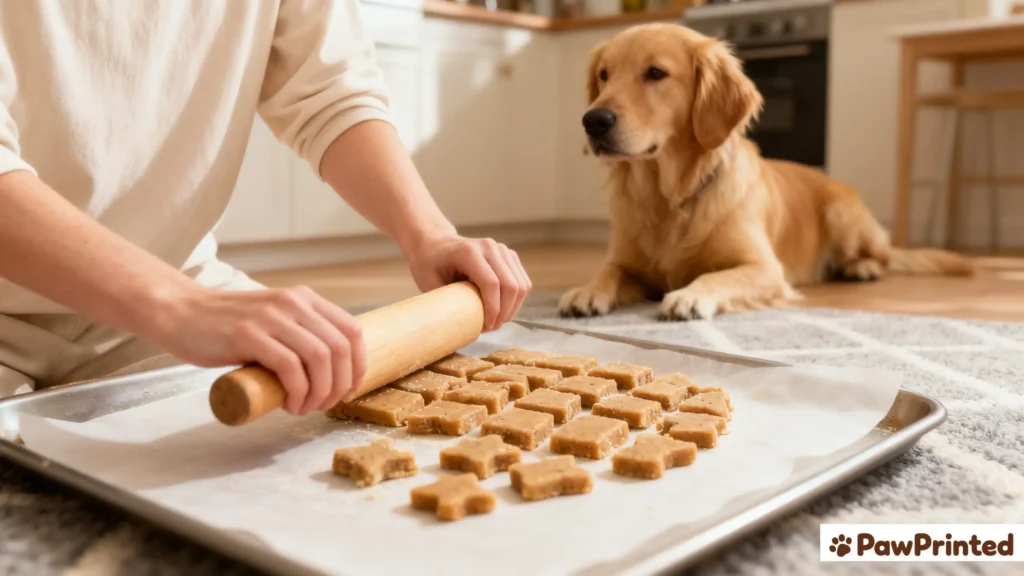
How Low-Calorie Treats Help With Weight Control
- Cut calories without cutting connection. You can reinforce behaviors often while keeping total intake in check.
- Enable more reps in training. Small, soft bites make precision rewarding easy. See our rapid-reward tutorial recipe: Cheese & Chicken Bites.
- Boost activity. Pair low-cal treats with micro-walks, recall games, or snuffle mats to add movement without overfeeding.
- Support satiety. Fiber-rich options (pumpkin, carrot, apple) add volume for “fuller with less.”
Shopping and want vetted options? We maintain a regularly updated list in Best Low Calorie Dog Treats (Vet Recommended).
Common Mistakes With “Low-Calorie” Treats
- No cap “because it’s low-cal.” Treats should still be ≤10% of daily calories. Frequent training days? Shave a little off meals.
- Delaying the reward. A big bite late is less effective than a tiny bite delivered on time.
- DIY but calorie-dense. Peanut butter, cheese, oil and honey add up fast. Balance with produce. Read our primer first: Homemade Dog Treats – What Owners Should Know First.
- Training with crunchy biscuits only. Crunch is slower to eat; use soft minis for speed. Learn why treats are training glue in Dog Treats – Why They Matter.
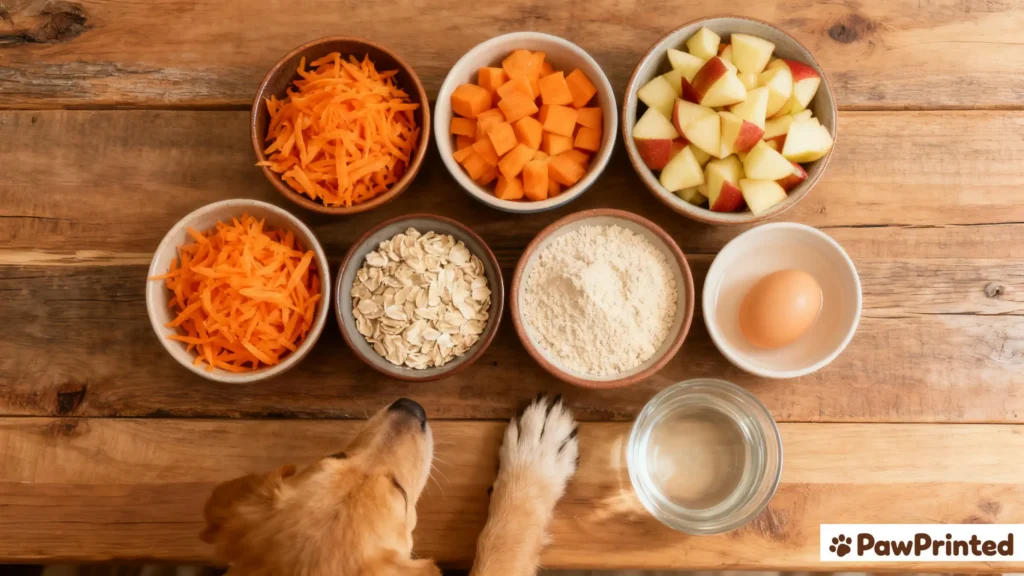
Vet-Approved, Lower-Calorie Ingredients
- Pumpkin purée – fiber for digestion and gentle volume.
- Carrot – crunchy, naturally sweet; easy mini rounds.
- Apple (no seeds) – hydrating, low-cal bite-size cubes.
- Greek yogurt (plain, low-fat) – freeze into dots for summer rewards.
- Sweet potato (thin-baked) – slow-release energy; cut very small for training.
Want plug-and-play ideas? Browse our small collection: Vet-Approved Dog Treat Recipes (8 Easy Snacks)—including the lighter Pumpkin & Coconut option.
How to Introduce Low-Cal Treats Into Your Routine
- Swap gradually. Over 5–7 days, replace higher-cal snacks with smaller, lower-cal minis to avoid “reward shock.”
- Pre-portion the day. Keep a ramekin or treat pouch with the day’s allowance—when it’s gone, you’re done.
- Match the moment. Soft mini for training, crunchy nibble for quiet time, produce cube for “I love you.”
- Adjust meals on training days. If you used lots of rewards at class, trim dinner by a spoonful or two.
- Track the trend. Weigh weekly, watch waistlines, and tweak portions as needed.
FAQ – Common Questions About Low Calorie Dog Treats
What are the healthiest low-calorie treats for dogs?
The best low-calorie treats combine high fiber and low fat—think carrot sticks, apple cubes, or pumpkin bites. Soft baked minis made from oats and vegetables also work well for training. Avoid artificial sweeteners, fillers, or excessive sodium. Look for treats under 3 kcal each to make frequent rewarding possible without weight gain.
Can dogs lose weight just by switching to low-calorie treats?
Low-calorie treats help reduce daily energy intake, but they’re only one piece of a healthy plan. Pair the switch with portion-controlled meals and more activity. Gradual weight loss of 1–2% body weight per week is safest. If your dog needs structured guidance, ask your vet to set a customized feeding and exercise schedule.
Are homemade low-calorie treats safe for daily use?
Yes, if you use dog-safe, vet-approved ingredients like pumpkin, carrots, oats, or plain yogurt. Avoid xylitol, nutmeg, chocolate, and salt-heavy ingredients. Keep portions small—homemade doesn’t mean calorie-free. Freeze or refrigerate leftovers for freshness and discard anything that spoils within 5 days.
How often can I give low-calorie snacks during training?
Even low-calorie rewards should stay within 10% of daily calories. During training, cut your dog’s main meal slightly or break treats into smaller pieces. The goal is to reward frequently without exceeding total energy needs. Small dogs especially reach their limit quickly, so measure treats for accuracy.
Is there a zero-calorie treat for dogs?
No treat is truly zero-calorie, but you can get close using ultra-low options like cucumber slices, steamed green beans, or ice cubes for crunch lovers. These provide texture and hydration without adding much energy. Rotate them with regular low-calorie treats for variety and enrichment.

Final Thoughts
Low-calorie treats won’t melt pounds by themselves, but they do make weight control easier: more reps, fewer calories, better habits. With smart timing and tiny portions, you’ll protect your dog’s waistline and your training progress—one happy bite at a time.
Explore More
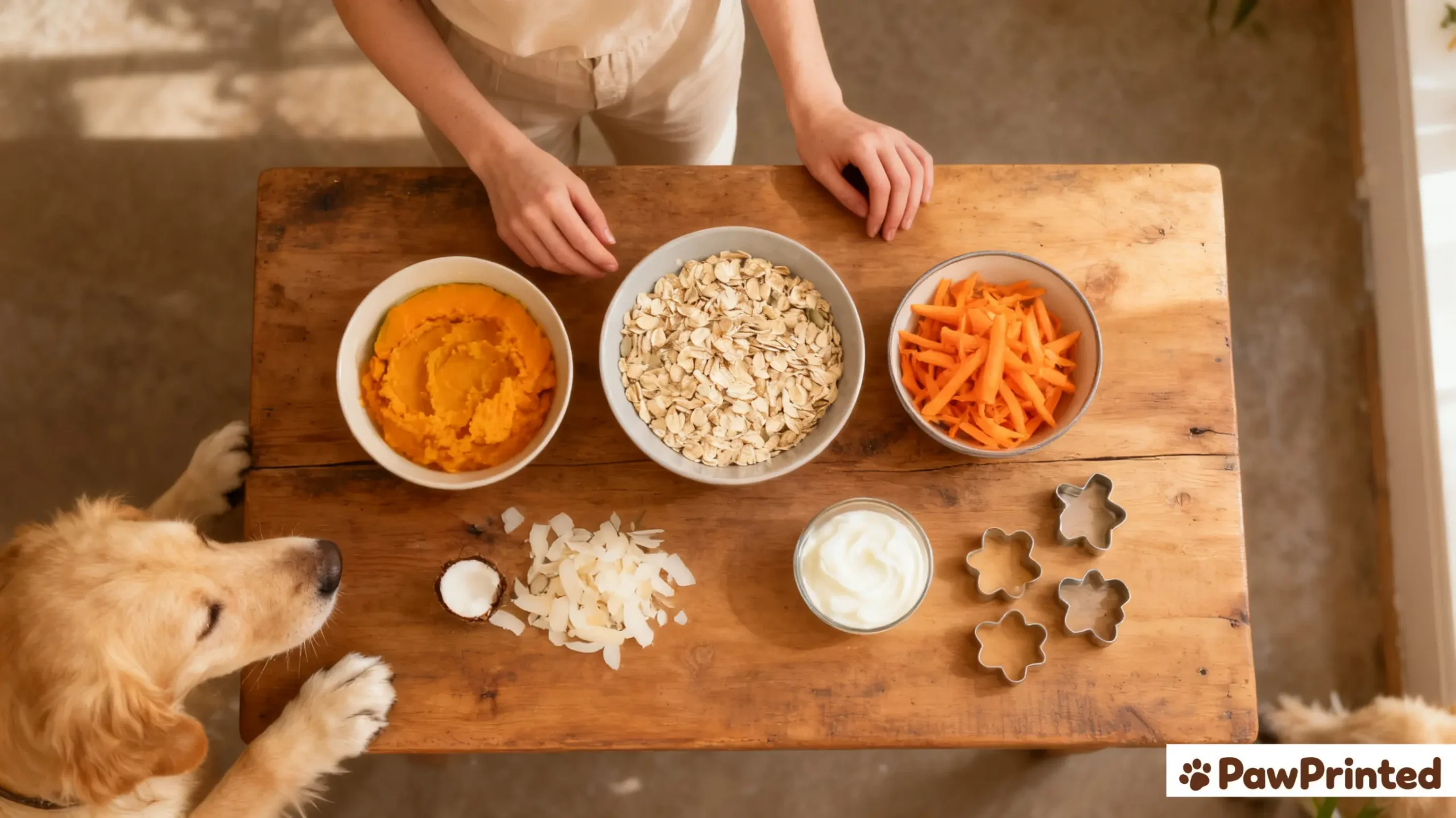
Low Calorie Dog Treat Formula (Apple & Carrot Training Bites)
- – Mixing bowl
- Grater or food processor
- Rolling Pin
- Small cookie cutter
- Baking sheet with parchment paper
- ½ cup finely grated carrot
- ½ cup mashed apple peeled, seeds removed
- 1 cup oat flour
- 1 egg or 2 tbsp unsweetened applesauce for egg-free option
- 1 tbsp water as needed
- Preheat oven to 325°F (160°C). Line a baking sheet with parchment paper.
- Mix the base. Combine grated carrot, mashed apple, and oat flour in a bowl until slightly crumbly.
- Bind the dough. Add egg (or applesauce) and mix until the texture forms a soft dough. Add water if needed.
- Shape the treats. Roll to ¼-inch thickness and cut into pea-sized training bites.
- Bake & cool. Bake for 20–25 minutes until firm. Let cool completely before serving.
• Each bite is approximately 2.8 kcal, ideal for dogs on controlled diets or frequent training.
• Use as part of a balanced plan—treats should make up no more than 10% of daily calories.
• If you prefer pre-made options, check our updated guide: Best Low Calorie Dog Treats (Vet Recommended).