Limited-Ingredient Salmon Dog Food — Can It Help Sensitive Dogs?
I started looking into limited-ingredient diets (LID) when Ethan’s skin got itchy and his stools turned unpredictable. If your pup is showing similar signs, simplifying what goes into the bowl can make patterns easier to spot — especially when you use a single animal protein like salmon. This guide explains what LID really means, why salmon is often chosen for sensitive pups, and how to switch safely without upsetting the tummy.
If you’re new to salmon as a dog-food protein, begin here for the health logic behind it: Salmon Dog Food – Why It’s a Healthy Choice. Ready to compare balanced formulas? See our hub: Best Salmon Dog Food Guide (Updated 2025).
Our goal is not to chase trends — it’s to help you observe, test, and feed with confidence alongside your vet’s advice.

What Does “Limited Ingredient” Actually Mean?
A Limited Ingredient Diet (LID) is built around a simple principle — use as few ingredients as possible while still covering your dog’s nutritional needs. Most true LID formulas contain only one animal protein and one primary carbohydrate source, such as salmon and sweet potato. The goal is to minimize exposure to potential allergens like chicken, beef, or wheat, giving your dog’s system a clean slate to calm inflammation.
For dogs with suspected food sensitivities, vets often recommend a short-term elimination plan using LID meals to pinpoint triggers. This controlled approach helps you separate true allergies from environmental issues — something regular “sensitive stomach” foods can’t always do.
Tip: Look for packaging that clearly lists “single animal protein” and avoids catchall terms like “meat meal” or “poultry blend.” Transparency is the first test of a true LID formula.
Key Nutritional Benefits of Salmon
Salmon is one of the most digestible and nutrient-dense proteins you can offer to sensitive dogs. Its natural Omega-3 profile supports skin, joints, and immunity — while its lean protein builds muscle without overstressing digestion. Here’s why it often becomes the cornerstone of many limited-ingredient diets.
High Digestibility
Salmon’s gentle amino acid profile makes it easy on the stomach, reducing the risk of bloating or post-meal discomfort compared with heavier meats like beef or pork.
Rich in Omega-3 Fatty Acids
EPA and DHA in salmon naturally soothe inflammation, helping itchy skin, dull coats, and red paws recover faster — common issues for allergic dogs.
Supports Immune Balance
The antioxidants in salmon, including selenium and astaxanthin, strengthen immune function while helping your dog’s body manage allergic stress more efficiently.
Gentle Energy Source
Salmon provides steady, moderate-fat calories that fuel metabolism without triggering spikes or gut stress — ideal for pups with sensitive digestion or inconsistent appetites.
Emma’s Tip: When testing a salmon-based formula, give it two full weeks before judging results. You’ll often notice shinier fur and calmer digestion by day 10 if it’s the right fit.
How Limited Ingredient Formulas Actually Work
A limited-ingredient dog food isn’t about feeding less — it’s about feeding smarter. By simplifying the recipe to one protein (like salmon) and one main carbohydrate, you make it easier to spot what truly agrees with your dog’s body. Each component is chosen for digestibility, predictability, and balance, not restriction.
Single Protein Simplicity
Using one animal source—like salmon—minimizes immune confusion and helps isolate triggers. It’s the foundation of elimination diets that vets use to test for food allergies safely and clearly.
Digestible Carbohydrate Pairing
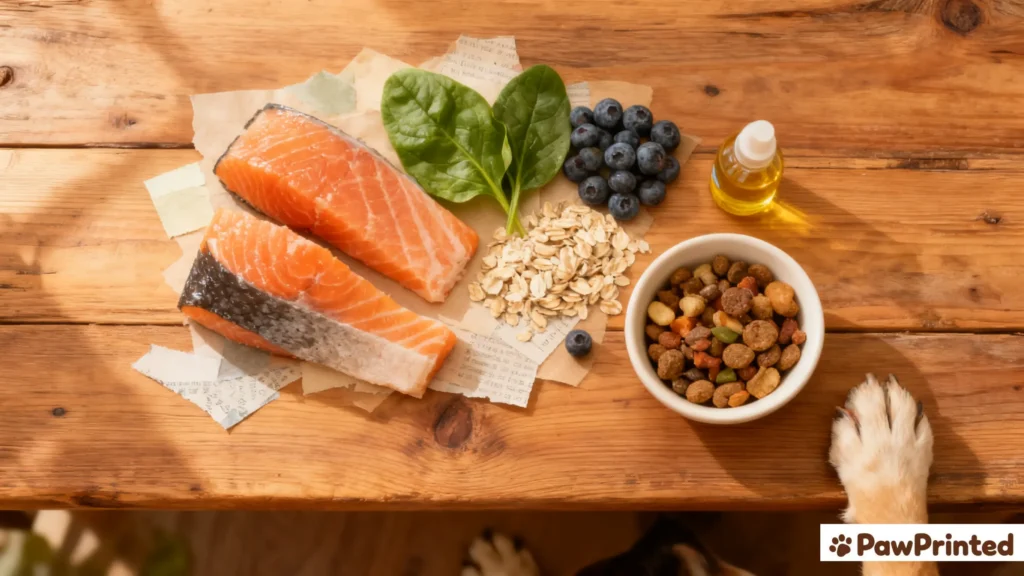
Pairing salmon with gentle carbs such as sweet potato or oatmeal supports steady digestion. This mix provides soluble fiber and slow-release energy while keeping the gut calm and stable.
No Fillers, Just Purpose
True LID formulas avoid soy, corn, and artificial additives. Every ingredient serves a clear purpose — supporting digestion, energy, or skin health — without unnecessary extras.
Consistent Formulation
Because LID diets stay identical from batch to batch, your dog’s gut doesn’t have to re-adjust every bag. That stability helps you see real progress and makes data tracking far more reliable.
Emma’s Tip: The magic of LID diets is clarity — fewer ingredients mean clearer feedback from your dog. Keep a simple food journal and note changes in skin, stool, and energy after each new formula.

Vet Insights — When to Try a Limited Ingredient Salmon Diet
Not every itchy or gassy dog needs a limited-ingredient formula — but for those with chronic skin flare-ups, ear infections, or loose stools, it can be a diagnostic lifesaver. Here’s what most vets recommend before switching to a salmon-based LID diet.
Recurrent Skin Issues
If your dog constantly licks, scratches, or develops red patches even after flea treatments, a salmon-based LID can help isolate protein triggers while restoring Omega-3 balance for calmer skin.
Chronic Ear or Paw Infections
Recurring yeast infections in ears or between toes often signal food sensitivities. Vets commonly recommend LID salmon diets as the first step in exclusion trials.
Digestive Upset and Loose Stool
Sensitive digestion benefits from salmon’s lean profile and gentle amino acids. It reduces gas, bloating, and intermittent diarrhea in dogs who can’t tolerate beef or chicken.
Post-Antibiotic Recovery
After gut flora disruption from antibiotics, a simplified salmon-based formula helps rebalance microbiota without overloading your dog’s system with multiple proteins or fillers.
Vet’s Reminder: Always consult your veterinarian before making a diet change. Bring your dog’s food log and allergy history to help identify whether an LID salmon formula is the right fit.
Limitations and Common Pitfalls
Even the best limited-ingredient salmon diets aren’t perfect. They’re excellent tools for managing sensitivities — but if misused, they can lead to new issues or missed diagnoses. Knowing where they fall short keeps your pup’s diet safe and effective.
Hidden Ingredients
Some “single-protein” foods are made in shared facilities where cross-contamination happens. Even trace chicken or egg proteins can trigger flare-ups in highly allergic dogs.
Nutrient Gaps
Simplified recipes can unintentionally reduce essential vitamins and minerals. A balanced LID should still meet AAFCO guidelines and include key nutrients like zinc, vitamin E, and fiber.
Misdiagnosed Allergies
Not every skin itch or soft stool stems from food. Environmental triggers such as dust, pollen, or yeast may mimic allergy symptoms — switching food alone might not solve the problem.
Over-Relying on Labels
Words like “hypoallergenic” or “natural” aren’t regulated. Focus instead on clear ingredient lists, vet-approved formulations, and third-party testing.
Emma’s Tip: Use a limited-ingredient diet as a short-term tool, not a lifetime restriction. Once symptoms settle, slowly reintroduce safe foods with your vet’s guidance to build long-term balance.
How to Transition & Mix Proteins Safely
Transitioning to a salmon-based limited-ingredient diet should be done slowly to protect gut health. A dog’s microbiome adjusts gradually to new amino acids and fat ratios, so patience pays off. Whether you’re switching from chicken or rotating both proteins, consistency and observation are key.
Step-by-Step Transition
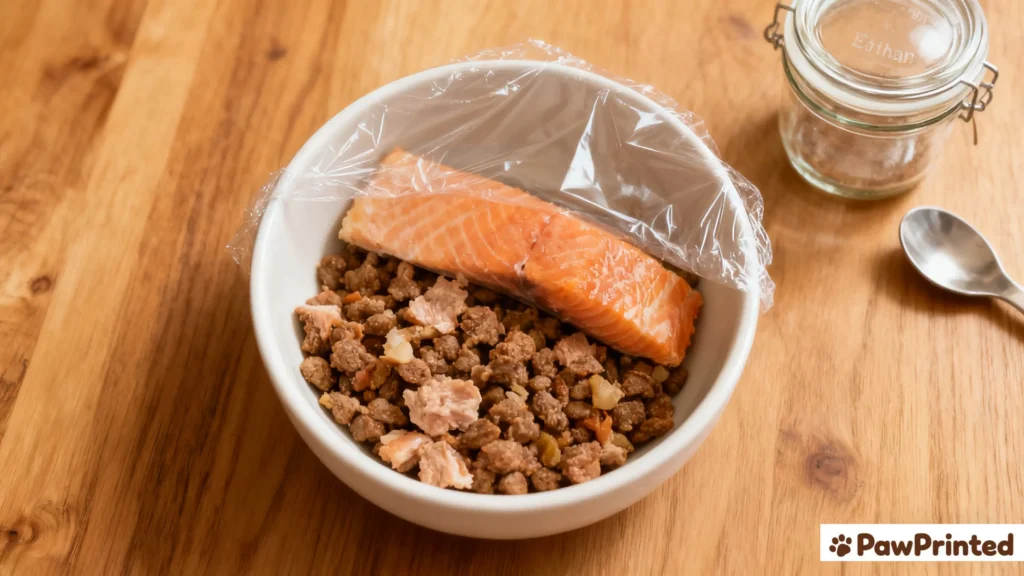
- Days 1–2: Mix 25% new food (salmon) with 75% old (chicken).
- Days 3–4: Move to a 50/50 blend and monitor stool firmness.
- Days 5–6: Increase salmon to 75% if digestion remains stable.
- Day 7: Fully switch or maintain rotation depending on tolerance.
A slow transition allows digestive enzymes and gut flora to rebalance naturally, minimizing stomach upset or appetite loss.
Mixing Proteins for Variety
- Alternate salmon and chicken every few days for amino acid diversity.
- Use lightly cooked toppers (like pumpkin or spinach) to ease digestion.
- Stick to single-protein treats when monitoring allergic reactions.
If symptoms return, simplify the bowl with a limited-ingredient salmon diet until balance is restored. For full homemade control, explore our Homemade Salmon Dog Food Guide.
Emma’s Tip: I never rush transitions — Ethan’s happiest changes always came after a full week. Watch the coat, stool, and energy before making another adjustment.
FAQ — Limited-Ingredient Salmon Diets
Is limited-ingredient salmon dog food good for allergies?
It can be—when the allergy is food-related. A limited-ingredient (LID) recipe narrows the bowl to one animal protein and a small, consistent set of supporting ingredients. That reduction helps you see whether a specific protein (often chicken or beef) was provoking itch, hotspots, ear gunk, or loose stool. Salmon is frequently chosen because its omega-3s support skin and gut comfort, and many dogs that react to poultry or beef tolerate fish better. Still, not all sensitivities come from food; fleas, yeast, or seasonal pollen can look identical to a “food allergy.” If symptoms don’t improve during a correctly run trial, the trigger may be non-dietary or a different ingredient entirely.
How long should I trial an LID salmon formula before judging results?
Most vets suggest 8–12 weeks for a proper elimination trial. The first 2 weeks are about settling the gut; weeks 3–6 reveal patterns in stool, itch, and ear debris; by weeks 8–12 you can make a confident call. Keep everything else steady—no mixed-protein treats, table scraps, or frequent brand swaps—or the data gets noisy. Track three things daily: stool quality, itch/licking time, and coat/skin appearance. If you see early improvement in week 2–3, stay the course; if symptoms worsen or weight/appetite drops, pause and call your vet. Patience matters more than perfection here.
What’s the difference between grain-free and limited-ingredient salmon diets?
Grain-free removes grains as carbohydrate sources; limited-ingredient reduces the number of total ingredients, usually to one protein and one primary carb. A salmon LID may or may not be grain-free—some use oats or rice deliberately for digestibility. If your goal is to identify a protein trigger, prioritise “single animal protein” and a short ingredient list. If your dog digests certain grains well, there’s no need to avoid them during the trial. Choose the format that delivers consistency, transparent labels, and complete nutrition rather than chasing a marketing term.
Can puppies or seniors use a limited-ingredient salmon diet?
Yes—provided the formula is complete and balanced for the life stage. Puppies need precise calcium/phosphorus and energy density; seniors often benefit from controlled calories plus skin/joint support. Look for life-stage statements and a full nutrient profile. If you can’t find those, it’s safer to use a standard complete diet and run the elimination with your vet’s guidance. For any age, introduce changes gradually, watch body condition and stool, and schedule check-ins to ensure growth (puppies) or muscle maintenance (seniors) stays on track.
What if my dog is still itchy or has soft stools on salmon?
First, make sure the trial is “clean”: no mixed-protein treats, toppers, or flavored medications. If you’ve been strict for at least 3–4 weeks without improvement, consider these possibilities: cross-contamination (trace poultry/egg in shared facilities), a different ingredient as the trigger (e.g., pea, potato, or a supplement), or a non-food cause like fleas, yeast, or seasonal allergies. Your vet may suggest switching to a hydrolyzed-protein diet or performing targeted diagnostics. Don’t stack changes—adjust one variable at a time so you can see what truly works.
Wrapping It Up
Limited-ingredient salmon dog food can be a gentle, effective reset for pups with skin, digestive, or allergy troubles. By simplifying ingredients, you reduce guesswork — and salmon’s natural omega-3s bring bonus support for coat health and gut calm. The key is patience: observe for at least 8 weeks, note what improves, and make changes slowly.
Every dog’s allergy story is different, but a clean LID salmon formula often offers clarity where mixed diets can’t. Use your vet’s input, track progress weekly, and remember that success is rarely instant — it’s built through consistent feeding, measured reintroductions, and ongoing observation.
If you don’t want to cook daily, check our dry food picks — those were Ethan’s daily backups.
Explore More — Related Salmon & Allergy Guides
Want to go deeper into allergy-safe feeding and salmon-based nutrition? These guides cover how to balance proteins, prevent flare-ups, and keep mealtimes simple.
References — Authoritative Sources
-
PetMD (2024) — “Limited Ingredient Diets for Dogs: What You Need to Know.”
PetMD Veterinary Nutrition — Explains how limited-ingredient diets help identify food sensitivities and outlines the proper length of an elimination trial. -
American Kennel Club (AKC, 2024) — “Can Dogs Eat Salmon?”
AKC Nutrition Advisory — Reviews the benefits and safety of feeding salmon, including preparation tips and omega-3 advantages for skin health. -
Tufts Cummings School of Veterinary Medicine (2023) — “Decoding Food Allergies in Dogs.”
Tufts Vet Nutrition Center — Offers a veterinary explanation of how to diagnose and manage food allergies using elimination and reintroduction trials. -
Frontiers in Veterinary Science (2022) — “Omega-3 Fatty Acids and Inflammation Control in Dogs.”
Frontiers Research Journal — Peer-reviewed study confirming that salmon-based omega-3 intake reduces skin inflammation and supports immune balance. -
National Institutes of Health (NIH, 2021) — “Dietary Simplicity and Microbiome Health in Companion Animals.”
NIH Health Library — Highlights how controlled ingredient diets promote gut stability and lower the risk of chronic inflammatory responses.
Homemade Salmon Dog Food Recipes (Vet Approved Series)
Explore our complete collection of vet-approved salmon dog food recipes — each designed for a different need: from gentle digestion to high-protein recovery. These meals are wholesome, easy to prepare, and Ethan-tested for flavor and health.
- 🐟 Salmon Dog Food Recipe (Rice & Peas, Vet Approved) — A classic gentle bowl for sensitive stomachs.
- 🥔 Salmon & Sweet Potato Dog Food Recipe (Easy & Nutritious) — Rich in vitamins and natural fiber.
- 🎃 Salmon & Pumpkin Dog Food Recipe (Gentle Digestion) — The go-to recipe for calm digestion and hydration.
- 🌾 Salmon & Oats Dog Food Recipe (Healthy & Filling) — A cozy, fiber-rich mix for steady energy.
- 🍚 Salmon & Quinoa Dog Food Recipe (Protein Boost) — High-protein and balanced with omega support.
- 🌿 Salmon & Spinach Dog Food Recipe (Omega-3 & Iron Boost) — For glossy coats and strong muscles.
- 🥣 Salmon & Lentils Dog Food Recipe (Fiber & Protein Blend) — Gentle on digestion, rich in texture.
- 🫐 Salmon & Blueberries Dog Food Recipe (Antioxidant Rich) — Boosts immunity with antioxidant power.