When Ethan’s tummy started acting up, I wanted something gentle, balanced, and easy to digest — so I began cooking a simple lamb & rice dog food recipe at home. Lamb gives him high-quality protein without upsetting his stomach, while rice keeps his meals steady and soothing on busy days. If you are curious why many sensitive pups do well on this combo, take a look at our Lamb Dog Food Guide — it explains the science in plain language and shows when lamb can be a smart choice. Below is exactly how I cook this meal for Ethan, with the small tweaks that made the biggest difference for us.
Ingredient Spotlight — Why Lamb & Rice Work So Well
Lean Ground Lamb
Lamb is a gentle, nutrient-rich protein that’s often easier for dogs to digest than chicken or beef. It provides essential amino acids, iron, and zinc — all crucial for maintaining strong muscles and a shiny coat. For dogs with mild sensitivities, lamb is one of the most well-tolerated meats.
Rice (White or Brown)
Rice gives steady energy and is soft on the digestive tract. White rice helps during recovery periods, while brown rice adds extra fiber and minerals for everyday balance. Together with lamb, it forms a mild, low-fat base perfect for sensitive stomachs.
Carrots & Spinach
These colorful veggies bring fiber, beta-carotene, and antioxidants that support digestion and immune health. They also add natural sweetness and variety, helping picky eaters stay interested in homemade meals.
Olive Oil & Calcium Supplement
A drizzle of olive oil supplies omega fatty acids for skin and coat care, while a small scoop of calcium powder (or crushed eggshells) keeps bones strong and growth balanced — especially for active or senior dogs.
Some owners wonder if switching from chicken might help their pup’s digestion — it often does. Learn more in our Lamb vs Chicken Dog Food Guide – Which One Should You Pick?
Tip: Choose lean cuts of lamb and cook them slowly — it keeps the flavor while reducing excess fat for gentler digestion.
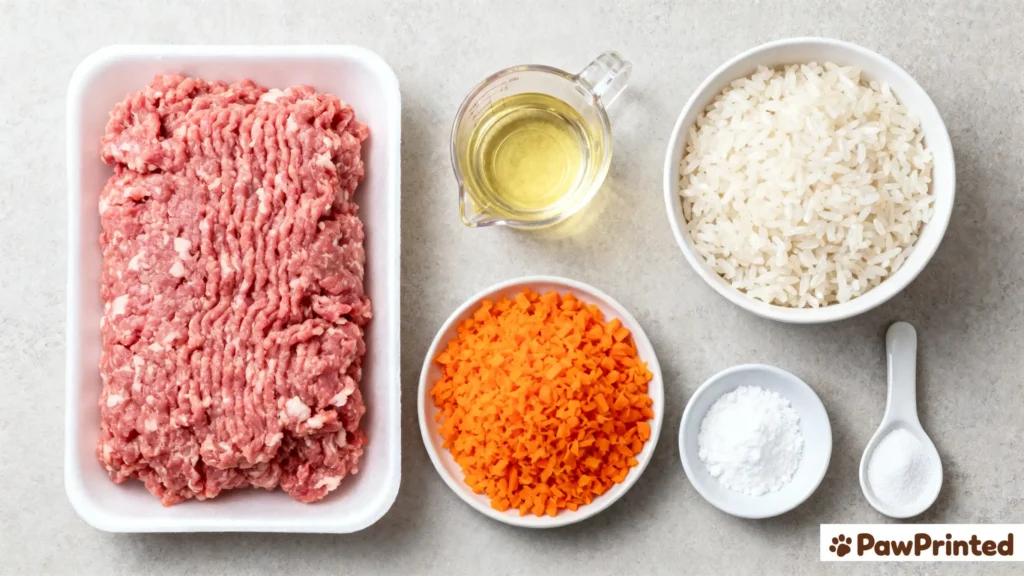
Ingredients You’ll Need
Lean Ground Lamb — 450 g (1 lb)
Rich in amino acids and gentle for sensitive dogs, lamb provides high-quality protein that helps maintain muscle tone without upsetting the stomach.
Rice — 1 cup (cooked soft)
Choose white rice for easy digestion or brown rice for added fiber. Both serve as a gentle carbohydrate base that keeps meals balanced and filling.
Carrots — ½ cup, finely chopped or grated
Provides fiber, vitamin A, and a natural sweetness that most dogs enjoy. Carrots also support digestion and eye health.
Olive Oil — 1 tsp
Adds omega fatty acids to promote shiny coats and healthy skin. Drizzle lightly after cooking to preserve nutrients.
Calcium & Multivitamin Supplement — 1 tsp each
Use a vet-approved calcium powder or crushed eggshells for bone support, plus a daily multivitamin to complete micronutrient needs.
Optional tool: for quicker prep, try the Total Pet Kitchen Pet Food Maker — it steams, chops, and mixes ingredients in one step, saving cleanup time.
Step-by-Step Cooking Guide
Step 1 — Cook the Lamb
In a non-stick pan, cook the lean ground lamb over medium heat until it turns evenly brown. Drain excess fat to keep the meal gentle on your dog’s stomach. Stir occasionally to avoid sticking and to ensure the meat cooks evenly without burning the edges.
Step 2 — Prepare the Rice
Boil the rice in plain water until soft and slightly sticky. Avoid salt, butter, or any seasonings — dogs don’t need added sodium. The goal is to create a moist texture that blends well with the cooked lamb.
Step 3 — Combine Everything
In a large bowl, mix the cooked lamb and rice together. Add finely grated carrots while the mixture is still warm so they soften slightly but retain nutrients. Stir gently until evenly combined for consistent flavor and nutrition in each bite.
Step 4 — Cool Before Adding Supplements
Let the mixture cool to room temperature before adding olive oil and your dog’s multivitamin or calcium supplement. This keeps nutrients intact and prevents oils from losing their natural benefits due to heat exposure.
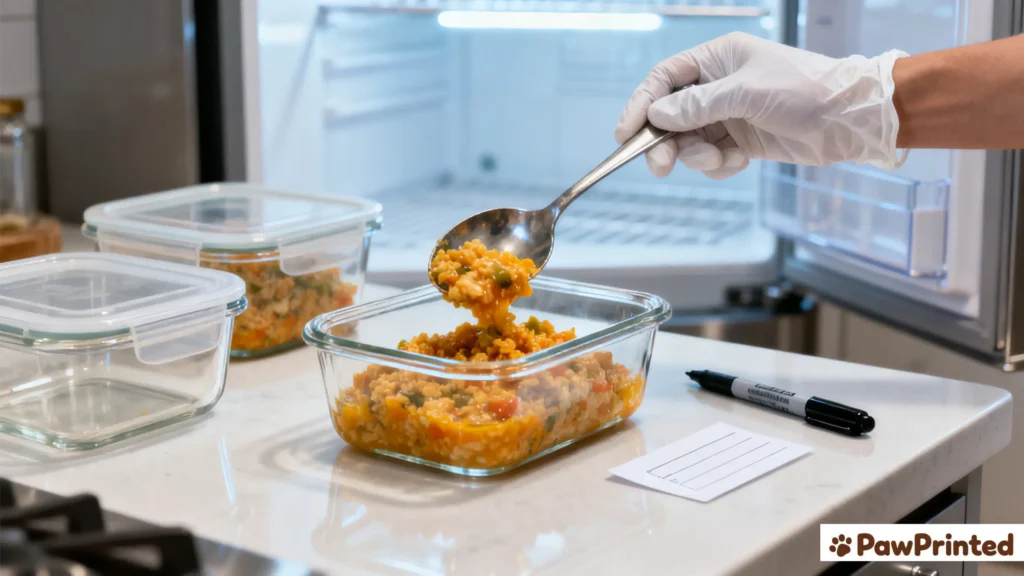
Step 5 — Portion and Store
Use clean containers to portion meals by your dog’s weight or feeding plan. Store them in the refrigerator for up to 5 days or freeze portions for later use. Label each batch with the date for easy rotation and freshness tracking.
Step 6 — Serve and Enjoy
Warm each serving slightly before feeding to bring out the aroma — Ethan loves it this way! For a fun twist, shape small portions using silicone molds from the BoneItUp Dog Treat Making Kit to create healthy mini bites for training rewards.
Lamb & Rice Dog Food Recipe (Balanced & Gentle)
- Non-stick pan or saucepan
- Measuring cups and spoons
- Mixing bowl and spatula
- Airtight storage containers
- Optional: Total Pet Kitchen Pet Food Maker (for quicker prep)
- 450 g 1 lb lean ground lamb – rich in amino acids and gentle for digestion
- 1 cup rice white or brown – soft carbohydrate base for steady energy
- ½ cup carrots grated – adds fiber and beta carotene
- 1 tsp olive oil – provides omega fatty acids for coat and skin health
- 1 tsp calcium powder or crushed eggshells – supports bone strength
- 1 vet-approved multivitamin supplement – completes daily micronutrient needs
- Cook the Lamb – In a non-stick pan, cook the ground lamb over medium heat until evenly browned. Drain excess fat to keep the recipe gentle on digestion.
- Boil the Rice – Cook rice in plain water until soft and slightly sticky. Avoid salt or oils.
- Combine Ingredients – Mix lamb, rice, and grated carrots in a large bowl while warm to soften the vegetables slightly.
- Cool & Add Supplements – Let the mixture reach room temperature, then add olive oil, calcium, and the multivitamin to preserve nutrients.
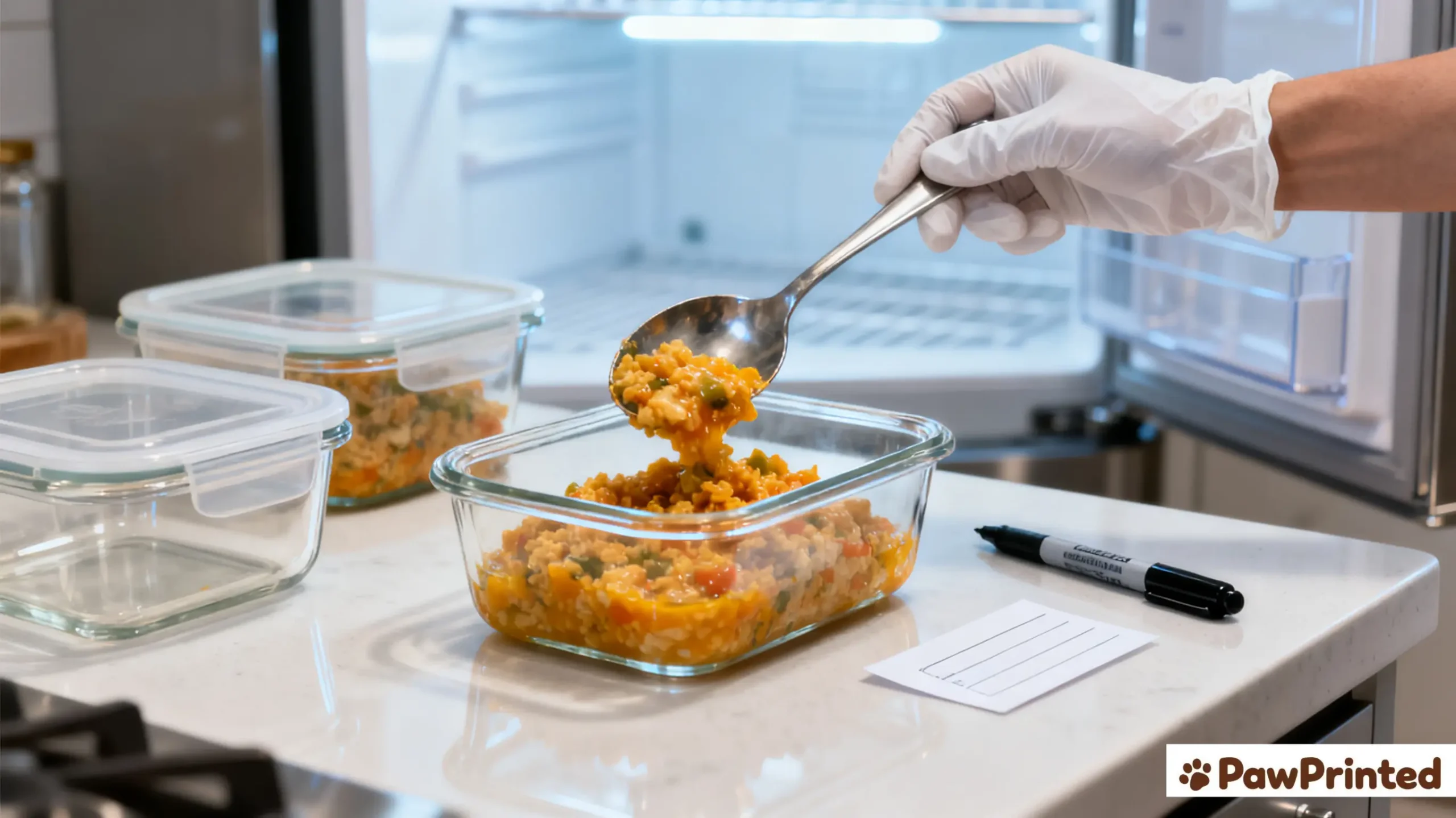
- Portion & Store – Divide into containers and refrigerate for up to 5 days or freeze for 2 months.
- Serve – Warm slightly before feeding; Ethan loves it when it’s just above room temperature.
Nutritional Data & Vet Insights
Protein Power
The lamb in this recipe provides high-quality protein packed with essential amino acids that support muscle repair and immune health. It’s especially helpful for dogs that need gentle but nutrient-dense meals without chicken-based proteins.
Healthy Carbohydrates
Rice delivers clean, slow-releasing energy that won’t upset digestion. Its mild texture makes it an ideal match for dogs recovering from digestive issues or switching from commercial food to homemade diets.
Digestive Support
Carrots provide fiber that keeps the digestive tract regular, while olive oil adds a touch of healthy fat that promotes nutrient absorption. Together they help Ethan stay active, happy, and bloat-free.
Vitamins & Minerals
Adding a vet-approved multivitamin and calcium powder ensures that your homemade meal meets daily micronutrient requirements. This combination maintains bone strength, coat shine, and overall vitality in adult dogs.
Fat Balance
With olive oil in moderation, this recipe stays low in saturated fat while still providing omega fatty acids. That balance supports skin barrier health and reduces inflammation — perfect for dogs prone to itchy skin or mild allergies.
Vet-Reviewed Ratio
According to most veterinary guidelines, a 40:50:10 ratio of protein, carbs, and veggies works well for gentle maintenance diets. This lamb and rice formula fits right within that framework, offering balanced nutrition for sensitive stomachs.
Tip: Keep portions steady and monitor your dog’s coat and stool quality — they’re the best indicators of nutritional balance. If you notice long-term issues, check our Limited Ingredient Lamb Dog Food Guide for alternative options.
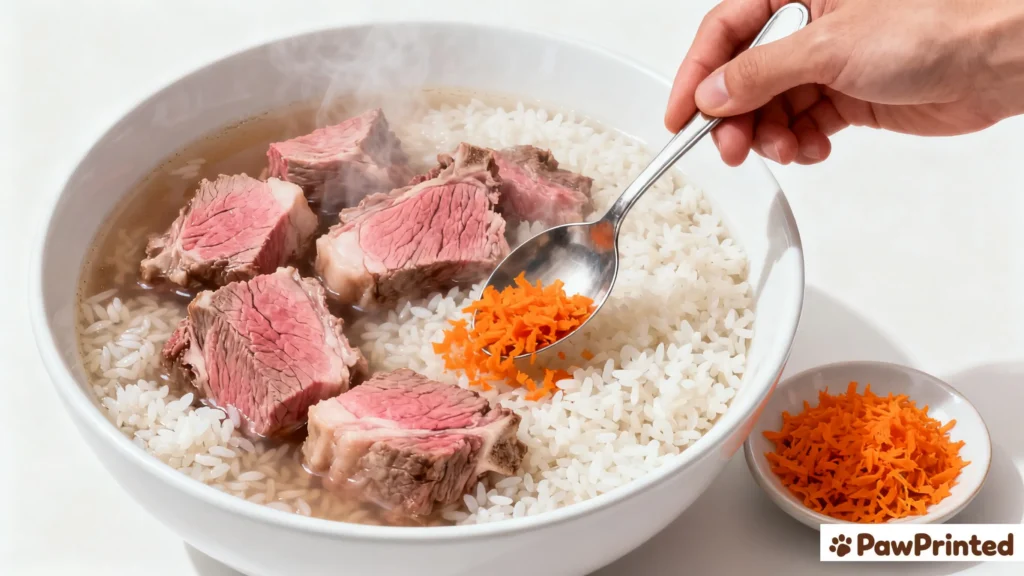
Vet Tips & Variations
For Sensitive Stomach Dogs
Keep the ingredient list short and clean. Avoid adding dairy, seasoning, or rich oils — they can trigger bloating or loose stool. Stick to lean lamb and plain rice, and transition gradually over 5–7 days to let your pup’s gut adjust smoothly.
Allergy-Friendly Adjustments
If your dog shows signs of protein allergy but tolerates lamb well, maintain it as the only meat source. For added fiber, try replacing carrots with zucchini or spinach — both mild and low-allergen vegetables suitable for daily feeding.
Senior Dog Variation
Older dogs benefit from softer textures and lighter fat content. Cook the rice slightly longer and mash the mixture for easier chewing. Reduce olive oil to half a teaspoon and keep the calcium supplement consistent for joint support.
Active or Sporty Dogs
For pups who burn more calories, add an extra 50–100 g of lamb and increase olive oil slightly for sustained energy. Pairing this meal with a vet-approved joint supplement can further protect their mobility and muscle tone.
Low-Fat Option
Use boiled lamb or trim visible fat before cooking to reduce grease. This version works best for dogs with pancreatitis history or those on weight management plans. Always consult your vet before changing calorie density.
Tip: Every dog’s metabolism is unique — start with small batches, observe stool and appetite, and fine-tune ingredients gradually for the best long-term balance.
Serving Ideas & Storage
Daily Portion Guide
Serve about ½ to 1 cup of this lamb & rice mix per 10 lb of body weight per day, divided into two meals. Adjust portion size based on your dog’s age, activity level, and body condition score — consistent weight and steady energy mean you’ve got it right.
Serving Style
Warm each portion slightly before serving to release the lamb’s aroma — Ethan always wags his tail when he smells it! Avoid microwaving too long, as it can dry out the rice. Stir a spoonful of water if the texture becomes too thick.
Refrigeration Tips
Store cooked portions in airtight containers in the fridge for up to 5 days. Label each container with the date and rotate daily for freshness. Small silicone molds make it easy to portion individual servings for quick defrosting later.
Freezing & Reheating
Freeze meal portions flat in freezer bags for up to 2 months. Thaw overnight in the fridge before serving. Avoid refreezing leftovers — this helps preserve texture and nutrients. Once thawed, use within 48 hours for the best taste.
Meal Add-Ons
For a little variety, mix in a spoon of pumpkin puree or plain kefir once or twice a week. These natural add-ons boost gut health and keep the flavor interesting. Just keep portions small to maintain balance and avoid excess calories.
For easier feeding and storage, I sometimes rely on the Amazon Basics Automatic Pet Feeder — it keeps portions consistent and helps when I’m not home on time.
Tip: Always cool meals fully before sealing — moisture trapped inside warm containers can shorten shelf life and dull flavor.
What Worked for Ethan
Ethan’s Everyday Favorite
After a few weeks on this lamb and rice meal, Ethan’s digestion settled, and his coat became noticeably shinier. It’s the one recipe that consistently keeps him happy and full without any bloating or fuss. I usually prep a batch every Sunday and portion it for the week ahead.
On extra busy days, we fall back on Purina ONE Lamb & Rice or Blue Buffalo Lamb & Brown Rice — both have been reliable for gentle stomachs.
My Time-Saving Helpers
When life gets hectic, I rely on tools that make home cooking faster and cleaner. The Total Pet Kitchen Pet Food Maker chops and steams lamb perfectly in minutes, and the BoneItUp Dog Treat Kit lets me turn leftover bits into healthy snacks Ethan adores.
For storage, I use labeled containers with our Amazon Basics Automatic Feeder — it keeps portions consistent and feeding stress-free.
Tip: Mix home-cooked meals with one commercial option from time to time to keep nutrients balanced and your dog’s taste buds excited.

FAQ
Can I use white rice instead of brown rice?
Yes, white rice is perfectly fine for most dogs. It’s softer and easier to digest, making it great for recovery or sensitive stomachs. However, brown rice contains more fiber and nutrients, which can support long-term digestive health. You can switch between the two depending on your dog’s needs, as long as portions remain balanced and unseasoned.
Is lamb good for dogs with sensitive stomachs?
Generally yes. Lamb is considered a novel, gentle protein that helps many dogs with food sensitivities digest more comfortably. It provides high-quality amino acids without triggering common poultry or beef allergies. Still, introduce it slowly and monitor stool consistency to make sure your pup tolerates it well.
Do I need extra vitamins or supplements in this recipe?
Homemade meals can sometimes lack certain micronutrients, so adding a vet-approved multivitamin and calcium source is recommended. These ensure your dog gets balanced daily nutrition, especially if homemade food is served regularly. Always check with your vet for dosage and appropriate supplement brands.
How long can I store lamb and rice dog food?
Freshly cooked portions last about 4–5 days in the fridge and up to 2 months in the freezer. Always cool meals fully before sealing, and thaw overnight in the refrigerator before serving. Discard any batch that smells sour or has changed color, as homemade food lacks preservatives found in commercial diets.
Can puppies eat this lamb and rice recipe?
Puppies can enjoy this recipe in small portions, but it’s not a complete diet for their growing needs. Their calcium and calorie requirements are higher, so supplement carefully or alternate with a vet-approved puppy food. Always consult your veterinarian before switching a young dog to any homemade diet.
Wrapping It Up
Cooking for Ethan has taught me that homemade meals don’t need to be complicated — just clean, balanced, and full of care. This simple lamb and rice dog food recipe became our daily comfort bowl, especially on days when his stomach needed something gentle yet nourishing. Watching him lick the bowl clean each time reminds me that a little effort in the kitchen goes a long way toward keeping our pups healthy and happy.
If you’ve been searching for a calm, steady diet for your dog, start small — one meal, one day at a time. Every pup is different, and what worked for Ethan might inspire your own perfect version. Keep it light, keep it balanced, and enjoy those tail wags along the way.
If you don’t want to cook daily, check our dry food picks – those were Ethan’s daily backups.
Author & Vet Review Box
“After trying multiple diets, this lamb and rice recipe became our most reliable go-to,” Emma shares. “It’s gentle, filling, and helps Ethan stay energetic without tummy issues. I love that I can make it with just a few clean ingredients.”
Vet Review (Dr. Miller, DVM): From a veterinary perspective, this formula provides an excellent protein-to-carbohydrate ratio and a mild fat balance suitable for sensitive stomachs. The addition of calcium and a multivitamin ensures the recipe meets basic nutrient needs. For most adult dogs, it’s a sound homemade option — just monitor weight and stool consistency over time.
References – Authoritative Sources
- PetMD (2024) – “Lamb-Based Diets for Sensitive Dogs.” Read the full article . Overview of how lamb protein supports digestion and coat health in sensitive dogs.
- American Kennel Club (2023) – “Choosing the Right Protein for Your Dog.” View AKC guide . Explains digestibility differences among lamb, chicken, and fish-based diets.
- Tufts Veterinary Nutrition (2024) – “Balancing Homemade Diets for Dogs.” Visit Tufts Vet Nutrition . Discusses how to safely balance nutrients when preparing homemade meals.
- NIH National Library of Medicine (2023) – “Digestibility of Animal Proteins in Canine Diets.” Read research summary . Provides data on how cooking and fat ratios affect digestibility in dog food.
- Frontiers in Veterinary Science (2022) – “Effects of Cooking Methods on Nutrient Retention in Dog Food.” Explore the full study . Research showing how slow cooking retains more amino acids and vitamins compared to high-heat methods.
- Hill’s Pet Nutrition (2023) – “Understanding Gentle Formulas for Sensitive Dogs.” Visit Hill’s resource . Covers commercial gentle diets and their comparison to home-cooked options.