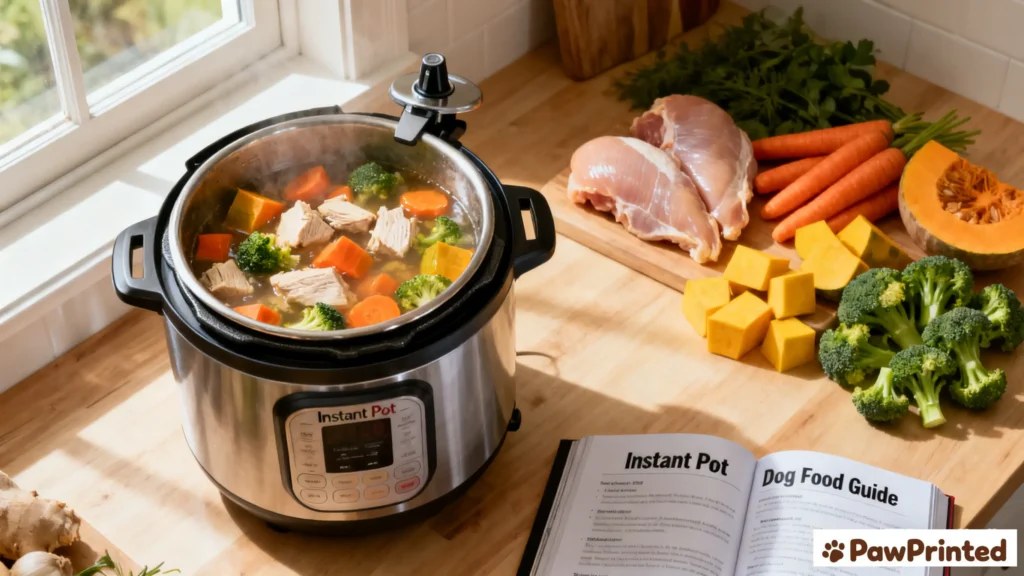
Pressure cookers and Instant Pot style appliances have changed how many families cook dinner, and it is natural to wonder if they can also make healthier homemade dog food. Fast cooking, sealed lids and intense steam all sound like they should lock in nutrition, save time and keep cleanup simple. For busy owners, that promise is very tempting.
The reality is more balanced. Instant Pot dog food can be a smart, efficient way to prepare cooked meals for your dog, but only if you understand what pressure cooking actually does to meat, starch and vegetables and how to keep recipes nutritionally complete. This guide looks at whether pressure cooking really preserves nutrients, when it helps, when it does not and how to use it safely.
If you are still deciding whether homemade food itself makes sense, it can help to start with the broader Homemade Dog Food Guide – What Owners Should Know First and then come back here to see where Instant Pot meals fit into your overall feeding plan.
What Instant Pot Dog Food Actually Is
An Instant Pot is a type of electric pressure cooker. It uses a sealed lid and controlled pressure to raise the boiling point of water so food cooks at a higher temperature than it would in an open pot. That is why tough cuts of meat and dense grains become tender in a fraction of the usual time. For dog food, that usually means lean meat, starches and vegetables cooked together under pressure until everything is soft and fully done.
Compared with a slow cooker, the Instant Pot trades time for intensity. You get similar tenderness and moisture, but in minutes instead of hours. That speed does not automatically mean more nutrition, but it does change which nutrients are most at risk and how you design recipes to protect them. The sealed environment also affects flavor and texture in ways many dogs enjoy.
How Pressure Cooking Works
Pressure cooking traps steam inside the pot so internal pressure rises. As pressure increases, the boiling point of water goes up, allowing food to cook at higher temperatures while still surrounded by moisture. This speeds up the breakdown of tough fibers in meat and plant cells.
What Happens To Protein
Protein still denatures and firms with heat, but the moist, pressurized environment helps keep meat tender instead of dried out. Overcooking can still happen, yet it often shows up as stringy texture rather than burnt edges, which many dogs tolerate better.
What Happens To Vitamins
Some water soluble vitamins will still be sensitive to high heat, but the sealed pot keeps most cooking liquid in the dish instead of evaporating. That means fewer nutrients are lost down the drain, though heat sensitive compounds can still degrade with time and temperature.
Texture And Flavor Outcomes
Instant Pot meals often have a rich, stew like texture with concentrated flavor. Grains and vegetables become very soft, which can be ideal for senior dogs or picky eaters that prefer moist, cohesive food instead of separate ingredients.
Key Benefits Of Instant Pot Dog Food
When it is used thoughtfully, an Instant Pot can remove some of the friction that makes homemade feeding hard to maintain. Fast cooking times and consistent results help owners stay on track, and the appliance is forgiving enough that you do not need advanced cooking skills to get decent texture and doneness.
The biggest advantages relate to speed and reliability rather than any magical nutritional effect. Pressure cooking gives you more flexibility to prepare fresh batches even on busy days, which can be a realistic way to keep cooked homemade meals in your dog’s routine.
Faster Than Slow Cooking
Dishes that might take six to eight hours in a slow cooker can often be done in less than an hour under pressure. That makes it easier to cook midweek batches without dedicating an entire day to dog food.
Reliable Tenderness
Tougher cuts of meat, hearty grains and fibrous vegetables all soften more quickly and evenly in an Instant Pot. Thorough tenderness can improve digestibility for many dogs and reduce the chance of undercooked components.
Batch Cooking Friendly
Because cooking time is short, you can prepare several batches back to back and portion them for freezing. This pairs well with weekend meal prep or rotating proteins without running your oven for hours.
Strong Aromas For Picky Eaters
The sealed environment keeps aromas and juices inside the pot, often making meals more fragrant when you open the lid. That can encourage interest in picky or mildly reluctant eaters when recipes are otherwise well designed.
If you are looking for tools that make feeding easier, browse our Best Dog Products Guide for curated bowls, storage, prep tools, and grooming picks that work well with homemade food.
Risks And Limitations Of Instant Pot Dog Food
It is easy to assume that if pressure cooking is fast and sealed, it must automatically preserve more nutrients. In practice, the picture is mixed. Some nutrients may be better retained because the cooking liquid is not discarded, while others are still broken down by heat. Instant Pot meals can also hide problems like excess fat, too much starch or missing supplements beneath a smooth, appealing texture.
Over relying on starchy ingredients to bulk up recipes is a common issue. Grains and potatoes become incredibly soft and can dominate a recipe if you do not carefully manage proportions. The high energy density of these ingredients can lead to weight gain if you do not adjust portions based on your dog’s body condition.
As with any homemade diet, most Instant Pot recipes circulating online are not nutritionally complete on their own. They may look wholesome, but they often lack long term levels of key vitamins, minerals and essential fatty acids. Without a supplement plan and an understanding of nutrient balance, it is possible to feed pressure cooked food that tastes great yet leaves quiet deficiencies over time.
For a broader safety lens beyond pressure cooking itself, it can help to read the Is Homemade Dog Food Safe? Guide and walk through the Homemade Dog Food Safety Framework as a checklist as you design Instant Pot recipes.
Safety First Before Switching To Instant Pot Dog Food
Pressure cooking can make homemade meals easier, but it does not remove the need for balanced recipes and safe feeding practices. Use these resources to stress test your plan before it becomes your dog’s main diet.
What Veterinarians Think About Instant Pot Dog Food
Many veterinarians place Instant Pot dog food in the same general bucket as other cooked homemade diets. They appreciate that meat is thoroughly cooked, bacterial risks are reduced compared with raw feeding and textures can be tailored for individual dogs. At the same time, they worry about unbalanced recipes, excess fat and owners assuming that home cooking automatically means superior nutrition.
Vets often recommend that owners view pressure cooking as a technique, not as the defining feature of the diet. The questions they care about most are still about protein quality, calorie density, mineral balance and whether the dog’s medical conditions are being accommodated.
Where Vets See Advantages
Pressure cooked food is thoroughly heated and usually very soft, which can help senior dogs, dental cases and many sensitive stomach dogs tolerate meals better than dense kibble or rich table scraps.
Where Vets Stay Cautious
Without careful planning, even Instant Pot recipes can be too fatty, too starchy or incomplete in micronutrients. Vets often see weight gain or lab changes after months of enthusiastic but unbalanced home cooking.
When To Involve Your Vet
If your dog has kidney, liver, heart or pancreatic disease, or if you plan to rely on pressure cooked meals as the primary diet, it is wise to involve your vet or a nutrition focused professional early. They can help adapt recipes or decide when commercial therapeutic food is safer.
Where To Learn Nutrition Basics
To understand how Instant Pot meals fit into a balanced plan, you can start with the Dog Food Macros Guide and the Dog Food Supplements Guide for a clear overview of the macro and micro pieces that need to be in place.
Safe Cooking Rules For Instant Pot Dog Food
Instant Pot recipes feel simple, but the details still matter. Following a few consistent rules helps you avoid undercooked ingredients, hotspots, excessive fat and food safety issues. The goal is to get repeatable, gentle meals that are easy on your dog and practical for you.
Cut meat and vegetables into similar sized pieces so they cook evenly. Use enough liquid to bring the pot to pressure and surround ingredients, but not so much that the final dish is watery. Always follow your appliance’s minimum liquid requirements and safety instructions, especially around maximum fill lines.
Choose lean cuts of meat and trim visible fat where possible. If a noticeable layer of fat collects on top after cooking, let the batch cool slightly, skim most of it away and only then portion or mix. Use natural release or quick release as recommended by your recipe and appliance manual, and do not open the pot until pressure has fully dropped.
Once cooking is complete, transfer the food into shallow containers to cool more quickly. Move portions into the refrigerator within a couple of hours, and freeze batches you will not use within a few days. Label containers with the recipe and date so you can rotate safely. These same best practices apply whether you are cooking for humans or for your dog.
If you want one place to explore everything about homemade dog food, start with The Complete Homemade Dog Food Knowledge Hub for a structured overview of guides, recipes, and health topics.
A Balanced Instant Pot Dog Food Framework
The Instant Pot is the tool, not the diet. A truly balanced pressure cooked meal looks very similar on paper to any other well designed cooked homemade recipe. The difference lies in how quickly it reaches a tender, safe state, not in what nutrients your dog needs.
A simple way to think about formulation is to start with a protein target, layer in appropriate carbohydrates and vegetables and then support the whole recipe with fats and supplements. The exact percentages will depend on your dog’s age, body condition and activity level, but the building blocks stay the same.
Lean Protein As The Core
In many Instant Pot recipes, 50 to 70 percent of the batch by weight comes from lean meat such as chicken breast, turkey, beef round or similar cuts. Protein supports muscle maintenance and healthy body composition.
Choosing The Right Carbohydrates
Pressure cooking works well for grains like rice, barley and oats. Using around 10 to 25 percent of the batch as well cooked carbohydrates can support energy and stool quality when paired with adequate protein and fat control.
Vegetables For Fiber And Variety
Dog friendly vegetables such as carrots, pumpkin, green beans and leafy greens can make up 10 to 20 percent of the recipe. They provide fiber, phytonutrients and visual variety when finely chopped or pureed.
Fats For Skin, Coat And Palatability
A measured amount of healthy fat, from trimmed meat plus added oils like fish oil, can support skin and coat while keeping calories predictable. It is better to add and track known amounts than to rely on random rendered fat in the pot.
Mineral And Calcium Balance
Home cooked diets rarely meet mineral needs without deliberate planning. Calcium, phosphorus and trace minerals matter over months and years, not just days. For a deeper dive into this piece, see the Calcium And Bone Balance In Homemade Dog Food Guide .
Targeted Supplements
Specific supplements, such as vitamin D, vitamin E, omega 3 fatty acids and iodine, often need to be added to long term Instant Pot recipes. A dog safe, vet aligned supplement plan turns a good pressure cooked meal into a complete diet.
When Instant Pot Dog Food May Not Be The Best Choice
Instant Pot dog food is not automatically right for every dog. Some medical conditions demand extremely precise control of protein, phosphorus, sodium or fat that is difficult to guarantee in a mixed pot recipe. Dogs with advanced kidney disease, certain liver conditions or a history of pancreatitis often do better on carefully formulated veterinary diets or tightly designed homemade plans created with professional help.
Very high energy working dogs may also need more protein density and different carbohydrate patterns than many everyday Instant Pot recipes provide. It is possible to design sport friendly pressure cooked meals, but they require more careful math and monitoring than casual batch cooking.
You might also find that the way Instant Pot meals fit into your lifestyle is the real deciding factor. If you rarely feel ready to prep ingredients, or if your kitchen time is already stretched, it may be easier to rely on commercial options and use home cooked food more selectively.
If full time pressure cooked feeding is not a match, you still have flexible options. You can combine smaller Instant Pot batches with Best Freeze-Dried Dog Food for busy days, explore Best Fresh Delivery Dog Food for gently cooked delivered meals or keep a plan from Best Backup Food For Homemade Diets so you are not forced into an all or nothing approach.
Final Thoughts – Does Pressure Cooking Really Preserve Nutrition?
Pressure cooking is efficient, convenient and capable of producing meals that many dogs enjoy. It can help you serve freshly cooked food more often and make homemade feeding feel less overwhelming. In that sense, Instant Pot dog food can definitely preserve something important, which is your ability to keep showing up for your dog’s bowl in real life.
Nutritionally, the Instant Pot is still just one cooking method among many. It does not erase the need for balanced recipes, sensible portions, appropriate ingredients and long term monitoring. Some nutrients will be preserved well, some will still be vulnerable to heat and all of them depend more on your ingredient and supplement choices than on the logo on the appliance.
If you do not want to cook daily, check our dry food picks – those were Ethan’s daily backups.
If you are stuck, start with gentle wet food, then move to steady dry picks that fit your dog’s needs and your schedule. You can treat Instant Pot meals as one useful tool in a flexible feeding strategy rather than a single perfect solution you must commit to forever.
Explore More Practical Ways To Upgrade Your Dog’s Food
Whether you keep using commercial food, add Instant Pot batches or move toward more homemade meals, you do not have to guess alone. These guides can help you take the next step with more confidence and less stress.
Frequently Asked Questions About Instant Pot Dog Food
Does pressure cooking preserve nutrients in dog food?
Pressure cooking can preserve some nutrients better than open pot boiling because the cooking liquid stays in the dish, but it does not perfectly protect every vitamin. Water soluble nutrients, such as many B vitamins, can still break down under high heat even if they are not poured down the sink. At the same time, the sealed environment can help retain more minerals and flavor compounds compared with methods where liquid and steam are lost. The real key is to treat pressure cooking as one factor in a larger nutrition plan. If your recipe starts with appropriate ingredients, uses sensible cooking times and is supported by a well chosen supplement routine, Instant Pot meals can absolutely be part of a nutritionally sound diet for many dogs.
Is Instant Pot dog food safe?
Instant Pot dog food can be very safe when you follow both the appliance instructions and basic food hygiene rules. The high temperatures achieved under pressure help ensure that meat and other ingredients reach a safe internal temperature, which reduces bacterial risk compared with undercooked or raw food. However, safety is not only about germs. You still need to avoid toxic ingredients, control fat levels, cool and store leftovers properly and watch for any signs that a new recipe does not agree with your dog. Using clear recipes, measuring ingredients, and introducing changes gradually gives you a safer path than improvising each batch. If your dog has a medical condition, reviewing your plan with a veterinarian adds another important layer of safety.
What ingredients work best in an Instant Pot for dog food?
Lean meats, dog friendly vegetables and moderate amounts of simple grains tend to work best in Instant Pot dog food recipes. Cuts like chicken breast, turkey, beef round or similar options cook quickly and evenly under pressure without releasing excessive fat. Carrots, pumpkin, green beans and leafy greens soften nicely and blend into a consistent texture that many dogs enjoy. Grains such as rice, oats and barley become tender and digestible when cooked with enough liquid and time. The main ingredients to avoid are fatty, heavily marbled meats, very starchy additions that dominate the bowl, and any foods that are known to be unsafe for dogs. Thinking in terms of a balanced recipe first, then adapting it to the Instant Pot, leads to better results than simply throwing random leftovers into the cooker.
How long should dog food cook in an Instant Pot?
Cooking times for Instant Pot dog food depend on the specific ingredients and the appliance model, but many mixed meat and grain recipes cook in roughly 10 to 30 minutes under pressure. Tougher cuts of meat or dense grains may need the longer end of that range, while finely chopped ingredients reach tenderness more quickly. It is important to account for the time it takes for the pot to come up to pressure and to release pressure afterward, since total elapsed time will be longer than the displayed cook time. Following tested recipes and using internal checks, such as verifying that meat is fully opaque and grains are soft all the way through, helps you fine tune timing. Once you find settings that consistently work for your favorite formulas, you can reuse them for more predictable results.
Can you freeze Instant Pot dog food?
Yes, most Instant Pot dog food is well suited to freezing and is often designed with batch cooking in mind. After pressure cooking, you should let the food cool in shallow containers so it reaches refrigerator temperature more quickly and spends less time at room temperature. From there, you can portion it into freezer safe containers or bags, label them with the recipe and date and store them for several weeks. Many owners aim to use frozen portions within four to six weeks to maintain quality, though the exact window can vary. When you are ready to feed, thaw portions in the refrigerator and stir thoroughly before serving to redistribute any separated liquid or fat. Freezing does not correct an unbalanced recipe, but it is an excellent tool for making a well designed Instant Pot plan realistic for busy households.