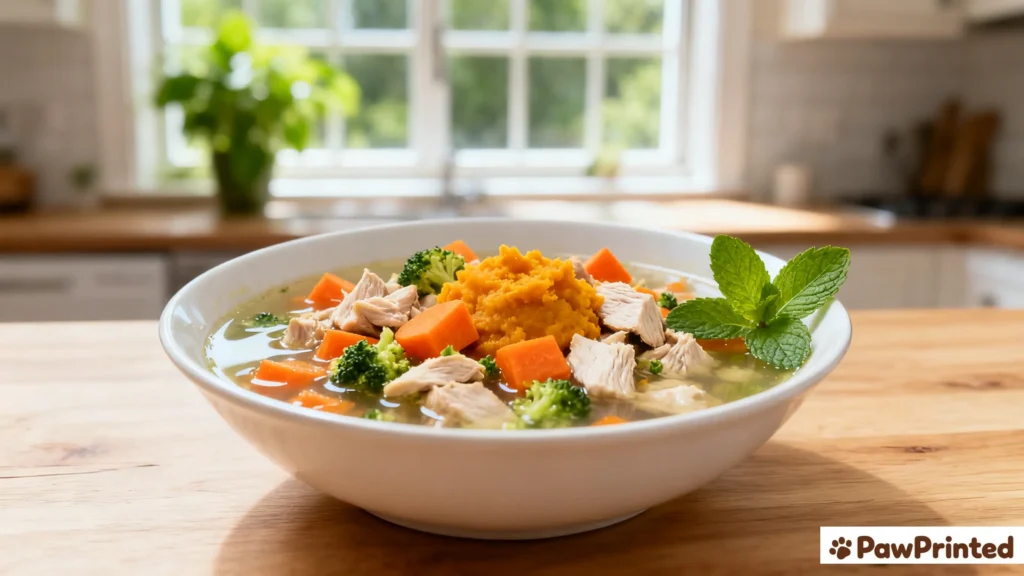
Soft, spoonable meals look and feel “nicer” than dry kibble, especially when your dog is staring at you from the kitchen floor. But from a nutrition and safety point of view, homemade wet dog food still has to follow clear rules. This guide walks you through when wet food is actually better, where the risks hide, and how to fit soft meals into a balanced feeding plan without guessing.
If you are still deciding whether homemade feeding is right for your household overall, you might want to pair this article with the Homemade Dog Food Guide – What Owners Should Know First and Homemade vs Store-Bought Dog Food – Which Is Healthier? so you see the full picture before changing everything at once.
Introduction
When people say “wet dog food” they usually picture cans or pouches. In a homemade kitchen, wet food simply means meals with a high moisture content and a soft, scoopable texture. That might look like a thick stew, a mash of finely chopped ingredients, or a moist mix over a small amount of dry food.
Wet food is often most helpful for dogs who struggle with dry kibble: picky eaters, older dogs with worn teeth, pups with sensitive stomachs, dogs recovering from surgery, or young puppies who are just learning to eat solid food. For many families, soft food is also emotionally easier to serve because it feels closer to “real food”.
This guide does not ask you to start cooking immediately. Instead, it helps you understand where homemade wet food shines, where it can go wrong, and how to decide whether it should be your dog’s main diet, a partial upgrade, or an occasional comfort meal on top of a trusted commercial option.
Benefits Of Homemade Wet Dog Food
When it is built on a balanced recipe, homemade wet food can offer some very real, practical benefits over dry-only feeding. The key is that these benefits come from the way you use moisture and texture, not from throwing away everything you already know about complete nutrition.
Easier To Chew And Swallow
Soft meals put less mechanical stress on teeth and jaw. That makes a big difference for senior dogs, small breeds with crowded teeth, or any dog with dental work in their past. Instead of crunching dry pieces, they can lick and gently chew a moist texture that still delivers meaningful protein and calories in each bite.
Often Gentler On Sensitive Stomachs
Thoroughly cooked, moist ingredients can be easier for some dogs to break down and move through the gut. When you finely chop or mash lean meat, soft starches, and vegetables, you reduce the work the stomach has to do. For dogs with recurring tummy trouble, this can complement a more targeted plan built around the Sensitive Stomach Dog Food Guide rather than replacing it.
Helps With Appetite And Picky Eating
Warm, fragrant wet food tends to smell stronger than dry kibble. That is exactly what many picky or stressed dogs need to start eating again. A soft base lets you fold in a small amount of their current commercial food or a topper they already love, which can work alongside your plan from the Homemade Dog Food for Picky Dogs guide.
Easier To Hide Supplements And Medicine
Soft, spoonable meals make it simple to mix in fish oil, joint supplements, probiotics, or even crushed tablets without your dog carefully spitting them out. That is especially helpful if you are following a structured approach like the Dog Food Supplements Guide and need your dog to reliably finish their full portion every time.
For many families, the biggest benefit is emotional: it feels like you are doing something “extra” for your dog. The right way to use that feeling is to pair it with good information, not let it push you into rushed, unbalanced recipes that only look comforting in the bowl.
Risks, Limitations And Common Misconceptions
Wet, homemade meals can be just as unbalanced as any other type of dog food if you guess your way through them. In fact, the soft texture sometimes hides problems because everything looks “blended” and delicious in the bowl, even when important nutrients are missing.
“It Is Soft So It Must Be Gentle”
Texture and digestibility are related but not identical. A very fatty, salty stew is still heavy on the stomach even if it is easy to lick up. Dogs with chronic diarrhea or nausea need recipes that follow clear digestibility rules like those in the Dog Food for Diarrhea Guide instead of relying on softness alone.
Higher Spoilage Risk
High moisture means bacteria and yeast get more comfortable more quickly. Wet food left on the counter or kept too long in the fridge can spoil in ways you cannot see. That is why homemade wet food should always be paired with the habits from the Homemade Dog Food Storage Guide rather than just “smelling it to check”.
Hidden Excess Calories
It is easy to add “just a bit more” broth, meat, or oil to make the texture perfect. Over time that can quietly push your dog into weight gain. If your dog is already on the heavier side, combining this guide with the Weight Loss Dog Food Guide helps you keep portions honest while still serving a soft, enjoyable meal.
Assuming Meat-Only Purees Are Complete
A bowl of pureed meat may look rich and satisfying, but it usually lacks calcium, certain vitamins, and enough fiber. That is one of the most common mistakes covered in the Homemade Dog Food Mistakes Guide and is a big reason why some homemade plans fail in the long term.
If you are worried about safety in general, it is worth reading the Homemade Dog Food Safety Framework and the Is Homemade Dog Food Safe Guide alongside this article, especially if your dog has medical conditions or takes long term medication.
If you are looking for tools that make feeding easier, browse our Best Dog Products Guide for curated bowls, storage, prep tools, and grooming picks that work well with homemade food.
What Makes A Balanced Wet Dog Food
Wet food is not a separate nutrition universe. A balanced soft meal follows the same foundations as any other complete dog diet, just with higher moisture. That means you still need to pay attention to macros, calcium, fats, and micronutrients instead of letting texture do all the work.
Macros Still Matter
Protein, fat, and carbohydrate ratios do not disappear just because everything is soft. A realistic starting point comes from the Dog Food Macros Guide where you can see how different activity levels and life stages change the targets you should aim for.
Calcium And Bone Support
Most homemade wet meals rely on boneless meats. That means they urgently need a safe calcium source such as a vet approved supplement or finely ground eggshell to keep bones and teeth supported. The details are laid out in the Calcium And Bone Balance in Homemade Dog Food Guide which pairs perfectly with any wet recipe work you plan to do.
Healthy Fats And Omega 3
Soft food makes it very easy to mix in salmon oil or other omega rich fats for skin, coat, and joint benefits. At the same time, it is also easy to overdo fat and trigger diarrhea. Using the principles from the Omega Rich Dog Food Guide helps you decide how much to add without tipping digestion over the edge.
Micronutrients And Supplements
Vitamins, minerals, and trace nutrients are harder to “see” in the bowl but still matter. Some owners rely on a carefully chosen all in one supplement, others use specific add ons. Either way, it is smart to base decisions on the Dog Food Supplements Guide and the Micronutrients in Dog Diets article rather than social media tips.
How To Make Homemade Wet Dog Food
The easiest way to think about homemade wet food is to start from a balanced recipe and then decide how soft you want the final texture to be. You are not inventing a brand new formula, you are adjusting moisture, chopping size, and cooking method.
A simple workflow is to cook lean protein, safe carbohydrates, and vegetables together, then adjust the texture with broth or water. You can keep things chunky, mash everything with a fork, or briefly pulse in a food processor. For owners who prefer low effort, it can be helpful to compare this with the approach in the Homemade Dry Dog Food Guide so you understand what changes when you move toward wet meals.
Kitchen tools like slow cookers, Instant Pots, and sturdy nonstick pans can make the whole process calmer on busy days. If you want a practical overview of gear that actually fits homemade cooking, you can look at the Best Dog Food Making Tools and the method specific guides for Slow Cooker Dog Food and Instant Pot Dog Food before you commit to one style.
Storage, Freezing And Reheating Wet Food Safely
Because wet food spoils more quickly than dry, storage and reheating are not small details. They are part of the safety plan. Getting this right protects both your dog’s gut and your time investment in cooking.
Fridge And Freezer Basics
Most homemade wet food can stay in the fridge for a few days and in the freezer for several weeks if it is cooled quickly and stored in clean, airtight containers. The Storage And Meal Prep Guide walks through time limits and practical container choices in more detail.
Portioning For Easy Use
Dividing wet food into individual portions before freezing means you only thaw what you need. This reduces waste and keeps bacteria growth lower. If you are still learning how much your dog should eat at each meal, the Portion And Serving Size Guide for Homemade Dog Food is a helpful companion.
Reheating Without Overcooking
Most dogs are happy to eat wet food that has simply been brought back to room temperature. If you do warm meals, use gentle heat and stir well to avoid hot spots. Avoid reheating in the microwave for too long, which can dry out edges and damage some nutrients.
Knowing When To Discard
If food smells sour, has visible mold, or has been left at room temperature for hours, it is safer to throw it away than to “test” it on your dog. Trust your safety rules from the storage guide more than your guilt about wasting a few portions.
If you want one place to explore everything about homemade dog food, start with The Complete Homemade Dog Food Knowledge Hub for a structured overview of guides, recipes, and health topics.
Which Dogs Benefit Most From Wet Food
Almost any dog can enjoy wet meals, but some groups often benefit more clearly than others. Thinking in terms of “who is this for” helps you decide how big a role wet food should play in your long term plan.
Puppies And Growing Dogs
Young dogs learning to eat solid food often find soft textures less intimidating and easier to handle. Just keep in mind that they also need very precise calcium and calorie control. Use this guide together with the Puppy Dog Food Guide rather than improvising with whatever is in your fridge.
Senior Dogs And Dogs With Dental Issues
Older dogs and those missing teeth may be physically unable to crunch kibble comfortably. Wet meals can keep them eating well without constant struggle. For planning the bigger picture around aging, the Senior Dog Food Guide gives you a wider framework to work inside.
Sensitive Stomachs And Recovery Cases
Dogs with chronic digestive issues, or those coming home from surgery or illness, may do better on soft, low fat, easy to digest meals for a period of time. That does not replace veterinary advice, but it can align well with the strategies in the Sensitive Stomach Dog Food Guide and the Dog Food for Diarrhea Guide when used correctly.
Picky Eaters And Dogs In Transition
Soft texture and stronger aroma make wet food a powerful tool when transitioning off an old diet. You can gradually mix a balanced homemade wet recipe into your current food using the steps in the Transitioning to Homemade Dog Food Guide and the dedicated Picky Eaters Homemade Dog Food Guide so the change feels smoother for your dog.
An Example Wet Dog Meal Blueprint
This is not a full recipe, but a blueprint that shows how the pieces of a balanced wet meal fit together. Exact amounts still need to follow a vetted recipe or a custom plan from your vet or nutritionist.
Lean Protein Base
Think skinless chicken, turkey, lean beef, lamb, or fish, cooked thoroughly and cut or shredded into small pieces. Protein stays central in wet meals, just as it does in the Beef Dog Food Guide and other ingredient focused articles.
Soft Carbohydrates And Fiber
Ingredients like rice, oats, sweet potatoes, or pasta give energy and help create a soft, cohesive texture. They also make it easier to hit realistic calorie targets without resorting to heavy fats.
Cooked Vegetables And Healthy Fats
Carrots, pumpkin, peas, or green beans add fiber and micronutrients once cooked and chopped well. A measured amount of healthy fat, such as fish oil or a small quantity of plant oil, rounds out the texture and supports skin and coat when used at sensible levels.
Calcium, Supplements And Moisture
A reliable calcium source, plus any vet recommended supplements, should be mixed in thoroughly. Finally, add warm water or low sodium broth to reach the soft, spoonable texture your dog prefers, stirring until everything is evenly distributed.
If you like working from frameworks, it can be helpful to pair this blueprint with the bigger picture in the PawPrinted Balanced Nutrition Model so you always know which part of the bowl is providing which role for your dog.
How Wet Food Fits Into Long Term Feeding
Once you understand how to make wet food safely, the next question is how heavily you want to rely on it. For some families, soft homemade meals become the main diet. For others, they work better as a topping, a rotation option, or a comfort meal a few times per week.
Long term use comes down to three checks. First, is the recipe balanced or built from a reliable base plan. Second, does your dog maintain a healthy body condition over several months. Third, can you realistically keep up with cooking, storage, and costs. Articles like the Homemade Dog Food Cost Guide and How To Know If Homemade Dog Food Is Working help you evaluate those pieces calmly.
It is also perfectly acceptable to mix homemade wet food with high quality commercial diets instead of choosing one side forever. The permission based article It Is Okay To Mix Homemade With Store-Bought can be a reassuring read if you tend to feel like anything less than “all in” is a failure.
Wrapping It Up
Homemade wet dog food can absolutely be “better” than dry only feeding, but not just because it looks softer in the bowl. The real advantage comes from pairing moisture and texture with sound nutrition, honest portion control, and safe storage habits over time.
If you have been feeling guilty about your current feeding routine, this does not need to be an overnight transformation. You can start with one balanced wet meal per week, get comfortable with portioning and freezing, then slowly expand from there. Progress matters more than perfection, and your dog will feel the difference as you build a plan that is both loving and sustainable.
Explore More Homemade Feeding Guides
Ready to go one layer deeper. These next reads help you turn soft meals from “nice idea” into a stable, well structured part of your dog’s long term feeding plan.
Homemade Dog Food Guide – Getting Started
See how wet meals fit inside the bigger homemade feeding picture, from basic rules to real life scheduling and family routines.
Dog Food Supplements Guide
Learn which add ons actually matter in wet food, how to choose them, and how to mix them in so your dog does not notice.
Best Dog Food Making Tools
Compare practical, everyday tools that make cooking, portioning, and storing homemade wet food much less stressful on busy days.
FAQ About Homemade Wet Dog Food
Is homemade wet dog food always better than dry food?
Not always. Homemade wet food can be better if the recipe is balanced, portions are right, and storage is safe, but soft texture alone does not guarantee an upgrade. Many complete commercial diets have been carefully formulated and tested, while rushed homemade stews may miss key nutrients like calcium, certain vitamins, or essential fatty acids. The real comparison is between a well designed wet recipe and whatever you are currently feeding, not simply “soft versus crunchy”. In some homes, a mixed approach that combines high quality commercial food with a few structured wet homemade meals each week is the most realistic and sustainable plan. What matters most is long term consistency and how your dog looks, feels, and moves on the diet, not the texture by itself.
Can I feed homemade wet dog food as my dog’s only diet?
You can, but only if the recipe is complete and balanced for your dog’s life stage and health status. Serving random meat and vegetables in a soft mash without a calcium source, appropriate fats, and micronutrient support will not support safe long term health. Dogs rely on precise intake of minerals, vitamins, protein, and energy over months and years. Before making wet food the only diet, it is wise to work from a vetted recipe, a nutritionist designed plan, or a formula that has been carefully built around established guidelines. Regular weight checks, body condition scoring, and periodic veterinary reviews help confirm whether your “wet only” plan is truly working rather than just looking appealing in the bowl.
Is homemade wet food easier to digest for all dogs?
Softer food can reduce mechanical effort for chewing and swallowing, but it does not automatically make every recipe easier to digest. Dogs with sensitive stomachs may still react poorly to high fat content, rich meats, or sudden changes in ingredients, even when everything is pureed. Digestibility depends on the combination of ingredients, fat level, fiber type, and how quickly you transition from the old diet. Some dogs feel dramatically better on thoughtfully prepared wet meals, while others do best on a mix of dry and wet. Watching stool quality, energy levels, appetite, and comfort over several weeks will tell you more than any single meal or one off reaction.
Can puppies eat homemade wet dog food safely?
Yes, puppies can eat homemade wet food, but they are the group where nutritional precision matters most. Growing dogs need tightly controlled calcium to phosphorus ratios, adequate high quality protein, and enough energy to support development without causing excessive growth. Soft texture can make meals easier to manage during teething and early weaning, yet it also increases the risk that well meaning owners will serve improvised stews without proper balance. If you want to use homemade wet food for a puppy, it is best to work from recipes specifically designed for growth or to follow a vet supervised plan and monitor growth curves and body condition closely over time.
Can I mix homemade wet dog food with commercial dry kibble?
Mixing homemade wet meals with commercial dry food is a valid option and often a very practical one. Combining the two lets you enjoy the emotional and sensory benefits of soft meals while still leaning on the convenience and tested balance of a complete kibble. The main consideration is that you should not dilute a commercial food so heavily that the overall diet becomes unbalanced. Aim for a predictable ratio, such as a small measured scoop of balanced wet food on top of each kibble meal, and adjust total calories so your dog’s weight stays stable. Introducing the combination slowly over several days reduces the risk of gastrointestinal upset and helps you spot how your dog responds before you commit to a new routine.
References – Authoritative Sources
World Small Animal Veterinary Association (WSAVA) – Global Nutrition Guidelines (2013). Practical recommendations for assessing and designing complete diets for dogs and cats, including moisture adjusted nutrient density.
AAFCO Dog Food Nutrient Profiles (latest edition). Regulatory profiles outlining minimum nutrient requirements for canine growth and adult maintenance that homemade wet diets should aim to align with.
Freeman et al. – World Small Animal Veterinary Association Nutrition Toolkit. Clinical overview of evaluating commercial and homemade diets, nutrient balance, and owner education in real world settings.
Case et al. – Canine and Feline Nutrition, 3rd Edition. Textbook covering digestibility, energy density, and texture considerations across dry, wet, and mixed feeding strategies.
PetMD and AKC Veterinary Articles on Homemade Dog Food and Food Safety. Vet reviewed summaries of common mistakes in home prepared diets, safe ingredient choices, and storage recommendations.