Ethan had one of those weeks where his skin looked a little angry again – extra scratching after walks, and a few dry spots that usually show up when something in his bowl does not agree with him. I did not want to play ingredient roulette, so I went back to the simple rotation that has been the most predictable for us at home: gentle proteins, steady carbs, and moisture-forward add-ins that keep meals soft and easy to digest.
This page is my “keep it calm” set – eight bowls I rotate depending on what is working that week. The goal is not perfection; it is a steady baseline that makes it easier to notice what helps, what flares, and what needs adjusting.
Ingredient Spotlight – Why These Ingredients Work
When I cook for skin sensitivity, I focus on two things first: how a meal feels in the belly, and how predictable the ingredients are from batch to batch. For us, that usually means choosing one main protein that Ethan handles well, pairing it with a steady carb for energy, and adding moisture-friendly vegetables that keep the texture soft.
The “skin-support” angle is not about chasing a miracle ingredient. It is about keeping the routine consistent enough that changes are easier to spot. A calmer gut often makes the whole week feel calmer – fewer surprises, fewer flare-ups, and more confidence that I can keep rotating without guessing.
The 8 Bowls I Rotate When Skin Allergies Flare
When Ethan’s skin starts acting up, I do not switch everything at once. I rotate meals slowly, watching how his coat, stools, and energy respond over a few days at a time. These eight bowls are the ones I come back to because they are predictable to cook, easy to portion, and gentle enough to repeat without adding stress to his system.
Each recipe focuses on a slightly different need. Some help calm digestion first. Others support the skin barrier through fat balance or ingredient simplicity. I do not use all of them at once. I choose based on what his body seems to need that week, and I keep the rest as quiet backup options.
This turkey and pumpkin bowl is one of my “reset meals” when Ethan’s tummy feels touchy and his skin looks a bit extra reactive. It’s soft, warm, and easy to portion, with a simple ingredient list that’s friendly for rotation weeks.
Quick Overview
- Prep Time: 10 minutes
- Cook Time: 3 hours (slow cooker, LOW)
- Total Time: 3 hours 10 minutes
- Yield: 6 portions (small-to-medium servings)
- Focus: gentle digestion, soft texture, simple rotation-friendly bowl
Main Ingredients I Use:
lean ground turkey, pumpkin puree, zucchini (optional), oats (optional), warm water or unsalted broth
Tools You’ll Want Ready:
skillet, slow cooker, spatula, measuring cup, storage containers, freezer labels
Step-by-Step
- Light brown the turkey. Warm a skillet over medium heat and gently break up the turkey. Stop as soon as it turns opaque with a few light brown edges so it stays tender later.
- Build the soft base. Add the turkey to your cooker with pumpkin and water or unsalted broth. If you use zucchini or a small scoop of oats for texture, stir them in now.
- Slow cook until spoon-soft. Cook on LOW until everything merges into a scoopable, soft bowl. Give it one gentle stir midway so pumpkin doesn’t settle at the bottom.
- Cool, portion, and store. Let it cool fully, skim any visible fat if needed, then portion into meal-sized servings. Refrigerate what you’ll use soon and freeze the rest flat for easy stacking.
Emma’s Notes
When I’m trying to keep things extra steady for skin flare weeks, I like the “low and slow” texture because it stays moist without needing extra oils. I usually cook this in a 7-quart slow cooker so the turkey stays tender and the pumpkin turns silky instead of drying out.
For rotation days, I portion and freeze in silicone freezer containers so each serving pops out clean and I’m not chiseling frozen food like an ice sculptor at 7 a.m.
If your dog’s itchiness seems to spike when the gut feels off, the “why” behind that pattern is explained clearly in Gentle Digestive Support for Skin Allergies, and it can help you rotate bowls with more confidence.
Things To Watch
- Choose lean turkey and avoid seasoned meat or turkey with added flavorings.
- Introduce slowly over 3-5 days if your dog is currently flaring or switching proteins.
- Cool completely before sealing containers to reduce condensation and spoilage risk.
- If your dog has pancreatitis history, keep portions smaller and skim visible fat after cooling.

This is one of my go-to bowls when I want skin support without making the ingredient list complicated. The texture stays soft and mashable, which makes it easy to portion and gentle for rotation weeks when Ethan’s skin feels reactive.
Quick Overview
- Prep Time: 12 minutes
- Cook Time: 22 minutes (stovetop simmer)
- Total Time: 34 minutes
- Yield: 5 portions (small-to-medium servings)
- Focus: skin support, omega-friendly protein, soft mash texture
Main Ingredients I Use:
salmon (boneless), sweet potato (peeled and diced), spinach (optional), water or unsalted broth
Tools You’ll Want Ready:
saucepan, fork or potato masher, measuring cup, portion scoop, storage containers
Step-by-Step
- Cook the sweet potato first. Simmer diced sweet potato in water or unsalted broth until it crushes easily with a fork. Keep the liquid level just high enough to prevent sticking.
- Add salmon gently. Slide in boneless salmon and keep the heat at a low simmer. Cook just until it flakes, then turn off the heat to avoid drying it out.
- Mash to a soft bowl texture. Flake the salmon and mash the sweet potato into a scoopable consistency. If you add spinach, stir it in at the end so it wilts without turning soggy.
- Cool and portion cleanly. Let everything cool fully, then portion into meal-sized servings. Refrigerate what you’ll use soon and freeze the rest in clearly labeled portions.
Emma’s Notes
When Ethan’s skin is acting up, I keep this bowl simple and consistent for a few days so I can actually tell what’s helping. For portioning, I like using a measured scoop like this portion-control food scoop because it keeps my serving sizes steady without me overthinking it every meal.
If he’s eating too fast, I’ll spread the bowl into a lick mat so the meal takes longer to finish. Slower pacing tends to look “calmer” for him, especially during itchy weeks when he already feels a little on edge.
If you want the deeper explanation behind fatty acids, skin barrier support, and why some proteins feel “easier” during flare periods, this section helps: Fatty Acids and Skin Barrier Repair.
Things To Watch
- Use boneless salmon and remove any skin or pin bones before cooking.
- Keep the simmer gentle; hard boiling can dry the fish and make the bowl less appealing.
- Introduce slowly if salmon is new to your dog’s rotation, especially during active flare periods.
- Cool completely before sealing containers to prevent moisture buildup and faster spoilage.

This is my “keep it quiet” bowl for allergy observation weeks – one main protein, one main veggie, and a soft, easy-to-portion texture. When Ethan’s skin feels reactive, simpler meals like this help me notice patterns without guessing what changed.
Quick Overview
- Prep Time: 10 minutes
- Cook Time: 20 minutes (gentle simmer)
- Total Time: 30 minutes
- Yield: 5 portions (small-to-medium servings)
- Focus: limited ingredient rotation, simple texture, allergy observation friendly
Main Ingredients I Use:
duck (boneless, trimmed), zucchini (chopped), water or unsalted broth
Tools You’ll Want Ready:
saucepan, spatula, fork for shredding, measuring cup, storage containers
Step-by-Step
- Trim and prep for a cleaner bowl. Trim visible fat from duck and chop zucchini into small pieces so everything cooks evenly and stays easy to mash or shred.
- Cook duck gently, then add zucchini. Simmer duck in water or unsalted broth at a low bubble until it’s fully cooked and easy to pull apart. Add zucchini midway so it softens without turning watery.
- Build a soft, scoopable texture. Shred the duck, lightly mash some zucchini, and stir together until the mixture holds on a spoon. Add a splash of cooking liquid only if it needs loosening.
- Cool completely and portion consistently. Cool to room temperature, portion into meal-sized servings, and label by date. Refrigerate what you’ll use soon and freeze the rest for rotation days.
Emma’s Notes
During allergy observation weeks, I keep portions boringly consistent on purpose. Using a measuring cup with clear markings helps me stay steady meal to meal, so if Ethan’s skin looks calmer, I’m not accidentally changing the “dose” without realizing it.
If he’s in a scratchy mood, I’ll serve this spread thin on a LickiMat to slow things down. That extra pacing sounds small, but it makes mealtime feel less frantic and easier on him when he’s already uncomfortable.
If you’re doing a true limited ingredient rotation and want the logic behind what to watch and how to keep variables clean, this section is the one I reference: Limited Ingredient Diets for Allergy Observation.
Things To Watch
- Duck can be richer than it looks – trim visible fat and keep the simmer gentle.
- Introduce slowly if duck is new in your rotation, especially during an active flare.
- Keep add-ons out (extra oils, random treats) if you’re trying to observe true patterns.
- Cool fully before sealing containers to reduce condensation and early spoilage.

This bowl is my “calm the system down” option when Ethan’s stomach feels touchy. Lamb keeps the protein simple, oats make the texture soft, and the whole thing stays easy to portion for steady, repeatable meals.
Quick Overview
- Prep Time: 10 minutes
- Cook Time: 25 minutes (stovetop simmer)
- Total Time: 35 minutes
- Yield: 6 portions
- Focus: soothing texture, gentle routine meals
Main Ingredients I Use:
lean ground lamb, rolled oats, water, optional pinch of salt-free broth
Tools You’ll Want Ready:
medium pot with lid, sturdy spoon, measuring cup
Step-by-Step
- Warm the lamb gently. I break the lamb into small pieces and cook just until it turns opaque, then I stop right there so it doesn’t dry out before simmering.
- Build the soft base. I add water and sprinkle in oats while stirring, so the oats hydrate evenly instead of clumping into one big paste.
- Simmer to a spoon-soft texture. I keep it at a low simmer for about 20 minutes, stirring occasionally, until everything looks cohesive and easy to scoop.
- Cool, then portion. I let it cool uncovered first, then portion once the steam is gone so storage stays clean and the texture holds.
Emma’s Notes
On sensitive-stomach weeks, I batch this in a 7-quart manual slow cooker so the texture stays consistently soft without me hovering over the stove.
For “no drama” portions, I keep my scoops consistent with a stainless steel measuring scoop so Ethan’s bowl size doesn’t creep up on busy days.
If your dog’s skin allergies also come with periodic gut flare-ups, the breakdown in Gentle Digestive Support for Skin Allergies can help you tighten your rotation with more confidence.
Things To Watch
- Choose lean lamb whenever possible; high-fat lamb can backfire for sensitive stomachs.
- Keep the simmer low; hard boiling can turn oats gluey and less appealing.
- Introduce oats slowly if your dog is new to them, especially during allergy tracking.
- Cool fully before sealing to avoid excess moisture and texture changes.

This is my “steady energy, steady routine” bowl when I want a simple meal that feels filling without being heavy. The texture stays spoon-soft, the flavors are familiar, and it works best for dogs who tolerate beef well while you keep an eye on itch patterns.
Quick Overview
- Prep Time: 10 minutes
- Cook Time: 20 minutes (gentle simmer)
- Total Time: 30 minutes
- Yield: 6 portions
- Focus: balanced energy, simple texture, easy portion control
Main Ingredients I Use:
lean ground beef, carrots, water, optional pinch of salt-free broth
Tools You’ll Want Ready:
medium pot with lid, wooden spoon, measuring cup, portion scoop
Step-by-Step
- Brown lightly, then stop. I warm the beef just until it turns opaque and breaks into small bits, then I stop cooking it hard so it doesn’t get dry before simmering.
- Soften the carrots first. I add the carrots with water (or a splash of broth) and simmer until they’re easy to mash with the spoon.
- Simmer into a cohesive bowl. I keep the heat low and stir occasionally for about 15–20 minutes until everything comes together into a soft, scoopable texture.
- Cool, skim if needed, then portion. Once it cools, I skim any visible fat and portion right away so the servings stay consistent day to day.
Emma’s Notes
If I’m using beef during a skin-allergy rotation, I keep the portions extra consistent so I can actually read Ethan’s skin signals. That’s why I portion with a portion control scoop instead of eyeballing it when I’m tired.
On weeks when his scratching is calmer, I’ll use this bowl as a “baseline meal” and rotate the next protein slowly. For quick, tidy prep, I keep the counter clean with a LickiMat nearby to park little add-ins while I’m measuring and mixing.
If your dog’s allergy season comes with weight swings (less activity, more snacking, more stress), the notes in Weight Stability and Chronic Skin Stress can help you tighten the rotation without guessing.
Things To Watch
- Only use lean beef; higher-fat beef can worsen stool quality and make skin tracking noisier.
- If beef is a suspected trigger, skip this bowl during elimination-style weeks.
- Keep the simmer gentle; hard boiling can dry the meat and make picky dogs walk away.
- Cool fully before sealing, and refrigerate promptly to keep the texture stable.

This is the bowl I use strictly as a diagnostic tool, not a comfort meal. The ingredient list stays intentionally short, the texture is clean and raw, and it helps me read skin reactions without extra variables getting in the way.
Quick Overview
- Prep Time: 10 minutes
- Cook Time: none (raw)
- Total Time: 10 minutes
- Yield: 4–5 portions
- Focus: allergy observation, novel protein, clean baseline
Main Ingredients I Use:
raw rabbit meat, finely chopped low-starch vegetables, filtered water
Tools You’ll Want Ready:
sharp knife, cutting board, digital scale, portion containers
Step-by-Step
- Prep everything cold. I keep the rabbit meat chilled while cutting so the texture stays clean and easy to portion.
- Chop vegetables very fine. Smaller cuts help avoid selective eating and keep each portion consistent.
- Weigh, don’t eyeball. I portion by weight so any skin change actually means something.
- Seal immediately. Portions go straight into the fridge or freezer to avoid oxidation and smell transfer.
Emma’s Notes
I only use this bowl when I need answers, not variety. When Ethan was dealing with persistent itching, this was the meal that finally gave me a calm baseline to observe from.
Because raw prep demands precision, I rely on a precise measuring cup instead of guessing, especially during elimination-style weeks.
If you’re considering raw feeding specifically for allergy diagnostics, the explanation in Raw Feeding as a Diagnostic Tool for Allergies helps set realistic expectations before you commit.
Things To Watch
- This is not a long-term casual meal; use it with intent and tracking.
- Skip all treats and extras during observation windows.
- Always source rabbit from reputable, food-grade suppliers.
- If stools loosen, pause and reassess before changing proteins.

This is my “keep it boring on purpose” bowl when I’m trying to calm down skin flare-ups and track patterns. Pork stays tender in the slow cooker, pumpkin keeps the texture soft, and the ingredient list stays tight so I’m not guessing what caused what.
Quick Overview
- Prep Time: 12 minutes
- Cook Time: 4–6 hours (slow cooker)
- Total Time: 4 hours 12 minutes
- Yield: 6–8 portions
- Focus: limited ingredient baseline, soft texture, steady skin routine
Main Ingredients I Use:
lean pork, plain pumpkin puree, water (or unsalted broth), optional gentle fiber add-in if your dog already tolerates it
Tools You’ll Want Ready:
slow cooker, mixing spoon, ladle, portion containers, paper towels for quick grease blotting
Step-by-Step
- Trim and keep it lean. I choose lean cuts and trim visible fat so the finished bowl stays gentle and doesn’t feel heavy for sensitive dogs.
- Start with a simple base. Pork goes in first, then pumpkin and water, and I stir just enough to coat everything without turning it into mush.
- Slow cook until it pulls easily. I let it run low and steady in a 7-quart manual slow cooker until the pork is soft enough to shred with a spoon and the pumpkin looks fully blended.
- Cool, de-fat, and portion. After cooling, I blot or skim any surface fat, then portion into daily servings so I’m not changing ratios each time I scoop.
Emma’s Notes
When Ethan’s skin was acting up, I learned the hard way that “more variety” was not the move. This bowl works best when I keep the week predictable, so I can actually tell whether the itching is calming down or just cycling.
For portion consistency, I rely on a stainless steel scoop because it lets me repeat the same serving size fast without compressing the food or making a mess.
If you’re using limited-ingredient meals to observe patterns, the guidance in Limited Ingredient Diets for Allergy Observation can help you decide what to simplify first and what to leave alone.
Things To Watch
- Keep the ingredient list stable for a full observation window before you change anything.
- Choose lean pork and avoid seasoning, oils, or add-on toppers during flare-ups.
- Cool completely before storing, and remove excess surface fat if your dog is sensitive.
- If stools loosen, reduce pumpkin slightly rather than swapping proteins immediately.

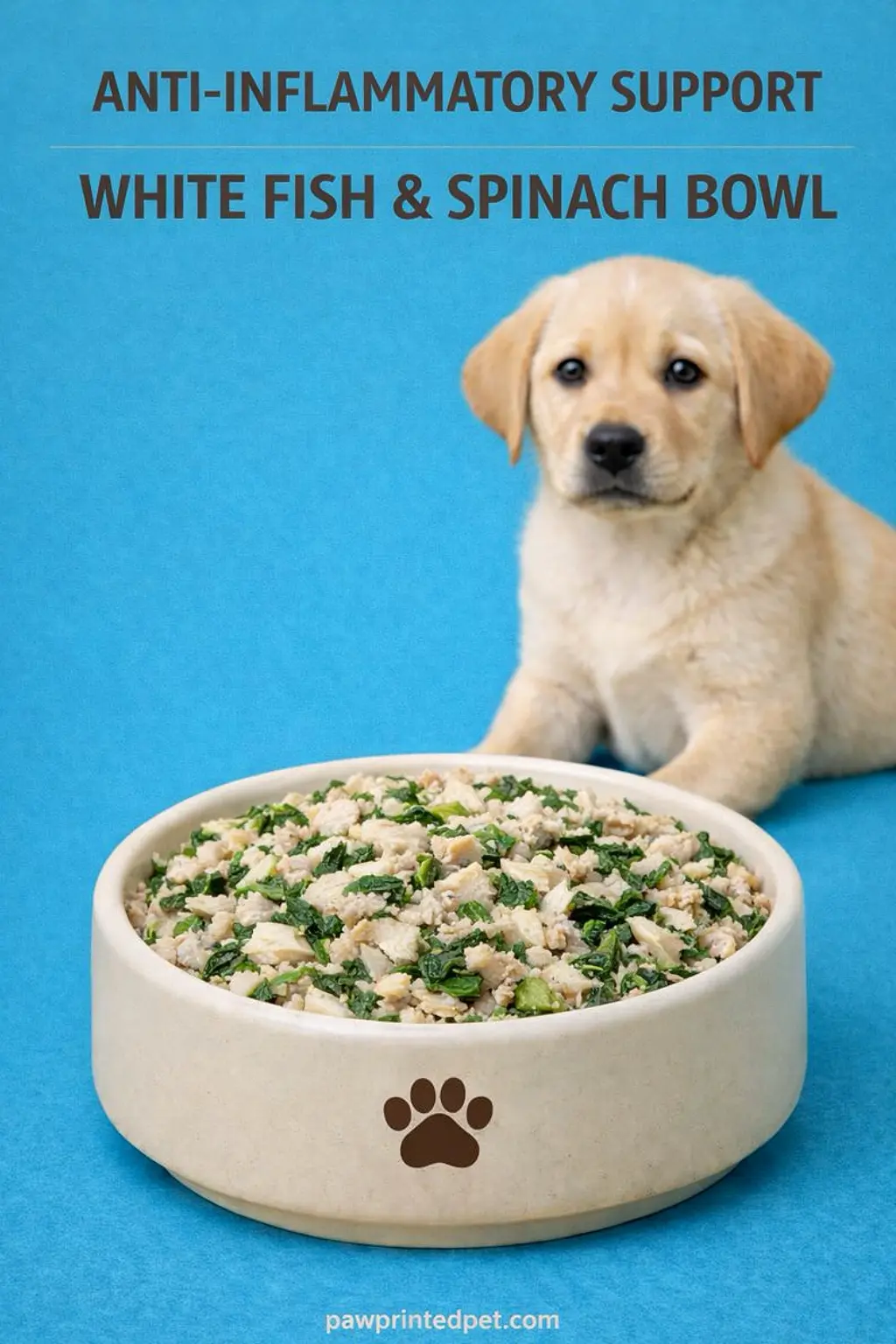
This is the bowl I rotate in when I want something very light but still supportive for skin recovery. White fish keeps protein load low, spinach adds gentle micronutrients, and the texture stays soft enough for dogs who feel off during flare-ups.
Quick Overview
- Prep Time: 10 minutes
- Cook Time: 20 minutes (stovetop)
- Total Time: 30 minutes
- Yield: 4–6 portions
- Focus: low inflammation load, light protein, soft texture
Main Ingredients I Use:
white fish fillets, fresh spinach, water or unsalted broth
Tools You’ll Want Ready:
wide stockpot, silicone spatula, slotted spoon, portion containers
Step-by-Step
- Prepare the fish gently. I cut the fish into large chunks so it cooks evenly without breaking apart too early.
- Simmer, don’t boil. The fish goes into a wide pot with water and cooks at a gentle simmer in a large cooking pot until it turns opaque and flakes easily.
- Add spinach at the end. Spinach only goes in for the last few minutes so it wilts without overpowering the bowl.
- Cool and portion carefully. I let everything cool fully, then lift portions with a stainless steel scoop to keep servings consistent.
Emma’s Notes
When Ethan’s skin looks irritated or his coat feels dull, this bowl usually feels like a reset. It’s not exciting, but that’s exactly why I trust it during sensitive weeks.
I don’t mix this with rich toppers. Keeping it simple helped me notice fewer scratch cycles and less redness around his paws after a few steady days.
If inflammation is part of your dog’s skin story, the explanation in Inflammation Control Through Protein Choice can help you decide when lighter proteins make sense.
Things To Watch
- Use plain white fish only, no seasoning or oil.
- Do not overcook or boil aggressively, which can toughen the texture.
- Introduce spinach gradually if your dog is not used to greens.
- Store chilled portions for up to three days, or freeze immediately.
Some links above are affiliate links. They never cost you extra, and they help us keep testing foods, tools, and daily routines with Ethan so these guides stay honest and practical.

Nutritional Data & Vet Insights
What I Track First
With skin flare-ups, I track the boring basics before I chase anything fancy: stool consistency, scratching frequency, ear gunk, and how quickly Ethan finishes the bowl. If two bowls are equally “healthy,” I keep the one that looks calmer on his skin and simpler in my kitchen.
Protein Consistency Matters
Skin-sensitive dogs often do better when protein changes are intentional and spaced out. That is why this rotation keeps each bowl predictable and avoids mixing multiple new proteins at once. It makes it easier to notice patterns without guessing what caused what.
Moisture and Texture
A softer, moisture-forward texture usually keeps meals easier to eat and easier to portion. When Ethan’s skin is irritated, I also notice he does better when meals are not dry or crumbly. I aim for a spoonable texture that holds together without being sticky.
Fiber Without Overdoing It
Fiber can help, but too much can backfire. I keep fiber sources simple and consistent and adjust slowly if stool changes. If I need more firmness, I add small increases over a few days rather than changing the whole bowl at once.
Fat Balance and Skin Comfort
Skin support often improves when fat sources are steady and not excessive. I try to avoid “fat surprises” where one batch is much richer than the last. Consistency helps more than extremes.
When to Ask Your Vet
If itching is intense, there are open sores, recurrent ear infections, or weight changes, I treat that as a cue to loop in a vet. Food is a daily tool, but it should not be the only tool when symptoms are escalating.
Vet Tips & Variations
These are the small adjustments I use to keep the rotation practical across different dogs and different weeks. I keep changes minimal, do them one at a time, and watch for a few days before deciding if the tweak stays.
Sensitive Stomach Weeks
Keep the bowl extra simple and soft. Reduce mix-ins, avoid sudden fiber jumps, and stay with the most predictable protein in your rotation. If you switch, switch once, not three things at once.
Senior Dogs
Make the texture softer and the portions smaller. If chewing is slower, chop ingredients finer and keep meals warm (not hot) so the aroma helps. Watch weight and adjust gently.
Weight Control
Tighten portioning first, then simplify extras. Keep bowls consistent and measure for a full week before changing ingredients. If a dog is hungry between meals, add moisture and volume rather than adding rich toppers.
Active Dogs
Increase energy slowly and stay consistent with the main protein. I prefer a small bump in steady carbs rather than adding random rich treats. If the stool loosens, roll back and re-balance.
Serving Ideas & Storage
I portion bowls the same way every time so I can compare how Ethan responds from week to week. If a new bowl is in “testing mode,” I keep the serving size conservative for the first few meals, then adjust once I see how his skin and digestion look.
For the fridge, I keep 2-3 days ready and rotate forward so nothing sits too long. For the freezer, I portion single-meal servings so I can thaw exactly what I need without breaking up a big block. I label the protein and the date and keep the texture soft by thawing overnight in the fridge.
When I batch-cook, I freeze portions with so the rotation stays clean and I am not guessing what is in each portion later.
FAQ
How long does it take to see changes in skin allergies after switching dog food?
Most dogs need a few weeks of consistency before you can judge skin changes with confidence. In the first week, I mainly watch digestion and energy, because those usually change faster than skin. Skin often improves more slowly since the coat and barrier take time to recover, and scratching can lag behind the trigger. If you change foods too often, it becomes almost impossible to know what helped. I treat it like a simple home experiment: keep one main protein steady, avoid “bonus” treats that introduce new ingredients, and take notes on itching, ears, and stool. If symptoms are severe, worsening, or include open sores, it is worth involving a vet earlier rather than waiting it out.
What are the most common food ingredients that trigger itching in dogs?
The most common triggers are usually proteins, not vegetables, and they vary by dog. Some dogs react to chicken, beef, dairy, or eggs, while others struggle more with certain additives or mixed-protein foods where everything is blended together. That is why I keep bowls simple when I am trying to understand a pattern. If you suspect food is part of the problem, focus on ingredient consistency and reduce “background noise” from treats, chews, and table scraps. Keep one main protein for long enough to observe, then change only one major variable if you need to test. If itching is paired with repeated ear infections or stomach upset, it is a strong hint that a structured elimination approach may be more useful than random switching.
Is a limited ingredient diet better for dog skin allergies?
A limited ingredient approach can be very helpful when you are trying to identify patterns, because it reduces the number of possible triggers. The key benefit is clarity, not magic. When a bowl has one main protein, one steady carb, and a short vegetable list, it is easier to notice whether symptoms improve or flare. The downside is that limited does not automatically mean balanced for long-term feeding, especially if the diet becomes too repetitive without guidance. I use limited bowls as a short, controlled phase, then expand carefully once I have a clearer baseline. If your dog has strong symptoms, it is best to coordinate with a vet so you do not accidentally create nutrient gaps while you are troubleshooting.
Can homemade dog food help with itchy skin if allergies are environmental?
Homemade food may still help even when the main trigger is environmental, because a steady, predictable bowl can reduce overall irritation load. If pollen, dust, or seasonal changes are the bigger driver, food is not a cure, but it can support a calmer baseline. In my kitchen, I think of it as removing one variable so I can see the real pattern more clearly. A consistent bowl also makes it easier to notice which weeks are “seasonal flare weeks” and which weeks are truly food-related. If environmental allergies are suspected, you may also need non-food routines such as bathing schedule changes, paw wiping after walks, or vet-guided allergy support. Food helps most when it keeps digestion stable and avoids extra ingredient surprises.
How do I rotate proteins safely for a dog with skin allergies?
Rotate slowly and intentionally, and change only one big thing at a time. I keep a bowl steady for at least a week or two before I decide if it belongs in the rotation, and I avoid rotating multiple new proteins in the same week. If a dog is highly reactive, the safest method is usually to establish one “calm baseline” bowl first, then add a second bowl that is still simple but uses a different protein. Keep treats consistent with the same protein whenever possible, because treats can sabotage your tracking without you realizing it. The goal is to reduce guessing. If you see a clear flare, roll back to the baseline, let things settle, and do not stack new changes on top of a flare week.
Wrapping It Up
If you are dealing with itchy skin weeks, I hope this rotation gives you a calmer starting point. The biggest win in my kitchen is consistency: a predictable bowl, a simple rotation, and enough structure that you can actually tell what is helping. If you try any of these bowls, tell me what your dog’s “calm baseline” looks like, and what you noticed after a week or two.
If you don’t want to cook daily, check our dry food picks – those were Ethan’s daily backups.
Author & Vet Review Notes
Emma’s note: I built this rotation for real life, not perfect life. When Ethan’s skin acts up, I lean on consistency, softer textures, and simple ingredient lists so I can actually track what changes.
Vet review note: For dogs with recurring itch and skin irritation, a structured approach that limits variables can support clearer observation. If symptoms are severe, persistent, or paired with ear infections or GI signs, work with your veterinarian to rule out infections and consider a formal elimination plan.
References – Authoritative Sources
These are reputable veterinary and scientific resources that explain food allergies, elimination diets, and skin barrier health in dogs.
Food Allergies in Dogs (2023) – American Kennel Club (AKC). View source
A clear overview of common allergy signs, how food allergies differ from intolerances, and why structured trials matter.
Food Allergy in Pets (2024) – Tufts University Cummings School of Veterinary Medicine. View source
Veterinary nutrition guidance that helps dog parents understand elimination strategies and ingredient consistency.
Atopic Dermatitis (Canine) (2023) – Merck Veterinary Manual. View source
Explains skin barrier dysfunction, itch cycles, and why multiple triggers can stack together in flare weeks.
Allergic Skin Disease in Dogs (2022) – PetMD. View source
Practical explanation of common causes of itching and when to seek veterinary support beyond diet changes.
Cutaneous Adverse Food Reactions in Dogs (2021) – NIH PubMed (review literature). View source
Research summaries that describe how adverse food reactions can present and why controlled diet trials are used.
Omega-3 Fatty Acids and Skin Health (2020) – Veterinary nutrition references (review summaries). View source
Helpful background on fatty acids, skin barrier support, and realistic expectations when symptoms are chronic.
Turkey & Pumpkin Gentle Digestive Bowl
- Stockpot
- Wooden spoon
- Fine mesh strainer
- Ground turkey
- Plain pumpkin puree
- White rice
- Water
- Step 1
- Start by preparing the ground turkey in a clean stockpot over low to medium heat. Break the meat apart slowly with a wooden spoon so it cooks evenly without browning too aggressively. The goal here is to gently cook the turkey through while keeping the texture soft and moist. Avoid high heat, as fast cooking can create dry edges that are harder on sensitive digestion. Once the turkey is fully cooked and no longer pink, pause briefly to assess the moisture level in the pot before moving on.
- Step 2
- Add the white rice and water directly to the cooked turkey. Stir gently so the grains are evenly distributed throughout the meat. Bring the mixture to a light simmer, then reduce the heat and let it cook uncovered. Stir occasionally to prevent sticking and to help the rice absorb both the water and the natural juices released from the turkey. This slow simmering stage allows the starches to soften fully, which helps create a calmer, more predictable digestive response.
- Step 3
- Once the rice is fully cooked and the mixture has thickened slightly, stir in the plain pumpkin puree. Mix thoroughly so the pumpkin coats the turkey and rice evenly. Continue cooking on low heat for several more minutes, allowing the pumpkin to warm through without drying out. Pumpkin adds moisture and fiber, so the final texture should look soft, cohesive, and lightly spoonable rather than dry or crumbly.
- Step 4
- Remove the pot from heat and allow the mixture to cool naturally. As it cools, skim off any visible excess fat from the surface to keep the meal lighter. Once fully cooled, portion the food into individual servings. Store portions in the refrigerator for short-term use or freeze for longer storage. Always thaw and serve at room temperature to avoid upsetting digestion.