Homemade Beef Dog Food Guide
More dog owners are turning to homemade diets to take control of what goes into their pup’s bowl — especially when it comes to beef. This homemade beef dog food guide walks you through everything you need to know before getting started: from choosing lean cuts to ensuring a nutritionally balanced meal plan. When done right, homemade meals can offer freshness, transparency, and fewer additives compared to commercial kibble.
But before grabbing a skillet, it’s important to understand the science behind proper ratios of protein, fat, and carbohydrates. A dog’s nutritional needs are different from a human’s, and skipping key nutrients like calcium or omega-3s can lead to deficiencies over time. We’ll break down how to get it right — safely and sustainably — for both you and your dog.
To learn more about beef’s general benefits and how it stacks up against other proteins, check Beef Dog Food Guide – Why It’s a Popular Choice , or compare beef to other meats in Beef vs Chicken Dog Food Guide – Which One Should You Choose? .

Nutritional Background – Why Homemade Beef Meals Need Balance
Beef is a powerhouse protein that supplies essential amino acids, iron, and zinc — all crucial for maintaining your dog’s muscle strength, immune function, and energy levels. However, when preparing homemade beef dog food, balance matters far more than quantity. Too much fat or an incorrect calcium-to-phosphorus ratio can upset your dog’s digestion or weaken bone health over time.
The ideal formula for homemade meals includes about 40–50% lean beef, 30% vegetables and carbohydrates, and 20% supplements or additives that provide missing nutrients. Ingredients such as sweet potatoes, oats, or brown rice make excellent bases, while cooked carrots or spinach can supply necessary fiber and antioxidants.
For pups with mild digestive issues, you can find more gentle preparation methods in Beef Dog Food for Sensitive Stomach Guide – Does It Work? , which covers how to select leaner cuts and slow-cooked textures that promote smoother digestion.
Tip: Dogs require micronutrients like calcium, zinc, vitamin E, and omega-3s — nutrients often missing in homemade meals. Always include a vet-approved supplement mix or crushed eggshell powder to keep meals balanced.
The Science Behind Homemade Beef Dog Food
The logic behind homemade beef dog food is simple: fresh, minimally processed ingredients can provide better nutrient absorption and reduce exposure to fillers or artificial additives. However, the science shows that dogs need more than just meat — a proper diet must also include essential fatty acids, fiber, vitamins, and minerals for long-term health.
Studies from veterinary nutrition programs have found that over 60% of homemade diets lack at least one essential nutrient — typically calcium, iodine, or vitamin D. That’s why following verified formulas or consulting a veterinary nutritionist is critical when preparing meals at home. Over time, an imbalanced diet may lead to joint issues, dull coat, or fatigue.
For owners dealing with food sensitivities or allergies, simplifying your ingredients can be especially helpful. Reference Limited Ingredient Beef Dog Food Guide – Can It Help with Allergies? to learn how a controlled, single-protein plan can reveal triggers and support recovery without nutritional compromise.
Homemade diets can absolutely work — as long as they are built with science-backed ratios and consistent nutrient supplementation. A little precision goes a long way toward maintaining optimal health and digestion for your dog.
Tip: Always weigh and measure ingredients using a kitchen scale rather than estimating. Consistency ensures your dog receives the same nutrient ratio in every meal.
Vet Insights – What Experts Say About Homemade Beef Diets
Veterinarians often support homemade beef dog food when it’s properly formulated, especially for dogs with food sensitivities or digestive issues. The main concern isn’t whether beef is safe — it’s whether the meal contains all the nutrients dogs need to thrive. When homemade diets are balanced and portion-controlled, they can rival or even exceed commercial foods in quality.
Most vets recommend starting with lean cuts like sirloin or 90% ground beef, avoiding fatty trimmings and seasoning. Pairing beef with cooked grains and fiber-rich vegetables can help stabilize digestion and nutrient absorption. A classic starter formula is similar to Beef Dog Food Recipe (Rice & Carrots, Vet Approved) , which balances protein and fiber in a way that’s easy on the stomach.
Dr. Lydia Harper, DVM, recommends that homemade feeders always include a calcium source (like ground eggshell powder) and a multivitamin supplement to prevent deficiencies. She also emphasizes consistency: frequent recipe changes or “kitchen improvisation” can cause digestive instability and long-term nutrient imbalance.
Homemade beef diets aren’t inherently risky — they just demand more precision and commitment. Once the formula is set and balanced, it can offer unmatched freshness, flavor, and digestibility.
Tip: Don’t guess your recipe. Ask your vet to review your formula once a year and adjust supplements as your dog ages or changes weight.
Who Benefits Most from Homemade Beef Dog Food
Homemade beef meals can be a game-changer for dogs who struggle with commercial diets, allergies, or sensitive digestion. By controlling every ingredient, you can eliminate fillers, artificial flavors, and low-quality fats that often irritate your dog’s system. This level of transparency is especially valuable for dogs with known intolerances or picky appetites.
Puppies, senior dogs, and those recovering from illness can also thrive on homemade meals when carefully balanced. Owners can tailor the recipe’s texture, moisture, and calorie content to suit each dog’s specific needs — something store-bought kibble can’t easily provide.
For dogs prone to mild allergies or skin irritation, recipes like Beef & Sweet Potato Dog Food Recipe (Easy & Nutritious) combine gentle carbs and lean beef to reduce inflammation and support gut balance. This pairing delivers both flavor and digestive comfort, making it ideal for dogs transitioning away from processed foods.
Homemade diets also benefit owners who prefer to avoid preservatives or who want to use locally sourced ingredients. The key is discipline — measuring portions accurately and maintaining consistent feeding routines.
Tip: Keep a vet-reviewed recipe log and rotate 2–3 balanced beef formulas every few weeks to avoid micronutrient gaps.
Risks & Limitations of Homemade Beef Dog Food
While homemade beef dog food gives you full control over ingredients, it also comes with important challenges. The biggest risks are nutritional imbalance, food safety issues, and the temptation to rely on “eye measurement” instead of precise ratios. Without guidance, even well-intentioned recipes can fall short on calcium, iodine, or essential fatty acids.
1. Nutrient Deficiency
Many owners forget that beef alone doesn’t meet a dog’s full nutritional profile.
Without supplements or organ meats, homemade meals may lack calcium, vitamin E, or taurine — all critical for bone strength and heart health.
2. Food Safety
Raw or undercooked beef can contain harmful bacteria such as Salmonella or E. coli.
Always cook meat thoroughly and store leftovers under 4 °C to prevent contamination.
3. Poor Ingredient Balance
Too much fat or protein can burden the digestive system, especially in small or senior dogs.
Adding gentle grains or vegetables helps moderate digestion and nutrient absorption.
4. Misuse of Grain-Free Trends
Some owners eliminate grains unnecessarily, thinking it’s “healthier.”
In fact, balanced whole grains aid digestion and energy.
See
Grain Free Beef Dog Food Guide – Is It the Right Choice?
for context on when grain-free diets actually make sense.
If you’re committed to homemade feeding, try variations like Beef & Quinoa Dog Food Recipe (Protein Rich) for better amino acid diversity and fiber. A balanced recipe rotation can help cover nutritional blind spots while keeping meals exciting for your dog.
Tip: Work with a vet to test your homemade formula’s nutrient levels at least once a year — it’s the easiest way to ensure your recipe truly meets AAFCO standards.
Ingredient Spotlight – Building a Balanced Homemade Beef Recipe
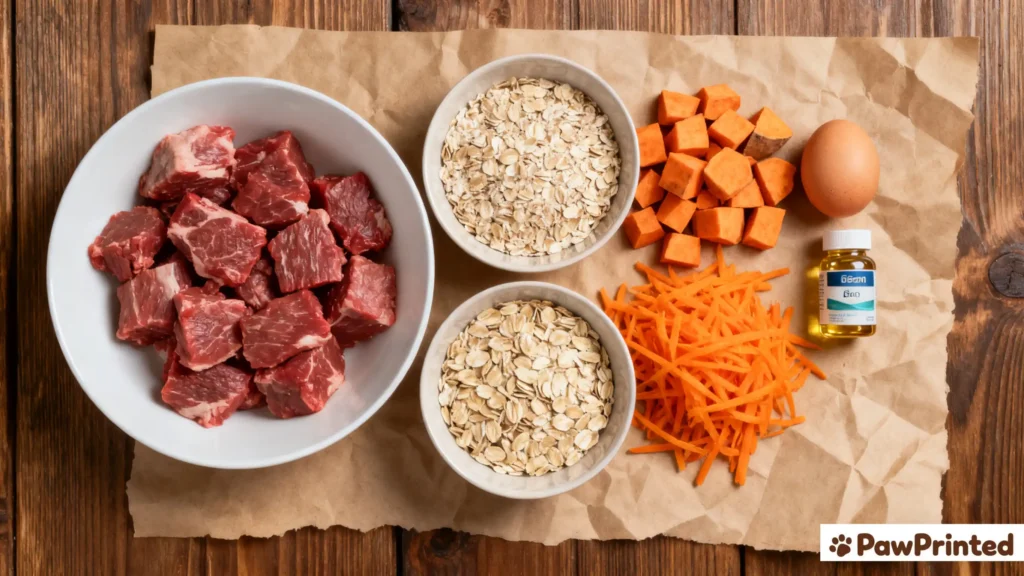
The beauty of homemade beef dog food lies in choosing fresh, simple ingredients that serve a clear purpose. Each component contributes something essential — from protein and fiber to healthy fats and trace minerals. A well-structured recipe relies on balance rather than quantity, making it easy for your dog to digest and absorb nutrients efficiently.
Lean Beef:
The foundation of your dog’s meal, providing amino acids for muscle health and iron for oxygen transport.
Choose 90% lean beef or sirloin to minimize fat without sacrificing flavor.
Carbohydrates (Sweet Potato or Rice):
Offer slow-release energy and help firm up stools.
Sweet potatoes are gentle on the stomach, while rice keeps the meal light and easy to digest.
Vegetables:
Add fiber and vitamins. Carrots, spinach, and green beans promote gut regularity and supply antioxidants for immune support.
Healthy Fats & Supplements:
Omega-3s from fish oil improve coat health and reduce inflammation, while calcium and multivitamin powders fill nutritional gaps.
For inspiration, browse Vet-Approved Beef Dog Food Recipes (8 Easy Meals) — each example demonstrates how small ingredient adjustments can make a big difference in nutrient completeness and digestibility.
Tip: Cook vegetables lightly instead of boiling them to preserve vitamins, and always let food cool before serving to maintain texture and taste.
Owner Experience – How Homemade Beef Meals Worked for Ethan
When Ethan first started showing signs of discomfort after eating — bloating, soft stools, and occasional skipping of meals — I decided to take control of his diet. After consulting with our vet, we built a homemade beef dog food plan using lean ground beef, carrots, and oats. Within two weeks, his digestion improved noticeably, and his appetite returned with enthusiasm.
What surprised me most was how consistent his energy became. Feeding smaller, freshly cooked portions twice daily kept his stomach calm and prevented the mid-day fatigue he used to have on commercial kibble. I occasionally alternated recipes inspired by Vet-Approved Beef Dog Food Recipes (8 Easy Meals) to maintain balance and avoid nutritional monotony.
The biggest lesson learned? Homemade feeding isn’t about fancy ingredients — it’s about commitment and observation. Once you establish a routine, it becomes a simple, enjoyable way to strengthen your bond with your dog while giving them exactly what their body needs.
Tip: Keep a weekly feeding log noting stool quality, appetite, and energy. These small notes help fine-tune your dog’s homemade diet over time.
Vet Recommendation Summary
Veterinarians generally support homemade beef dog food when it’s formulated under professional guidance. They emphasize that while fresh meals can improve digestion and palatability, balance remains non-negotiable. Every recipe must meet the minimum nutritional standards for protein, calcium, phosphorus, and essential fatty acids to maintain long-term health.
For beginners, many vets suggest starting with lean ground beef combined with a single, easy-to-digest carbohydrate and a reliable supplement blend. This controlled approach allows your dog’s system to adjust before introducing variety. Regular weight checks, stool monitoring, and annual vet consultations ensure the diet remains appropriate as your dog ages.
To compare your homemade recipes with commercial options and see which brands align with vet-approved standards, explore Best Beef Dog Food Guide (Updated 2025) . It features top-rated choices for pet owners who prefer convenience without sacrificing nutrition.
Tip: Even if you prepare food at home, keep a vet-approved commercial backup on hand for travel days or emergencies — consistency is key to digestive stability.
Frequently Asked Questions (FAQ)
1. Can I feed my dog homemade beef food every day?
Yes, as long as the recipe is nutritionally balanced and approved by a veterinarian or canine nutritionist. Dogs need specific vitamins and minerals — especially calcium, zinc, and omega-3s — which are often missing from plain meat-and-veggie mixes. Using a complete supplement blend or vet-approved formula helps ensure daily feeding stays safe and complete.
2. What type of beef is best for homemade dog food?
Lean cuts such as sirloin, 90% ground beef, or stew meat are ideal. Avoid fatty trimmings and processed meats like sausages or cured beef. Lean beef provides high-quality protein while reducing the risk of digestive upset or pancreatitis.
3. Should I cook the beef or serve it raw?
Cooking beef is strongly recommended for safety reasons. Lightly sauté or boil until fully cooked to kill harmful bacteria such as Salmonella or E. coli. Raw feeding can be risky unless guided by a veterinary nutritionist and handled with strict hygiene.
4. How do I make sure my homemade beef meals are balanced?
Always include a calcium source (like eggshell powder or canine calcium supplement), omega oils, and a dog-safe multivitamin. Aim for roughly 40–50% lean protein, 30% carbs or vegetables, and 20% nutritional add-ons. If you’re unsure, ask your vet to evaluate your recipe’s nutrient content.
5. Can homemade beef food help with allergies or skin issues?
It can — especially when you control every ingredient. Removing fillers, soy, or chicken-based proteins often reduces allergic reactions. Start with a simple formula and adjust slowly, similar to the principles in our Limited Ingredient Beef Dog Food Guide – Can It Help with Allergies? .
Author & Vet Review Notes
Author’s Note – Emma, Founder of PawPrinted:
I started cooking homemade beef meals for Ethan during a time when his appetite was inconsistent and commercial foods weren’t helping. The shift was transformative — not just for his digestion but for our routine together. Making his meals from scratch gave me confidence that I knew every ingredient in his bowl. It’s more work, but seeing him finish every meal happily made it worth it. I learned that the key to success isn’t perfection — it’s patience, consistency, and collaboration with your vet.
Vet Review – Dr. Lydia Harper, DVM:
I’ve reviewed this guide to confirm its nutritional accuracy and clinical relevance. Homemade beef diets can be excellent when owners follow properly balanced recipes and use the correct supplements. The most common mistake I see is omitting essential minerals or relying solely on meat and vegetables without calcium or omega sources. When formulated responsibly, these meals can improve digestion, coat health, and overall energy. This guide provides a realistic, safe framework for pet owners interested in home-prepared nutrition.
References — Authoritative Sources
-
American Kennel Club (AKC, 2024) – “Homemade Dog Food: What You Need to Know”
Provides detailed guidance on ingredient selection, portion ratios, and supplement essentials for balanced homemade diets. Read on AKC -
PetMD (2024) – “Homemade Dog Food: Is It a Good Idea?”
Explains the benefits and risks of homemade feeding, emphasizing the importance of veterinary guidance and nutrient completeness. Read on PetMD -
VCA Animal Hospitals (2023) – “Home-Prepared Diets for Dogs”
Offers veterinary recommendations for safe food handling, essential nutrient inclusion, and supplement guidelines for home-prepared diets. Read on VCA Hospitals -
Tufts University Cummings Veterinary Center (2023) – “Are Homemade Dog Diets Really Better?”
A veterinary-backed overview comparing homemade diets to commercial foods, highlighting common nutritional mistakes and solutions. Read on Tufts Vet Nutrition -
Frontiers in Veterinary Science (2023) – “Nutritional Evaluation of Homemade Dog Food Recipes”
Peer-reviewed study showing that 70% of home-prepared dog food recipes lack key nutrients, underscoring the need for veterinary formulation. Read on Frontiers -
National Institutes of Health (NIH, 2022) – “Micronutrient Deficiency in Home-Prepared Pet Diets”
Analyzes long-term effects of nutrient gaps in unbalanced homemade diets and recommends supplement strategies for canine health. Read on NIH
Explore More Homemade Beef Dog Food Guides
Interested in more homemade ideas for your pup? Explore these related PawPrinted guides — all vet-reviewed and designed to help you cook balanced, nourishing meals your dog will love.