When the weather heats up, many dogs struggle more than we do. Thick coats, limited sweat glands and lots of outdoor play can make summer feel exhausting for them. Frozen dog treats offer a simple way to cool your pup down while still giving them something fun and tasty to look forward to after walks, playtime or a long nap in the sun.
Compared with plain ice cubes, homemade frozen treats are gentler on your dog’s teeth and a lot more interesting. You can build them with real food ingredients like yogurt, fruit or light broths so they provide hydration, a bit of nutrition and a refreshing texture at the same time. The key is keeping the recipes simple, safe and sized correctly for your dog’s mouth and daily calorie needs.
This collection brings together six frozen dog treat recipes that Emma developed for Ethan during hot days. Each one focuses on short ingredient lists, clear portions and easy steps, so even busy owners can prep a small batch on the weekend and pull out a few cubes whenever their dog needs a cool break.
Six Cooling Frozen Dog Treat Recipes (Menu Cards)
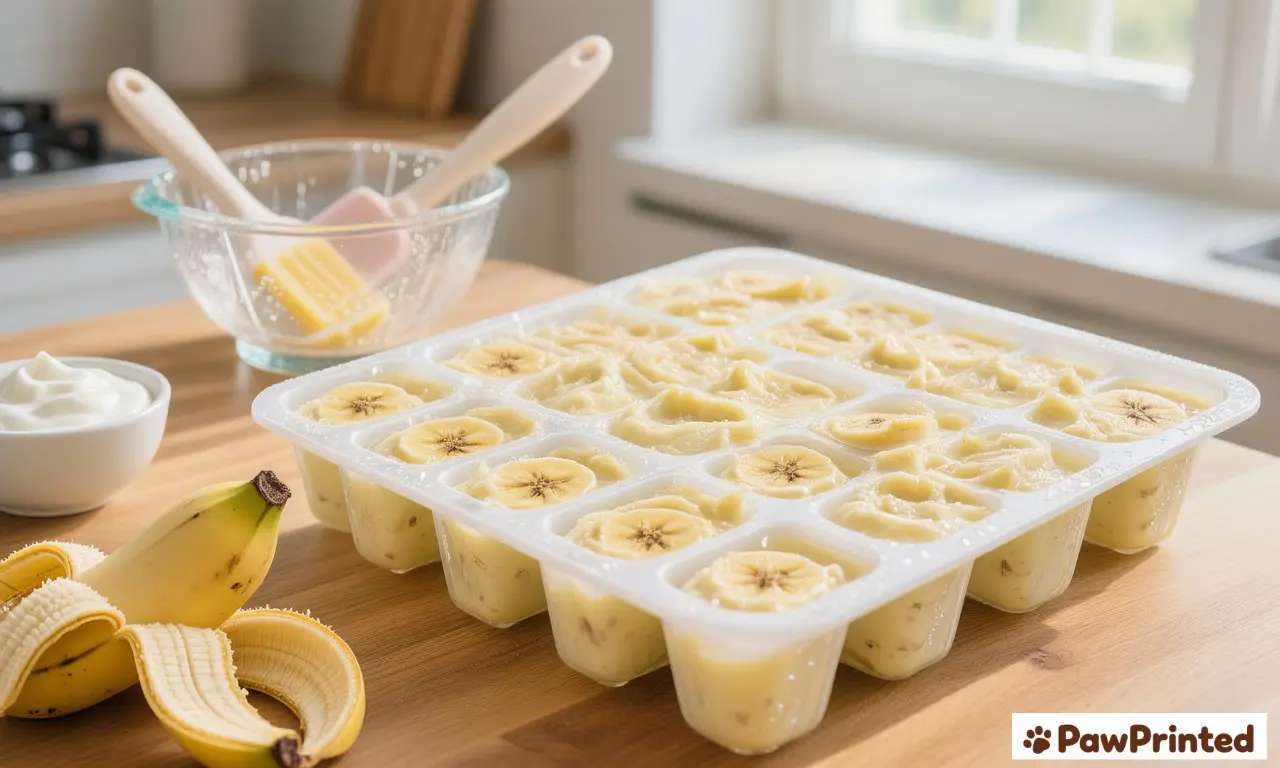
A creamy, cooling frozen pop made with plain yogurt and ripe banana. Perfect for hot days when your dog needs a soothing, low-effort snack straight from the freezer.
Quick Overview
- Base: Plain yogurt and mashed ripe banana.
- Shape: Poured into silicone molds or ice cube trays.
- Texture: Soft-lick pops that thaw quickly at room temperature.
- Best for: Dogs that enjoy creamy, dessert-like treats.
Why It Works
- Plain yogurt can offer gentle gut support for some dogs.
- Banana adds natural sweetness without extra sugar or syrups.
- Ideal as a low-effort way to cool your dog down after playtime.
Things To Watch
- Skip this recipe for lactose-intolerant or dairy-sensitive dogs.
- Use small molds for toy breeds to avoid overfeeding calories.
- Always choose unsweetened, xylitol-free yogurt designed for humans.
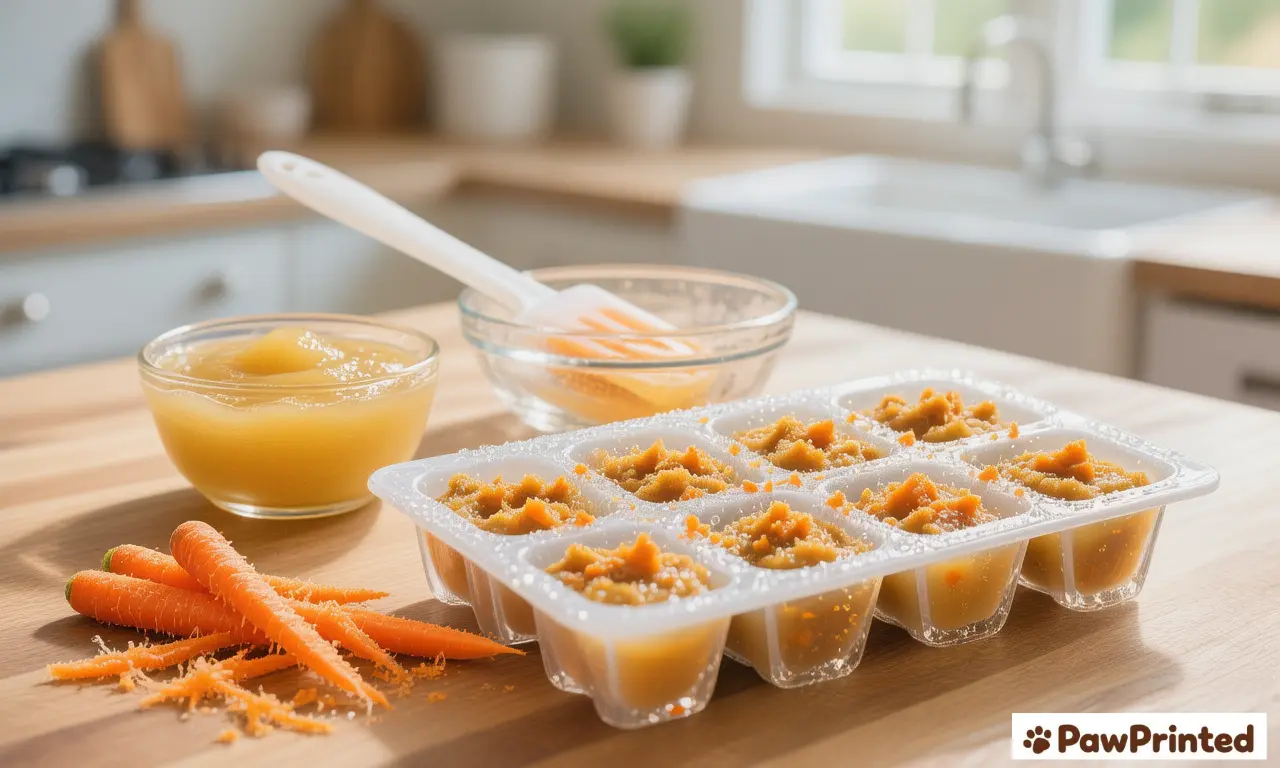
A lightly sweet, refreshing frozen mix of unsweetened applesauce and finely grated carrot. Great for dogs that like crunch and fruit without heavy fats or dairy.
Quick Overview
- Base: Unsweetened applesauce.
- Add-in: Finely grated carrot for texture and color.
- Texture: Thin frozen tiles or cubes that break apart easily.
- Best for: Dogs needing low-calorie, fruit-forward snacks.
Why It Works
- Applesauce offers gentle sweetness without using added sugar.
- Carrots bring fiber and crunch in a frozen, slow-lick format.
- Simple ingredient list is easy to track for sensitive stomachs.
Things To Watch
- Always choose applesauce with no added sugar or cinnamon.
- Monitor stool if your dog is not used to higher-fiber treats.
- Offer smaller pieces for small breeds or dogs that gulp food.
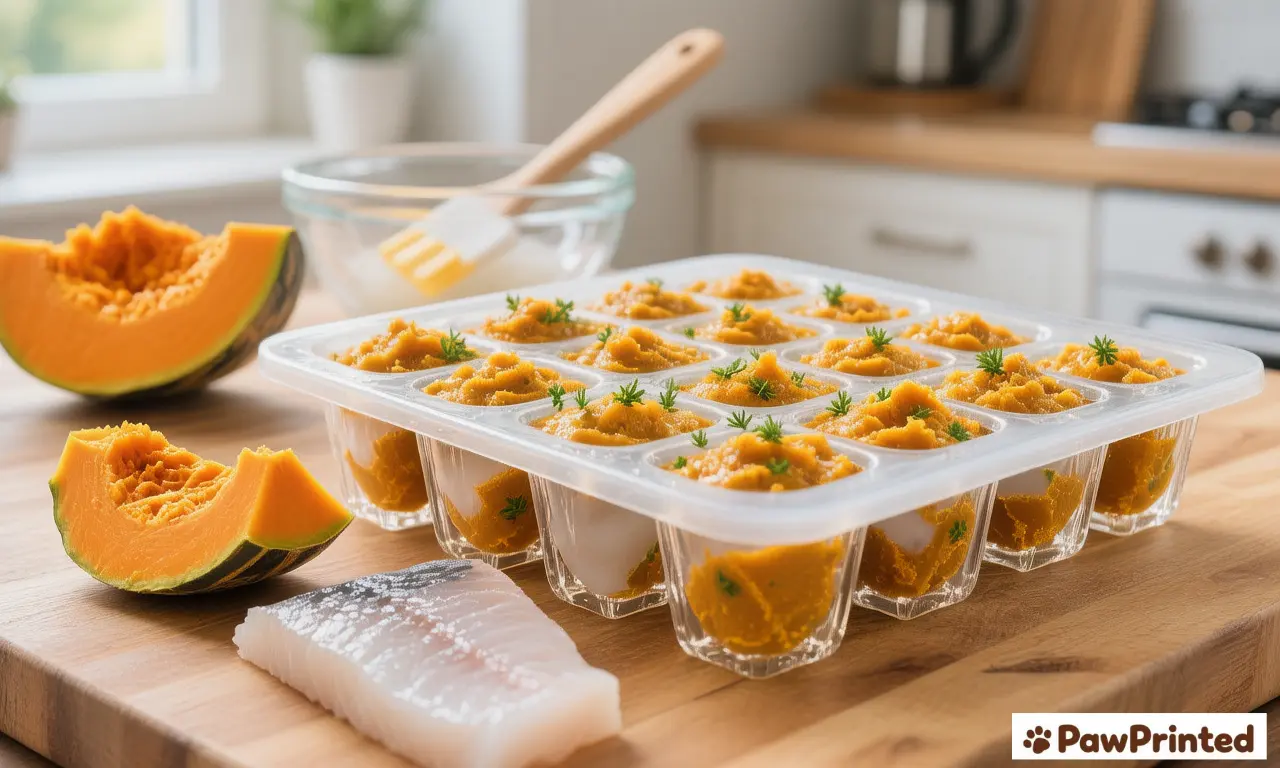
A savory, scent-forward frozen treat made with smooth pumpkin puree and cooked white fish. Designed to tempt picky eaters while staying light and hydrating.
Quick Overview
- Base: Plain pumpkin puree.
- Protein: Cooked, flaked white fish.
- Texture: Firm little ice balls with a soft center.
- Best for: Dogs that love fish aroma and cooler snacks.
Why It Works
- Pumpkin supports stool quality and adds low-calorie bulk.
- White fish brings lean protein and enticing scent for picky dogs.
- Freezer-friendly format makes it easy to prep several days at once.
Things To Watch
- Make sure the fish is fully deboned and cooked through.
- Check with your vet for dogs on cardiac-sensitive diets.
- Offer on easy-to-clean surfaces; fishy treats can be a bit messy.
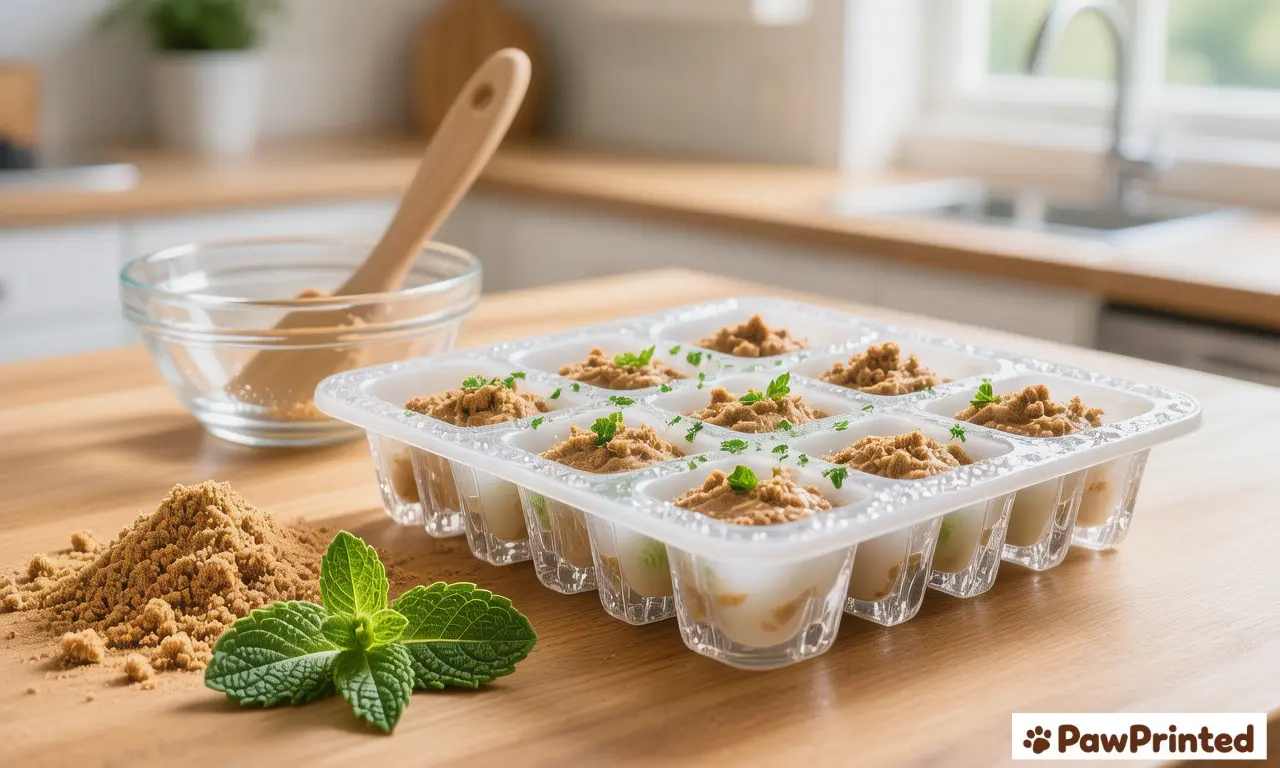
A lighter take on peanut treats that uses peanut powder and fresh mint for a cooler, lower-fat summer snack with a gently refreshing twist.
Quick Overview
- Base: Reconstituted peanut butter powder.
- Flavor: Fresh mint leaves, finely chopped.
- Texture: Firm little frozen bites that soften as they warm.
- Best for: Dogs that love peanut aroma but need lower fat.
Why It Works
- Peanut powder keeps flavor while trimming excess fat calories.
- Mint adds a mild breath-freshening effect for some dogs.
- Each bite can be cut very small for training or weight control.
Things To Watch
- Confirm the peanut powder is xylitol-free and unsweetened.
- Use only dog-safe fresh mint, not mint oils or candies.
- Introduce slowly to watch for any tummy or skin reactions.
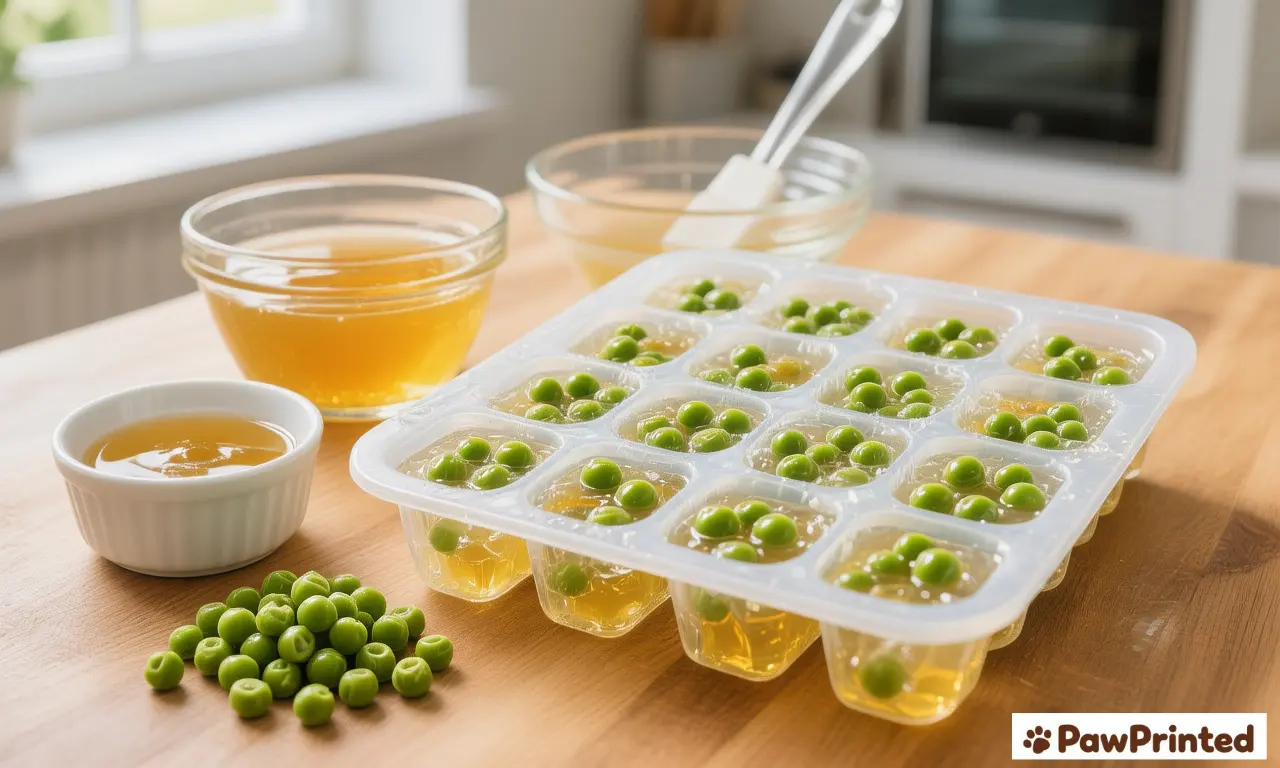
Simple, savory ice cubes made from unsalted chicken broth and soft pea bits. Great for enrichment bowls and slow-lick mats when the weather is warm.
Quick Overview
- Base: Unsalted, onion-free chicken broth.
- Add-in: Soft cooked peas in small pieces.
- Texture: Hard ice cubes that soften as dogs lick them.
- Best for: Dogs that enjoy savory, broth-heavy flavors.
Why It Works
- Broth-based cubes encourage hydration on hot or active days.
- Pea bits add small bursts of texture and gentle fiber.
- Perfect to use in puzzle toys or slow feeders for extra engagement.
Things To Watch
- Choose low-sodium broth with no garlic or onion ingredients.
- Supervise dogs that like to crunch ice quickly to avoid tooth stress.
- Adjust the number of cubes per day for dogs on strict calorie plans.
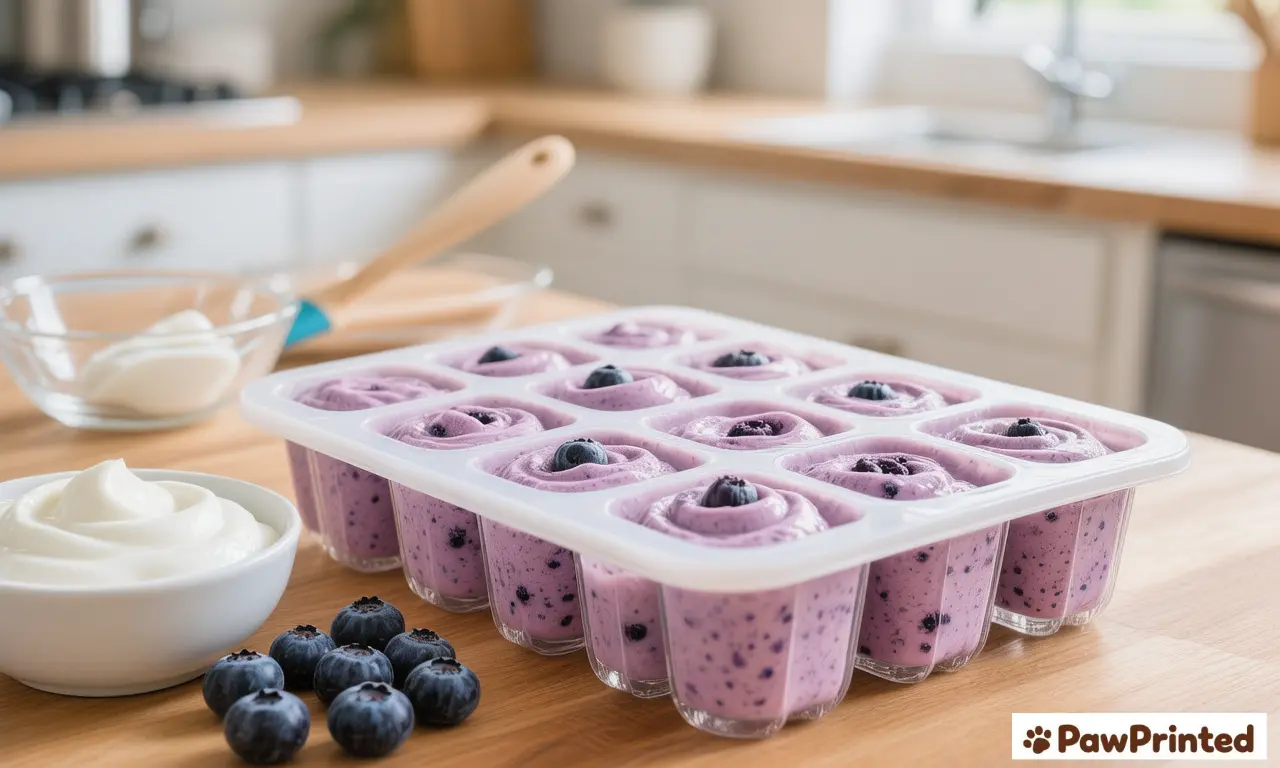
A berry-bright frozen treat using plain yogurt and whole blueberries. An easy, photogenic recipe that fits perfectly into a summer snack rotation for most dogs.
Quick Overview
- Base: Plain yogurt.
- Add-in: Whole or halved blueberries.
- Texture: Creamy bites with juicy berry centers.
- Best for: Dogs that enjoy tangy, fruit-based snacks.
Why It Works
- Blueberries are a common antioxidant-rich fruit used in many dog foods.
- Frozen format slows down enthusiastic snackers on hot days.
- Works well as a once-a-day special treat or enrichment topper.
Things To Watch
- Use small molds so blueberries do not pose a choking risk.
- Stick to plain yogurt if your dog tolerates dairy comfortably.
- Reduce other daily treats to keep overall calories in check.
Frozen Treat Basics – Safety Rules Every Owner Should Know
Before you start freezing everything in the fridge, it helps to set a few ground rules. Frozen treats should never be rock hard bricks that your dog has to crush with full force. Aim for small portions that soften quickly at room temperature so they can be safely licked, chewed and swallowed without stressing teeth or jaws. For tiny dogs, seniors and brachycephalic breeds, even smaller shapes are usually the better choice.
Frozen snacks are still calories, not toys. It is easy to keep dropping extra cubes into the bowl on a hot afternoon, but your dog’s daily energy needs do not change just because it is summer. Treat portions should still stay under the usual guideline of no more than about ten percent of their daily calories, especially for dogs that are already a bit round or working on weight loss.
Finally, every new frozen recipe should be introduced slowly. If your dog has never tried yogurt, certain fruits or broth-based treats before, start with a single small cube and watch how their stomach and stool respond over the next 24 hours. This is even more important for dogs with sensitive digestion, allergies or a history of pancreatitis.
Tools and Kitchen Setup for Frozen Dog Treats
You do not need a professional kitchen to make great frozen dog treats, but a few simple tools make the job much easier. Silicone ice cube trays, small freezer molds and flexible baking cups help you control portion size and pop out treats without cracking them. A basic blender or stick mixer can be helpful for smoothing fruit, yogurt or broth into a pourable base before you portion it.
Measuring cups and spoons are worth using, even if the recipes feel forgiving. They keep your batches consistent so you can track how much your dog is actually getting each day. A small funnel or jug with a spout makes it less messy to pour mixtures into tiny molds, especially when you are working with runny bases like broth or diluted yogurt.
Storage matters too. Once the treats are frozen solid, transferring them to labeled airtight containers or freezer bags helps prevent freezer burn and keeps strong food smells from spreading through the freezer. Writing the recipe name and date on the container will remind you to use them within a couple of weeks while they still taste and smell their best to your dog.
How to Choose the Right Frozen Treat for Your Dog
Not every frozen treat is right for every dog. The best choice depends on your dog’s age, weight, activity level and any existing health issues. For active, healthy dogs, fruit and yogurt based treats can be a fun way to mix hydration with a bit of extra energy. For dogs that gain weight easily, lighter broth based recipes or small low calorie cubes may be a better routine option.
Dogs with sensitive stomachs, food allergies or skin issues often need more careful recipes. In these cases, you may want to stick to single protein broths, limited ingredient mixes and bases you already know they tolerate well in their regular diet. Avoid complicated blends with multiple new foods at once so you can clearly see what works and what does not.
You can also match the type of frozen treat to the moment. After a long summer walk, a hydrating broth cube or yogurt pop can help your dog cool down. During training, tiny soft frozen bites broken from a larger cube can work as high value rewards without adding too much bulk. As you read through the six recipes in this collection, think about which ones fit your dog’s daily routine and how you can rotate them through the week.

How To Serve Frozen Dog Treats Day To Day
Frozen dog treats work best when they are treated like a small extra, not a full snack session on their own. Most owners find it helpful to offer a frozen treat after a walk, on hot afternoons, or when their dog needs a calm activity while they answer emails or cook dinner. For intense chewers, you can serve these recipes in puzzle toys, slow feeders, or rubber toys that can be frozen to stretch out licking time and keep boredom in check without piling on too many calories.
As a simple rule of thumb, aim for frozen treats to stay within the usual treat guideline of around 10% of your dog’s daily calories. That might mean one larger cube for a big dog or a thin slice or small pop for a toy breed. Always let the treat sit at room temperature for a minute or two if it feels rock hard, and supervise your dog while they enjoy it so they lick rather than try to bite off huge chunks at once.
Storage & Meal Prep Tips For Frozen Dog Treats
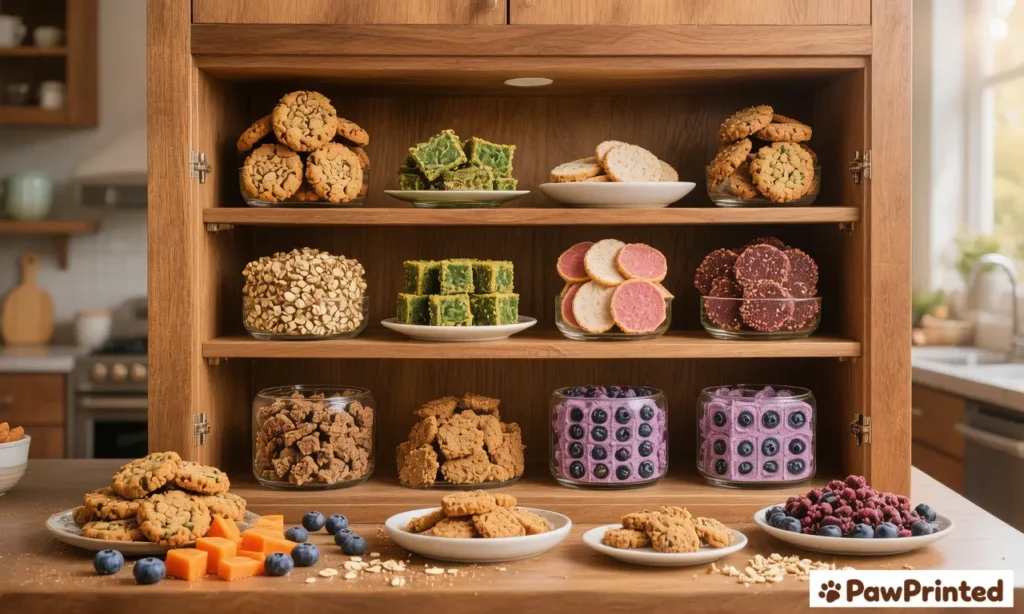
One of the biggest advantages of frozen dog treats is how well they fit into weekend meal prep. You can mix, portion and freeze a full batch in silicone trays, ice cube molds, or small containers, then serve over the next couple of weeks. Most yogurt or fruit based recipes keep well for 2 to 3 weeks in the freezer, while meat or broth based treats are usually best within 1 to 2 weeks for peak flavor and food safety.
Label each container with the recipe name and date so you do not lose track of what is inside. Keep treats in airtight containers or well sealed freezer bags to avoid freezer burn and to stop strong smells from spreading to your own food. If you like to rotate between several recipes, dedicate one small freezer basket or shelf to dog treats so everything stays organized and you can quickly grab the right shape or flavor when your dog has earned a cooling reward.
Vet Tips & Easy Ingredient Swaps
Vets usually recommend starting with very simple frozen recipes and adding new ingredients slowly, especially if your dog has a history of tummy upset or allergies. Plain yogurt, mashed banana, pumpkin puree, low sodium broth, and soft cooked vegetables are common starting points. If your dog is sensitive to dairy, you can swap yogurt for lactose free kefir, goat milk, or even a small amount of water and pureed fruit to get a similar texture without triggering problems.
For dogs that need tighter calorie control, try thinning richer bases with water and freezing the mix in smaller cavities so each piece is light but still interesting. Senior dogs or those with dental discomfort may prefer semi frozen treats that are chilled but not rock solid. Always check with your vet if your dog has kidney disease, pancreatitis, heart disease, or is on a strict prescription diet, and bring your frozen recipes to appointments so your vet can confirm they fit the overall plan.
Frozen Dog Treats FAQ
Are frozen dog treats safe for most dogs?
Frozen dog treats are generally safe for healthy adult dogs when they are made from dog friendly ingredients and offered in sensible portions. The main things to consider are temperature, texture and what is actually in the recipe. Hard, rock solid blocks can be uncomfortable for sensitive teeth or small dogs, so it often helps to let a treat soften slightly before serving. Ingredients should stay simple and avoid added sugar, salt, seasonings, chocolate, xylitol or other foods that are unsafe for dogs. If your dog has any chronic health condition or is on a prescription diet, talk with your vet before adding regular frozen treats so you do not accidentally disrupt their carefully balanced meal plan or make existing issues harder to control.
How often can I give my dog a frozen treat?
Most dogs can enjoy frozen treats a few times per week as part of their normal treat allowance, as long as total treats stay around 10 percent or less of daily calories. Large, active dogs might handle a small frozen treat most days in summer, while smaller or less active dogs may only need one or two per week. Think about frozen treats as a swap, not an extra, and reduce other biscuits or chews on days when you serve a frozen recipe. If you notice weight gain, loose stool, or changes in appetite, scale back frequency or shrink portion sizes and check in with your vet to be sure the overall feeding plan still fits your dog’s needs.
What ingredients are best for homemade frozen dog treats?
Good base ingredients for homemade frozen dog treats are those that are already part of a healthy dog diet. Plain unsweetened yogurt, mashed banana, pure pumpkin, low sodium chicken broth, blueberries, strawberries, and soft cooked vegetables like carrots or peas are common choices. These can be blended with a splash of water to thin the mixture and poured into molds. For dogs that tolerate it, a small amount of lean cooked meat or fish can be mixed in for extra aroma and protein. Always avoid artificial sweeteners, heavily spiced human leftovers, and high fat additions like whipped cream or ice cream, which can trigger tummy upset or pancreatitis in sensitive dogs.
Can puppies have frozen dog treats too?
Puppies can enjoy carefully chosen frozen treats, but they need a bit more caution than adult dogs. Their teeth and jaws are still developing, so very hard or oversized frozen blocks are not ideal. Instead, focus on softer, thin frozen layers made from puppy safe ingredients like water thinned pumpkin puree, a small amount of plain yogurt, or soaked and blended kibble from their regular puppy food. Keep portions small so you do not interfere with their main meals or cause unnecessary calories. If your puppy is teething or has a sensitive stomach, ask your vet for specific recipe ideas that support development without upsetting the careful balance of a complete puppy diet.
What if my dog has sensitive teeth or is a senior dog?
Dogs with sensitive teeth, dental disease or senior dogs with mouth discomfort may still enjoy frozen treats, but the texture and serving style need adjusting. Instead of fully frozen cubes, try refrigerating the mixture until it is chilled and spoonable, or partially thaw frozen pieces until they are cool but easy to dent with a finger. This keeps the soothing, cooling effect without forcing hard chewing. Avoid very large chunks that require strong biting, and always supervise to make sure your dog is licking rather than trying to break off big pieces. Regular dental checks are important, and if your vet has advised softer foods only, follow that guidance and ask which chilled or semi frozen ideas fit your dog’s current dental plan.
Explore More Dog Treat Ideas
Keep Cool Treat Time Fun And Safe
If your dog loved these frozen recipes, you can keep building a simple, vet aware treat routine that works in every season, not just during summer heat waves.
Author & Vet Review Notes
Emma says: “Frozen treats saved us on so many sticky, humid days with Ethan. I love having a tray of simple cubes ready to go so I can reward him for calm behavior without reaching for heavy biscuits. My rule is to keep recipes short, watch his stool and energy, and always treat these as a swap, not an extra.”
Vet review note: “From a veterinary perspective, frozen dog treats can be a great tool for enrichment and temperature relief when they are built on appropriate ingredients and used in moderation. I encourage owners to think about total daily calories, dental comfort and any existing medical conditions. If your dog has pancreatitis, kidney disease, heart disease or is on a prescription diet, discuss each recipe with your vet before making it part of a regular routine.”
References – Authoritative Sources
PetMD. Healthy Ways to Treat Your Dog. 2013. PetMD. https://www.petmd.com/dog/centers/nutrition/evr_dg_healthy_dog_treats – Explains why treats should generally stay around 10 percent of daily calories and how to keep snacks nutritionally balanced.
Blue Cross. Can dogs eat ice cubes? 2023. Blue Cross UK. https://www.bluecross.org.uk/advice/dog/can-dogs-eat-ice-cubes – Discusses safety tips for serving frozen items and how to adapt for different dog sizes and health needs.
American Kennel Club. Summer Safety Tips for Dogs. 2022. American Kennel Club. https://www.akc.org/expert-advice/health/summer-safety-tips-dogs/ – Provides guidance on keeping dogs cool in hot weather, including the role of cool treats and hydration.
American Kennel Club. Can Dogs Eat Ice Cream? 2021. American Kennel Club.
Can Dogs Eat Ice Cream?
– Outlines why high sugar, high fat human desserts are risky and why dog specific frozen recipes are a safer choice.World Small Animal Veterinary Association. Global Nutrition Committee Toolkit. 2021. WSAVA.
Nutrition Guidelines
– Offers general principles for evaluating pet diets, including treats and extras, within a complete nutrition plan.American College of Veterinary Nutrition. Pet Owner Resources. 2020. ACVN. https://acvn.org/pet-owners/ – Provides evidence based advice on formulating homemade pet foods and treats and when to consult a board certified nutritionist.