Feeding my dog has always been important, and I’ve experimented with many diets. Recently, I started incorporating salmon into my dog’s meals, and the benefits have been noticeable. In this guide, I’ll share my experience, detailed preparation steps, and tips for safely feeding your dog salmon.
Why Choose Salmon for Dogs?
Salmon is rich in Omega-3 fatty acids, high-quality protein, and essential vitamins that support:
- Healthy skin and shiny coat
- Strong muscles and joints
- Brain and eye development
- Reduced inflammation and improved immune function
When I added salmon to my dog’s diet, I noticed a significant improvement in coat shine and energy levels.
Is Salmon Safe for Dogs?
Yes, cooked salmon is safe, but raw salmon can contain parasites. Always:
- Use fresh, boneless salmon fillets
- Cook thoroughly by steaming or baking
- Avoid seasoning, salt, or sauces
- Introduce gradually to monitor for allergies
Step-by-Step Guide: Preparing Dog Food with Salmon
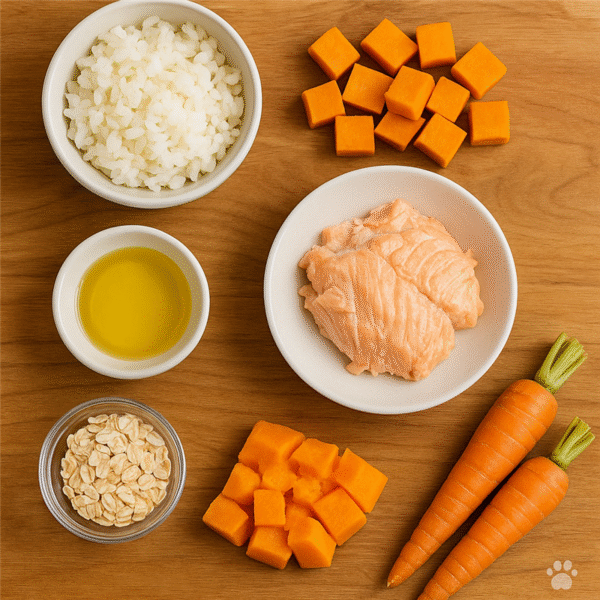
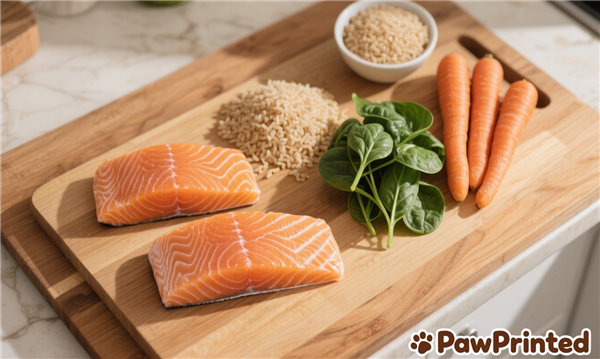
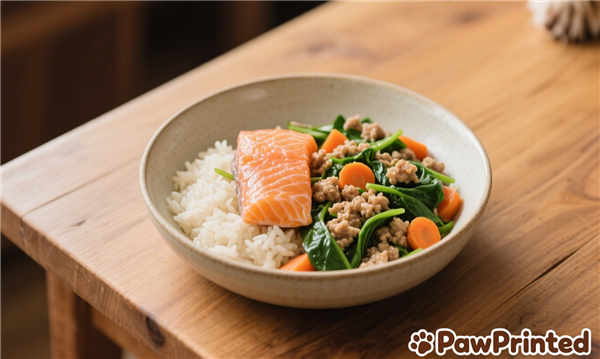
Step 1: Gather Ingredients
- Protein: Fresh boneless salmon fillet
- Vegetables (optional): Carrots, peas, or spinach (finely chopped or steamed)
- Grains (optional): Cooked rice or quinoa for extra energy
- Supplements (optional): Fish oil if recommended by your vet
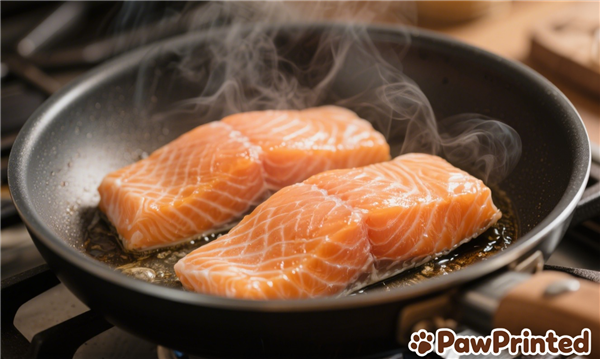
Step 2: Cook the Salmon
- Preheat oven to 350°F (175°C) or prepare a steamer
- Place salmon on a lined baking tray or steamer basket
- Cook until fully done (internal temp ~145°F / 63°C)
- Let cool before serving
Tip: Do not use seasoning, garlic, or onions, as these are toxic to dogs.
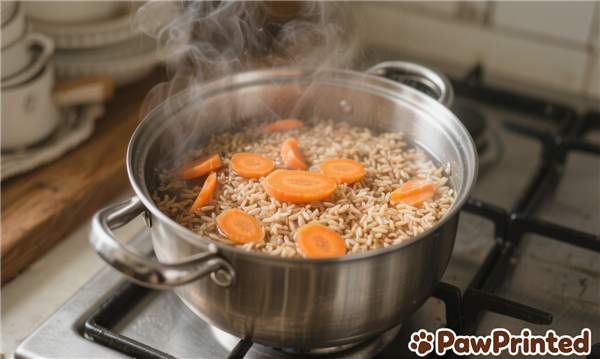
Step 3: Prepare the Vegetables
- Steam or lightly cook vegetables for easier digestion
- Chop or mash to puppy-friendly sizes
- Mix with cooked grains if using
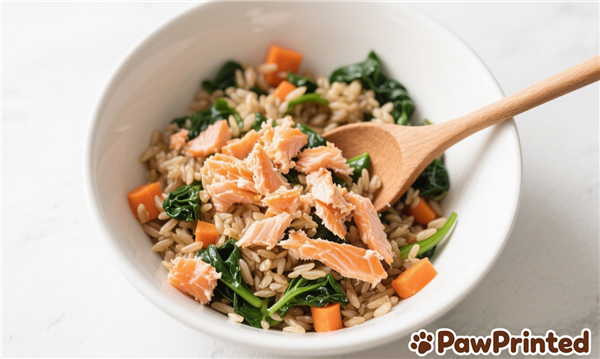
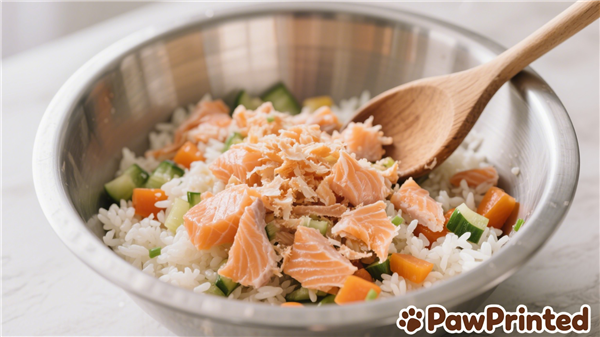
Step 4: Combine and Serve
- Flake the salmon into bite-sized pieces
- Mix with vegetables and grains in a clean bowl
- Serve at room temperature
Tip: Store leftovers in the fridge for up to 2 days in airtight containers.
Step 5: Monitor & Adjust
- Observe for allergies or digestive issues
- Adjust portion size based on weight, age, and activity
- Consult your vet for long-term diet balance
Which Dogs Benefit Most from Salmon?
- Dogs with dry, itchy skin
- Dogs with dull coats or low energy
- Dogs needing Omega-3 for joint or heart health
Not suitable for:
- Dogs with known fish allergies
- Dogs prone to pancreatitis (consult vet first)

FAQs About Dog Food with Salmon
Q1: Can I feed raw salmon to my dog?
No, raw salmon may contain parasites. Always cook thoroughly.
Q2: How often should I feed salmon to my dog?
1–2 times per week is sufficient to provide Omega-3 benefits without overloading fat.
Q3: Can puppies eat salmon?
Yes, cooked and boneless salmon is safe for puppies, but start with small portions.
Q4: Is salmon vet approved?
Yes, many veterinarians recommend cooked salmon for dogs when properly prepared.
Owner’s Feedback After Feeding Salmon Meals
After serving the salmon meals to my dog for the first time, I was thrilled to see him eagerly finish every bite. His tail wagged nonstop, and he seemed more energetic and playful than usual. Within a week, I noticed his coat becoming glossier and his skin healthier. It felt reassuring to know that not only did he enjoy the food, but it was also supporting his overall well-being. I’m excited to continue this diet and share these positive experiences with other dog owners.