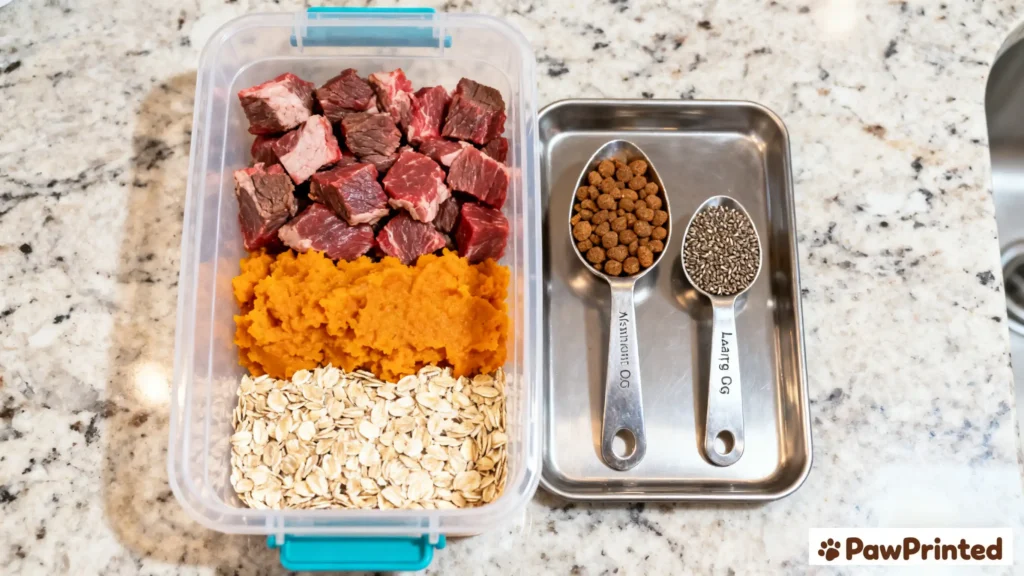
Portion & Serving Size Guide for Homemade Dog Food
You finally committed to homemade dog food, the pots are on the stove, your kitchen smells amazing… and then you freeze at the bowl.
How much is actually “enough” for your dog? One scoop? Two? A random mug you grabbed from the cabinet?
This guide walks you through portion and serving size in a calm, human way, so you can stop guessing and start feeding with confidence.
Why Portion Size Matters More Than You Think
Portion size is one of those “invisible” decisions you make every single day. Get it right and your dog quietly maintains a healthy weight, has steady energy, and ages more comfortably. Get it wrong and you see slow but real changes in body shape, joints, digestion, and mood.
With homemade dog food, portion control feels scarier because you do not have a commercial label telling you “feed 1 cup per 10 lb”. You are now the one deciding how much cooked food lands in the bowl. That is powerful, but it also needs some structure.
If you are just starting out with fresh cooking and feel a bit lost on the big picture, it can help to pair this guide with our Homemade Dog Food Guide so you understand both “what to feed” and “how much to feed” at the same time.
How To Estimate A Safe Starting Portion
Every dog is different, so no single number fits everyone. Still, most vets and nutritionists work from a similar starting idea: daily food needs are linked to your dog’s ideal body weight, activity level, and whether the diet is fresh or kibble based.
For homemade, fully balanced fresh food, a common starting range for healthy adult dogs is around 2 percent to 3 percent of their ideal body weight per day, split into two meals. Tiny dogs, super active dogs, and intact dogs may need more. Seniors, couch potatoes, and neutered dogs often need less.
Think of this as a starting frame, not a final answer. Just like we explain in the Dog Food Macros Guide, your dog’s real needs show up in their body condition, not only on a calculator.
Puppies
Often 3 percent to 5 percent of ideal adult weight equivalent per day, divided into 3 to 4 meals. Growth is intense, so check weight weekly and adjust quickly.
Adult Dogs
Roughly 2 percent to 3 percent of ideal body weight per day for most pets, split into 2 meals. Sport or working dogs may sit above that range.
Senior Dogs
Often closer to 1.5 percent to 2.5 percent of ideal body weight per day, depending on mobility and muscle. Focus on lean body mass, not the number on the scale alone.
Overweight Dogs
Use the target healthy weight, not the current weight, to estimate portions. Combine this guide with our Weight Loss Dog Food Guide if your vet wants a structured slimming plan.
Want to layer in supplements without throwing portions off completely? The Dog Food Supplements Guide walks through add ons that bring nutrients, not just calories.
Signs Your Dog Is Getting Too Much Or Too Little
Instead of obsessing over the exact gram number, train yourself to read your dog like a dashboard. Portions are “right” when your dog’s body and behavior say so, not just when the scoop looks neat.
Too much food often shows up as slow weight gain over months, a thicker layer of fat over the ribs, heavier breathing on walks, and softer, larger stools. You may also notice more begging and food obsession because habits formed around oversized bowls are hard to break.
Too little food is more than just being slim. You might see ribs and spine becoming sharp, low energy between meals, food guarding, scavenging outdoors, or a coat that looks dull. In severe underfeeding, stool may become very small or infrequent.
If reading body condition feels new, pairing this guide with How To Know If Homemade Dog Food Is Working can give you real life checkpoints like “coat, poop, and energy” to review monthly.
How To Adjust Portions Without Stressing Your Dog
Once you have a starting portion, the real art is in the small tweaks. You do not need dramatic changes. In fact, big swings in serving size can upset digestion and make dogs anxious around mealtimes.
A practical rule: adjust in small steps of about 5 percent to 10 percent at a time, then hold that new portion for 10 to 14 days while you watch body condition, stool, and energy. Repeat the cycle until your dog sits in a healthy, stable zone.
For example, if your dog is slowly gaining weight, shave a little off each meal and reduce extras like table scraps before you overhaul the entire recipe. If your dog is too lean, increase portions slightly and check with your vet if weight still does not move after a few weeks.
Owners who feel nervous about “doing it wrong” often find comfort in our Homemade Dog Food Safety Framework, which gives a vet aligned checklist you can repeat as you adjust and retest.
Factoring In Age, Activity, Neutering And Body Type
Portion guides always look clean on paper. Real dogs show up with quirks. Some burn calories like tiny athletes. Others can gain weight just by walking past the treat jar. That is why formulas and body reading must work together.
Puppies and adolescents usually need more food per kilogram because they are growing and moving constantly. Highly active or working dogs may need significantly more than the “average pet” benchmarks you see online. Neutered or spayed dogs often need fewer calories because of hormonal shifts that affect metabolism.
Breed and build matter too. A stocky bulldog and a lean sighthound at the same weight do not use calories in the same way. If your dog has arthritis, heart disease, kidney issues or other medical needs, always confirm portion decisions with your vet before making big changes.
If you want a broader nutrition view by life stage, our Puppy Dog Food Guide and Senior Dog Food Guide show how age and portion decisions travel together over your dog’s lifetime.
Portions For Homemade, Kibble And Mixed Feeding
Homemade food, kibble and wet food are not equally dense in calories. One cup of homemade stew is not the same as one cup of high energy kibble. That is why we always recommend weighing food when you can instead of relying on cups alone.
With homemade food, you are often dealing with moist, lower density meals that take up more space in the bowl. With commercial kibble, calories can be packed tightly into small scoops. If you are doing a mixed approach, you will want to reduce kibble as you add homemade food, not simply stack them on top of each other.
A useful starting point is to treat homemade food as your “base” and use small amounts of kibble or treats as add ons. Our article It’s Okay To Mix Homemade With Store Bought explains how to keep overall calories reasonable when you do a blended feeding style.
If your schedule is tight, using a kitchen scale and a simple measuring routine, supported by tools from Best Dog Food Making Tools, can make your portion habits more consistent, even on chaotic weekdays.
Common Portion Mistakes And How To Avoid Them
Most homemade feeders are not “bad owners”. They are just busy humans who accidentally repeat a few common patterns. Cleaning these up can make a huge difference, even if you do not change the recipe itself.
Eyeballing Every Meal
“That looks about right” turns into portion creep over months. Solution: weigh or measure a few times per week so your eyes stay calibrated.
Forgetting Treat Calories
Treats seem tiny, but training, chews and table scraps add up fast. Aim to keep extras under about 10 percent of daily calories.
Using Current Weight As Target
If your dog is already overweight, basing portions on their current weight will quietly lock in that extra fat. Use a realistic goal weight instead.
Changing Too Many Things At Once
Switching recipe, portion and schedule all at the same time makes it impossible to see what helped or hurt. Adjust one lever at a time.
If you suspect more than just portion is off, pairing this guide with Homemade Dog Food Mistakes Guide can help you untangle portion issues from recipe and supplement issues step by step.
A Realistic Sample Day Of Portions And Feeding Rhythm
Sometimes you do not need another formula. You need to see what a calm, realistic feeding day looks like on a normal weekday. Use this as inspiration, then reshape it around your own dog and schedule.
Imagine a 20 kg healthy adult dog who has been doing well on 2.5 percent of ideal body weight in homemade food. That works out to about 500 g of food per day. You might feed 250 g in the morning and 250 g at night, plus a few small training treats that fit inside the 10 percent extra calories rule.
Morning: portion, feed, quick body check. Afternoon: training treats or enrichment snacks sized to your plan. Evening: second portion, short walk, and a mental note on energy and stool for the day. Once per week you look at the bigger picture using prompts from The 3 Layer Feeding Strategy so treats, meals and supplements still fit together.
When Portion Questions Need A Vet Or Nutritionist
Portion decisions are not just a math problem when your dog has medical needs. Heart disease, kidney disease, pancreatitis, diabetes, inflammatory bowel disease and joint problems can all change how tightly you need to control calories and nutrients.
If your dog is losing or gaining weight without explanation, if their appetite suddenly changes, if you see vomiting, diarrhea, coughing, or dramatic changes in thirst or urination, do not try to fix portions alone. Call your vet, bring photos, body condition notes, and your recipe details.
For dogs already eating therapeutic diets, always ask your vet before changing portion size or swapping a chunk of the diet for homemade. Articles like Kidney Friendly Dog Food Guide and Joint Support Dog Food Guide can give you context, but they are not a replacement for medical advice.
Explore More: Turn Portion Theory Into Everyday Habits
You do not need to feed perfectly to feed better. The next step is picking one small upgrade, then letting it become a habit. These guides can help you keep momentum without burning out.
Start With The Big Picture
New to homemade feeding and still connecting all the dots between recipes, portions and safety checks.
Fine Tune Nutrient Balance
Ready to move beyond “how much” and get clearer about protein, fat and carbs in each bowl.
Make Measuring Less Annoying
Want tools that make portioning and batch prep faster, cleaner and more repeatable.
FAQ: Portion & Serving Size For Homemade Dog Food
How do I calculate how much homemade dog food to feed?
The safest way to calculate homemade portions is to combine a general formula with close observation of your individual dog. A common starting point for healthy adult dogs is to feed around 2 percent to 3 percent of their ideal body weight in fresh food each day, divided into two meals. Tiny dogs, very active dogs and intact dogs often sit on the higher side of that range, while seniors and low activity dogs may sit lower.
Begin with that estimate, then weigh or measure the food so you know exactly what you are feeding. Watch body condition, energy and stool for at least two weeks. If your dog is gaining too fast, reduce portions slightly. If they are losing weight or staying too thin, increase portions gradually. Your vet can confirm a target weight range and help you refine the numbers if you are unsure.
How many meals per day are best for homemade dog food?
Most adult dogs do well on two meals per day, while puppies usually need three to four smaller meals. Splitting the daily portion into several feedings helps digestion, stabilizes energy and can reduce begging or gorging behavior. For dogs with certain medical conditions, such as diabetes or digestive disease, your vet may recommend even more frequent small meals to keep blood sugar and gut comfort steadier.
The key is to think in terms of total daily portion first, then divide it into a schedule that fits your routine and your dog’s needs. Some owners prefer two equal meals, while others give a slightly larger breakfast and a lighter dinner. As long as the total matches your portion plan and your dog is maintaining a healthy body condition, you can choose the rhythm that works best for your household.
How should I adjust portions if my dog needs to lose weight?
When a dog needs to lose weight, it is important to be deliberate rather than just “eyeballing less food”. Start by having your vet confirm a healthy target weight and rule out medical causes of weight gain. From there, base your portion on the goal weight rather than the current weight, and aim for slow, steady loss rather than dramatic drops. Many dogs do well with a modest calorie reduction that translates to slightly smaller portions combined with increased movement where appropriate.
Track weight every two to four weeks and adjust in small steps. If weight is not changing at all, reduce the portion a bit more. If it is dropping too fast or your dog seems very hungry and low in energy, ease portions up slightly and reassess. Remember that treat calories count too, so part of a weight loss plan is swapping high calorie extras for lower calorie rewards or integrating them into the daily food allowance.
How do I handle portions when I mix homemade food with kibble?
Mixing homemade food with kibble can work well, but it requires more awareness around total calories. The mistake many owners make is adding a generous scoop of homemade food on top of the full kibble ration, which quietly pushes daily calories well above what the dog needs. A better approach is to decide what percentage of the bowl you want to come from homemade food and then reduce kibble accordingly.
For example, if you want half of each meal to be homemade, you might feed roughly half your normal kibble portion plus a carefully measured amount of homemade food that brings the total calories back into a normal range. Weighing both components and checking your dog’s body condition regularly will help you spot trends early. If you feel unsure, ask your vet to review the combined plan so you can enjoy the benefits of both styles without unintentional overfeeding.
How much of my dog’s daily calories can safely come from treats?
A common guideline is to keep treats and extras at or below about 10 percent of your dog’s daily calorie intake. This helps maintain nutritional balance from the main diet while still leaving room for training rewards, chews and small sharing moments that are part of real life. When treats creep far beyond that threshold, they can displace important nutrients from the main food and contribute to weight gain without owners realizing it.
Think of treats as part of the total feeding plan, not something that lives on a separate calorie island. If you know a day will involve a lot of training or enrichment, you can slightly reduce meal portions to accommodate the extra treats. Choosing lower calorie, nutritionally useful treats and cutting them into smaller pieces also allows you to reward more often without dramatically affecting overall energy intake.
References – Authoritative Sources
These resources are aimed at veterinarians and serious dog owners who want to go deeper into calorie needs, body condition scoring and feeding plans. They are not required reading, but they are useful if you enjoy checking the science behind your kitchen decisions.
World Small Animal Veterinary Association (WSAVA) Global Nutrition Committee, 2011. Dog and Cat Nutrition Toolkit. Practical guidance on calorie needs, body condition scoring and feeding plans for companion animals. Visit WSAVA
National Research Council, 2006. Nutrient Requirements of Dogs and Cats. A comprehensive scientific reference on energy requirements and nutrient needs across life stages and activity levels. View NRC publication
American College of Veterinary Nutrition (ACVN). Owner facing articles on balanced diets, treating obesity and adjusting portions under veterinary supervision. Explore ACVN resources
Pet Obesity Prevention, annual surveys. Data on trends in pet obesity and practical tools for owners to recognise and correct overfeeding early. See survey insights
Veterinary Clinics of North America: Small Animal Practice, various issues. Peer reviewed articles on nutritional management of obesity and life stage feeding in dogs. Browse journal
American Animal Hospital Association (AAHA), 2021. Nutrition and Weight Management Guidelines. Practical recommendations on assessing body condition, calculating portions and creating weight management plans. Read AAHA guidelines