The first time I spotted a bright box of dog cake mix on a store shelf, I paused. Could something this quick really be gentle enough for Ethan’s stomach and still feel special? I brought a box home, more curious than confident, and decided to test it against our usual homemade routine.
On Saturday, I baked the mix exactly as directed. On Sunday, I made our standby from scratch — the peanut butter and pumpkin version that never lets us down. The kitchen smelled amazing both days, but I could already tell the experiences were different: one was hands-off and tidy, the other slow and personal.
If you want a baseline for comparison, start with our Dog Birthday Cake Recipe (Peanut Butter & Pumpkin, Vet Approved) and then see how a boxed mix stacks up in your own kitchen. That simple A/B test is how this guide began — not with theory, but with a whisk, a timer, and Ethan’s very honest tail wags.
What Is a Dog Cake Mix?
A dog cake mix is essentially a pre-measured baking blend made specifically for dogs — designed to help busy owners whip up a quick celebration without hunting down individual ingredients. Most boxes contain a base flour (like oat, rice, or coconut), a natural flavor powder such as peanut butter or banana, and sometimes a small packet of frosting mix or decorations. All you usually need to add is water, oil, or an egg.
These mixes simplify the process and ensure portion consistency, but not all are equal in quality. Some contain stabilizers or sugars that dogs don’t need, while others are formulated by pet nutritionists with balanced macros and safe ingredient lists. The difference is subtle but important — one saves time, the other truly supports your dog’s well-being.
To understand how a fresh, natural version compares, try looking at a simple recipe like our Healthy Dog Cake Recipe (Banana & Oats). It’s proof that a healthy bake doesn’t need a commercial label — just the right proportions of wholesome ingredients and a few minutes of care.
Pros of Using Dog Cake Mix
For many pet parents, the biggest reason to try a dog cake mix is convenience. You skip the measuring cups, ingredient guessing, and cleanup — all while still giving your dog something that feels homemade. But beyond saving time, some mixes offer real advantages when chosen carefully.
1. Quick & Easy
Just add water or an egg, bake, and you’re done. Perfect for owners who want a fun activity without a full kitchen session. The structure and sweetness are balanced for canine taste rather than human palates.
2. Vet-Formulated Options
Many newer brands now partner with veterinarians or canine nutritionists, offering safer recipes with clearly labeled allergen information and age guidance for puppies or seniors.
3. Consistent Results
Unlike homemade bakes that can vary in texture, pre-mixed powders ensure repeatable results every time — useful if you plan to celebrate multiple birthdays or events.
4. Great for Beginners
For first-time bakers, a mix is a gentle way to start learning safe baking for dogs without worrying about nutrient balance or ingredient ratios.
If convenience is your top priority, look for trusted vet-reviewed products such as the ones in our Best Dog Birthday Cake Mix (Top Rated Options) . Choose simple ingredient lists — fewer fillers, more function.
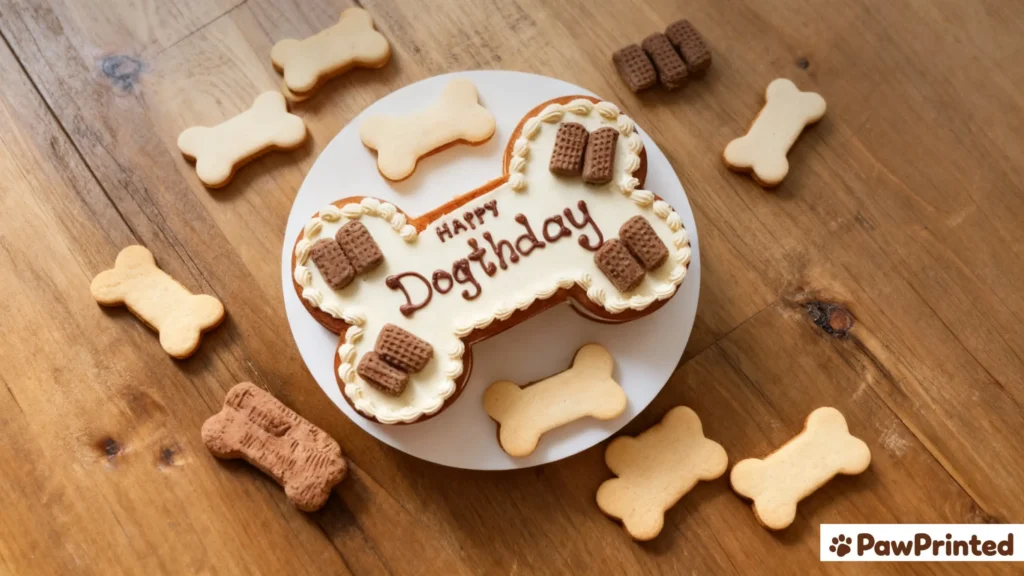
Cons of Dog Cake Mix
While dog cake mixes sound like the perfect solution, not every box guarantees quality. The biggest trade-off for convenience is losing control over what goes into your dog’s treat. Some mixes contain additives or fillers that extend shelf life but do little for nutrition — and that’s where a closer look at the label really matters.
1. Limited Ingredient Control
With mixes, you can’t fine-tune the balance of protein, fiber, or sweetness. If your dog has allergies or a sensitive stomach, this lack of flexibility can be risky.
2. Hidden Additives
Some commercial mixes rely on preservatives or milk powders that may cause digestive upset. Always check for artificial colors, sugar, or xylitol — even trace amounts can be harmful.
3. Higher Cost Per Serving
Pre-made mixes can be nearly twice as expensive as making your own from scratch. You’re paying for packaging, branding, and convenience — not necessarily better nutrition.
4. Less Customization
You can’t adjust flavor, texture, or calorie levels for your dog’s age or breed. Homemade versions let you adapt recipes freely and align with dietary needs.
If you prefer complete ingredient control, check our Homemade Dog Cake Guide for safe swaps, allergy-friendly options, and beginner-friendly baking methods.
Ingredient Transparency & Safety
Whether you bake from scratch or use a dog cake mix, the real measure of “healthy” lies in ingredient clarity. Dogs can’t process many human additives — even small doses of sugar, chocolate, or xylitol can lead to digestive stress or toxicity. That’s why reading the ingredient label carefully is the single most important step before you bake.
1. Check the First Ingredient
The first item listed should be a whole food source — oat flour, brown rice flour, or coconut flour. Avoid vague listings like “baking blend” or “flavor base.”
2. Avoid Artificial Additives
Look for phrases like “xylitol-free,” “no added sugar,” or “color-free.” Bright frostings and long shelf lives often mean unnecessary chemicals.
3. Limit Dairy & Salt
Some mixes add milk powder or sodium to enhance texture and taste. These can upset digestion, especially for sensitive or senior dogs.
4. Watch the Serving Size
Even healthy mixes can be calorie-dense. Stick to one small slice as a treat, not a meal replacement — moderation matters most.
If your dog has a history of allergies or stomach sensitivity, it’s worth reviewing our Dog Cake for Allergies – Can Dogs Really Enjoy It? for guidance on safe substitutions and hypoallergenic flours.
DIY vs Pre-Made — Which One’s Better?
The biggest question most dog parents face isn’t whether to bake, but how to bake. Should you grab a box of dog cake mix for convenience, or measure everything yourself for peace of mind? The answer depends on your time, your dog’s diet, and how much control you want over ingredients.
Homemade Cakes
- ✅ Full control over every ingredient
- ✅ Easier to adjust for allergies or sensitivities
- ⚠️ Requires more prep and cleanup
- ⚠️ Can be inconsistent without a tested recipe
Pre-Made Mixes
- ✅ Fast, tidy, and nearly foolproof
- ✅ Often portioned for one celebration
- ⚠️ Limited customization and flavor options
- ⚠️ Quality varies by brand — always read the label
Homemade cakes give you creative freedom and control, but pre-made mixes offer reliable convenience for quick celebrations. There’s no absolute winner — it’s about what fits your rhythm. For many, the best approach is a mix of both: homemade for special weekends, boxed mixes for busy weekdays.
For a clear look at trusted, safe brands that strike the right balance between quality and convenience, browse our Best Dog Cake Guide (Updated 2025) for vet-approved recommendations and real-owner feedback.
Common Mistakes When Using Dog Cake Mix
Even the best dog cake mix can go wrong if handled like a human dessert. Small details — like icing choice, serving size, or baking temperature — often decide whether your pup ends up delighted or dealing with a tummy ache. Here are the most common mistakes to avoid and how to fix them easily.
1. Using Human Frosting
Regular frosting contains sugar and dairy that can upset digestion. Try a safer alternative like plain Greek yogurt or smooth mashed pumpkin for a creamy, dog-safe topping.
2. Ignoring Portion Size
Cake is still a treat — not a meal. Medium dogs only need a small slice (about two fingers wide). Overfeeding may lead to extra calories or digestive stress.
3. Skipping Label Checks
Not every “dog-safe” mix meets the same standards. Always review the ingredient list for xylitol, salt, or flavor additives before baking or buying in bulk.
4. Overbaking or Undermixing
Dog cake mixes are often lower in sugar and fat, which means they dry faster. Keep an eye on baking time and mix thoroughly to ensure even texture and moisture.
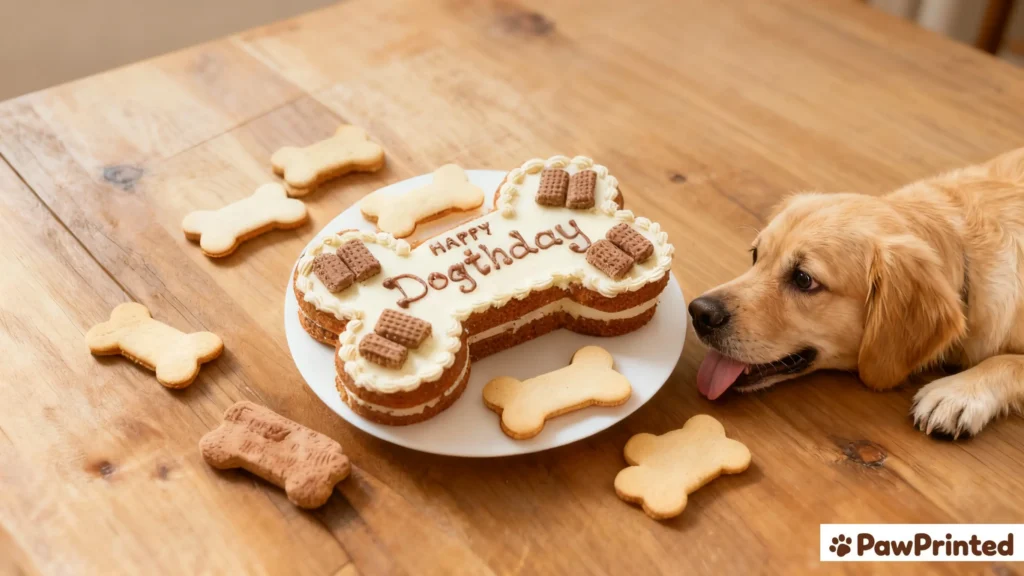
Remember — the goal isn’t perfection but celebration. A slightly lopsided, love-filled cake will always win more tail wags than any “Instagram-perfect” dessert. For small, easier celebrations, you can also check our Dog Cupcake Recipe (Apple & Carrots) — a simpler, bite-sized version of the same joy.
Notes
Wrapping It Up
A dog cake mix can be a fun, time-saving way to celebrate your pup — but it’s not automatically healthy. Always read labels, choose brands that use real ingredients, and treat cake as a small joy, not a daily snack. Whether you bake from scratch or open a box, the celebration comes from the bond you share, not the packaging.
What matters most is intention. When you know what goes into your dog’s treat, you’re not just baking — you’re caring in the most tangible way possible. Choose the path that fits your rhythm and your dog’s needs, and every celebration becomes meaningful.
Frequently Asked Questions
1. Are dog cake mixes really safe?
Most dog cake mixes are safe when designed specifically for pets and labeled “xylitol-free.” The main concern comes from brands that mimic human cake recipes or use artificial sweeteners and flavorings. Always verify that the mix lists dog-safe ingredients like oat flour, coconut flour, banana, or peanut butter powder. When in doubt, check reviews or ask your vet before serving.
2. What ingredients should I check on the label?
Focus on transparency. Look for natural flours, unsalted peanut butter, pumpkin, or banana, and avoid any mention of xylitol, raisins, chocolate, or “artificial flavor.” If the label lists sugar or salt within the first three ingredients, it’s best to skip that brand. Simpler formulas are generally gentler on digestion.
3. Is homemade better than store-bought?
Homemade cakes give you complete control — ideal for dogs with allergies or sensitive stomachs. Store-bought mixes save time but may contain fillers or flavor enhancers. The healthiest choice depends on your priorities: control versus convenience. If you read labels and choose quality mixes, both can fit into a balanced celebration routine.
4. Can puppies or senior dogs have cake mix cakes?
Yes, in moderation and with the right texture. For puppies, use water instead of oil to reduce fat; for seniors, opt for soft, moist bakes without frosting. Avoid mixes with added salt, dairy, or sugar. Always start with small portions and monitor for signs of bloating or loose stool afterward.
5. Can I add my own ingredients to a boxed mix?
Yes — a small spoon of mashed banana, carrot purée, or pumpkin can add natural sweetness and nutrients. Just avoid adding milk, chocolate, or flavored yogurt. If you modify the recipe, reduce baking time slightly and test texture with a toothpick to prevent dryness.
6. What’s the best brand of dog cake mix in 2025?
The best brand depends on your dog’s dietary needs, but top-rated options often use limited ingredients, no artificial colors, and are tested by vets. Look for mixes labeled “grain-free” or “sensitive stomach friendly.” Always buy from reputable pet brands and avoid generic mixes sold for both dogs and humans.
References — Authoritative Sources
- “Can Dogs Eat Cake? Here’s What to Know.” American Kennel Club (AKC, 2023) — Explains why regular cake isn’t suitable for dogs and how dog-specific cake mixes can provide safer alternatives. View AKC Article
- “Safe Ingredients for Homemade Dog Treats.” PetMD (2024) — Detailed guidance on which baking ingredients are safe for dogs and how to substitute human-grade items. Read on PetMD
- “Homemade Dog Treats & Balanced Nutrition.” Tufts Cummings Veterinary Nutrition Center (2022) — Outlines how to maintain balanced nutrition when baking treats at home or using pre-mixed products. See Tufts Vet Guide
- “Human Foods That Are Dangerous for Dogs.” U.S. FDA (2024) — Lists toxic ingredients such as xylitol, chocolate, and grapes, emphasizing ingredient checks before baking. FDA Consumer Update
- “Treats, Snacks, and Training Rewards.” Hill’s Pet Nutrition (2023) — Explains calorie balance and portion control when giving special treats like dog cakes. Read Hill’s Guide
- “People Foods to Avoid Feeding Your Pets.” ASPCA Animal Poison Control Center (2024) — Comprehensive list of foods that are unsafe for pets, supporting better ingredient awareness in treat mixes. ASPCA Reference