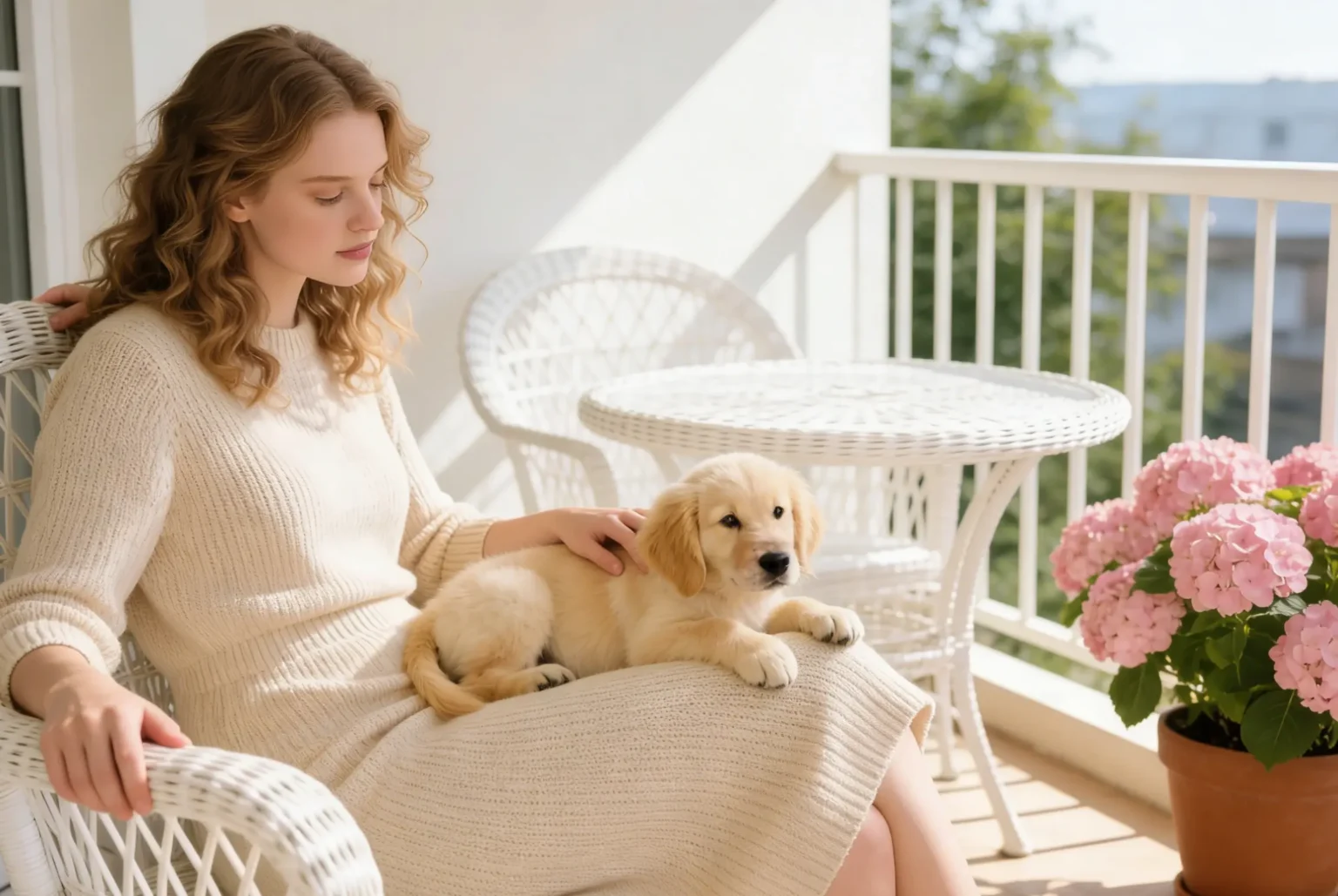
Ethan does not need a sugar-swirled, bakery-style moment to feel celebrated. What he needs is a simple, dog-safe way to join the family ritual without upsetting his stomach or turning the next day into a cleanup mission.
Over the years I learned something that surprised me – the “birthday cake” part matters less than the feeling of being included. So instead of chasing one perfect cake, I built a small set of reliable options that fit different dogs, different seasons, and different real-life situations.
This page is my practical kitchen collection of eight dog birthday cake recipes. Each one has a specific purpose, a predictable texture, and a simple ingredient logic so you can pick the right match for your pup and keep the celebration happy and calm.
Ingredient Spotlight – What Makes a Birthday Cake Dog-Safe
When I say “dog birthday cake,” I am not talking about a human dessert with a tiny dog-friendly label. A dog-safe cake is more like a soft, portionable meal-treat hybrid made with familiar ingredients and clear boundaries.
In most of these recipes, you will see a simple pattern: a gentle base (like pumpkin, banana, or plain yogurt) paired with a steady binder (like eggs) and a predictable texture builder (like oats or coconut flour). That combination helps the cake hold together, slice cleanly, and stay easy to digest.
The biggest win is what we do not add. No sugar. No chocolate. No artificial sweeteners. No heavy frosting. If you keep the ingredient list short and the portions realistic, the “birthday” part stays joyful without turning into a stomach gamble.
Recipe List Introduction – How This 8-Cake Collection Works
These eight recipes are intentionally different. I built them the way I plan real meals at home: one option for sensitive stomach days, one for picky eaters, one that feels more like a savory “birthday dinner,” and a couple that cover common needs like weight management, skin and coat support, and allergy-friendly swaps.
If you have one dog, you can pick a single best-fit cake and freeze extra slices for later. If you have multiple dogs (or one dog with a changing appetite), this collection works like a rotation. You choose the cake that matches the week, not just the occasion.
That is the point of a practical birthday cake – it is not about making the fanciest dessert. It is about making a safe, repeatable celebration that fits your dog and your kitchen.
Birthday Cake Recipes
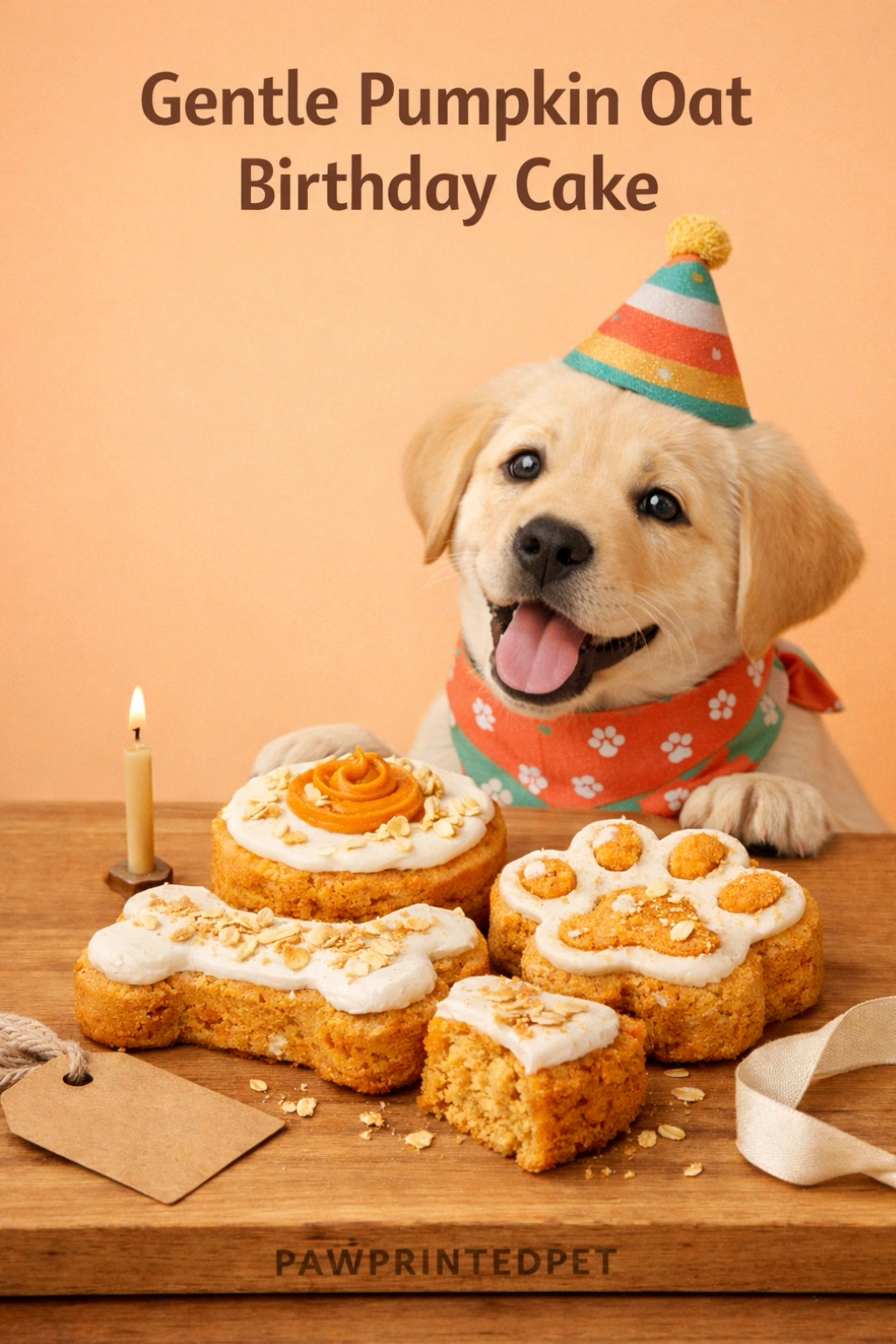
This is the starting point I recommend if you are baking a dog birthday cake for the very first time. It gives you a complete, real baking experience without feeling overwhelming. The flavors are gentle, the texture is forgiving, and the process builds confidence fast.
Quick Overview
- Prep Time: 15 minutes
- Cook Time: 20–22 minutes
- Total Time: about 55 minutes
- Yield: 1 small birthday cake
- Focus: beginner-friendly, full baking experience
Main Ingredients I Use:
Pumpkin puree, rolled oats or oat flour, egg, and a small amount of yogurt for moisture.
Tools You’ll Want Ready:
Mixing bowl, spatula, small silicone cake mold, measuring cup, cooling rack, and a compact oven.
Step-by-Step
- Preheat with steady heat. If this is your first time baking a dog birthday cake, a small countertop oven is much easier to work with. The heat stays more even and predictable than a full-size oven, which helps avoid overbaking. I usually bake this recipe in a small countertop oven and preheat it fully before the batter goes in.
- Measure before mixing. Pumpkin and oats behave very differently once combined. I always measure carefully using a measuring cup with clear markings so the cake stays soft instead of dense.
- Choose a forgiving mold. Silicone molds make first bakes much less stressful. They release cleanly and keep the cake size realistic. A dog birthday silicone cake mold works perfectly here.
- Bake gently and cool fully. Let the cake cool completely before removing it from the mold. This helps the structure set and keeps slices neat.
Emma’s Notes
This cake is about confidence more than perfection. Once you bake this one successfully, the rest feel much easier.
Ethan’s very first birthday cake was a pumpkin oat cake like this. It wasn’t fancy, but it felt meaningful and calm, which mattered more than looks.
I usually slice it thin and serve it slowly, turning the moment into a small ritual instead of a rush.
Things To Watch
- Do not overbake; pumpkin cakes dry out quickly.
- Measure oats carefully to avoid a heavy texture.
- Cool fully before slicing to keep clean edges.
- Serve in small portions, especially for first birthdays.
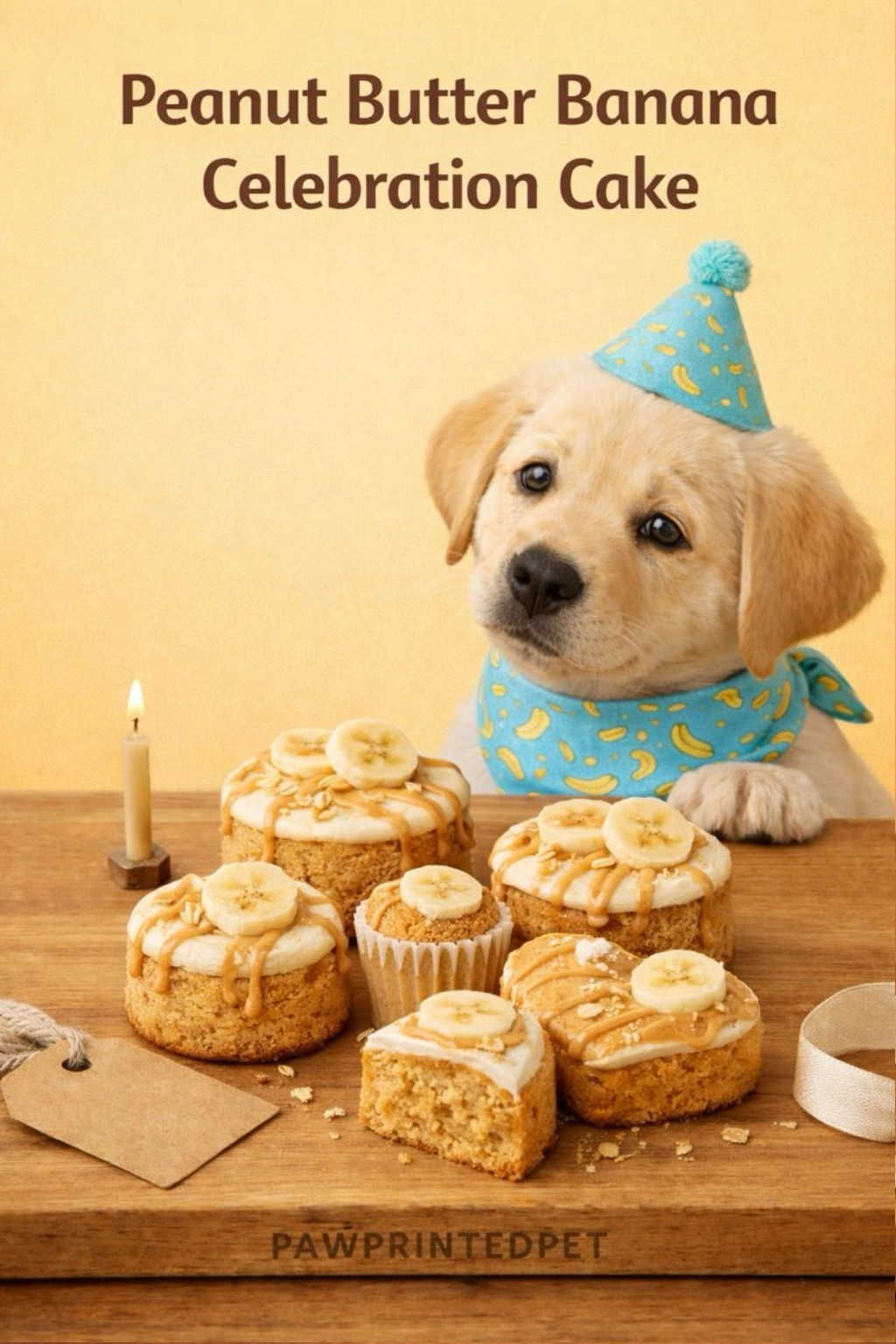
This one is my “make them come running” celebration cake. The banana aroma is naturally sweet, peanut butter adds that cozy richness, and the crumb stays soft even when you slice it thin. If your dog is a picky eater or loses interest fast, this cake is usually an easy win.
Quick Overview
- Prep Time: 12–15 minutes
- Cook Time: 18–22 minutes
- Total Time: about 50 minutes
- Yield: 1 small celebration cake
- Focus: appetite boost, soft crumb, high “wow” smell
Main Ingredients I Use:
Ripe banana, egg, oats or oat flour, and a spoonful of unsweetened peanut butter.
Tools You’ll Want Ready:
Mixing bowl, spatula, small cake pan or silicone mold, and a blender if you want the smoothest texture.
Step-by-Step
- Start with a smooth banana base. Mash the banana until it is mostly lump-free. For very smooth batters (especially if your dog is picky about texture), blending briefly with a handheld immersion blender helps everything come together quickly without overworking it.
- Add peanut butter with safety in mind. I only use peanut butter that is free from xylitol and added sugars, such as unsweetened peanut butter . Stir it in slowly so the fat distributes evenly and the cake bakes without oily pockets.
- Bring the batter together gently. Fold in oats or oat flour just until the batter looks spreadable. Stop as soon as it comes together – overmixing makes banana cakes dense instead of tender.
- Bake, cool, then slice thin. Bake only until the center is set. Let the cake cool completely so the slices stay neat and the banana aroma settles into the crumb.
Emma’s Notes
If I want guaranteed “happy eyes” from Ethan, this is the cake I make. The banana smell does most of the work, and the peanut butter makes it feel like a real celebration without adding anything weird.
I keep portions small and use the leftovers as quick “birthday week” treats. Thin slices feel special, but they do not turn into a heavy snack day after day.
If your batter looks thick, do not panic. Bananas vary a lot. Add a tiny splash of water and mix just enough to loosen it.
Things To Watch
- Use only unsweetened peanut butter and confirm it contains no xylitol.
- Very ripe bananas make the best aroma and softest texture.
- Do not overbake; banana cakes dry quickly if you chase browning.
- Cool fully before slicing so the crumb holds together.
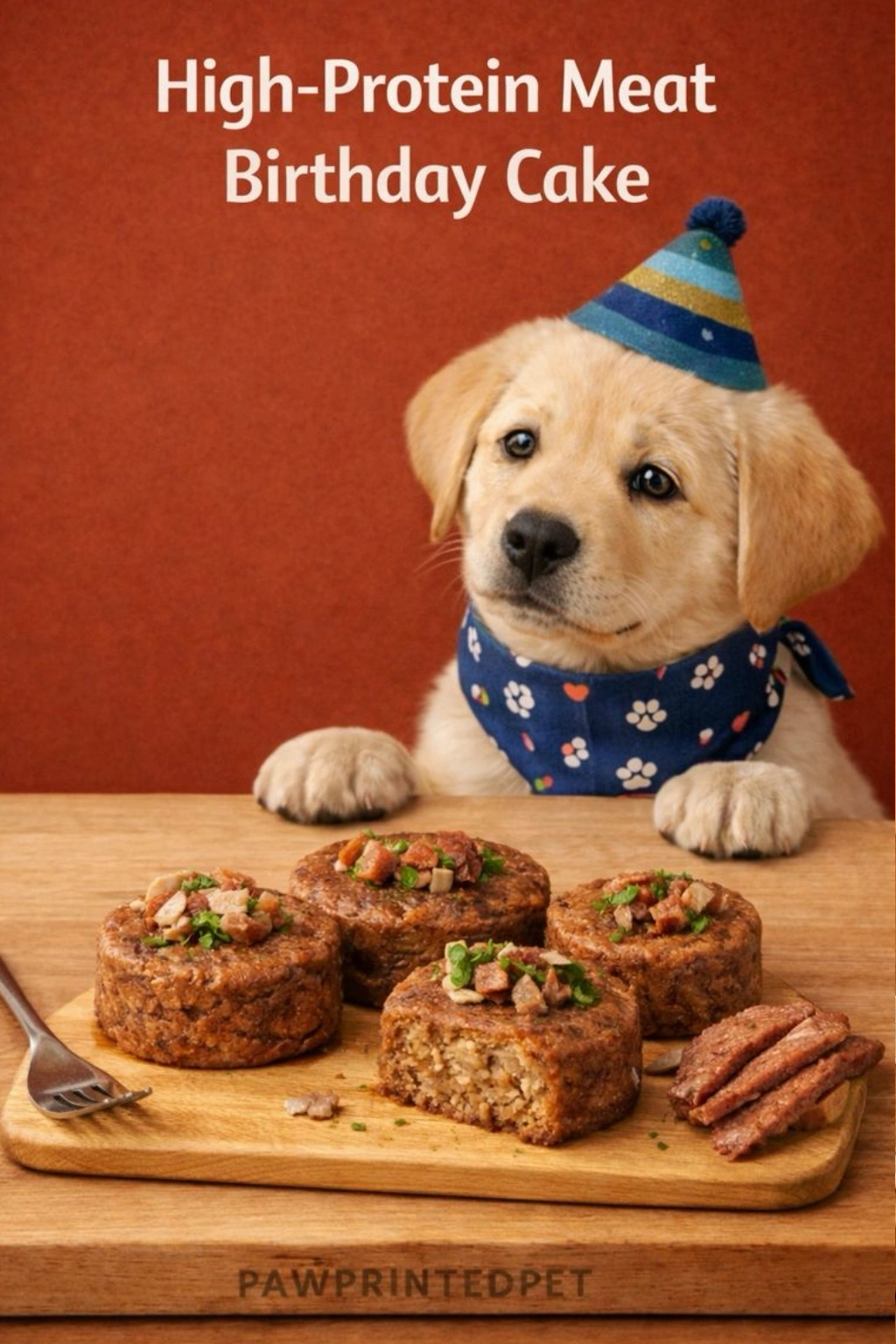
This is my go-to “main course” birthday cake for dogs who turn away from sweet smells. It bakes like a soft meatloaf, slices clean, and feels more like a real meal than a dessert. If your dog is picky about textures or gets weirded out by frosting, this one keeps the celebration simple and satisfying.
Quick Overview
- Prep Time: 15–18 minutes
- Cook Time: 22–28 minutes
- Total Time: about 60 minutes
- Yield: 1 small meat-style cake
- Focus: high protein, savory aroma, clean slices
Main Ingredients I Use:
Lean ground meat, egg, a small binder (oats or cooked mashed vegetable), and a splash of water or broth to keep it tender.
Tools You’ll Want Ready:
Mixing bowl, spatula, small pan or silicone mold, and a scoop for portioning.
Step-by-Step
- Make the meat base smooth. I like the meat mixture to be very even so it bakes without dry pockets. When I want a finer texture, I quickly blend the mixture with a handheld immersion blender before I add the binder.
- Add a “sliceable” binder. Stir in a small amount of oats or mashed cooked vegetable. The goal is a mixture that holds shape but still looks moist, not crumbly.
- Portion cleanly, then press gently. I portion the mixture with a stainless steel food scoop so each slice feels consistent, especially if I am saving some for later.
- Bake until set, then rest. Bake just until the center is firm and the juices run clear. Let it rest fully before slicing so the cake stays neat and doesn’t fall apart.
Emma’s Notes
This is the cake I make when I know sweet flavors will be ignored. Ethan treats it like a real dinner, not a “photo prop,” and that is exactly the point.
I keep slices thin and serve them slowly. A savory cake disappears fast if your dog is excited, so I treat it like a calm, paced reward.
If the mixture feels dry before baking, add a tiny splash of water and mix just enough to smooth it out. Tender beats “perfectly firm” every time.
Things To Watch
- Choose lean meat to avoid greasy slices and stomach upset.
- Do not over-pack the mixture; gentle pressing keeps the crumb tender.
- Rest before slicing so portions stay clean and easy to serve.
- Keep servings modest, especially for smaller dogs.
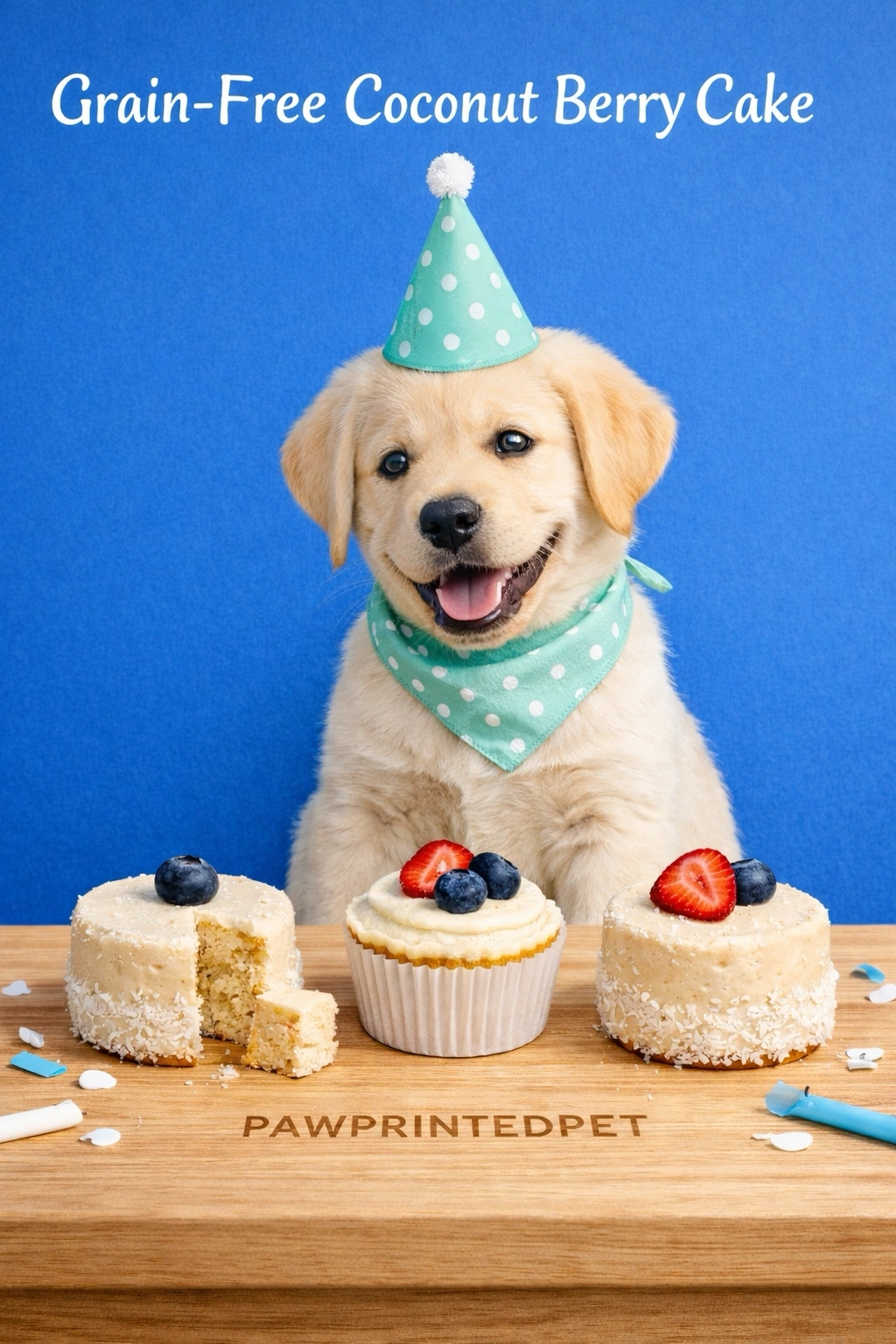
This is the cake I reach for when a dog needs fewer ingredients and a calmer birthday moment. The coconut aroma stays soft, the texture slices clean, and nothing about it feels heavy or overstimulating. It is simple on purpose.
Quick Overview
- Prep Time: 14 minutes
- Cook Time: 20-24 minutes
- Total Time: about 55 minutes
- Yield: 1 small cake
- Focus: grain-free, low stimulation, easy to slice
Main Ingredients I Use:
Unsweetened shredded coconut or a small amount of coconut flour, egg,
and a little pumpkin puree or mashed banana to keep things from drying out.
Tools I Prep First:
Mixing bowl, spatula, small cake pan, parchment or baking mat,
cooling rack, and a sharp knife for thin slices.
Step-by-Step
- Start light with the coconut. Coconut absorbs moisture quickly, so I add it gradually. The batter should spread easily, not crack or clump.
- Build moisture before structure. I mix the egg and pumpkin until smooth before adding anything dry. This keeps the cake tender instead of crumbly.
- Stop mixing early. As soon as everything comes together, I stop. Grain-free batters tighten fast if you overwork them.
- Bake gently, then cool fully. Grain-free cakes dry out easily, so steady heat matters. If this is your first time baking a dog cake, using a compact countertop oven makes temperature control much easier than a full-size oven. Let the cake cool completely before slicing.
- Decorate lightly, if at all. I keep decoration minimal and dog-safe. When I want a simple birthday look without turning it into a project, I use a dog birthday cake kit and stop there.
Emma’s Notes
This cake is intentionally quiet. It does not smell like a human dessert and it does not try to be exciting. That is exactly why it works so well for sensitive dogs.
I usually slice this one thin and freeze most of it. One slice at a time keeps the celebration gentle and predictable, which matters more than the cake itself.
Things To Watch
- Use unsweetened coconut only.
- Add coconut flour slowly if using it.
- Avoid overbaking — lighter is better than dry.
- Always cool fully before slicing.
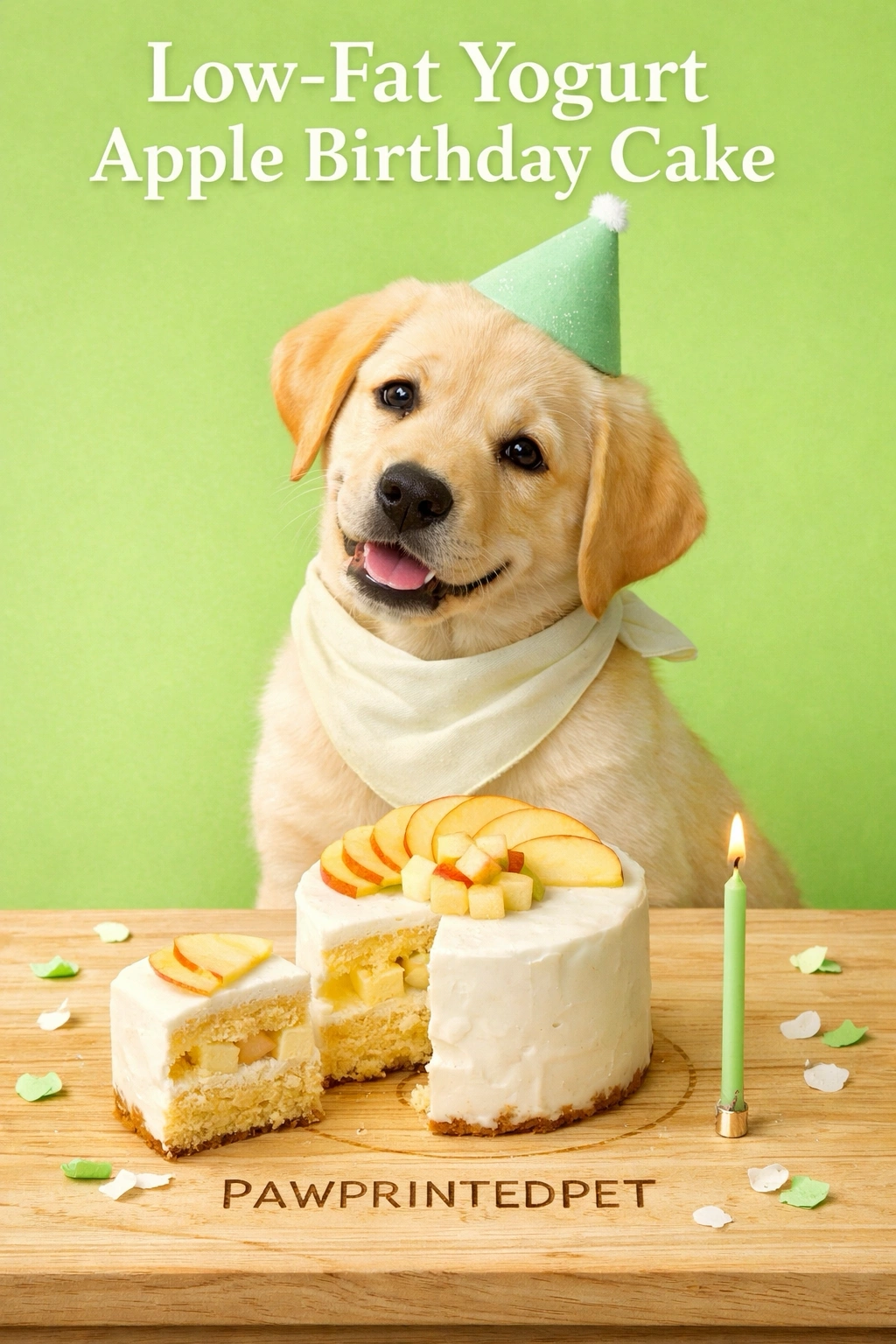
This is my “light celebration” cake for dogs who do better with a lower-fat treat and a fresher, cleaner bite. The yogurt keeps the crumb soft, the apple adds a gentle sweetness, and the portions are easy to keep sensible. Ethan gets excited for this one, but I keep the slices small and steady.
Quick Overview
- Prep Time: 12-15 minutes
- Cook Time: 18-22 minutes
- Total Time: about 50 minutes
- Yield: 1 small cake
- Focus: low-fat feel, easy portions, older-dog friendly
Main Ingredients I Use:
Plain low-fat yogurt, grated apple (no seeds), egg, and a small amount of oats or oat flour for structure.
Tools You’ll Want Ready:
Mixing bowl, grater, spatula, small pan or mold, parchment, cooling rack, and a knife for thin slices.
Step-by-Step
- Grate the apple finely. I want the apple to disappear into the batter, not turn into wet chunks. It helps the cake stay moist without adding extra fat.
- Measure with intention. For this cake, I keep the oat-to-yogurt ratio consistent so it stays light. I use this accurate measuring cup and I do not eyeball it.
- Mix until smooth, then stop. I whisk yogurt and egg first, fold in the apple, then add oats last. As soon as the batter looks even, I stop mixing.
- Bake gently, then cool fully. I bake just until the center sets. The texture tightens as it cools, so I let it cool completely before slicing.
- Serve as a slow activity. When I want a calmer finish, I spread a thin layer of yogurt on a flat surface and let Ethan work for it on this lick mat .
Emma’s Notes
This cake is not a “big dessert” moment. It is a clean, light celebration. If your dog is on a weight plan or gets an upset stomach from richer treats, this is a safer-feeling option.
I cut thinner slices than I think I need, then I stop. A small slice plus a happy walk does more for the birthday vibe than a big portion ever will.
Things To Watch
- Use plain yogurt only (no xylitol, no added sweeteners).
- Remove apple seeds and core completely.
- Keep slices small – this one is meant to feel light.
- Cool fully before slicing so portions stay clean.
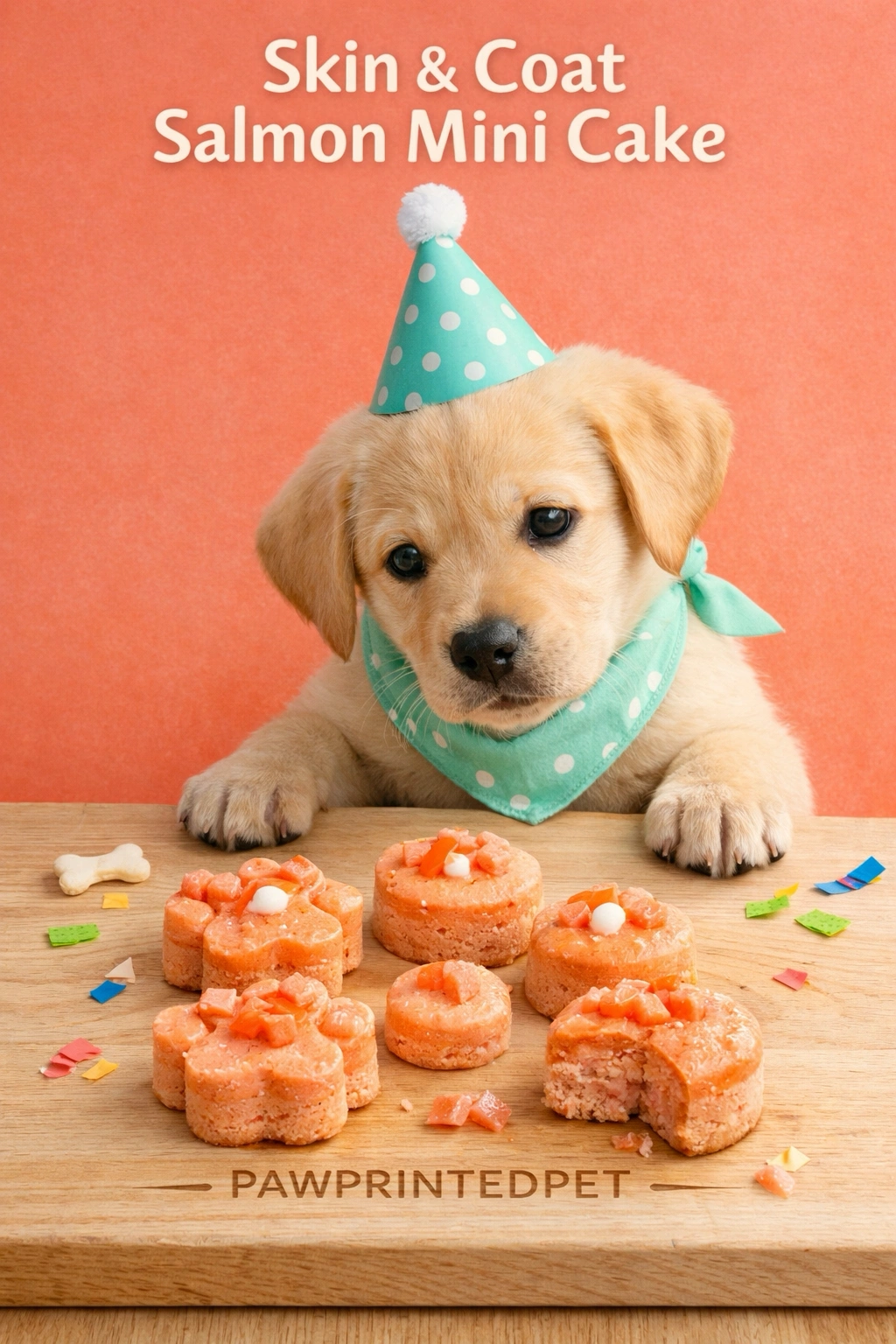
This is my “looks like a treat, eats like a real meal” birthday mini cake. It is savory, it feels substantial, and it fits dogs who do better with a protein-forward celebration. When Ethan is in a dry-skin phase, this one always feels like a smart little upgrade.
Quick Overview
- Prep Time: 12-15 minutes
- Cook Time: 18-22 minutes
- Total Time: about 55 minutes
- Yield: 1 mini cake (6-8 small portions)
- Focus: skin and coat support, savory finish, tidy portions
Main Ingredients I Use:
Cooked salmon, egg, a small amount of oats, and a little plain yogurt for a thin topper (optional).
Tools You’ll Want Ready:
Bowl, fork, baking dish or small pan, cooling rack, and one tool that makes portioning easy.
Step-by-Step
- Keep the salmon texture clean. I flake the cooked salmon finely, then measure it the same way every time so the cake sets predictably. A simple stainless steel scoop makes this part fast and consistent.
- Mix just until it holds together. I combine salmon, egg, and oats until the batter looks cohesive. If it feels dry, I add a teaspoon of water and stop mixing as soon as it softens.
- Bake, then cool fully before topping. Savory cakes slice cleaner after they cool, so I always give it time.
- Use a no-mess finish. If I add a topper, I spread it thin so it stays put. When I want the birthday excitement to stay calm and tidy, I serve the slice on a suction-cup lick mat so it does not turn into a slippery kitchen moment.
Emma’s Notes
I like this cake when I want the celebration to feel “nutritious” instead of dessert-like. Ethan stays focused on licking and chewing, and it naturally slows him down.
I keep portions small and treat it like a mini meal topper across a few days. One slice on a calm day beats one big slice on a chaotic day.
If your dog is sensitive, start with a plain slice first, then try the thin topper next time. Simple first, fancy later – that is my rule.
Things To Watch
- Use fully cooked, boneless fish only.
- Keep the topper thin so it does not drip or add too much richness.
- Let the cake cool before slicing for clean portions.
- Portion small if your dog is not used to richer proteins.
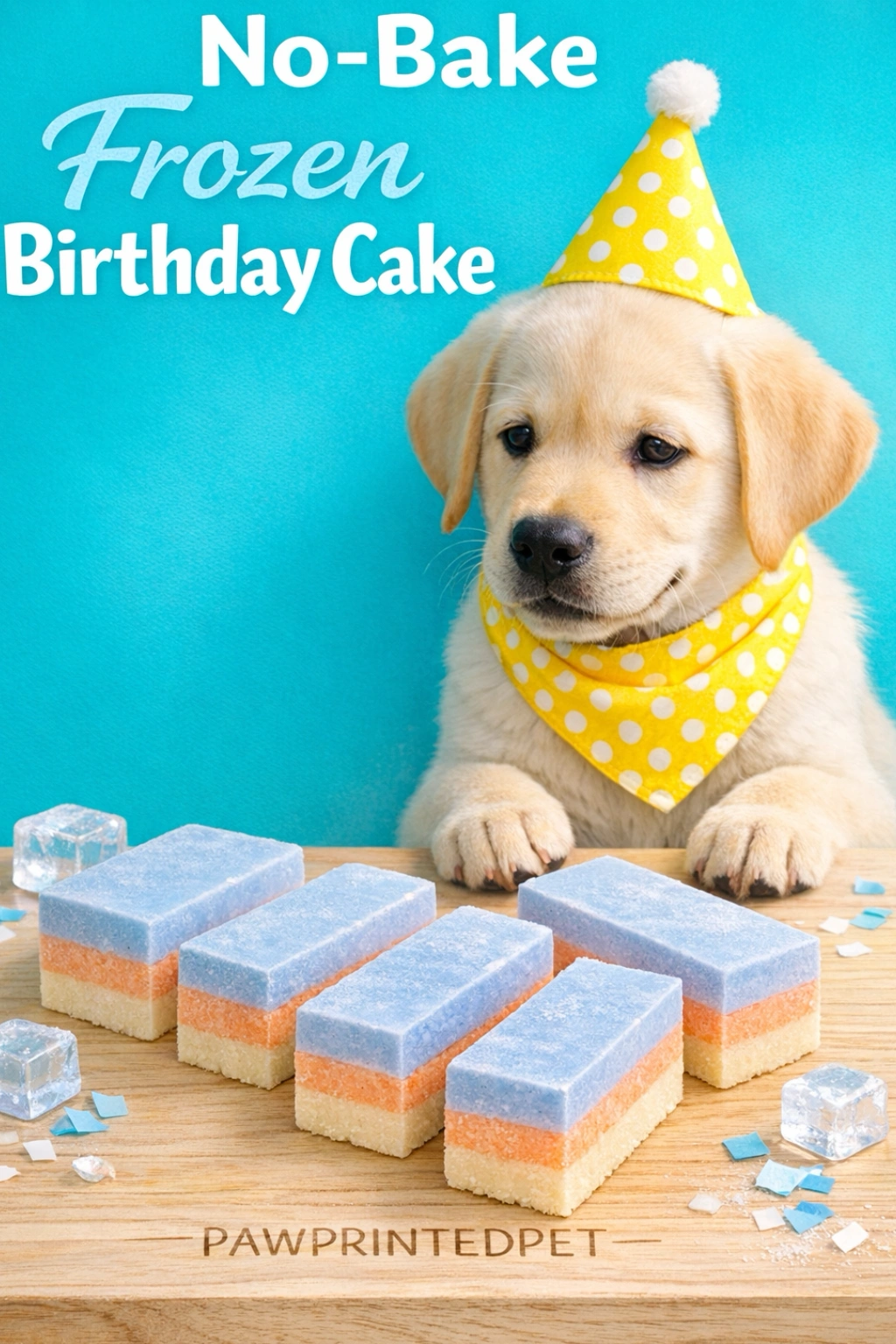
This is my hot-weather birthday move when I want a celebration that feels refreshing and low effort. No oven, no fuss, just a cold slice that turns into a calm little licking session instead of a sugar-rush moment. Ethan thinks it is a “treat popsicle,” and honestly, he is not wrong.
Quick Overview
- Prep Time: 10-12 minutes
- Freeze Time: 3-5 hours
- Total Time: same day, mostly hands-off
- Yield: 8-10 small squares
- Focus: cooling treat, no-bake, clean portions
Main Ingredients I Use:
Plain yogurt, mashed banana or pumpkin, a little oat flour, and a tiny splash of water if the mix feels too thick.
Tools You’ll Want Ready:
Mixing bowl, spoon, freezer-safe tray or mold, and a way to store portions so they stay fresh.
Step-by-Step
- Mix until it looks smooth, not runny. I mash the fruit first, then stir in yogurt and oats. If it starts looking paste-like, I add a small splash of water and stop as soon as it loosens up.
- Freeze in thin layers for easy snapping. I spread the mixture in a shallow tray so it sets fast and breaks into small pieces without crumbling.
- Store the extras the simple way. Once the pieces are fully frozen, I portion them and tuck them into reusable silicone freezer bags so nothing picks up freezer smells.
- Serve slowly, not straight from the freezer. I let a piece sit for a minute, then press it onto a flat surface so Ethan can work on it calmly. My favorite for this is a frozen-friendly lick mat because it turns “birthday cake” into a quiet enrichment moment.
Emma’s Notes
I keep portions small on this one. Frozen treats feel bigger than they are, and that is exactly the point. If your dog tends to get excited, this is the cake that naturally slows the pace.
If your freezer runs cold and the pieces feel rock-hard, just give them a short rest on the counter. I want “cool and lickable,” not “tooth test.”
For birthday photos, I do one clean square on a mat, then I let Ethan finish it at his own speed. Less mess, more calm, and the moment actually lasts.
Things To Watch
- Keep portions small, especially for puppies and seniors.
- Let pieces soften briefly so it is lickable, not rock-hard.
- Use plain yogurt with no added sweeteners.
- Freeze in thin layers so you can snap clean portions.
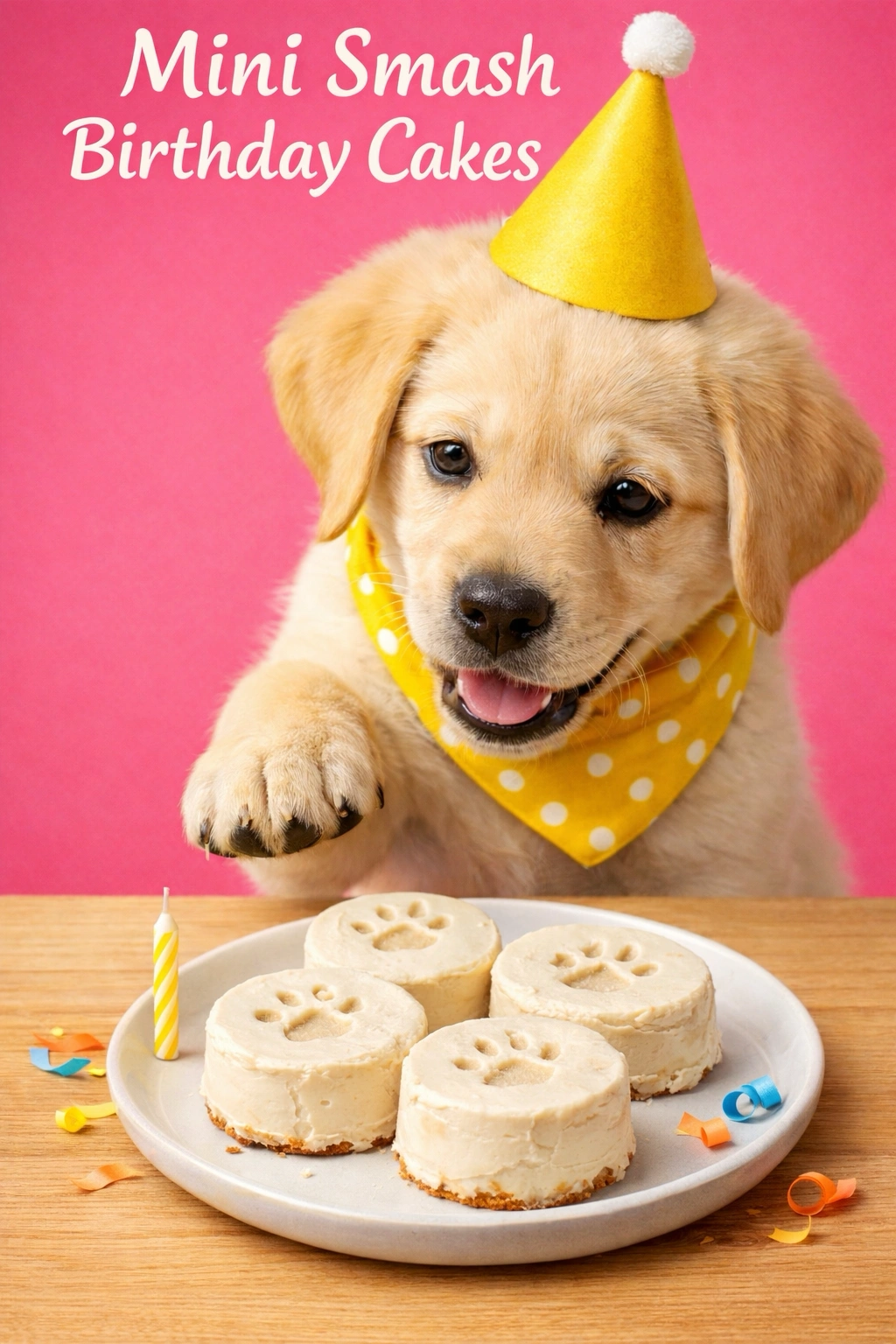
This is my tiny “photo + play” birthday cake for pups who get overwhelmed by big portions. It is intentionally small, soft, and quick to make. One mini cake, one joyful smash, and you are done.
Quick Overview
- Prep Time: 12 minutes
- Cook Time: 14-16 minutes
- Total Time: about 45 minutes
- Yield: 1 mini cake
- Focus: single serving, pup-safe, photo-friendly
Main Ingredients I Use:
Banana or pumpkin for softness, plain yogurt, egg, and a small amount of oats.
Tools You’ll Want Ready:
Small bowl, spoon, mini pan or mold, cooling rack, and a shallow serving surface.
Step-by-Step
- Mix a soft batter. I blend banana and yogurt until smooth first, then add the dry ingredients last. This keeps the cake tender and easy to “smash.”
- Keep the portion truly mini. I measure small on purpose. If you want the easiest way to keep portions consistent, a portion-control scoop makes it harder to accidentally overdo it.
- Bake briefly, then cool fully. Pull it when the center is set. The texture firms as it cools, and it unmolds cleaner.
- Serve in a way that slows the excitement. I usually place the mini cake in a slow feeder bowl so the smash lasts longer instead of disappearing in two seconds.
Emma’s Notes
This one is pure “one happy moment.” I like it for puppies, shy dogs, or any dog who gets too wound up when the portion looks big. Ethan always goes into detective mode first – sniff, lick, then the tiny smash.
If your dog tends to inhale food, keep the cake softer and serve it slower. Small wins beat messy stomach surprises.
Things To Watch
- Keep it truly mini – this is not a “leftovers” cake.
- Skip any sweeteners or frosting meant for humans.
- Cool fully before serving so the texture is stable.
- Supervise the smash moment (especially with puppies).
Some links above are affiliate links. They never cost you extra, and they help us keep testing foods, tools, and daily routines with Ethan so these guides stay honest and practical.
Nutritional Data & Vet Insights
Digestive Load
Birthday cake should feel easy on the gut, not like a surprise meal. The gentlest options in this collection rely on familiar bases like pumpkin, banana, or plain yogurt, plus a simple binder so the texture stays soft and predictable. If your dog has a sensitive stomach history, start with the mildest recipe and serve a very small first portion, then keep the rest of the day normal and boring. For the ingredient boundaries and what “healthy” really means in a slice, see Healthy Dog Cake – What Every Owner Should Know.
Protein Density
Some dogs do better with a savory, meal-like birthday cake that leans on protein rather than sweetness. That is why this collection includes higher-protein options that can feel more satisfying for active dogs or picky eaters who ignore dessert-style treats. The practical rule is portion control – richer cakes should be served in smaller pieces, especially for dogs who are not used to higher-fat ingredients. If you are weighing convenience options, the decision framework in Dog Cake Mix – Is It Worth Buying? helps you compare ingredients and serving goals.
Sugar-Free Design
A dog birthday cake is not a place for added sugar. Even small amounts can push calories up fast, and sweetened ingredients often come with additives you do not want. Every recipe here keeps sweetness simple – fruit and squash do the job, and “frosting” is intentionally light. If you want a complete safety overview before you choose a recipe, start with Dog Birthday Cake – Why It’s More Than Just a Treat and then come back to pick the best fit.
Which Dogs Benefit Most
These recipes are designed for healthy dogs who can handle a small celebratory treat, but the best choice depends on your dog’s week, not your calendar. Sensitive stomach pups often do best with pumpkin-oat or banana-based cakes. Weight management dogs benefit from lighter toppings and smaller portions. Allergy-prone dogs may need grain-free or limited-ingredient versions with a single protein. If your dog falls into the allergy category, read Dog Cake for Allergies – Can Dogs Really Enjoy It? for a realistic approach to ingredients and expectations.
When To Skip Cake
Skip birthday cake if your dog is dealing with vomiting, diarrhea, pancreatitis history, or a recent medication change that already makes their stomach unpredictable. Also pause if your dog is on a strict veterinary diet and your vet has advised against off-plan treats. In those situations, you can still do a “birthday moment” by shaping a small portion of their regular food into a mini mound and adding a single safe topper. If you want the most cautious, first-time decision checklist, see Homemade Dog Cake – What Owners Should Know First.
Portion Reality Check
The safest birthday cake is the one your dog does not overeat. Think in bites, not slices. Small dogs often do best with one to two bite-sized pieces, medium dogs with a thin slice, and large dogs with a modest slice. If multiple people are celebrating, pre-portion the cake and serve it yourself so “just one more bite” does not turn into half the pan. For small celebrations where portion control is the whole point, consider cupcakes instead – Dog Cupcakes – Why They’re Perfect for Small Celebrations.
Vet Tips & Variations
Every dog celebrates differently. If you want the birthday moment without the next-day stomach drama, use these vet-informed tweaks to match your dog’s age, activity level, and sensitivity profile. Keep changes simple and do not stack multiple new ingredients at once.
Sensitive Stomach
Choose the gentlest base first, keep the ingredient list short, and avoid rich toppings. Pumpkin-forward cakes tend to be the easiest starting point for many dogs. Bake fully, cool completely, and serve a very small test bite before offering more. If you are unsure what qualifies as “gentle,” use the checklist in Healthy Dog Cake – What Every Owner Should Know.
Weight Management
Treat the birthday cake as a controlled bonus, not an extra meal. Go for thinner slices, skip thick frosting, and pick recipes that feel filling without being heavy. If your dog is actively trying to lose weight, adjust the day’s regular treats down so the total calories stay steady. The simplest method is to pre-portion everything before the celebration starts.
Senior Dogs
Seniors often do best with softer textures and lower-fat choices. Fully cooked, moist cakes are easier to chew and tend to be more comfortable for dogs with dental issues. Keep toppings minimal, avoid cold servings, and aim for simple flavors your dog already eats regularly. For the “bigger picture” on keeping celebrations safe, see Dog Birthday Cake – Why It’s More Than Just a Treat.
Active Dogs
For athletic or very active dogs, a slightly higher-protein, savory cake can fit better than a sweet-style recipe. Use lean proteins and keep fats controlled, especially if your dog has ever had digestive upset after richer foods. The key is still portion size – the slice should be a celebration bite, not a performance meal replacement.
Mild Allergies
If allergies are part of your dog’s story, keep the recipe limited-ingredient and avoid mixing multiple proteins “just because it’s a party.” Grain-free can help some dogs, but it is not automatically better. Choose one clear strategy and test in small portions. For a balanced view on when grain-free is actually useful, read Grain Free Dog Cake – Is It Better for Allergies?.
Serving Ideas & Storage
The easiest way to keep birthday cake safe is to make it portion-friendly from the start. Cool the cake completely, slice it into small pieces, and store servings so you do not feel pressured to “use it up” in one day. That keeps the celebration fun and keeps your dog’s routine stable.
Serving Size By Dog Size
Small dogs usually do best with one to two bite-sized pieces. Medium dogs can have a thin slice. Large dogs can have a modest slice, but keep it reasonable if the recipe includes richer ingredients like peanut butter or yogurt. If your dog is trying a new recipe for the first time, start smaller than you think you need and wait before offering more.
How To Pair With Regular Food
Think of cake as replacing part of the day’s treats, not adding on top. The cleanest approach is to keep breakfast and dinner normal, then give the cake as a small mid-day celebration bite. If you are hosting guests, serve the cake yourself so multiple people do not accidentally double the portion.
Fridge Rules
Store plain cake in an airtight container in the fridge and use it within a few days for best texture and smell. If you use yogurt topping, consider storing it separately and adding it right before serving so the cake does not get soggy. Label the container so you do not lose track of when it was made.
Freezer Rules
Freezing is ideal for portion control. Slice the cake into small pieces, freeze them in a single layer first, then transfer to a container or freezer bag. Thaw a single portion in the fridge overnight or let it soften briefly at room temperature. If you want built-in portion control for small celebrations, cupcakes are often the easiest format – see Dog Cupcakes – Why They’re Perfect for Small Celebrations.
If you are still deciding between baking from scratch and using a boxed option, this guide lays out the tradeoffs clearly: Dog Cake Mix – Is It Worth Buying?.
FAQ
Can dogs eat birthday cake?
Yes, dogs can eat a birthday cake if it is made specifically for dogs with safe ingredients and realistic portions. A dog birthday cake should be more like a soft, simple treat than a sugary dessert. The safest versions use familiar foods like pumpkin, banana, plain yogurt, eggs, and oats, and they avoid sugar, chocolate, artificial sweeteners, and heavy frosting. The goal is inclusion and celebration, not a huge calorie event.
The most common problem is not the concept of cake. It is the portion size and the ingredient overload. Even dog-safe ingredients can cause loose stool if your dog eats too much at once or if the recipe introduces several new foods in one day. If your dog has a sensitive stomach, keep the ingredient list short and start with a small bite, then wait to see how they do before offering more.
If your dog has medical issues like pancreatitis, chronic GI disease, or strict weight control needs, talk with your vet first. In those cases, the best “birthday cake” might be a tiny, vet-approved portion of a familiar food instead of a full slice. A calm stomach is the real celebration.
How much dog birthday cake is safe to serve?
A safe serving depends on your dog’s size, diet history, and how rich the cake is, but the general rule is to keep it small enough that it does not replace a meal. For small dogs, that can be a couple of bite-sized pieces. For medium dogs, a thin slice is usually enough. For large dogs, you can serve a slightly bigger slice, but it should still feel modest. The point is the moment, not the volume.
Pay attention to richer ingredients like peanut butter and yogurt. They are popular, but they can also be heavy for some dogs, especially if your pup is not used to them. If this is your dog’s first birthday cake, choose a simpler recipe and treat it like a new food introduction. Start with a small bite, pause for an hour or two, and only offer more if your dog seems comfortable.
If you are hosting a party or multiple people will want to share, set the portion in advance and serve it yourself. That prevents accidental overfeeding. And if your dog has a sensitive stomach, it is smart to keep the rest of the day boring and consistent. A small slice plus a normal dinner is often the best balance.
Can puppies have birthday cake?
Puppies can have a dog-safe birthday cake in very small amounts, but they are more likely to react to new ingredients, so the recipe choice matters. A puppy-friendly cake should be gentle, low in fat, and made with a short ingredient list. Pumpkin and oats tend to be easier for many puppies than richer ingredients like peanut butter. The goal is a tiny taste and a fun photo, not a large serving.
The key risk with puppies is digestive instability. Their gut is still developing, and even safe foods can cause soft stool if the portion is too large or if the recipe introduces multiple new items at once. If your puppy is on a specific food plan from your breeder or vet, do not change the pattern drastically on a celebration day. Give the smallest possible bite and keep the rest of the day consistent.
If your puppy has had any issues like diarrhea, vomiting, or slow weight gain recently, skip the cake and celebrate with a safer option like a tiny portion of their normal food shaped into a fun “smash” mound. The happiest birthday is the one that does not lead to a stressful night.
Can I freeze dog birthday cake for later?
Yes, freezing dog birthday cake is one of the best ways to keep portions controlled and prevent waste. Most dog-safe cakes freeze well if you cool them fully, slice them into small pieces, and store them in an airtight container. For cakes that use yogurt or moist ingredients, freezing also helps maintain texture because the pieces stay firm and easy to serve.
The most practical method is to pre-slice the cake and freeze individual portions. That lets you take out one small piece at a time instead of thawing the whole cake. You can thaw portions in the fridge overnight or let a small piece soften at room temperature for a short period. If your dog is sensitive, avoid serving very cold pieces quickly, especially in winter or for older dogs.
Label your container with the date and aim to use frozen portions within a couple of months for best quality. If the cake has a thick yogurt topping, it can be easier to freeze the cake plain and add a fresh topping on the day you serve it. That keeps the texture and smell more appealing.
Is yogurt frosting safe for dogs?
Plain, unsweetened yogurt can be safe for many dogs and works well as a light “frosting,” but it depends on your dog’s tolerance. Some dogs handle yogurt easily, while others react to dairy with gas or loose stool. If your dog has never had yogurt, test a small lick on a normal day before using it as a birthday topping. The safest choice is a simple, thin layer rather than a thick frosting pile.
Choose yogurt with no added sugar and no artificial sweeteners. Avoid flavored yogurts, especially those with xylitol or other sweeteners that can be dangerous. If your dog is dairy-sensitive, you can still get the frosting effect with mashed pumpkin, mashed sweet potato, or a thin layer of banana mash. Those options give a similar look without the dairy risk.
If you want the cleanest approach, treat yogurt like a garnish. A small swipe is enough for the photo and the moment. Most dogs care more about the smell and the attention than the frosting thickness. Keeping it light helps the celebration stay comfortable the next day.
Wrapping It Up
A dog birthday cake is not about doing more. It is about doing just enough to make your dog feel included, celebrated, and comfortable. When the ingredients are simple and the portions are realistic, the memory lasts longer than the cake itself.
If you try one of these recipes, I would love to hear how it worked for your pup. Every dog celebrates a little differently, and those small adjustments are what turn a recipe into a routine.
If you don’t want to cook daily, check our dry food picks – those were Ethan’s daily backups.
Author & Vet Review Box
Emma’s Note:
I treat birthday cakes the same way I treat any homemade food for Ethan – simple ingredients, clear portions, and no pressure to make it perfect. The calmer the ingredient list, the calmer the next day tends to be. If I plan ahead and freeze small portions, birthdays feel fun instead of disruptive.Vet Review:
Dog birthday cakes can be appropriate when they are treated as small, controlled treats rather than full meals. Recipes that avoid added sugar, excessive fat, and unfamiliar ingredients are generally easier on digestion. Owners should consider the dog’s overall diet, medical history, and body condition before introducing celebratory foods, and keep portions modest to prevent GI upset.
References – Authoritative Sources
Below are authoritative references we use to keep our ingredient choices and safety guidance grounded in veterinary nutrition principles.
Feeding Your Dog – How to Make Smart Food Choices (2023) – American Kennel Club (AKC)
AKC Nutrition Guidance – Practical overview of safe nutrition decisions for pet owners.
Dog Nutrition (2024) – PetMD
PetMD Dog Nutrition – Context on common ingredient safety and portion cautions.
Homemade Diets for Dogs and Cats (2022) – Cummings School of Veterinary Medicine at Tufts University
Tufts Vet Nutrition – Evidence-based guidance on balancing homemade feeding.
Pet Food Safety (2023) – U.S. Food and Drug Administration (FDA)
FDA Pet Food – Safety-focused reference for handling and storage practices.
Nutrition and Your Pet (2021) – American Veterinary Medical Association (AVMA)
AVMA Nutrition – Owner-friendly guidance on nutrition fundamentals and health considerations.
Using Research to Inform Diet Choices (Search Portal) – NIH PubMed
NIH PubMed – Research gateway for digestion, fiber, and diet tolerance topics.
Explore More PawPrinted Guides
Gentle Pumpkin Oat Birthday Cake (First-Time Friendly)
- – Mixing bowl
- Measuring cup
- Spatula or spoon
- Small baking pan or silicone cake mold
- Oven
- Cooling rack
- Pumpkin puree unsweetened, plain
- Rolled oats or oat flour
- Egg
- Water as needed for batter consistency
- Step 1
- Preheat the oven and prepare your baking pan or silicone mold. If using rolled oats, pulse them briefly until they resemble a coarse flour. This helps create a smoother cake texture and prevents uneven pockets once baked. Measure all ingredients before mixing so the batter comes together quickly and evenly.
- Step 2
- In a mixing bowl, combine the pumpkin puree and egg until fully blended. Add the oats gradually, stirring between additions. The batter should look thick but spreadable, not stiff. If it feels too dense, add a small amount of water one tablespoon at a time until the mixture loosens slightly.
- Step 3
- Transfer the batter into the prepared pan or mold and smooth the surface gently with a spatula. Bake until the center is set and no longer looks wet. The edges should feel firm but not browned. Avoid overbaking, as oat-based cakes can dry out quickly once they pass the set stage.
- Step 4
- Remove the cake from the oven and allow it to cool completely before slicing. Cooling helps the structure settle and prevents crumbling. Once fully cooled, cut into thin slices suitable for your dog’s size and serve slowly as a special birthday treat.