On days when Ethan is full of energy but I cannot add another long walk, I lean on simple DIY dog toys. Not because I love crafts, but because enrichment gives dogs a calm, focused way to use their brains at home. In this guide, I am sharing easy enrichment ideas you can make with everyday items, plus how I decide which DIY dog toy to use, when to keep it simple, and when to skip it for safety.
Quick note before we start: DIY should feel low-pressure. If one idea is not a fit for your dog, that is normal. The goal is calm engagement, not perfect handmade toys.
🧩 DIY Dog Toys Collection – 10 Calm Enrichment Ideas
This collection brings together ten thoughtfully designed DIY dog toys, presented as a complete 44-page printable enrichment guide. Each activity is created to support calm, focused engagement at home using simple household materials. Rather than encouraging constant stimulation or novelty, this collection helps dog parents build a more balanced, sustainable daily enrichment routine.
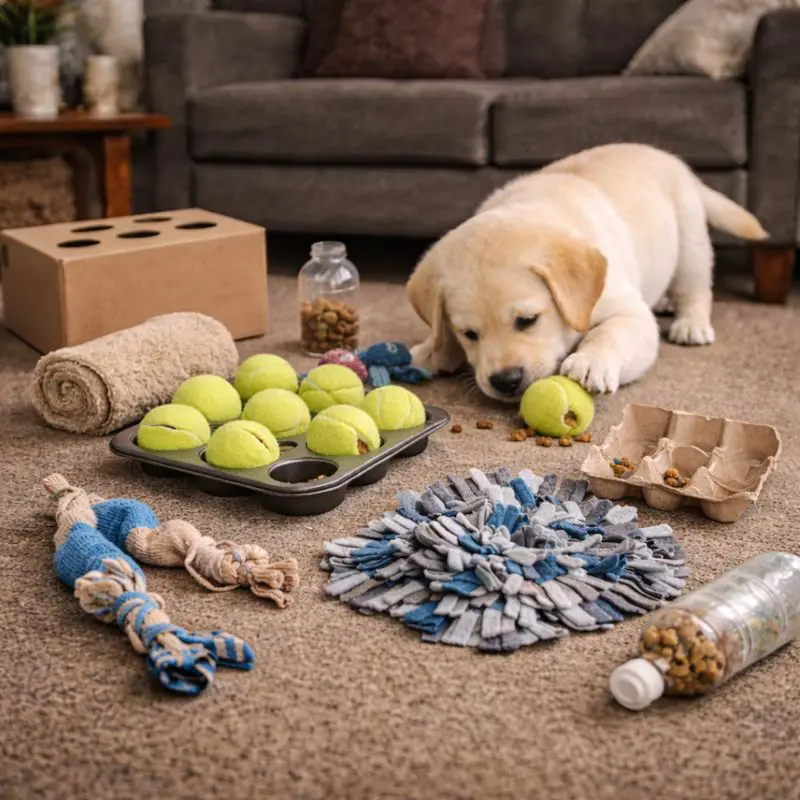
📘 What You’ll Get (10 Activities):
🧩 Towel Dog Toy DIY – A Simple Enrichment Puzzle
🧶 Snuffle Mat DIY – Easy No-Sew Enrichment for Dogs
🍼 Plastic Bottle Treat Dispenser DIY – Interactive & Low-Cost Fun
📦 Cardboard Box Puzzle DIY – Simple Brain Game for Curious Dogs
🧁 Muffin Tin Game DIY – Classic Nose Work for Dogs
❄️ Frozen Towel Chew DIY – Cooling & Calming Enrichment
🥚 Egg Carton Scent Puzzle DIY – Simple Nose Work Game ·
🧦 Sock Tug Toy DIY – Gentle Pull & Chew Play
🧻 Paper Towel Roll Puzzle DIY – Safe Tear & Sniff Play
🎾 Tennis Ball Treat Puzzle DIY – Quick Nudge-and-Reward Game
🛠️ Each activity includes clear setup instructions, safety guidance,
and practical tips for adjusting difficulty.
Scroll down to explore each DIY toy individually. You can view them one at a time, download a single guide, or use the full collection as a calm enrichment reference for everyday life with your dog.
What You’ll Find in This Collection
Inside this guide, you’ll find ten DIY dog toys organized as a complete enrichment system. Each activity supports a different need, including sniffing and nose work, gentle chewing, light pulling, controlled problem-solving, and emotional release.
Every toy is explained in plain language and designed to be used in short, intentional sessions that fit into real daily life. No special tools or advanced preparation are required.
How to Use the Individual Cards
Each DIY toy in this collection can be used on its own or combined with others as part of a rotating enrichment routine. The guide helps you choose activities based on your dog’s energy level, mood, and environment, instead of relying on trial and error.
Many dog parents use this collection as a reference, returning to it whenever they need a calm indoor activity, a low-effort enrichment option, or a way to add mental engagement without increasing physical intensity.
Why This Set Works Together
These toys were selected to work together as a small, intentional system rather than as random activities. When rotated thoughtfully, they help meet a dog’s enrichment needs while reducing overstimulation and burnout.
This approach supports better emotional regulation, encourages focused engagement, and makes enrichment more sustainable for both dogs and humans.
Emma’s Notes
I used to feel like I needed more and more toys to keep Ethan engaged. What actually helped was learning how to use a small set of activities well.
This 44-page guide reflects how I really use DIY toys in everyday life: rotating them slowly, watching his responses, and choosing calm enrichment over constant stimulation. It’s designed to be something you come back to, not something you read once and forget.
🧺 Towel Dog Toy DIY – A Simple Enrichment Puzzle
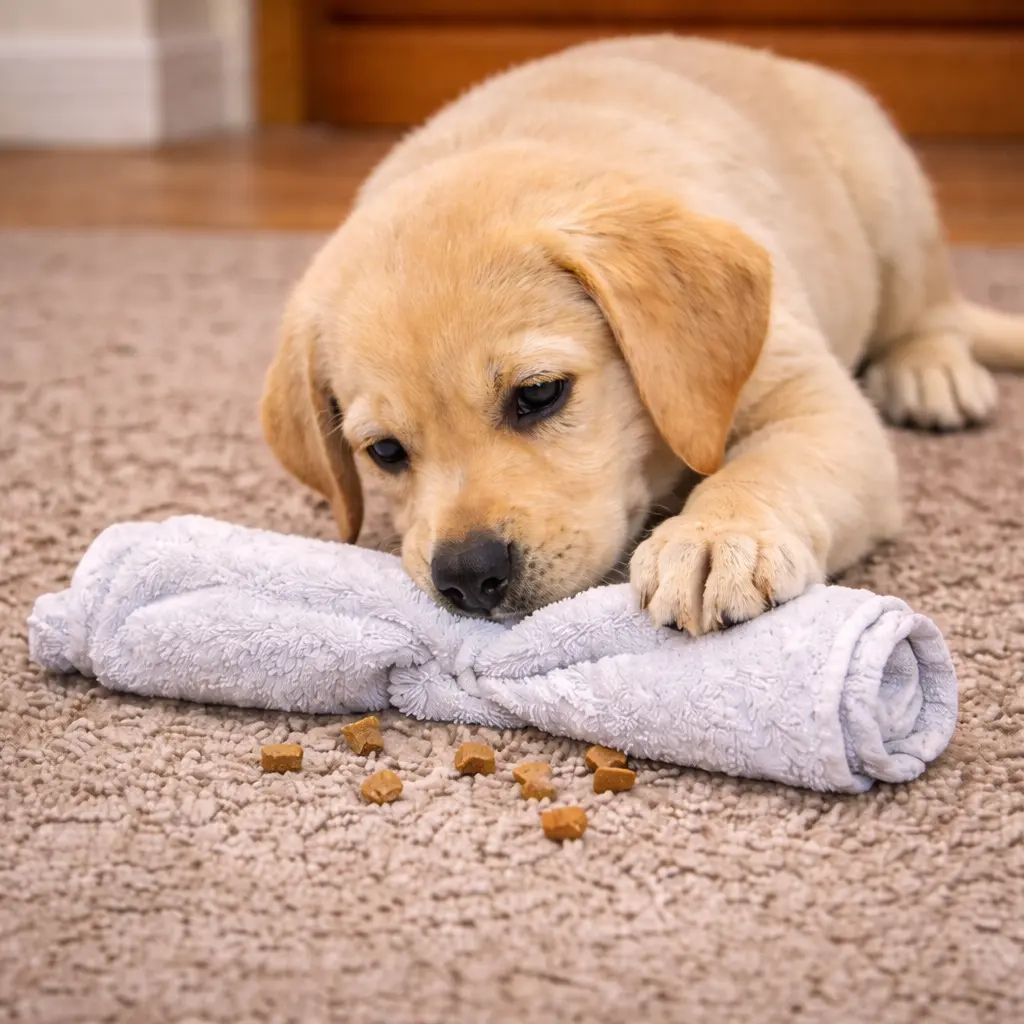
This towel dog toy is one of the simplest enrichment ideas you can make at home, yet it works surprisingly well for mental engagement. By hiding treats inside a rolled towel, dogs are encouraged to slow down, use their nose, and problem-solve in a calm, low-pressure way. It is especially helpful for indoor days, bad weather, or moments when physical exercise is limited.
📘 What You’ll Get
• 4-page printable PDF guide
• Clear step-by-step instructions
• Visual walkthrough + text-only print page
• Tips for adjusting difficulty
• Safety notes and best-use guidance
Step-by-Step Instructions
- Prepare the towel. Choose a clean, dry towel with no loose threads. Lay it completely flat so treats can be spread evenly.
- Add the treats. Sprinkle a small amount of dry treats or kibble across the towel. Keep pieces small to encourage sniffing rather than chewing.
- Roll it tightly. Roll the towel into a firm log starting from one end. A tighter roll increases the challenge slightly.
- Adjust difficulty. Leave it rolled for beginners or tie a loose knot for more experienced dogs.
- Let your dog explore. Place it on the floor and allow calm, self-paced interaction.
Why This Toy Helps
This DIY toy turns treat time into a simple problem-solving activity. Dogs rely on scent and gentle manipulation instead of speed, which supports mental engagement without overstimulation.
When I Use This Toy
I use this towel toy on rainy days, after shorter walks, or during calm afternoons when indoor enrichment is needed. It fits naturally into a relaxed daily routine.
Things to Watch
- Always use towels without loose threads or holes.
- Skip the knot for dogs new to enrichment toys.
- Supervise play and remove the towel once treats are finished.
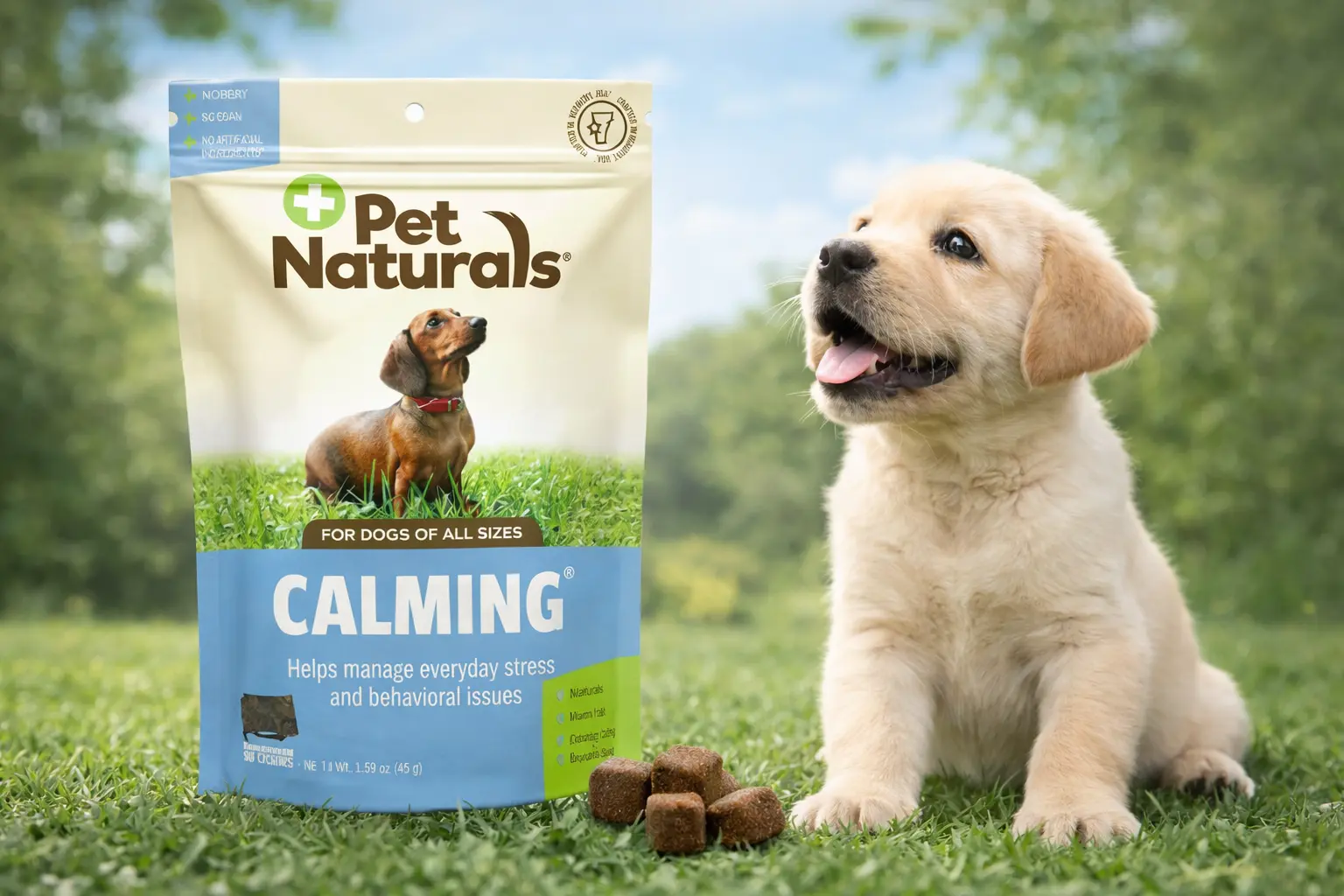
Pet Naturals Calming Soft Chews
I use these calming chews as a short-term support option when Ethan is dealing with everyday stress triggers, like noisy environments, travel days, or changes in routine. They’re easy to portion, simple to give, and fit naturally into our routine without replacing food or training.
- Best for: Fireworks, storms, travel, grooming, separation moments
- What’s inside: L-theanine, thiamine (vitamin B1), and a colostrum-based calming complex
- How I use it: Given before known stress events, not something I rely on every day
- Good to know: Soft chew texture works well even for picky or older dogs
🌿 Snuffle Mat DIY – Easy No-Sew Enrichment for Dogs
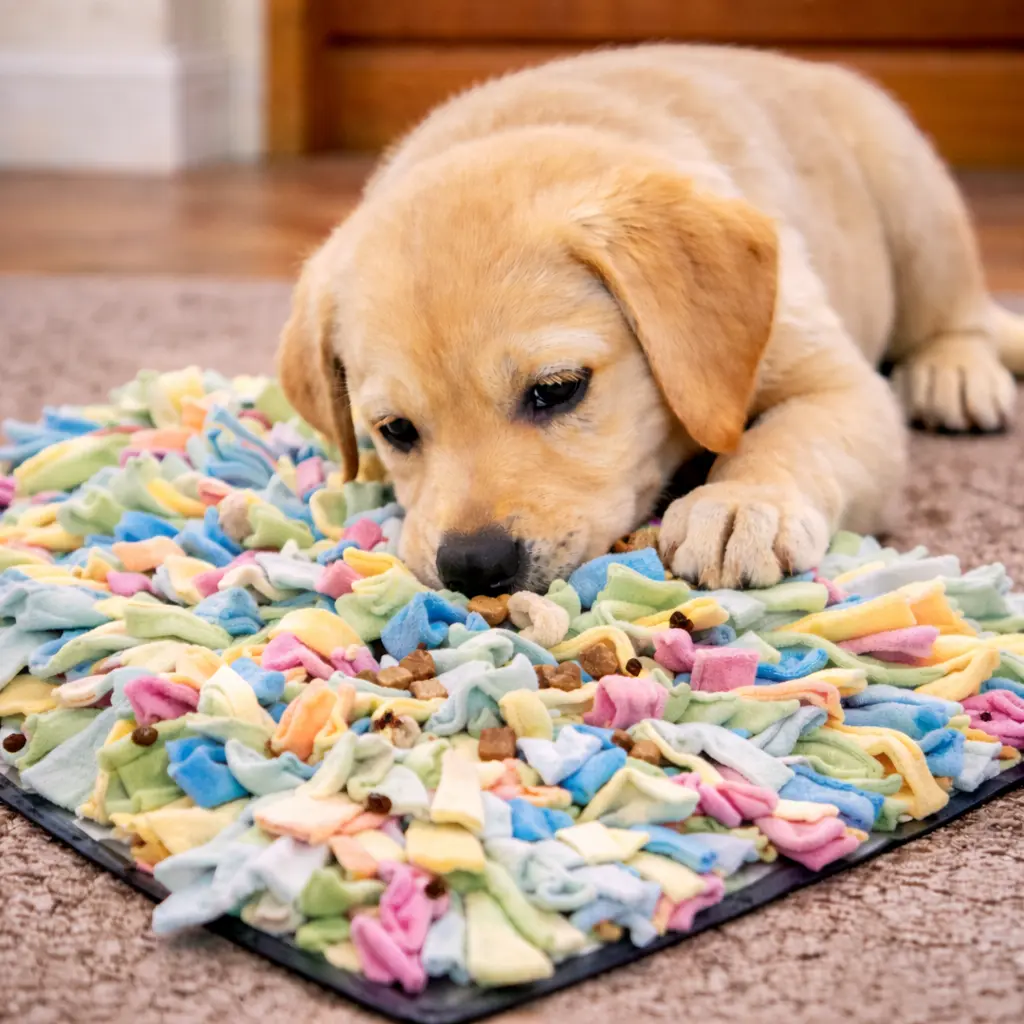
This DIY snuffle mat is a calm, scent-based enrichment toy that encourages dogs to slow down and use their nose to search for food. It requires no sewing, no special tools, and can be adjusted easily for different skill levels. This makes it a great option for beginners or dogs that benefit from low-pressure mental work.
📘 What You’ll Get
• 4-page printable PDF guide
• Clear step-by-step instructions
• Visual walkthrough + text-only print page
• Tips for adjusting difficulty
• Safety notes and best-use guidance
Step-by-Step Instructions
- Prepare the base. Use a rubber sink mat, bath mat with holes, or a similar gridded base that allows fabric strips to be threaded through easily.
- Cut fabric strips. Cut fleece or soft fabric into long strips. The fabric should be wide enough to grip but soft enough to move easily.
- Thread and tie. Pull each strip through a hole in the mat and tie a simple knot. Repeat until the surface is evenly covered.
- Hide the treats. Sprinkle small treats or kibble between the fabric layers. Press them down slightly so your dog must sniff to find them.
- Introduce calmly. Place the mat on the floor and allow your dog to explore at their own pace.
Why This Toy Helps
Sniffing is naturally calming for dogs. A snuffle mat encourages focused scent work, which can help reduce restlessness and provide mental stimulation without increasing arousal.
When I Use This Toy
I use a snuffle mat when I want to slow Ethan down during meals or when outdoor activity is limited. It works especially well in the evening as part of a wind-down routine.
Things to Watch
- Use sturdy fabric that does not fray easily.
- Start with loosely packed treats for beginners.
- Supervise use and remove the mat once food is finished.
♻️ Plastic Bottle Treat Dispenser DIY – Interactive & Low-Cost Fun
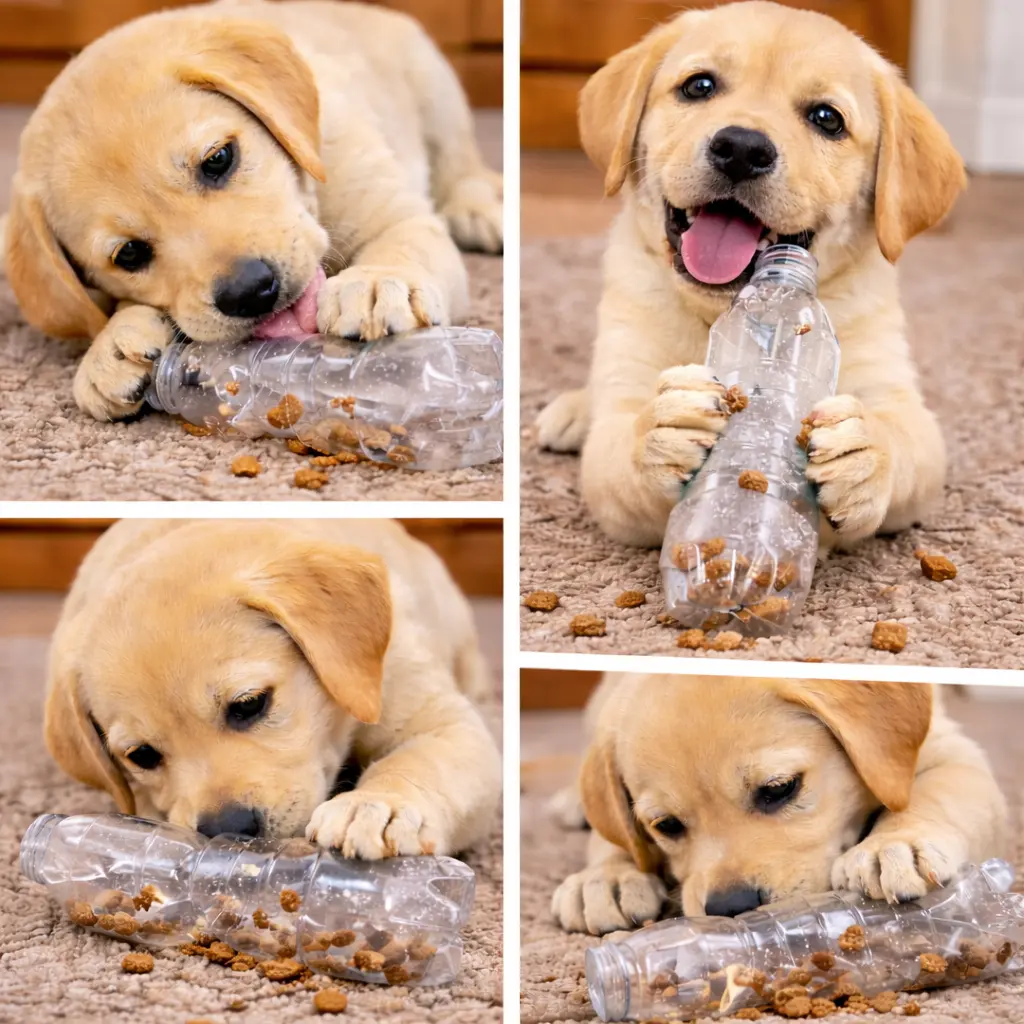
This plastic bottle treat dispenser is a simple DIY toy that turns basic movement into a rewarding problem-solving activity. By rolling or nudging the bottle, dogs learn how to release treats gradually, which helps burn mental energy without requiring intense physical effort. It is an easy way to reuse everyday materials while adding enrichment to indoor play.
📘 What You’ll Get
• 4-page printable PDF guide
• Clear step-by-step instructions
• Visual walkthrough + text-only print page
• Tips for adjusting difficulty
• Safety notes and best-use guidance
Step-by-Step Instructions
- Choose the right bottle. Use a clean, empty plastic bottle with a screw-on cap. Remove all labels and make sure there are no sharp edges.
- Create treat openings. Cut one or two small holes in the sides of the bottle. The holes should be just large enough for treats to fall out slowly.
- Add the treats. Place a small handful of dry treats or kibble inside. Avoid overfilling so the treats dispense gradually.
- Secure and test. Screw the cap on tightly and gently roll the bottle yourself to make sure treats come out at a controlled pace.
- Introduce the toy. Place the bottle on the floor and let your dog explore by nudging or pawing it.
Why This Toy Helps
This toy combines movement with reward. Dogs must experiment with different actions to release treats, which encourages problem-solving and sustained focus. It can be especially helpful for dogs that enjoy interactive play but need controlled, indoor-friendly enrichment.
When I Use This Toy
I use this toy when Ethan needs something engaging but not overly exciting. It works well between training sessions or on days when outdoor playtime is shorter than usual.
Things to Watch
- Always supervise to prevent chewing on plastic.
- Use smooth holes with no sharp edges.
- Remove the bottle once treats are finished.
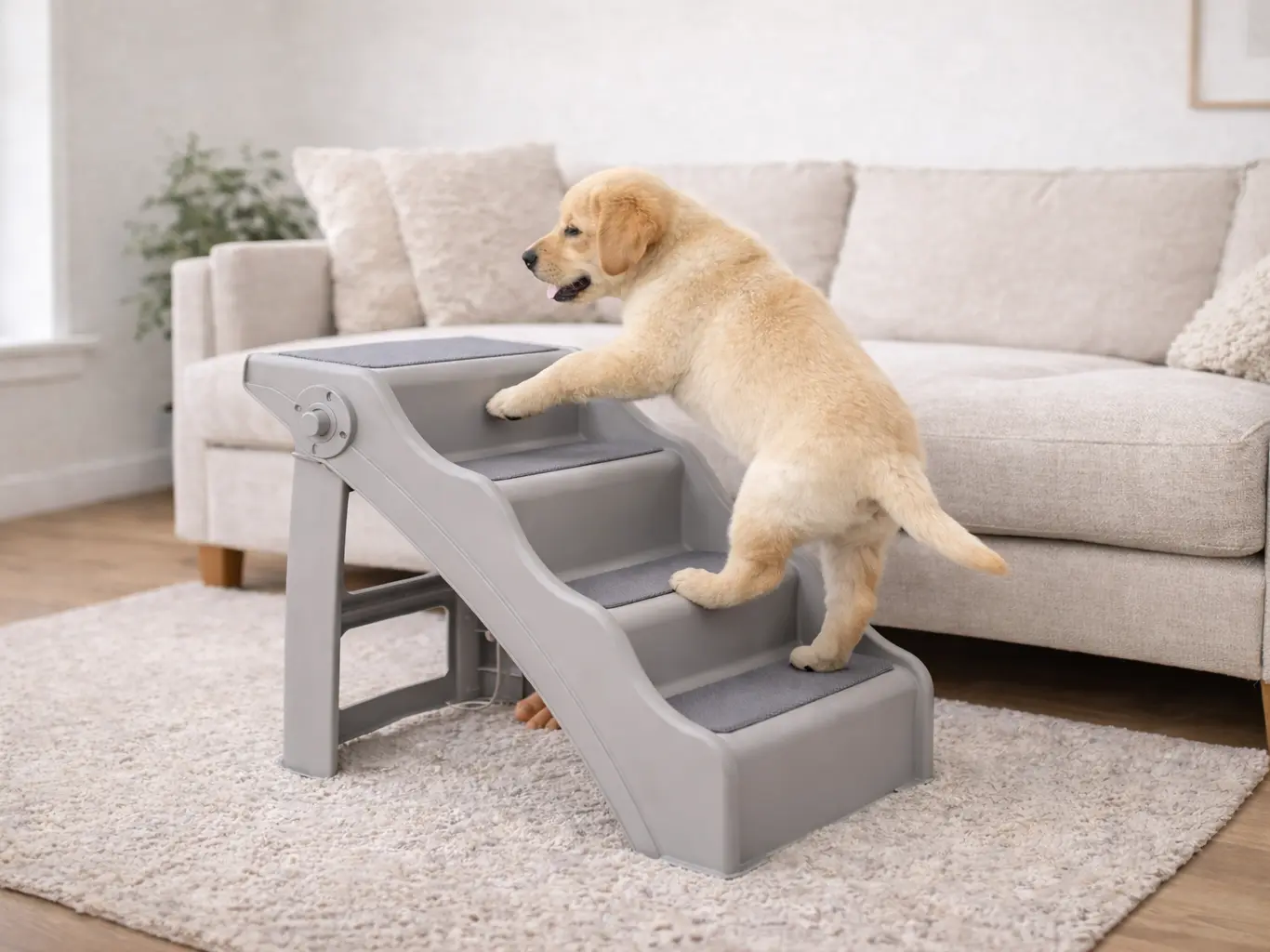
Foldable Non-Slip Pet Steps (3-Step)
I like having foldable steps like this around for the “up and down all day” spots – the couch, a favorite chair, or the bed. It’s one of those small setup changes that can make daily routines calmer, especially for puppies who are still learning body awareness or dogs who shouldn’t be jumping.
What matters most to me is stable footing. The non-slip treads help paws feel secure, and the foldable design makes it easy to move out of the way when we need floor space. I still introduce steps slowly with a few treats and gentle repeats, so it feels like a normal path – not a scary new object.
- Best for: Couch/bed access for small dogs, puppies, and older dogs
- Why it helps: Reduces repeated jumping and supports safer daily movement
- How I use it: Place flush to furniture and teach with slow, calm reps
- Good to know: Choose height and depth based on your furniture, not just your dog
📦 Cardboard Box Puzzle DIY – Simple Brain Game for Curious Dogs
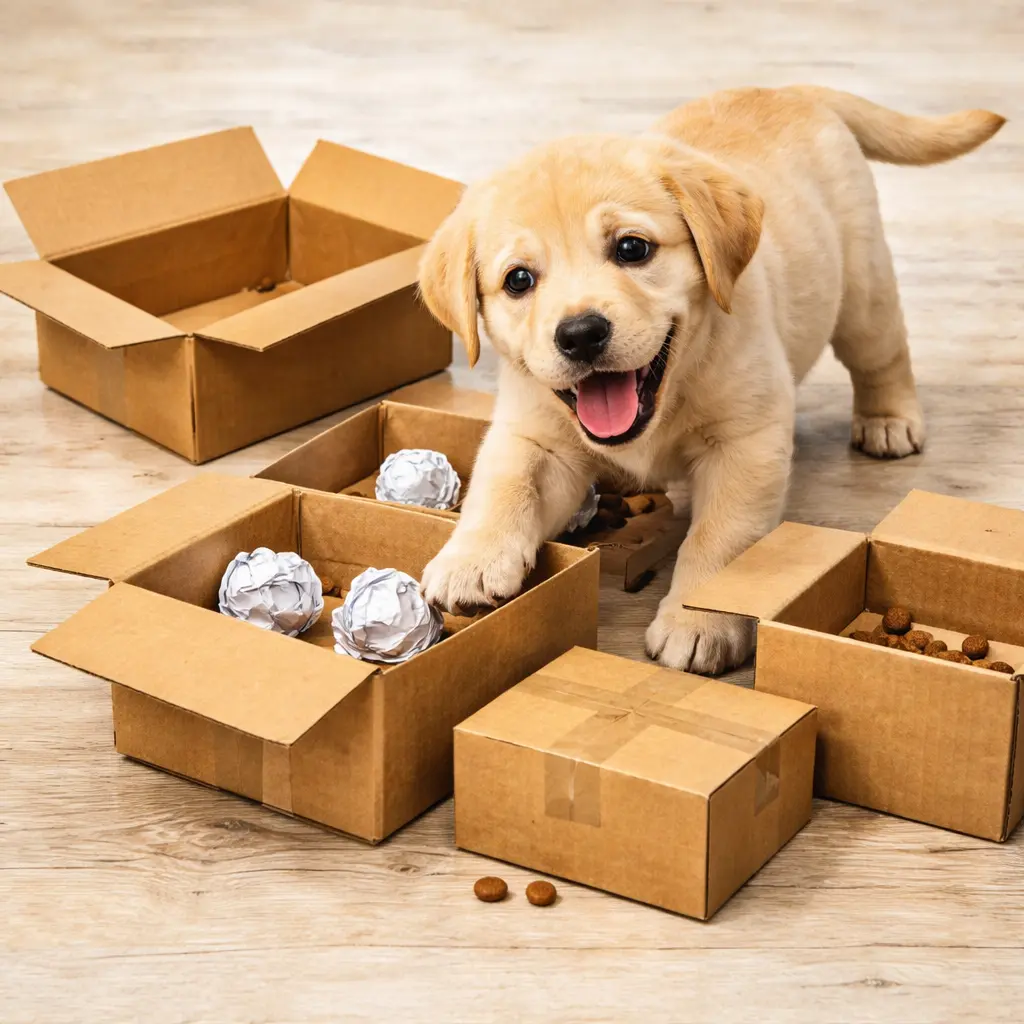
This cardboard box puzzle is a flexible DIY enrichment activity that turns ordinary boxes into an engaging problem-solving game. By hiding treats inside layered boxes or paper-filled compartments, dogs are encouraged to sniff, paw, and investigate at their own pace. It is easy to set up, easy to customize, and works well for dogs that enjoy exploring new textures.
📘 What You’ll Get
• 4-page printable PDF guide
• Clear step-by-step instructions
• Visual walkthrough + text-only print page
• Tips for adjusting difficulty
• Safety notes and best-use guidance
Step-by-Step Instructions
- Collect safe boxes. Use clean cardboard boxes without staples, tape, or sharp edges. Different sizes work best for creating layers.
- Create compartments. Place smaller boxes inside a larger one or crumple paper to form simple hiding spots for treats.
- Hide the treats. Drop small treats or kibble into a few compartments. Avoid placing food in every section to encourage searching.
- Set it on the floor. Place the box puzzle in an open area where your dog can move around it easily.
- Let your dog explore. Allow sniffing, pawing, and gentle tearing while supervising calmly.
Why This Toy Helps
Cardboard puzzles combine scent work with physical interaction. Dogs must decide where to investigate next, which encourages focus and independent problem-solving. The lightweight materials also keep the activity flexible and low-pressure.
When I Use This Toy
I use cardboard puzzles when Ethan seems mentally restless or when I want to give him something new without introducing a brand-new toy. It works especially well as a short enrichment break during the day.
Things to Watch
- Always supervise to prevent eating cardboard.
- Remove tape, staples, and labels completely.
- Discard the boxes once they become soggy or overly torn.
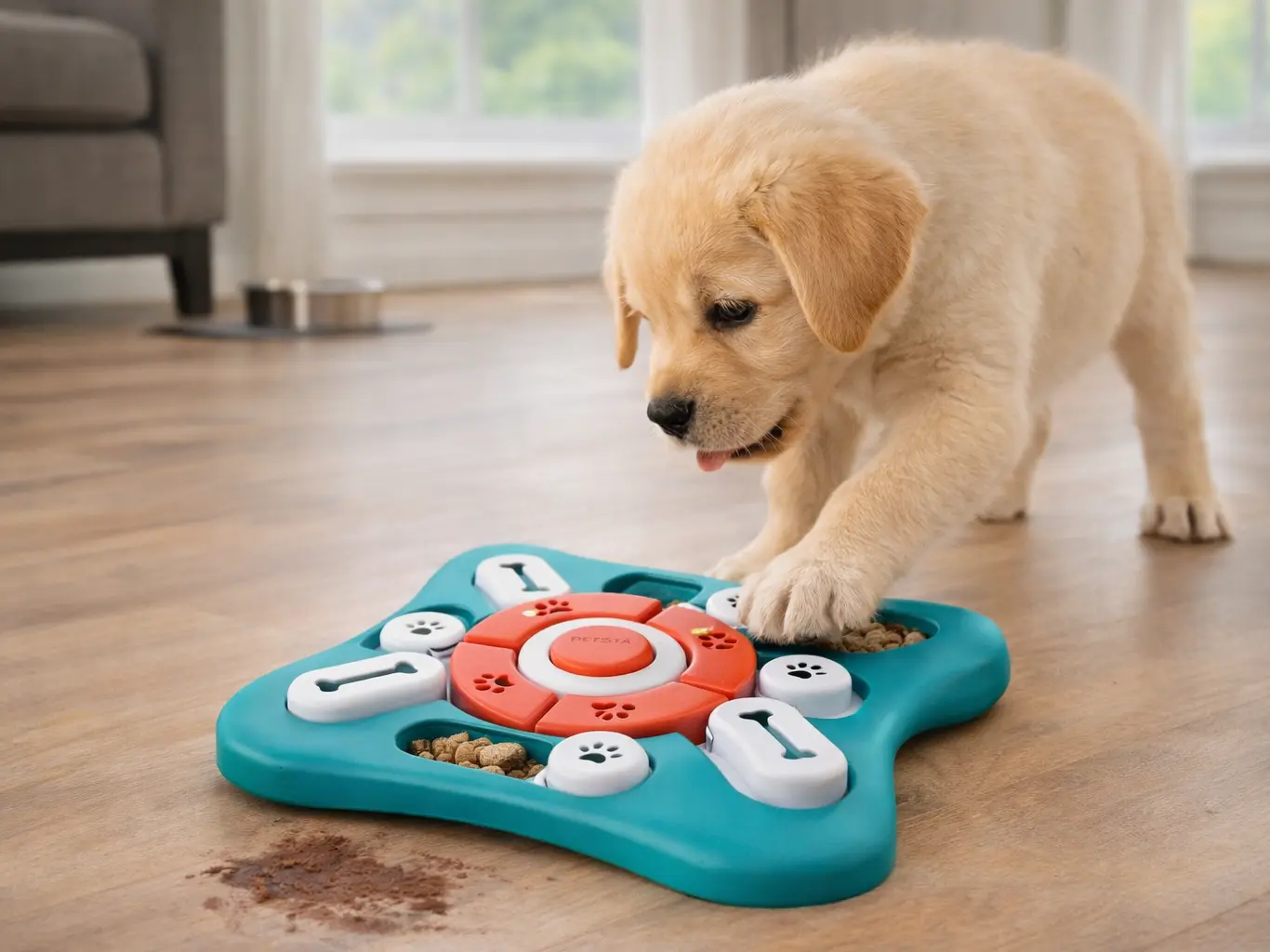
Interactive Puzzle Toy for Mental Stimulation
This is one of those toys I reach for when I need Ethan to slow down a bit. I scatter a few small treats inside, set it on the floor, and it buys me real quiet time while he works through the sliders and lids.
- Best for: Puppies and young dogs who need mental work
- Why it helps: Turns treats into a thinking task, not fast eating
- Good to know: Start easy, then add more covered compartments
🧁 Muffin Tin Game DIY – Classic Nose Work for Dogs
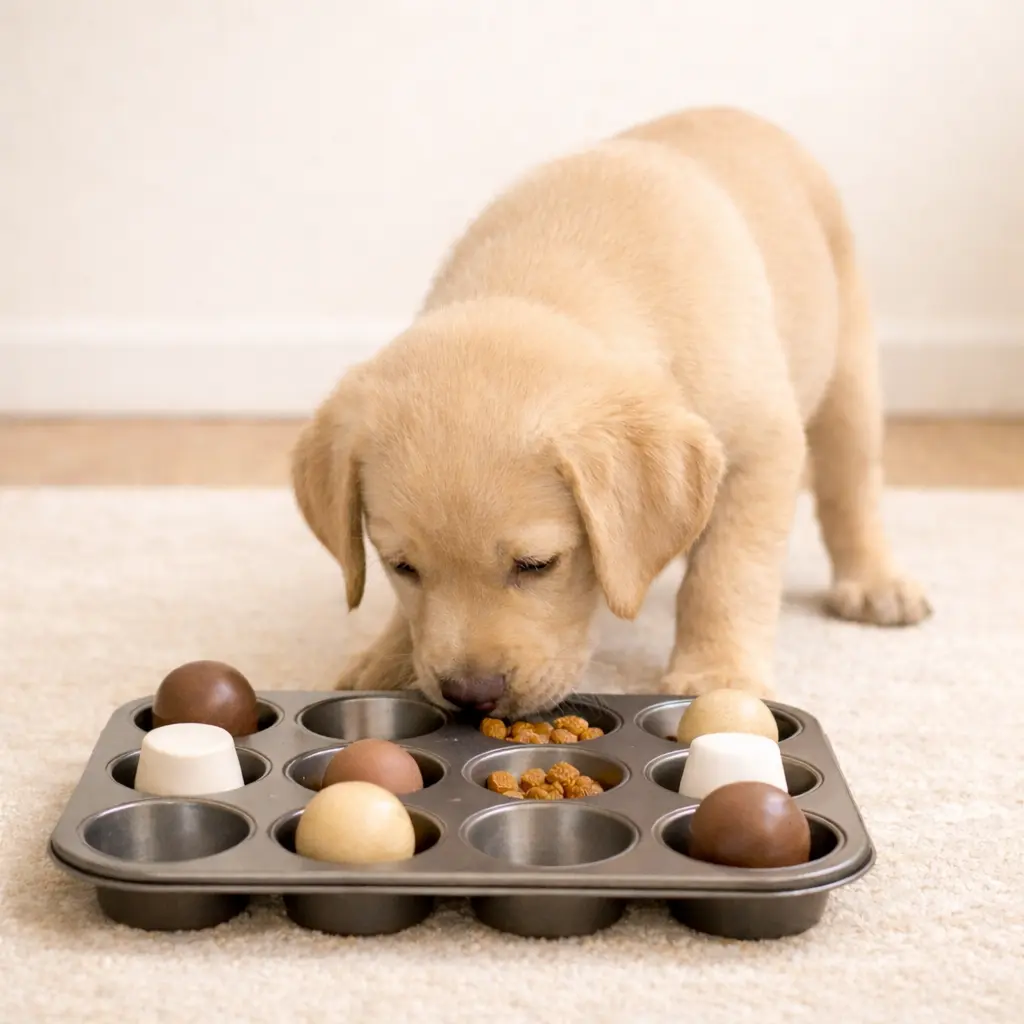
The muffin tin game is a simple enrichment activity that introduces dogs to basic nose work using everyday household items. By hiding treats under lightweight covers, dogs learn to sniff, think, and choose how to uncover rewards. It is easy to set up, highly adjustable, and works well for dogs at almost any skill level.
📘 What You’ll Get
• 4-page printable PDF guide
• Clear step-by-step instructions
• Visual walkthrough + text-only print page
• Tips for adjusting difficulty
• Safety notes and best-use guidance
Step-by-Step Instructions
- Prepare the muffin tin. Use a standard metal muffin tin and place it on a non-slip surface to prevent sliding during play.
- Add the treats. Drop a few small treats or pieces of kibble into some of the cups. Leave others empty to encourage scent discrimination.
- Cover the cups. Place tennis balls, small cups, or soft toys over each muffin hole. Start with lightweight covers for beginners.
- Introduce the game. Set the tin on the floor and allow your dog to investigate by sniffing, nudging, or lifting the covers.
- Adjust difficulty. Increase challenge by using heavier covers or hiding treats in fewer cups as your dog gains confidence.
Why This Toy Helps
This game encourages dogs to rely on their sense of smell rather than speed. Choosing which cup to investigate builds focus and patience, while the physical action of lifting covers adds a gentle problem-solving element.
When I Use This Toy
I use the muffin tin game when I want to give Ethan structured enrichment without setting up a complex puzzle. It works especially well before rest time, helping him settle more easily afterward.
Things to Watch
- Choose covers your dog cannot chew or swallow.
- Use a non-slip surface to keep the tin steady.
- Supervise play and remove items once treats are gone.
❄️ Frozen Towel Chew DIY – Cooling & Calming Enrichment
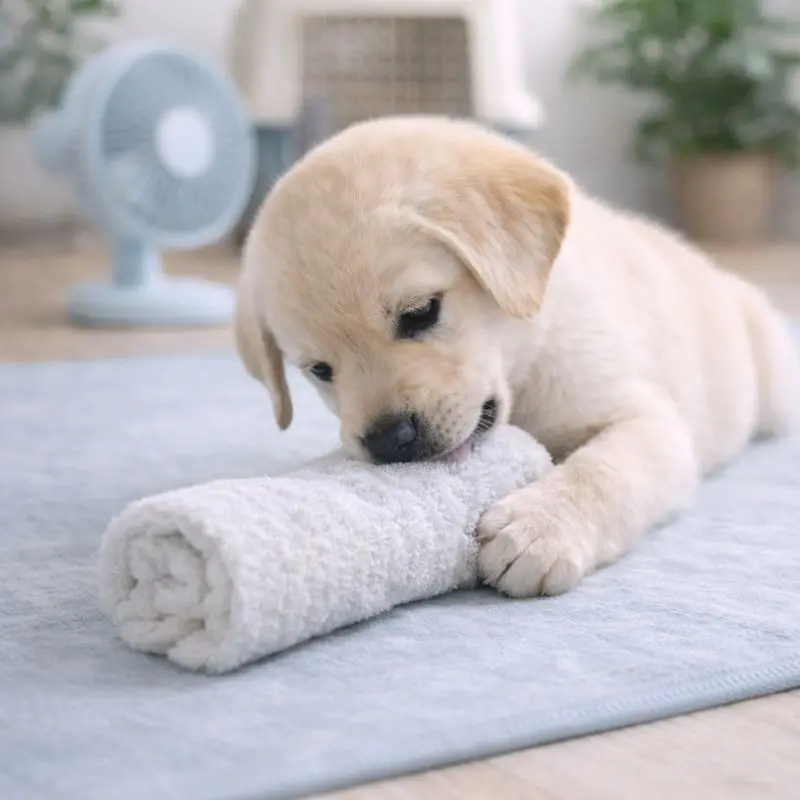
The frozen towel chew is a simple DIY enrichment option designed to help dogs cool down and release energy in a calm, controlled way. By freezing a lightly soaked towel with a few treats inside, dogs can chew, lick, and explore without excessive excitement. It is especially useful during warm weather or when dogs need a soothing activity.
📘 What You’ll Get
• 4-page printable PDF guide
• Clear step-by-step instructions
• Visual walkthrough + text-only print page
• Tips for adjusting difficulty
• Safety notes and best-use guidance
Step-by-Step Instructions
- Choose the towel. Select a clean towel that is appropriate for your dog’s size. Avoid towels with loose threads or holes.
- Lightly soak. Wet the towel with clean water and wring it out well. It should be damp, not dripping.
- Add treats. Place a few small treats along the towel to encourage gentle chewing and licking.
- Roll and freeze. Roll the towel into a loose log and place it in the freezer until fully frozen.
- Offer with supervision. Give the frozen towel to your dog and allow calm, supervised interaction.
Why This Toy Helps
Cold chewing and licking can be naturally soothing for dogs. This toy provides sensory input without overstimulation, helping dogs relax while still engaging with a rewarding activity.
When I Use This Toy
I use frozen towel chews during hot afternoons or when Ethan needs a calm activity after training or play. It fits well into a wind-down routine and encourages quiet focus.
Things to Watch
- Always supervise to prevent fabric shredding.
- Remove the towel once it begins to thaw significantly.
- Skip treats if your dog chews too aggressively.
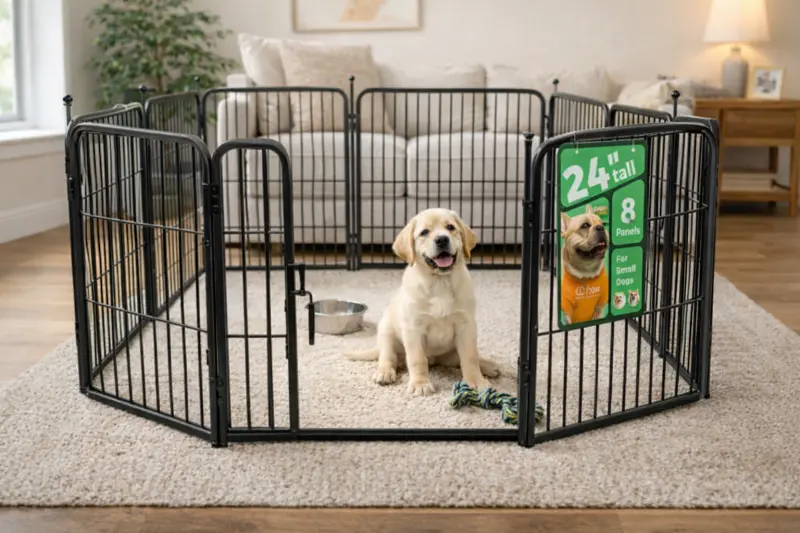
FXW Foldable Dog Playpen (24-Inch, 8 Panels)
I use a playpen like this when I need a temporary, safe space for Ethan, especially during busy moments or early adjustment days. It gives him room to move while keeping boundaries clear, without feeling like full confinement.
- Best for: Puppies, small dogs, short-term indoor setup
- Why it helps: Clear boundaries without full crate use
- How I use it: During busy hours or early transition days
- Good to know: Panel layout is flexible, size choice matters
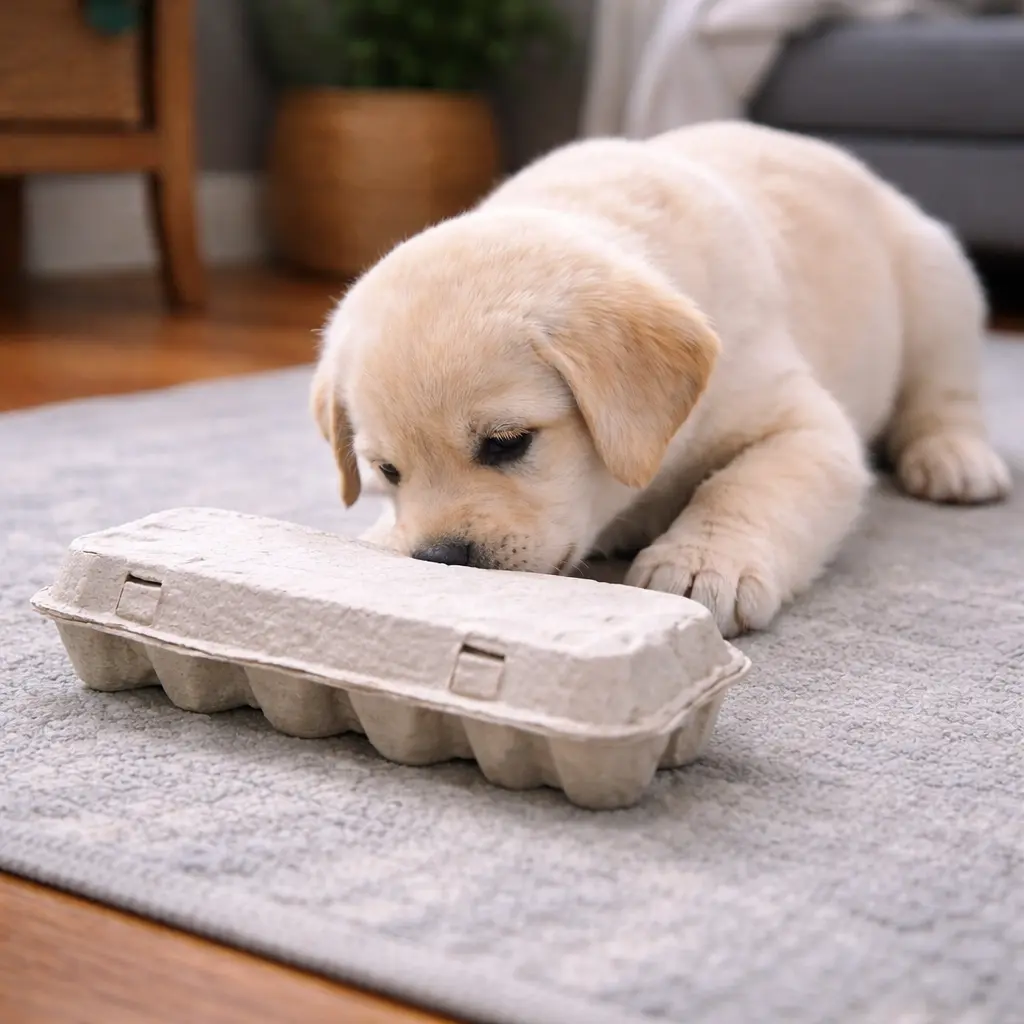
🥚 Egg Carton Scent Puzzle DIY – Simple Nose Work Game
This egg carton scent puzzle is a low-effort DIY enrichment game that encourages dogs to slow down and make choices using their sense of smell. By hiding treats in selected compartments, dogs learn to sniff, pause, and decide where to investigate next. It is quick to set up and works well for calm indoor enrichment sessions.
📘 What You’ll Get
• 4-page printable PDF guide
• Clear step-by-step instructions
• Visual walkthrough + text-only print page
• Safety notes and best-use guidance
Step-by-Step Instructions
- Prepare the carton. Use a clean cardboard egg carton and remove any loose paper or labels. Make sure there are no sharp edges.
- Hide the treats. Place small treats or kibble into a few selected cups. Leave others empty to encourage scent discrimination.
- Close the lid. Gently close the carton so treats are hidden but still accessible.
- Set it down. Place the carton on the floor in an open area with enough space to investigate.
- Let your dog explore. Allow sniffing, nudging, and gentle opening while supervising calmly.
Why This Toy Helps
This game focuses on scent-based decision-making rather than speed. Dogs must pause and evaluate which compartment to open, helping build focus and mental endurance without physical intensity.
When I Use This Toy
I use this puzzle when Ethan needs something mentally engaging but calm, such as during quiet afternoons or between short walks. It fits well into low-energy enrichment routines.
Things to Watch
- Always supervise to prevent chewing or eating cardboard.
- Use cardboard cartons only, not plastic.
- Discard the carton once it becomes wet or torn.
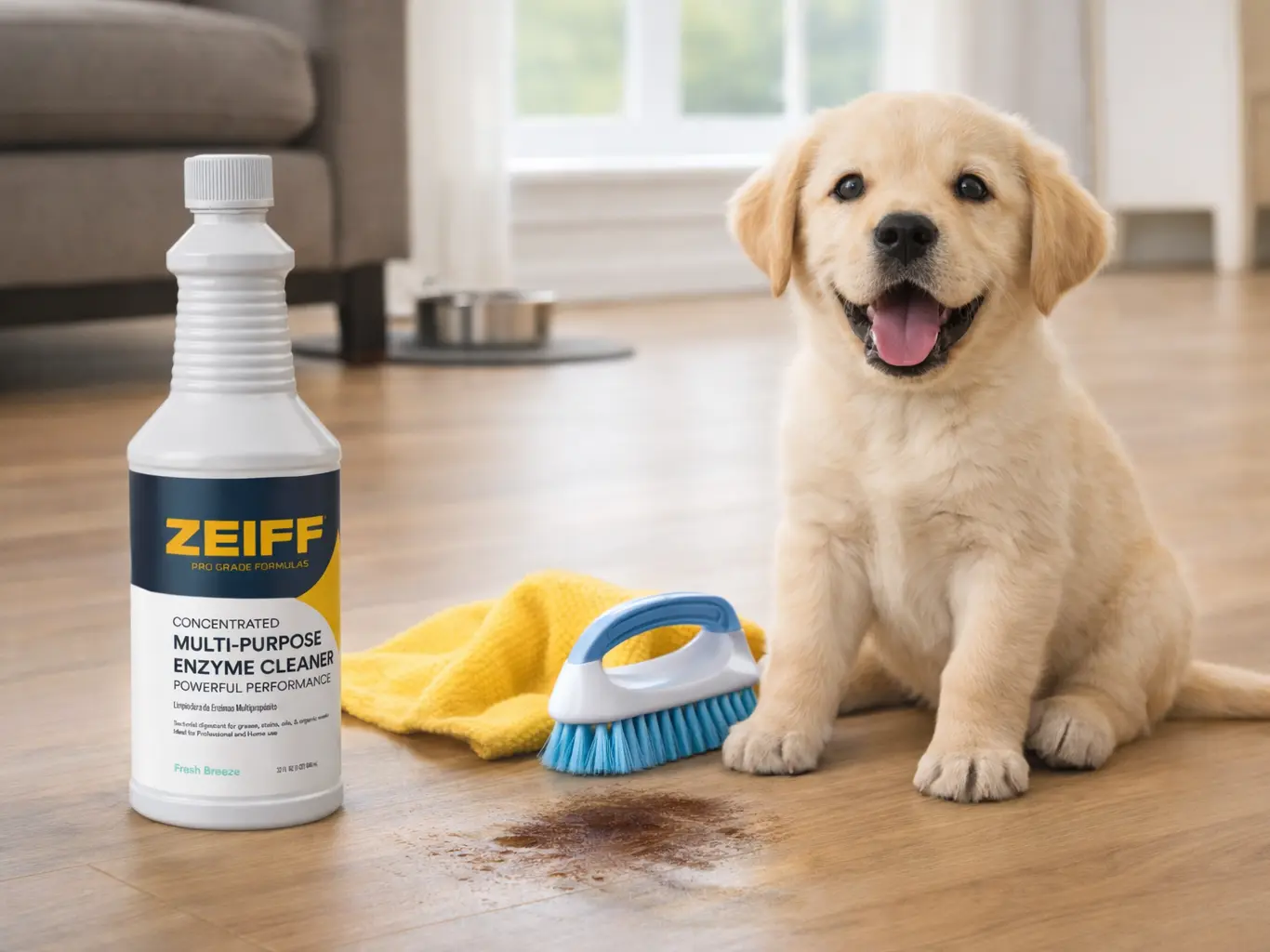
Zeiff Multi-Purpose Enzyme Cleaner (32 oz)
I keep an enzyme cleaner like this around for the real-life messes that come with dogs, especially during puppy weeks or rainy-day routines. When there’s a spot that needs a deeper reset, I reach for this first, then follow up with a quick wipe and fresh air time.
- Best for: Pet mess cleanup on floors, rugs, crates, and washable surfaces
- Why it helps: Enzyme-based formula aimed at odor and stain reset
- How I use it: Apply, let it sit, then blot or wipe, and let the area fully dry
- Good to know: Patch-test first and keep pets away until the surface is dry
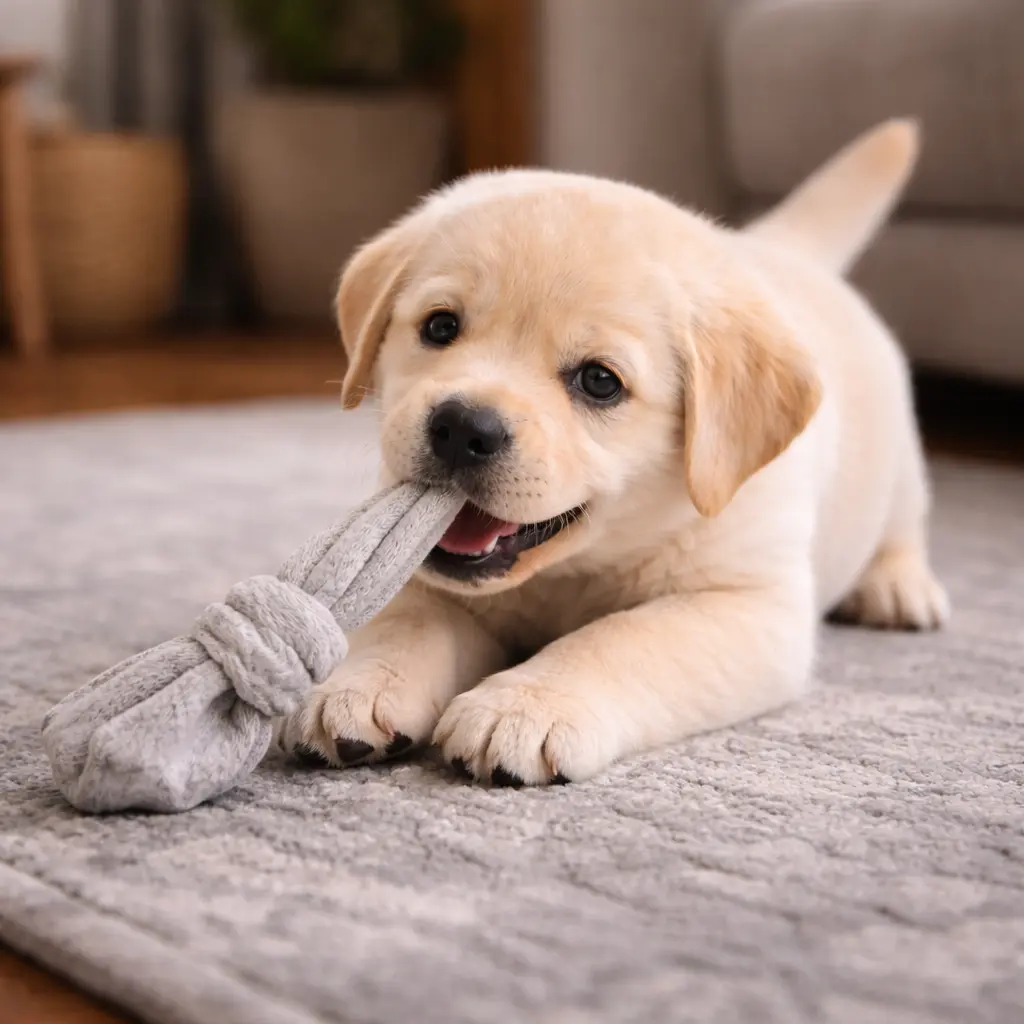
🧦 Sock Tug Toy DIY – Gentle Pull & Chew Play
This sock tug toy is a simple DIY option for dogs who enjoy light pulling, chewing, and interactive play. By braiding or knotting old socks, you create a soft, flexible toy that allows dogs to release energy without hard materials or loud movement. It works especially well for calm tug games and short bonding sessions.
📘 What You’ll Get
• 4-page printable PDF guide
• Clear step-by-step instructions
• Visual walkthrough + text-only print page
• Tips for adjusting difficulty
• Safety notes and best-use guidance
Step-by-Step Instructions
- Choose the socks. Use clean, thick socks with no holes. Longer socks create better grip and flexibility.
- Layer and knot. Place two or three socks together and tie a firm knot at one end.
- Braid or twist. Braid the socks tightly or twist them together to add resistance.
- Secure the end. Tie another knot at the opposite end so the toy stays intact.
- Introduce calmly. Offer the toy during relaxed play and keep sessions short.
Why This Toy Helps
Gentle tug play allows dogs to release tension through controlled movement. The soft texture reduces overstimulation while still satisfying chewing and pulling instincts.
When I Use This Toy
I use this toy during short indoor play breaks or when Ethan seems restless but not overly energetic. It works best as a quick interaction rather than extended tug sessions.
Things to Watch
- Stop play if the socks begin to tear.
- Do not allow unsupervised chewing.
- Avoid using socks that resemble everyday clothing items.
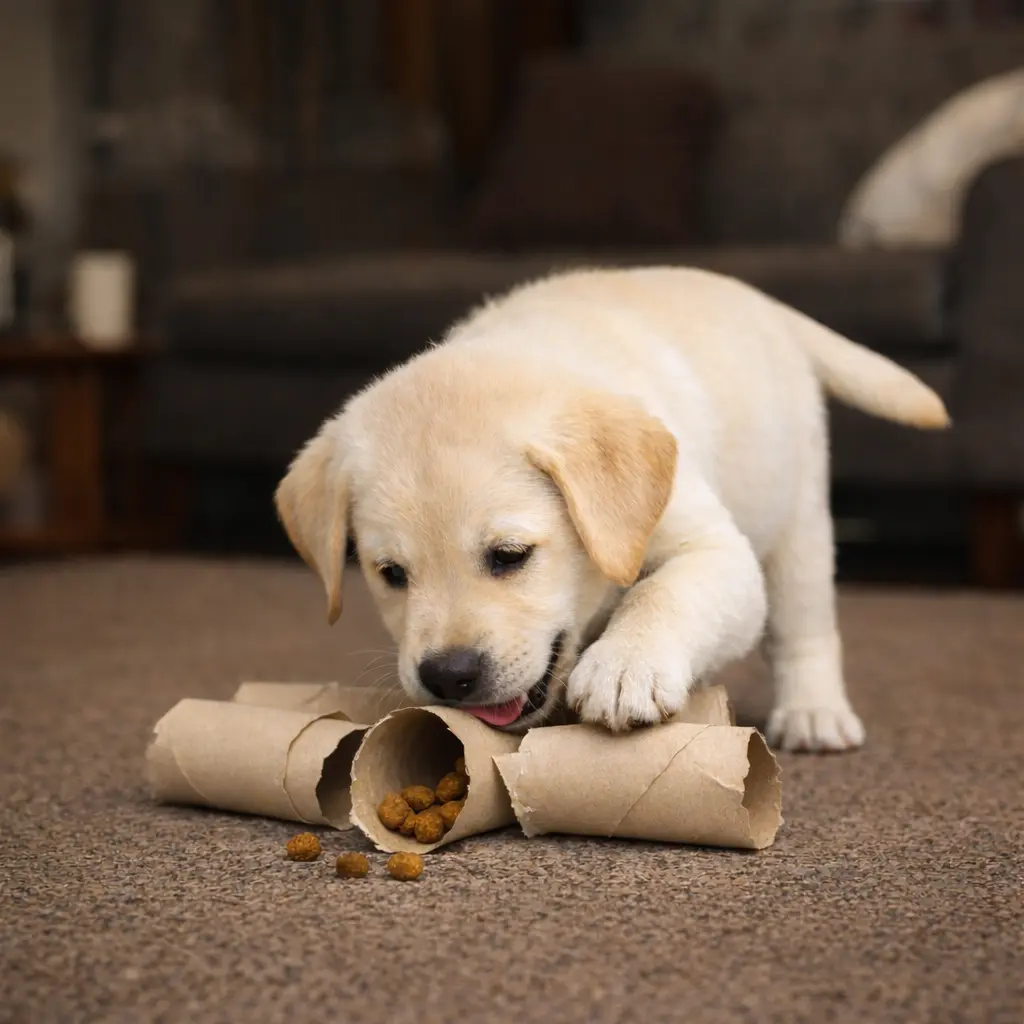
🧻 Paper Towel Roll Puzzle DIY – Safe Tear & Sniff Play
This paper towel roll puzzle is designed for dogs who enjoy sniffing, gentle tearing, and short bursts of focused activity. It offers a controlled way to let dogs explore and break something apart without turning into chaotic or overstimulating play. When used intentionally, it becomes a calm enrichment moment rather than a mess.
📘 What You’ll Get
• 4-page printable PDF guide
• Clear step-by-step instructions
• Visual walkthrough + text-only print page
• Tips for adjusting difficulty
• Safety notes and best-use guidance
Step-by-Step Instructions
- Prepare the roll. Use an empty paper towel roll with no glue or residue. Gently press one end flat to create a partial seal.
- Add treats. Drop a few small treats or kibble pieces inside the tube. Avoid overfilling so the puzzle stays engaging rather than frustrating.
- Close the other end. Fold the open end inward to lightly trap the treats. Do not compress too tightly for first-time users.
- Introduce on a calm surface. Place the roll on the floor and let your dog investigate freely.
- Supervise the interaction. Allow sniffing and gentle tearing, but step in once treats are found.
Why This Toy Helps
Some dogs need a safe outlet for controlled destruction. This toy channels that instinct into a short, purposeful task that combines scent work with problem solving. The lightweight material keeps the experience calm and manageable.
When I Use This Toy
I use this puzzle when Ethan seems curious or mildly restless, especially before quiet time in the afternoon. It works well as a transition activity between play and rest.
Things to Watch
- Always supervise and remove small cardboard pieces.
- Do not use with dogs who swallow paper.
- Limit frequency to avoid encouraging random tearing behavior.
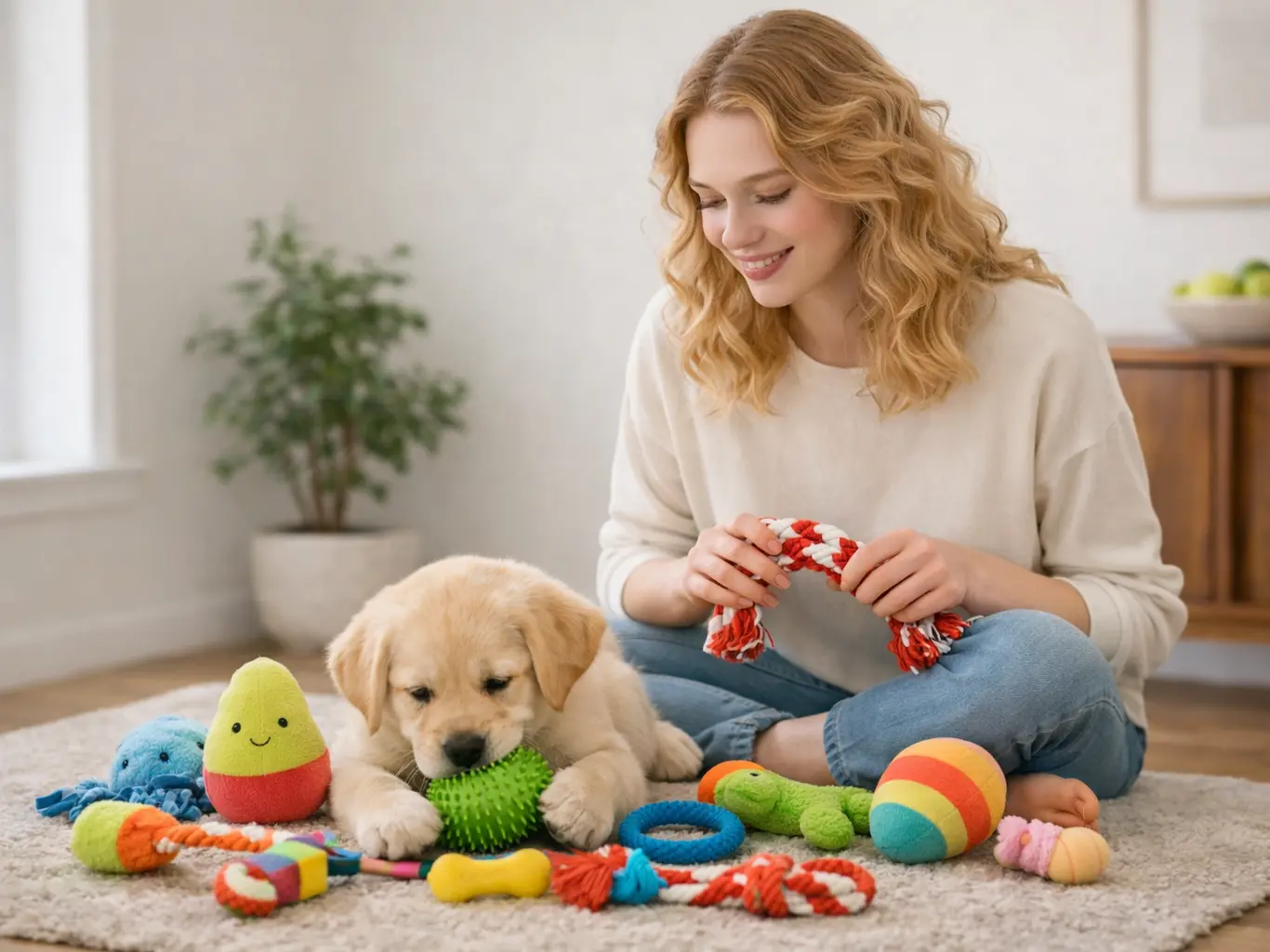
Zeaxuie Puppy Toy Variety Pack (25-Piece Set)
I like a mixed toy set like this for the first few weeks at home, when you’re still learning what your puppy actually enjoys. I keep a couple of options out, rotate the rest, and it helps prevent the “nothing is interesting unless it’s a shoe” phase.
- Best for: Puppies and small dogs who need safe daily variety
- Why it helps: Multiple textures for chewing, tug, and solo play without overthinking it
- How I use it: Rotate 2–3 toys at a time and swap every couple of days
- Good to know: Supervise chewers and retire any toy once threads or seams loosen
🎾 Tennis Ball Treat Puzzle DIY – Quick Nudge-and-Reward Game
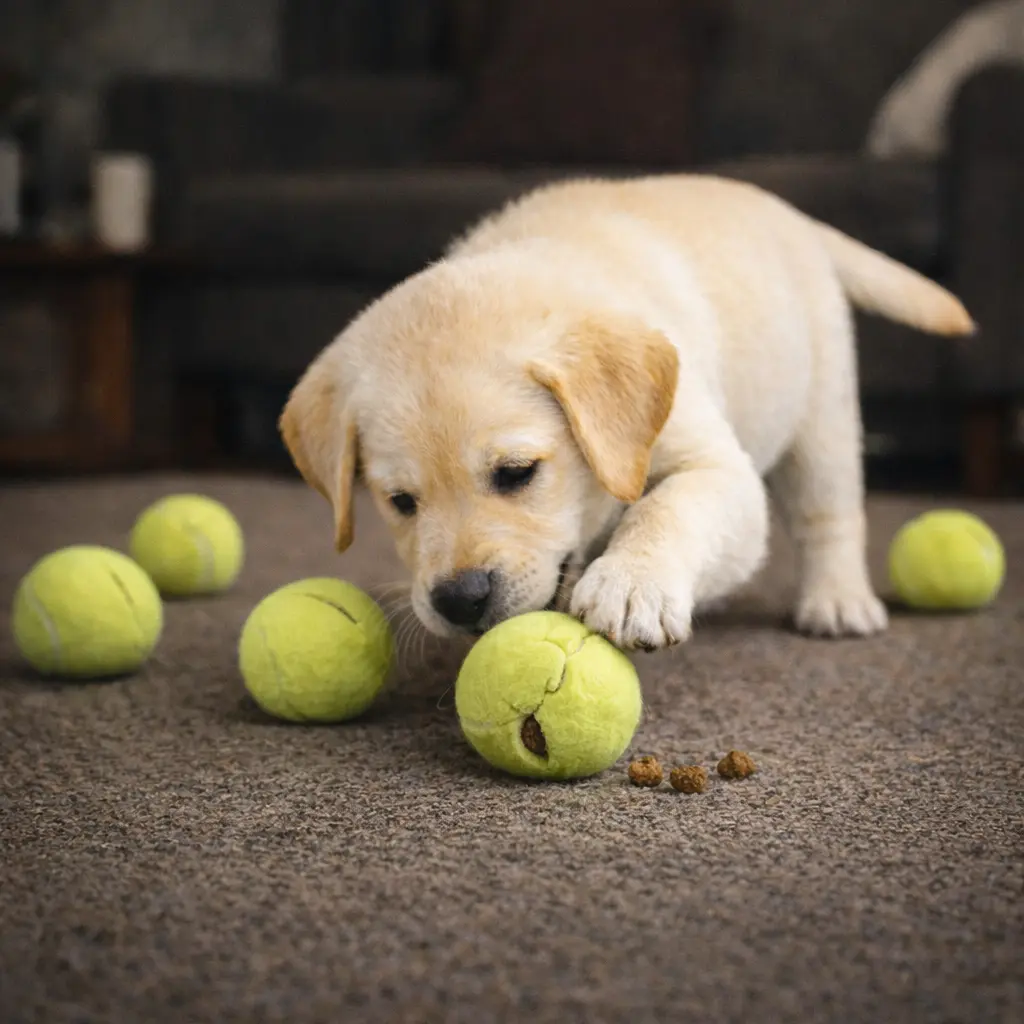
This tennis ball treat puzzle is a simple DIY enrichment toy that encourages dogs to use their nose, paws, and gentle problem-solving to earn rewards. It is fast to set up, easy to repeat, and works well when you want a calm indoor activity that still feels interactive. The best part is that you can adjust difficulty in seconds based on your dog’s experience level.
📘 What You’ll Get
• 4-page printable PDF guide
• Clear step-by-step instructions
• Visual walkthrough + text-only print page
• Tips for adjusting difficulty
• Safety notes and best-use guidance
Step-by-Step Instructions
- Pick the right ball. Use a clean tennis ball that is size-appropriate for your dog. Avoid balls that are already peeling or breaking down.
- Make a small slit. Cut one short slit in the ball just wide enough to push treats through. Keep it tight so treats do not fall out too easily.
- Load the treats. Press a few small treats inside the ball. Start with softer, smaller pieces so your dog can learn the pattern.
- Introduce calmly. Place the ball on the floor and let your dog investigate. Most dogs learn quickly that nudging and rolling releases rewards.
- Adjust difficulty. Make the slit slightly smaller for a longer puzzle, or slightly wider if your dog is new and needs quick success.
Why This Toy Helps
This toy creates a simple reward loop without turning into high-speed chasing. Dogs stay focused on nudging, sniffing, and figuring out how to release treats, which supports calm engagement and mental effort in a short time window.
When I Use This Toy
I use this puzzle when I want Ethan to settle into a quiet activity but I do not have time to set up a bigger enrichment game. It is also a helpful option for quick indoor breaks between errands or meetings.
Things to Watch
- Always supervise to prevent chewing chunks off the ball.
- Replace the ball if the slit tears wider or the surface peels.
- Skip this toy for heavy chewers who destroy tennis balls quickly.
What Makes a Good DIY Dog Toy?
When I test DIY dog toys with Ethan, I use four simple rules. If an idea fails one of these, I do not force it.
- Safe materials: nothing sharp, brittle, or easy to swallow.
- Adjustable challenge: I can make it easier or harder in seconds.
- Calm-first: it encourages sniffing, licking, or problem-solving, not frantic chewing.
- Low effort for me: if it takes 30 minutes to set up, I will not keep using it.
If your dog is a heavy chewer or tends to shred fabric, treat DIY enrichment as supervised play only. Some popular towel games can be risky if a dog ingests fabric, so my default is hands-on supervision and quick cleanup.
Why Enrichment Often Works Better Than More Exercise
A lot of boredom looks like extra energy, but what many dogs need is a job. Enrichment uses the brain, and that can be more settling than adding more physical activity, especially indoors or on rainy days.
In my house, sniffing games are the easiest win. They slow Ethan down, help him focus, and leave him calmer afterward. Snuffle-style activities are widely recommended as a way to let dogs forage and engage their natural seeking behavior.
Think of DIY dog enrichment as a simple routine tool. I use it in short sessions, then I put it away. The structure is what creates calm.
How to Choose the Right DIY Toy for Your Dog
I do not rotate ten toys at once. I pick two or three that match Ethan’s mood and my schedule, then I repeat them until they feel effortless.
- If your dog gets overexcited: choose sniffing and licking over noisy toys.
- If your dog gives up quickly: lower the challenge so they can succeed fast.
- If your dog shreds and swallows: skip fabric and paper and focus on safer alternatives.
- If you are busy: pick one five-minute setup you can repeat without thinking.
When DIY Dog Toys Are Enough and When They Are Not
DIY dog toys are enough when you want short, supervised enrichment that fits into real life. I use them as quick boredom busters, calm indoor enrichment, and simple puzzle breaks.
DIY is not enough when you need long unattended time, or when your dog consistently swallows non-food materials. If safety is a constant worry, that is not a DIY problem – it is a signal to simplify your approach.
Common Mistakes With Homemade Dog Toys
- Making it too hard too fast: frustration turns enrichment into stress.
- Using the toy as a babysitter: most DIY options require supervision.
- Skipping cleanup: loose fabric, plastic, or paper pieces add risk.
- Not rotating: novelty matters more than quantity.
My simple rule: if Ethan fails twice, I make it easier. If he succeeds instantly, I add one small twist next time.
Explore More PawPrinted Guides
Wrapping It Up
DIY dog toys do not need to be fancy. When I keep the setup simple and the rules clear, Ethan gets calmer and I get my day back. Start with one easy option, repeat it for a week, then add a second. Calm routines are built with consistency, not with more projects.
FAQ
Are DIY dog toys safe?
DIY dog toys can be safe when you choose the right materials and supervise the session, but they are not automatically safe just because they are homemade. I treat most DIY enrichment as a short, hands-on activity rather than something Ethan keeps while I walk away. Fabric, plastic, and paper are common DIY materials, and the main risk is chewing plus swallowing pieces. If your dog shreds and eats non-food items, skip towel and tube puzzles and choose safer enrichment that does not break into swallowable parts. A good rule is this: if you cannot confidently predict what will happen when your dog gets excited, it is not the right DIY toy for today. Start easy, watch closely, and end the session while your dog is still calm.
What household items can I use to make DIY dog toys?
The best household items are the ones that are sturdy, predictable, and easy to clean. In my home, towels, old T-shirts, muffin tins, and plain cardboard boxes are the most common starting points because they create simple puzzles without requiring special tools. That said, the same item can be safe for one dog and unsafe for another, depending on chewing style. If your dog tends to shred fabric or swallow paper, avoid those materials and focus on supervised enrichment that keeps pieces large and controlled. I also prefer setups that are fast to reset, because the goal is a repeatable routine, not a one-time craft project.
Can DIY dog toys help with boredom and anxiety?
DIY dog toys can help reduce boredom because they give dogs a clear task, and many dogs settle after sniffing or problem-solving for a few minutes. For anxiety, I think of enrichment as support, not a cure. Sniffing and licking activities often feel calmer than loud toys because they encourage steady focus rather than high arousal. If your dog is anxious, keep sessions short, lower the challenge so success comes quickly, and avoid anything that makes your dog frantic. If anxiety is severe or escalating, enrichment is still useful, but it should sit alongside training support and guidance from a qualified professional.
How long should an enrichment session last?
In most homes, short sessions work best. With Ethan, I aim for five to ten minutes for DIY puzzles, and even shorter for puppies or dogs new to enrichment. The goal is focused engagement, not exhaustion. If your dog finishes in under a minute, the puzzle is too easy and you can tighten the roll or add a simple fold next time. If your dog quits or gets frustrated, the puzzle is too hard and you should reduce the challenge immediately. Ending on a success is what makes enrichment repeatable and calming over time.
How often should I rotate DIY dog toys?
Rotation matters more than quantity. I usually keep two or three DIY options in a small rotation, then switch one out every few days. This keeps novelty high without turning enrichment into a daily production. If your dog starts losing interest, change the setup slightly rather than building a whole new toy. For example, with a towel roll, you can loosen the roll for quick wins or tighten it for more challenge. The best rotation schedule is the one you will actually keep, because consistency is what creates calmer behavior patterns.
References – Authoritative Sources
I keep DIY enrichment simple, but I still like to ground decisions in trustworthy guidance on enrichment safety and snuffle-style activities.
How to Make a Snuffle Mat (Animal Humane Society, n.d.) – A practical overview of constructing a snuffle mat and why foraging-style play supports enrichment.
Snuffle Mats for Dogs (American Kennel Club, 2024) – Notes on snuffle mat sizing, use, and how foraging can extend engagement time.
6 Pet Enrichment Toys You Can Make at Home (Stack Veterinary Hospital, 2023) – Examples of simple household-item enrichment setups