When you switch your pup to homemade dog food, the feeding routine changes more than you might expect. Fresh recipes are usually softer, wetter, and more fragrant than dry kibble, which makes standard bowls much easier to tip, push, or turn into a full kitchen mess. What looks like a healthy upgrade on the menu can quickly turn into splashes on the floor and food stuck in hard to clean corners.
The right feeding bowl setup helps you keep all that goodness where it belongs. Stable bases, raised edges, safe materials, and the right height for your dog can make homemade meals cleaner, more comfortable, and more hygienic. For dogs with sensitive digestion or joint issues, a better bowl is not just a nice accessory, it is part of a healthier daily routine.
In this guide, we reviewed six of the best feeding bowls and feeders for homemade dog food, from simple adjustable stainless steel bowls to smart WiFi auto feeders that can support frozen batch cooking and long weekends away. Each pick is evaluated on hygiene, mess control, comfort, and how well it fits into a real life homemade meal plan.
Our goal is to help you match your dog, your kitchen setup, and your schedule with a feeding solution that actually works day after day, so your effort in cooking fresh food is not wasted on spills and stressful cleanups.
How We Picked These Feeding Bowls And Feeders
Not every dog bowl can handle soft stews, chunky mixes, or gently warmed homemade meals. We focused on products that stay stable on the floor, use food safe materials, and make it easier to keep the feeding station clean. From there, we looked at how each option supports different lifestyles, from busy weekdays to longer trips away from home.
Hygiene And Safe Materials
We prioritized bowls and feeders made from stainless steel, BPA free plastics, or food grade components that are easy to sanitize after wet or oily meals. Products that resist scratching, do not trap odors, and are clearly labeled as food safe scored higher, especially for dogs on long term homemade diets.
No Mess, Easy Clean Design
Designs with non slip bases, weighted frames, or spill guard rims help keep homemade food inside the bowl, not across your kitchen. We also looked for wide openings and smooth interior surfaces that make it quicker to wipe down or load into the dishwasher after each meal.
Comfort, Height And Eating Style
For many dogs, especially medium and large breeds, the height of the bowl can influence posture, comfort, and how cleanly they eat. Adjustable stands, tilted bowls, and gentle slow feed features were all considered, so fast eaters, senior dogs, and small breeds can each have a setup that matches their body and their habits.
Lifestyle Fit And Reliability
Finally, we rated each product on how well it fits into a real homemade feeding routine. That includes capacity for batch cooked meals, reliability of automatic scheduling, backup power or gravity systems for travel days, and how much daily effort the setup actually saves you once the novelty wears off.
Our Top Picks For Cleaner Homemade Meals
Each of the six picks below solves a slightly different problem, from neck strain and splashy stews to busy weekday schedules and weekend trips. You can mix and match them with your homemade meal plan, using an elevated bowl for fresh dinners and an automatic or gravity feeder for safe, no drama backup food.
Start with the bowl or feeder that best matches your dog’s size and your routine, then fine tune details like portion size, height, and cleaning frequency once you have used it for a week or two. Small adjustments here often make the biggest difference in how tidy and stress free your homemade feeding corner feels.
Adjustable Height Stainless Steel Pet Feeding Bowl (50 oz Single Bowl)
This adjustable stainless steel bowl is built for dogs that live on homemade food. The 50 oz capacity handles chunky stews and mixed textures, while four height settings help medium and large dogs eat in a more natural posture – less bending, less splashing, and a cleaner feeding corner after every fresh meal.
Specs
- Type: Manual elevated feeding bowl
- Capacity: 50 oz single bowl (≈1.48 L)
- Material: Stainless steel bowl + non-slip stand
- Height Range: 3.7″–12.36″ (4 fixed levels)
- Best For: Medium & large dogs on homemade diets
What We Loved
- Elevated posture helps reduce neck and joint strain with heavier meals
- Wide stainless steel bowl suits stews, soft mixes, and warm recipes
- Stable, anti-slip base keeps the bowl from drifting on smooth floors
- Height can be shared between different sized dogs in one household
Could Be Better
- No automatic portioning or scheduling – every meal is still manual
- Stand takes up more room than a flat bowl in very small kitchens
- Listing gives limited detail on frame materials and long-term durability

Petory 4 L Automatic Dog Feeder With Portion Control
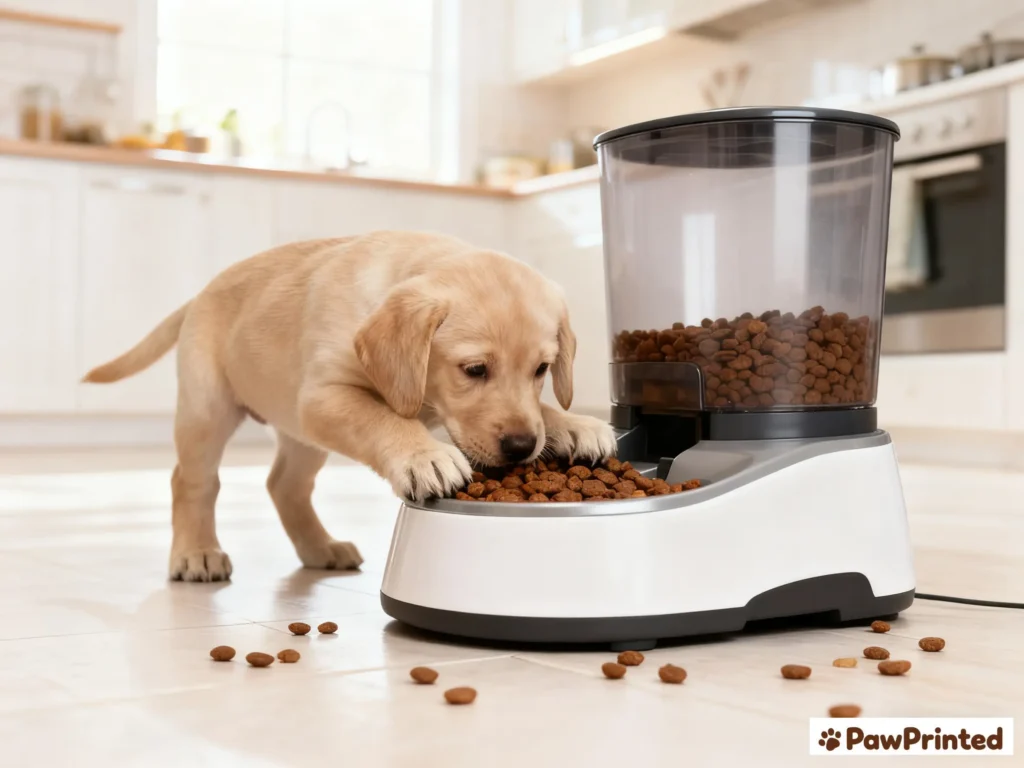
Petory is a good match if you cook in batches and still rely on measured dry or semi moist meals on busy days. The 4 liter hopper, 6 meals per day programming, and flexible portion sizes make it easier to control calories when your dog eats richer homemade food at breakfast or dinner and kibble backups in between.
Specs
- Type: Automatic timed feeder
- Capacity: 4 L hopper (about 135 oz)
- Material: BPA-free plastic body + stainless steel bowl
- Power: Wall power plus battery backup
- Best For: Short trips and daily portion control
What We Loved
- Portion sizes and up to 6 meals per day help support weight control plans
- Dual power design keeps meals running even during short outages
- Sealed hopper and adjustable rotor for different kibble sizes
Could Be Better
- No WiFi app control, all schedules are set on the device itself
- Higher price than basic gravity feeders or budget auto units

PETLIBRO WiFi Automatic Dog Feeder With App Control (5 L)
PETLIBRO is ideal if you balance homemade meals with carefully chosen dry food when you travel or work late. The app lets you adjust schedules from your phone, review feeding logs, and react to low food or clog alerts so your dog is less likely to miss a meal while you are away from the kitchen.
Specs
- Type: WiFi smart automatic feeder
- Capacity: 5 L hopper
- Material: ABS body + stainless steel bowl
- Power: Wall power with alert system support
- Best For: Tech friendly homes and frequent travelers
What We Loved
- App control for up to 10 meals a day plus feeding logs for peace of mind
- Low food, clog, and low battery alerts reduce surprise missed meals
- Large capacity supports one or two dogs on a mixed fresh and dry routine
Could Be Better
- Higher price than basic automatic or gravity feeders
- Needs WiFi and nearby outlet placement for full functionality

Yuposl 2 L Automatic Dog Feeder With Tilted Steel Bowl
Yuposl is a budget friendly option for small dogs that still need regular, timed meals when you are at work. The tilted stainless steel bowl supports a more comfortable posture, while the long battery life and simple controls make it easy to combine homemade breakfasts or dinners with dry food portions during the day.
Specs
- Type: Automatic timed feeder
- Capacity: 2 L hopper (about 8 cups)
- Material: Stainless steel bowl + ABS and food grade plastics
- Power: Battery first with optional wall power
- Best For: Small dogs and cats on mixed feeding plans
What We Loved
- Very strong value for owners who want timing without a high price tag
- Tilted steel bowl reduces neck strain and chin irritation from plastic
- Locking lid and sealed rotor help reduce sneaky snacking between meals
Could Be Better
- Smaller capacity is not ideal for larger dogs or multi pet households
- No app control, schedules must be set on the built in display

Petmate Gravity Dog Feeder (Multiple Sizes)
Petmate is a simple, power free way to keep dry food available, which pairs well with homes that cook for one dog and keep kibble ready for others. The large capacity makes refills less frequent, and the wide opening is easy to scoop from when you top up a separate bowl for homemade meals.
Specs
- Type: Gravity style dry food feeder
- Capacity: 3 to 12 lb sizes available
- Material: BPA-free plastic construction
- Power: Not required
- Best For: Multi pet families using dry food backups
What We Loved
- No power, apps, or settings to manage, just simple gravity refills
- Large capacity suits big dogs or households with more than one pet
- Wide mouth is easy to clean and to scoop from during meal prep
Could Be Better
- No portion control, so it is not a good fit for dogs that tend to overeat
- Only supports dry food, not wet or fully homemade recipes

NKECOBJI Gravity Dog Food And Water Dispenser Set (3.8 L Each)
This NKECOBJI set is a practical backup for families that cook fresh food most days but still need a low effort option for weekends away. The paired gravity feeder and waterer keep basics covered without power, and the clear reservoirs make it easy for a neighbor or sitter to check levels at a glance.
Specs
- Type: Gravity feeder and waterer set
- Capacity: 3.8 L food + 3.8 L water
- Material: Food grade PP and PET plastics
- Power: Not required
- Best For: Small and medium dogs during short trips
What We Loved
- Food and water solved together in one matched set
- Transparent bodies make it easy to see when refills are needed
- Anti slip base and siphon style water flow help reduce spills
Could Be Better
- No portion control, so it is not ideal for strict weight management
- Plastic parts should be checked and replaced over time as they age

Quick Comparison – Which Feeding Setup Fits Your Home
If you are not sure where to start, use this quick comparison to match your dog and your lifestyle to the right feeding solution. Think about your schedule first, then your dog’s size and eating style, and finally how much hands on effort you are willing to put into daily cleanup.
Best For Daily Homemade Meals
The adjustable stainless steel bowl is the most natural fit if you cook fresh food regularly. It keeps the bowl at a comfortable height for medium and large dogs, reduces splashing from saucy recipes, and is easy to wash after each meal.
Best For Precise Portions And Weight Control
Petory’s automatic feeder supports careful portion sizing when you are managing calories. It pairs well with richer homemade recipes at breakfast or dinner and controlled dry food portions while you are out.
Best For Smart, App Based Feeding
PETLIBRO is the top choice if you want to monitor meals from your phone. It is especially useful for households that travel often or share feeding responsibilities between family members.
Best Budget Option For Small Dogs
The Yuposl feeder gives you timed meals and a tilted steel bowl without the higher cost of full smart systems. It works well for small dogs that eat a mix of homemade food and lightweight dry portions.
Best Gravity Feeder For Multi Dog Homes
Petmate’s gravity feeder is a good fit for households where at least one dog is on homemade meals while others stay on dry food. It keeps kibble available with almost no daily management.
Best Food And Water Set For Short Trips
The NKECOBJI set covers both food and water when you are away for a couple of days. It is not meant to replace homemade feeding long term, but it can simplify weekends and short breaks.
Buying Guide – How To Choose A Bowl Or Feeder For Homemade Dog Food
A good feeding setup for homemade dog food should feel almost boring in the best way: it stays put, cleans easily, and does not change how the food tastes or smells. Use the points below as a checklist while you compare bowls and feeders.
Material And Hygiene
Stainless steel and glazed ceramic are usually the safest choices for fresh food because they resist scratching and do not hold on to odors or grease. Avoid older, worn plastic bowls that may trap bacteria in tiny grooves or react to warm meals over time.
Stability And Mess Control
Look for non slip bases, sturdy stands, or weighted designs that do not slide when your dog gets excited about dinner. Slightly raised rims or deeper shapes can help keep chunky stews and broths inside the bowl instead of on your floor.
Cleaning And Daily Maintenance
Homemade food often leaves more residue than kibble, so dishwasher safe parts and smooth interior surfaces matter. Check that you can quickly disassemble, wash, and reassemble the bowl or feeder without tools.
Capacity And Meal Style
Make sure the bowl comfortably fits your dog’s typical portion of homemade food without feeling cramped. For feeders, confirm that the hopper size matches how often you want to refill and whether you plan to use dry food, air dried recipes, or a mix.
Height, Posture, And Age
Medium and large dogs usually benefit from a slightly elevated bowl, especially as they age. Senior dogs and dogs with joint issues often eat more cleanly and comfortably when they do not need to hunch over each bite.
Power, Backup, And Reliability
For automatic and smart feeders, check how they behave during power cuts or WiFi drops. Battery backups, simple manual override buttons, and clear alerts are all signs that a feeder is ready for real life, not just perfect conditions.
Limitations And Common Pitfalls To Avoid
Even a great bowl or feeder cannot fix every feeding problem on its own. Knowing the common weak spots will help you set realistic expectations and avoid habits that work against your homemade meal routine.
Relying On Plastic Bowls Long Term
Plastic can scratch and discolor quickly when exposed to oily or warm homemade food. Those marks can trap bacteria and odors, especially if the bowl is not washed thoroughly after every meal.
Choosing The Wrong Bowl Height
Bowls that are too low can encourage hunching and messy eating for taller dogs, while bowls that are too high may feel awkward or uncomfortable. A good rule is to start around chest height and adjust based on how relaxed your dog looks while eating.
Using Auto Feeders For Wet Food
Most automatic feeders are designed for dry food only. Filling the hopper with moist homemade recipes can lead to clogs, mold, and inconsistent portions, and may void warranties if the product is used outside its instructions.
Ignoring Overeating Risks With Gravity Feeders
Gravity feeders remove the hassle of refilling but also remove built in portion control. Dogs that eat quickly or have a history of weight gain often do better with scheduled meals rather than all day access to food.
Start by choosing a setup that supports the way you already live, then adjust one variable at a time – bowl height, portion size, or feeding schedule – so you can see what actually improves your dog’s comfort and your cleanup time.
FAQ – Bowls, Feeders, And Homemade Dog Food
What type of bowl is best for homemade dog food?
The best bowls for homemade dog food are usually shallow, wide, and made from non porous materials such as stainless steel or glazed ceramic. These materials resist bacteria buildup, do not absorb strong food smells, and stand up well to warm, moist recipes that leave more residue than dry kibble.
A wide opening allows your dog to reach different textures comfortably without pushing food up high on the sides. Non slip or weighted bases help prevent sliding and tipping when your dog gets enthusiastic about dinner. If your dog often splashes or scatters food, bowls with a gentle inward lip or slightly deeper walls can keep more of the meal in the bowl.
For dogs with joint or neck issues, pairing a hygienic bowl with an adjustable stand is often the most comfortable setup and can reduce both mess and strain over time.
Are stainless steel bowls good for homemade dog food?
Yes, stainless steel bowls are one of the safest and most practical options for serving homemade dog food. They are naturally resistant to rust and scratching, tolerate warm meals, and do not hold odors from rich stews or fatty recipes.
Stainless steel is also easy to sanitize, whether you wash by hand or in the dishwasher, which is important when you are regularly serving moist or oily food. Many veterinary professionals prefer stainless steel because it reduces the risk of bacteria sticking around between meals.
For best results, choose bowls with smooth seams and a non slip base, and check them regularly for dents or damage that might trap residue over time.
How can I prevent my dog from making a mess while eating homemade food?
To reduce mealtime mess, focus on stability and fit. Choose a bowl with an anti slip base, a stable stand, or a heavier footprint so it does not travel across the floor. Slightly deeper or gently curved shapes can help keep chunky stews inside the bowl, while a wide opening prevents food from getting pushed over the edge.
For fast eaters, switching to a simple slow feeder design can break up big bites and limit splashes. Placing the bowl on a washable mat or tray creates a second layer of protection for your floor and keeps cleanup faster.
If your dog still makes a big mess, reduce portion size per serving and offer an extra small meal later in the day so the bowl is never overfilled.
Are elevated bowls better for dogs eating homemade meals?
Elevated bowls can be helpful for many dogs, especially medium and large breeds, because they reduce the amount of bending needed to reach the food. This can make homemade meals more comfortable to eat and may reduce splashing for dogs that get very excited at mealtime.
Senior dogs and dogs with arthritis or neck stiffness often benefit the most, as eating closer to chest height can feel more natural. However, not every dog needs an elevated bowl, and some may prefer a slightly lower setup, so it is worth watching how your dog stands and moves while eating.
As a starting point, aim for a height where your dog’s neck is level or only slightly angled down, and adjust from there based on comfort and how tidy the eating area stays.
Are plastic bowls safe for homemade dog food?
Plastic bowls are generally not the best choice for long term homemade feeding, especially with rich or warm recipes. They tend to scratch more easily than stainless steel or ceramic, and those scratches can collect residue and bacteria even when the bowl looks clean at a glance.
Some plastics may also discolor or warp over time with repeated washing and contact with oily foods. If you do use plastic temporarily, choose food grade, BPA free options and inspect them often for wear.
For a consistent homemade routine, most owners are better off investing once in a good stainless steel or ceramic setup that is easier to keep hygienic over the long run.
References – Authoritative Sources
The guidance in this article is informed by veterinary nutrition resources and peer reviewed publications. A selection of key references is listed below to support further reading.
- American Kennel Club (AKC). “Dog Bowls And Feeding Basics – Choosing Safe Materials And Setups.” AKC – Dog Feeding Basics
- PetMD. “Safe Food And Water Bowls For Dogs – Hygiene, Materials, And Cleaning.” PetMD – Dog Bowl Safety
- Tufts University Cummings School Of Veterinary Medicine. “Feeding Pets Safely – Food Storage, Bowls, And Cross Contamination.” Tufts Vet – Feeding Pets Safely
- World Small Animal Veterinary Association (WSAVA). “Global Nutrition Toolkit – Practical Feeding Guidelines For Dogs And Cats.” WSAVA – Global Nutrition Toolkit
- American Veterinary Medical Association (AVMA). “Pet Food Safety – Handling, Storage, And Feeding Practices.” AVMA – Pet Food Safety
Explore More Dog Food Guides
Want to explore more homemade dog food ideas? These three hubs help you browse recipes by ingredient, by health goal, or across the full PawPrinted dog food library. Perfect if you want a clear starting point without digging through dozens of posts.