If your dog keeps scratching their ears, shaking their head, or suddenly smells a little off after bath time, you are not overthinking it. Ear issues are common, and many of the early signs are easy to miss until they turn into a bigger problem. This guide walks through the most common warning signs, what they may mean, what you can safely do at home, and when it makes sense to stop guessing and ask your vet for help.
For many dog parents, the hardest part is not cleaning the ears. It is knowing whether the problem is mild irritation, trapped moisture, wax buildup, or something that is already moving toward infection. That is why this article focuses on practical observation, gentle care, and simple next steps that feel doable in real life.
Signs Your Dog Might Have Ear Problems
Most ear issues do not start with a dramatic emergency. They usually begin with small behavior changes that are easy to brush off during a busy week. Paying attention early can help you act sooner and avoid turning a simple irritation into a painful problem.
Frequent Scratching
If your dog keeps pawing at one or both ears, something may be bothering them inside the ear flap or canal.
Head Shaking
Repeated head shaking often points to irritation, trapped moisture, debris, or early inflammation.
Strong Smell
Healthy ears should not have a strong odor. A sour, yeasty, or unpleasant smell is a common red flag.
Redness or Swelling
Warm, red, puffy ears can suggest inflammation, irritation, or infection that needs closer attention.
Discharge
Dark buildup, thick residue, or sticky discharge may mean wax overload, mites, or infection.
Pain When Touched
If your dog pulls away, cries, or becomes tense when you touch the ear area, the problem may already be more advanced.
Tip: One mild sign on its own may not mean much, but several signs together usually mean it is time to pay closer attention.
7 Dog Ear Problems (Quick Fix Cards)
👂 Dog Ear Problems Collection – 7 Common Issues and What to Do First
This collection brings together seven common dog ear problems that many owners notice first at home, including scratching, bad smell, dark discharge, redness, trapped moisture, head shaking, and painful ears. Each card focuses on one specific situation, what it may mean, what gentle first steps make sense, and what signs suggest the problem is moving beyond simple home care. Rather than giving you scattered tips, this guide works as a practical dog ear care system you can return to whenever something feels off and you want a calmer place to start.

📘 What You’ll Get (7 Full Guides):
🐶 Dog Keeps Scratching Ears – gentle first steps for mild irritation and buildup
👃 Bad Smell from Ears – what odor can mean and how to handle early changes
🟤 Dark Ear Discharge – how to respond when debris looks like coffee grounds
🔴 Red and Warm Ears – when soothing and protecting make more sense than cleaning
💧 Wet Ears After Bath – simple prevention steps to reduce trapped moisture
🐕 Dog Keeps Shaking Head – how to check for light buildup before it escalates
😣 Painful Ears When Touched – when to stop handling and think about follow-up care instead
🛠️ Each guide includes clear steps, realistic use notes, and practical at-home support without extra clutter.
🎨 Included in Two PDF Formats:
Color Visual Edition – designed for easier browsing, quick reference, and clearer visual use on mobile or tablet.
Black-and-White Printable Edition – designed for clean printing, lower ink use, and simple practical reference during care routines.
No ads, no pop-ups, no extra clutter – just a clean format you can actually use.
Scroll down to explore each ear problem card individually. You can start with the one that matches what you are seeing now, keep a few common cards saved for later, or use the full set as a simple ear care reference system for everyday life with your dog.
What You’ll Find in This Collection
Inside this guide, you’ll find seven dog ear care cards organized around the kinds of problems owners usually notice first. Some cards focus on light, early-stage situations like scratching, odor, or head shaking, while others cover more caution-heavy signs such as dark discharge, swelling, or pain when touched.
Each card is written to feel practical and usable in real life. Instead of overwhelming you with dense explanations, the collection helps you start with what the sign may mean, what gentle action makes sense first, and what changes suggest it is time to take the issue more seriously.
Why the Two PDF Versions Are Useful
This collection includes both a color visual version and a black-and-white printable version because they solve different everyday problems. The color edition is easier to browse quickly on your phone or tablet, especially when you want to compare different ear issues and spot the right card fast.
The black-and-white version is better when you want a cleaner working copy. It prints neatly, uses less ink, and strips away visual distractions, which makes it easier to keep nearby while checking symptoms, following a simple ear care routine, or reviewing what to watch over the next day or two.
How to Use the Individual Cards
Each card can be used on its own or as part of a small ear care reference set. Some owners may only need the scratching or bath-time moisture cards now, while others may want the full set saved because ear issues rarely show up the same way every time.
The collection is designed to reduce guesswork. Instead of wondering whether a smell, shake, or discharge is something minor or something to watch more closely, you can start with the matching card and follow a calmer, more consistent first-step approach.
Why This Set Works Together
These seven cards were selected to work together as a small, practical dog ear care system rather than as unrelated tips. Across the set, you move from early warning signs like scratching and odor into more caution-focused situations like discharge, redness, and pain.
That makes the bundle more useful over time. You are not just downloading one answer for one day. You are building a reference library that helps you respond more clearly when different ear issues show up in slightly different ways.
Emma’s Notes
What helped me most was not trying to memorize every ear symptom all at once. It was having a small set of practical references I could check when something looked or felt different.
Some situations only needed a gentle cleaning and a dry finish. Some clearly needed me to stop touching the ear and back off. Some were more about prevention after baths than treatment at all. Having both a visual version and a printable version made this easier in real life. One is easier to browse quickly, and the other is easier to actually use when I want a cleaner working copy beside me. That is the rhythm this bundle is built for.
🐶 Dog Keeps Scratching Ears – Gentle First Steps for Mild Irritation
Frequent ear scratching is often one of the earliest signs that something feels off. In many mild cases, it comes from dust, wax buildup, or light irritation rather than a more serious issue. A simple cleaning and drying routine can help you deal with it early before the ear becomes red, smelly, or more sensitive.

📘 Choose What Fits Best:
• Free: full PDF for this specific ear problem
• Bundle: all 7 complete dog ear care guides in one set
• Includes both a clean black & white printable version and a color visual version
• No ads, no pop-ups — just a simple, distraction-free format
• Designed for quick use without guessing or overthinking
Quick Overview
- Time: 5-10 minutes
- Difficulty: Easy
- Best For: Mild scratching linked to dust, wax, or light irritation
- Focus: Gentle cleaning and keeping the ear dry
Step-by-Step Instructions
- Check the Ear First Look for visible wax, redness, odor, or dampness before treating this like a simple itch.
- Start With a Gentle Cleaner Apply a small amount of ear cleaner so you can loosen mild buildup without using anything too harsh.
- Massage the Base Lightly Gently rub the base of the ear for a few seconds to help the cleaner move through surface debris.
- Wipe the Outer Ear Use a soft wipe or cotton pad to remove loosened buildup without pushing deeper into the canal.
- Keep the Ear Dry Let the ear air out well afterward, since trapped moisture can make mild irritation worse.
Why This Helps
This is the most standard mild-problem entry point. When scratching starts because of dust, wax, or light irritation, a gentle cleaner and a dry finish can often calm things down before the ear develops odor, redness, or heavier buildup. It is a simple first step that feels practical instead of aggressive.
Emma’s Notes
This is the kind of issue I try to catch early, because mild scratching is usually much easier to manage before it turns into a smellier or more sensitive ear problem.
I usually use a gentle ear cleaner when I want to clear light buildup without making the skin feel stripped or overworked.
I keep a simple version of the routine nearby so I do not start guessing halfway through and end up cleaning more than I should.
Things to Watch
- If scratching keeps happening for more than a couple of days, it may be more than mild irritation.
- If redness, swelling, or a strong smell appears, stop treating it like a basic cleanup job.
- If your dog becomes sensitive to touch, it is a sign to step back and reassess.
👃 Bad Smell from Ears – Freshen Up Mild Odor Before It Gets Worse
A strong ear smell is often one of the first signs that something is starting to build up. In mild cases, it may come from yeast or bacteria growing in a warm, damp environment. A gentle cleaning and drying routine can help you manage odor early and make it easier to notice when the problem is getting more serious.

📘 Choose What Fits Best:
• full PDF for this specific ear problem
• all 7 complete dog ear care guides in one set
• Includes both a clean black & white printable version and a color visual version
• No ads, no pop-ups — just a simple, distraction-free format
• Clear steps, practical routines, and easy to follow anytime
Quick Overview
- Time: 5-10 minutes
- Difficulty: Easy
- Best For: Mild ear odor without obvious pain
- Focus: Cleaning, airflow, and keeping ears dry
Step-by-Step Instructions
- Check for Visible Buildup Look for wax, dampness, or light residue before assuming it is just a smell issue.
- Use a Gentle Cleaner Apply an ear cleaner that supports mild odor control without feeling too harsh on the skin.
- Massage and Loosen Debris Gently rub the base of the ear so the solution can reach light buildup.
- Wipe the Outer Ear Remove loosened residue with a soft wipe or cotton pad without pushing deeper into the canal.
- Improve Airflow Let the ear dry well and avoid leaving it warm and damp after cleaning.
Why This Helps
Mild odor usually means the ear environment is shifting in the wrong direction. Gentle cleaning helps remove buildup, while better airflow and less moisture make it harder for yeast and bacteria to keep thriving. Catching that smell early often makes the routine much simpler.
Emma’s Notes
A bad smell is one of those signs I do not ignore, because healthy ears usually do not smell strong in the first place.
I usually reach for a cleaner with a soothing formula when I want to freshen things up without making the ear feel stripped or overly dry.
If the smell keeps coming back, I stop treating it like a quick cleanup problem and pay closer attention to what else is going on.
Things to Watch
- If the smell gets stronger after cleaning, the issue may be more than surface buildup.
- If odor comes with discharge, redness, or repeated scratching, it is time to take it more seriously.
- If one ear smells much worse than the other, that can be a useful clue that something specific is going on.
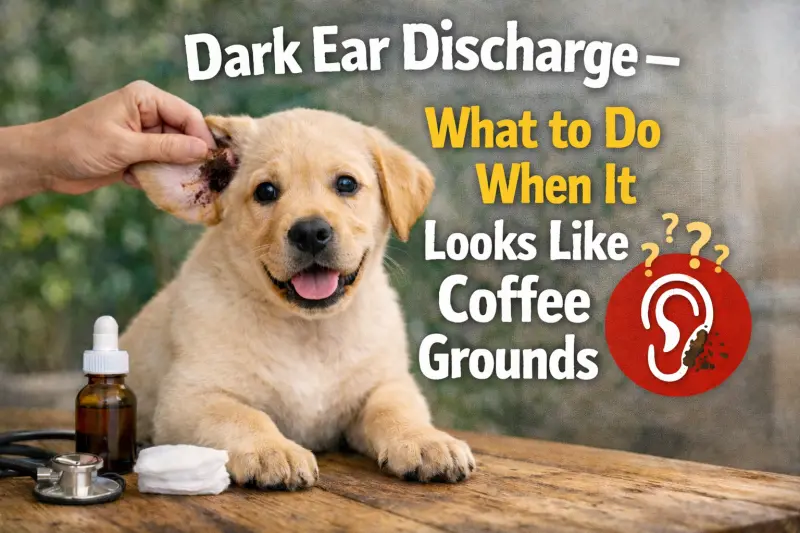
🟤 Dark Ear Discharge – What to Do When It Looks Like Coffee Grounds
Dark ear discharge that looks like coffee grounds often makes dog owners worry fast, and for good reason. This kind of buildup can point to ear mites or a more irritated ear environment that should not be ignored. The goal here is gentle cleanup, close observation, and avoiding rough handling that can make the ear even more sensitive.
📘 Choose What Fits Best:
• full PDF for this specific ear problem
• all 7 complete dog ear care guides in one set
• Includes both a clean black & white printable version and a color visual version
• No ads, no pop-ups — just a simple, distraction-free format
• Designed for quick use without guessing or overthinking
Quick Overview
- Time: 5-10 minutes
- Difficulty: Easy to moderate
- Best For: Dark discharge that looks dry, grainy, or coffee-ground-like
- Focus: Gentle cleanup and close monitoring
Step-by-Step Instructions
- Look Closely Before Cleaning Check whether the debris is dry, dark, and grainy rather than soft wax or light surface dirt.
- Do Not Scrape or Dig Avoid trying to scrape the material out, since that can irritate the ear and make your dog resist handling.
- Use a Gentle Treatment Option Apply a mild ear care product that supports deeper cleaning without turning the whole thing into an aggressive ear session.
- Wipe Only What Loosens Easily Remove what comes away naturally from the outer area and leave anything that feels stuck or uncomfortable.
- Watch the Pattern Closely Pay attention to whether the dark debris returns quickly, spreads, or comes with more scratching and irritation.
Why This Helps
When the discharge looks darker and more unusual, a basic wipe-only routine can feel too light. Gentle but more targeted cleaning helps you manage visible buildup while giving you a better sense of whether the ear is calming down or moving toward something that needs more attention.
Emma’s Notes
This is the kind of ear issue that makes people nervous fast, because it looks more serious than simple wax and usually comes with more scratching.
I usually reach for a deeper-care ear treatment when I want something that feels more supportive than an everyday quick clean.
I still keep the routine gentle, though, because rough cleaning usually makes the whole situation harder instead of better.
Things to Watch
- If scratching becomes more frequent, the irritation may be increasing rather than settling down.
- If the debris spreads, thickens, or starts coming with odor, it is time to take the problem more seriously.
- If your dog becomes highly sensitive or the ear looks red underneath the discharge, do not keep forcing cleanup.
🔴 Red and Warm Ears – Soothe Irritation Without Overdoing It
Red, warm ears usually mean the skin is already irritated and needs a gentler approach. This can happen with inflammation, allergies, or repeated rubbing and cleaning that pushed the ear too far. At this stage, the goal is not deeper cleaning. It is reducing irritation, keeping the area dry, and watching closely for signs that the problem is getting worse.

📘 Choose What Fits Best:
• full PDF for this specific ear problem
• all 7 complete dog ear care guides in one set
• Includes both a clean black & white printable version and a color visual version
• No ads, no pop-ups — just a simple, distraction-free format
• Designed for quick use without guessing or overthinking
Quick Overview
- Time: 3-5 minutes
- Difficulty: Easy
- Best For: Mild redness, warmth, or early irritation
- Focus: Soothing, protecting, and avoiding extra irritation
Step-by-Step Instructions
- Pause Deep Cleaning If the ear already looks red or feels warm, stop treating it like a routine cleanup day.
- Check for Moisture or Surface Irritation Look for dampness, rubbing marks, or surrounding skin that also seems irritated.
- Keep the Area Dry Let the ear air out and avoid anything that traps heat or moisture.
- Use a Gentle Soothing Option Apply a mild support product only if it feels appropriate for outer-ear irritation and does not seem to increase discomfort.
- Watch for Pain or Worsening Swelling If the ear becomes more tender, more swollen, or your dog resists touch, stop home handling and reassess.
Why This Helps
Once the ear is red and warm, more cleaning is not always the answer. A calmer approach helps reduce the risk of making inflamed skin even more reactive. This is why soothing, protecting, and keeping the area dry makes more sense here than forcing another round of ear cleaner.
Emma’s Notes
When an ear already looks irritated, I stop trying to “clean my way out of it.” That usually backfires.
I usually reach for a soothing support spray when I want to calm the outer area instead of adding more friction or moisture.
If redness keeps building or the ear starts feeling painful, I stop treating it like a minor home-care issue and pay much closer attention.
Things to Watch
- If the redness spreads or the ear feels hotter over time, the irritation may be escalating.
- If your dog starts pulling away, crying, or guarding the ear, pain is becoming part of the picture.
- If swelling continues or returns again and again, there may be an underlying trigger such as allergies.
💧 Wet Ears After Bath – Keep Moisture Out Before Trouble Starts
Wet ears after bath time are a very common setup for later irritation and smell. The issue is usually not the bath itself, but moisture getting trapped where the ear stays warm and slow to dry. A simple prevention routine can make a big difference here because once dampness lingers, the ear becomes much easier to upset.

📘 Choose What Fits Best:
• full PDF for this specific ear problem
• all 7 complete dog ear care guides in one set
• Includes both a clean black & white printable version and a color visual version
• No ads, no pop-ups — just a simple, distraction-free format
• Designed for quick use without guessing or overthinking
Quick Overview
- Time: 3-5 minutes
- Difficulty: Easy
- Best For: Dogs whose ears stay damp after baths or water play
- Focus: Prevention, dryness, and airflow
Step-by-Step Instructions
- Keep Water Out as Much as Possible During bath time, avoid aiming water directly into the ear and try to protect the opening from splashing.
- Dry the Outer Ear Right Away Use a soft towel or cloth to blot around the outer ear instead of letting water sit there.
- Let the Ear Air Out After the bath, give the ear time to breathe instead of trapping moisture under heavy fur or folded skin.
- Use Drying Support if Needed If your dog tends to stay damp around the ears, use a product that supports dryness rather than waiting for odor to show up later.
- Check Again the Next Day Recheck the ear 1 to 2 days later for smell, scratching, or a damp feeling that never fully went away.
Why This Helps
This is one of the clearest prevention-based ear care situations. The goal is not treatment. It is stopping trapped moisture before it turns into smell, irritation, or repeat ear trouble. Prevention works especially well here because the trigger is usually obvious and easy to manage once you spot the pattern.
Emma’s Notes
I treat this as a setup problem, not a cleaning problem. If water keeps getting into the ear during baths, the same issue tends to come back again and again.
I usually use ear covers during bath time when I want to reduce how much water gets near the ear opening in the first place.
Once I started thinking about prevention instead of cleanup, this whole kind of ear issue became much easier to manage.
Things to Watch
- If a bad smell appears 1 to 2 days after a bath, moisture may have stayed trapped too long.
- If your dog starts scratching after every bath, it is worth treating bath-time ear protection as part of the routine.
- If the ear never seems to dry well on its own, airflow and ear hair may be part of the problem.
🐕 Dog Keeps Shaking Head – Check for Mild Buildup Before It Escalates
Frequent head shaking is often one of the first signs that something inside the ear feels irritating. In mild to moderate cases, it can come from debris, wax buildup, trapped moisture, or the start of a more irritated ear environment. The goal here is to check gently, clean lightly when appropriate, and watch whether the pattern keeps repeating.

📘 Choose What Fits Best:
• full PDF for this specific ear problem
• all 7 complete dog ear care guides in one set
• Includes both a clean black & white printable version and a color visual version
• No ads, no pop-ups — just a simple, distraction-free format
• Designed for quick use without guessing or overthinking
Quick Overview
- Time: 5-10 minutes
- Difficulty: Easy
- Best For: Mild head shaking linked to debris, wax, or light irritation
- Focus: Gentle checking, light cleaning, and pattern watching
Step-by-Step Instructions
- Look Before You Clean Check the ear opening for visible wax, dampness, or light debris before reaching for any product.
- Start With the Outer Area Clean only the visible outer part first so you can see whether the shaking may be linked to surface buildup.
- Use a Mild Cleaner if Needed If the ear looks a little dirty or waxy, use a gentle ear cleaner instead of anything strong or overly aggressive.
- Keep the Routine Light This is not the moment to scrub deeply. A mild check-and-clean routine is usually enough for first-step care.
- Watch the Pattern Over the Next Few Days Notice whether the head shaking settles down, stays the same, or starts showing up with scratching or odor.
Why This Helps
Head shaking is often a behavior clue before the ear looks obviously bad. That is why this kind of card works best as a “check first, clean lightly, then observe” routine. If mild buildup is the trigger, a gentle cleanup can help quickly. If the behavior keeps going, that tells you the problem may not be surface-level anymore.
Emma’s Notes
When a dog keeps shaking their head, I do not assume it is serious right away, but I also do not ignore it. It usually means something feels off in there.
I usually use a gentle ear cleaner if I can already see mild buildup, because it is a practical first step that does not make the whole situation feel overhandled.
If the shaking keeps happening after a light cleanup, I stop treating it like a quick hygiene issue and start watching for other signs.
Things to Watch
- If head shaking continues for several days, the trigger may be deeper than simple debris.
- If shaking starts happening with scratching, smell, or discharge, the pattern is becoming more meaningful.
- If one ear is clearly worse than the other, it may point to a more specific irritation or blockage.
😣 Painful Ears When Touched – Stop Handling and Reassess First
If your dog pulls away, cries, freezes, or reacts when the ear is touched, this is no longer a simple cleanup situation. Pain usually means the ear is already significantly irritated or inflamed, and pushing through home care can make things worse fast. The safest move here is to stop handling, keep your dog comfortable, and think in terms of follow-up care rather than immediate fixing.

📘 Choose What Fits Best:
• full PDF for this specific ear problem
• all 7 complete dog ear care guides in one set
• Includes both a clean black & white printable version and a color visual version
• No ads, no pop-ups — just a simple, distraction-free format
• Designed for quick use without guessing or overthinking
Quick Overview
- Time: 2-3 minutes
- Difficulty: Easy to identify, not ideal for home handling
- Best For: Ears that trigger pain, avoidance, or strong sensitivity
- Focus: Stop handling, reduce stress, and avoid making it worse
Step-by-Step Instructions
- Stop the Cleaning Routine If your dog reacts with pain, do not keep trying to finish the ear care session just because you already started.
- Reduce Extra Handling Avoid repeated touching, lifting, or checking if the ear is clearly making your dog uncomfortable.
- Keep the Area Calm and Dry Let the ear rest, avoid moisture, and do not add unnecessary products in the moment.
- Watch Your Dog’s Body Language Notice whether there is flinching, whining, guarding, hiding, or unusual defensiveness around the ear.
- Think About Follow-Up, Not Forcing a Fix Any tools or cleaners here belong to later maintenance after the painful phase is properly addressed, not as a push-through solution right now.
Why This Helps
Once pain is part of the picture, the priority shifts from “how do I clean this?” to “how do I stop making it worse?” That is why this card is built around pause, comfort, and caution. Trying to force a cleanup on a painful ear can increase stress, increase resistance, and turn a manageable problem into a much harder one.
Emma’s Notes
This is one of those situations where I do less, not more. If the ear is painful, I do not treat it like a regular hygiene issue.
I think of products like a grooming kit for later maintenance only after the painful stage is no longer the main problem.
For me, this is the line where I stop trying to “solve it at home” and start focusing on keeping things calm, simple, and less stressful for the dog.
Things to Watch
- If your dog pulls away, cries, or snaps when the ear is touched, pain is already a major factor.
- If swelling, heat, or discharge is also present, this is not a normal maintenance moment.
- If your dog starts avoiding you during ear checks, the discomfort may be stronger than it looks from the outside.
How to Clean Dog Ears Safely
Ear cleaning should feel gentle, quick, and boring. That is actually the goal. You are not trying to scrub aggressively or make the ear look perfect. You are trying to remove mild surface buildup, help the ear stay dry, and avoid making irritation worse.
Step 1: Lift the Ear Flap
Choose a calm moment and gently lift the outer ear so you can look for redness, smell, moisture, or visible wax.
Step 2: Add Ear Cleaner
Use a dog-safe ear cleaning solution and follow the label directions. Do not improvise with random household liquids.
Step 3: Massage the Base
Massage the base of the ear for about 10 to 15 seconds so the solution can loosen light debris and wax.
Step 4: Let Your Dog Shake
Yes, this part gets messy. It also helps move loosened material outward so you can wipe it away more easily.
Step 5: Wipe the Outer Area
Use a soft cotton pad or gauze to wipe what you can see on the outside. Do not push anything deep into the ear canal.
Step 6: Stop if It Looks Painful
If the ear is very red, swollen, bleeding, or painful to touch, pause home cleaning and ask your vet what to do next.
Note: A mild cleaning routine can help with light wax or post-bath moisture, but it is not a cure-all for deeper infections, mites, or more painful ear problems.
Common Dog Ear Care Mistakes
Many ear problems get worse because the first fix was too aggressive, too frequent, or simply aimed at the wrong thing. A few very common mistakes show up again and again.
Using Cotton Swabs Deep Inside
This can push debris farther in and irritate sensitive tissue instead of helping.
Cleaning Too Often
Over-cleaning can dry out the ear, disrupt the normal balance, and create more irritation.
Ignoring Bad Smell
A strong odor is often one of the clearest clues that something is wrong. Do not treat it like normal dog chaos perfume.
Letting Ears Stay Wet
Moisture trapped after baths, swimming, or rainy walks can create a very friendly little party for yeast and bacteria.
Tip: Gentle and consistent beats aggressive and occasional almost every time.
When to Consider a Vet Visit
There is a big difference between a mild ear cleanup and an ear problem that is already painful or infected. The goal is not to panic over every scratch. The goal is to notice when home care stops making sense.
Symptoms Last More Than 2 to 3 Days
If scratching, head shaking, or irritation continues despite gentle care, the issue may need a closer look.
Strong Odor Gets Worse
A worsening smell usually means the problem is not resolving on its own.
Visible Pain or Swelling
If your dog flinches, cries, resists touch, or the ear looks swollen, skip the guessing game and call your vet.
Heavy Discharge or Bleeding
Thick discharge, pus, or blood is not a simple maintenance issue and should not be treated like one.
Veterinarians usually look at the amount and type of discharge, how inflamed the ear is, whether there is pain, and whether the pattern suggests yeast, bacteria, mites, allergies, or something else entirely. That professional distinction matters because different causes need different treatment.
Simple Ways to Help Prevent Ear Problems
You cannot prevent every ear issue, especially in dogs who are prone to allergies, heavy wax, floppy ears, or lots of outdoor adventures. But you can make problems less likely by keeping your routine simple and consistent.
Dry Ears After Baths
Focus on the outer ear and do not let moisture sit there for hours.
Check Ears Weekly
You are not looking for perfection. You are looking for changes in smell, color, buildup, or sensitivity.
Clean Only When Needed
Some dogs need regular cleaning. Others do best with a lighter touch. More is not always better.
Notice Pattern Changes
If ear issues keep returning, there may be a bigger trigger such as allergies or recurring infection.
Final Thoughts
Ear problems in dogs are common, but that does not mean they should be ignored. Small signs like scratching, odor, or head shaking often show up before the ear looks truly bad. That early window is where calm observation and gentle care can help the most.
You do not need to become your dog’s personal ear detective with a magnifying glass and dramatic soundtrack. You just need a simple system: notice the signs, clean gently when appropriate, avoid the usual mistakes, and know when it is time to get professional help.
Need a More Detailed Version?
If you want a cleaner, printable version of this topic with a more detailed routine, symptom guide, and easy reference layout, this article can lead naturally into a downloadable PDF.
References – Authoritative Sources
American Kennel Club – Ear infections in dogs. A practical veterinary-style overview of common symptoms, causes, and treatment considerations. Visit source
PetMD – Dog ear infection signs and home care guidance. Useful for understanding early warning signs and when home management is no longer enough. Visit source
Merck Veterinary Manual – Ear disorders in dogs. A strong reference for the clinical side of otitis and related ear conditions. Visit source
Cornell University College of Veterinary Medicine – General ear health and veterinary care background that supports owner education. Visit source
VCA Animal Hospitals – Dog ear cleaning and infection care articles with strong owner-facing explanations. Visit source
Schema Integration
Dog Ear Care FAQs
How often should I clean my dog’s ears?
It depends on your dog. Some dogs need weekly cleaning, while others only need it occasionally. A good rule is to clean when you notice mild buildup, but avoid over-cleaning.
Can I use cotton swabs to clean my dog’s ears?
No. Cotton swabs can push debris deeper into the ear canal and cause irritation. Use a cotton pad or gauze for the outer ear only.
Why do my dog’s ears smell bad?
A strong smell often means yeast or bacterial overgrowth. Healthy ears should not have a noticeable odor.
Is it normal for dogs to shake their heads?
Occasional shaking is normal. Frequent or repeated head shaking may indicate irritation, debris, or early infection.
What does dark ear discharge mean?
Dark, coffee-ground-like debris can be a sign of ear mites. If it persists or worsens, it’s best to have it checked.
When should I take my dog to the vet for ear problems?
If symptoms last more than a few days, worsen, or include pain, swelling, or heavy discharge, you should consider a vet visit.
Can ear infections go away on their own?
Mild irritation might improve, but infections usually require proper treatment. Delaying care can make the condition worse.
How can I prevent ear problems in dogs?
Keep ears dry, check them regularly, clean when needed, and watch for early signs like smell or scratching.