Most training problems are not really “method” problems. They are reward problems. When the treat is too low value, your dog does not feel a reason to try. When it is too high value at the wrong time, you can accidentally create frantic behavior, sloppy reps, or a dog who only works when the jackpot shows up.
The goal is simple: choose treats that help your dog stay engaged, think clearly, and repeat the behavior you want. In this guide, I will show you how to pick training treats by value level, texture, and timing, so each training method has a reward that actually fits the job.
10 Training Methods and Treat Pairings
🟡 Marker Training with Soft Rewards – Clean Timing, Calm Focus
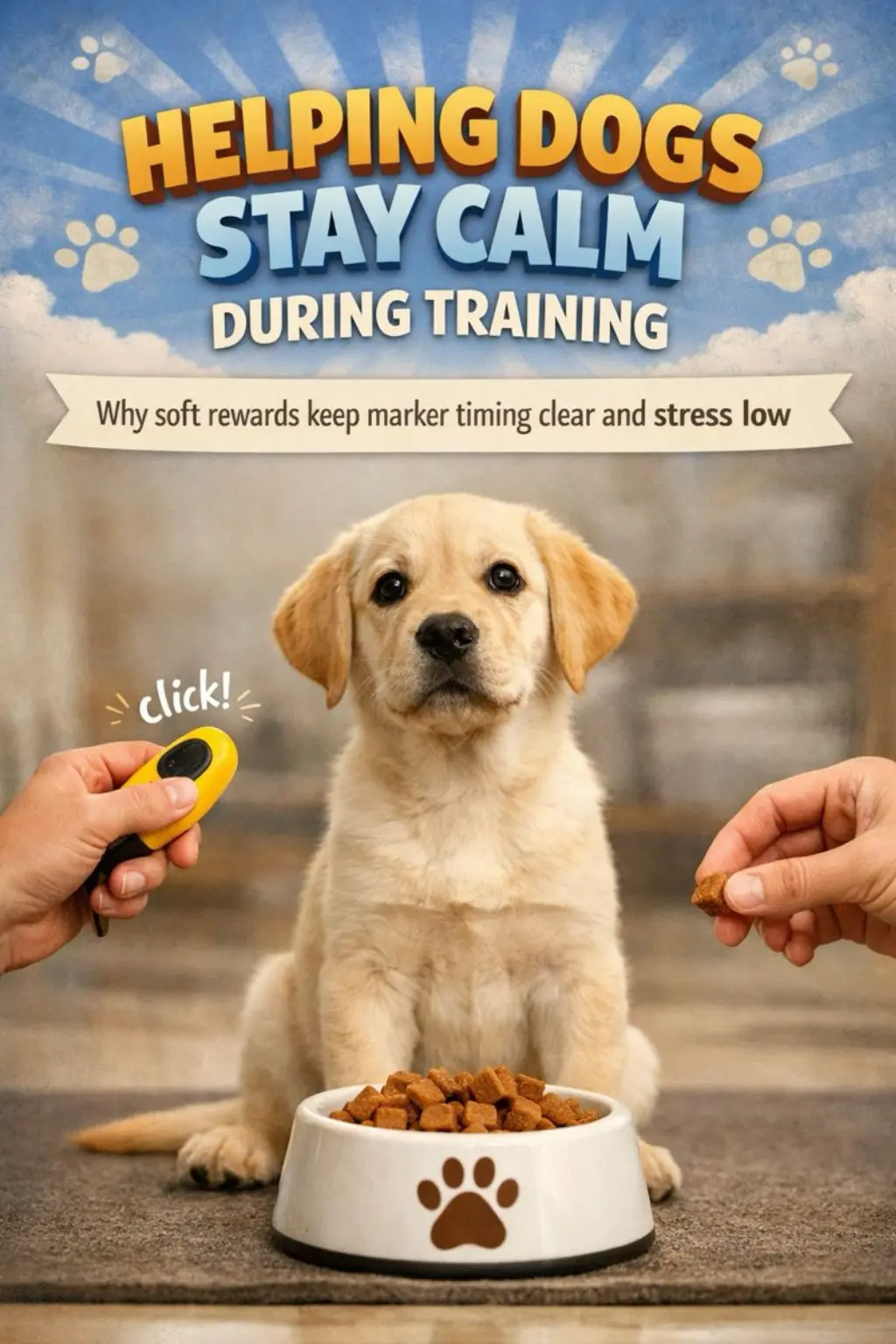
Marker training works best when the reward is fast to deliver and easy to swallow. If the treat is too crunchy, too dry, or takes a long time to chew, the timing gets messy and the dog starts guessing which part earned the reward. Soft rewards keep the loop simple: mark, deliver, reset, repeat. That clarity is what makes progress feel steady instead of chaotic.
How I Keep Marker Training Clean
I start by tightening my marker timing before I ask for harder reps. When I want consistent, quick feedback (especially for sit, touch, and eye contact), I use a clicker set so the marker sound stays crisp and repeatable, even when I am moving around the kitchen or yard.
Next, I make delivery frictionless. If I am fumbling with pockets or opening a container, my timing slips and the dog starts drifting. A clipped-on training treat tote keeps rewards easy to grab with one hand, which helps me keep sessions short, calm, and clean.
Finally, I reduce environmental noise before I raise criteria. If the dog is bouncing between distractions, the marker loses meaning. I will often reset reps inside a defined boundary using a simple playpen so the dog can focus on the pattern instead of scanning the room. For the soft treat option that fits this method, I rotate in Soft Chicken & Oat Training Treats when I want quick chewing and fast reset between reps.
What I Notice When It’s Working
- The dog snaps back to me quickly after each reward instead of wandering.
- Cues look cleaner because the marker is landing on the same moment each time.
- Sessions stay calmer because chewing time is short and predictable.
Things I Still Keep an Eye On
- If soft treats are too large, the dog slows down and timing gets sloppy again.
- If arousal rises, I lower criteria and shorten the session instead of pushing through.
- If motivation drops suddenly, I reassess distraction level and reward value.
Tip: If your timing feels off, do three 60-second sessions instead of one long session. Short loops keep the marker precise and the dog confident.
🎯 High-Value Motivation Reset Method – Rebuilding Engagement Without Pressure
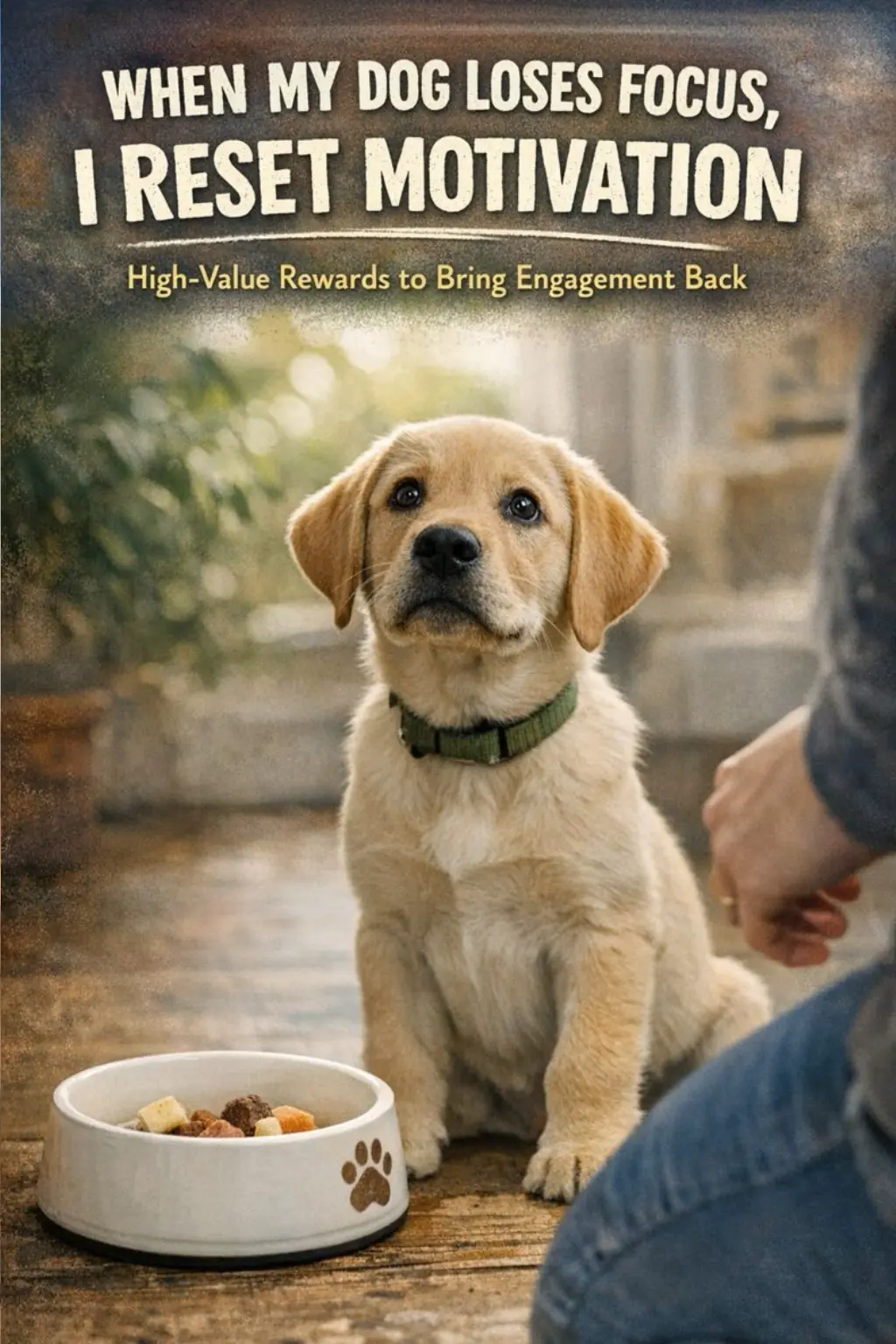
Motivation drops often show up after repeated cues, long sessions, or rewards that no longer feel meaningful to the dog. From the human side, it can look like stubbornness or distraction. From the dog’s side, the reward simply stopped standing out enough to justify the effort.
How I Reset Motivation Without Escalating Pressure
I start by changing the value of the reward before changing the cue. Instead of repeating commands, I switch to a scent-forward, soft treat that creates immediate interest again. During this reset phase, I often rotate in Peanut Butter Banana High-Value Training Treats to make engagement feel worthwhile again without increasing volume or intensity.
Next, I simplify delivery and timing. When rewards arrive late or fumbled, motivation drops fast. Keeping treats accessible allows me to reinforce the exact moment I want. That is why I rely on a lightweight training treat tote so rewards stay fast, quiet, and predictable.
Finally, I limit session length and protect emotional balance. When frustration builds, learning shuts down. Supporting calm focus between short sessions matters more than squeezing in extra reps, which is when a gentle daily calming supplement can help stabilize arousal without replacing training itself.
What I Notice When Motivation Resets
- Eye contact returns earlier in the session.
- The dog offers behaviors instead of waiting or disengaging.
- Rewards regain meaning without increasing quantity.
Things I Still Keep an Eye On
- Avoid using high-value rewards to push longer sessions.
- If motivation drops repeatedly, reassess overall routine and rest.
- Sudden disinterest paired with lethargy may warrant a vet check.
Tip: If motivation fades, resist the urge to repeat cues. Change the reward first, then reassess the task difficulty.
🧠 Distraction-Proof Training Method – Teaching Focus When the World Gets Loud
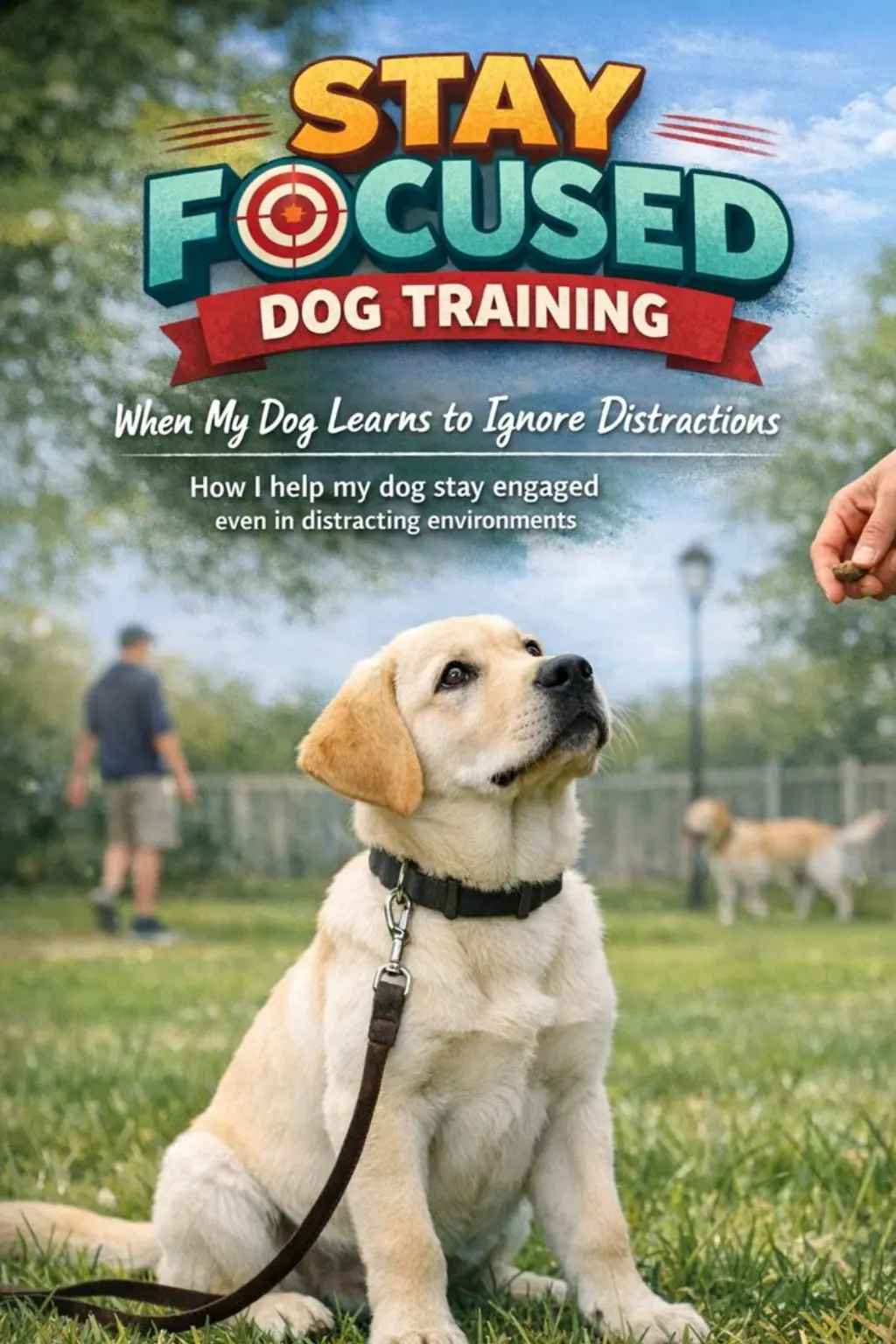
Distraction issues rarely mean a dog has not “learned” the behavior. They usually mean the environment became more interesting than the reward. New smells, movement, distance, and emotional arousal can quietly overpower cues that work perfectly at home.
How I Build Focus Before Adding Distractions
I start by lowering the difficulty instead of repeating cues. In distracting environments, I reduce distance and manage movement first, so my dog can succeed before asking for focus. Using a controlled, tangle-free training leash lets me limit wandering and keep attention within a workable range instead of fighting the environment.
Once focus shows up briefly, I reinforce it with a reward that clearly outcompetes the distraction. For outdoor or high-stimulus sessions, I rotate in Liver High-Value Training Treats because scent intensity matters more than size when distractions are strong.
After training, I prioritize decompression instead of more reps. Over-arousal carries home easily, so I guide my dog into a predictable cooldown routine. A familiar resting space like a simple wire crate helps stimulation drop back to baseline before the next session.
What Improves When Focus Holds
- Responses appear sooner after the cue, even with movement nearby.
- Eye contact replaces scanning the environment.
- Recovery after distraction becomes faster and calmer.
Things I Still Keep an Eye On
- Avoid stacking multiple new distractions at once.
- Do not increase session length just because focus returns.
- If arousal stays high after training, scale back next time.
Tip: Distraction training works best when you teach recovery, not perfection. The goal is returning to focus, not never losing it.
⏳ Steady Duration Building Method – Healthy Reinforcement Rotation
Duration training often breaks down not because a dog does not understand the cue, but because reinforcement timing becomes inconsistent. When rewards are either too rich or too random, sustained focus quietly erodes.
How I Build Longer Focus Without Frustration
I extend duration by stabilizing the reward first. For longer training sessions, I rotate in balanced, whole-food treats instead of escalating intensity. Meals like Salmon & Sweet Potato Healthy Training Treats let me reinforce frequently without pushing arousal too high.
After longer sessions, I keep feeding routines predictable. Using a raised feeding bowl helps post-training meals feel calmer and more structured, especially when dogs are physically tired but mentally alert.
Consistency matters across days, not just sessions. I label and batch treats carefully using simple food labeling tools so rotation stays intentional and I do not accidentally overload calories or ingredients.
What Improves With Stable Duration Training
- Dogs hold positions longer without repeated cues.
- Fewer breaks caused by frustration or scanning.
- Smoother transitions between work and rest.
Things I Still Watch Closely
- Do not increase duration and difficulty at the same time.
- Watch calorie creep during longer sessions.
- End sessions before focus fully collapses.
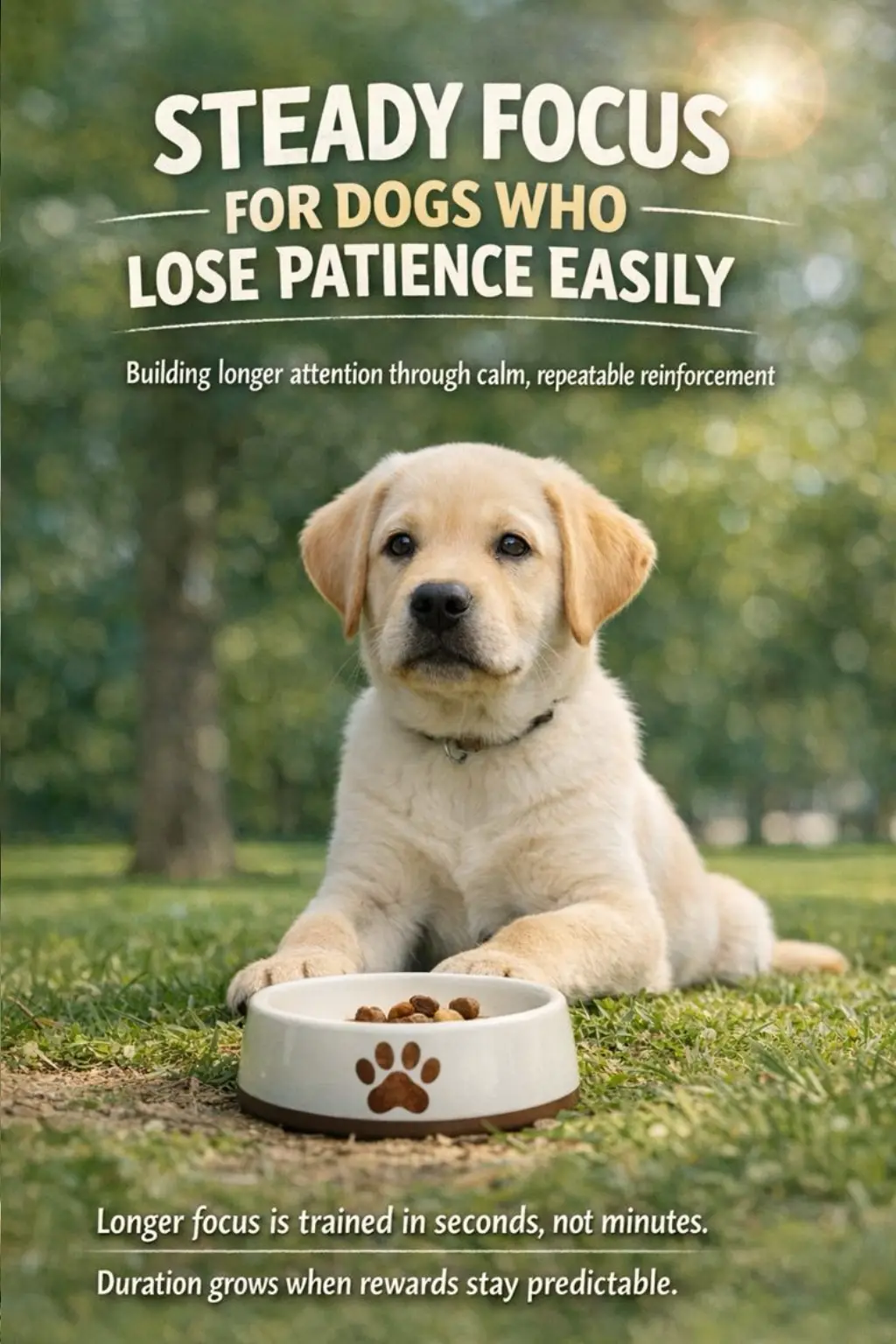
Tip: Duration training succeeds when the dog feels the reward is steady, not when they wonder if it will disappear.
🥕 Low-Calorie High-Repetition Training Method – Clean Reps Without Calorie Creep
High-repetition training is where “treat math” quietly breaks most plans. The reps look great, but calories stack up fast, dogs start anticipating constant hand-feeding, and sessions get more frantic instead of more precise. This method keeps reinforcement frequent while staying light, predictable, and sustainable for everyday practice.
How I Keep Reps High and Calories Low
I start by picking a treat that breaks into tiny pieces without losing its “worth it” factor. When I need a low-calorie baseline that still feels rewarding, I rotate in Low-Calorie Pumpkin Training Treats so I can reinforce often without turning one session into a full extra meal.
Next, I reduce friction in the delivery itself. During rapid-fire reps, I want my reward hand to move smoothly without digging, crinkling, or breaking my timing, which is why I keep treats in a training treat tote where I can grab a piece by feel and stay locked in on the behavior.
Finally, I end with a calm “downshift” so high-frequency work does not carry over into restless pacing. A structured cooldown using a slow feeder bowl helps transition the dog from fast reinforcement mode into a slower, settled rhythm.
What I Notice When It’s Working
- Reps stay clean and consistent instead of escalating into begging.
- Focus lasts longer because reinforcement is predictable, not frantic.
- Training feels repeatable day to day without “treat guilt.”
Things I Still Keep an Eye On
- If attention drops, I tighten criteria before increasing treat value.
- If arousal climbs, I pause and reset instead of pushing more reps.
- I adjust meal portions on heavy training days to keep intake balanced.
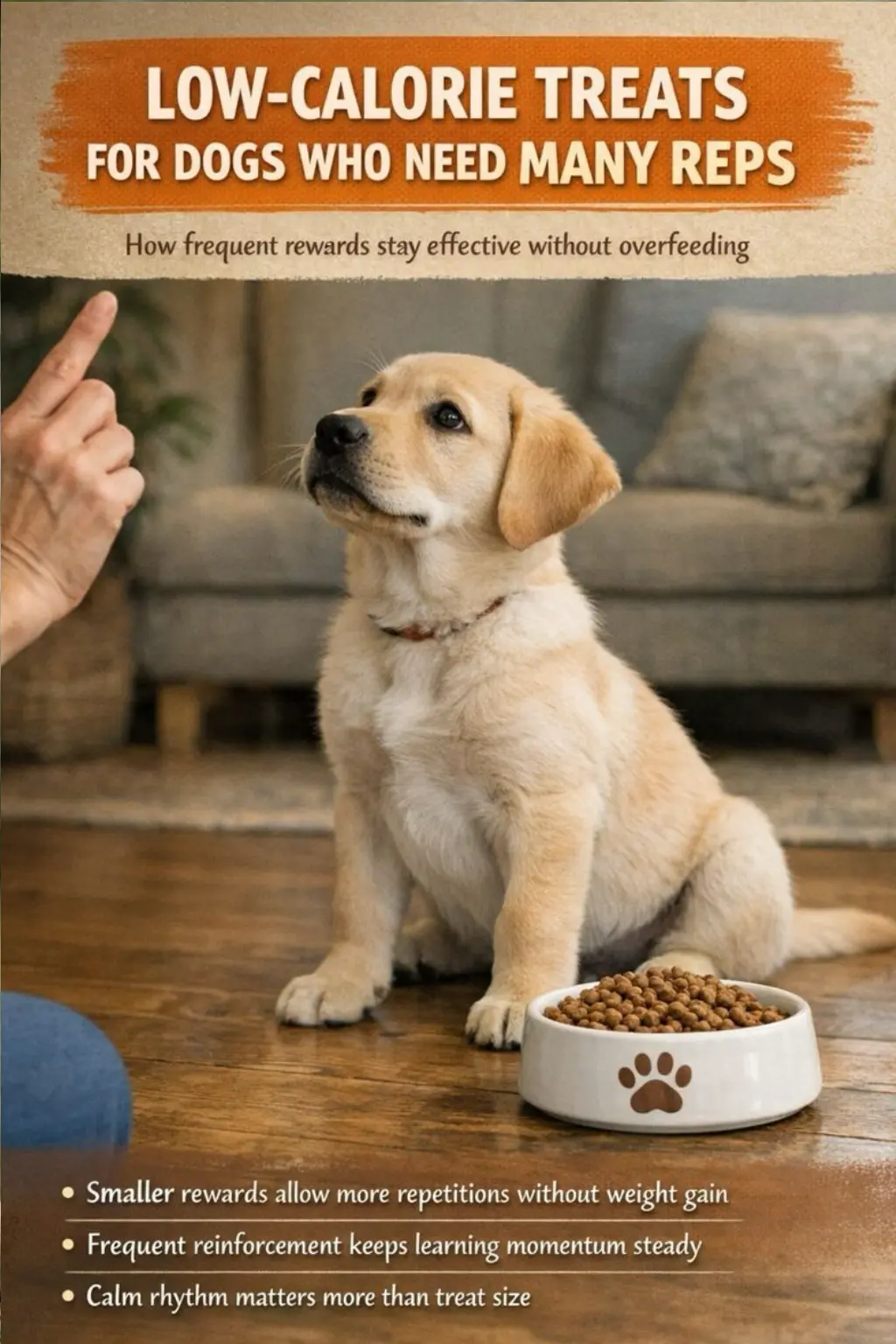
Tip: When you feel tempted to “just give more treats,” switch to one-minute micro-sessions and end on a win. You will get cleaner learning with fewer calories.
🐶 Puppy Foundation Training Method – Building Clarity Before Freedom
Puppy training problems rarely come from a lack of effort. They usually come from too much freedom, too many signals, and no clear system tying behavior to outcomes. In the foundation phase, puppies are not being “stubborn” – they are trying to understand which patterns actually matter. This method focuses on clarity, predictability, and gentle structure before asking for reliability.
How I Build a Clear Foundation
I start by keeping rewards extremely easy to chew and quick to swallow. Puppies lose focus fast if treats take effort, so I rely on Cheese & Yogurt Soft Puppy Training Treats to mark behaviors cleanly without interrupting momentum.
Next, I lock in a single, consistent potty location. Rather than letting puppies guess where relief is allowed, I guide them to a predictable surface every time. Using an artificial grass potty helps turn potty success into a repeatable pattern instead of a lucky accident.
Finally, I connect behavior to communication. Puppies learn faster when actions trigger clear cues, so I introduce potty bells early, pairing touch with immediate outdoor access to form a simple request-response loop.
What I Notice When It’s Working
- Potty timing becomes more predictable instead of random.
- Puppies start offering behaviors instead of wandering.
- Training sessions feel calmer and shorter, not chaotic.
Things I Still Keep an Eye On
- Avoid expanding freedom too quickly after a good day.
- Watch for overtired signals and end sessions early.
- If accidents increase suddenly, reassess schedule consistency.
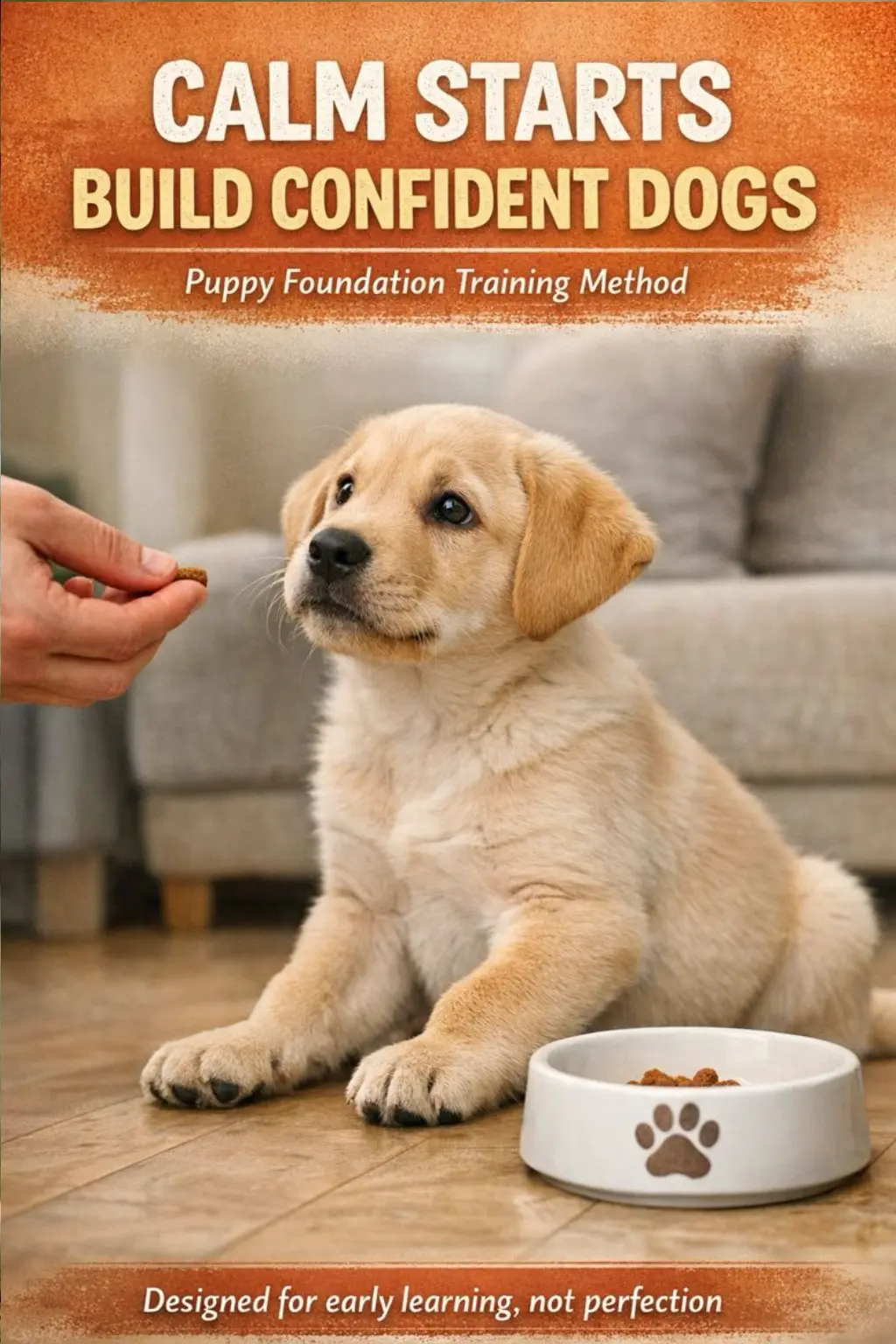
Tip: Foundation training is about reducing decisions, not increasing commands. Fewer choices make learning faster for young dogs.
🧘 Calm Obedience Maintenance Method – Keeping “Settle” Strong Without Hyping It Up
Calm obedience tends to fade when daily life gets busy and rewards become either too exciting or too unpredictable. Dogs can still “know” the cues, but their arousal level overrides follow-through. This method is about protecting low-arousal reliability by pairing simple cues with predictable decompression, so calm behavior stays easy to access even on noisy days.
How I Maintain Calm Obedience
I keep the reinforcement natural and not overly stimulating, especially for dogs who get “spun up” by rich smells or crunchy textures. When I want steady, calm follow-through, I rotate in Turkey & Cranberry Natural Training Treats because they work well for quiet reps without shifting the dog into party mode.
After short sessions, I extend calm on purpose instead of ending on a spike. A slow, rhythmic finish helps the nervous system stay in “settle mode,” which is why I sometimes use a slow feeder bowl as a cooldown tool when I want calm behavior to last beyond the last cue.
I also teach a consistent calm station so the dog has a predictable place to land after training or household activity. Having one dedicated, comfortable spot reduces pacing and helps cues like “place” feel automatic, so I set up a supportive calming dog bed in the same location and treat it like part of the routine, not a special event.
What I Notice When It’s Working
- “Settle” happens faster, with less repeating.
- The dog recovers more smoothly after stimulation.
- Quiet behaviors show up on their own, without prompting.
Things I Still Keep an Eye On
- Avoid long sessions that slowly raise arousal without noticing.
- Do not reward calm with overly exciting play right afterward.
- If restlessness persists despite routine, reassess daily exercise and downtime balance.
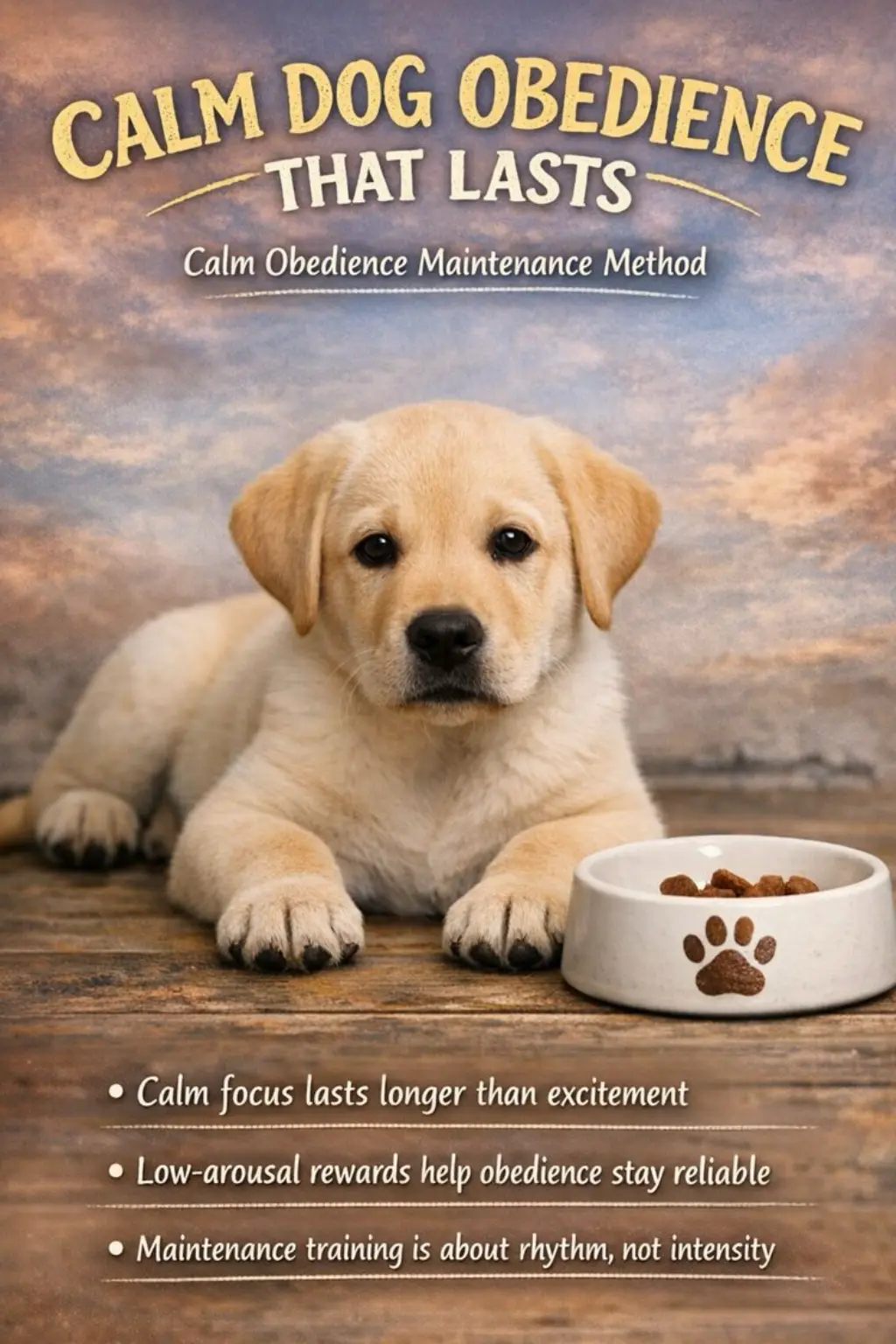
Tip: For calm obedience, end sessions “quietly successful.” One clean rep, then a calm station routine, beats ten more reps that slowly raise arousal.
🧩 Sensitive Dog Training Continuity Method – Keeping Progress Without Triggering Setbacks
Sensitive dogs often do not struggle with learning itself. They struggle with inconsistency. Small changes in food, timing, or environment can quietly reset progress, making training feel unpredictable for both the dog and the owner. This method focuses on continuity: keeping inputs stable so the dog’s nervous system does not have to reprocess new variables every day.
How I Protect Training Continuity
I start by removing ingredient noise from reinforcement. For sensitive dogs, rotating treats too often can look like inconsistency rather than variety. When I need reliable responses without digestive or behavioral side effects, I stick to Hypoallergenic Lamb Training Treats so the dog only has to focus on the cue, not on processing something new.
To keep variables locked, I portion training treats ahead of time and separate them by session and context. Using individual meal prep containers helps me avoid accidental mixing and keeps each training block consistent from day to day.
I also label everything clearly. Sensitivity often shows up when proteins or purposes blur together, so I rely on simple food service labels to track which treats were used, when, and in what situation. That record alone prevents many silent setbacks.
What Improves When Continuity Is Protected
- Training responses stay steady across different days.
- Digestive and behavioral reactions become easier to predict.
- The dog shows more confidence entering training sessions.
Things I Still Keep an Eye On
- Avoid introducing new treats during stressful weeks.
- Watch for subtle signs of overstimulation, not just obvious reactions.
- If sensitivity escalates despite consistency, reassess environment load.
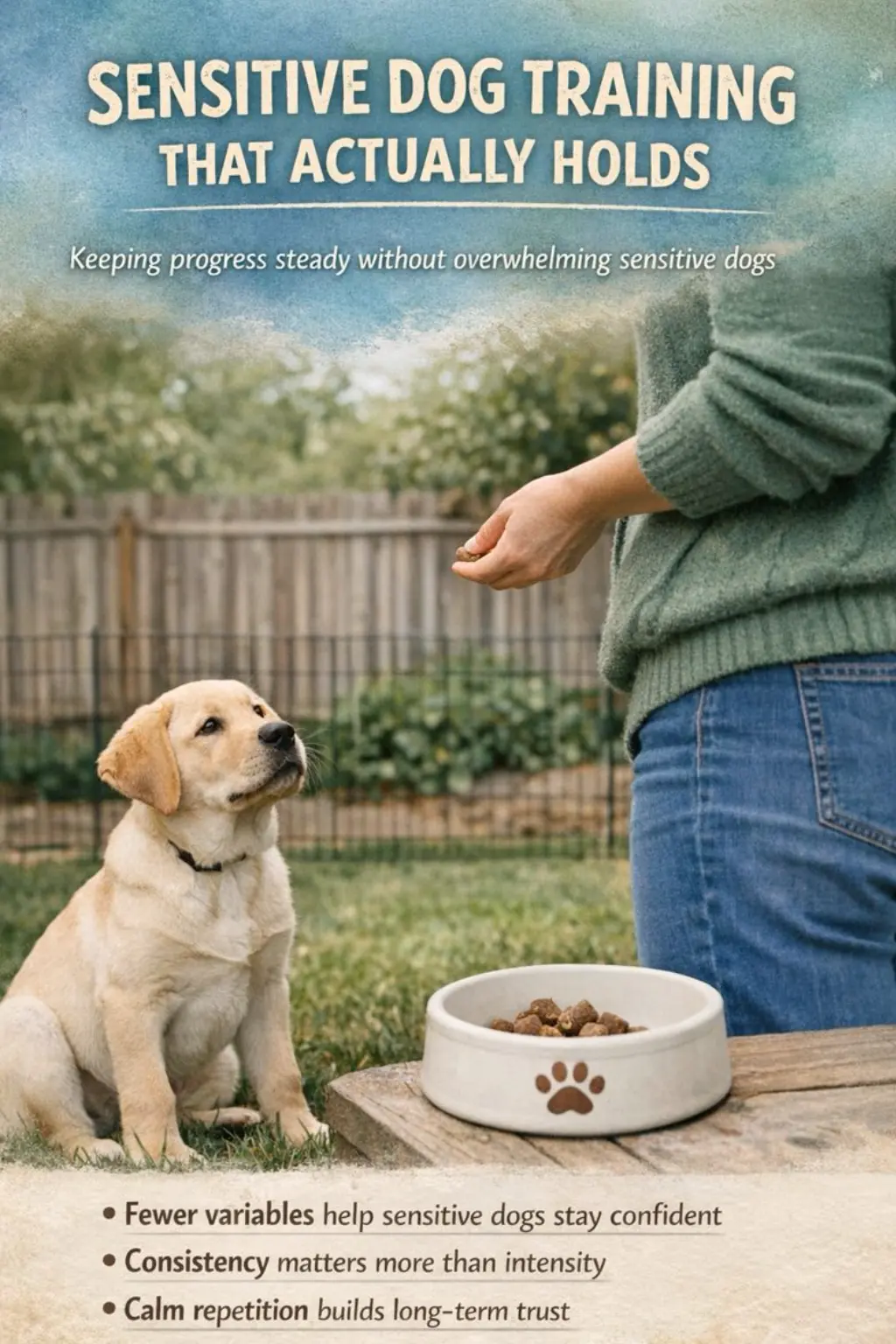
Tip: For sensitive dogs, progress is protected by sameness. Change only one variable at a time, and let stability do the heavy lifting.
🧯 Quick Reinforcement Backup Method – Staying Consistent on Messy, Busy Days
Training does not fall apart because you “miss one session.” It falls apart when your backup plan is unclear, so you skip reinforcement entirely on the day you actually needed it most. This method is about keeping a small, reliable reinforcement option ready so you can mark and reward cleanly even when cooking time, attention, or the environment is not ideal.
How I Keep a Backup Plan Ready
When I know I will have a busy day, I prepare a treat option that needs no baking and can be portioned fast. I use No-Bake Tuna Easy Training Treats because the workflow is simple: mix, portion, chill, and it is ready to reinforce without turning the day into a kitchen project.
I store backup portions in a silicone freezer portion container so each session has a clean, predictable amount. That prevents over-rewarding and keeps reinforcement consistent even when I am rushed.
If the training area gets distracting, smell is often the hidden reason attention drops. I keep the space neutral with an odor eliminator spray so the dog’s focus stays on cues rather than scanning the floor for “interesting” leftover scents.
What I Notice When the Backup Plan Works
- I can reinforce quickly without improvising food.
- The dog stays responsive even when the day is chaotic.
- Training feels continuous instead of stop-and-start.
Things I Still Keep an Eye On
- Use small portions so backup treats do not inflate daily calories.
- Do not rely on emergency treats as the only reinforcement long-term.
- If the dog is repeatedly distracted, reassess the training environment before adding difficulty.
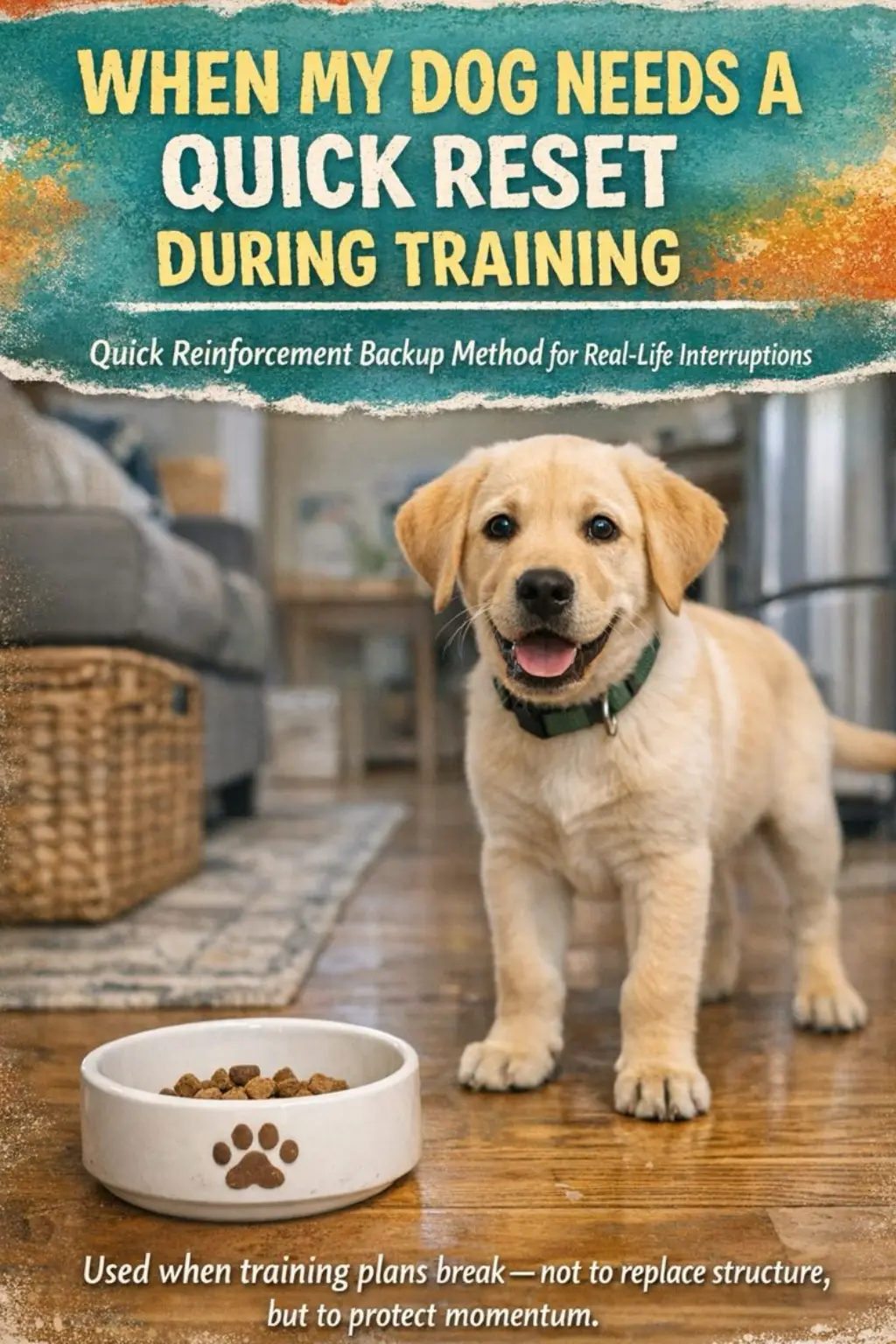
Tip: Your backup treat only needs to be reliable and easy. If it reduces decision fatigue, you will actually use it when it matters.
🧊 Cooldown & Stress-Relief Training Method – Helping Dogs Settle After Excitement
Many training setbacks are not caused by a lack of skill, but by unfinished emotional cycles. After excitement, play, heat, or a new environment, some dogs struggle to shift back into a calm learning state. This method focuses on teaching the body how to slow down, so calm becomes something the dog can reach intentionally instead of waiting for exhaustion.
How I Guide the Cooldown Phase
I start by offering a slow, rhythmic activity instead of asking for obedience right away. A frozen option like Frozen Yogurt & Blueberry Training Treats gives the mouth something to do while the nervous system begins to settle naturally.
To extend that calming effect, I serve frozen or semi-frozen rewards in a slow feeder bowl so licking replaces frantic chewing. This pacing helps shift arousal downward without adding new stimulation.
Once the body starts to relax, I guide the dog to a consistent rest location. Having a dedicated calming dog bed makes the transition clear: this is where movement stops and recovery begins.
What Improves When Cooldown Is Working
- Breathing slows and body posture softens.
- Vocalization and pacing reduce on their own.
- The dog can re-engage with training later without frustration.
Things I Still Keep an Eye On
- Avoid using cooldown tools as rewards for overexcitement.
- If stress signs persist, reduce stimulation earlier in the routine.
- Cooling strategies support training, but do not replace structured rest.
Tip: Cooling down should feel predictable, not corrective. When dogs know what comes after excitement, they reach calm faster each time.
Some links above are affiliate links. They never cost you extra, and they help us keep testing foods, tools, and daily routines with Ethan so these guides stay honest and practical.
How Rewards Actually Drive Learning
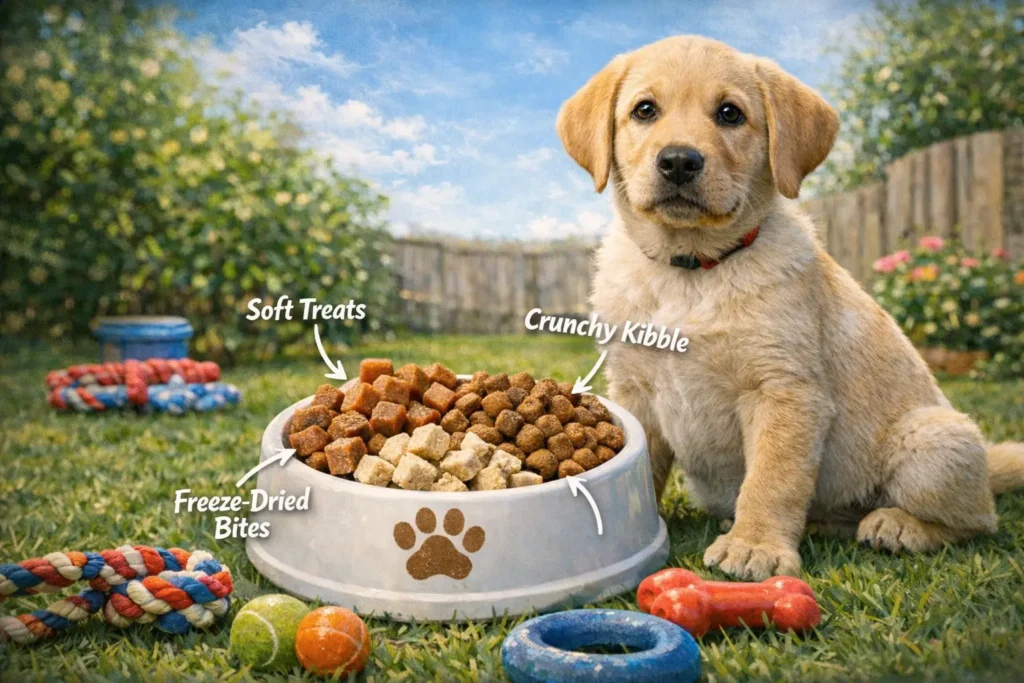
Positive reinforcement training is straightforward: behavior that is rewarded is more likely to happen again. What is less obvious is that the reward does not just “pay” the dog. It also sets the emotional tone of the session. A soft, quick-to-eat treat keeps the rhythm steady. A crunchy, slow-to-chew treat can break the flow. A frozen lick can slow the nervous system down when your dog needs help settling.
Timing matters more than treat size. If the reward arrives late, your dog may connect the treat to the wrong behavior. In practice, the best training treats are the ones that let you deliver feedback fast and consistently, with minimal fuss in your hands and minimal delay in your dog’s mouth.
Low, Medium, and High Value Treats Explained
Think of treat value as “how much your dog cares” in that moment, not what the ingredient label says. The same treat can be high value at home and medium value outside. Value changes with distraction, stress, novelty, and your dog’s current motivation.
Low value treats are for easy reps your dog already understands, especially indoors. They are useful for high repetition and for dogs who gain weight easily. Medium value treats are for new skills or for keeping attention in mildly distracting environments. High value treats are for hard moments: outdoors, around other dogs, during fear recovery, or when you need a clean breakthrough on a difficult behavior.
One common mistake is treating high value as the default. If every rep pays like a jackpot, some dogs get over-aroused and start offering chaotic behaviors. A good training plan uses value like a dial: turn it up when you need it, turn it down when you do not.
Why Texture Often Matters More Than Ingredients During Training
Ingredients matter for long-term diet decisions, but training is about mechanics. Texture decides how smoothly your session runs. Soft treats are usually the most efficient because your dog can swallow quickly and stay ready for the next cue. Crunchy treats can be great for enrichment or calm chewing, but in fast-paced training they often slow you down.
There is also a behavior side to texture. Lickable and frozen rewards can reduce arousal for dogs who get emotionally “amped” during training. On the other hand, very smelly, very exciting treats can be a lifesaver for dogs who struggle to stay engaged around distractions. Matching texture to your dog’s arousal level is one of the fastest ways to improve focus.
When to Change Treats During Training
You do not need a new treat for every session. Switching too often can create unnecessary variables, especially for sensitive dogs. Instead, change treats when the training problem changes.
Increase value when you move from indoors to outdoors, when you add distance or duration, or when you introduce a major distraction. Decrease value when your dog is already succeeding easily, when you are doing “maintenance reps,” or when you see signs of over-arousal like jumping, grabbing, frantic barking, or losing the ability to think between reps.
If you want a structured overview of how methods map to rewards, you can reference the method section in the companion article here: Dog Training Methods – Marker Training with Soft Rewards .
Common Mistakes Dog Parents Make With Training Treats
These are the patterns that most often slow progress, even when the training plan is solid.
- Treats are too big. Big bites create long chewing time and fewer reps. Tiny pieces usually outperform bigger ones.
- High value is used for everything. This can create frantic sessions and reduce the power of a true “special” reward.
- Rewards arrive late. Late treats reinforce the wrong moment and create confusion.
- Treats replace real reinforcement. Praise, play, sniff breaks, and permission to move can be powerful when used intentionally.
- No plan for calories. Training is often daily. If you do not adjust meal portions, weight gain sneaks in.
- Ignoring body language. Stress signs often show up before “bad behavior” does. Treat choice can help your dog stay under threshold.
How Training Goals Change the Treat You Need
Different training methods ask different things from your dog. Some require speed and precision. Some require emotional stability. Some require sustained focus under distraction. Your treat choice should match that demand.
For example, marker training and shaping benefit from small, soft rewards that keep the rhythm tight. Distraction-proof training often needs higher value to compete with the environment. Calm obedience and duration building often improve when you use rewards that keep arousal down and reinforce steady breathing, slower movement, and relaxed posture.
The clean way to think about it is this: treat value supports motivation, treat texture supports rhythm, and treat delivery supports emotional regulation.
How to Rotate Training Treats Without Confusing Your Dog
Rotation works best when the reward structure stays consistent. That means your dog still understands: cue, behavior, marker, reward. The treat can change without changing the rules.
If your dog is sensitive, rotate within a tight lane: keep the same general texture and portion size, and only change one variable at a time. For example, rotate proteins but keep the treat soft and pea-sized. If you are rotating for motivation, keep the “default” treat consistent and bring in high value only for hard reps, new environments, or recovery moments.
The biggest rotation mistake is changing both value and texture at the same time. When that happens, you cannot tell if progress improved because your dog learned, or because the reward became wildly more exciting.
Are Homemade Training Treats Better Than Store-Bought?
Homemade treats can be excellent because you control texture, portion size, and ingredients. They are especially helpful for dogs who need soft treats, limited-ingredient options, or predictable rewards that do not upset digestion.
Store-bought treats can be more convenient and consistent for busy weeks. The best option is the one you can use reliably. If you rarely have time to cook, a simple store-bought rotation may support more training than an ambitious homemade plan you never repeat. Many dog parents do best with a hybrid approach: one dependable everyday treat and one or two “special” rewards for hard sessions.
How Much Is Too Much – Portion Control During Training
Training calories add up quickly because training is frequent. The safest strategy is to make treats smaller than you think you need and increase the number of reps instead of the size of each reward.
For most dogs, pea-sized pieces are a strong starting point. If your dog is tiny, go smaller. If your dog is big, resist the temptation to go bigger unless you truly need it for motivation. You can also “pay in pieces” by breaking a single treat into multiple rewards. If weight is a concern, reduce meal portions on heavy training days and keep an eye on body condition, not just the scale.
Wrapping It Up
The best training treat is not a single recipe or a single product. It is the reward that matches your dog’s current challenge. When the treat fits the method, training becomes calmer, clearer, and more repeatable. Start simple: choose one soft everyday treat, add one high value option for hard moments, and keep portions small enough that you can practice more without overfeeding.
Explore More
If you want to build a steady training routine, these are the pages I reference most often while planning treat value and session structure.
Homemade Training Treats Collection
Jump to the full set of recipes and pick textures that match your dog’s focus level.
Dog Training Methods Guide
Use this as your map for choosing the right method before you fine-tune the treat.
Marker Training Section
A quick refresher on clean markers and why soft rewards keep timing sharp.
FAQ
What are the best treats for dog training?
The best treats for dog training are small, easy to eat, and matched to the difficulty of the situation. For simple behaviors your dog already knows, low or medium value treats are often enough, especially at home. When you train outside, add distractions, or work on a challenging behavior, you may need a higher value treat to keep your dog engaged. Texture matters too. Soft treats usually work best because they do not slow down the pace of training. If your dog gets over-excited, a calmer texture and smaller portions can help keep thinking online. The ideal setup for most homes is a reliable everyday training treat plus one high value option reserved for harder reps, new environments, and recovery moments.
What are high value treats and when should I use them?
High value treats are rewards your dog finds especially motivating in that moment, often because they are smellier, tastier, or simply more exciting than the usual options. You should use high value treats when the training task is genuinely hard for your dog. Common examples include training outdoors with distractions, practicing around other dogs, working through fear or noise sensitivity, or asking for more duration and impulse control than your dog can comfortably handle yet. The key is to use high value treats strategically, not constantly. If every rep pays like a jackpot, some dogs become frantic and stop thinking clearly. Treat value is most effective when it is a dial you adjust: higher for hard moments, lower for easy reps and maintenance practice.
Should training treats be soft or crunchy?
For most training sessions, soft treats are the better choice because they are fast to chew and swallow, which keeps your timing clean and your training rhythm steady. Crunchy treats can be useful in slower activities like enrichment, decompression, or calm chewing, but they often interrupt training flow because your dog spends longer chewing. If you are working on precise marker timing, shaping, or high repetition reps, soft treats usually outperform crunchy ones. That said, individual preference matters. Some dogs love crunch and stay focused, while others get distracted by chewing. If your dog becomes over-aroused during training, switching to a softer treat with a calmer delivery, or using a lickable reward for short settling breaks, can help keep the session controlled.
How many training treats can I give per day?
There is no single number that fits every dog because it depends on treat size, your dog’s calorie needs, and how much training you do. A practical approach is to keep treats very small and plan for more reps rather than bigger rewards. Pea-sized pieces are a strong starting point for many dogs, with smaller for tiny dogs and only slightly larger for big dogs. If you train daily, treats can easily become a meaningful part of your dog’s intake, so adjust meal portions on heavy training days. Watch body condition over time: you should be able to feel ribs under a light layer of tissue, and your dog should have a visible waist from above. If weight creeps up, reduce treat size, increase low calorie options, and shift some rewards to praise, play, or sniff breaks.
Can I use my dog’s kibble as training treats?
Yes, kibble can work as a training treat, especially for easy behaviors, indoor practice, and maintenance reps where distractions are low. Using kibble is also a smart way to control calories because you can measure it and subtract it from meals. The limitation is motivation. Many dogs will not work hard for kibble in distracting environments, or when learning a brand-new skill. In those situations, your dog may need a higher value reward to stay engaged and successful. A balanced strategy is to use kibble as your default for easy reps and reserve a soft, higher value treat for moments when you truly need more motivation. If you want to keep training smooth, choose rewards that are easy to deliver quickly, and avoid switching values too often during a single session unless you are intentionally raising difficulty.
References – Authoritative Sources
These sources provide additional context on reward-based training, learning theory, and practical training mechanics.
American Kennel Club (AKC) – Positive Reinforcement Training (2023) – AKC. Read
Explains how reinforcement influences behavior and why timing and consistency matter.
RSPCA – Reward Based Training (2022) – RSPCA. Read
Outlines humane training principles and the benefits of reward-based methods.
AVSAB – Humane Dog Training Position Statement (2021) – American Veterinary Society of Animal Behavior. Read
Summarizes why reward-based training is recommended and how it supports welfare.
UC Davis School of Veterinary Medicine – Dog Behavior and Training Resources (2020) – UC Davis. Read
Provides veterinary-backed behavioral guidance and training considerations.
NIH – Operant Conditioning Overview (2019) – National Institutes of Health. Read
Offers background on learning theory concepts that underpin reward-based training.