Potty Training Basics – What It Really Is and the 7 Challenges Most People Face
Successful potty training is not about teaching a dog to “hold it longer.” It is about keeping three things stable over time: timing, space, and calm follow-through. When one of these breaks down, accidents repeat, signals disappear, and progress feels inconsistent.
Most potty training struggles follow predictable patterns. That is why fixing everything at once rarely works. Progress usually comes from identifying the most obvious pattern in your home and adjusting one variable at a time until the routine becomes clear again.
Below are the seven most common potty training challenges. You can jump directly to the one that best matches what you are seeing right now. Each section links to a focused Training Card that explains why the pattern happens and how to respond without adding unnecessary steps.
Training Cards – Pick Your Problem and Follow the Pattern
Each Training Card focuses on one behavior pattern. The goal is not to correct everything at once, but to make one part of the routine more predictable so learning can actually stick.
Read the card that matches your dog’s behavior most closely. Apply one change, run it consistently for a few days, and observe what improves before layering in anything new.
Puppy Potty Training Accidents Indoors – Stop Repeat Spots Fast
Indoor accidents usually happen when the routine is still fuzzy, the space is too big, or we miss the tiny pre potty signals. Most puppies are not being stubborn – they are learning timing, surfaces, and what “outside” even means. The real problem is that one messy day can quietly turn into a repeating habit if the area keeps smelling like a bathroom.
How I Actually Handle It With Ethan
When an accident happens, I blot it right away and fully soak the spot, plus a small border around it, using an enzyme based cleaner. Puppies rarely hit the exact same dot twice, but they will return to the same scent zone if any trace is left behind, which is why I let the area air dry completely instead of wiping it off too soon. enzyme cleaner has worked reliably for breaking that cycle.
During the transition phase, I temporarily place a disposable pad in the most likely accident area, especially after naps or high energy play. This is not about replacing outdoor potty trips, but about protecting the floor while I tighten the outside schedule and rebuild the habit loop. I usually keep simple disposable pee pads on hand for those in between moments.
To reduce guesswork, I also add a clear asking step at the door. Teaching Ethan to interact with a consistent cue helped replace wandering and sniffing with a direct signal, even when his timing was not perfect yet. A basic door setup like these potty bells made that communication much clearer for both of us.
What I Notice When It Starts Working
- Accidents stop repeating in the same room once scent cues are fully removed.
- Potty timing becomes easier to predict after naps, meals, and play.
- Door behavior becomes clearer, even if the signal starts out subtle.
Things I Still Keep an Eye On
- A sudden spike in accidents usually means the schedule slipped, not that training failed.
- Straining, blood, or very frequent small pees should be checked by a vet.
- One stubborn corner often means the cleaning area was too small the first time.
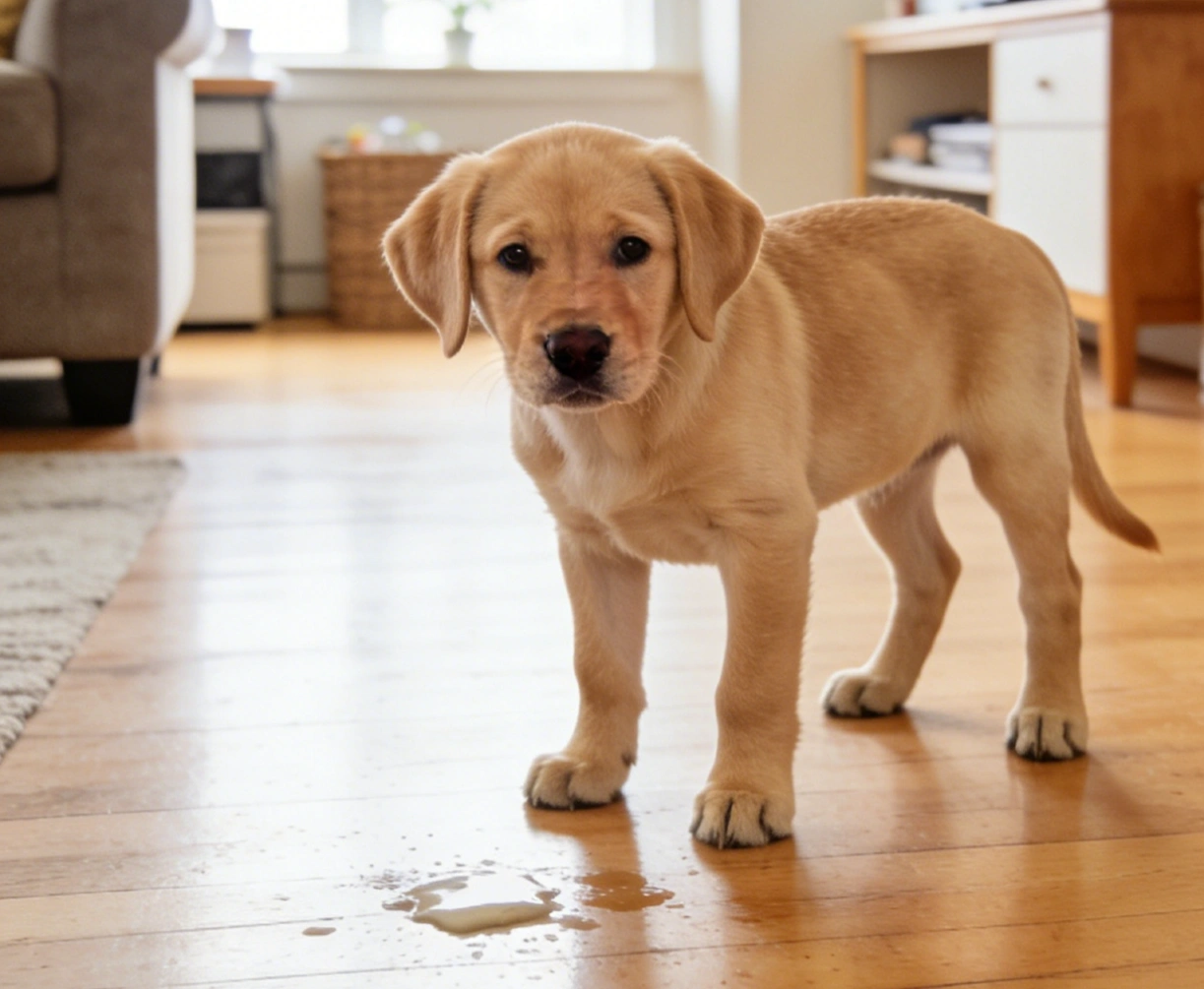
Tip: If accidents keep happening in one room, shrink access for a few days and take your puppy out immediately after every nap, meal, and play burst. Routine consistency beats correction every time.
Puppy Pees Right After Coming Inside – Fix the Transition Window
This usually happens when your puppy thinks the potty trip is “over” the moment the door closes, or when outside time turns into sniffing, playing, or rushing back in. The tricky part is that the bladder is still full, and the habit becomes: hold it outdoors, then release indoors where they feel safe. What owners experience is the most annoying version of success: your puppy tried to wait, just in the wrong place.
How I Reset This With Ethan
I treat coming inside as a short “hold and confirm” phase, not the finish line. We go straight to the potty spot first, then I pause for 30 to 60 seconds before letting Ethan roam. If he does not go, I keep him close and try again a few minutes later, because freedom too early is what trains the indoor release. A simple timer or habit tracker helps me stay consistent on the tough days, and I like using a visible routine log to remove guesswork.
If your puppy rushes indoors and immediately pees, I temporarily narrow the space during this transition window. A small, calm boundary prevents wandering and sniffing for a “favorite corner,” and it also makes it easier for me to spot the tiny signals. For many families, a foldable playpen like this classic exercise pen is an easy way to create a controlled entry zone without turning the whole house into a training obstacle course.
If the puppy has already started choosing the same indoor entry path or mat, I clean that area as if it was a repeat spot, even if the mess looks small. The goal is to remove the “this smells like my bathroom” cue that tells them to finish indoors. An enzyme cleaner such as multi-purpose enzyme cleaner is useful here because it targets the scent trail, not just the surface mess.
What Gets Better When It Clicks
- Your puppy starts finishing outside because “outside” becomes the only complete potty routine.
- The first two minutes after coming in become calmer and more predictable.
- You stop getting surprise puddles in the entryway or right after the leash comes off.
Things I Still Watch Closely
- If your puppy is drinking a lot more than usual or peeing tiny amounts very often, rule out medical causes first.
- Do not extend outdoor time into long play sessions if potty is the goal – separate potty trips from fun trips.
- If your puppy is scared outside, address the fear factor, because anxious pups often avoid peeing until they feel safe indoors.

Tip: Keep the leash on for the first 1 to 2 minutes after you come inside. If your puppy does not pee outdoors, do a short reset, try again in 5 to 10 minutes, and only give full freedom after you get a confirmed potty.
Puppy Doesn’t Signal Before Potty – Teaching Clear Communication
When a puppy does not signal before potty, it is usually not defiance or stubbornness. Most puppies simply do not yet understand that humans rely on signals instead of body cues like pacing, sniffing, or sudden stillness. The result is frustrating accidents that seem to come “out of nowhere,” even though the puppy was trying to communicate in a way we missed.
How I Teach Clear Signals
I start by slowing the routine down. Before every potty trip, I pause near the exit and wait quietly instead of rushing out. This gives Ethan space to offer a behavior, even something small like looking at the door or stopping movement. That pause is where communication starts.
To make signaling clearer and more repeatable, I introduce one consistent cue at the exit. Hanging a simple potty bell near the door gives the puppy a physical action they can repeat. The goal is not noise, but clarity. A basic door-mounted bell system works well because it stays in the same place and becomes part of the routine, like a simple door bell setup that never moves or changes height.
During the learning phase, I also limit wandering so signals are easier to notice. Reducing space means fewer missed cues and faster feedback. A lightweight indoor boundary helps keep the puppy close enough that subtle signals are not lost across the room. This is where a small indoor playpen can quietly support the routine without adding pressure or confusion.
What Improves With Clear Signals
- You start noticing patterns instead of random accidents.
- Your puppy gains confidence because signaling actually works.
- The routine feels calmer, with less guessing and rushing.
Things I Still Pay Attention To
- Do not wait for a “perfect” signal. Reward small attempts early.
- Avoid adding multiple cues at once. One signal is enough.
- If accidents continue despite signaling attempts, review timing and frequency.
Tip: If your puppy only signals after the accident, you are close. Start rewarding the earliest sign you notice, even if it feels too small.
Puppy Regresses in Potty Training – Resetting the Routine Without Drama
Potty training regression is common after schedule changes, growth spurts, stress, or one “busy week” where the routine slips. Most puppies are not forgetting on purpose. They are testing timing again, and if accidents start happening in the same places, the habit can rebuild quickly. The goal is a calm reset, not a stricter punishment.
How I Reset the Routine
First, I tighten the environment so Ethan has fewer chances to rehearse accidents. I use a small, defined management zone during the reset window, which is where a foldable indoor playpen helps me keep the day predictable without hovering.
Next, I clean any accident spots like I am “erasing a habit,” not just wiping a mess. A good enzyme-based cleaner matters here because it removes the odor cues that quietly invite repeat accidents, so I keep an enzyme cleaner for deep reset cleanups in the rotation when regression shows up.
Finally, I make the reward timing obvious again. The puppy needs a clear “yes” the instant the right thing happens, so I use a simple marker tool to sharpen the signal and rebuild consistency fast.
What I Notice When It’s Improving
- Accidents stop clustering in the same area.
- The puppy starts checking in before wandering off.
- Potty timing becomes more predictable again.
Things I Still Keep an Eye On
- Do not “free roam” too early after a few good days.
- Do not change signals. Keep one routine and one cue.
- If urine looks unusual or the puppy strains, contact a vet.
Tip: For 3 to 5 days, act like you are “starting over,” then loosen freedom gradually. Regression hates consistency, so keep yours boring.
Puppy Only Pees in Certain Spots – Breaking the Location Habit
When a puppy only pees in certain spots, it is often a scent loop. One accident leaves a cue, the cue pulls them back, and the habit becomes a “bathroom corner.” If the spot stays rewarding in any way, the puppy keeps choosing it, even if you are taking them outside regularly.
How I Break the Spot Pattern
I treat the spot like a training trigger and remove the cue first. The most important step is using a true enzyme-based cleaner that targets lingering odor, so I keep an enzyme urine remover for repeat-spot cleanups instead of standard household spray.
Next, I block access so Ethan cannot rehearse the habit while the new routine forms. Even a simple, stable barrier makes a difference, and a classic indoor exercise pen helps me redirect movement without chasing or scolding.
If the spot is a rug or pad area, I make cleanup fast and consistent because slow cleanup leaves cues behind. A small cleaning tool for scrubbing edges and corners is useful here, so I use a simple scrub brush to keep the area truly reset between training reps.
What Changes When It Works
- The puppy stops “beelining” to the same corner.
- Accidents become less location-specific and easier to prevent.
- Outside potty starts feeling more rewarding than the old spot.
Things I Still Keep an Eye On
- Do not use ammonia-based cleaners. They can smell like urine.
- Do not keep “testing” the spot by letting the puppy roam there.
- If the puppy urinates very frequently, consider vet guidance.
Tip: After deep cleaning, feed a meal or do a short training session near the old spot. It helps rewrite the “bathroom meaning” of that area.
Puppy Has Accidents When Excited – Managing Greetings and Big Feelings
Excitement accidents usually happen during greetings, play, or sudden stimulation. The puppy is not trying to be “naughty.” Their body is simply running faster than their bladder control. Your goal is to lower the intensity of the moment and give the puppy a predictable routine they can succeed in.
How I Lower Excitement Accidents
I change the greeting script. Before anyone says hello, I take Ethan out for a quick potty opportunity. Then I keep greetings low-key for 30 seconds, no squealing or rapid petting, just calm contact and slow movement.
For puppies that spike fast, I support calm behavior with predictable decompression routines. Some families use a gentle calming chew during high-trigger windows, so I keep a calming chew option for special situations, not as a daily replacement for training.
If the puppy tends to sprint across the house and leak, I limit the “launch space” during greetings. A defined boundary zone keeps movement controlled, and a foldable playpen helps me create calmer arrivals without constantly correcting.
For quick cleanup and odor prevention when an accident happens, I use a reliable enzyme cleaner so the puppy does not build a repeat scent pattern, such as an enzyme-based stain and odor remover that is designed for pet accidents.
What I Notice When It’s Improving
- Greetings become calmer and shorter.
- The puppy checks in instead of sprinting and leaking.
- Accidents shift from “every greeting” to rare and manageable.
Things I Still Keep an Eye On
- Avoid exciting play immediately after drinking water.
- Do not punish leaks. It increases stress and can worsen the pattern.
- If accidents happen with no excitement trigger, check health factors.
Tip: Ask guests to ignore the puppy for 10 seconds at the door. Most excitement accidents fade when the first minute stays boring.
Puppy Struggles With Nighttime Potty – Keeping Nights Calm and Predictable
Nighttime potty struggles usually happen when the space is too big, the bedtime routine is inconsistent, or the puppy wakes and wanders instead of settling. Many puppies are not trying to “cause trouble.” They are overwhelmed, unsure, or simply not able to hold it yet. A stable boundary plus a repeatable bedtime flow usually improves things quickly.
How I Keep Nights Predictable
I shrink Ethan’s nighttime space so he can settle instead of pacing. A simple wire crate fits our routine well because the boundary is clear, airflow is good, and the setup stays consistent night after night, like a basic foldable wire crate that is easy to place near the bed.
During accident phases, I keep cleanup friction low so I can stay calm and consistent. A washable base layer helps manage small leaks and reduces stress, so I use a waterproof reusable pad under the bedding as a protective layer, not as the primary potty surface.
If the puppy has a history of repeating the same nighttime spot, I treat it like a habit reset and clean thoroughly. That is where an enzyme urine remover helps remove the cue that can trigger repeat accidents.
What Gets Better With a Stable Night Setup
- The puppy settles faster instead of wandering and sniffing.
- You wake up to fewer surprise accidents and less stress.
- Nighttime becomes a predictable rhythm, not a guessing game.
Things I Still Keep an Eye On
- A crate is not a “hold it forever” tool. Keep breaks age-appropriate.
- Do not move bedtime cues around. Consistency matters more than style.
- If the puppy wakes to pee very frequently, consider vet guidance.
Tip: Keep the last potty break boring and consistent. Same door, same leash, same quiet cue, then straight back to bed.
Some links above are affiliate links. They never cost you extra, and they help us keep testing foods, tools, and daily routines with Ethan so these guides stay honest and practical.
When to Expect Progress (and When Not To)
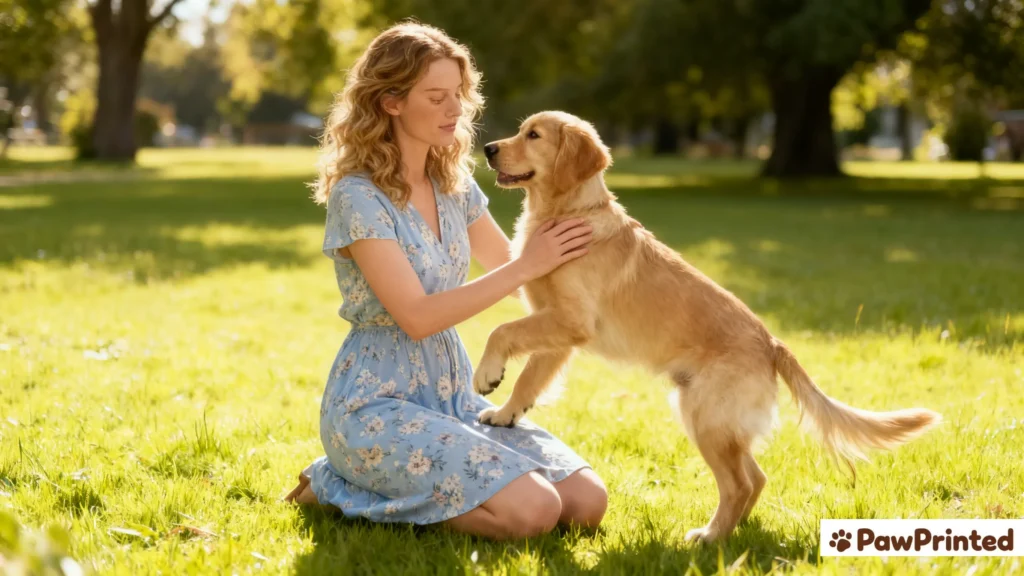
Potty training progress is not measured by perfect weeks without accidents. Real progress shows up as fewer repeated mistakes, clearer timing patterns, and faster recovery after something goes wrong. Many puppies improve in uneven waves – a few good days, followed by a messy day, then a longer stretch of stability. This up-and-down pattern is normal, especially when routines shift, freedom increases, or excitement levels change.
What matters most is whether accidents are becoming more predictable and easier to prevent. When you can say “I see why that happened” instead of feeling surprised, your training is working. If you want a clearer expectation map to keep yourself from over-correcting, use this as a reference point: Puppy Potty Training Timeline Guide – What to Expect by Age . It helps you calibrate what is realistic at each stage so you do not add pressure or steps before your puppy is ready.
8 to 12 weeks
At this stage, accidents are mostly about biology, not learning. Bladder control is limited, and signals are unreliable or nonexistent. Progress looks like fewer truly random accidents because you are preventing mistakes through tight timing, supervision, and limited space. Success here is management first, learning second.
3 to 4 months
Your puppy starts connecting patterns: the door, the leash, the routine, and the outcome. Early signals may appear, but they are often subtle and inconsistent. Accidents usually happen during transitions or when freedom expands too quickly. Progress looks like clearer timing and fewer repeats in the same situation.
5 to 6 months
Consistency begins to pay off more visibly. Many puppies become more reliable with daytime potty habits, but excitement, visitors, schedule changes, or new environments can still trigger setbacks. Progress here is stability across different days, not just good behavior in familiar routines.
When to pause and rule out health issues
Training patterns should change gradually. Sudden increases in urination frequency, straining, blood, strong odor changes, or accidents that appear overnight without a routine change can signal a medical issue. When behavior shifts abruptly, it is always appropriate to rule out health causes before adjusting training.
Emma’s rule for staying sane: treat every accident as information, not failure. Ask “What changed?” – timing, freedom, excitement, or supervision – and adjust one variable at a time. Small, calm corrections compound faster than constant resets.
Common Mistakes That Slow Potty Training
Most training “plateaus” are not caused by a puppy refusing to learn. They are usually caused by routine drift or freedom increasing faster than reliability. If accidents keep repeating, check these common bottlenecks first.
- Giving more space too fast after a couple of good days
- Changing timing daily (weekends vs weekdays) and expecting instant generalization
- Missing subtle pre-potty signals because your puppy is too far away or distracted
- Cleaning emotionally instead of cleaning thoroughly and neutrally
- Making nighttime trips stimulating instead of calm and boring
If accidents feel “mysterious” or keep repeating in the same situations, this guide breaks down the most common causes in plain language: Indoor Potty Accidents in Dogs – Why They Happen .
If you suspect the real issue is a messy transition (outside looked successful, but inside immediately falls apart), this foundation guide helps you spot the pattern: Why Dogs Struggle With Transitions .
How Long Does Potty Training Usually Take?
Most puppies need weeks of steady rhythm to look noticeably “better,” and months to look reliably consistent. The timeline depends on age, supervision, how quickly freedom is earned, and whether accidents are prevented from becoming a habit.
A practical target is this: accidents become rare, signals become clearer, and the household becomes calmer. If your routine stays stable, reliability typically follows – even if it is not perfectly linear.
If progress keeps sliding backward after a few good days, it is usually a consistency problem, not a “stubborn puppy” problem. This foundation guide explains why: Why Dog Training Regresses .
Final Thoughts – Calm Routines Win
Potty training is not a straight line. A puppy can look “trained” for a week and still have a messy day when the schedule shifts, excitement spikes, or supervision slips. That does not erase progress – it simply shows where the routine is still fragile.
Keep timing predictable, keep freedom earned, and keep follow-through calm. If you fix the pattern instead of reacting to the accident, you build a foundation that holds up for years.
If you want to zoom out and build a stronger daily structure beyond potty training, start here: Dog Training Hub .
FAQ – Puppy Potty Training
How long does it take to potty train a puppy?
Most puppies improve in stages, not overnight. Many households see fewer accidents within a few weeks of consistent timing and supervision, while true reliability often takes a few months. The biggest driver is routine stability: predictable potty timing, limited freedom, and calm follow-through after each trip. If accidents repeat in the same situations, that usually means the schedule or space is not matched to the puppy’s current ability yet. Focus on prevention first, then reward any early signal you notice so the puppy learns that communication works. If progress suddenly reverses without a routine change, consider ruling out a health issue with a vet.
Why does my puppy keep having accidents indoors even after going outside?
This usually happens when the outside trip was incomplete or rushed, or when the puppy is still learning the difference between outside play and potty time. Some puppies get distracted outdoors, do not fully empty, then finish inside once they relax. Treat the return indoors as part of training: come inside calmly, keep your puppy close for a short window, and offer a second quick potty opportunity if needed. Also watch for excitement spikes right after entry, because excitement can trigger quick peeing. The fix is typically tighter supervision, slower transitions, and more consistent timing, not punishment.
How do I teach my puppy to signal before potty?
Signals are learned behaviors, not automatic skills. Build a consistent pause at the exit so your puppy has space to offer something repeatable, then reinforce the earliest version of that cue every time. During the learning phase, reduce freedom so subtle signals are not missed across the room. Over time, your puppy learns that signaling leads to the door opening, which is the real reward. The key is repetition with the same timing and the same exit routine, so your puppy can predict what works. If signals are inconsistent, it usually means the routine is moving too fast or your puppy has too much space.
Is potty training regression normal?
Yes, regression is common, especially during growth spurts, schedule changes, travel, visitors, or when freedom increases too quickly after a few good days. Regression usually means the routine loosened, not that the puppy forgot. The fastest fix is a reset: tighten timing, reduce space, and return to predictable supervision for several days. Look for repeatable triggers like post-nap, post-play, or transitions. If regression appears suddenly with frequent urination or discomfort, rule out a medical issue. Otherwise, treat regression as a cue to rebuild consistency rather than restarting from zero.
How do I handle nighttime potty training without losing sleep?
Nighttime is mostly management, not skill-building. The goal is to reduce wandering and help your puppy settle so their body can sleep. Keep the bedtime routine consistent, keep the last potty break consistent, and avoid making nighttime trips stimulating. If wake-ups are frequent, check dinner timing, water timing, and late-evening excitement. Many households improve nights by tightening sleep space and using the same calm cue each night. Expect gradual improvement as your puppy matures, but prioritize predictability over testing how long they can hold it.
References – Authoritative Sources
American Kennel Club (AKC) (2023), “Housetraining Puppies”, AKC. https://www.akc.org/expert-advice/training/housetraining-puppies/ Practical guidance on building a consistent housetraining routine and preventing repeated accidents.
VCA Animal Hospitals (2022), “Housetraining Puppies and Dogs”, VCA. https://vcahospitals.com/know-your-pet/housetraining-puppies-and-dogs Veterinary-focused overview of training logic, timing, and common causes of setbacks.
RSPCA (2021), “Toilet Training Your Dog”, RSPCA. https://www.rspca.org.uk/adviceandwelfare/pets/dogs/training/toilet Reinforcement-based training explanation and practical prevention strategies during learning.
MSD Veterinary Manual (Merck) (2022), “Behavior Problems of Dogs”, MSD Veterinary Manual. https://www.msdvetmanual.com/behavior/behavior-problems-of-dogs/behavior-problems-of-dogs High-level veterinary reference on behavior concerns and when patterns warrant medical evaluation.
Cornell University College of Veterinary Medicine (2020), “Behavior Service and Training Support”, Cornell CVM. https://www.vet.cornell.edu/departments-centers-and-institutes/cornell-richard-p-ryan-veterinary-hospital/companions/behavior-service Background on behavior support principles and guidance on when to seek professional help for persistent issues.
Explore More PawPrinted Guides
If you want training to feel less reactive, focus on repeatable routines and clearer communication. These guides help you build the bigger structure around daily training so progress holds up even when life gets busy.
Dog Training Hub
Browse all PawPrinted training guides across routines, behavior patterns, and everyday management strategies.
Why Consistency Matters in Dog Training
Learn how tiny routine drift creates big setbacks, and how consistency makes training “stick” faster.
Space Management in Dog Training
A practical guide to using space and boundaries to prevent mistakes and speed up learning.