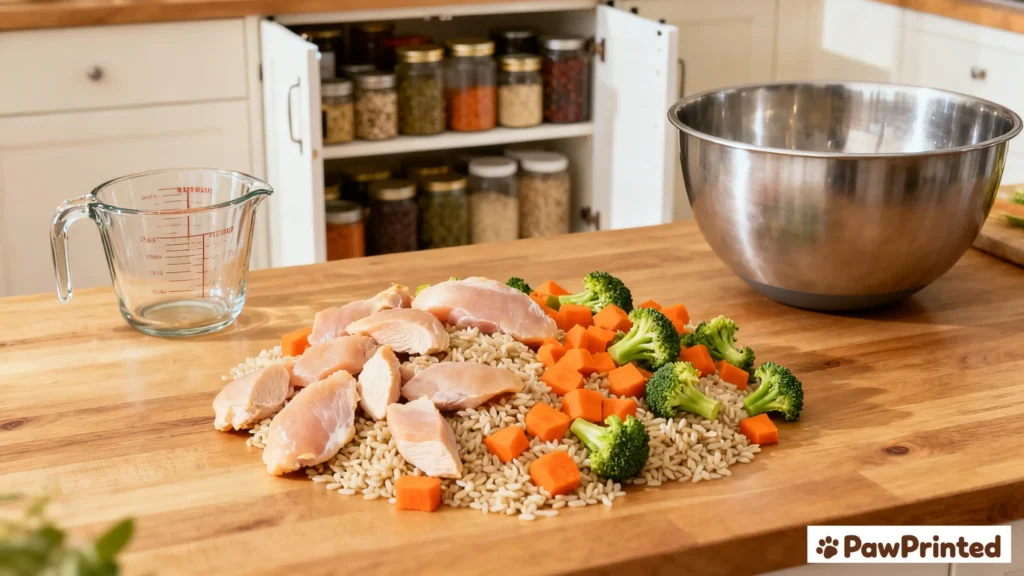
Homemade dog food can be beautifully balanced on paper and still miss the mark if the portion size is off. Too much, and you quietly create a weight problem. Too little, and your dog runs on fumes. This guide walks you through practical, vet-aligned ways to size portions so every bowl feels “just right” for your dog in real life.
Why Portion Size Is The Quiet Boss Of Homemade Dog Food
When owners first switch to homemade dog food, the main focus is usually on ingredients, recipes, and whether the meals look “healthy” enough. Portion size often comes last, or it is guessed by copying the amount of commercial kibble in the bowl. In reality, how much you feed is just as important as what you feed.
If you are just starting out with homemade feeding, it can help to pair this guide with the broader Homemade Dog Food Guide so you understand both recipe quality and feeding quantity at the same time.
The goal here is simple: give you a calm, repeatable way to decide serving sizes so you are not guessing at every scoop or stressing over whether that extra spoon of food is harmless or harmful.
Why Getting Portion Size Wrong Causes Real Problems
Feeding slightly too much homemade food for months can quietly add weight and strain joints, especially in medium and large breeds. Feeding too little for the same period can leave your dog hungry, low on energy, and prone to nutritional gaps even if the recipe itself is balanced.
Commercial dog food labels at least give you a starting point. With homemade diets, you do not have that printed chart on the bag. That is why a separate, clear portion strategy is essential, especially when you are also adjusting macronutrients as explained in our Dog Food Macros Guide .
Good portion control also protects sensitive dogs. If your dog has a history of tummy upsets and you are reading this together with the Sensitive Stomach Dog Food Guide , dialing in the amount can be the difference between a stable gut and recurring loose stools.
Step One: Think In Calories, Not Just Scoops
The most reliable way to set portions is to start with an estimated daily calorie requirement, then translate that into grams or cups of your recipe. Different recipes have different calorie densities, so feeding “one cup” is not a universal rule.
Many vets use body weight based formulas as a rough starting point. They adjust those formulas for a dog that is underweight, overweight, or highly athletic. You can treat that number as a starting budget and then split it into one, two, or three meals depending on your schedule and your dog’s digestion.
If you already understand how your recipe’s protein, fat, and carb balance works from the Dog Food Macros Guide , this calorie framework is the next step that turns theory into daily bowls.
Adjusting Portion Size For Puppies, Adults, And Senior Dogs
Even with the same weight and recipe, a puppy, an adult, and a senior will not have the same calorie needs. Growth, maintenance, and aging each pull on the energy budget in different ways.
Puppies
Puppies burn calories quickly for growth and playful activity. They usually need a higher calorie intake per kilogram of body weight compared to adult dogs, sometimes nearly double in early growth phases. Most puppies do best on two to four meals per day so their developing gut and blood sugar do not get overwhelmed by large, spaced out feeds.
When in doubt, start with the higher end of the recommended range and monitor body condition closely. The Puppy Dog Food Guide can help you align portion decisions with safe growth curves.
Adult Dogs
Once growth is complete, the goal shifts from rapid development to stable maintenance. Adult dogs need enough calories to support activity, organ function, and a healthy coat, but not so many that their waistline disappears. For most moderately active adults, one or two main meals per day works well.
Pay attention to small trends: if your dog’s harness feels tight after a month on a new homemade recipe, you may be slightly overfeeding even if the bowl does not look huge.
Senior Dogs
Senior dogs often move less, sleep more, and can lose muscle instead of fat if portions and protein quality are not managed carefully. They may need fewer calories overall, but they still need high quality nutrients in every bite. With older dogs, it is often smarter to feed slightly smaller, more frequent meals that are easy to digest.
If joint comfort is a concern, remember that overeating adds extra load. Combine smart portions with the insights from the Joint Support Dog Food Guide for weight aware senior care.
Weight Management
For dogs that already carry extra weight, portion control is your main lever. You may keep the same recipe but drop total daily calories gradually, aiming for slow, steady loss instead of crash dieting. Most vets recommend targeting around 1 to 2 percent body weight loss per week, monitored with regular weigh ins.
You can pair this portion guide with the Weight Loss Dog Food Guide or the Low Calorie Dog Food Guide for more structured support.
Adjusting Portions For Activity Level And Lifestyle
Two dogs with the same weight and age can still need very different portions if one spends most of the day on the sofa and the other is hiking or training regularly. Lifestyle quietly pushes daily calorie needs up or down.
Couch Companion
Dogs that mostly nap, stroll, and live an easy indoor life usually sit toward the lower end of calorie ranges for their weight. It is common for these dogs to gain weight quietly if owners feed like they are still in their high activity years. Start with a conservative portion, monitor body shape, and resist the urge to “top up” every time they ask.
Everyday Family Dog
Many dogs live somewhere in the middle: a couple of walks, some play, normal family life. For these dogs, standard maintenance formulas are often close to reality, but homemade feeding can still shift calories up if recipes are rich in oils or starchy sides. Use this guide as a check against slow seasonal weight creep, especially in winter.
Active Or Working Dog
Dogs that regularly run, hike, train, or perform work often need significantly more calories than the “average” chart suggests. For them, slightly underfeeding shows up quickly as weight loss and reduced stamina. It is usually safer to start higher and adjust down slowly than to keep them lean but low on energy.
Recovery And Low Activity Phases
After surgery, injury, or during forced rest, a previously active dog can suddenly become semi sedentary. Holding portions at the high activity level during these weeks quickly adds fat. It is a good time to lower portions a little, focus on easy to digest recipes, and keep an eye on stool quality and weight.
Turning Numbers Into Real Bowls In Your Kitchen
Once you have a target daily calorie range, you still have to turn it into something you can scoop in the kitchen. This is where many owners get stuck, because homemade food does not have a simple “one cup equals X calories” label.
The most practical approach is:
- Weigh a typical batch of your cooked recipe.
- Estimate total calories in the batch from your ingredients or your recipe calculator.
- Divide total batch calories by total weight to get calories per 100 grams.
- Use that number to decide how many grams your dog should get per day.
A simple digital kitchen scale makes this process far easier than trying to memorize how full a scoop looked last week. If you want to upgrade your prep tools, the Best Dog Food Making Tools hub walks through scales, storage, and cooking gear that fit homemade workflows.
How Many Meals Per Day Works Best For Your Dog
The same daily calorie total can behave very differently in a dog’s body depending on how you split it. Some dogs thrive on two solid meals per day, while others do better with three smaller meals with fewer hours of fasting in between.
Puppies usually do best with three or more meals, so their developing digestion does not get overloaded. Dogs with sensitive stomachs or a history of bile vomiting often do better when large gaps between meals are avoided. Older dogs may handle slightly smaller, more frequent portions better than one heavy evening bowl.
If you are planning your routine for the first week of homemade feeding, you can combine this section with the step by step plan in the 7 Day Homemade Dog Food Start Guide and the Dog Food Transition Guide .
Real World Portion Examples For Different Dogs
Every dog is unique, but examples like these help you sanity check whether your first estimate is wildly high or low. Assume in all cases that the recipe is moderately calorie dense and balanced for daily feeding.
Small Dog Example (Around 5 kg)
A small, mostly indoor dog may only need enough homemade food to cover their moderate energy needs. If they are lively but not athletic, they may sit in the lower to mid calorie range for their weight. Split that into two or three small meals, and watch for slow changes in body shape and energy as your main feedback.
Medium Dog Example (Around 10 to 15 kg)
Many medium sized family dogs fall into this range. A dog that gets daily walks and play but is not a running partner usually needs a solid maintenance portion with enough protein to support muscle, but not so much added fat that the waist disappears. If you notice weight creeping up after a month, you can trim portions by a small percentage and recheck in two weeks.
Large Dog Example (20 kg And Above)
Larger dogs carry more absolute body weight, so excess calories have a bigger impact on joints. For them, even a small daily overfeed adds up over months. It is often safer to start slightly conservative, then increase in small steps if you see unwanted weight loss or lack of energy.
High Energy Or Working Dog Example
A dog that regularly trains, hikes, or competes can have calorie needs that surprise owners. For these dogs, underfeeding shows up as visible weight loss and a drop in performance before anything else. You may need to increase both portion size and the energy density of the recipe. The High Energy Dog Food Guide can help you think about both quantity and quality.
Signs Your Dog’s Portion Size Needs Tweaking
No formula can replace what you see with your own eyes. Your dog’s body and behavior will quietly tell you whether the current serving size is working or not.
Steady Weight Gain
If your dog’s collar, harness, or waistline are getting tighter over a few weeks, you are probably slightly overfeeding, even if the food is healthy. Reduce daily portions by a modest amount, and retest after two to three weeks instead of making big, sudden cuts.
Unexpected Weight Loss
Visible ribs, loss of muscle over the hips, or a sharp drop in stamina suggest underfeeding or a health problem. First check your portion math and recipe density. If portions look appropriate but weight continues to fall, it is time for a vet conversation.
Changes In Stool Quality
Overfeeding can show up as large, soft stools or extra trips outside. Underfeeding or recipes that are too low in fiber can show up as small, dry stools and straining. For digestive focused fine tuning, you can cross reference this guide with the Dog Food For Diarrhea Guide and the High Fiber Dog Food Guide .
Hunger Signs Or Food Obsession
Some dogs act obsessed with food no matter what, but a sudden shift toward intense food guarding, scavenging, or constant searching may mean their portions are too small. Before increasing dramatically, rule out boredom and lack of enrichment so you are not simply feeding away an emotional need.
Common Portion Mistakes With Homemade Dog Food
Portion mistakes rarely come from bad intentions. They usually come from guessing, rushing, or copying someone else’s routine that does not match your dog’s reality.
Copying Kibble Portions Exactly
Homemade food often has a different calorie density than dry kibble. If you simply fill the bowl to the same visual level, you may be feeding far more or far fewer calories than before. Always recheck portions when you change format from dry to homemade.
Not Updating Portions As Dogs Age
Puppies, adults, and seniors do not stay in one calorie bracket forever. If you have been feeding “the same amount for years,” chances are the portion is now a bit misaligned. Pair this guide with the Age Based Adjustment Guide to reset your baseline.
Ignoring Treats And Extras
Training treats, chews, and table scraps all count toward your dog’s daily calorie budget. A perfect portion plan can be undone by a generous treat habit. If your dog’s weight is rising, start by auditing extras before dramatically cutting main meals.
Changing Too Much, Too Fast
When owners panic about weight gain or loss, it is easy to overcorrect and swing too far the other way. Gentle adjustments, monitored over weeks, are safer than extreme cuts or drastic increases that upset your dog’s digestion and mood.
If you don’t want to cook daily, check our dry food picks – those were Ethan’s daily backups.
Wrapping It Up
Portion control can feel technical at first, but it quickly becomes another quiet habit in your kitchen. Once you know your dog’s approximate calorie needs, how much your usual recipe provides per gram, and how their body responds over time, you will make adjustments with more confidence and less anxiety.
Remember that no chart knows your dog as well as you do. Use the guidelines here as a structure, then layer on what you see: body shape, energy, stool quality, and overall mood. When in doubt, check back in with your vet, especially if you are managing weight loss, chronic illness, or senior care.
If you are stuck, start with gentle wet food, then move to steady dry picks. That kind of flexible mindset also works inside homemade feeding: softer recipes on tough days, slightly leaner or richer batches when life and your dog’s needs change.
From there, you can build out your toolkit with practical gear from the Best Dog Food Making Tools hub and a backup plan from Best Backup Food For Homemade Diets so that even on busy days, your dog’s bowl stays consistent, balanced, and reassuringly familiar.
Explore More Homemade Feeding Guides
Ready to deepen your homemade feeding routine after getting portions under control? These hand picked guides help you connect serving size with recipe quality, safety, and daily life.
Build Your Core Knowledge
Understand how ingredients, macros, and supplements work together so every portion you feed is nutritionally meaningful, not just a full bowl.
Fine Tune For Health Goals
If weight, tummy upsets, or allergies are part of your story, link your portion decisions with functional nutrition strategies that match real conditions.
Make Daily Feeding Easier
Take the mental load off with smart tools, storage, and backup foods that keep portions consistent even when you do not have time to cook from scratch.
References – Authoritative Sources
These references are provided to support the concepts in this guide and to help you discuss serving size decisions confidently with your veterinary team.
- WSAVA Global Nutrition Committee (2019) – Global nutrition guidelines for dogs and cats. World Small Animal Veterinary Association. Read guideline
- Association of American Feed Control Officials (AAFCO) – Dog and cat food nutrient profiles. AAFCO Official Publications. Overview of nutrient profiles
- PetMD Editorial Team – “How Much Should I Feed My Dog?” PetMD, updated regularly. Portion size article
- American Kennel Club (AKC) – “Feeding Your Dog: How Often and How Much.” American Kennel Club. Feeding frequency overview
- Freeman, L. M. et al. – “Evaluation of raw food diets for dogs.” Journal of the American Veterinary Medical Association. Abstract and discussion
- Hand, M. S. et al. – Small Animal Clinical Nutrition. 5th ed. Mark Morris Institute. Textbook resource
FAQ – Portion & Serving Size For Homemade Dog Food
How do I calculate the right portion of homemade dog food for my dog?
The simplest way to calculate portions is to start with an estimated daily calorie need based on your dog’s weight, age, and activity level, then translate that number into grams of your specific recipe. First, estimate total calories in a cooked batch by adding the calories from each ingredient. Then weigh the entire batch to find total grams. Divide total calories by total grams to get calories per gram. Once you know how many calories your dog needs per day, you divide that by the calories per gram to find the target grams per day. From there, you can split the total grams into two or three meals depending on your schedule and your dog’s digestion. Recheck weight, body condition, and energy after two to three weeks and adjust slightly up or down rather than making aggressive changes.
How many times per day should I feed homemade dog food?
Most healthy adult dogs do well on two meals per day, while puppies and some seniors may benefit from three or more smaller meals to keep blood sugar and digestion more stable. Puppies generally need at least three meals because their stomachs are smaller and their growth needs are higher. Dogs with sensitive stomachs or a history of bile vomiting often feel better when long fasting gaps are avoided, so three smaller meals or two meals plus a small snack may make sense. Very active dogs can also benefit from splitting their daily calories into multiple feeds around exercise so they do not run hard on a completely empty stomach. Start with what fits your schedule and your dog’s history, then adjust if you see hunger, vomiting, or sluggishness between meals.
Can I use cups instead of a scale for homemade dog food portions?
You can use cups as a rough measure, but they are far less accurate than a digital kitchen scale, especially with recipes that vary in moisture and density. A packed cup of a chunky stew style recipe will not weigh the same as a loosely filled cup of a drier, grain heavy mix, even if they visually look identical. That difference can quietly shift your dog’s daily calorie intake by hundreds of calories over time. A simple scale lets you set a consistent gram target and trust that each meal really matches your plan. If you prefer cups for daily convenience, you can still use a scale for a few days to learn what one “level cup” of your usual recipe weighs, then treat that number as your reference when you scoop.
Should I change portion size when I switch recipes?
Yes, it is smart to revisit portion size whenever you change recipes, especially if the new formula has different fat levels, carb sources, or moisture content. Even if the bowl looks similar, a richer recipe with more oils and starches may deliver far more calories per gram than a leaner, vegetable heavy option. When you switch, recalculate calories per gram for the new batch, and use that to reset your gram based portion target. During the first two to four weeks on the new recipe, watch body weight, waistline, and stool quality closely. Make small adjustments instead of sharp cuts or increases, and avoid changing both recipe and portion size dramatically at the same time unless you are doing so under veterinary guidance.
How can I tell if I am overfeeding my dog with homemade food?
The clearest signs of overfeeding are gradual weight gain, loss of waistline, a layer of fat over the ribs that makes them hard to feel, and larger or more frequent stools. Some dogs also become more sluggish or panty during walks when they are carrying extra weight, even if their appetite still looks strong. If your dog seems constantly hungry but is also gaining weight, the problem is usually portion size or high calorie extras, not a lack of nutrients. Start by trimming daily portions by a modest percentage and reducing treats, then monitor changes over three to four weeks. If weight continues to rise despite reasonable cuts, or if your dog seems unwell in other ways, schedule a vet check to rule out medical causes.