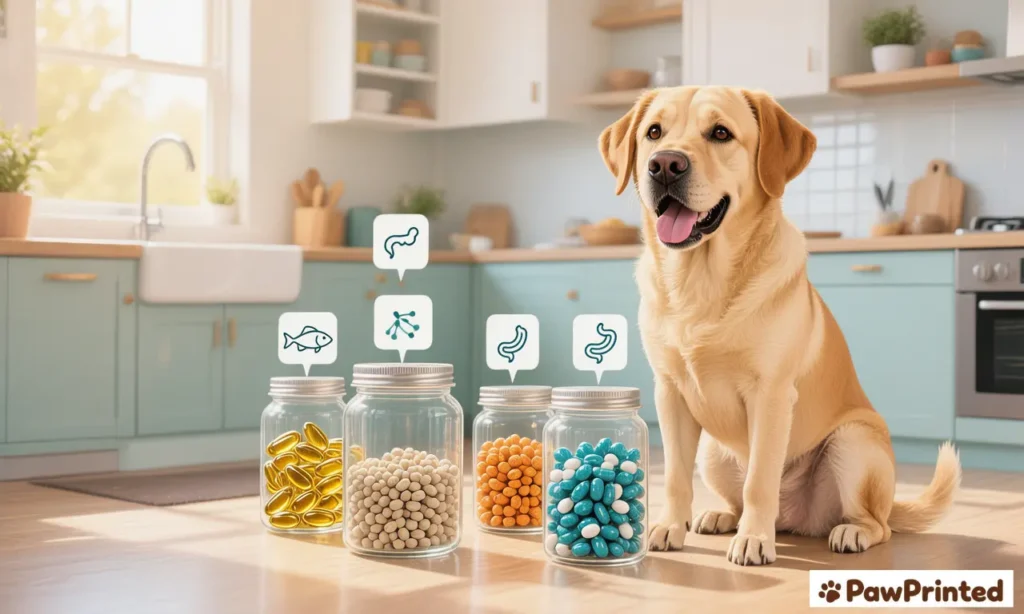
If you have ever stood in front of a wall of dog supplements and thought, “Do I really need all of this for my dog?” – you are not alone. Between shiny omega oils, probiotic powders, and multivitamin chews, it is very easy to overbuy or add the wrong thing.
This guide is here to keep things simple and honest. We will walk through which dog food supplements actually matter, when they are worth adding, and how to avoid turning your dog’s bowl into a random chemistry experiment.
If you are still getting comfortable with the basics of homemade feeding, start with our Homemade Dog Food Guide – What Owners Should Know First and the Dog Food Macros Guide – Protein, Fat and Carbs Explained. This supplements guide sits on top of those foundations.
What Dog Food Supplements Can (And Cannot) Do
Supplements are like the finishing touches on a solid recipe. They can fill small nutritional gaps, support specific health needs, and give a little “extra” to skin, joints, or digestion. But they are not a magic fix for a poor quality base diet or an unbalanced homemade recipe.
Think of it this way:
- Base diet – does 80 to 90 percent of the work.
- Supplements – fine tune the remaining 10 to 20 percent.
- Emergency expectations – no supplement can instantly undo months of poor nutrition.
The goal of this guide is to help you stop guessing. By the end, you will know which supplements to prioritize, which ones can wait, and how to build a simple, realistic routine that fits your life and your dog’s actual needs.
When Do Dogs Actually Need Supplements?
Not every dog needs a long list of powders and oils. In many cases, a complete commercial food plus the occasional treat is enough. Supplements become more important when you check one or more of these boxes:
- You feed homemade food regularly and want to keep it nutritionally complete long term.
- Your dog has a specific issue like itchy skin, loose stool, stiff joints, or a sensitive stomach.
- Your vet has identified a risk such as early kidney changes, heart concerns, or a history of pancreatitis.
- Your dog is at a life stage that needs extra support, like fast growing puppies or senior dogs.
If your dog is on full homemade meals most days, you are no longer leaning on a commercial diet to quietly fill gaps in vitamins and minerals. In that situation, smart supplements are not just “nice” – they are part of your safety net.
For dogs with digestive trouble, our Sensitive Stomach Dog Food Guide – What Helps Most is a good companion read alongside this article, especially before you start layering new supplements into an already upset gut.
Core Dog Food Supplements Most Owners Should Consider First
Before diving into fancy niche formulas, it helps to know the “big five” supplements that do the most work for homemade and mixed diets. You do not have to use all of them, but this is the short list most owners should look at first.
Calcium
Homemade recipes that do not include raw, edible bone almost always need added calcium. Without enough calcium, your dog’s body will pull it from bone, which can quietly weaken the skeleton over time. A vet approved calcium supplement or precisely measured eggshell powder helps balance the calcium to phosphorus ratio so that growing dogs and adults maintain strong bones and teeth.
Balanced Multivitamin and Mineral Mix
Even thoughtful homemade recipes can run a bit low on certain micronutrients like zinc, copper, iodine, manganese, or some B vitamins. A canine specific multivitamin and mineral mix is designed to top up those tiny but essential nutrients without overdoing it. Look for formulas labelled for “homemade diets” and always follow the dosing guidelines based on your dog’s weight and calorie intake.
Omega 3 (EPA and DHA)
Many dogs get plenty of omega 6 from chicken fats and vegetable oils but remain low in omega 3. Marine based omega 3s, such as fish oil or algae oil, have anti inflammatory benefits for joints, skin, and even brain health. Choose a product with clearly labelled EPA and DHA content, store it away from heat and light, and introduce it slowly to avoid loose stool or a fishy smell on the breath.
Probiotics
A good probiotic can support a more resilient gut environment, especially in dogs that are transitioning to homemade food, prone to softer stool, or recovering from antibiotics. Look for products with named strains and a guaranteed CFU count through the end of shelf life, not just at manufacturing. As with other supplements, start with a fraction of the full dose and work upward as your dog’s digestion adjusts.
Vitamin E
When you add omega rich oils to food, your dog’s body uses more vitamin E to protect those fats from oxidation. That is why many homemade feeding frameworks include a modest vitamin E supplement. Too much is not better, so follow vet aligned guidelines and avoid stacking multiple products that all add extra vitamin E on top of each other.
Joint Support (For Seniors and Active Dogs)
If your dog is already slowing down, has a history of joint issues, or is a high impact athlete, a joint formula with glucosamine, chondroitin, and omega 3s can be one part of a broader comfort plan. Joint supplements take time to show effects, so think in terms of weeks and months, not days. Always pair them with appropriate weight management and a diet that does not make underlying inflammation worse.
For a deeper dive into how omega and joint nutrition interact, our Omega Rich Dog Food Guide – Anti Inflammatory Benefits and Joint Support Dog Food Guide – Does It Improve Mobility are useful follow up reads.
Optional Supplements Based on Your Dog’s Goals and Issues
After you have covered bones, basic vitamins, and omega 3s, additional supplements become more situational. These are the “maybe” options that can be helpful if there is a clear purpose, but they are not mandatory for every dog.
Gut Focused Add Ons
Digestive enzymes, prebiotics, or extra soluble fibers can support dogs that tend to have gassy stomachs or soft stool. They are most useful when paired with a sensitive stomach friendly base diet rather than added on top of foods that already upset your dog. If you rely on these constantly just to keep stool normal, it is worth revisiting the core recipe first.
Skin and Allergy Support
Supplements with omega 3s, certain plant oils, or targeted nutrients may help itchy, flaky dogs when combined with a well chosen base diet. They are not a replacement for ruling out fleas, infections, or strong environmental allergies. For complicated skin cases, work with your vet on an overall plan and use supplements as one small piece of that strategy.
Immune Support Boosters
“Immune” blends often include antioxidants, vitamins, and herbs. These may be helpful during stressful periods or recovery, but they are not a shield against serious illnesses. If you are interested in this category, choose products that share their exact ingredient list and dosages, then run that list past your vet for safety.
Calming and Mood Support
L theanine, certain amino acids, or herbal blends can support dogs that are anxious or easily overstimulated, especially alongside behavior work. These supplements are not a substitute for training, enrichment, or medical treatment when needed. Think of them as a gentle nudge, not a full solution, for emotional and behavioral health.
If your dog has more complex needs, articles like Immune Support Dog Food Guide – Best Nutrition Practices and Anti Inflammatory Diet for Dogs – Food That Helps Skin can help you decide whether a supplement is the right lever to pull or if you first need to adjust the main diet.
How to Choose Dog Supplements Without Getting Overwhelmed
Shopping for supplements can feel like scrolling endless ads. To keep it practical, use a simple checklist every time you consider a new product:
- Start with the goal – what exactly are you trying to support or fix for your dog.
- Check the active ingredients – look for clearly listed amounts per teaspoon, capsule, or chew.
- Look at the dose, not the bottle size – compare price per unit of active ingredient, not just price per bottle.
- Avoid mystery blends – “proprietary” mixes that hide exact dosages make it hard to know what you are actually giving.
- Watch the extras – skip products with heavy artificial flavors, colors, or unnecessary sweeteners whenever possible.
If you prefer a curated starting point instead of building from scratch, our Best Dog Health Supplements Guide groups products by real life goals, like joint comfort, skin health, or digestive support, rather than just by brand names.
How to Add Supplements Into Your Dog’s Daily Routine
Once you have picked your core supplements, the next challenge is actually using them consistently. A great product that sits in the pantry does nothing for your dog. A simple routine works better than a perfect but complicated plan.
A realistic starting structure might look like this:
- Daily anchors – calcium and a balanced multivitamin for homemade diets.
- Most days – omega 3 oil, especially for dogs with joint or skin goals.
- As needed blocks – probiotics during transitions or after digestive upsets.
- Age or issue based – joint formulas for seniors, extra immune support during stressful periods.
Introduce only one new supplement at a time and keep a simple note in your phone about how your dog’s stool, energy, and coat change over the next 2 to 4 weeks. This makes it much easier to see what is actually helping instead of guessing.
Portion, Timing, and Consistency – The Boring Part That Makes All the Difference
Most supplements are not dangerous when used correctly, but more is not better. Doses are calculated based on body weight, calorie intake, and safe upper limits. When in doubt, use the lower end of the recommended range and talk with your vet before increasing.
A few practical tips:
- Give with food – many supplements are gentler on the stomach when given with a meal rather than on an empty stomach.
- Split doses – if your dog is sensitive, you can give half with breakfast and half with dinner.
- Plan for skip days – it is better to be consistent 80 percent of the time than perfect for one week and burned out the next.
For help dialing in total portions, the Portion and Serving Size Guide for Homemade Dog Food is a good reference to keep next to your supplements plan, especially if your dog’s weight tends to fluctuate.
Common Supplement Mistakes Owners Make
Most supplement problems come from enthusiasm, not neglect. You want to do everything you can, so a few drops becomes a full pump, one joint chew becomes three, and suddenly your dog’s stool has turned to pudding.
- Stacking similar products – using multiple formulas that all contain omega 3, vitamin E, or joint ingredients at once.
- Changing too many things together – switching food, adding oil, and starting probiotics all in the same week.
- Ignoring the base diet – hoping supplements will fix issues that are really coming from an unsuitable main food.
- Skipping vet input – especially for dogs with kidney, liver, or heart conditions where certain supplements may be risky.
If you feel overwhelmed, it can help to temporarily simplify down to a good base diet plus one or two key supplements, then rebuild from there. Our Homemade Dog Food Mistakes Guide – What Owners Usually Get Wrong walks through this “reset and rebuild” approach in more detail.
If You Can Only Choose 1 to 3 Supplements, Start Here
You do not need a full shelf of products to support your dog well. If budget or time is tight, focus on the highest impact options for your situation.
- For most homemade diets – a canine multivitamin and mineral mix plus calcium is non negotiable.
- For skin and joints – add a quality omega 3 product with clear EPA and DHA values.
- For wobbly digestion – consider a well formulated probiotic and review the sensitive stomach food choices you are making.
If you prefer ready collected options that match real life lifestyles, the Find the Right Dog Food for Your Life – A Real World Selection Hub will help you pair supplements with dry food backups that still support your homemade goals.
Explore More Homemade Nutrition Guides
If you are building a long term homemade plan, these guides fit together with your supplement routine like puzzle pieces. Take them one at a time and save the ones you want to revisit.
Final Thoughts – Start Small, Stay Curious, and Adjust Slowly
Supplements can look intimidating from the outside, but they do not have to take over your life or your kitchen counter. Start with the basics that protect long term health, like calcium, a balanced multivitamin, and omega 3s if your dog needs them. Add probiotics or joint support when there is a clear reason, and skip anything that only makes sense in marketing copy.
If you are ever unsure, step back and ask two questions. What is my dog’s main food right now, and what specific outcome am I hoping to see from this supplement. When those answers are clear, it becomes much easier to pick smart, targeted products and ignore the noise.
You do not need a perfect supplement routine to be a good dog parent. You just need a safe base, a few well chosen extras, and the patience to adjust slowly as your dog’s needs change.
FAQ – Dog Food Supplements Guide
Do dogs really need supplements if they are eating homemade food?
Many dogs on carefully formulated homemade diets will still benefit from specific supplements, especially calcium, micronutrient mixes, and omega 3s. When you move away from commercial foods, you also move away from their built in vitamin and mineral profiles, which means you become responsible for filling those gaps. A vet aligned calcium source and a canine multivitamin designed for homemade feeding help cover essentials like zinc, iodine, and certain B vitamins that are harder to meet with food alone. Omega 3 supplements are also helpful for most dogs because typical homemade meats and oils tend to be richer in omega 6 than omega 3, which can tilt the balance toward inflammation over time. That said, supplements are not a substitute for a balanced recipe. The best approach is to start with a well designed base diet, then use supplements to complete the picture, not to repair a recipe that is fundamentally unbalanced or improvised.
Can I give too many supplements to my dog?
Yes, it is possible to over supplement, and it happens more often than most owners realize. Fat soluble vitamins like A, D, E, and K can build up in the body if given far above recommended levels, which is why stacking multiple multivitamins or “all in one” powders is risky. Even water soluble nutrients and herbs can cause problems in high doses, from digestive upset to interactions with medications. When you give several products at once, you may accidentally duplicate ingredients like fish oil, vitamin E, or joint compounds without noticing. To stay safe, map out everything your dog is taking, add up overlapping ingredients, and check those totals with your vet, especially if your dog has kidney, liver, or heart issues. In most cases, it is smarter to use fewer, well chosen supplements at correct doses than many products at random.
Are human supplements safe to use for dogs?
Some human supplements can be used in dogs under veterinary guidance, but they are not automatically safe just because the active ingredient looks similar. Human products often contain sweeteners, flavorings, and tablets coatings that are not ideal for dogs, and some may include xylitol, caffeine, or herbal blends that are dangerous for pets. Dosages on human labels are also calculated for adult humans, not for a ten kilogram dog, so “one capsule a day” may be far too much. For basic nutrients like omega 3 or certain plain minerals, your vet may approve a human grade product if you can see the exact milligram amounts and divide the dose accurately. However, canine specific supplements are usually a safer default because they are formulated with dog weight ranges and pet safety in mind. When in doubt, ask your vet to review the ingredient list before you start.
How long does it take to see results from a new supplement?
The timeline depends on what you are targeting. Some digestive support supplements, like probiotics or added fiber, may show changes in stool quality within a few days to a couple of weeks, especially if you introduce them gently and pair them with appropriate food choices. Skin and coat benefits from omega 3s often take longer because hair needs time to grow out and the body has to rebalance inflammation levels, so think in terms of six to twelve weeks rather than days. Joint support products may take a month or more before any subtle improvements in comfort or mobility appear. To really understand what is working, change only one thing at a time and keep simple notes on energy, stool, scratching, and overall comfort. If you see no change after a reasonable trial and the problem is still troubling your dog, it is time to talk with your vet about other options.
Which supplements should puppies avoid or use carefully?
Puppies are still building bones, joints, and organs, so overdoing supplements can cause more harm than good. Extra calcium is a good example. While adult homemade diets need added calcium, giving large breed puppies excessive calcium or unbalanced mineral mixes can disturb normal bone development and increase the risk of orthopedic problems. High dose vitamin D, vitamin A, or certain herbal blends are also unsafe in growing dogs. In general, puppies do best with a veterinarian approved growth recipe plus only the supplements your vet specifically recommends, such as omega 3s at a safe dose or a simple probiotic during transitions. Avoid improvising with human vitamins, multiple growth formulas, or trendy powders “for extra support.” If you are ever uncertain, ask your vet for a puppy specific supplement plan rather than copying what works for an adult dog in the same home.
References – Authoritative Sources
- PetMD (2023) – Overview of Vitamins and Minerals in Dog Nutrition. Summary of essential micronutrients for dogs, safe ranges, and common deficiency risks in unbalanced diets.
- Tufts University Cummings School of Veterinary Medicine (2022) – Client Handouts on Home Prepared Diets. Practical guidance on when supplements are required for homemade feeding and how to choose vet aligned products.
- American College of Veterinary Nutrition (ACVN) – Statements on Home Prepared Diets. Expert consensus on nutritional completeness, supplementation needs, and the risks of unformulated recipes.
- AKC Canine Health Foundation (2021) – Omega 3 Fatty Acids and Joint Health in Dogs. Review of clinical research on EPA and DHA for inflammation, skin health, and mobility support.
- Frontiers in Veterinary Science (various years) – Studies on Probiotics and Gut Health in Dogs. Peer reviewed trials examining how targeted probiotic strains influence stool quality and digestive resilience.