Fresh breath, cleaner chewing habits and simple homemade ingredients — that’s the heart of this dental dog treats collection. If your dog struggles with mild odor, early plaque buildup or just needs a healthier chew to replace processed store-bought snacks, these recipes make a gentle upgrade without complicating your kitchen routine.
Each treat in this collection uses natural ingredients like parsley, mint, pumpkin and coconut oil to support fresher breath and more enjoyable chewing. They’re designed to be easy to prepare in small batches, adjustable in texture and friendly for dogs with sensitive teeth. Whether your dog prefers soft bites or firmer chews, you’ll find a recipe that fits perfectly.
Why Homemade Dental Treats?
Most commercial dental chews rely on starch-heavy bases and artificial flavorings to maintain structure. Homemade versions let you control ingredients while offering a more natural chew that supports everyday dental comfort. Many dogs respond better to herbs and mildly abrasive textures than to synthetic additives.
You can also customize bite size, firmness and ingredient combinations as your dog’s needs change. Softer versions suit seniors and small breeds, while crisp edges or slightly firmer bakes help promote gentle scraping for dogs with stronger chewing habits. The flexibility makes homemade options both effective and safe to rotate into a daily routine.
Six Breath-Freshening Dental Treat Recipes (Menu Cards)
Soft, chewy sticks made with pumpkin and fresh mint to gently freshen breath while staying easy on sensitive stomachs. A good everyday option for dogs that dislike very hard chews.
Quick Overview
- Protein: Optional light protein or kept meat-free.
- Base: Pumpkin puree with mint and mild binding flour.
- Texture: Chewy, soft sticks that bend before they break.
- Best for: Everyday breath care and mild chewers.
Why It Works
- Mint helps freshen breath without artificial flavoring.
- Pumpkin offers gentle fiber and a naturally sweet taste.
- Chewy texture encourages slower nibbling instead of gulping.
Things To Watch
- Introduce slowly if your dog is new to mint.
- Use small pieces for dogs on tight calorie limits.
- Refrigerate or freeze to keep the chews from drying out.
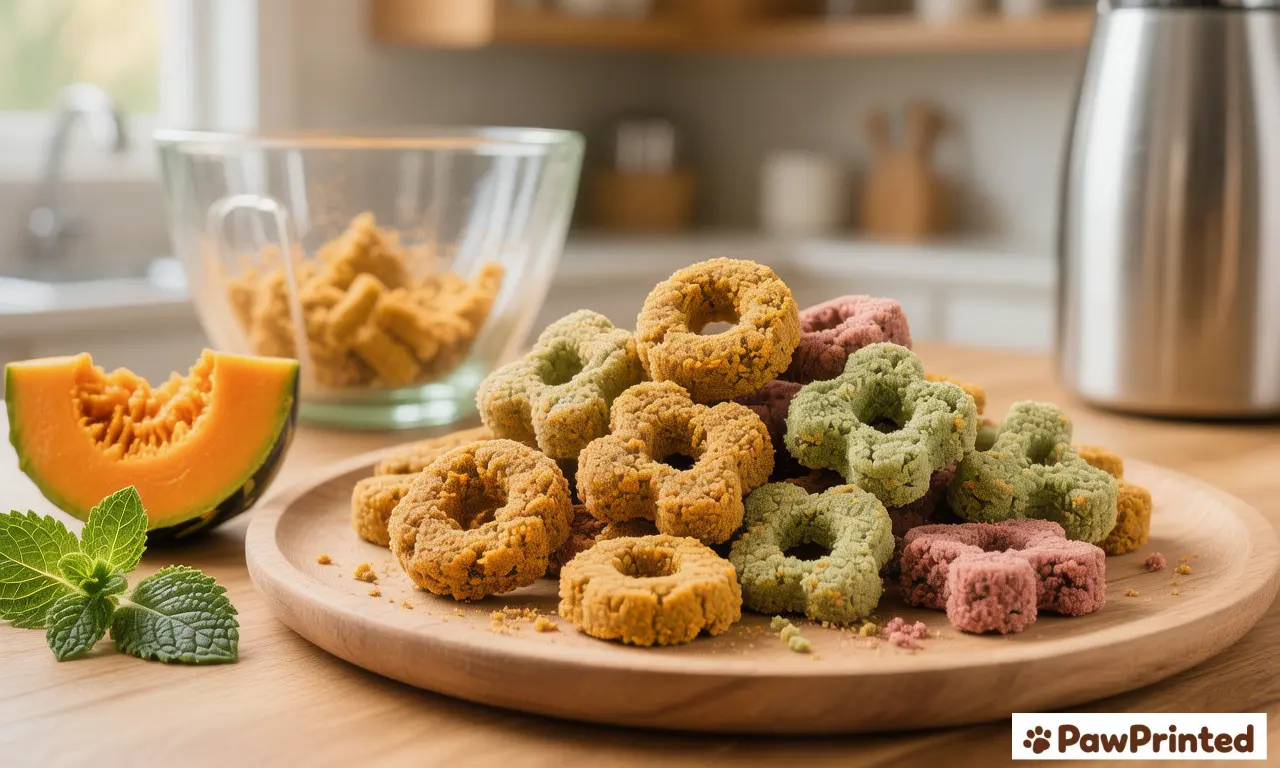
Light, savory bites using chicken bone broth and parsley for dogs that love a meaty smell but still need breath-freshening support and gentle textures.
Quick Overview
- Protein: Chicken bone broth as the flavor base.
- Base: Soft dough with chopped parsley and mild starch.
- Texture: Tender, slightly bouncy cubes.
- Best for: Dogs that prefer savory over herbal snacks.
Why It Works
- Bone broth adds aroma that encourages chewing without added salt.
- Parsley supports fresher breath and pairs well with chicken.
- Soft texture is kinder to aging teeth and small breeds.
Things To Watch
- Always use unsalted, onion-free bone broth made for dogs.
- Adjust portions for dogs already on chicken-heavy diets.
- Store chilled and use within a few days or freeze in small batches.
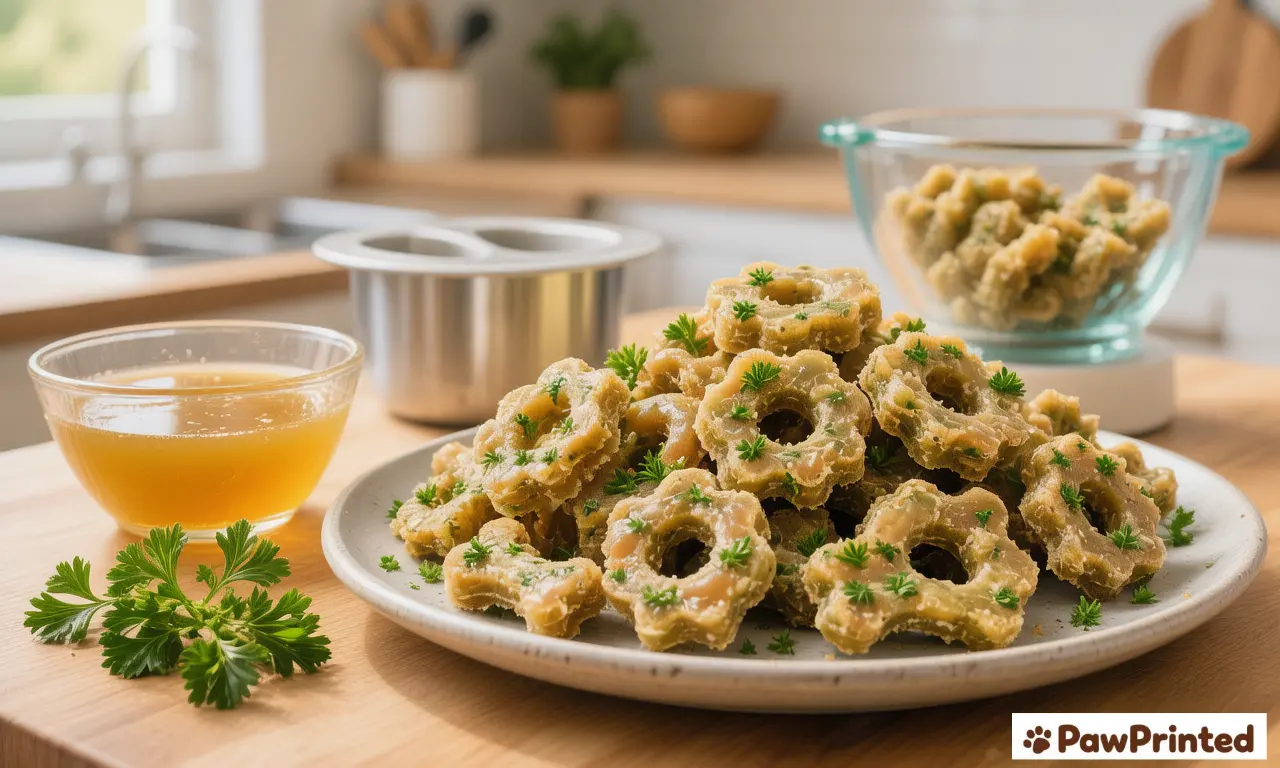
Small, melt-in-the-mouth bites using coconut oil and fresh basil for dogs that enjoy softer textures and a gentle, herb-scented finish on the breath.
Quick Overview
- Protein: Typically protein-free snack.
- Base: Coconut oil set with light, dog-friendly binders.
- Texture: Soft, fat-based bites that soften quickly in the mouth.
- Best for: Dogs with mild dental wear or small mouths.
Why It Works
- Coconut oil helps carry basil aroma across the tongue.
- Basil adds a fresh, green note without heavy spice.
- Small pieces make it easier to control calories per bite.
Things To Watch
- Use very small portions for dogs prone to weight gain.
- Introduce slowly if your dog is new to coconut oil.
- Keep chilled so the bites do not melt in warm kitchens.
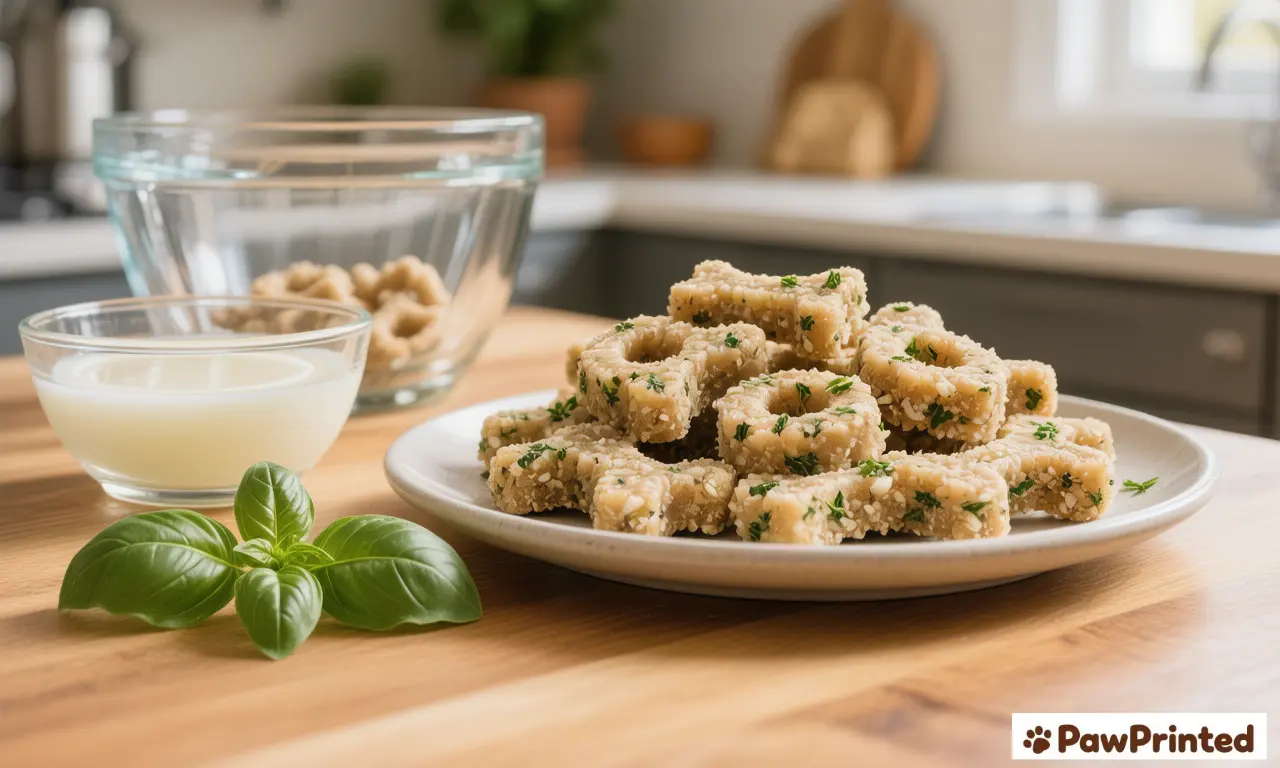
Tiny, crunchy-on-the-edges bites with grated carrot and mint to encourage nibbling and light mechanical cleaning while adding a fresh, garden-style aroma.
Quick Overview
- Protein: Optional egg or kept vegetarian.
- Base: Grated carrot, mint and light flour blend.
- Texture: Small, crisp-edged bites for frequent rewards.
- Best for: Training sessions that also support fresher breath.
Why It Works
- Mini size keeps calories low per piece during training.
- Carrot adds gentle crunch without being too hard.
- Mint offers a fresher scent after multiple small rewards.
Things To Watch
- Avoid overbaking so the bites do not become too hard.
- Count these toward your dog’s total training treats for the day.
- Watch for any change in stool with higher carrot intake.
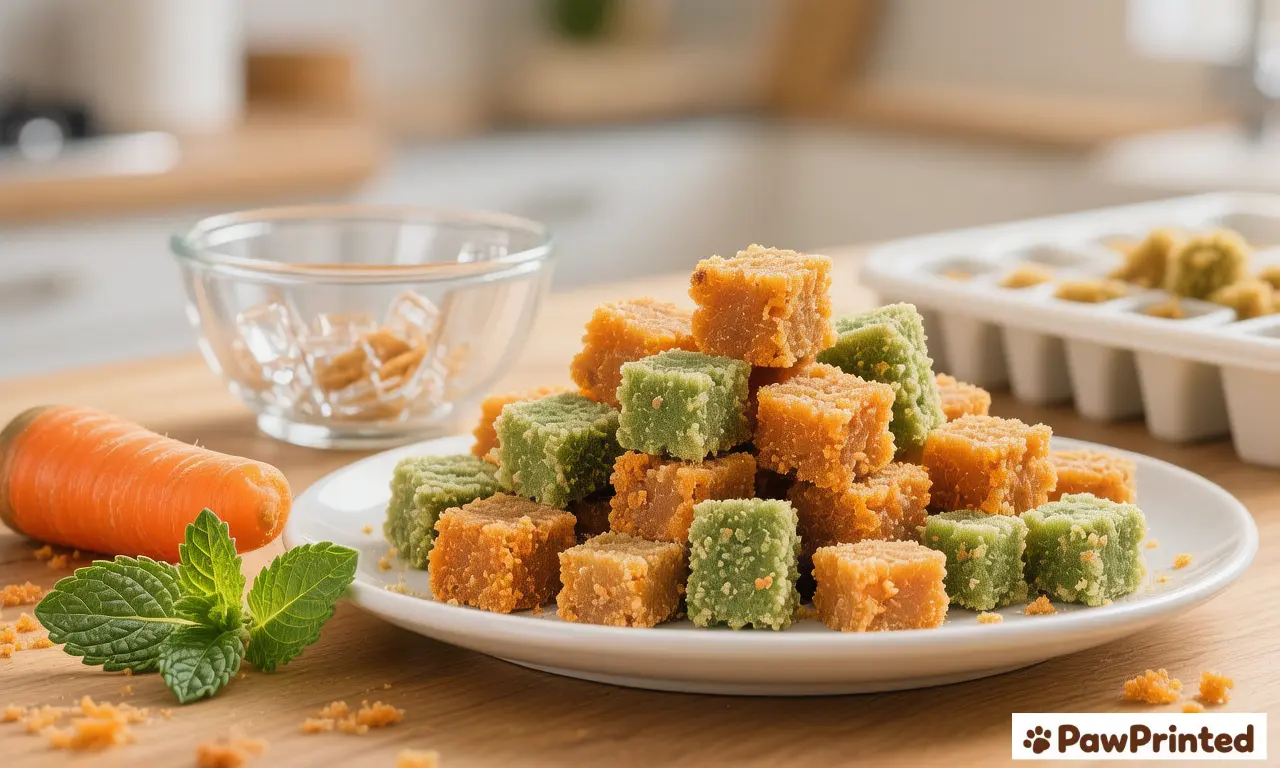
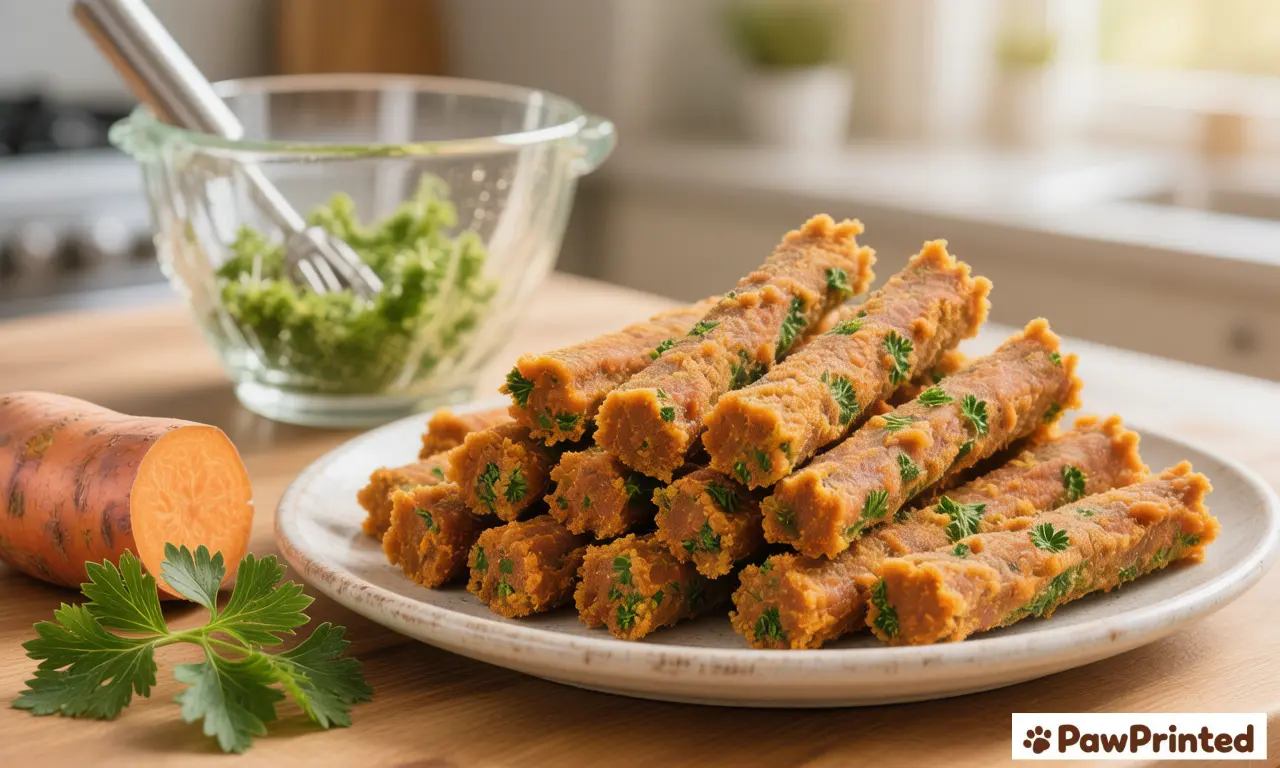
Baked sticks made from sweet potato and parsley that encourage longer chewing and mild scraping along the teeth surface without harsh edges.
Quick Overview
- Protein: Typically plant-based with optional egg.
- Base: Sweet potato strips or dough with fresh parsley.
- Texture: Firm but not rock-hard chew sticks.
- Best for: Dogs who enjoy holding and gnawing on treats.
Why It Works
- Stick shape encourages dogs to chew instead of swallowing whole.
- Sweet potato offers gentle fiber and natural sweetness.
- Parsley supports fresher breath during and after chewing.
Things To Watch
- Supervise to be sure your dog does not snap off and gulp large pieces.
- Skip if your dog struggles with firmer textures or has dental pain.
- Store in an airtight container to prevent over-hardening.
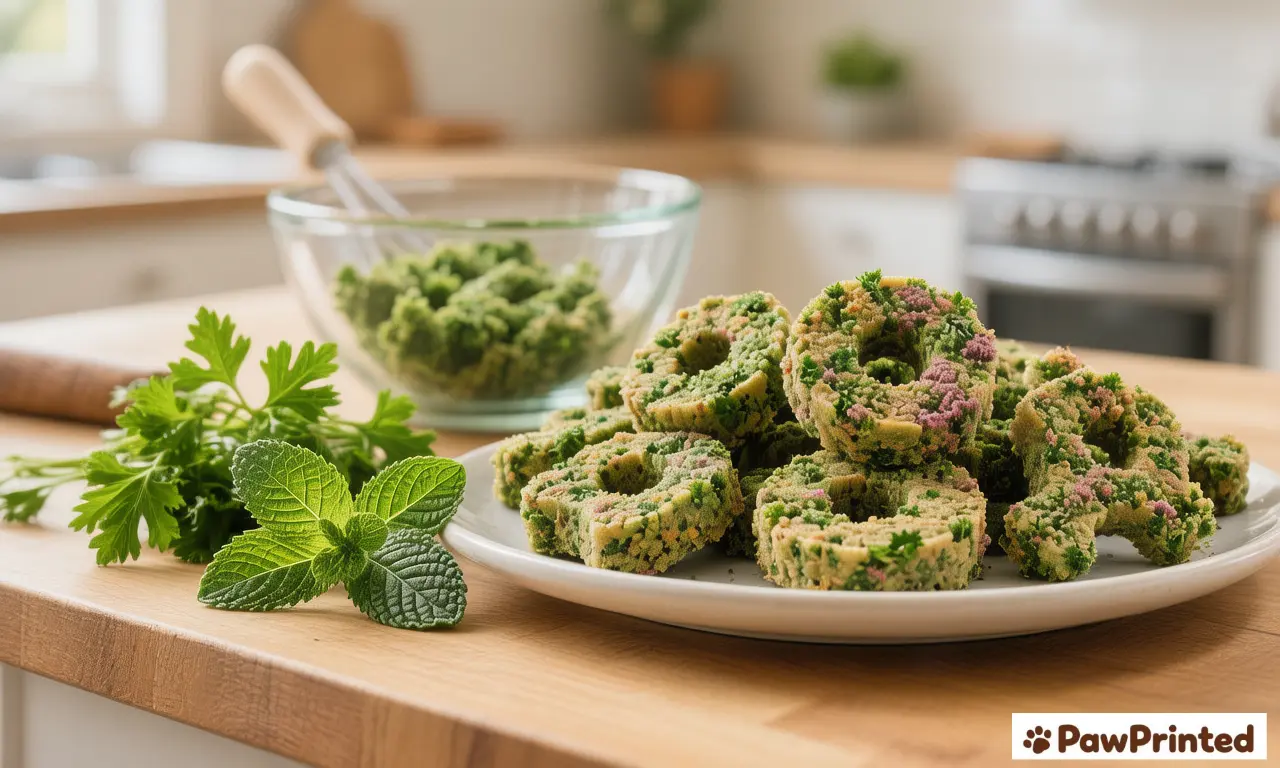
The core parsley and mint dental recipe from this collection, designed as a simple, herb-forward bite that can be customized for many dogs as a daily breath helper.
Quick Overview
- Protein: Optional egg or kept completely herb-based.
- Base: Fresh parsley and mint in a light, dough-style mix.
- Texture: Soft to medium bites that break easily by hand.
- Best for: Everyday use as a simple, customizable dental treat.
Why It Works
- Focuses on breath-friendly herbs instead of strong flavors or sweeteners.
- Dough base can be rolled, cut and sized for different breeds.
- Short ingredient list makes it easier to track possible reactions.
Things To Watch
- Introduce slowly for dogs with sensitive stomachs or new to fresh herbs.
- Keep an eye on total treat calories across the day.
- Pair with regular brushing and vet checks for full dental care.
Key Ingredients That Support Oral Health
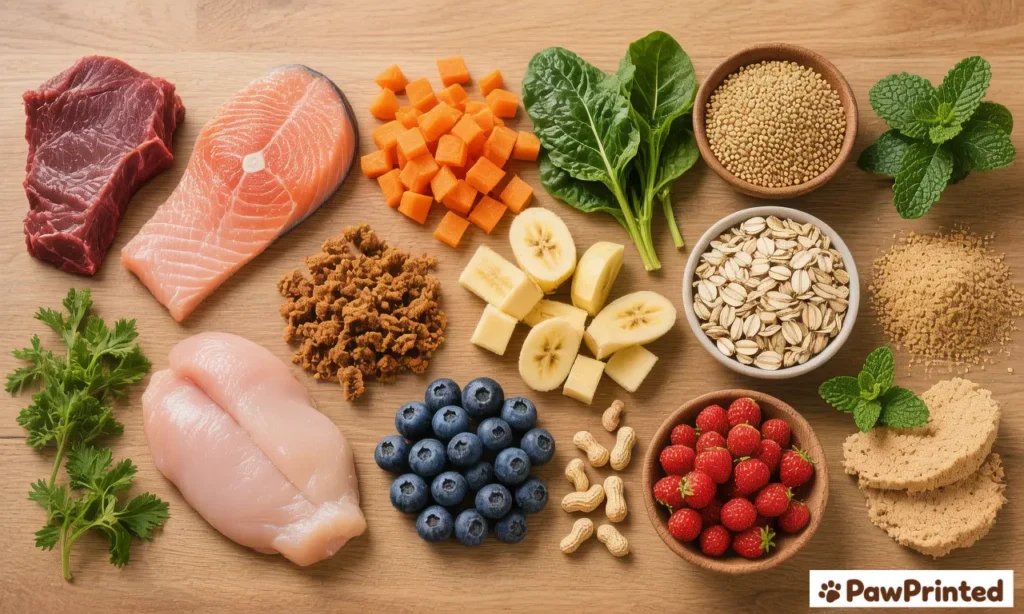
Several simple, dog-safe ingredients naturally support fresher breath and healthier chewing. Parsley and mint are long-standing favorites for their light aromatic effects, while pumpkin, carrot and sweet potato add fiber that encourages steady digestion. Coconut oil contributes a smoother mouthfeel and is easy to incorporate into soft chews.
Texture also matters. Ingredients such as oats or vegetable purées can be shaped thicker for firmer chews, or thinned out for softer training-friendly bites. The aim is to create a treat that encourages comfortable chewing without overwhelming the teeth or gums.
How To Use Dental Treats Safely
Dental treats work best when used consistently and in moderation. Offer them once or twice per day depending on your dog’s size and overall calorie needs. For young puppies or senior dogs, choose softer treats and cut them into smaller portions to reduce chewing strain.
Always supervise chewing sessions, especially when testing a new recipe or a firmer texture. If your dog tends to gulp, choose flatter or smaller shapes that encourage slower eating. These treats support daily freshness, but they should complement regular brushing and veterinary dental checkups rather than replace them.
Vet Tips & Variations
Dogs react differently to herbs, textures and levels of crunch. Always start with small servings when you introduce a new dental treat, especially those containing fresh herbs. Monitor stool quality, appetite and chewing comfort during the first few days.
You can adjust the texture of these dental treats by changing baking time or swapping the base flours. For softer bites, reduce the cook time and keep pieces small. For dogs that prefer stronger chewing resistance, increase thickness or extend the bake slightly. Each recipe can also be adapted for small breeds by shaping mini versions that are easier to handle.
If your dog has existing dental concerns, avoid overly firm textures and choose softer recipes from this collection. Always pair treats with regular brushing and routine veterinary dental checks to maintain long-term oral health.
FAQ About Homemade Dental Dog Treats
How often can dogs eat dental treats?
Most dogs can enjoy dental treats daily, as long as the total calories fit within their daily limits. Homemade versions tend to be lower in additives, making them easier to portion safely. Always adjust quantity based on your dog’s size and activity level.
Do homemade dental treats help with bad breath?
Yes. Recipes that include fresh herbs such as parsley or mint can offer light breath-freshening benefits, especially when paired with ingredients that encourage consistent chewing. They are not a replacement for brushing, but they can help maintain a cleaner-feeling mouth.
Are soft dental treats effective?
Soft treats still offer benefits for dogs with sensitive teeth or early-stage dental wear. While they do not scrape as much as firm textures, they encourage gentle chewing and can carry breath-supporting herbs without causing discomfort.
Can puppies eat homemade dental treats?
Puppies may eat softer dental treat recipes as long as the ingredients are appropriate and the bites are cut small. Avoid hard textures until adult teeth are fully developed. Introduce only one new recipe at a time.
Do dental treats replace brushing?
No. Dental treats are a helpful supplement but not a full substitute for regular brushing. They support breath freshness and mild debris control, but long-term dental health still requires brushing and vet-guided cleaning.

Explore More
Try More Homemade Dog Treat Recipes
Want more healthy, dog-safe treat ideas? Explore our full collections and pick your pup’s next favorite snack.
Author & Vet Review Notes
“These dental treats were some of the easiest snacks to adjust for Ethan’s daily routine. We kept portions small and rotated softer and firmer textures to match his chewing comfort. Fresh herbs made a noticeable difference in breath freshness without heavy flavors.”
— Emma, Founder & Dog Mom
“Homemade dental snacks can support daily oral hygiene, especially for dogs that dislike commercial chews. Choose textures that match your dog’s dental condition and remember that treats work best when combined with regular brushing and professional veterinary dental care.”
— Dr. Lydia Harper, DVM
References — Authoritative Sources
- PetMD (2024). Dog Dental Health Basics. Source — Overview of canine oral care and daily maintenance.
- AKC (2024). Safe Herbs for Dogs. Source — Guidance on parsley, mint and common kitchen herbs.
- Tufts Veterinary Nutrition. Home-Prepared Treat Guidelines. Source — Best practices for homemade treat safety.
- NIH Oral Health Division. Chewing & Saliva Production in Dogs. Source — Scientific foundations of chewing benefits.
- Frontiers in Veterinary Science (2023). Dietary Additives & Dental Outcomes in Dogs. Source — Research on ingredients that support oral freshness.