If your dog starts scratching more after snacks, gets soft stools from random biscuits, or just seems extra sensitive to “mystery ingredients,” you are not alone. Many families discover that regular store-bought treats are packed with wheat, corn, soy and fillers that do not always sit well with sensitive pups. That is why this grain free dog treats collection was built around simple recipes you can actually read, measure and adjust at home.
In this guide, you will find six grain free treat recipes that use clear proteins and root veggies instead of cereal grains. Each one is designed to be practical for a home kitchen, easy to batch prep, and gentle enough for dogs who do better without wheat based snacks. Think of this page as your grain free snack map: start with the recipe that fits your dog best now, then rotate through the others as you learn what their tummy and skin like most.
Why Grain Free Dog Treats Matter
Grain free treats are not magic, but they can be a useful tool when you are trying to reduce potential triggers in your dog’s snack routine. For some dogs, common grains like wheat or corn seem to overlap with itchy skin, recurring ear issues or loose stools, especially when treats also contain artificial flavors and low quality fats. Swapping to grain free recipes built on sweet potato, pumpkin, peas or quinoa flour is one simple way to narrow down what might be bothering your dog.
At the same time, going grain free does not mean every recipe is automatically healthier or lighter. Portion size, total daily calories and overall balance still matter just as much as the ingredient list. This collection focuses on grain free combinations that pair clear proteins with fiber rich vegetables, so you can reward your dog without loading them with extra fillers. Used alongside your regular diet plan and vet advice, these treats become a targeted way to give joy, not extra problems.
Grain Free Dog Treat Recipes Overview
This collection brings together six grain free dog treat recipes that remove wheat, corn and soy while keeping flavors rich and textures satisfying. Each recipe features a clear protein source paired with gentle carbohydrates such as sweet potato, carrot, pea flour or pumpkin. Whether your dog has recurring skin reactions or you simply want to reduce unnecessary fillers in their snacks, these treats offer a straightforward way to reward with confidence.
Below, you will find six detailed recipe cards. Each one includes a short summary, quick overview, key benefits and a link to the full tutorial. You can explore them individually based on the ingredients your dog tolerates best, or follow the entire set as a structured rotation plan for sensitive pups.
Six Grain-Free Treat Recipes (Menu Cards)
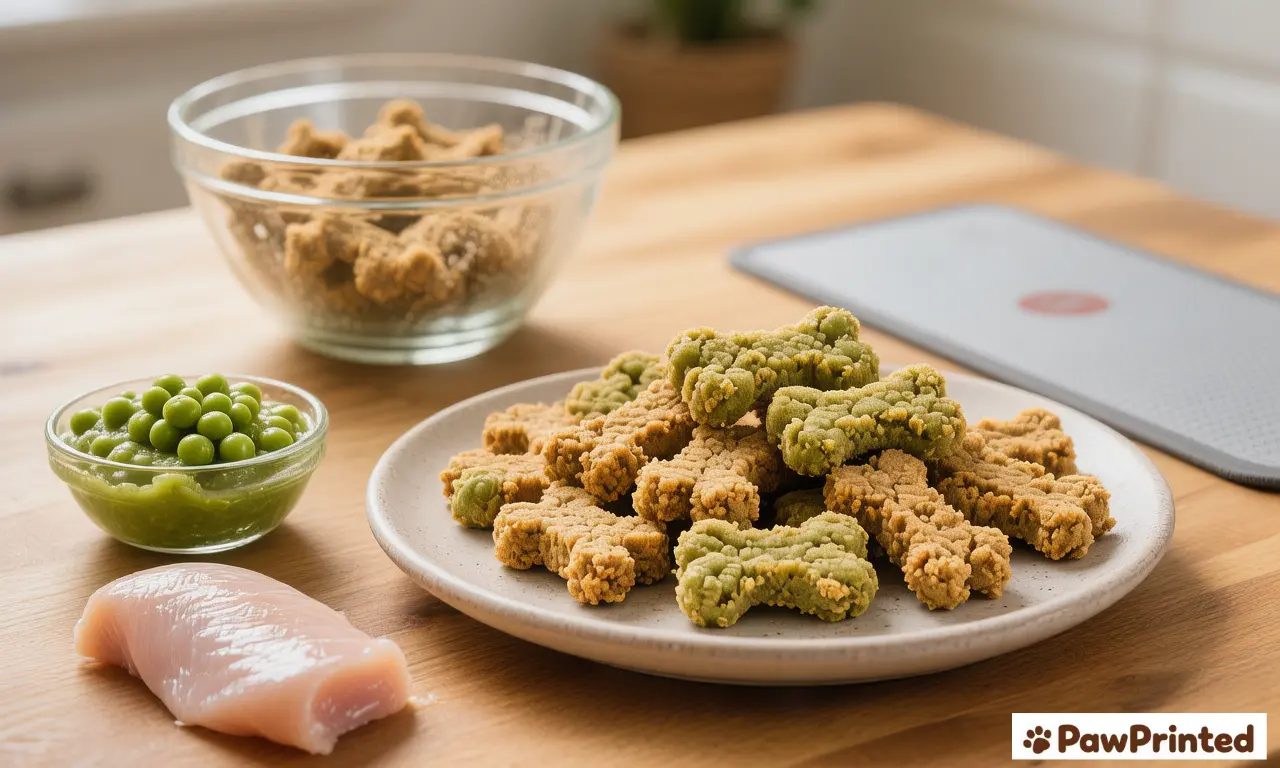
A simple grain free blend of chicken and pea puree that bakes into soft, easy-to-chew bites. Designed for dogs that do best on poultry-based, low-grain or grain free snacks.
Quick Overview
- Protein: Lean chicken.
- Base: Smooth pea puree for structure instead of wheat.
- Texture: Soft, breakable pieces ideal for daily rewards.
- Best for: Dogs shifting off traditional grain-based treats.
Why It Works
- Uses a familiar poultry protein many dogs already tolerate well.
- Replaces flour with peas to keep the recipe grain free.
- Soft pieces are easy to portion for training and weight control.
Things To Watch
- Skip this recipe if your dog does not tolerate chicken.
- Introduce slowly for dogs new to pea-heavy recipes.
- Store in an airtight container and refrigerate after a couple of days.
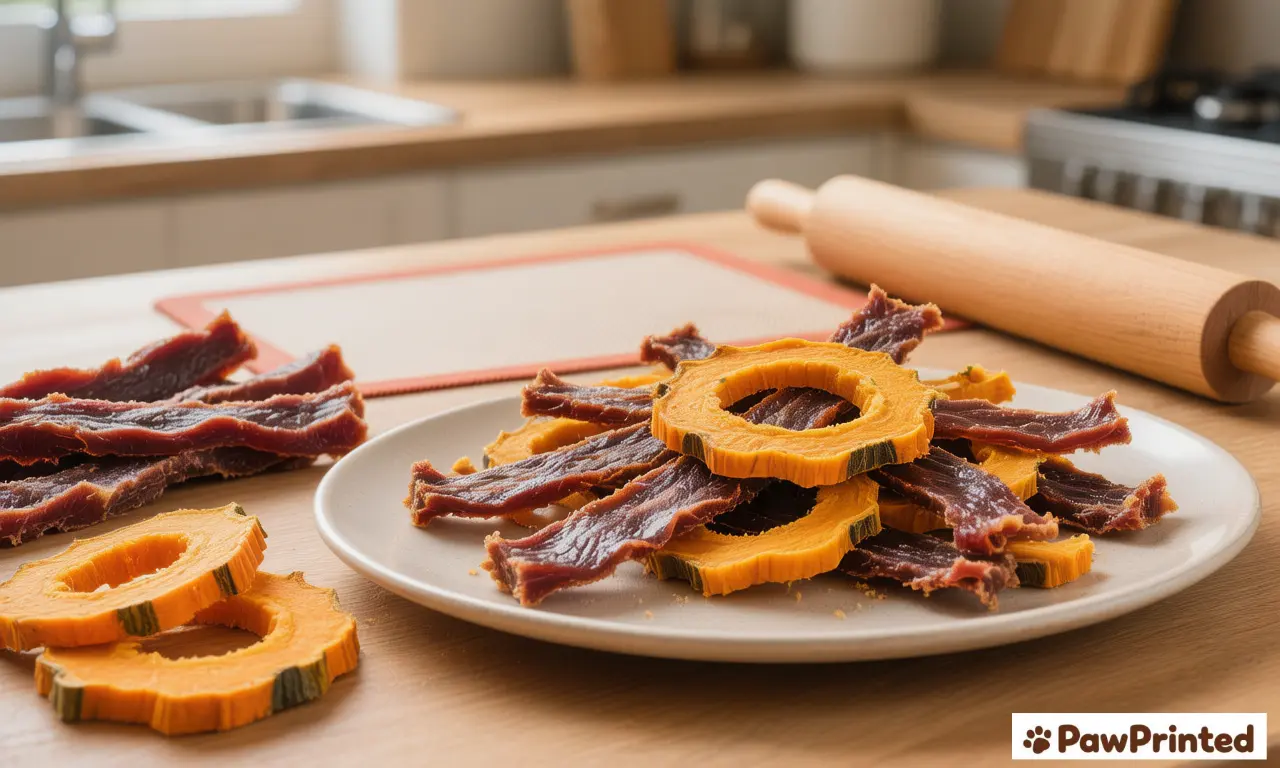
A higher value, chewy grain free treat that pairs beef jerky style strips with thin baked pumpkin chips. Perfect when you need your dog’s full focus in training.
Quick Overview
- Protein: Lean beef slices or jerky-style cuts.
- Base: Thin pumpkin slices instead of biscuit dough.
- Texture: Chewy jerky with lightly crisp pumpkin.
- Best for: High-value training rewards and recall work.
Why It Works
- Beef aroma keeps most dogs locked in during training sessions.
- Pumpkin chips add fiber without adding any grains.
- Easy to cut into very small pieces so calories stay controlled.
Things To Watch
- Not ideal for dogs who cannot tolerate red meats.
- Chewier pieces may not suit dogs with dental discomfort.
- Supervise to avoid gulping larger jerky segments.
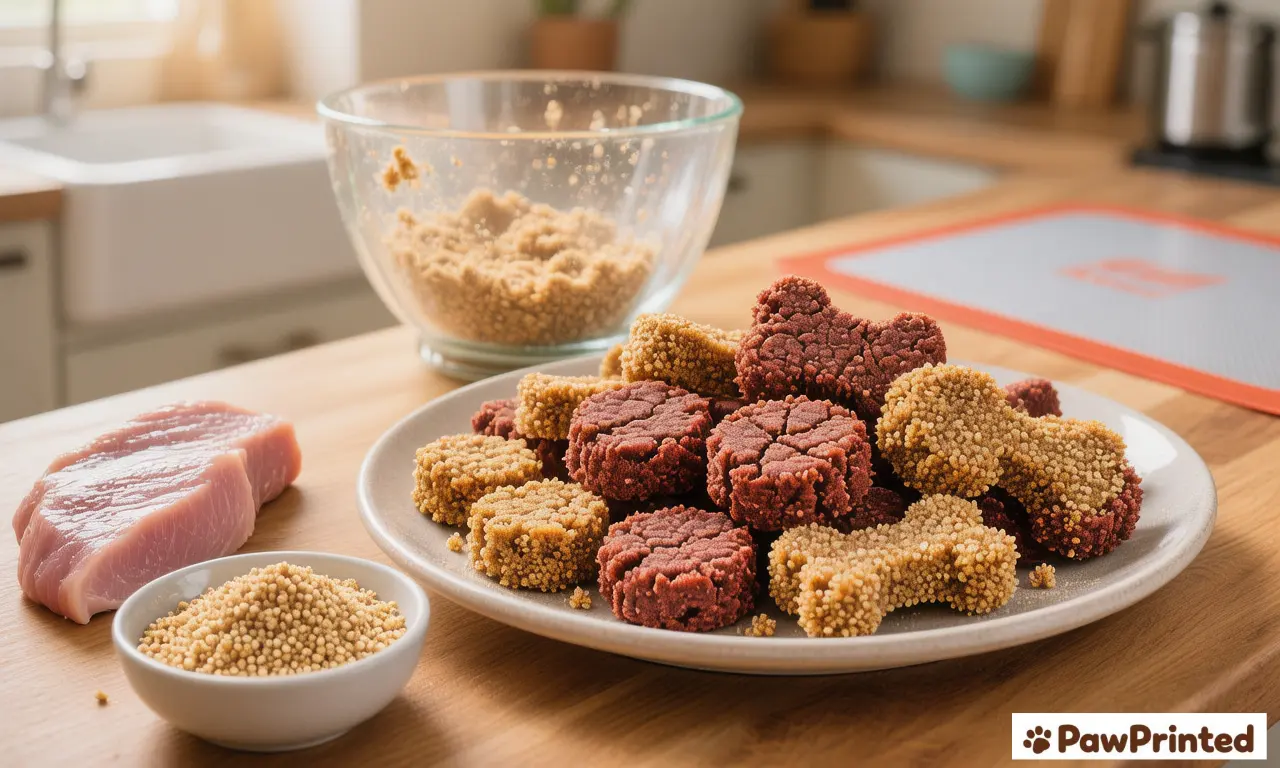
Light, oven-baked biscuits made with lean turkey and quinoa flour instead of wheat. A good option for dogs that need gentle ingredients in a more traditional biscuit shape.
Quick Overview
- Protein: Ground turkey.
- Base: Quinoa flour as a grain free binder.
- Texture: Firm but still easy to snap into smaller pieces.
- Best for: Dogs transitioning off wheat-heavy biscuits.
Why It Works
- Turkey is a lean protein often used in sensitive dog diets.
- Quinoa flour supports structure without gluten-containing grains.
- Biscuit format works well for everyday rewards and travel snacks.
Things To Watch
- Ensure quinoa fits your vet’s recommendations if your dog is very sensitive.
- Adjust baking time if you need a softer texture for senior dogs.
- Let biscuits cool fully before storage to avoid moisture buildup.
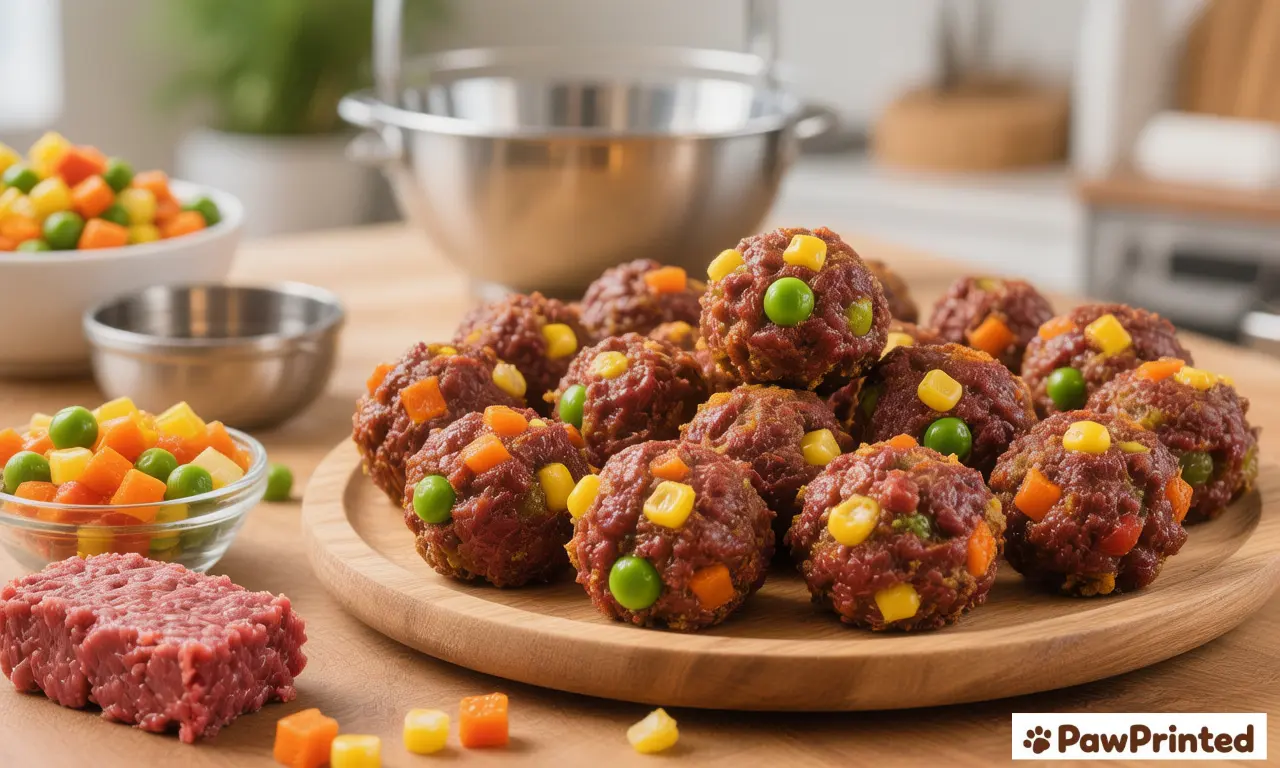
Bite-size lamb meatballs studded with small vegetable pieces, baked without grains. These make dense, rewarding treats for special occasions or focused training bursts.
Quick Overview
- Protein: Ground lamb.
- Base: Finely chopped vegetables instead of grain fillers.
- Texture: Moist, dense meatballs that can be halved easily.
- Best for: Occasional high-value rewards or food-motivated dogs.
Why It Works
- Lamb provides a rich, enticing flavor many picky dogs love.
- Vegetable bits add bulk and nutrients without any flour.
- Easy to control portions by shaping small or mini meatballs.
Things To Watch
- Higher calorie density means smaller serving sizes are best.
- Not ideal for dogs on strict low-fat diets without vet guidance.
- Refrigerate leftovers promptly and use within a few days.
Gentle cod blended with smooth carrot puree and baked into soft, grain free bites. A mild option for dogs that do well on fish-based treats and need simple ingredients.
Quick Overview
- Protein: Boneless cod fillet.
- Base: Carrot puree for color and gentle fiber.
- Texture: Soft, moist pieces that are easy to chew.
- Best for: Dogs with mild digestive or skin sensitivities.
Why It Works
- Fish-based protein can feel lighter than rich red meats for some dogs.
- Carrots support stool quality without adding any grains.
- Short ingredient list suits elimination-style diet planning.
Things To Watch
- Ensure all bones are removed before mixing and baking.
- Refrigerate quickly and use within a few days or freeze portions.
- Check with your vet if your dog is on special cardiac or fish-restricted plans.
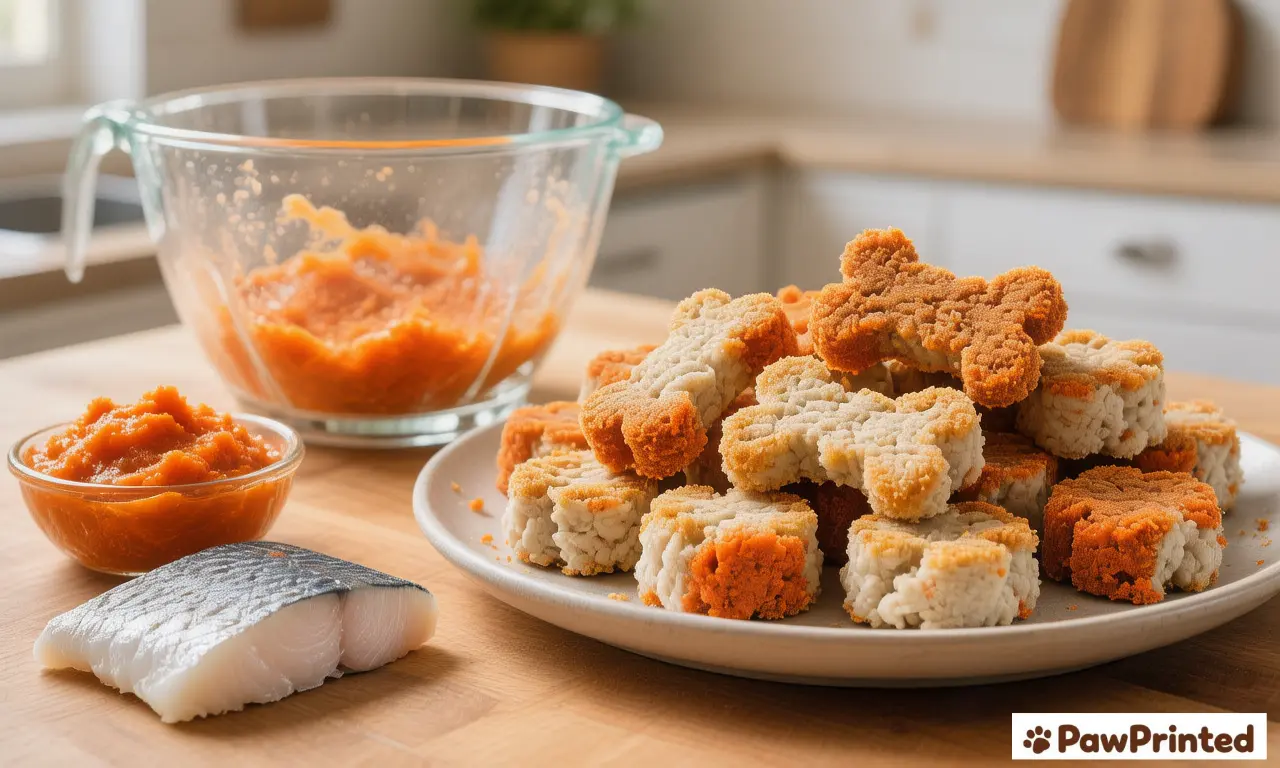
The classic salmon and sweet potato grain free treat that combines omega-rich fish with fiber-packed sweet potato. Crunchy, allergy-friendly and a favorite for many pups.
Quick Overview
- Protein: Salmon.
- Base: Mashed sweet potato in place of wheat flour.
- Texture: Firm, crunchy edges with a satisfying bite.
- Best for: Dogs needing grain free, omega-3 rich treats.
Why It Works
- Salmon provides essential omega-3 fatty acids for skin and coat support.
- Sweet potato offers gentle fiber and natural sweetness without grains.
- Reliable go-to option for pups already doing well on fish-based diets.
Things To Watch
- Use skinless salmon to reduce excess oils where needed.
- Let treats cool fully to keep their crunch in storage.
- Monitor fat intake if your dog is on a low-fat or pancreatic-sensitive diet.


How To Use These Treats
Grain free dog treats fit naturally into several daily routines. You can use them as quick rewards during training sessions, small incentives after outdoor walks, or light evening snacks for dogs who enjoy a predictable routine. The key is portion control— even grain free treats add calories, so keep each serving small and consistent.
For small breeds and senior dogs, break treats into tiny pieces to prevent choking and reduce overfeeding. If your dog is on a weight management program, count each treat toward the daily calorie budget and prefer the recipes that bake into smaller cubes or softer drops. Tracking intake for a week can also help clarify which treat sizes work best.
Storage & Meal Prep Tips
Grain free dog treats vary in shelf life depending on whether they are baked, dried, or fish based. Most baked treats stay fresh for three to five days in airtight containers, while dehydrated versions remain crisp for longer. Fish based treats should be stored in the refrigerator and used within two to three days unless frozen.
Batch prep works well for busy weeks—simply bake larger quantities and freeze small portions. Use freezer safe containers or silicone trays to keep shapes intact. Clearly labeling each batch with the date helps maintain rotation, and cooling baked treats fully before storage prevents moisture buildup that can soften the texture.
Vet Tips & Variations
Veterinarians typically recommend grain free treats for dogs undergoing allergy trials or those sensitive to wheat, corn, or soy. When adjusting recipes, start with mild proteins such as turkey, salmon, or cod, then add dog friendly vegetables like sweet potato or carrots. Introduce only one new ingredient every three to five days so you can observe digestive reactions or changes in stool quality.
For dogs with known protein allergies, choose recipes with limited ingredients and avoid mixing multiple meats in the same batch. Senior dogs may prefer softer textures, so slightly reduce baking time or shape treats into small spoon drops. Dogs with sensitive stomachs should begin with minimal portions and gradually increase only if they tolerate the recipe well.
FAQ
Are grain free dog treats better for dogs with allergies?
Grain free dog treats can help dogs sensitive to wheat, corn, or soy. They replace common grains with alternatives like sweet potato, pea flour, or quinoa flour. However, they won’t resolve every allergy—many dogs react more to proteins than grains. Always introduce new treats slowly and monitor skin, stool, or behavior changes over several days before using them regularly.
Can grain free treats help reduce digestive issues?
Some dogs experience fewer digestive problems when switching to grain free treats, especially those who struggle with gas, bloating, or loose stool from grain based snacks. The simplified ingredient list may also help identify problem foods. Still, it’s important to choose treats with gentle binders and avoid those that rely heavily on legumes if your dog is sensitive to peas or lentils.
How often can I give grain free treats?
Most dogs can enjoy grain free treats daily in small portions. A general guideline is that treats should not exceed ten percent of a dog’s daily calorie intake. Adjust based on your dog’s activity level, body condition, and whether you are using the treats for frequent training sessions or occasional snacks.
Are grain free treats safe for puppies?
Grain free treats can be safe for puppies if they are soft, small, and made with gentle ingredients. Avoid hard or overly crunchy biscuits for very young puppies. Choose recipes featuring easily digestible proteins and simple vegetables, and always break pieces into tiny training friendly portions to prevent choking.
Do grain free dog treats help with weight control?
Grain free treats can support weight control when they are low in calories and used alongside proper meal planning. Some recipes naturally reduce calories by replacing starchy grains with lean proteins or vegetable purees. Still, even the healthiest grain free treats should be counted toward the daily calorie total to avoid gradual weight gain.
Explore More Grain Free & Allergy-Friendly Treats
More Grain Free Treat Recipes
Discover all six grain free homemade treats created for sensitive dogs and everyday rewards. Save this collection if your pup thrives on grain free snacks.
Vet-Approved Treat Recipes
Browse our master list of homemade dog treat recipes reviewed by veterinary professionals, from training bites to gentle tummy-friendly snacks.
Related Reading
Learn more about how to choose safe, allergy-friendly snacks and build a long-term treat plan that supports your dog’s health and training.
Author & Vet Review Notes
Emma’s Notes: Grain free treats became part of Ethan’s routine when we were troubleshooting skin irritation last year. I found that rotating between poultry, lamb, and fish based recipes kept him excited while still staying gentle on his stomach.
Vet Review: For dogs trialing grain free diets, simple ingredient treats like these complement your vet’s guidance. Focus on leaning toward single protein snacks and monitor any changes in digestion or skin quality. Transition slowly and keep treat calories within daily limits.
References — Authoritative Sources
- PetMD (2024). “Grain-Free Diets for Dogs: Pros, Cons, and Common Misconceptions.” Source
- American Kennel Club (AKC). “Dog Treat Safety and Nutrition Basics.” Source
- Tufts Cummings Veterinary Center (2023). “Understanding Food Sensitivities in Dogs.” Source
- NIH National Library of Medicine. “Canine Food Allergies and Dietary Management.” Source
- Frontiers in Veterinary Science (2024). “Alternative Carbohydrates in Canine Diets.” Source