Why I Cooked This
When Ethan’s stomach started acting up last winter, I knew I needed to rethink his meals. Commercial kibbles were too harsh, and he’d walk away after two bites. That’s when I went back to basics — cooking a simple beef dog food recipe with rice and carrots, ingredients that are gentle, wholesome, and vet approved.
I remember the first batch vividly — the kitchen filled with that cozy scent of beef simmering over low heat while Ethan sat by the stove, tail tapping like a metronome. It reminded me that homemade food isn’t just about nutrition; it’s about comfort and trust between us.
If you’ve ever wondered why beef works so well for sensitive or picky eaters, you can read our Beef Dog Food Guide to learn how it supports muscle health, energy, and digestion — the same reasons this recipe quickly became Ethan’s favorite bowl.
Ingredient Spotlight — Why Beef & Carrots Work So Well
Beef – The Heart of This Meal
Lean ground beef brings high-quality protein and essential amino acids that support your dog’s muscles and immune system. It’s also rich in iron and B vitamins, helping maintain steady energy levels without upsetting the stomach. For sensitive eaters, beef often feels more satisfying than poultry-based recipes.
Rice – Gentle, Comforting Energy
Soft-cooked white rice serves as a soothing carbohydrate base. It’s easy to digest, helps absorb excess stomach acid, and keeps meals light yet filling. This makes it perfect for pups recovering from digestive issues or transitioning away from commercial dry food.
Carrots – Bright Fiber and Natural Sweetness
Carrots provide a natural source of fiber and beta-carotene, promoting eye health and firm stool. Their subtle sweetness also improves flavor balance, making homemade meals more appealing to picky dogs like Ethan. They blend perfectly with the mild taste of beef and rice.
If your dog has allergies or prefers simpler ingredient lists, check our Limited Ingredient Beef Dog Food Guide for allergy-friendly meal variations.
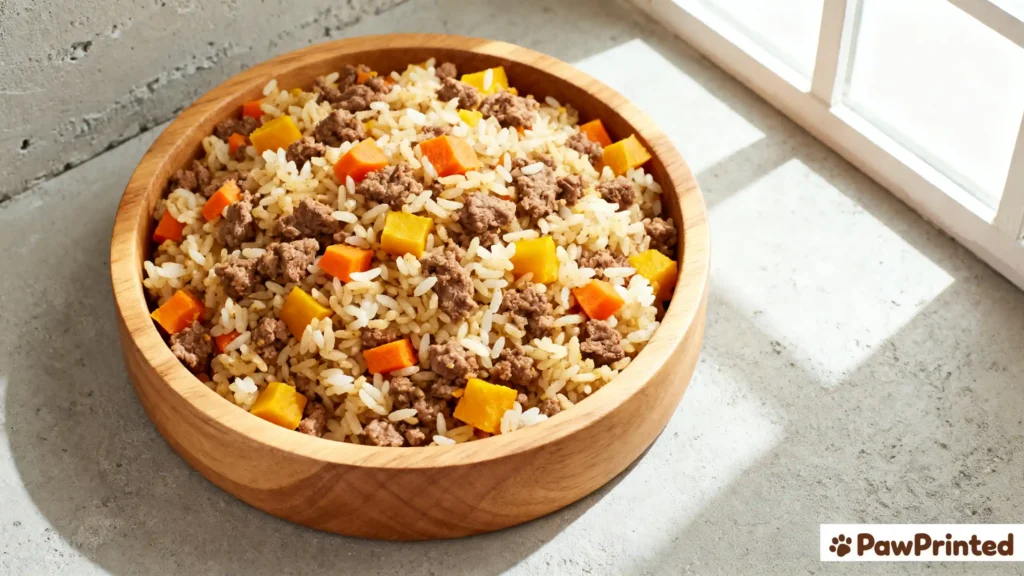
Ingredients You’ll Need
Lean Ground Beef
Use about 1 lb (450 g) of lean ground beef. It’s the main protein in this beef dog food recipe and provides iron, zinc, and amino acids to keep your pup strong and active.
Cooked White Rice
Prepare 1 cup (200 g) of soft-cooked white rice. It’s gentle on digestion and gives steady energy without overwhelming sensitive stomachs.
Finely Chopped Carrots
Add ½ cup (60 g) of grated or diced carrots for fiber, color, and natural sweetness that dogs love.
Pumpkin Puree (optional)
Mix in 2 tbsp of pumpkin puree for extra fiber and smoother stool consistency—perfect for sensitive stomach dogs.
Salmon Oil or Olive Oil
Use 1 tsp of healthy oil to balance omega-3 and omega-6 fatty acids, promoting coat shine and joint flexibility.
Calcium Source + Multivitamin (for Balance)
Add ½ tsp of calcium supplement and ½ chew of dog multivitamin to keep Ca:P ratio around 1.2:1 and cover micronutrient needs.
Optional Tools for Easy Cooking
Use a nonstick pan for low-fat browning and precise portions with measuring cups to keep each batch consistent.
Always choose human-grade ingredients and avoid seasoning — your dog doesn’t need salt or oil beyond the small nutrition-friendly amount included here.
Step-by-Step Cooking Guide
Step 1 – Cook the Rice
Start by cooking 1 cup of white rice until soft and slightly sticky. I often use Minute Ready Serve Rice when I’m short on time—it cooks evenly and blends beautifully with ground beef. Let it cool a bit while you prepare the rest of the ingredients.
Step 2 – Brown the Beef
Heat a drizzle of olive oil in a nonstick pan and add the lean ground beef. Break it apart gently and cook until fully browned. To make sure it’s safe, check that the internal temperature reaches 165 °F using your digital thermometer. Drain any excess fat so the meal stays light on Ethan’s stomach.
Step 3 – Add Carrots for Color and Fiber
Mix in ½ cup of finely chopped carrots while the beef is still warm. I love using Harmony House Dried Carrots —they soften quickly and keep that bright orange color dogs find irresistible. Cook for 2–3 minutes so the veggies release their natural sweetness.
Step 4 – Blend in Pumpkin and Rice
Add the cooked rice and a spoonful of pumpkin puree (go/beef-pumpkin) to the pan. Stir slowly until everything is evenly coated and the mixture takes on a warm golden tone. This step gives the meal a silky texture and extra fiber for healthy digestion.
Step 5 – Cool and Add Supplements
Turn off the heat and let the food cool for 10 minutes. Then stir in your dog’s daily supplements: a dash of salmon oil and ½ chew of a trusted multivitamin (Zesty Paws Multivitamin). Adding them after cooling preserves the nutrients and omega fatty acids.
Step 6 – Portion and Store
Once the mixture is room temperature, divide it into measured portions using your measuring cups and store them in an airtight container (IRIS Container). Refrigerate for up to 4 days or freeze for 2 weeks. Ethan always knows when I open that lid — his nose beats me to it every time!
Always let the food cool before serving and skip all salt or seasoning — dogs don’t need extra sodium, and a neutral flavor keeps their digestion calm.
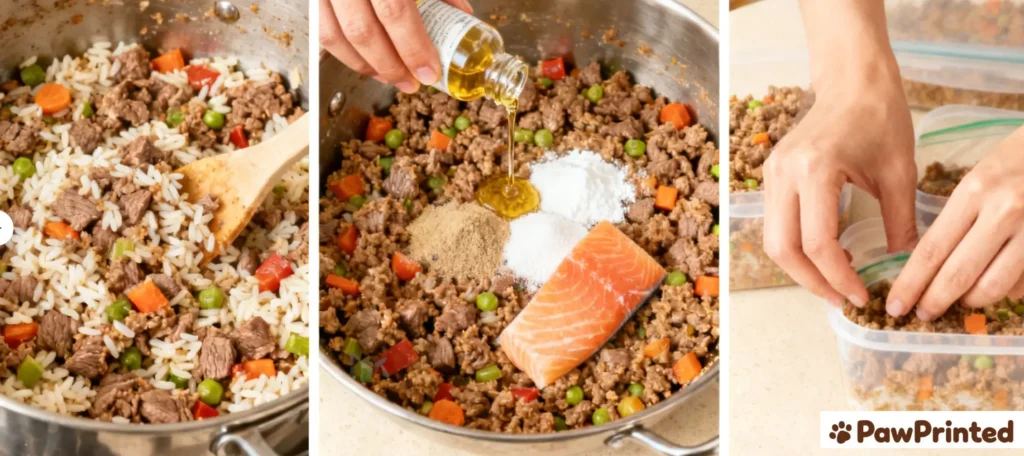
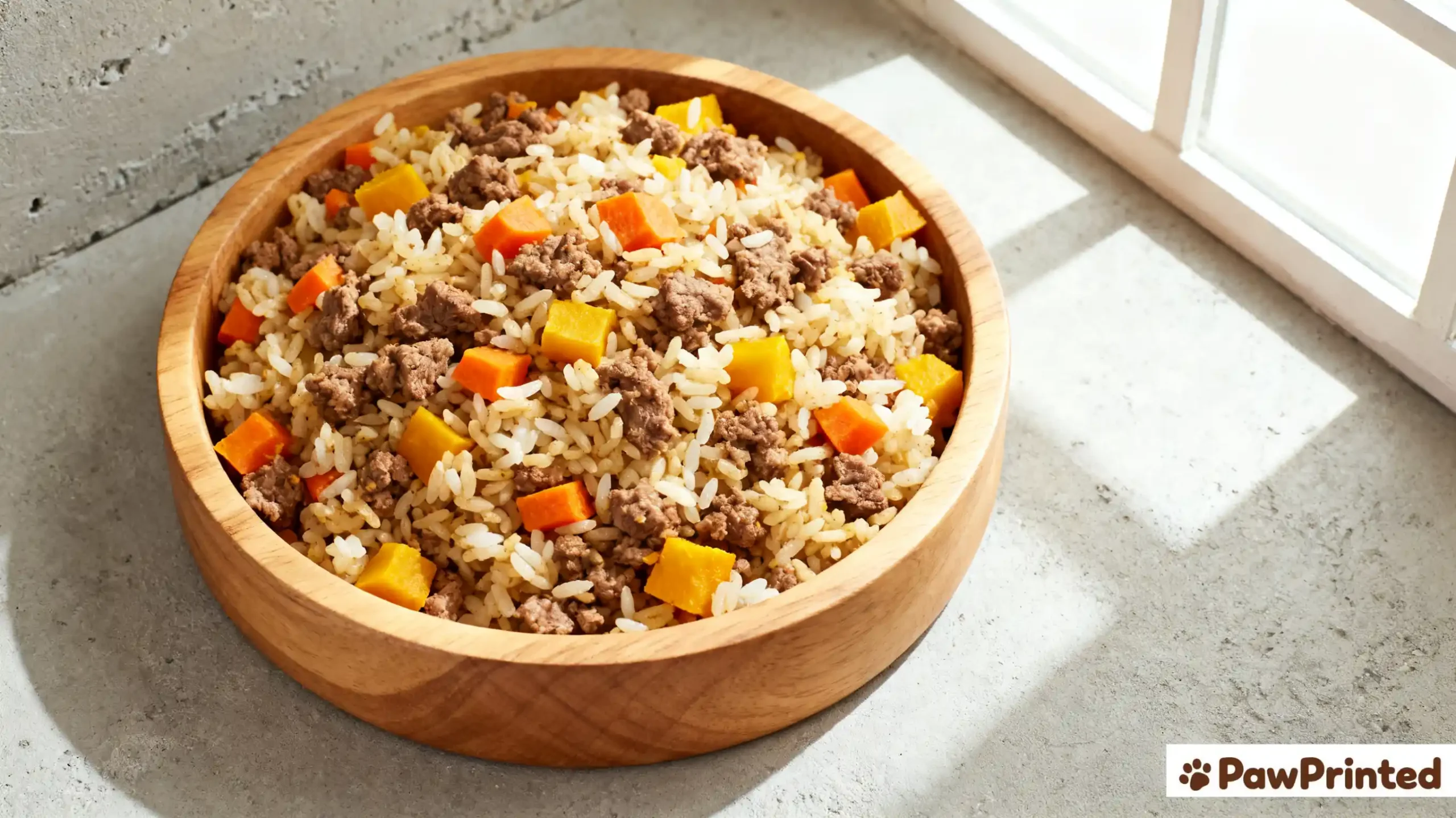
Beef Dog Food Recipe (Rice & Carrots, Vet Approved)
- Nonstick skillet
- Silicone spatula
- – Measuring cups
- Digital thermometer
- Airtight food container
- 1 lb 450 g lean ground beef — rich in protein and iron, gentle on digestion
- 1 cup 200 g cooked white rice — soft, easy-to-digest carb source
- ½ cup 60 g finely chopped carrots — fiber + beta carotene for gut & eye health
- 2 tbsp pumpkin puree optional — adds fiber, helps regulate stool
- 1 tsp salmon oil omega-3 for coat and joints
- ½ tsp calcium supplement or eggshell powder maintains Ca:P ≈ 1.2:1
- ½ chew dog multivitamin fills micronutrient gaps
- Optional: 250 mg taurine for cardiac support in large breeds
- Optional garnish: parsley or spinach powder
- Cook the rice until very soft and slightly sticky so it binds easily with meat.
- Brown the beef in a nonstick pan over medium heat (use a digital thermometer to confirm 165 °F / 74 °C). Drain excess fat.
- Add carrots and pumpkin to the warm beef, stir for 2–3 minutes until softened.
- Combine with cooked rice, mixing evenly.
- Cool the mixture for 10 minutes, then stir in salmon oil, calcium, and multivitamin so nutrients aren’t lost by heat.
- Portion & store in airtight containers or freeze for up to 2 weeks.
- Serve over a non-slip mat and watch that tail wag!
Nutritional Data & Vet Insights
High-Quality Protein
Lean ground beef delivers a full spectrum of amino acids that support tissue repair, muscle tone, and a healthy immune response. According to Dr. Lydia Harper, high-digestibility proteins like beef can reduce gastric irritation compared to some poultry proteins.
Digestive-Friendly Carbohydrates
White rice serves as a gentle carbohydrate source that stabilizes blood sugar and minimizes stool irregularities. Its bland nature makes it ideal for dogs transitioning from commercial kibble or recovering from mild digestive upset.
Natural Fiber & Antioxidants
Carrots and pumpkin provide soluble fiber and beta-carotene, promoting firm stool, balanced gut flora, and immune resilience. These colorful vegetables also add natural sweetness that encourages picky eaters to finish their bowls.
Healthy Fats for Skin & Coat
Adding a small amount of salmon oil supplies Omega-3 fatty acids, which soothe inflammation and enhance coat shine. Combined with natural fats from beef, this helps maintain a balanced Omega-6 to Omega-3 ratio for long-term skin health.
Essential Minerals & Micronutrients
Calcium powder and a canine multivitamin close nutritional gaps common in homemade meals. They ensure proper calcium-to-phosphorus ratio (around 1.2 : 1) and replenish trace elements like zinc and manganese that support bones, joints, and nerve health.
Vet Insight: This recipe aligns with AAFCO adult maintenance standards when calcium and multivitamin supplements are included. For puppies or special medical diets, consult your veterinarian before regular feeding.
Vet Tips & Variations
For Sensitive Stomach Dogs
Stick to lean beef and soft-cooked rice, keeping the fat content minimal. You can also increase pumpkin puree for extra fiber and smoother digestion. Avoid adding dairy or new proteins until your dog’s stool stays consistently firm for a few days.
For Dogs with Allergies
If your dog reacts to beef, try substituting ground turkey or lamb while keeping the same proportions of rice and carrots. Always test a small portion first to rule out sensitivities. You can find safe alternatives in our Limited Ingredient Beef Dog Food Guide.
For Senior Dogs or Joint Support
Older pups benefit from additional Omega-3s and joint supplements. Mixing in a daily half-tablet of Cosequin Joint Supplement supports flexibility and comfort. Keep texture soft and moisture high to help seniors chew easily.
For Active or Working Dogs
Increase beef to 1¼ lb per batch and add ½ tsp of olive oil for more calories and sustained energy. Extra protein helps recovery after exercise while maintaining lean muscle mass. Keep hydration consistent, especially after outdoor play sessions.
Every variation should be introduced gradually over 3–5 days. Always monitor stool consistency, appetite, and energy levels to ensure your pup is adapting comfortably to any recipe change.
Serving Ideas & Storage
Portion Size Guide
As a general rule, feed about 1 cup of food per 10 lb of body weight per day, divided into two meals. Ethan, who weighs 35 lb, enjoys about 1¾ cups split between breakfast and dinner. Adjust portions based on your dog’s activity level and body condition — you should feel ribs but not see them.
Refrigeration & Freshness
Store freshly cooked meals in an airtight container (go/beef-container) and refrigerate for up to four days. Keep each portion sealed to prevent odor absorption and nutrient loss. Label containers with the cooking date to stay organized.
Freezing for Later Use
For longer storage, divide cooled food into freezer-safe trays or bags. A single batch can last up to two weeks in the freezer without affecting taste or texture. Thaw overnight in the refrigerator and stir well before serving to restore consistency.
Serving Presentation
Serve meals at room temperature or slightly warm — never hot. I use a non-slip silicone feeding mat to keep Ethan’s bowl in place and make cleanup easy after he licks every last bit of beef and rice from the dish.
Always discard leftovers after 48 hours once opened. Serve with fresh water, and never microwave supplements — add them only after reheating the meal to preserve nutrients.
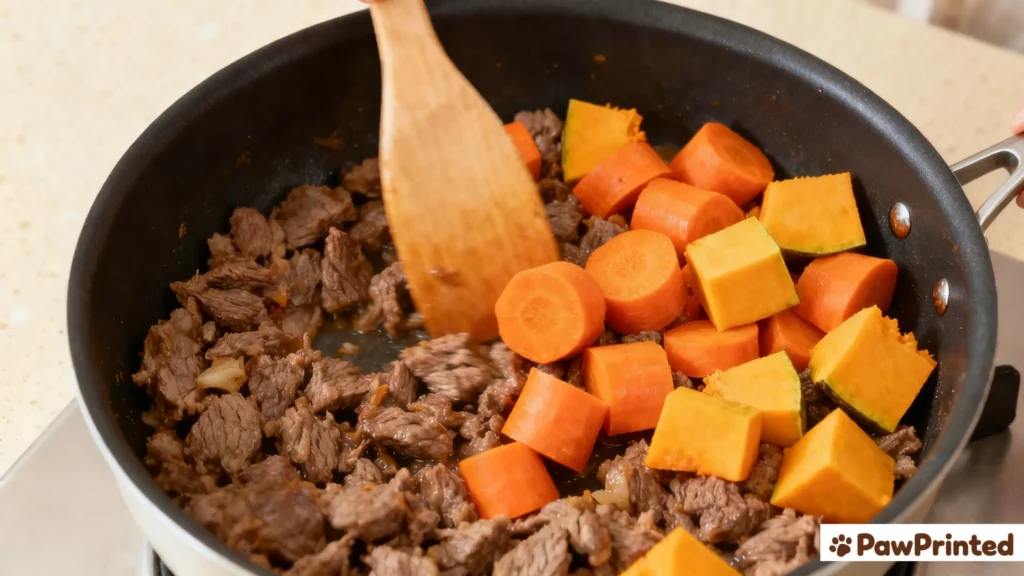
What Worked for Ethan
Pumpkin Puree for Easy Digestion
Ethan’s tummy tends to calm down when I mix in a spoonful of Farmer’s Market Organic Pumpkin Puree. It adds fiber and a mellow sweetness that helps regulate digestion, especially after long park days or new treats.
Carrot Bits that Stay Bright
I love using Harmony House Dried Carrots — they rehydrate in minutes and keep that vibrant orange glow even after cooking. Ethan seems to enjoy the light crunch they add to each bite.
Omega Boost for Coat Shine
A few drops of Grizzly Health Salmon Oil turned his coat from dull to glossy within weeks. It’s now a small daily ritual — drizzle, stir, and wait for the happy tail thump against the cabinet door.
Smart Storage That Saves Time
I portion everything into an IRIS Airtight Food Container. It keeps food fresh, stacks neatly in the fridge, and makes feeding on busy mornings completely mess-free.
Checking Temperature the Easy Way
I use a ThermoPro Digital Thermometer to confirm the beef is cooked safely at 165 °F. No more guessing — just peace of mind and one perfectly wagging dog waiting by the stove.
Every product I use here is part of our daily routine — simple, reliable tools that make homemade cooking easy and safe. Ethan might not read reviews, but his empty bowl says it all.

FAQ — Homemade Beef Dog Food
Can dogs eat beef and rice every day?
Yes, but only if the meal is nutritionally balanced. Homemade beef and rice recipes can form part of a healthy routine when paired with calcium and vitamin supplements to meet AAFCO standards.
Feeding plain beef and rice alone for weeks may lead to nutrient deficiencies, especially calcium and trace minerals. Adding vegetables such as carrots or pumpkin helps round out fiber and antioxidants.
Use this recipe as a balanced meal plan, not a quick fix, and rotate proteins every few weeks for optimal long-term health.
How much homemade beef dog food should I feed?
Start with about one cup per 10 lb of body weight per day, divided into two meals. Adjust portions based on age, metabolism, and activity level.
Observe your dog’s body shape — you should feel the ribs easily but not see them. Over time, adjust upward for active dogs or downward if weight gain appears.
Consistency in feeding times helps regulate digestion and keeps energy levels stable throughout the day.
Is this recipe good for sensitive stomach dogs?
Yes. Beef, rice, and carrots are gentle ingredients suitable for mild digestive issues. Their low-fat and high-fiber profile helps calm upset stomachs.
Introduce the recipe gradually over 3–5 days to prevent sudden gut changes. If your dog shows bloating or loose stool, pause and consult your vet.
Once adapted, most dogs tolerate this combination very well — Ethan certainly did after just one week.
Can I replace rice with other grains or veggies?
Absolutely. You can substitute white rice with sweet potato, quinoa, or oats, depending on your dog’s preference and dietary needs.
Each option changes texture and calorie density slightly, so keep the total portion similar and monitor stool quality for any reaction.
Simple swaps like these keep mealtime interesting and ensure varied nutrition without upsetting digestion.
How should I store homemade beef dog food safely?
Let cooked food cool completely before storing it in airtight containers. Refrigerate portions for up to four days or freeze for two weeks.
Always thaw in the refrigerator, not on the counter, to prevent bacterial growth. Reheat gently and mix well before serving.
Label each container with the date, and discard any batch that smells sour or looks dry around the edges.
Wrapping It Up
Every time I cook this recipe, Ethan reminds me why homemade food matters. It’s not just about filling his bowl — it’s about showing care in the smallest details, like using clean ingredients and taking a few extra minutes to stir everything by hand. That quiet moment when he takes the first bite, tail swishing, makes every effort worth it.
If you’re new to making homemade dog food, start simple. This beef dog food recipe with rice and carrots is forgiving, nutritious, and perfect for busy dog parents. Once you see how much happier and calmer your pup feels, you’ll never look at store-bought kibble the same way again.
If you don’t want to cook daily, check our dry food picks — those were Ethan’s daily backups.
Author & Vet Review Box
Emma – Founder & Dog Mom: “Cooking for Ethan keeps me grounded. This beef and rice recipe reminds me that healthy dog food doesn’t have to be complicated — it just needs love, balance, and patience.”
Dr. Lydia Harper, DVM – Veterinary Reviewer: “From a veterinary standpoint, this recipe provides balanced macronutrients when prepared with calcium and multivitamin supplements. It’s gentle on digestion and suitable for adult dogs under AAFCO maintenance standards.”
Both Emma and Dr. Harper agree that small, thoughtful adjustments — like adding fish oil or pumpkin — can make a big difference in long-term wellness and digestion.
References — Authoritative Sources
- PetMD (2024) – “Homemade Dog Food Basics.” Read on PetMD. Provides an overview of safe homemade feeding practices, including portion control and nutrient balance for adult dogs.
- American Kennel Club (AKC, 2023) – “Can Dogs Eat Beef?” Read on AKC. Explains how cooked lean beef benefits dogs’ muscle health and why fat trimming reduces digestive upset.
- Tufts Cummings School of Veterinary Medicine (2023) – “Nutrient Balance in Home-Prepared Diets.” Visit Tufts Vet. Discusses essential nutrient ratios, calcium-phosphorus balance, and supplement recommendations for homemade meals.
- Hill’s Pet Nutrition (2022) – “Digestive Health and Sensitive Stomachs.” View Hill’s Resource. Outlines how mild, high-digestibility foods support GI stability and reduce bloating in dogs.
- Frontiers in Veterinary Science (2022) – “Assessment of Homemade Canine Diets.” Open Access Study. Reports that over 90% of home-prepared recipes lack at least one key micronutrient, reinforcing the need for supplement use.
- National Research Council (NRC, 2023) – “Nutrient Requirements of Dogs and Cats.” Read NRC Reference. The primary scientific standard used by veterinarians to assess nutritional adequacy in canine diets.