When your dog’s tummy turns unpredictable — soft stools one day, skipped meals the next — life quickly becomes a guessing game. I’ve been there with Ethan. After months of trial and error, the biggest relief came not from medicine, but from a bowl built around clean, gentle protein — salmon.
This article walks you through how salmon dog food for sensitive stomachs actually works, what makes it different from chicken or beef formulas, and how to transition safely without upsetting your pup’s digestion. You’ll also find vet-reviewed recommendations, ingredient tips, and real results from our PawPrinted kitchen.
Want to preview what balanced salmon diets look like? Explore our Best Salmon Dog Food Guide (Updated 2025) for top vet-approved picks, or dive into the Grain-Free Salmon Dog Food Collection if you’re testing gentle, low-filler options. For dogs with multiple sensitivities, start with our Limited Ingredient Salmon Formula Guide to narrow triggers before rebuilding variety.
Whether you’re troubleshooting chronic tummy troubles or just want smoother digestion, this guide keeps it science-backed, vet-aligned, and experience-tested — because feeding should feel calm again.
What Causes a Sensitive Stomach in Dogs
A dog’s stomach can react to many different triggers — from overly rich proteins and processed fillers to abrupt diet changes or even mild infections. In Ethan’s case, his symptoms began subtly: soft stools, frequent gurgling, and a picky appetite. What looked like simple fussiness was actually mild food sensitivity that developed over time.
1. Protein Sensitivity
Repeated exposure to the same protein (often chicken or beef) can overwhelm a dog’s immune system, leading to low-grade inflammation or poor digestion.
2. Low-Quality Fillers
Cheap grains, artificial colors, and heavy by-products add calories without nutrition — irritating the gut and promoting inconsistent stool texture.
3. Gut Flora Imbalance
Stress, antibiotics, or diet changes can disrupt the gut microbiome, making digestion less efficient and triggering soft stools or excess gas.
4. Too Many Formula Changes
Constantly switching brands or protein sources prevents the digestive system from adapting. Even healthy food can cause trouble if introduced too fast.
Vet Tip: If your dog’s discomfort comes with vomiting, loss of appetite, or blood in the stool, check with your vet before adjusting food — stomach issues can sometimes mask deeper problems.
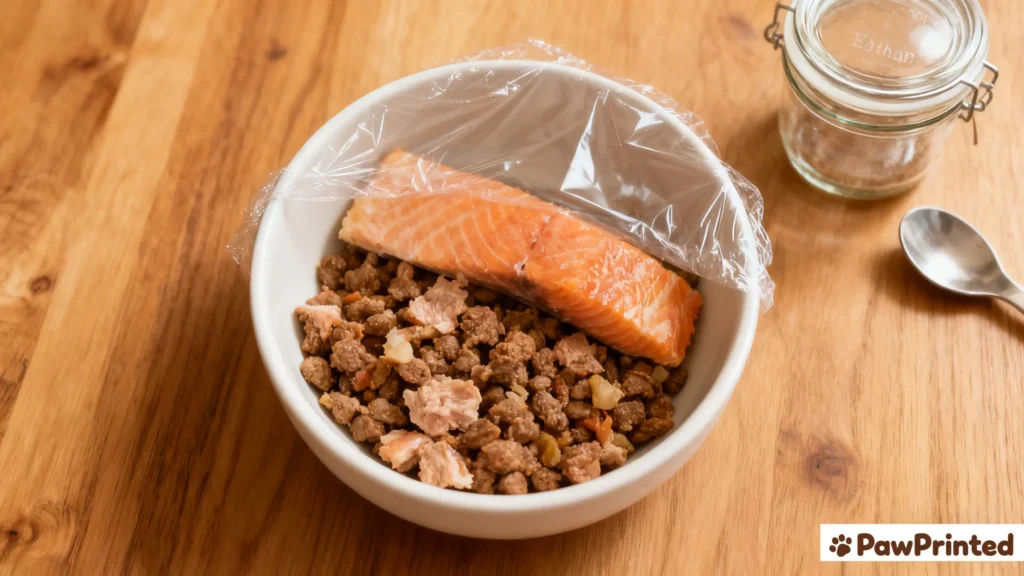
Why Salmon Is Often Chosen for Sensitive Stomach Formulas
Salmon isn’t just a tasty fish — it’s one of the most digestible and anti-inflammatory proteins you can feed a sensitive dog. Compared with chicken or beef, salmon provides cleaner amino acids, smoother digestion, and natural Omega-3s that help calm irritated gut tissue and support overall wellness.
Gentle on Digestion
Salmon protein breaks down easily and is low in connective tissue, making it ideal for pups with sluggish or sensitive digestive systems. Dogs that struggle with heavy meats often do well on a salmon-first formula.
Anti-Inflammatory Benefits
Rich in Omega-3 fatty acids (EPA & DHA), salmon helps reduce gut and skin inflammation. Consistent intake can promote firmer stools and better nutrient absorption over time.
Shinier Coat, Healthier Gut
The same nutrients that keep the stomach calm also nourish the coat and skin. Ethan’s fur became noticeably softer after two weeks on a salmon-based diet.
Novel Protein Advantage
For dogs previously exposed to common meats, salmon counts as a “novel protein.” This reduces the chance of immune flare-ups — a key reason many limited-ingredient salmon formulas are vet-recommended.
Emma’s Tip: If your pup’s stomach still feels off, check ingredient lists closely — not all “salmon recipes” use pure salmon as the first ingredient. Look for “deboned salmon” or “salmon meal” listed first on the label.
Why Salmon Is Often Chosen for Sensitive Stomach Formulas
Salmon isn’t just a tasty fish — it’s one of the most digestible and anti-inflammatory proteins you can feed a sensitive dog. Compared with chicken or beef, salmon provides cleaner amino acids, smoother digestion, and natural Omega-3s that help calm irritated gut tissue and support overall wellness.
Gentle on Digestion
Salmon protein breaks down easily and is low in connective tissue, making it ideal for pups with sluggish or sensitive digestive systems. Dogs that struggle with heavy meats often do well on a salmon-first formula.
Anti-Inflammatory Benefits
Rich in Omega-3 fatty acids (EPA & DHA), salmon helps reduce gut and skin inflammation. Consistent intake can promote firmer stools and better nutrient absorption over time.
Shinier Coat, Healthier Gut
The same nutrients that keep the stomach calm also nourish the coat and skin. Ethan’s fur became noticeably softer after two weeks on a salmon-based diet.
Novel Protein Advantage
For dogs previously exposed to common meats, salmon counts as a “novel protein.” This reduces the chance of immune flare-ups — a key reason many limited-ingredient salmon formulas are vet-recommended.
Emma’s Tip: If your pup’s stomach still feels off, check ingredient lists closely — not all “salmon recipes” use pure salmon as the first ingredient. Look for “deboned salmon” or “salmon meal” listed first on the label.

Step-by-Step Guide: Transitioning to a Salmon Diet for Sensitive Stomach
A sensitive stomach needs time to adapt to any new food — even one as gentle as salmon. Rushing the switch is the most common reason dogs experience loose stools or sudden loss of appetite during a diet change.
Days 1–2: Start at 25% Salmon
Mix one part of the new salmon food with three parts of your dog’s old food. Observe stool texture and appetite; most dogs handle this first step easily. If your pup is extra sensitive, extend this stage to three full days.
Days 3–4: Move to 50/50 Blend
Gradually increase salmon to half of each meal. This is when gut bacteria begin adjusting to new amino acids and oils, so mild soft stools are normal. Stay consistent with feeding times.
Days 5–6: 75% Salmon Diet
If your dog’s digestion looks stable, move to a 3:1 ratio. You may start noticing smaller, firmer stools and steadier appetite — both signs of progress.
Day 7 and Beyond: Full Transition
Switch entirely to salmon-based food. Keep monitoring for two weeks — changes in coat shine, energy level, or stool consistency reveal how well your dog’s gut is adapting. For detailed switching advice, see our Homemade Salmon Dog Food Guide.
Emma’s Tip: I always give Ethan at least a full week before judging a new food. The digestive system thrives on patience, not sudden changes — your pup’s gut needs time to catch up to better nutrition.
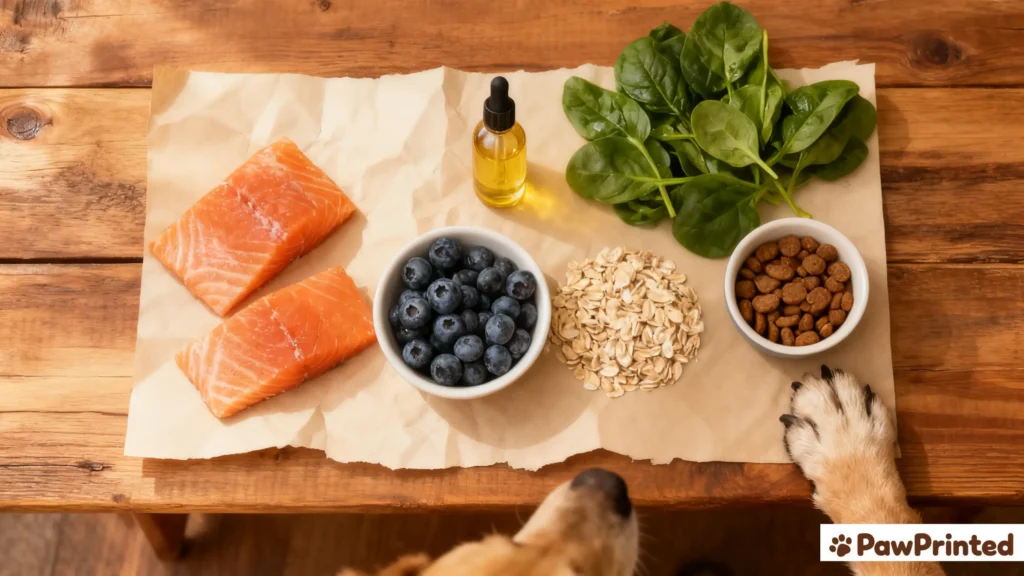
What the Research and Vets Say
There’s growing veterinary consensus that salmon-based diets can support sensitive digestion when the protein source is clean and paired with balanced fiber. While not every dog improves overnight, several studies show promising results for gut health and stool stability.
Digestibility Studies
Research from the Journal of Animal Science found that fish-based proteins, including salmon, have higher amino acid digestibility and lower intestinal residue compared with chicken or lamb. This means less stress on the digestive tract and more nutrient retention.
Vet Clinical Observations
Veterinarians often recommend salmon diets for dogs showing mild food intolerance. Its anti-inflammatory omega-3s support intestinal repair and help calm irritated mucosa. Vets also note smoother stool consistency within 10–14 days of a clean salmon formula.
Small-Scale Consumer Trials
A 2023 study from Go! Solutions observed that 24 dogs switching to a salmon-and-oatmeal formula had firmer stools and improved appetite within one month. The gut microbiome showed reduced Escherichia and Streptococcus counts, suggesting a measurable balance improvement.
Balanced Nutrition Perspective
Tufts University’s Veterinary Nutrition Center emphasizes that the benefit comes from the full formula — not just salmon alone, but how it pairs with soluble fiber and gentle carbs to maintain digestive harmony.
Vet Tip: Salmon works best when it’s part of a complete plan — clean protein, moderate fat, stable fiber, and patient feeding. If symptoms persist beyond two weeks, consult your vet to rule out enzyme deficiencies or gut infections.
FAQ — Salmon Dog Food for Sensitive Stomach
1. Does salmon dog food really help dogs with sensitive stomachs?
Yes, for many dogs it does. Salmon is naturally rich in omega-3 fatty acids and has a highly digestible protein profile. This makes it easier on the gut than heavier meats such as beef or lamb. When paired with simple carbs and fiber, salmon can reduce soft stools and support regular digestion.
2. Can my dog eat salmon every day?
Daily feeding is safe as long as the diet is balanced and complete. Many commercial salmon formulas include vitamins and minerals to meet full AAFCO standards. Avoid feeding plain cooked salmon only — it lacks calcium and certain nutrients dogs need long term.
3. How long does it take to see improvement?
Most dogs show digestive improvement within 7–14 days of switching to a clean salmon-based formula. Coat texture and stool quality are usually the first visible signs of progress. If there’s no change after 3 weeks, discuss enzyme support or alternate proteins with your vet.
4. What if my dog still has loose stool after switching?
It may mean the transition was too fast or that another ingredient is causing irritation. Gradually reduce the old food over 5–7 days and limit treats that contain other proteins. If symptoms persist, try a limited-ingredient salmon formula or add a small amount of canned pumpkin for fiber balance.
5. Are grain-free salmon dog foods better for sensitive stomachs?
Not always. Grain-free diets can help some dogs but may reduce soluble fiber that benefits digestion. The key is moderation — look for formulas that replace grains with gentle carbs like oatmeal or sweet potato, and always choose salmon as the main protein to ensure consistent gut support.
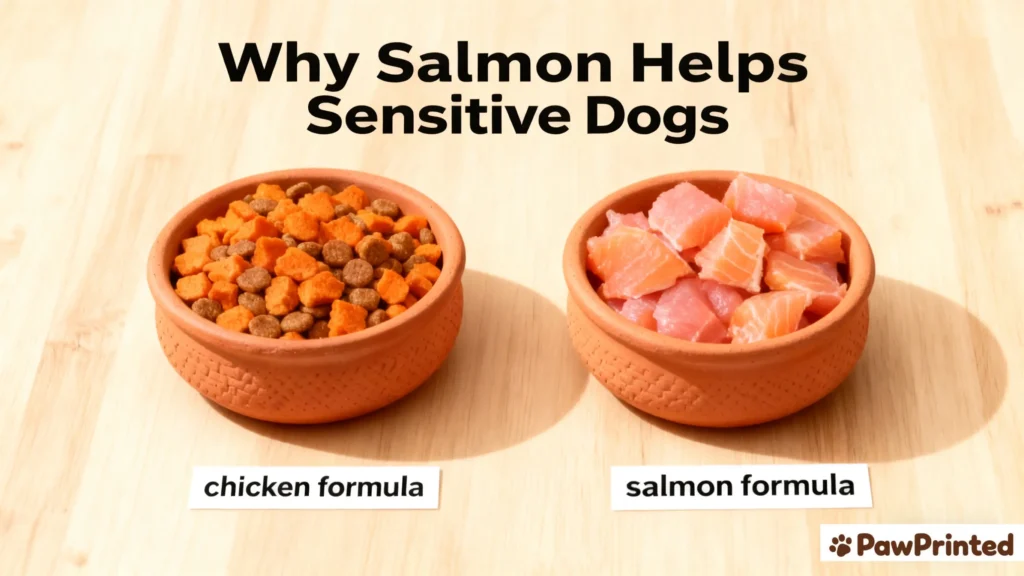
Wrapping It Up
For many dogs, salmon dog food for sensitive stomachs offers a real path toward calmer digestion and steadier energy. Its clean protein profile, anti-inflammatory omega-3s, and predictable nutrient balance make it one of the most vet-approved choices for gentle feeding. Still, every pup is unique — progress comes from patience, consistent meals, and close observation.
If your dog’s symptoms don’t ease after a couple of weeks, don’t lose heart. Sometimes sensitivities go beyond diet, involving enzymes, microbiome shifts, or stress factors. Teaming with your vet ensures your plan stays safe and customized.
If you don’t want to cook daily, check our dry food picks — those were Ethan’s daily backups.
Explore More — Related Sensitive Stomach & Salmon Guides
Want to explore more gentle, vet-reviewed options? These related PawPrinted guides walk you through salmon-based diets, limited-ingredient picks, and real feeding tips that have worked for Ethan.
References — Authoritative Sources
-
PetMD (2025) — “Best Dog Foods for Dogs with Sensitive Stomachs.”
PetMD Veterinary Nutrition Team — Explains how fish-based proteins like salmon reduce gastric irritation and improve stool consistency. -
DogFoodAdvisor (2025) — “Best Salmon Dog Food Guide.”
DogFoodAdvisor Review Panel — Ranks salmon formulas among the most digestible protein options for dogs with gut sensitivities. -
Tufts Cummings School of Veterinary Medicine (2023) — “Understanding Digestive Upset and Food Intolerance in Dogs.”
Tufts Vet Nutrition Center — Outlines clinical methods for identifying food triggers and stresses gradual transitions when introducing new proteins. -
Go! Solutions (2023) — “Gut Microbiome and Digestive Health in Dogs Fed Salmon-Based Diets.”
Go! Solutions Research Team — Found measurable microbiome balance and firmer stools after one month on a salmon and oatmeal formula. -
Frontiers in Veterinary Science (2022) — “Omega-3 Fatty Acids and Inflammation Control in Dogs.”
Frontiers Research Journal — Peer-reviewed evidence showing EPA and DHA from salmon support gut health and reduce chronic inflammation. -
American Kennel Club (AKC, 2024) — “Can Dogs Eat Salmon?”
AKC Canine Nutrition Advisory — Details safe cooking methods and nutritional benefits of salmon for canine digestion and coat condition.
Homemade Salmon Dog Food Recipes (Vet Approved Series)
Explore our complete collection of vet-approved salmon dog food recipes — each designed for a different need: from gentle digestion to high-protein recovery. These meals are wholesome, easy to prepare, and Ethan-tested for flavor and health.
- 🐟 Salmon Dog Food Recipe (Rice & Peas, Vet Approved) — A classic gentle bowl for sensitive stomachs.
- 🥔 Salmon & Sweet Potato Dog Food Recipe (Easy & Nutritious) — Rich in vitamins and natural fiber.
- 🎃 Salmon & Pumpkin Dog Food Recipe (Gentle Digestion) — The go-to recipe for calm digestion and hydration.
- 🌾 Salmon & Oats Dog Food Recipe (Healthy & Filling) — A cozy, fiber-rich mix for steady energy.
- 🍚 Salmon & Quinoa Dog Food Recipe (Protein Boost) — High-protein and balanced with omega support.
- 🌿 Salmon & Spinach Dog Food Recipe (Omega-3 & Iron Boost) — For glossy coats and strong muscles.
- 🥣 Salmon & Lentils Dog Food Recipe (Fiber & Protein Blend) — Gentle on digestion, rich in texture.
- 🫐 Salmon & Blueberries Dog Food Recipe (Antioxidant Rich) — Boosts immunity with antioxidant power.