Why I Asked Vets About Salmon
I still remember the week Ethan’s coat lost its usual shine — no itching, no dandruff, just that tired look that tells you something’s off. When I asked our vet if it could be food related, the word “salmon” came up again and again. It wasn’t about a miracle fix but about balance — gentle proteins, omega-3s, and digestibility.
That small conversation turned into a deep dive. I wanted to know what veterinarians actually say about feeding salmon — what’s good, what’s risky, and how to do it safely. In this guide, you’ll find those answers, backed by science and hands-on experience from PawPrinted’s kitchen. If you’d like a broader overview first, see why salmon dog food is considered a healthy choice.
Whether you’re exploring homemade meals or commercial diets, this article walks through everything vets want dog parents to know before adding salmon to the bowl — because good food isn’t just about taste; it’s about long-term health.
What Vets Usually Say About Salmon for Dogs
High-Quality Protein Source
Most veterinarians highlight salmon as a lean, high-value protein that’s easy for dogs to digest. It delivers essential amino acids without the excess fat often found in red meats, making it suitable for both active and senior pups.
Omega-3s for Skin and Coat Health
EPA and DHA — two key omega-3 fatty acids in salmon — are known to reduce inflammation and improve coat texture. Vets often recommend adding salmon-based diets when dogs face dry skin or seasonal shedding issues. You can also explore our salmon dog food benefits guide for more detail.
Gentle on Sensitive Stomachs
Compared to poultry or beef, salmon tends to be gentler on the digestive tract. Its clean protein profile and moderate fat content help dogs that struggle with bloating or food sensitivities. Learn how this works in our salmon-for-sensitive-stomach article.
Vets Emphasize Safe Preparation
While salmon is nutritious, most veterinarians warn that raw or smoked fish can carry parasites or added sodium. Always choose fully cooked, unseasoned portions — or a commercial formula with verified sourcing, as outlined in our Best Salmon Dog Food Guide.
Vet’s Reminder: Even the healthiest proteins can cause trouble if portioned poorly. Start small, monitor stool quality, and introduce new ingredients gradually over 5–7 days.

Nutritional Benefits of Salmon — Why It’s Worth Considering
Complete, Highly Digestible Protein
Salmon provides a full amino acid profile that supports lean muscle, recovery after play, and steady energy without the heaviness some dogs experience on red meats. It’s a practical everyday protein for both active pups and seniors.
Omega-3s (EPA & DHA) for Skin, Joints & Heart
EPA and DHA help calm inflammatory pathways that affect itchy skin, coat dullness, and joint stiffness, while also supporting heart rhythm and cognitive health. Consistent small servings generally work better than large, occasional boosts.
Micronutrients that Dogs Actually Use
Salmon naturally supplies B-vitamins (including B12), selenium, and potassium — nutrients involved in metabolism, immune balance, and cell repair. Paired with gentle carbs and fiber, it supports stable appetite and stool quality.
Antioxidant Partners: Blueberries & Greens
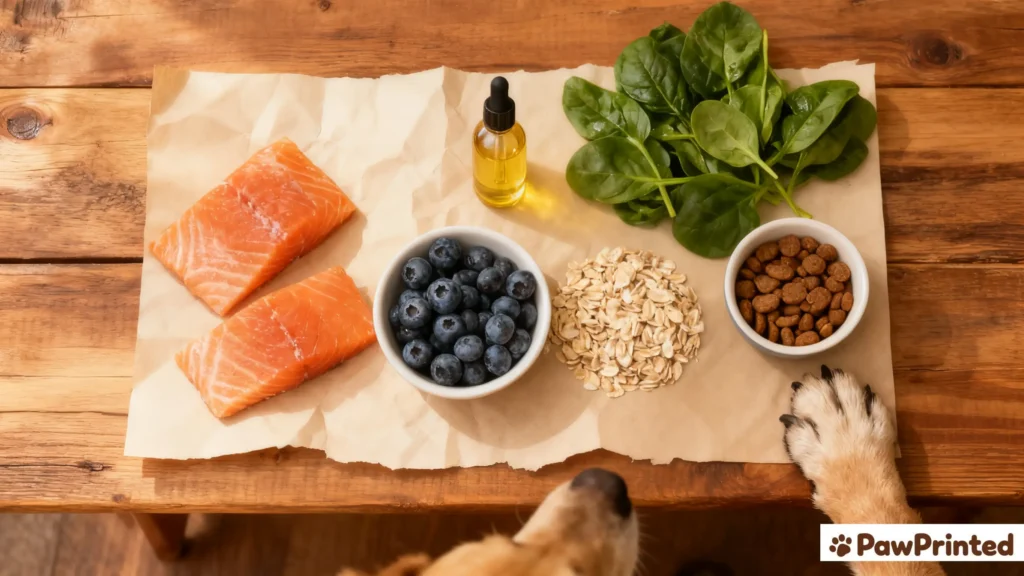
Antioxidant-rich add-ins (like blueberries or spinach) complement salmon’s fats to support skin and immune resilience. For an easy kitchen example, see our salmon & blueberries recipe that’s gentle on digestion.
Bottom line: Salmon combines complete protein, anti-inflammatory omega-3s, and practical micronutrients — a trio many vets rely on for skin, coat, joint comfort, and overall vitality.
How to Safely Feed Salmon to Your Dog
Cook It Thoroughly — Never Raw
Raw salmon may contain parasites such as *Neorickettsia helminthoeca*, which can cause severe illness in dogs. Always cook salmon until it’s fully opaque and flakes easily. Avoid smoked or cured salmon, which often contains excess salt.
Remove All Bones Before Serving
Even tiny pin bones can lodge in a dog’s throat or digestive tract. Before mixing salmon into your dog’s bowl, double-check for bones and discard the skin if it’s oily or seasoned. Proper prep makes this protein both safe and enjoyable.
Keep Portions Balanced
Vets recommend that fish-based meals make up about 20–25% of a balanced weekly rotation. Pair salmon with fiber-rich carbs and cooked vegetables for complete nutrition. For a practical ratio, check our homemade salmon dog food guide.
Introduce It Gradually
Switching proteins too fast can upset digestion. Start with small spoonfuls mixed into your dog’s usual food and increase gradually over five to seven days. For easy starter inspiration, try our vet-approved salmon & rice recipe.
Vet’s Tip: Keep seasoning off the table — no salt, garlic, onion, or butter. A drizzle of plain fish oil or water is all you need for flavor and shine.
Selecting Quality Salmon Dog Food & Ingredients Checklist
Wild-Caught vs. Farm-Raised Salmon
Wild-caught salmon usually has a cleaner omega-3 to omega-6 ratio and fewer contaminants, but sustainable farmed sources can also be safe if properly certified. Look for traceable origin on the label — transparency is key to trust.
Ingredient Label Clarity
Always ensure “salmon” or “salmon meal” is listed as the first ingredient. Avoid vague terms like “fish by-product.” If the label includes natural preservatives such as mixed tocopherols, that’s a good sign of freshness and quality control.
Balanced Formulas with Gentle Carbs
Salmon pairs well with brown rice, oats, or sweet potato. Formulas with balanced fiber help stabilize digestion and improve stool consistency. See our salmon-for-sensitive-stomach article for vet-approved options.
Third-Party Testing & Vet Endorsement
Choose brands that share independent lab results and follow AAFCO nutritional standards. Avoid mystery sources or imported blends with unclear fish meal origins. For reference, our Best Salmon Dog Food Guide highlights trusted vet-endorsed options.
Bottom line: Read labels like you’re shopping for yourself — clear sourcing, balanced nutrients, and transparency always matter more than flashy marketing claims.
Risks & Veterinary Warnings — When Salmon May Not Be Ideal
Parasites and Raw Salmon Illness
Raw salmon can carry Neorickettsia helminthoeca, the bacterium responsible for salmon poisoning disease. Symptoms include vomiting, fever, and loss of appetite. Always cook salmon thoroughly — this simple step prevents nearly all known risks.
Heavy Metals and Contaminants
Salmon from polluted waters may accumulate mercury or PCBs over time. Reputable pet food brands routinely test their batches, but if you’re buying fresh fish, choose sources known for sustainability and clean water. Rotating proteins also reduces risk.
Fat Content and Pancreatic Sensitivity
Although salmon’s fats are healthy, they’re still rich. Dogs prone to pancreatitis or weight gain should consume smaller portions or alternate with leaner proteins like white fish or turkey. For allergy-friendly alternatives, see our limited-ingredient salmon guide.
Allergic Reactions or Intolerances
Even healthy proteins can trigger food allergies in rare cases. Watch for ear scratching, paw licking, or chronic gas after switching to salmon-based food. If symptoms appear, try a grain-free salmon option or rotate back to your previous base protein under vet supervision.
Vet’s Reminder: Most issues arise from overfeeding or poor sourcing — not from salmon itself. Balance, moderation, and proper cooking go a long way toward keeping your pup safe and thriving.
Portion, Frequency & Feeding Guide for Salmon
Start with 2–3% of Body Weight
Most vets suggest feeding around 2–3% of your dog’s body weight daily, split into two meals. For example, a 25 lb dog may begin with roughly 8 oz of total food per day. Always adjust portions according to activity level and stool quality.
Rotate Proteins Weekly
To prevent nutrient gaps and flavor fatigue, alternate salmon with other proteins such as chicken, turkey, or lamb. Variety also minimizes potential allergies. See our salmon vs chicken comparison for rotation ideas and digestion insights.
Mix with Gentle Carbs and Greens
For balanced nutrition, blend salmon with plain rice, oats, or lightly steamed vegetables. This supports digestion and keeps energy steady throughout the day. Dogs with touchy stomachs often do well with cooked oatmeal or pumpkin as gentle binders.
Safe Storage & Leftovers
Refrigerate cooked salmon meals in airtight containers for up to three days, or freeze portions for longer use. Always thaw in the refrigerator, never at room temperature. For homemade prep methods, check our homemade salmon dog food guide.
Feeding Insight: Gentle transitions and small, consistent servings make all the difference — salmon’s benefits show best when it becomes part of a balanced weekly plan, not a one-time trial.

What Worked for Ethan — A Real-World Example
The Switch to Salmon
When Ethan first tried salmon, I introduced it slowly — one spoonful mixed into his usual food. Within a week, his coat began to regain that soft gloss and his energy level steadied through the afternoons. The mild flavor made it easy to transition.
Visible Coat & Skin Improvement
After about three weeks, his shedding eased noticeably. The dry patches around his tail disappeared, and brushing became easier. That’s when I realized how much omega-3s truly help in daily maintenance — not just during shedding season.
Better Digestion and Appetite
His stool firmed up and his appetite balanced — no more overeating out of boredom. The gentle fat content in salmon supported smooth digestion and kept his metabolism steady even on slow days at home.
Our Go-To Vet-Approved Choices
When I’m not cooking fresh salmon meals, I rotate between trusted commercial options that Ethan enjoys. If you’re curious about safe, balanced picks, you can explore them in our Best Salmon Dog Food Guide for detailed comparisons and vet reviews.
Note: Every dog responds differently. Start with small servings, record weekly observations, and work with your vet to fine-tune the diet. Real improvement shows over weeks, not days — just like it did for Ethan.

FAQ — Common Questions About Salmon for Dogs
Can dogs eat salmon every day?
In moderation, yes. Salmon is a clean, lean protein, but it’s best rotated with other meats to avoid nutrient imbalance. Feeding it daily in small portions is safe if the recipe is complete and balanced. Over time, mixing with other proteins like turkey or lamb keeps meals diverse and nutritionally steady.
Is raw salmon safe for dogs?
No. Raw or undercooked salmon may contain parasites that can cause serious illness. Always cook salmon thoroughly and skip smoked, salted, or seasoned fish. Cooking eliminates bacteria and preserves digestibility while keeping omega-3s intact.
Can salmon help with a dog’s itchy skin?
Yes, omega-3 fatty acids in salmon can reduce inflammation and dryness that cause itchiness. Many vets use salmon diets to help dogs with seasonal allergies or dull coats. Results are gradual — typically visible within 3–4 weeks of consistent feeding.
Is salmon better than chicken for dogs?
It depends on your dog’s needs. Salmon offers higher omega-3s and gentler digestibility, while chicken provides lean protein and easier availability. Dogs with sensitive stomachs or dry skin often do better on salmon-based meals, but rotation between both works well for most pups.
How much cooked salmon can a dog have?
Vets generally suggest about 2–3% of your dog’s body weight in total food daily, with salmon making up part of that. For example, a 25-pound dog can have 2–3 oz of cooked salmon per meal, balanced with grains or vegetables. Always start small and monitor your dog’s digestion and stool consistency.
Wrapping It Up — Final Thoughts
Salmon stands out as one of the most balanced proteins you can offer your dog — rich in omega-3s, gentle on digestion, and supportive of skin, coat, and heart health. When prepared safely and rotated wisely, it can bring long-term improvements you’ll notice in both mood and mobility.
Still, even the best foods depend on moderation and observation. Work with your vet to decide how often salmon should appear in your dog’s bowl, and pay attention to portion size, sourcing, and freshness. A little consistency goes a long way toward sustainable wellness.
If you don’t want to cook daily, check our dry food picks — those were Ethan’s daily backups.
Want to keep learning? Explore our latest salmon-focused guides and recipes below — all vet reviewed, dog tested, and Emma approved.
Explore More — Keep Learning & Discover More Salmon Guides
References — Authoritative Sources
- AKC — Can Dogs Eat Salmon?
- PetMD — Is Salmon Good for Dogs?
- Tufts Vet Nutrition — Safe Fish Options for Dogs
- FDA — Pet Food Safety: Fish and Seafood
Note: The links above direct you to authoritative veterinary and scientific resources that support this article’s key points. We recommend reading them if you’d like to confirm nutrient data or explore fish-based feeding guidelines from trusted experts.
Homemade Salmon Dog Food Recipes (Vet Approved Series)
Explore our complete collection of vet-approved salmon dog food recipes — each designed for a different need: from gentle digestion to high-protein recovery. These meals are wholesome, easy to prepare, and Ethan-tested for flavor and health.
- 🐟 Salmon Dog Food Recipe (Rice & Peas, Vet Approved) — A classic gentle bowl for sensitive stomachs.
- 🥔 Salmon & Sweet Potato Dog Food Recipe (Easy & Nutritious) — Rich in vitamins and natural fiber.
- 🎃 Salmon & Pumpkin Dog Food Recipe (Gentle Digestion) — The go-to recipe for calm digestion and hydration.
- 🌾 Salmon & Oats Dog Food Recipe (Healthy & Filling) — A cozy, fiber-rich mix for steady energy.
- 🍚 Salmon & Quinoa Dog Food Recipe (Protein Boost) — High-protein and balanced with omega support.
- 🌿 Salmon & Spinach Dog Food Recipe (Omega-3 & Iron Boost) — For glossy coats and strong muscles.
- 🥣 Salmon & Lentils Dog Food Recipe (Fiber & Protein Blend) — Gentle on digestion, rich in texture.
- 🫐 Salmon & Blueberries Dog Food Recipe (Antioxidant Rich) — Boosts immunity with antioxidant power.