When Ethan first started shedding more during spring, our vet suggested adding iron and omega-3–rich foods into his meals. That led to this simple homemade Salmon & Spinach Dog Food Recipe — a nourishing, protein-forward bowl that supports coat shine, joint comfort, and steady energy throughout the day. It’s gentle enough for sensitive stomachs, yet hearty enough for active pups.
This recipe follows the same nutritional balance found in our other fish-based meals, like the Salmon & Oats Dog Food Recipe, but with an extra mineral boost from spinach. It’s easy to cook, easy to store, and most importantly — Ethan finishes every bite.
Before we dive into ingredients, if you’re wondering whether salmon is really safe and beneficial for dogs, our vet-approved guide explains why it’s one of the best lean proteins you can use at home.
Next: we’ll look at why salmon and spinach work so well together — and how this combination supports your dog’s overall health.
Why Salmon & Spinach Work So Well Together
Salmon brings premium animal protein and natural omega-3 fatty acids that strengthen muscles, nourish the skin, and promote a glossy coat. Spinach adds iron, magnesium, and antioxidants that support blood circulation, metabolism, and long-term vitality. Together, they form one of the cleanest, most balanced bases for homemade dog meals.
Our vet often compares this pairing to a “light performance diet” — protein-rich yet soothing for sensitive stomachs. It’s a great option for dogs that need extra energy without the heaviness of red meats.
If you’ve ever wondered whether spinach is actually safe for dogs, the short answer is yes — in moderation and cooked gently. It provides trace minerals and fiber that support healthy digestion, especially when combined with omega-rich fish.
Protein Synergy
Salmon: Complete amino acid profile for lean muscle.
Spinach: Plant-based support for cellular health.
Benefit: Builds stamina and aids muscle recovery naturally.
Omega-3 & Iron Balance
Salmon: EPA and DHA reduce inflammation.
Spinach: Iron improves blood oxygenation.
Benefit: Keeps coat shiny and boosts daily energy.
Digestive Comfort
Salmon: Gentle, anti-inflammatory protein.
Spinach: Fiber stabilizes digestion.
Benefit: Supports gut health and consistent stools.
Low Glycemic Index
Salmon: Naturally low-carb, high-protein base.
Spinach: Adds slow-release micronutrients.
Benefit: Helps maintain steady blood sugar.
Next: let’s prepare your ingredient list — and see how each element supports omega-3 balance and iron intake.
Ingredients You’ll Need
This homemade Salmon & Spinach Dog Food Recipe uses clean, everyday ingredients — each one carefully chosen to support omega-3 health, iron balance, and gentle digestion. You can easily scale portions based on your pup’s weight and daily activity.
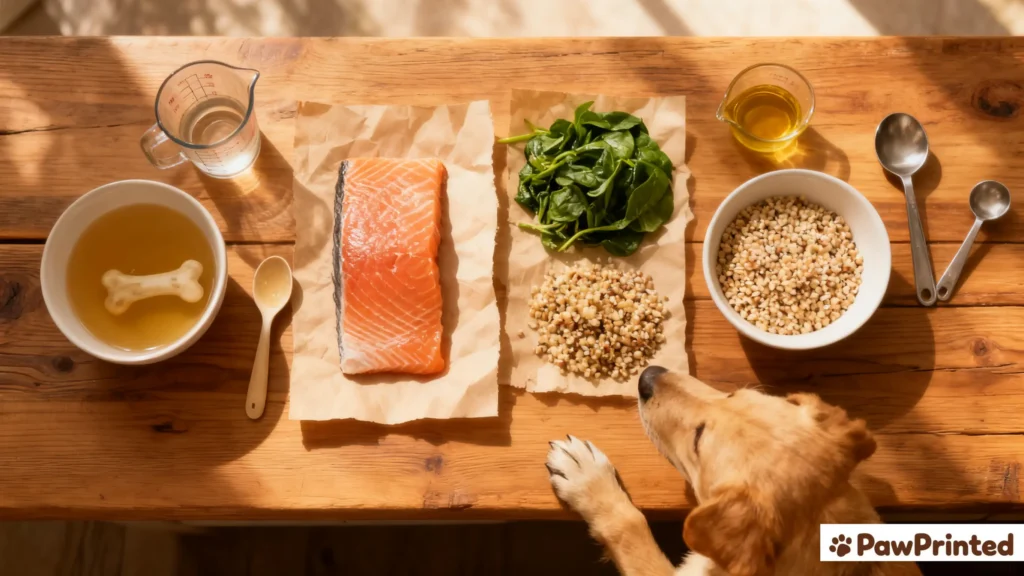
Fresh Salmon — 1 lb (boneless, skinless)
The heart of this recipe — a rich, omega-packed protein source that supports skin, coat, and joint health. For busy weeks, I keep a small bag of Purina Pro Plan Salmon on hand — it matches the same protein quality and digestibility as fresh fish.
Fresh Spinach — ½ cup (lightly steamed, chopped)
Iron-rich and full of antioxidants that support blood and muscle health. Steam lightly to soften fibers and enhance nutrient absorption. When Ethan was recovering from mild anemia, this became his daily green boost.
Quinoa or Sweet Potato — ½ cup (cooked soft)
Provides steady carbohydrates and fiber. For extra variety, rotate with Wellness CORE Salmon — its complex carb blend mimics quinoa’s digestibility for long-term balance.
Olive Oil or Fish Oil — 1 tsp
A drizzle of healthy fats nourishes skin and joints while improving nutrient absorption. On rotation weeks, I use Natural Balance Salmon as a balanced fallback — it includes added omegas for coat shine.
Unsalted Bone Broth or Water — ¼ cup
Keeps the mixture moist and flavorful while adding gentle hydration. Always cool before serving to protect sensitive stomachs.
Optional Treat — For Rewards & Training
Ethan’s absolute favorite topper is Zignature Salmon — crunchy, single-source protein bites that make excellent training rewards between meals. You can also pair this recipe with Purina Sensitive Skin & Stomach Salmon for extra digestive support.
Next: let’s walk through the step-by-step cooking guide — keeping proteins intact and textures pup-approved.
Step-by-Step Cooking Guide
Follow these gentle steps to keep proteins intact and textures pup-friendly. Let the food cool fully before serving, and scale portions to your dog’s size and daily activity.
1) Rinse & Cook the Base
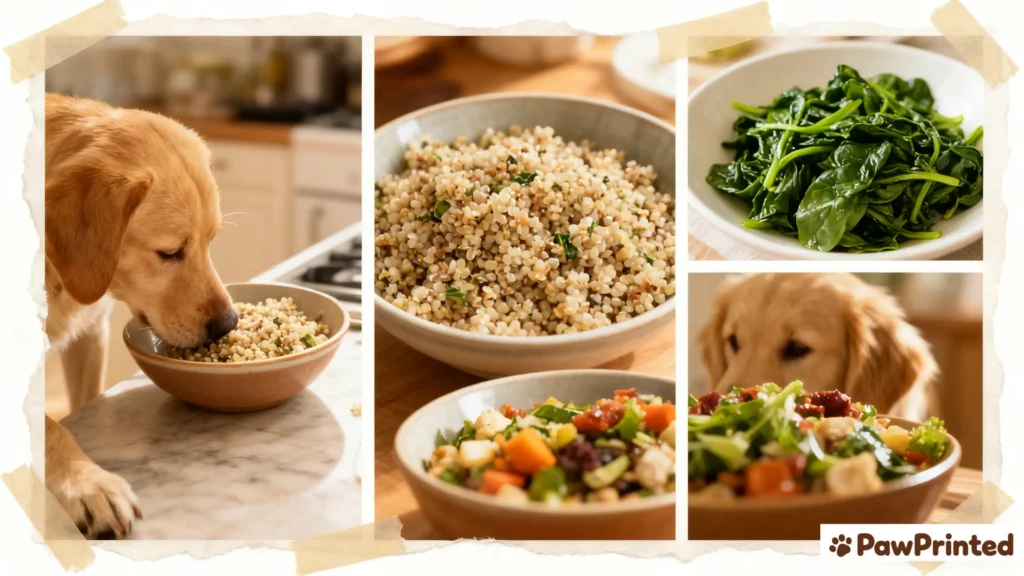
Rinse quinoa thoroughly (30–60s) to remove saponins; cook in unsalted water or bone broth until soft and fluffy. If you prefer a fiber-forward texture, see our Salmon & Oats version.
2) Cook the Salmon (No Salt)
Steam or bake boneless, skinless salmon until just cooked through; flake gently and check for pin bones. Avoid salt, garlic, or onion. On ultra-busy mornings, I do half homemade + half Purina Pro Plan Salmon to keep protein levels steady.
3) Lightly Steam the Spinach
Steam until bright green and tender, then chop finely. This reduces oxalates and improves iron absorption. For iron-rich alternatives, rotate in lentils as shown in our Salmon & Lentils recipe.
4) Combine & Hydrate
In a bowl, fold salmon + quinoa (or oats) + spinach together. Add a splash of warm unsalted broth to bind. Finish with 1 tsp olive or fish oil; fold—don’t mash—to keep texture appealing.
5) Cool, Portion, Store
Cool to room temperature. Serve about 1 cup per 20 lb body weight/day, split into two meals. Refrigerate up to 3 days or freeze portions up to 2 weeks. Label dates for easy rotation.
6) Serve & Rotate (Optional)
Start at 25% homemade and increase over 3–5 days. For sensitive tummies, rotate with Purina Sensitive Salmon; for extra omega-3 shine weeks, a few bites of Wellness CORE Salmon & Spinach blend in seamlessly.
Next: check the nutrition snapshot & vet insights to fine-tune portions with confidence.
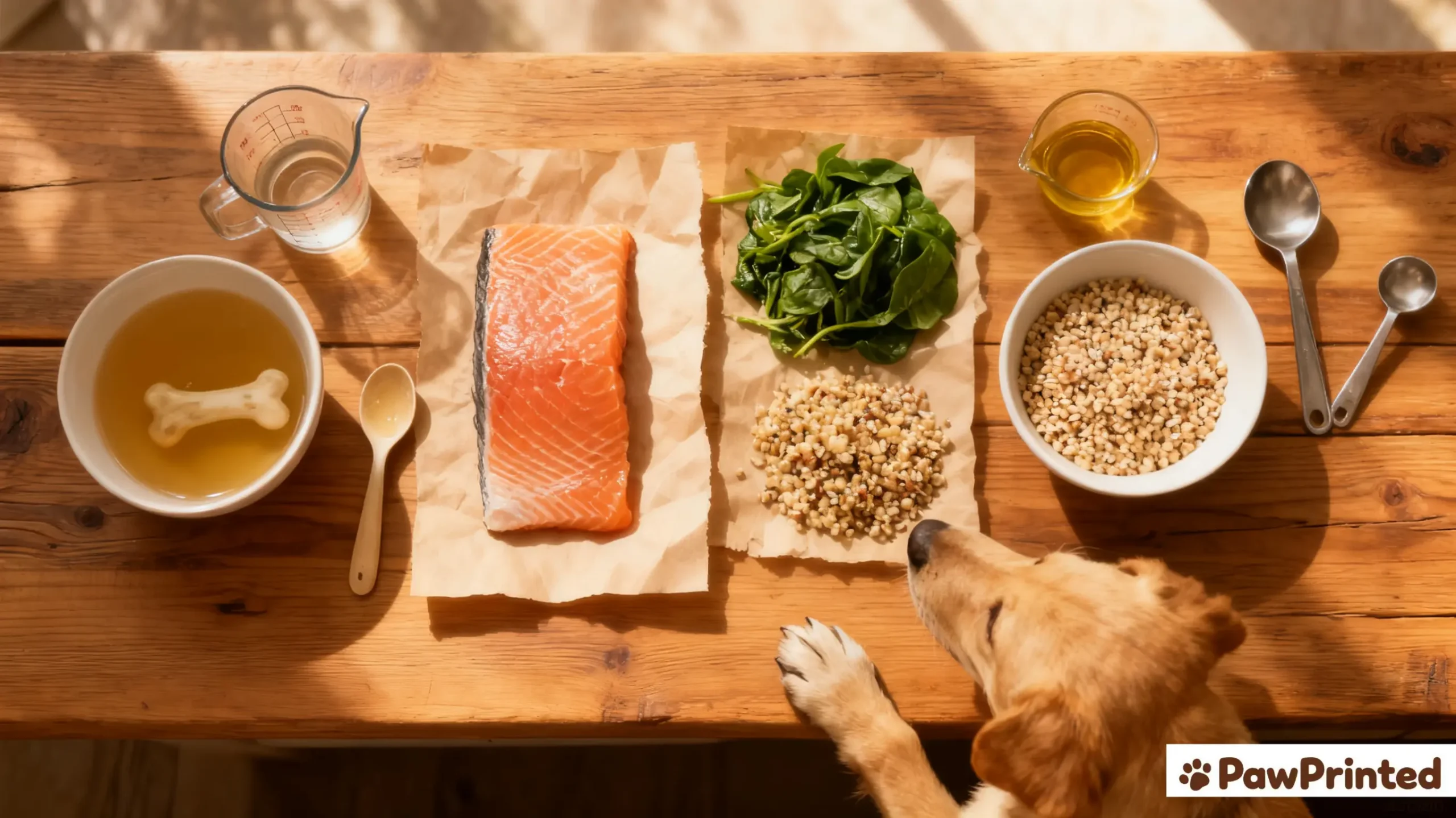
Salmon and Spinach Dog Food Recipe (Omega 3 and Iron Boost)
- Medium pot for quinoa
- Steamer or baking tray for salmon
- – Mixing bowl
- Measuring cups & spoons
- Airtight glass containers for storage
- 1 lb boneless skinless salmon fillet cooked and flaked
- ½ cup cooked quinoa rinsed thoroughly before cooking
- ¼ –½ cup spinach lightly steamed and finely chopped
- 1 tsp olive oil or fish oil
- ¼ cup unsalted bone broth or water
- Optional Treat: small portion of salmon freeze-dried treats
- Rinse & Cook Quinoa:
- Rinse quinoa under cold water for 30–60 seconds to remove bitterness.
- Cook in water or bone broth until soft and fluffy. Set aside to cool.
- Cook the Salmon:
- Steam or bake salmon until fully cooked through.
- Remove any skin and bones, then flake into small pieces suitable for your dog’s size.
- Steam the Spinach:
- Lightly steam spinach until tender, then finely chop for better digestion and nutrient absorption.
- Combine & Mix:
- In a bowl, combine salmon, quinoa, and spinach.
- Add bone broth and drizzle olive or fish oil. Fold gently to combine — avoid mashing.
- Cool & Serve:
- Allow the mixture to cool completely.
- Portion into daily servings, refrigerate up to 3 days or freeze for 2 weeks.
• Always cool before serving and adjust portions to your dog’s weight.
• You can rotate this recipe with dry foods such as Purina Pro Plan Salmon or Wellness CORE Salmon for variety.
• If you don’t want to cook daily, check our dry food picks — those were Ethan’s daily backups.
Nutritional Data & Vet Insights
This Salmon & Spinach Dog Food Recipe provides a steady mix of high-quality protein, omega-3 fats, and iron-rich greens — perfect for dogs who need energy, recovery support, or skin nourishment. It mimics the nutrient ratios of many vet-approved sensitive stomach diets, while keeping ingredients completely natural.
Protein — ~30%
Salmon delivers a complete amino acid profile that supports lean muscle, coat repair, and immune strength. For rotation weeks, Wellness CORE Salmon maintains similar protein density and digestibility.
Fat — ~10%
Healthy fats from salmon and fish oil promote skin elasticity and nutrient absorption. If your pup needs a moderate-fat formula, consider Natural Balance Salmon & Sweet Potato — its omega-3 profile complements homemade batches well.
Fiber — ~4%
Balanced fiber supports healthy digestion and firm stools. Spinach and quinoa work together to regulate gut flora without heaviness. You can also explore our Digestive Dog Food Guide for more fiber-friendly meal ideas.
Calories — ~320 kcal per cup
Moderate calorie density makes it easy to adjust for activity levels. On training days, I add a small handful of Zignature Salmon bites as toppers — they boost protein without upsetting digestion.
Omega-3 (EPA/DHA) — ~0.8%
Essential for skin health, inflammation control, and cognitive function. Dogs with itchy or dry skin may benefit from rotating with Purina Sensitive Skin & Stomach Salmon, which maintains consistent omega ratios year-round.
Next: explore our Vet Tips & Variations for customizing portions by age, energy, and sensitivity.
Vet Tips & Variations
Every dog’s body and energy needs differ — even between siblings. Here’s how I fine-tune our Salmon & Spinach Dog Food Recipe based on vet guidance and Ethan’s own taste tests. These small changes help you personalize meals for weight control, digestion, skin support, or senior health.
For Gentle Digestion
Replace quinoa with soft pumpkin or mashed sweet potato to reduce fiber density while keeping energy stable. During Ethan’s mild stomach flare-ups, we used our Salmon & Pumpkin Recipe — gentle, balanced, and vet-approved. For easy rotation, Purina Sensitive Skin & Stomach Salmon keeps digestion smooth without sacrificing protein.
For Weight Control
Reduce oil by half and use steamed white fish or turkey instead of full-fat salmon. Our vet also recommends rotating with Natural Balance Salmon & Sweet Potato for a lower-calorie, balanced fallback. You can also explore our Low Fat Dog Food Recipe (Turkey & Pumpkin) for lighter weeks.
For Allergy-Prone Dogs
Stick to single-source proteins and avoid chicken-based oils or additives. Zignature Salmon L.I.D. offers a simple grain-free rotation that fits most allergy management plans. For homemade control, start with our 8 Vet-Approved Salmon Recipes.
For Senior Dogs
Seniors benefit from extra moisture and soft textures. Add 2–3 tablespoons of warm broth and a sprinkle of ground flaxseed for omega-3 support. Rotate with Wellness CORE Salmon for consistent protein while easing digestion. Learn more in our Senior Dog Food Guide.
For Active or Working Dogs
Double the salmon portion and add an extra teaspoon of fish oil after cooling. This increases calorie density and post-exercise recovery. On Ethan’s long play days, I top his bowl with a handful of Purina Pro Plan Salmon for slow-release energy and steady muscle maintenance.
Next: let’s cover serving & storage ideas — so your prep stays fresh and stress-free.
Serving Ideas & Storage
Portion consistently, keep textures soft, and rotate smartly. The tips below help you serve this Salmon & Spinach Dog Food safely every day — whether you’re feeding fresh, mixing with kibble, or stocking the freezer for busy weeks.
Portion Guide
Start with ~1 cup per 20 lb body weight/day, split into two meals. Adjust +/−10% based on activity, age, and body condition. Track weight and stool quality weekly to fine-tune.
Mix with Kibble (Daily Balance)
On busy mornings, a 50/50 bowl keeps macros steady: half homemade + half Purina Pro Plan Salmon & Rice. For extra coat support weeks, rotate to Wellness CORE Salmon & Spinach.
Gentle Stomach Days
Lower the oil slightly, add a splash of warm broth, and go 25% homemade → 50% → 75% → 100% over 3–5 days. If sensitivity flares, switch the dry half to Purina Sensitive Skin & Stomach (Salmon).
Storage & Freezer Prep
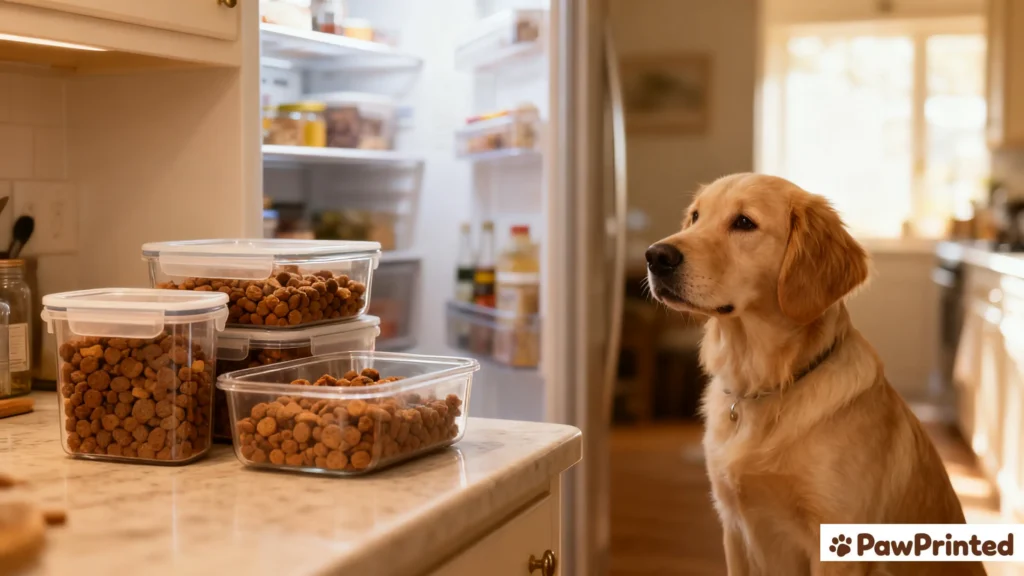
Refrigerate in airtight containers up to 3 days. Freeze flat in portioned bags up to 2 weeks. Thaw overnight in the fridge; never at room temp. Label dates and weights for consistent feeding.
Refresh & Toppers
Reheat gently with a spoon of warm unsalted broth. For picky days, crumble a few bites of Zignature Salmon (L.I.D.) or mix in a small scoop of Natural Balance Salmon & Sweet Potato for aroma and texture.
Meal Planning Help
New to batching and rotation? See our Homemade Salmon Dog Food Guide for batch sizes, freezer charts, and transition timelines.
Next: see what worked for Ethan — the salmon formulas that matched this homemade bowl best.

What Worked for Ethan
After months of testing salmon-based meals — from homemade bowls to premium dry options — Ethan showed us what really works. His coat stayed shiny, digestion stayed calm, and his energy didn’t dip once. Below are the five salmon formulas that matched our homemade balance most closely, perfect for busy days or backup rotations when you can’t cook.
Purina Pro Plan Adult Salmon & Rice
Ethan’s weekday go-to. It keeps his coat smooth and his digestion balanced with probiotics and a lean omega blend. I often use it as a 50/50 mix with our homemade salmon meals when we’re short on prep time.
Purina Sensitive Skin & Stomach (Salmon)
The gentlest dry formula we’ve found. It’s rich in omega-3 and fortified with prebiotics — perfect for dogs prone to bloating or soft stools. This one helped Ethan recover after his sensitive stomach phase.
Wellness CORE High Protein Salmon
A muscle-supporting formula ideal for active dogs. High in clean protein, moderate in fat, and completely grain-free. I rotate this in during Ethan’s training weeks for extra recovery support.
Natural Balance Salmon & Sweet Potato
Perfect for light meals or weight management phases. Its gentle carbs and single-protein focus help keep calories balanced without losing flavor. Ethan loves it as a topper or light lunch option.
Zignature Salmon Limited Ingredient Formula
Simple, allergy-friendly, and nutrient-dense. It uses salmon as the only protein source and skips grains, soy, and fillers. I recommend this one for pups managing food sensitivities or seasonal itch.
Next up: Frequently Asked Questions for vet guidance and ingredient tips — including how often dogs can safely eat salmon.
Frequently Asked Questions
Is spinach safe for dogs?
Yes — in small, cooked portions, spinach is completely safe for dogs. It provides natural iron, magnesium, and antioxidants that support blood health and energy. Always steam or lightly cook it to reduce oxalate content, which can stress kidneys if fed raw in large quantities. Avoid adding salt or oil, and serve as part of a balanced meal plan rather than a daily staple.
Can dogs eat salmon and spinach together?
Absolutely. Salmon and spinach form a nutrient-dense, balanced pairing for dogs. Salmon adds omega-3s for coat and joint health, while spinach contributes fiber and vitamins that improve metabolism. When cooked gently and portioned correctly, this combination supports muscle tone and digestion without adding excess fat.
How often can I feed salmon to my dog?
Two to three times per week is ideal for most dogs. Salmon is rich in healthy fats but should be balanced with lean proteins or moderate-fat meals on other days. Ensure the salmon is fully cooked, boneless, and free from seasoning. Avoid raw or smoked salmon, which can contain parasites or excess sodium.
Is quinoa or rice better with salmon recipes?
Both are fine choices, but quinoa offers higher protein and fiber, while rice is gentler for sensitive digestion. For active dogs, quinoa helps maintain steady energy. For those with mild stomach issues, white rice is often easier to process. The key is consistency — once you find the right balance, stick to the same ratio for smoother digestion.
Can I freeze homemade salmon dog food?
Yes, freezing is a safe and practical way to extend freshness. Divide cooked portions into airtight containers or freezer bags, label the date, and store for up to two weeks. Thaw in the refrigerator overnight before serving. Avoid reheating in the microwave, which can create hot spots — gently warm with broth if needed.
Wrapping It Up
This Salmon & Spinach Dog Food Recipe hits the sweet spot we want for Ethan: clean protein, steady iron, and omega-3s that keep his coat glossy and joints comfortable — without upsetting his stomach. It’s simple to batch, easy to freeze, and flexible enough to rotate through the year.
On the weeks we can’t cook, our backup rotation keeps the same balance: a half-and-half bowl with Purina Pro Plan Salmon & Rice or a full dry day using Purina Sensitive Skin & Stomach (Salmon). For higher protein training phases, we lean on Wellness CORE Salmon; for lighter-carb days or picky appetites, a scoop of Natural Balance Salmon & Sweet Potato or a handful of Zignature Salmon (L.I.D.) refreshes texture and aroma.
Want more salmon ideas or need a gentle rotation plan? Explore below.
Further Reading (External Sources)
These resources provide additional insight into canine nutrition, fish-based proteins, and safe vegetable inclusion. They’ve been carefully selected from trusted veterinary and academic sources for those who want to go deeper.
- PetMD — Is Salmon Good for Dogs?
- American Kennel Club — Can Dogs Eat Spinach?
- Tufts Veterinary Nutrition — The Truth About Homemade Diets
- U.S. FDA — Feeding Your Dog a Complete and Balanced Diet
Note: We only reference educational, science-backed materials from licensed veterinarians or established institutions. These links are non-affiliate and provided for informational context only.
Homemade Salmon Dog Food Recipes (Vet Approved Series)
Explore our complete collection of vet-approved salmon dog food recipes — each designed for a different need: from gentle digestion to high-protein recovery. These meals are wholesome, easy to prepare, and Ethan-tested for flavor and health.
- 🐟 Salmon Dog Food Recipe (Rice & Peas, Vet Approved) — A classic gentle bowl for sensitive stomachs.
- 🥔 Salmon & Sweet Potato Dog Food Recipe (Easy & Nutritious) — Rich in vitamins and natural fiber.
- 🎃 Salmon & Pumpkin Dog Food Recipe (Gentle Digestion) — The go-to recipe for calm digestion and hydration.
- 🌾 Salmon & Oats Dog Food Recipe (Healthy & Filling) — A cozy, fiber-rich mix for steady energy.
- 🍚 Salmon & Quinoa Dog Food Recipe (Protein Boost) — High-protein and balanced with omega support.
- 🌿 Salmon & Spinach Dog Food Recipe (Omega-3 & Iron Boost) — For glossy coats and strong muscles.
- 🥣 Salmon & Lentils Dog Food Recipe (Fiber & Protein Blend) — Gentle on digestion, rich in texture.
- 🫐 Salmon & Blueberries Dog Food Recipe (Antioxidant Rich) — Boosts immunity with antioxidant power.