Some treats make tails wag — others make skin itch. When Ethan started reacting to almost every “good boy” snack, I realized how tricky allergies can be. Even the tiniest bite could mean endless scratching and sleepless nights.
After months of vet visits, food logs, and testing every gentle snack I could find, we finally built a list that actually worked — best hypoallergenic dog treats that were safe, tasty, and perfect for training without flare-ups. These treats helped Ethan enjoy his rewards again and made me feel confident about every bite.
In this guide, I’ll share what makes a treat truly hypoallergenic, our vet-approved gentle options for sensitive pups, and how to use them smartly during training. Whether you’re cooking at home or shopping on Amazon, this is your allergy-safe roadmap to happier, itch-free rewards.
Warm Intro — Ethan’s Story & The Treat Struggle
When Ethan first started itching after every “good boy” moment, I thought it was just a seasonal allergy. But the more treats we tried, the worse it got — red paws, belly rashes, and those heartbreaking 2 a.m. scratching fits. Suddenly, reward time wasn’t fun anymore; it was a guessing game of what would cause the next flare-up.
So I went on a mission. I read labels, called our vet, and tested every brand that claimed to be “gentle.” Most failed. A few passed. And one quiet evening, Ethan finally sat patiently beside me, tail wagging, enjoying a snack that didn’t make him miserable. That was the moment I knew we’d found something real — the best hypoallergenic dog treats that could bring back joy without the itch.
In this guide, you’ll find our vet-approved gentle options for sensitive dogs, plus smart ways to use these allergy-friendly training treats so you can keep tails wagging safely every day. If you’ve ever struggled to balance love, food, and health — Ethan and I have been there, and this list is made for you.

What Makes a Dog Treat “Hypoallergenic”?
A truly hypoallergenic dog treat is designed to calm the immune system instead of triggering it. That means fewer ingredients, cleaner labels, and proteins your dog’s body doesn’t recognize as “trouble.” These formulas skip the usual suspects — chicken, beef, dairy, soy, or wheat — and rely on limited-ingredient recipes built for sensitive pups.
Some use novel proteins like duck, fish, or venison, which are gentler for dogs who’ve reacted to common meats. Others rely on hydrolyzed protein — a scientific approach that breaks protein into smaller pieces so the immune system won’t overreact. Both paths aim for the same goal: a treat that feels like comfort, not a risk.
Tip: When starting an allergy-friendly diet, introduce one treat at a time and track your dog’s response for at least 7–10 days. Mix gentle rewards with balanced meals — see our healthy dog treats guide to keep nutrition consistent.
If you’re unsure what’s causing your dog’s reaction, your vet can recommend a supervised elimination trial. It’s not the fastest route, but it’s the one that finally gave Ethan relief — and taught us that “simple” really is the secret to allergy-friendly training treats .
How We Tested (Emma & Ethan’s Routine)
Finding gentle treats wasn’t a one-week project — it was months of watching, logging, and waiting. I worked with our vet to test small batches of hypoallergenic dog treats in real life, using Ethan’s regular training sessions as our testing ground. Each treat had to pass his approval and his stomach’s test — in that order.
Our routine was simple but strict: one new treat per week, small portions only, and close observation for any sign of itch or redness. Every brand went through the same checklist:
- Ingredient clarity — Could I pronounce every item on the label?
- Protein source — Was it single or hydrolyzed? No hidden “meat meals.”
- Texture & training use — Did it crumble cleanly in hand and keep Ethan focused?
- Vet-approved balance — Does it fit within his prescribed allergy diet plan?
After weeks of trial and error (and lots of sniffing), only five treats made the cut — gentle on skin, good for the gut, and happy-tail approved. You’ll find them below, ranked not by brand power, but by how well they worked for one very patient, very deserving dog.
Note: We tested treats alongside Ethan’s prescribed allergy diet under vet supervision. Always consult your vet before changing protein sources or introducing new training treats — even gentle ones.

Our Vet-Approved Top Picks (2025 Edition)
After months of testing, Ethan and I finally found a handful of allergy-friendly options that earned both the vet’s trust and a wagging tail. These aren’t trend snacks — they’re the quiet heroes that passed every test for ingredient purity, digestibility, and training-safe texture. Each one has a small story behind it, but the short version? They worked — gently, consistently, and joyfully.
Below are our top five vet-approved hypoallergenic dog treats for 2025 — from plant-based to postbiotic-boosted — chosen for real results, not just clever packaging.
| Option | Why It Helps | Best For |
|---|---|---|
| Bright Planet Hypoallergenic Treats | Plant-based and eco-friendly with allergy-safe ingredients. No meat proteins, no flare-ups, and a sweet earthy aroma dogs love. | Everyday rewards for dogs reacting to animal proteins. |
| Fabrechew High-Protein Hypoallergenic Treats | High digestibility with clean single-protein nutrition and no grains or fillers — powerful but gentle. | Active pups needing extra protein and stomach comfort. |
| Blue Dog Bakery Natural Softies | Soft-baked texture perfect for sensitive teeth; made with simple ingredients and no artificial colors. | Seniors or dogs with dental issues who still deserve a chewy joy. |
| iPaw Hypoallergenic Training Treats | Low-calorie, bite-size, and easy to carry — ideal for frequent training sessions without upsetting digestion. | Training-focused pups and allergy-sensitive learners. |
| Honest Goodness Postbiotic Treats | Infused with postbiotics and cinnamon to support gut and immune balance; allergy-safe, mildly aromatic, and vet-endorsed. | Dogs with skin irritation or gut sensitivities needing holistic care. |
Each of these treats fits a slightly different lifestyle — from eco-friendly snackers to working-breed trainers — but all share the same promise: clean ingredients, calm skin, and happy tails.
Tip: If your dog’s skin or digestion is extra sensitive, rotate one brand at a time for two weeks before mixing. Gentle consistency often beats variety during allergy management.
Vet’s Insight: “Allergy-safe treats are part of a dog’s healing plan — not a luxury. What you remove from their diet matters as much as what you add.” — Dr. Hayes, DVM (Allergy Care Specialist)

Why Treats Matter for Allergic Dogs
For dogs with allergies, even one bite can make a big difference — for better or worse. Most allergic reactions start quietly inside the body, when the immune system mistakes harmless proteins for invaders. What follows is a wave of inflammation that shows up as red skin, itchy paws, or a gurgly stomach hours later. It’s why your pup might seem fine after a snack… until the scratching starts at midnight.
That’s why treats matter so much in allergy management. They’re small, but they add up — and the wrong ingredient can undo weeks of progress on a special diet. Choosing hypoallergenic dog treats that match your dog’s main food protein keeps their system stable and avoids re-triggering those immune alarms. It’s not about being strict; it’s about being kind to their body’s limits.
When you pick treats with care, you’re not just avoiding flare-ups — you’re building trust. Dogs learn that snack time is safe again, and you can finally reward without worry. It’s one of those quiet wins that means everything. If you’re still unsure what to choose, check our healthy dog treats guide or our full treat overview for more allergy-friendly ideas that pair well with vet diets.
Tip: If your dog’s allergies are unpredictable, stay consistent with one brand and one protein for at least three weeks. Sudden changes can confuse even the best elimination plan — slow and steady works best.
DIY Gentle Option (Quick Recipe)
Not every good treat comes from a bag. When Ethan’s skin needed a break from store-bought snacks, I started baking my own hypoallergenic dog treat recipe — simple, low-stress, and completely under my control. It’s a small act of care that turned into one of our favorite kitchen rituals.
This version uses gentle, vet-approved ingredients that stay friendly to sensitive tummies. It’s soft enough for training, firm enough for storage, and so delicious that Ethan still waits by the oven every time I make a batch.
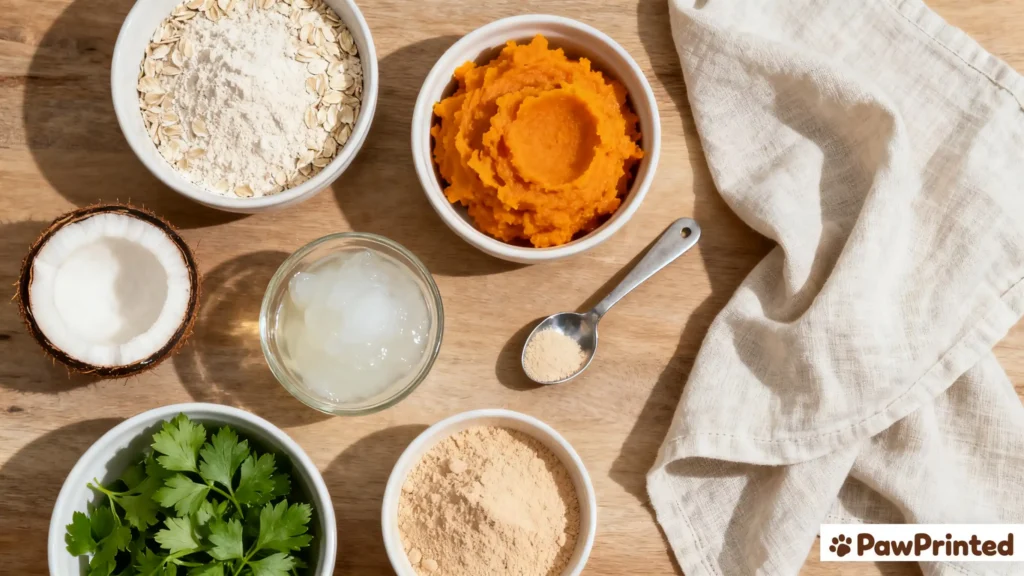
Ingredients (makes about 20 small treats)
- 1 cup oat flour (or finely ground rolled oats)
- ½ cup pumpkin purée
- 2 tablespoons fish-based protein powder (like salmon or whitefish)
- 1 tablespoon coconut oil
- Optional: a sprinkle of parsley for fresh breath
Instructions
- Preheat oven to 325°F (160°C) and line a baking sheet with parchment paper.
- In a mixing bowl, combine oat flour, pumpkin purée, protein powder, and coconut oil. Stir until a soft dough forms.
- Roll out the dough to about ¼ inch thick and cut into small bite-sized pieces.
- Place on the baking sheet and bake for 25–30 minutes until firm and slightly golden.
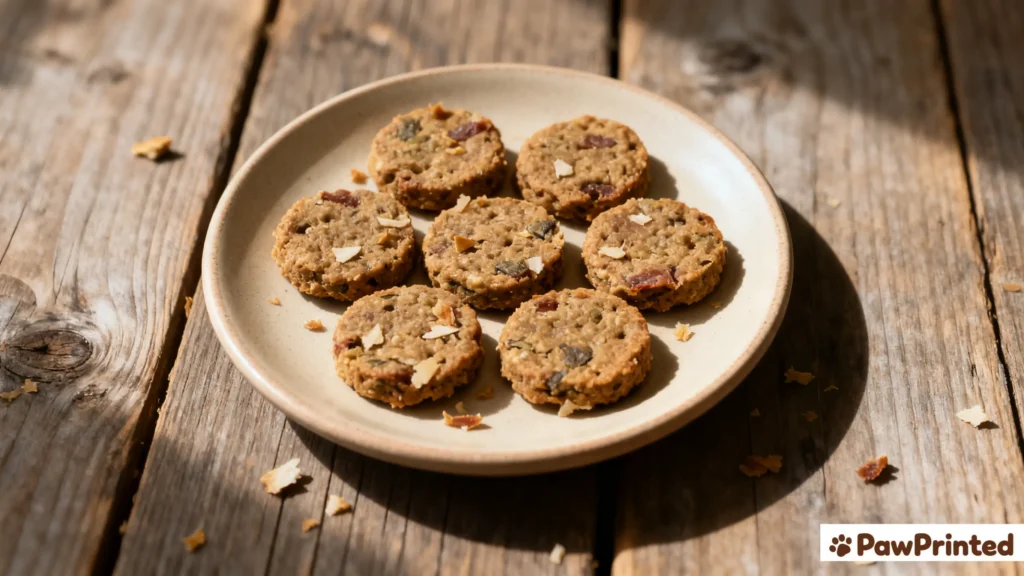
- Let cool completely before serving, and store in an airtight container in the fridge for up to 5 days.
These homemade allergy-friendly dog treats are gentle on digestion and rich in fiber and Omega-3s — great for skin, coat, and gut balance. If your dog tolerates grains, you can also try our Peanut Butter & Oats Treat Recipe for a sweeter variation.
Note: Always introduce homemade recipes gradually and monitor your pup for changes. If you’re unsure about protein sources, ask your vet to confirm ingredient safety for your dog’s allergy plan.
Emma’s Testing Snapshot: Each treat was tested for two full weeks during Ethan’s daily training sessions. I logged reactions, appetite, and focus — and only the brands that passed all three made it here.
How to Use Treats During Training (Without Flare-Ups)
Once we found treats that didn’t make Ethan itchy, training finally became fun again. But for dogs with allergies, even the best treat can backfire if you overuse it. The trick is balance — rewarding progress without overloading their system. Here’s how I built an allergy-safe reward routine that works for sensitive pups.
Step 1: Pre-portion with purpose
Measure out your daily treat allowance in advance and keep it in a small container or pouch. This keeps calories in check and prevents “one more treat” moments. Low-calorie, bite-size rewards like the iPaw Training Treats are perfect for frequent cues without digestive stress.
Step 2: Reward behavior — not habit
Use treats to mark correct behavior right as it happens. Dogs learn faster when timing is perfect. Save verbal praise and affection for the in-between moments, so food remains a focused motivator, not background noise.
Step 3: Keep variety in motivation
Alternate between snacks, kind words, and short play breaks. This builds emotional engagement while reducing the risk of food boredom or calorie overload. Ethan loves mixing a small ball toss between treat rounds — it keeps his tail and his mind moving.
Step 4: One protein at a time
During allergy management, consistency is everything. Stick with a single-protein treat until your dog’s symptoms are stable for at least 2–3 weeks. Sudden changes — even healthy ones — can confuse their immune system. If you’re also watching weight, see our guide on low calorie dog treats for extra balance.
Step 5: End on a positive note
Finish every session with an easy cue your dog already knows — like “sit” or “paw” — and a small, gentle reward. Ending with success builds confidence and trust, turning training into a safe, joyful ritual instead of a calorie-heavy challenge.
Tip: Training isn’t just about obedience — it’s about communication. Using gentle training treats helps your dog associate learning with comfort, not anxiety. For more creative reward ideas, explore our training dog treats recipe that works even for sensitive eaters.
- Bright Planet: Smells earthy but Ethan adored it — perfect for daily low-allergy rewards.
- Fabrechew: The crunch kept him focused during training, no tummy issues after.
- Blue Dog Bakery: Ideal for older pups; soft, mild, and genuinely comforting.
Red Flags — When to Pause a Treat
Even the gentlest snack can be the wrong fit for a particular dog. Allergic reactions don’t always show up right away — sometimes it’s hours, or even the next morning. The key is to watch quietly and consistently. You know your dog’s “normal,” so when that changes, trust your instincts.
Common warning signs include:
- Excessive licking of paws or belly
- New redness around ears or muzzle
- Hives, bumps, or dry flaky skin
- Gas, bloating, vomiting, or soft stool
- Behavioral changes like restlessness or loss of appetite
If you notice any of these signs after introducing a new treat, pause immediately. Go back to your previous safe snack or main diet and allow a few days for the reaction to settle. Then, under your vet’s guidance, reintroduce one ingredient at a time to find the true trigger.
Stop and call your vet if symptoms are severe — persistent scratching, swelling, vomiting, or lethargy can signal a stronger allergic reaction. Quick communication with your vet keeps things from getting worse and helps you fine-tune your dog’s allergy-safe plan.
Allergies can feel like detective work, but you’re not alone. Once you learn your dog’s unique sensitivities, each new snack becomes a safer, happier moment. For gentle alternatives, browse our healthy dog treats guide and hypoallergenic treat recipe — both trusted by Ethan’s tail-wagging approval.
FAQ — Hypoallergenic Dog Treats
The best hypoallergenic dog treats are made with limited, simple ingredients that avoid common triggers like chicken, beef, wheat, and dairy. Look for single or hydrolyzed proteins such as duck, fish, or venison, and skip unnecessary fillers or colorings. Treats labeled as “limited-ingredient” or “veterinary-approved” are safest for dogs with recurring skin or stomach issues. When possible, match your treats’ protein source with your dog’s regular food to keep their system stable.
Yes — as long as the ingredient list stays short and the recipe avoids common allergens. Soft hypoallergenic treats are easier to chew and digest, making them ideal for senior dogs or those with dental sensitivity. Choose grain-free formulas made with pumpkin, oats, or sweet potato. Introduce new treats one at a time and observe your pup’s skin and digestion for a few days before rotating flavors.
Yes — the right hypoallergenic dog treats can reduce inflammation that causes itchy skin. Options enriched with omega-3 fatty acids, probiotics, or postbiotics help balance the skin–gut connection and calm irritation. You can also make gentle homemade treats using oat flour, pumpkin, and coconut oil; they’re soothing, natural, and easy to digest.
Not always. Most dogs tolerate plain peanut butter, but some may still react to additives or flavorings. Always use unsalted, xylitol-free peanut butter with no dairy or sugar. Start with small portions and watch for any signs of itchiness or stomach upset. If your dog enjoys it safely, you can include it in a homemade peanut butter treat recipe for a wholesome, allergy-friendly snack.
Absolutely. Homemade treats let you control every ingredient and avoid hidden allergens. Start with one protein your dog tolerates, like turkey or fish, add an easy carb such as oat or rice flour, and bake gently until firm. Our hypoallergenic dog treat recipe is a good beginner’s option — simple, soft, and safe for sensitive pups.
❤️ Save this guide or share it with another pet parent who’s fighting allergies — it could make their next treat a happy one.
Have you tried any of these gentle treats with your pup? Tell us what worked in the comments — Ethan and I love discovering new allergy-safe favorites from other pet parents.