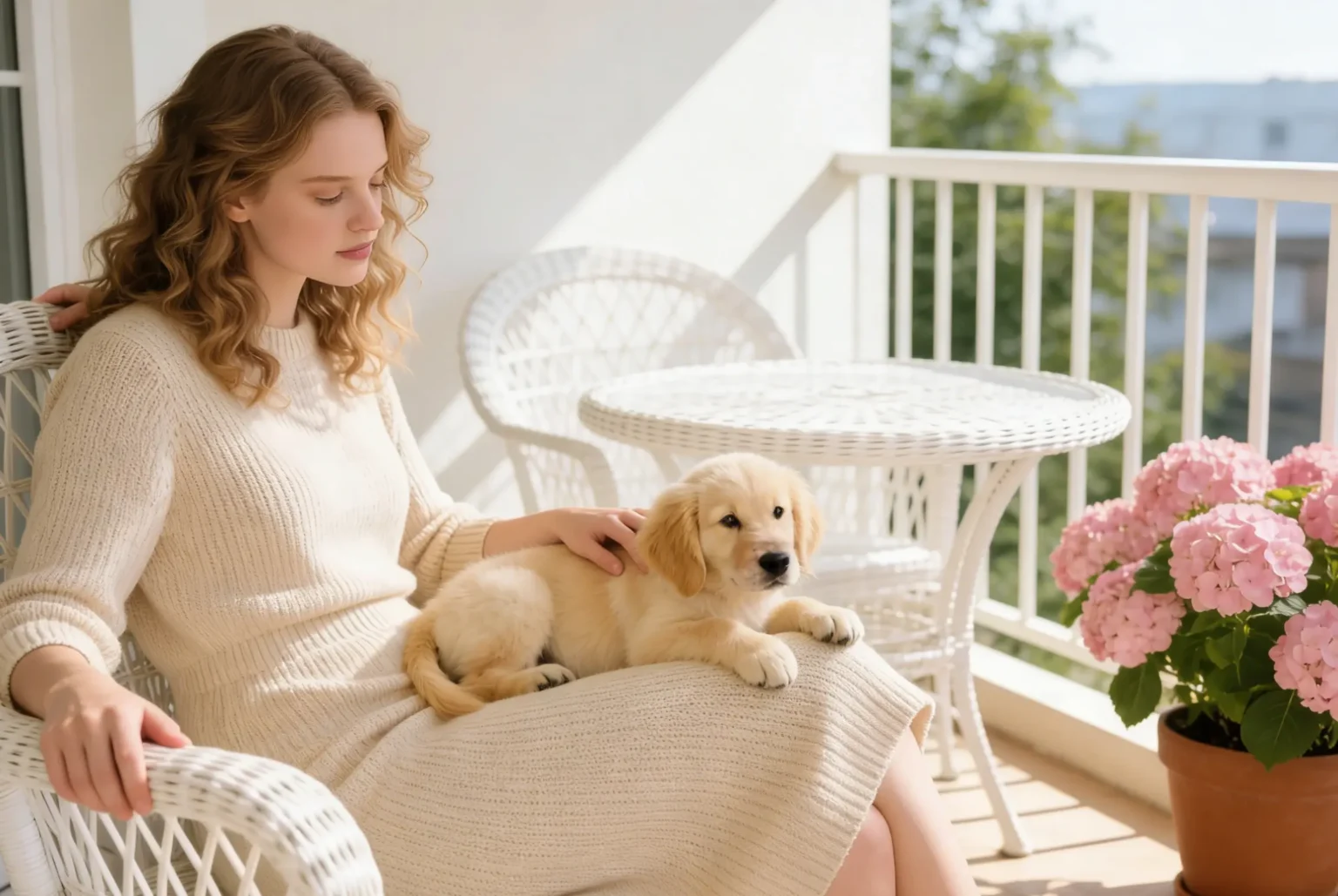
Does your dog focus better when there’s a tiny snack involved? Same. This guide distills what trainers actually use and why, so you can pick treats that get fast, clean responses without wrecking dinner or your dog’s waistline.
Why Treats Work So Well
Training works because dogs learn through clear, consistent consequences. Positive reinforcement—rewarding the behavior you like—makes it far more likely to happen again. And nothing delivers that message faster than food. A tiny, tasty treat releases dopamine in your dog’s brain within seconds, creating a direct “do this, good things happen” connection.
Using training dog treats allows you to mark success precisely. The instant your dog sits or looks at you, a click or “Yes!” followed by a reward tells them they nailed it. This instant feedback builds understanding faster than verbal praise alone. Even simple commands become clearer because every repetition pays off the same way—quickly and predictably.
That’s why even professional trainers rely on high value treats during early learning or tough distractions. Food cuts through noise, stress, and hesitation. Once behaviors become solid, you can fade to praise, play, or affection—but treats are what get you there fastest. For a full look at how reward timing shapes progress, see why dog treats matter for training and bonding.
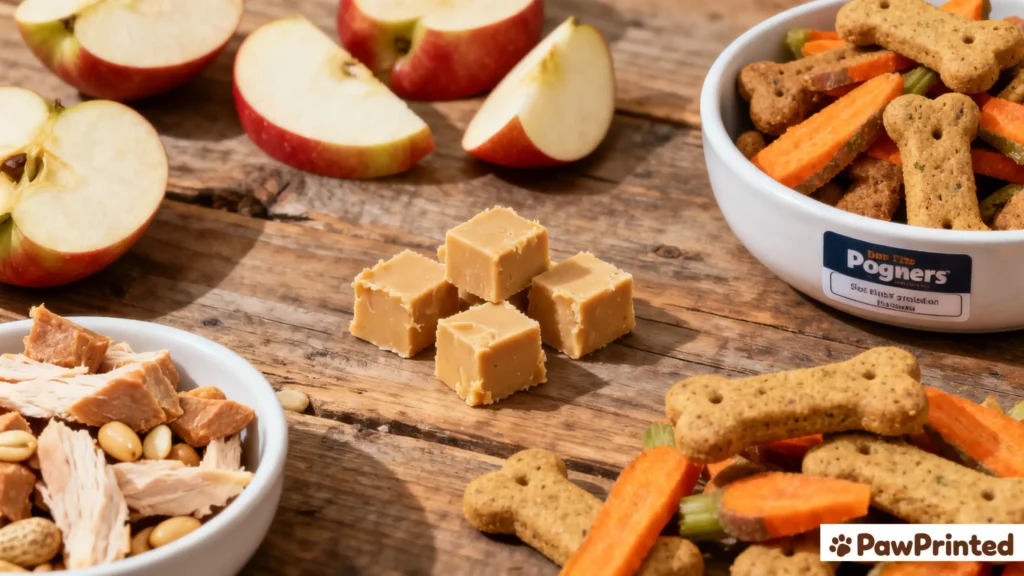
Trainer’s Tip: The treat isn’t just a snack—it’s a language. Each small bite tells your dog, “Yes, that’s it!” before confusion can set in.
What Makes a Great Training Treat
| Criterion | Why it matters | Target spec |
|---|---|---|
| Size | Many reps without filling up | Pea-sized (0.3–1 g) |
| Texture | Fast swallow, minimal crumbs | Soft/chewy for drills; semi-moist for tossing |
| Palatability | Beats distractions in real life | Use “high value” for new/hard skills |
| Ingredients | Digestibility and health | Short list; avoid excess salt/sugar |
| Calories | Prevents stealth weight gain | 1–3 kcal per piece |
For smaller daily sessions, healthier bases tend to work best. See our overview of healthy dog treats every owner should know for ingredient ideas that keep training light but effective.
Match the Treat to the Situation
- Foundation drills at home: Soft, pea-sized, mild flavors. You’ll deliver 30–60 reps in 5–10 minutes; tiny and quick to swallow wins.
- Leash walking outdoors: Semi-moist bits you can deploy while moving and that stay appealing even in wind, scents, and traffic.
- Distraction or distance work: “Jackpot” level (high aroma, higher meat content) to defeat competing reinforcers.
- Capturing calm: Less smelly, lower-calorie bites you can give frequently without amping arousal.
- Toss/recall games: Slightly firmer texture so pieces don’t disintegrate mid-air.
How to Use Training Treats Wisely
- Budget the calories. Daily treat calories ≈ ≤10% of total. If you train a lot or your dog’s weight is a concern, switch some reinforcers to lower-calorie options. Our low calorie dog treats guide shows easy swaps that still motivate.
- Pay fast, fade smart. Start continuous reinforcement, then thin to variable schedules once the behavior is fluent so you don’t need a treat for every single rep.
- Use a marker. A clicker or crisp “Yes!” locks in the exact moment your dog got it right, then the treat arrives promptly.
- Mix reinforcers. Food + play + praise keeps sessions fresh and prevents overfeeding.
Common Mistakes Owners Make
Even the most caring owners can accidentally send mixed messages during training. Most mistakes aren’t about “bad dogs” — they’re about timing, repetition, or reward balance. Here’s what we see most often, and how to fix it fast.
- 1. Giving the treat too late. Dogs link actions to outcomes in seconds. If you hand over the treat 3–5 seconds after the behavior, your pup might think you’re rewarding standing up, not sitting. Fix: Keep treats in your hand or pouch and reward within one second of success. The faster the mark, the faster the learning.
- 2. Using treats for everything. Food is a powerful tool—but not the only one. Overusing it can make your dog dependent on snacks instead of feedback. Fix: Phase in praise, toys, and play as secondary rewards once behaviors are reliable.
- 3. Ignoring portion size. Many owners don’t realize that 20 small bites add up to a full meal. Extra calories sneak in quickly, especially with high-value treats like cheese or liver. Fix: Use low calorie dog treats or break large pieces into halves or quarters for frequent training.
- 4. Skipping the mental breaks. Just like kids, dogs get overwhelmed when drills run too long. Fatigue leads to slower reactions and frustration. Fix: Keep sessions under 10 minutes, then pause for a calm walk or cuddle before the next round.
- 5. Expecting progress without consistency. Treats only work if the timing and message are the same every time. Switching cues or missing rewards causes confusion. Fix: Practice a few minutes every day instead of marathon sessions once a week. Small, daily wins build real confidence.
Most of these mistakes come from love, not laziness — we just get excited about progress. For a deeper look at how reward timing and tone affect trust, read Dog Treats – Why They Matter for Training and Bonding.
Trainer’s Tip: Dogs don’t remember what they did five seconds ago — they remember how they felt when you said “Good!” Make sure every reward lands at the right moment.
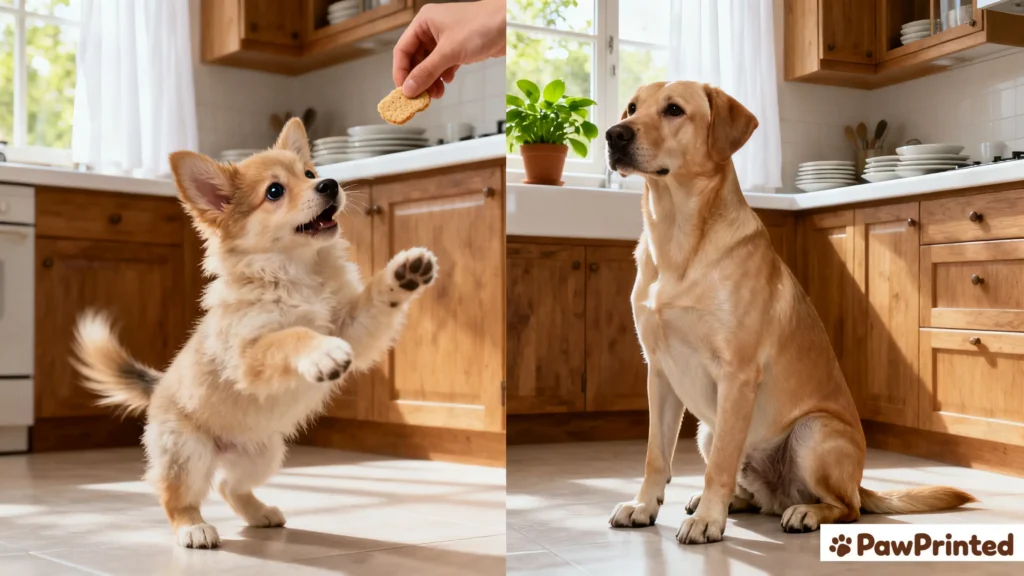
Puppies vs. Adults – How Treats Work Differently
Puppies and adult dogs don’t just differ in size — they learn, chew, and focus differently. A treat that thrills a bouncy 10-week-old may bore a mature retriever. Understanding these differences helps you pick the right texture, flavor, and frequency so training feels rewarding, not overwhelming.
- For Puppies: Go soft, smelly, and frequent. Young pups have tiny teeth and short attention spans, so aim for pea-sized, easily chewable treats. Soft training bites or small bits of cooked chicken work perfectly. Reward every success instantly — timing builds habits faster than quantity. See our Puppy Training Schedule for age-appropriate practice ideas.
- For Adult Dogs: Mature dogs benefit from varied reinforcement. Mix treats with verbal praise and short play sessions to keep motivation balanced. Adults often respond well to high-value snacks like low calorie dog treats that don’t overdo the calories. Focus on consistency — one calm, clear cue repeated daily beats random rewards.
In short, puppies need instant rewards to connect cause and effect, while adults thrive on predictable reinforcement and variety. Adjusting treat type, size, and frequency to your dog’s stage keeps learning fun and calorie-friendly for life.
Trainer’s Tip: Keep puppy treats soft and gentle on baby teeth — freeze-dried bites can be too crunchy early on. For adults, rotate between food and affection so treats stay exciting without becoming the only motivation.
Choosing the Right Training Treats
Not all dog treats train equally well. The best training treat strikes a balance between taste, texture, and timing. It should be small enough for rapid rewards, flavorful enough to keep attention, and healthy enough to repeat dozens of times a day. What works in recall training may differ from crate sessions or trick practice — and that’s where most owners go wrong.
| Training Goal | Ideal Treat Type | Why It Works |
|---|---|---|
| Basic Commands (Sit, Stay) | Small soft bites (chicken, turkey, or pea-sized cheese & chicken treats) | Quick to chew; keeps sessions smooth and focused without losing rhythm. |
| Recall & Focus | High-value, strong-scent snacks like Zuke’s Mini Naturals or cooked liver bits | Boosts excitement and keeps motivation high during distractions. |
| Crate Training & Calm Behavior | Crunchy low-calorie biscuits or homemade apple-carrot treats | Chewing helps relaxation; low fat supports frequent use without weight gain. |
| New Tricks or Complex Tasks | Moist, bite-sized rewards such as peanut butter & oats treats | High scent value maintains engagement for multiple repetitions. |
| Dogs with Allergies | Single-ingredient hypoallergenic bites like hypoallergenic dog treats | Reduces irritation and ensures training stays consistent for sensitive pups. |
The golden rule? Treats are tools — not meals. Use the “Three-Second Rule”: deliver the reward within three seconds of the behavior, or it loses clarity. Keep pieces tiny (no bigger than your thumbnail) and adjust your dog’s main meals slightly if you train daily. For busy owners, a low-calorie bag from our Best Dental Dog Treats list doubles as a breath-freshening bonus during recall drills.
Trainer’s Tip: Rotate flavors weekly. Dogs, like people, get bored — a fresh scent (like salmon or pumpkin) reignites motivation faster than a new command ever will.
Quick Homemade Option for Training
If you love knowing exactly what’s in your dog’s snacks, homemade training treats are the easiest win. They’re fast to make, cost-friendly, and perfectly portioned for short sessions. The goal isn’t fancy baking—it’s control over ingredients, texture, and calories.
Start with a simple base like chicken, egg, and a small amount of cheese. These create a naturally irresistible scent that keeps your dog focused. Blend, bake, and cut into pea-sized cubes—you’ll have dozens of low-calorie rewards ready for the week. Because the treats are soft, you can break them in half for tiny pups or longer sessions without crumbling mess.
Homemade treats are also ideal for sensitive dogs. You can skip fillers, limit salt, and test single proteins to avoid allergy flare-ups. They’re especially handy when commercial treats feel too rich or high-calorie. For a full step-by-step guide, check our Training Dog Treat Recipe (Cheese & Chicken Bites) — it’s vet-approved, freezable, and ready in 25 minutes.
Pro Tip: Store a week’s batch in the fridge and freeze extras in small zip bags. Quick thaw, perfect size, zero guilt.
FAQ
What’s the best treat size for dog training?
The ideal training treat should be about the size of a pea — roughly 0.3 to 1 gram. This lets you deliver 30–60 rewards per session without overfeeding or breaking rhythm. Smaller bites keep your dog eager and prevent long pauses between commands. Soft, quick-to-swallow textures are better than crunchy ones, especially during drills or recall games. For large breeds, just scale the portion slightly, but keep calorie density low to maintain balance.
How many training treats can I give per day?
In general, treats should make up no more than 10% of your dog’s total daily calories. For example, a 25-lb dog eating 500 calories per day should get no more than 50 calories from treats — about 15–20 small pieces. If you’re practicing daily, switch to low calorie dog treats or homemade options like Apple & Carrot bites. Always deduct treat calories from the main meal to avoid slow weight gain.
What kind of treats work best for puppies?
Puppies learn faster with soft, aromatic, and gentle treats. Their small teeth and developing digestion make tiny, single-protein bites ideal. Choose natural recipes like pumpkin, coconut, or chicken puree — they’re easy to chew and highly digestible. For very young pups, break treats into micro-pieces and reward frequently during short sessions. You can even bake your own Pumpkin & Coconut puppy treats to control ingredients and avoid additives.
Do I always need “high value” treats for training?
Not necessarily. High value treats — like freeze-dried liver or cheese — are best for teaching new or challenging behaviors and for high-distraction settings. Once your dog knows the command, you can rotate to medium-value rewards or mix in praise and play. This balance keeps motivation high without excessive calories. Save top-tier treats for special breakthroughs — your dog will notice the difference and stay motivated longer.
Are store-bought training treats better than homemade ones?
Both have benefits. Store-bought treats are convenient, consistent, and often calorie-tested, while homemade options let you control ingredients and texture. Homemade treats like Cheese & Chicken Bites can be cut into any size you want and stored short-term in the fridge. Many trainers combine both: commercial treats for outdoor work and homemade batches for daily indoor drills. The goal is freshness, safety, and easy portion control.
Explore More
Bottom line: pick pea-size, soft, and tasty; pay fast; budget calories; and scale value to the challenge. With the right treat strategy, sessions feel crisp, short, and fun—for both of you.
Final Thoughts
Training treats are more than tiny bites — they’re communication tools. Every time you reward your pup at the right moment, you’re shaping trust, focus, and lifelong good manners. Whether you buy them or bake them at home, what matters most is timing, consistency, and joy in the process. Dogs learn best when they feel successful — and food helps you say “yes” in a language they instantly understand.
If you’ve struggled with distractions, stubborn moments, or calorie concerns, start simple: choose soft, low-calorie, high-reward treats and keep sessions short. Remember, it’s not about how much you give — it’s about how precisely you give it. Every calm “sit,” every happy glance, every tail wag is proof that your dog is learning through love and clarity.
Want to explore more ideas? Check out our Cheese & Chicken Training Treat Recipe for a quick homemade option, or see our Dog Treats – Why They Matter for Training and Bonding for deeper behavioral insights. You’ll find that great training isn’t about perfection — it’s about connection, timing, and those little moments when your dog looks up, ready to try again.
If you don’t want to cook daily, check our dry treat picks — those were Ethan’s daily backups.
— Emma, Ethan & the PawPrinted Team 🐾