On quiet weekend afternoons, I love baking a small batch of grain-free treats for our pup. These salmon & sweet potato bites are simple, gentle on digestion, and packed with natural omega-3s. If your dog tends to react to wheat biscuits, switching to grain-free snacks can feel like a fresh start—see the basics in Grain-Free Dog Food and try today’s recipe below.
Why I Love This Recipe
配料表简洁明了,即使放在烤箱里烤,依然散发着诱人的香味。三文鱼富含欧米伽-3脂肪酸,令狗狗的皮肤和毛发倍感舒适;红薯则富含纤维,带来柔和的甜味。烤制后口感紧实,酥脆可口,训练时也易于掰开。如果您的狗狗也过敏,可以搭配我们低敏狗粮配方(鸭肉和米饭)中的鸭肉配方,在不牺牲狗狗乐趣的情况下,调整狗狗的耐受性。
Ingredients (5 Simple, Grain-Free Essentials)
| Ingredient | Amount | Benefit |
|---|---|---|
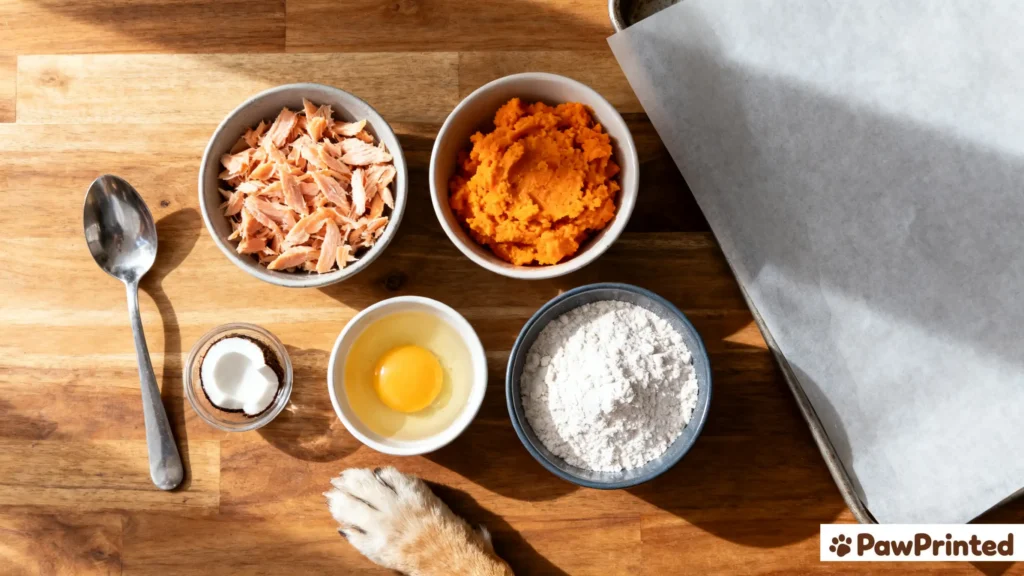
| Mashed sweet potato (steamed & cooled) | 1 cup | Gentle fiber; natural beta-carotene |
| Cooked salmon, flaked (skinless, boneless) | 1/2 cup | Omega-3s for skin/coat & joints |
| Coconut flour | ~1 cup | Grain-free binder; light fiber |
| Egg | 1 large | Protein; helps structure and binding |
| Coconut oil | 1 tbsp | Palatability; helps crisp edges |
How I Baked It (Step by Step)
- Prep the base. Peel and cube sweet potatoes; steam or bake until a fork slides through easily. Drain excess moisture and mash until smooth—no visible chunks. Let the mash cool to room temperature so it won’t scramble the egg later. Meanwhile, double-check your salmon: it should be fully cooked, skinless, boneless, and gently flaked to pea-size pieces. Preheat the oven to 325°F (160°C) and line a baking sheet with parchment. Cooling the sweet potato is the quiet hero here; it keeps the batter cohesive and prevents gummy pockets. If your mash seems watery, press it briefly in a sieve or pat with a towel. A thick, velvety base will make shaping easier and give you reliably crisp edges after baking.
- Fold in salmon & wet ingredients. In a large bowl, combine sweet potato, flaked salmon, egg, and coconut oil. Stir with a spatula using a gentle folding motion so the salmon stays in tender flakes rather than paste. You’re aiming for even salmon distribution—every bite should offer a hint of fish aroma without dense clumps. If your dog is flavor-shy, you can start with slightly less salmon and build up over future batches. Keep the mixture smooth and glossy; the oil helps prevent dryness and supports that light, toasty finish. At this point, the batter will be soft and spoonable, ready for the flour to create a balanced, rollable dough in the next step.
- Add coconut flour gradually. Coconut flour drinks up moisture fast. Sprinkle in half the flour and fold; give it a minute to hydrate before you add more. Continue in small additions until a soft dough forms—slightly tacky but not sticky. If it feels dry or cracks, moisten with a teaspoon of water at a time; if it sticks to your hands, dust in a spoonful of flour. The sweet spot: dough that rolls cleanly and lifts from parchment without tearing. Take a breath—this is the only “tricky” moment, and patience pays off. The right texture now means neat shapes, even baking, and a crisp-tender crumb your dog can crunch without crumbling everywhere.
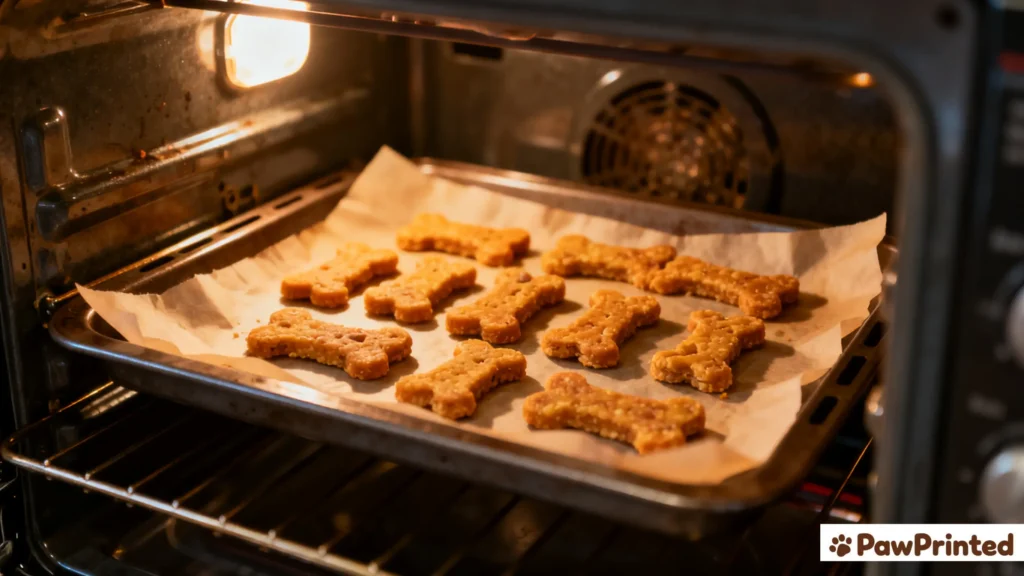
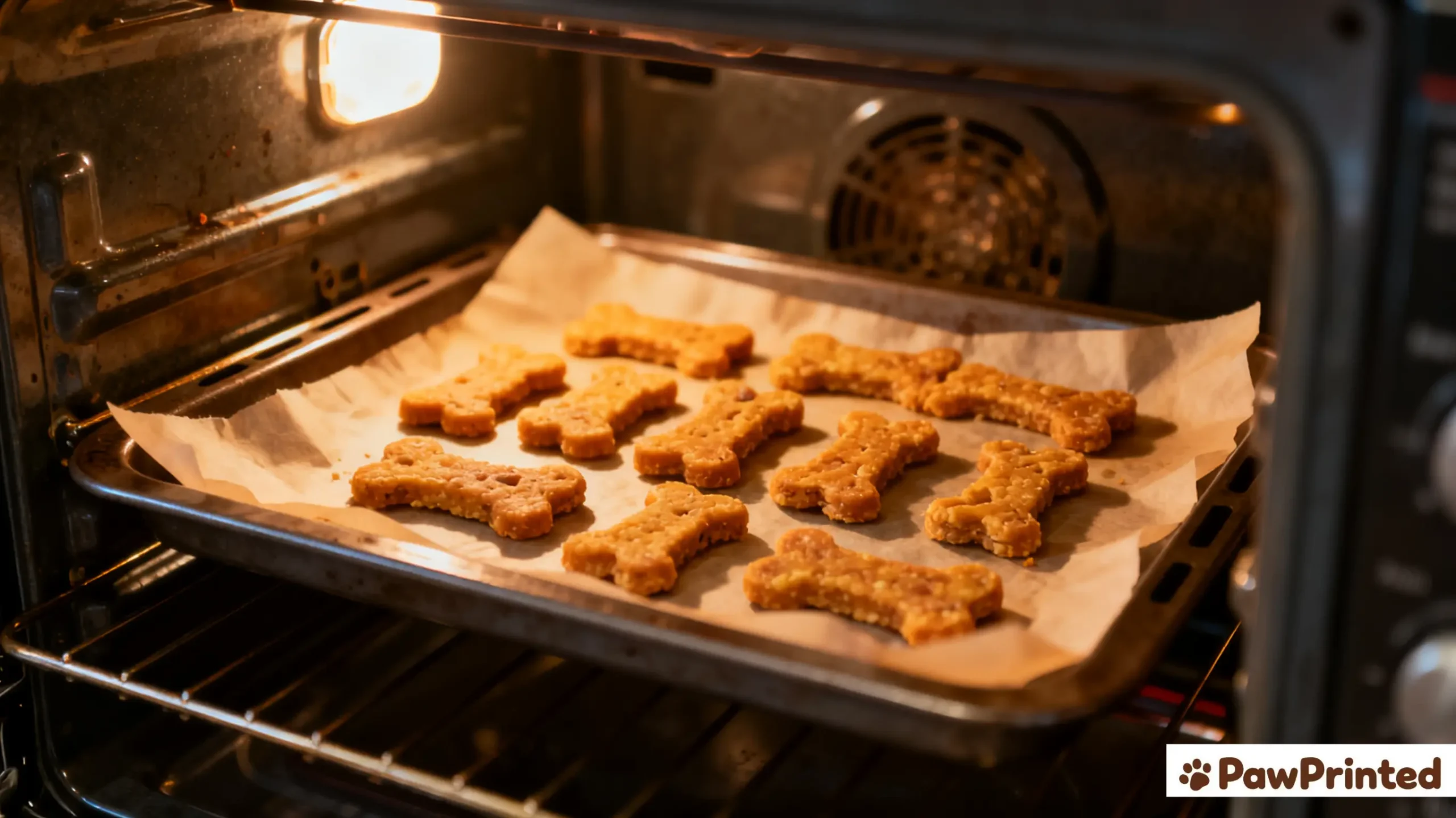
- Shape & bake to crisp-tender. Roll the dough between two sheets of parchment to about 1/4 in (6 mm) thick. Peel back the top sheet and cut with small bone-shaped cutters or slice into training squares. Transfer to the lined tray, spacing slightly. Bake at 325°F (160°C) for 25–30 minutes, rotating once for even color. You’re looking for firm edges and a matte surface with a hint of golden blush. For extra crunch, switch off the oven and let the tray rest inside with the door cracked for 10–15 minutes. Softer for seniors? Pull a few minutes earlier—texture is flexible and forgiving.
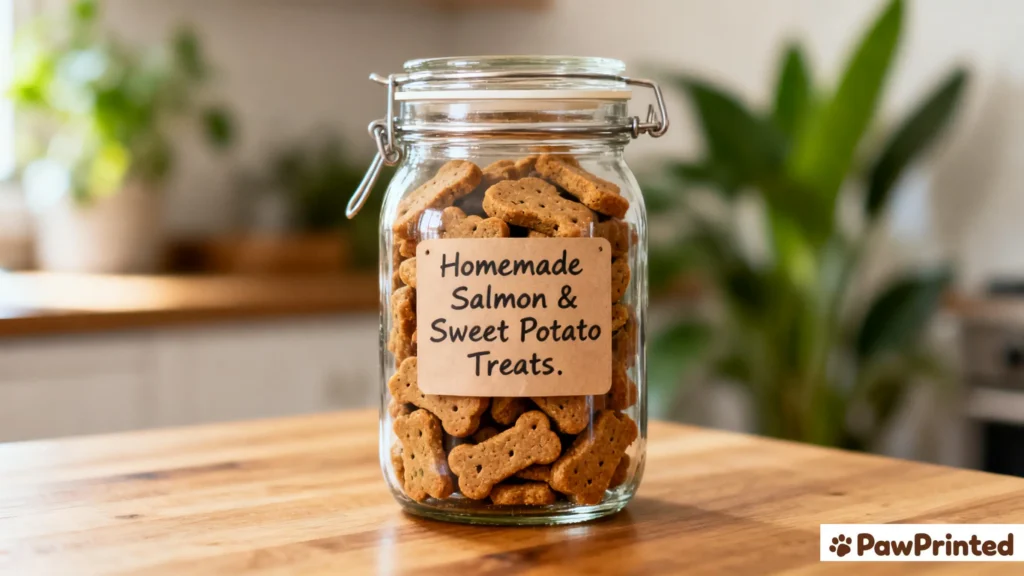
- Cool, test, and store smart. Let treats cool completely on a rack; residual heat finishes the set. Offer a small test bite to confirm texture and tolerance. Store in an airtight jar in the fridge up to 7 days, or freeze up to 1 month in labeled zip bags. For best aroma, thaw at room temp for 15 minutes or warm a few seconds. Keep treats under ~10% of daily calories and rotate with other gentle options from our Hypoallergenic Duck & Rice to map preferences without overdoing any one recipe.
Grain Free Dog Treats Recipe (Salmon & Sweet Potato, Vet Approved)
- Baking sheet lined with parchment paper
- Mixing bowl & spatula
- Rolling pin & cookie cutter
- Measuring cups & spoons
- Oven (preheated to 350°F / 175°C)
- 1 cup cooked salmon flaked, boneless
- 1 cup mashed sweet potato steamed or baked
- 1 egg binding agent
- ½ cup coconut flour grain-free alternative
- 1 tbsp coconut oil adds shine and healthy fats
- Prepare Ingredients: Steam or bake sweet potatoes until soft, then mash thoroughly. Flake cooked salmon into fine pieces, removing any bones.
- Combine the Base: In a large mixing bowl, combine salmon, mashed sweet potato, and egg. Stir until evenly mixed.
- Add Dry Ingredients: Slowly add coconut flour and coconut oil. Mix until a dough-like texture forms — soft but not sticky.
- Shape & Bake: Roll the dough to ½-inch thickness. Cut into small bite-sized pieces. Bake at 350°F (175°C) for 20–25 minutes until firm and golden.
- Cool & Store: Allow to cool completely before serving. Store in an airtight jar for up to 5 days, or refrigerate for longer freshness.
For pups with sensitivities, keep protein rotation simple and monitor reactions when introducing new ingredients.
If you prefer ready-made options, look for grain-free treats made with real salmon, fish oil, and coconut flour for healthy fats and shine.
Ethan especially enjoys single-ingredient salmon bites and crisp fish-skin chews when we skip baking days.
Explore More Dog Treat Recipes
- Homemade Dog Treats Recipe (Peanut Butter & Oats, Vet Approved)
- Healthy Dog Treats Recipe (Pumpkin & Coconut)
- Low Calorie Dog Treats Recipe (Apple & Carrots)
- Hypoallergenic Dog Treats Recipe (Duck & Rice, Vet Approved)
- Grain Free Dog Treats Recipe (Salmon & Sweet Potato)
- Training Dog Treats Recipe (Cheese & Chicken Bites)
- Frozen Dog Treats Recipe (Yogurt & Blueberries)
- Dental Dog Treats Recipe (Parsley & Mint)
Why These Ingredients Are Good for Dogs
- Salmon: Natural omega-3s to support skin, coat, and joint comfort.
- Sweet potato: Gentle fiber and beta-carotene for tummy and steady energy.
- Coconut flour: Grain-free structure with light fiber; easy training texture.
- Egg: Complete protein; binds and improves bite.
- Coconut oil: Palatable fat for crisp edges and pleasing aroma.
New to grain-free basics? Skim our primer in Grain-Free Dog Food for how to balance snacks within a weekly plan.
Storage Tips
- Refrigerate: Airtight container up to 7 days.
- Freeze: Up to 1 month; thaw briefly before serving.
- Portion: Keep treats <10% daily calories; break into training-size pieces.
Notes
Notes: These treats are best enjoyed fresh, stored in an airtight jar for up to 5 days or frozen for later. For pups with sensitivities, keep protein rotation simple and monitor reactions when introducing new ingredients.
If you’d like an easy store-bought option, try single-ingredient treats like Vital Essentials Salmon Bites or crisp texture favorites such as Polkadog Salmon Skins. For mixed-protein chews, PAWUP Cod & Duck Treats are a great grain-free option dogs love.
If you don’t want to bake weekly, check our affiliate picks for quick, allergy-friendly treats — Ethan’s go-to backups for busy days!
FAQ
Are grain-free dog treats healthier for all dogs?
Short answer: Not automatically—grain-free helps when grains trigger sensitivity. Details: The benefit comes from removing a trigger and keeping ingredients simple. For many dogs, grain-free treats like salmon & sweet potato reduce itch or tummy flare-ups while staying tasty. Keep total treats under ~10% daily calories and rotate flavors to avoid overreliance on any one ingredient. For the bigger picture of meals vs. snacks, see our overview in Grain-Free Dog Food.
Can salmon and sweet potato cause allergies?
Short answer: They’re generally well-tolerated, but any food can become a trigger for some dogs. Details: Start with small portions and watch for signs (itch, loose stools). If fish isn’t tolerated, swap salmon for white fish or turkey and keep the method the same. For broader allergy-friendly ideas, compare with our duck-based option in Hypoallergenic Dog Treats.
How often can I give these treats?
Short answer: Use as training or between-meal rewards, typically <10% daily calories. Details: Break into small pieces to stretch sessions without overfeeding. On higher-treat days, trim a little from meals. For weekly planning and balance tips, skim Grain-Free Dog Food.
What’s the best store-bought grain-free treat if I don’t have time to bake?
Short answer: Choose short labels and single-protein options. Details: Favorites in our pantry include Polkadog Salmon Chips and Caledon Sweet Potato Chews. They pair well with this recipe’s flavors and keep the grain-free theme consistent.
Can I swap sweet potato for pumpkin?
Short answer: Yes—pumpkin purée works well, but mind the moisture. Details: Start with less purée and add coconut flour gradually until the dough is rollable. Pumpkin brings extra softness and a slightly different aroma. Keep the method the same and bake to a matte, firm finish.
Explore More
Final Thoughts
Grain-free doesn’t have to mean complicated. With salmon, sweet potato, and a little weekend baking, you can keep training joyful and tummies calm. If this recipe helped your pup, save it, share it, or tell us how it went—Emma & Team are cheering you on.