When Emma noticed Ethan slowing down on the stairs, she wondered if it was “just age” or something more. For many dogs—especially large breeds and seniors—stiffness, reluctance to jump, and slower walks can point to osteoarthritis. This guide explains how diet fits into joint care, what nutrients actually help, and how to build an easy, vet-approved plan at home.

Why Arthritis Diets Matter for Dogs
Arthritis is common in adult and senior dogs and can be worsened by extra weight, genetics, or old injuries. Food can’t “cure” worn cartilage, but it supports three key goals: healthy weight (less load on joints), lower inflammation, and steady delivery of joint-supportive compounds. Parents who combine smart nutrition with measured movement often see better comfort and mobility. For a broader view of targeted formulas and structures across conditions, browse our Health-Specific Dog Food Hub.
Key Nutrients That Support Joint Health
- Glucosamine & Chondroitin: Building blocks that support cartilage turnover and joint lubrication. If you prefer complete diets that already include them, see our picks in Best Dog Food with Glucosamine & Chondroitin.
- Omega-3 Fatty Acids (EPA/DHA): Help moderate inflammatory pathways. Fish-forward rotations can help—start with our Salmon Dog Food Guide.
- Green-Lipped Mussel (GLM): A natural source of glycosaminoglycans and omega-3s used in many vet-formulated mobility diets.
- Turmeric/Curcumin: Provides complementary anti-inflammatory support when dosed appropriately (always check with your vet for your dog’s weight).
- High-Quality, Lean Protein: Protects muscle mass so joints don’t carry the entire workload.
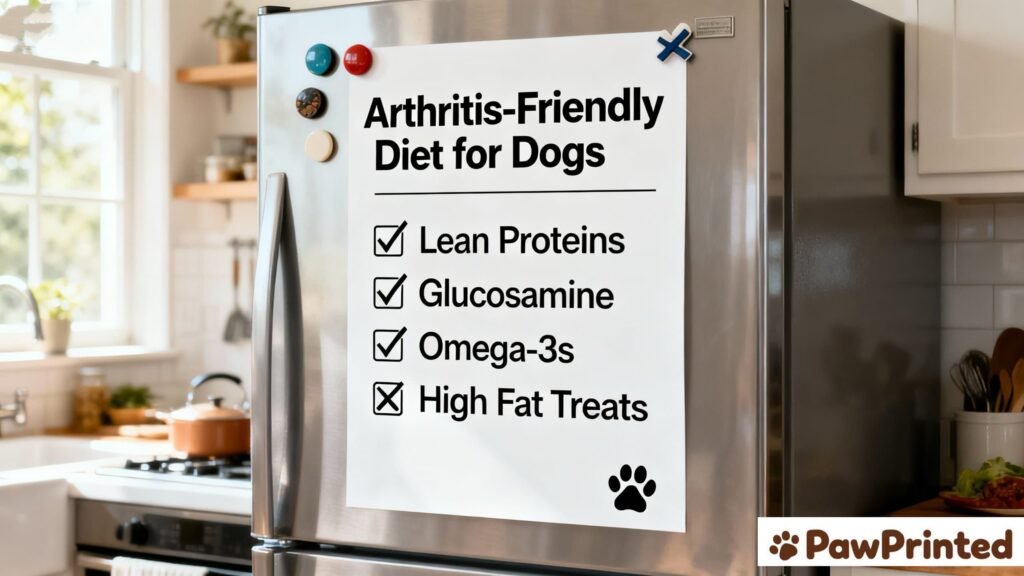
What Experts Usually Recommend
Vets typically combine a complete joint-aware formula with measured use of supplements and gentle activity. Weight management is often the #1 “treatment” because every extra pound increases the load on hips and elbows. For parents who prefer a simple home bowl on occasional days, try our limited-ingredient, joint-friendly base and rotate with complete commercial formulas for micronutrient coverage. If you’re weighing food vs. supplements, start here: Dog Food with Glucosamine – Is It Effective?
Practical Feeding Tips for Arthritic Dogs
- Portion with intent: Feed for an ideal body condition score; split meals and use slow-feed bowls to prevent fast gulps.
- Keep it gentle: Choose digestible carbs (e.g., soft oats, rice) and lean proteins to avoid heavy, greasy bowls.
- Rotate smartly: Alternate joint-aware commercial diets with simple home bowls to widen nutrient coverage.
- Start with an easy home recipe: Try our turkey-and-oats base—designed to be gentle and topper-friendly: Dog Food with Glucosamine Recipe (Turkey & Oats).
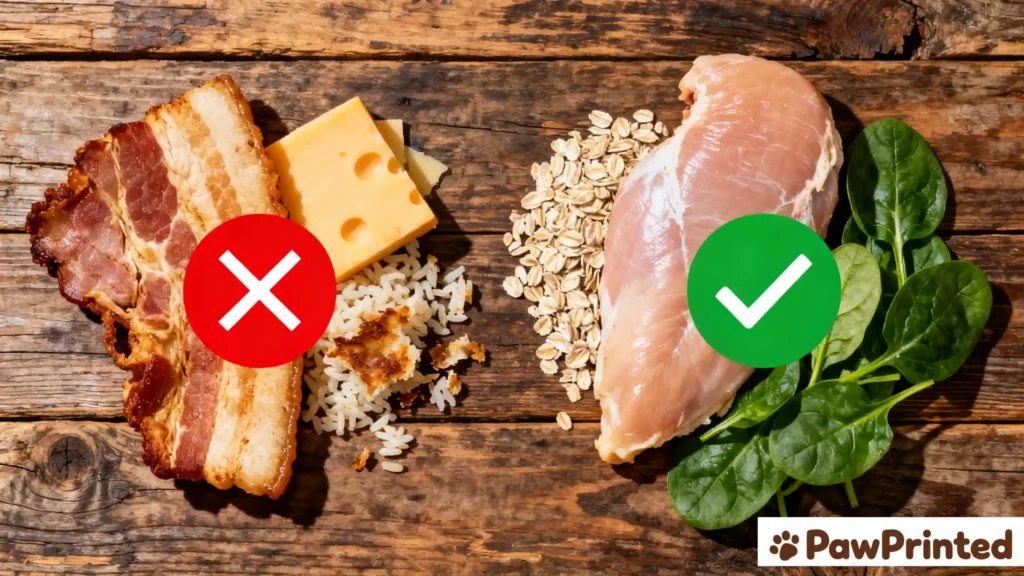
Common Myths (and Friendly Facts)
- Myth: “Supplements alone will fix it.” Fact: The best outcomes pair weight control + joint nutrients + sensible activity.
- Myth: “All grain-free foods help joints.” Fact: Joint comfort relates more to omega-3s, GLM, and glucosamine than to grain status.
- Myth: “Senior arthritis can’t improve.” Fact: Many parents report better stairs, play, and sleep with diet and routine tweaks.
FAQ
What food is good for dogs with arthritis?
Look for diets that combine joint support plus weight control. Helpful features include salmon or fish oil for EPA/DHA, glucosamine and chondroitin for cartilage turnover, and high-quality lean proteins to maintain muscle. Gentle carbohydrates such as oats or soft rice keep meals easy to digest, while green-lipped mussel offers additional glycosaminoglycans. Parents who rotate a complete joint-aware food with simple home bowls often report steadier comfort over time. If you want a gentle starter at home, try our Turkey & Oats recipe and pair with a mobility-focused kibble.
What is the best dog food for old dogs with arthritis?
There isn’t a single “best” brand for every senior, but formulas that combine mobility nutrients with senior-appropriate calories tend to work well. Prioritize foods listing fish oil or salmon, stated glucosamine/chondroitin levels, and controlled fat to support weight. Texture also matters—smaller bites or moistened meals can help picky seniors. For ready-to-buy options that bake in joint support, see our best glucosamine & chondroitin picks, then adjust portions to maintain an ideal body condition.
Do vets recommend glucosamine for dogs with arthritis?
Many vets do, especially alongside diet and weight strategies. Glucosamine and chondroitin are considered supportive nutrients for cartilage metabolism and synovial fluid. They’re commonly delivered via complete diets, chews, or powders. Response varies by dog and takes time—parents typically trial for 4–8 weeks while monitoring comfort and activity. For a balanced view of food vs. supplement delivery, read our explainer: Is food-based glucosamine effective?
Is rice inflammatory for dogs with arthritis?
Plain, well-cooked rice is generally neutral and often used to keep bowls gentle. In joint care, the bigger levers are omega-3 intake, overall calorie control, and joint nutrients. If your dog tolerates rice, it can pair well with lean proteins and veggies in a home bowl. Focus on what improves comfort: steady weight, mobility nutrients, and a digestible base. For a simple template that avoids heavy fats, try our Turkey & Oats home recipe as a topper or occasional meal.
What natural foods can help arthritis in dogs?
Parents often use salmon or sardines (omega-3s), green-lipped mussel (glycosaminoglycans), and turmeric/curcumin (adjunct anti-inflammatory support). Lean proteins protect muscle mass, which reduces joint strain. Remember that “natural” still needs balance—rotate with complete formulas to cover vitamins and minerals. If you prefer a limited-ingredient base at home, see our Turkey & Oats joint-friendly recipe and pair with a mobility diet from our best picks.

Final Thoughts
Diet won’t rebuild a lifetime of joint wear—but it can make a dog’s day meaningfully easier. When Emma paired Ethan’s joint-aware food with gentle walks and a leaner bowl, stairs felt less daunting again. Start small: tighten portions, add omega-3s, and choose foods that clearly list joint nutrients. Track comfort week by week and share your progress—we’re cheering for you and your pup.
Related Reading
Helpful resources: AKC: Arthritis in Dogs · PetMD: Osteoarthritis in Dogs · Tufts Cummings: Clinical Nutrition