When my pup Ethan started skipping meals and looking uneasy after dinner, I chalked it up to picky eating—until the occasional vomiting, gas, and loose stool made it clear: we were dealing with a sensitive stomach. If you’re in the same boat, you’re not alone. This vet-approved guide explains why sensitive stomach dog food matters, how to spot the signs, which diets work best, and what to avoid—so you can help your dog feel comfortable again.
Vet-approved: This article follows veterinary nutrition principles and practical, real-world care tips. For persistent or severe symptoms, always consult your veterinarian.
Why This Topic Matters
Digestive upsets are among the most common concerns that veterinarians hear from dog parents. Tummy troubles can reduce nutrient absorption, alter appetite, and impact skin and coat health. Left unmanaged, they may snowball into chronic discomfort. Choosing a diet designed for sensitive stomachs isn’t indulgence—it’s often the quickest way to restore comfort and confidence around mealtime.
Well-designed sensitive stomach formulas prioritize clarity (clearly named proteins), simplicity (limited ingredients), and digestibility (gentle carbs and moderate fat). Combined with slow transitions and consistent routines, they can deliver noticeable improvements within a week.
Deep Dive Into the Problem
Common Causes
- Complex or mixed proteins: Kibbles blending multiple proteins can be harder to tolerate for sensitive pups.
- Rapid diet changes: Sudden switches disrupt the gut microbiome and often trigger soft stool.
- Food intolerances: Wheat, corn, soy, and dairy frequently top the list of potential irritants.
- Excess fat or table scraps: High-fat trimmings, spicy or seasoned foods are common culprits.
- Non-diet triggers: Stress, gulping food, or underlying conditions (e.g., pancreatitis) can mimic diet issues.
Common Misconceptions
- “All premium foods are gentle.” Many premium recipes still combine multiple proteins and extras that sensitive dogs may not tolerate.
- “Grain-free fixes everything.” Not quite—gentle grains like rice and oats are digestion-friendly for many dogs.
- “Just add pumpkin.” Pumpkin helps some dogs, but it isn’t a complete solution and won’t fix non-diet causes.
The Science of Gentle Diets
Veterinary nutrition for sensitive stomachs focuses on ingredient clarity and digestibility. Single or novel proteins (lamb, turkey, salmon) reduce variables, while simple carbs (rice, oats, sweet potato) provide energy without overtaxing digestion. Prebiotics and probiotics support the microbiome. Moderating fat helps minimize flare-ups. The result is a calm, predictable meal that’s comfortable to process.

What Experts Usually Say
Vets often describe sensitive stomach diets as “precision, not restriction.” By narrowing ingredients and simplifying recipes, you remove probable triggers and give the gut room to recover. In our home, when we transitioned Ethan to a lamb-and-rice sensitive stomach formula—paired with slower feeding and smaller portions—the difference was immediate: calmer belly, firmer stool, and brighter energy.
Experts also emphasize consistency: keep mealtimes steady, avoid frequent brand-hopping, and make changes gradually. If symptoms persist despite smart diet choices, a veterinary exam can rule out infections, parasites, or pancreatic and biliary issues that require medical management.

Practical Takeaways (for Dog Parents)
- Log symptoms (vomiting, loose stool, gas, appetite changes) for 7–10 days.
- Pick one clearly named protein and a simple carb (e.g., lamb + rice), then stick with it.
- Transition slowly: start 25% new food for 2 days, then 50%, 75%, and 100% over a week.
- Use a slow feeder or smaller, more frequent meals if your dog gulps food.
- Consider gentle supplements (prebiotics/probiotics) if advised by your vet.
- Reassess after 7–14 days; if no improvement, contact your veterinarian.
Many pups do better on a sensitive stomach dog food that balances digestible protein with simple carbs. Dogs with suspected intolerances often benefit from a limited ingredient diet focused on clarity and consistency. If diarrhea is frequent, explore our diarrhea care article for additional strategies.
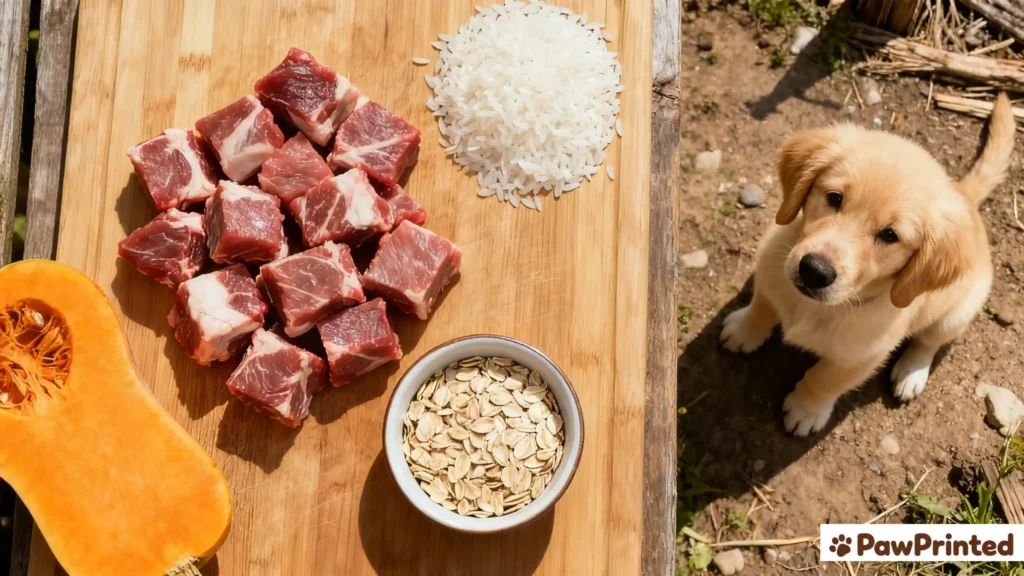
Best Sensitive Stomach Options
Best Dry (Kibble)
Convenient and shelf-stable. Look for single protein recipes with prebiotic fiber and moderate fat. Kibble also pairs well with slow feeders for gulpers.
Helpful reading: explore top dry options inside our Sensitive Stomach Guide.
Best Wet
Higher moisture and softer texture can soothe mild nausea and encourage picky eaters. Watch fat content and ensure clear, limited ingredients.
If diarrhea is frequent, also see Dog Food for Diarrhea for food-format tips.
Best Limited Ingredient (LID)
Fewer ingredients = fewer potential triggers. Great for suspected intolerances and elimination-style trials. Stick with one protein and one carb for at least 10–14 days.
Learn how LID helps sensitive pups: Limited Ingredient Diets.
Ingredients to Avoid (With Table)
Not every ingredient is troublesome, but the following are common triggers or complicating factors for sensitive stomachs. If symptoms persist, consider trialing a recipe that excludes them.
| Ingredient / Factor | Why It May Be a Problem | Gentle Alternative |
|---|---|---|
| Mixed “mystery” proteins | Harder to isolate triggers; variable digestibility | Single proteins (lamb, turkey, salmon) |
| High fat / table scraps | Can aggravate diarrhea and nausea | Moderate fat, consistent meals |
| Wheat / corn / soy / dairy | Common intolerance suspects in sensitive dogs | Rice, oats, sweet potato |
| Artificial colors/flavors | Unnecessary additives; potential irritants | Clean-label, limited-ingredient recipes |
| Sudden diet changes | Disrupt the microbiome; trigger loose stool | 7-day gradual transition |
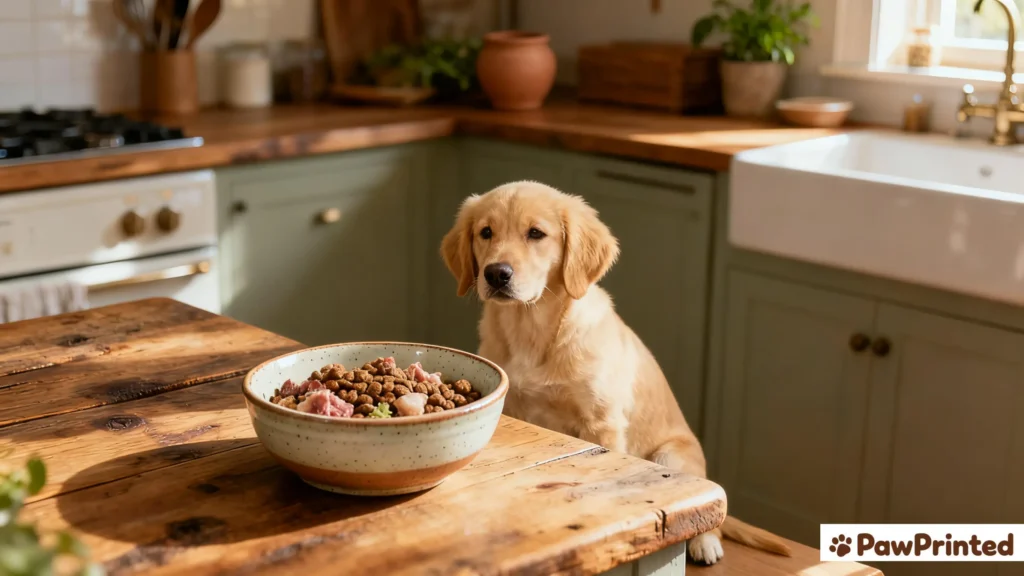
Vet-Approved Homemade Ideas
Homemade can help during short GI resets or when you need ultra-simple meals. For long-term feeding, work with your vet to ensure complete and balanced nutrition.
- Lamb & Rice (Gentle): Lean lamb + white rice + a spoon of pumpkin. Simple, soothing, and easy to digest during flare-ups. More: Full recipe & tips
- Chicken & Pumpkin: Skinless chicken and pumpkin can help firm stool while keeping meals light. Ideas: Loose-stool friendly
- Fish & Rice: White fish with rice is classic GI-friendly fare—low-fat and straightforward. Plan: GI-focused homemade
Want a bigger list? See our digestive recipe roundup.
How to Transition Food (Step-by-Step)
- Days 1–2: 25% new food + 75% current food.
- Days 3–4: 50% new food + 50% current food.
- Days 5–6: 75% new food + 25% current food.
- Day 7: 100% new food. Monitor stool and appetite.
For gulpers or anxious eaters, combine the transition with a slow feeder and smaller, more frequent meals. If symptoms flare at any step, pause at the prior ratio for 1–2 more days.
FAQs
The best choice is typically a clearly labeled single protein such as lamb, turkey, or salmon, paired with digestible carbohydrates like rice or oats. Vets often recommend limited-ingredient diets because fewer ingredients mean fewer potential triggers. Look for labels like “sensitive stomach” or “digestive care,” avoid artificial additives, and keep fat levels moderate. Trial the food for 7–14 days, transitioning slowly and monitoring stool, gas, and appetite to confirm it’s working for your dog.
Yes—these diets rely on highly digestible ingredients and soluble fiber that can help firm stool. Proteins like chicken or fish tend to be gentle, while rice, pumpkin, and oats soothe the gut. If diarrhea persists beyond a few days or includes blood, lethargy, or fever, contact your vet immediately. Sensitive stomach diets are helpful when diet intolerance is the cause, but persistent symptoms may signal infections, parasites, or other conditions that need medical attention.
For many dogs with food-related tummy troubles, yes. Owners often report firmer stools, less gas, and better appetite within a week. Success hinges on picking a simple formula, controlling fat, and transitioning gradually. However, if stress, gulping, pancreatitis, or other illnesses are driving symptoms, diet alone may not resolve the issue. Track changes carefully; if there’s no improvement after 10–14 days, your vet may suggest diagnostics or a prescription gastrointestinal diet tailored to your pup.
Avoid fatty table scraps, spicy or seasoned leftovers, and treats with artificial colors or flavors. Common irritants include wheat, corn, soy, and dairy. Many sensitive dogs also struggle with kibbles blending multiple proteins in one bag, which complicates trigger-hunting. Keep meals consistent, use a single protein plus a simple carb, and make changes slowly. If you suspect a particular ingredient, eliminate it for at least two weeks while monitoring stool and overall comfort.
Both can work. Wet food offers more moisture and a softer texture, which some dogs find soothing—great for picky eaters or mild nausea. Dry food is convenient, often includes prebiotic fiber, and pairs well with slow feeders. Some pups thrive on a mix of both. Choose the format your dog tolerates best and track stool quality, appetite, and comfort over a week to confirm you’ve found the right fit for their digestion.
Final Thoughts
Sensitive stomach dog food isn’t a fad—it’s a practical, science-backed way to help your dog feel comfortable again. Start simple, choose a clearly named protein with a gentle carb, and transition slowly. Track stool, appetite, and energy for 1–2 weeks. If symptoms persist, your veterinarian can help rule out non-diet causes and recommend the next step.
Have you tested a sensitive stomach recipe that worked wonders? Share your experience in the comments—you might help another dog parent find relief sooner.