I was nervous the first time I tried raw for my puppy—Would it be safe? Balanced? After a vet chat and a few weeks of careful notes, I found a simple, limited-ingredient path that kept stools steady and energy bright. Here’s the exact raw puppy bowl we now rotate when we want clean ingredients and predictable digestion.
Vet check first: puppies <8 weeks, immunocompromised pups, or dogs with medical conditions need individualized plans. If vomiting, diarrhea, or lethargy persists >24–48h, contact your vet.

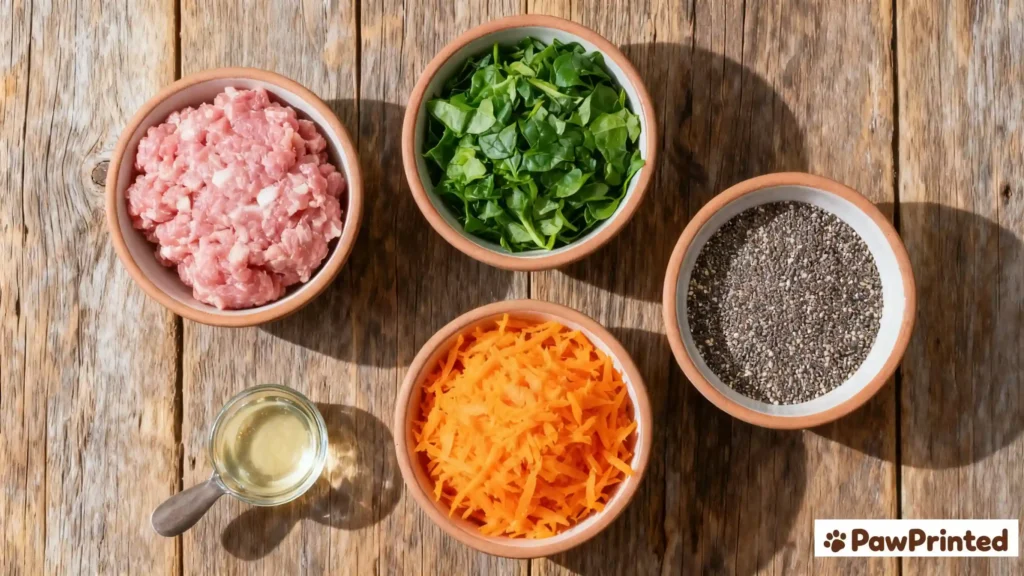
Ingredients (Limited-Ingredient, Puppy-Safe)
| Ingredient | Amount | Benefit for Puppies |
|---|---|---|
| Ground turkey (boneless, fresh) | 1 cup | Lean, highly digestible protein for growth |
| Beef liver (finely chopped) | 2 tbsp | Iron, vitamin A, trace minerals |
| Pumpkin purée (plain) | 1/3 cup | Gentle fiber, supports stool quality |
| Spinach (lightly steamed, chopped) | 1/4 cup | Antioxidants & iron, immune support |
| Plain yogurt (unsweetened) | 1 tbsp | Probiotics for gut balance |
Step-by-Step Instructions
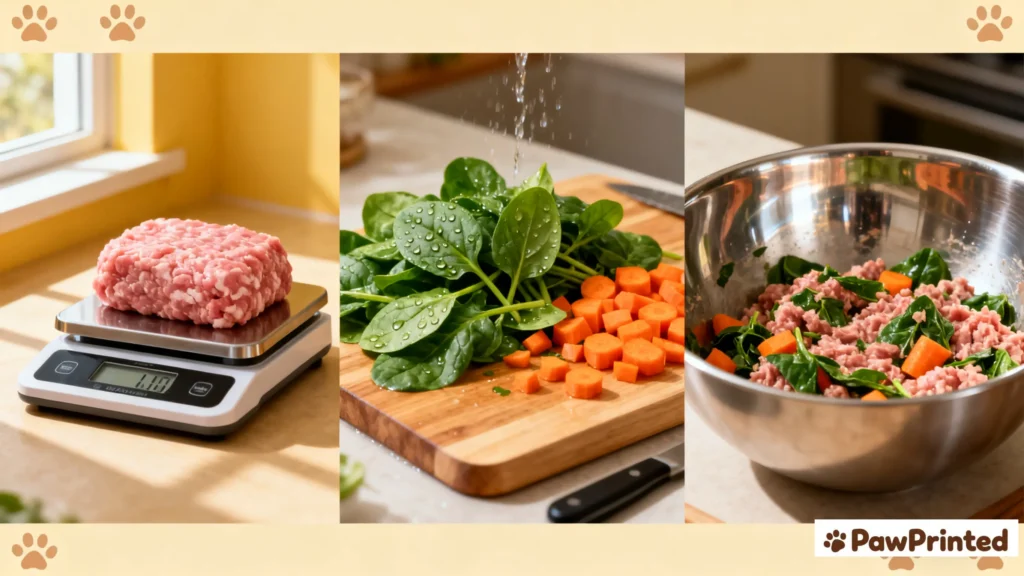
1) Chill & prep safely. Keep turkey cold from fridge to bowl; use a clean glass/steel mixing bowl and sanitized tools.
2) Build the base. Add ground turkey and finely chopped beef liver. Fold gently to distribute the organ meat evenly.
3) Add gentle plants. Mix in pumpkin purée and the lightly steamed, chopped spinach for fiber and micronutrients.
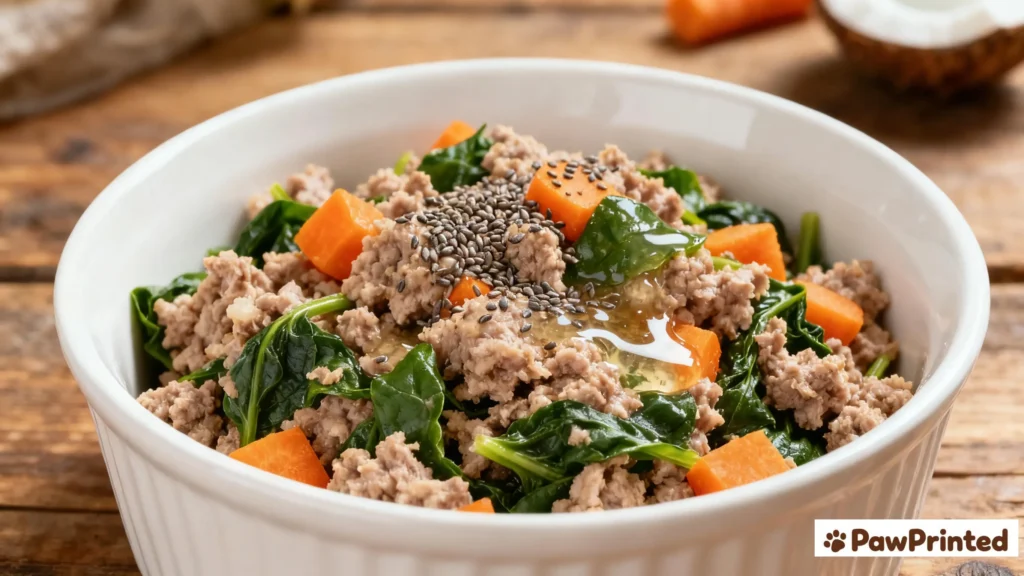
4) Finish with probiotics. Stir in plain yogurt until just combined. Portion immediately.
Tip: Start with small portions and keep the rest cold. Introduce no other diet changes during the first 7–10 days.
Why These Ingredients Work for Puppies
When I put together this recipe, I wanted it to be gentle enough for young tummies but still full of the nutrients growing pups need. Turkey is a lean, easily digestible protein that supports muscle development without being too heavy. Sweet potato adds soft, slow-release carbs and natural fiber, helping digestion stay smooth. Spinach is packed with iron and antioxidants, giving puppies an immune boost early in life.
I’ve also included blueberries for their natural antioxidants, which support skin and brain development. A small drizzle of coconut oil adds healthy fats that keep puppy coats soft and shiny. These ingredients are simple on purpose — fewer items mean fewer chances for food sensitivities, a principle similar to what you’d find in a limited ingredient dog food.
If your pup has a sensitive tummy, you might also explore our homemade dog food for sensitive stomachs guide, which explains how to rotate gentle carbs and proteins. For families managing itchiness or skin troubles, our dog food for allergies article can help you see how recipes like this can be adapted long term.
This mix isn’t just tasty — it’s built to set puppies up for strong growth, balanced digestion, and happy playtime energy.
Nutritional Snapshot (Approx.)
| Nutrient | Per 100g (est.) | Why It Matters |
|---|---|---|
| Protein | ~18 g | Growth & lean mass |
| Fat | ~7 g | Energy, skin & coat |
| Carbohydrate | ~3 g | Gentle energy & fiber |
Numbers are approximate; consult your vet if you plan long-term raw feeding or need precise targets.
Serving Sizes
Feed a total of 2–3% of body weight per day, split into 3–4 meals. Adjust by breed, growth stage, and activity. Keep weekly notes on weight, stools, skin/coat, and energy.
Storage Tips
Refrigerate portions for up to 48 hours. For longer storage, freeze in single-meal containers for up to 1 month. Thaw in the refrigerator (never at room temp).

My Puppy’s Reaction
Ethan paused to sniff (new smells! liver!) and then committed—slow, happy bites, clean bowl, steady stools the next day. That’s our favorite green light.
FAQ
Yes, in small amounts when steamed and finely chopped. Spinach provides iron, antioxidants, and vitamins. Too much can stress developing kidneys, so keep it as a small accent. For rotation ideas, see our homemade dog food for sensitive stomach guide.
Turkey is often gentler on puppy digestion and less likely to trigger allergies. It’s leaner and lighter than many chicken cuts. Some families start with turkey, then slowly introduce chicken. For more protein comparisons, visit our dog food for allergies resource.
Yes. Blueberries are rich in antioxidants that support brain, immune, and skin health. They’re naturally sweet and high in fiber, so use small amounts. For gentle commercial options, see our puppy food hub.
Go slow: 25% homemade + 75% kibble for 3–4 days → gradually increase every few days. Watch stools, energy, and coat. A sudden switch can upset digestion. See our dog food transition guide for full timelines.
If daily prep feels heavy, start with gentle wet foods and later move to steady dry picks. For fundamentals, see our transition guide and puppy food hub.
Follow PawPrinted on Pinterest
See puppy-friendly bowls, portion tips, and step-by-step prep days.

Raw Dog Food for Puppies (Vet-Approved & Balanced)
- – Mixing bowl
- – Measuring cups
- Spoon or spatula
- Airtight containers
- 1 cup turkey ground, raw
- 1/2 cup pumpkin purée
- 1/2 cup quinoa cooked, cooled
- 1/4 cup carrot finely grated
- 1 tsp chia seeds
- In a clean bowl, combine raw ground turkey, pumpkin, quinoa, carrot, and chia seeds.
- Mix thoroughly until evenly combined.
- Portion into small bowls; serve fresh or refrigerate up to 2 days.
- Always serve at room temperature and consult your vet before introducing raw diets.
If you don’t want to cook daily, check our dry food picks — those were Ethan’s daily backups.
For allergy-prone pups, see our limited ingredient guide here: https://pawprintedpet.com/limited-ingredient-dog-food/
Always consult your vet before making major dietary changes.